The Global Alliance for Tibet & Persecuted Minorities are pleased to join with over 80 Hong Kong civil society and human rights organisations across the world to urge government action in response to the latest round of Hong Kong National Security arrest warrants and bounties announced on 14 December 2023.
This Joint Statement was released on 20th December 2023, ahead of the Universal Periodic Review (UPR) on China during the UN Human Rights Council Session in January 2024 in Geneva, Switzerland.
Human Rights Day Protest in London, 10 December2023, Photo: Tsering Passang, GATPM
Joint Statement from Hong Kong Groups on the Hong Kong National Security arrest warrants and bounties
We, the undersigned, representing Hong Kong civil society and human rights organisations across the world, condemn the Hong Kong National Security arrest warrants and bounties announced on 14 December 2023.
These Hong Kong National Security Police issued arrest warrants and bounties for five Hong Kong pro-democracy activists living overseas, are further evidence that this draconian law is being used extraterritorially and retrospectively to silence pro-democracy voices and intimidate the Hong Kong community overseas.
In particular, we condemn the targeting of peaceful pro-democracy activists Joey Siu, Frances Hui, and Simon Cheng. We continue to condemn the targeting of Nathan Law, Dennis Kwok, Ted Hui, Kevin Yam, Anna Kwok, Finn Lau, Elmer Yuen, and Christopher Mung, and the bounties issued in their names and urge democratic countries to introduce measures to protect these individuals and the Hong Kong community as a whole from transnational repression at the hands of the People’s Republic of China.
This is the latest escalation in the National Security Law, which was imposed by Beijing in 2020 and has been condemned by many governments and multiple UN Committees. So far, 260 people have been arrested under the National Security Law.
This is also the latest escalation in transnational repression against Hong Kongers, many of whom have faced attacks and harassment from the Chinese Communist Party and its agents, across various jurisdictions.
We urge the governments of the United Kingdom, United States of America, Canada, Australia, New Zealand, and European Union countries, to introduce measures to protect the rights and freedoms of Hong Kong activists in exile, particularly those who have been granted asylum and faced past threats from Beijing.
We urge these governments, and in particular the governments of the United Kingdom and the United States of America where these five reside, to continue to reiterate that the Hong Kong National Security Law does not apply in their jurisdictions, and condemn the latest arrest warrants and bounties and reaffirm that they are not valid in their jurisdictions.
We urge these governments, and others, to raise the topic of Hong Kong in their recommendations to China at the UN Universal Periodic Review, which will take place on 23 January 2024.
Finally, we urge governments to suspend the remaining extradition treaties that exist between democracies and the Hong Kong and Chinese Governments and work towards coordinating an INTERPOL early warning system to protect Hong Kongers and other dissidents abroad. Hong Kong activists in exile must be protected in their peaceful fight for basic human rights, freedoms and democracy.
Signatories (in alphabetical order)
1. Action Free Hong Kong Montreal
2. AfricaHongKongFrance (AHKF)
3. Alberta Uyghur Association
4. Amnesty International UK
5. Association of Hong Kongers in Western Australia
6. Australia Hong Kong Link
7. Australia Capital Hong Kong Association
8. Australian Uyghur Association
9. Blossom Community HK CIC 大樹下合作社
10. Britons in Hong Kong
11. Campaign For Uyghurs
12. Canadian Friends of Hong Kong
13. Center For Uyghur Studies
14. Chicago Solidarity with Hong Kong 芝援香港
15. China Aid Association
16. Chinese Human Rights Defenders (CHRD)
17. Committee for Freedom in Hong Kong Foundation
18. Democracy for Hong Kong (D4HK)
19. DC4HK (Washingtonians supporting Hong Kong)
20. Freedom House
21. Fight for Freedom. Stand with Hong Kong.
22. Finnish Hongkongers
23. Free Tibet 24. Freiheit für Hongkong e.V.
25. Germany Stands with Hong Kong
26. Global Alliance for Tibet & Persecuted Minorities
27. Halifax-Hong Kong Link
28. Hackney Chinese Community Services (HCCS)
29. HearthTalk UK
30. HKersUnited
31. Hong Kong Aid 港援
32. Hong Kong Assistance and Resettlement Community (HKARC)
33. Hong Kong Centre for Human Rights
34. Hong Kong Committee in Norway
35. Hong Kong Democracy Council
36. Hong Kong Forum, Los Angeles
37. Hong Kong International Alliance Brisbane (HKIA Brisbane)
38. Hong Kong Labour Rights Monitor
39. Hong Kong Outlanders in Taiwan
40. Hong Kong Professional Network
41. Hong Kong Revolution Power
42. Hong Kong Watch
43. Hong Kong in Chester
44. Hongkonger in Deutschland e.V.
45. Hongkongers in Britain 英國港僑協會
46. HongKongers in Leeds
47. Hong Kongers in San Diego
48. Human Rights Foundation
49. Human Rights in China 50. Humanitarian China
51. International Campaign for Tibet
52. International Tibet Network
53. Japan Hong Kong Democracy Alliance
54. June 4 Sparks
55. Lady Liberty Hong Kong
56. Le Comité pour la Liberté à Hong-Kong
57. Manchester Stands With Hong Kong
58. New Yorkers Supporting Hong Kong
59. NGO DEI 60. Northern California Hong Kong Club
61. Nottingham Stands with Hong Kong
62. Philly4HK
63. Power to Hongkongers
64. Safeguard Defenders
65. Salford HongKongers
66. Scottish Hongkongers
67. Southampton Hongkongers
68. Students for a Free Tibet
69. Students For Hong Kong
70. Stop Uyghur Genocide
71. Taiwan HK Association
72. Texans Supporting Hong Kong – TX4HK
73. The 29 Principles
74. The Dissident Project
75. The Hong Kong Scots
76. Tibet Justice Center
77. Tibet Solidarity
78. Tibetan Community in Britain
79. Tibet Initiative Deutschland
80. Torontonian HongKongers Action Group
81. Trafford Hongkongers CIC
82. UK Uyghur Community
83. US Hongkongers Club
84. Uyghur Human Rights Project
85. Victoria HongKongers Association (Australia) 澳洲維港
By Tsering Passang, Founder and Chair, Global Alliance for Tibet & Persecuted Minorities
British MPs debated on China’s “Persecution of Buddhists in Tibet” in the UK Parliament on 14th December 2023 for nearly an hour and half. The UK Foreign Minister noted the full deliberations and important matters raised by MPs from multiple political parties. Accepting the parliamentarians’ deliberations, the Foreign Minister expressed the government’s growing concerns of human rights violations by the People’s Republic of China and agreed to “continue to hold it to account”.
This timely debate in the UK Parliament, ahead of the Universal Periodic Review (UPR) on China, to be held in January 2024 during the UN Human Rights Council in Geneva, presented a wonderful opportunity to further scrutinise China’s continued gross violations of human rights and religious freedom in China’s occupied region of Tibet.
The Westminster Hall Debate was chaired by Valerie Vaz MP and led by Jim Shannon MP, forwarded by the Backbench Business Committee.
Some highlights from the Westminster Hall Debate on Persecution of Buddhists in Tibet (14 Dec 2023):
Jim Shannon MP
In his opening remarks, Jim Shannon MP said: “I am grateful that we are having this important debate on the persecution of Buddhists in Tibet. The people of Tibet are dear to me, so I find the topic to be of special importance. I am chair of the all-party parliamentary group for international freedom of religion or belief. We speak up for those of Christian faith, those with other faiths and those with no faith. Today, we are speaking for those with other faiths; we are speaking for those who have the Buddhist faith. Buddhists are among our stakeholders on the APPG and they are very important to us.”
Kerry McCarthy MP said: “Since my last speech on Tibet in 2020, I would have hoped to see at least some humanitarian improvements in the region, but sadly not. Instead, China has continued to act with impunity, denying the most fundamental human rights to people in Tibet, and has not ceased its vigorous extermination of the Tibetan identity.
On forced labour, the Government are aware of UN reporting from April 2023 on allegations of so-called “labour transfer” and “vocational training” programmes in Tibet, which are being used “as a pretext to undermine Tibetan religious, linguistic and cultural identity” and “to monitor and politically indoctrinate Tibetans”.
Fiona Bruce MPsaid: “Tibetan religious cultural heritage is being weaponised by the Chinese authorities to reimagine and redefine Tibet’s status as a culture, at the very same time that China is challenging Tibet’s right to independence.
In the case of Tibet, there is a pressing urgency to recognise that it will be increasingly hard to defend the freedom of religion or belief for its people, who are threatened by cultural genocide and, in the case of the children who I have referred to, by actual genocide. Those are compelling words, but more action is needed to address this issue.”
“We are paying close attention to the deeply concerning situation in Tibet, where members of the Buddhist faith are enduring systematic violations of their rights.
Anne-Marie Trevelyan MP, Minister of State in the Foreign, Commonwealth & Development Office
We believe that long-term stability in Tibet is best achieved through respect for universal human rights and genuine autonomy for Tibet within the Chinese system. However, China is systematically violating Tibetans’ rights, including by restricting their freedom of religion or belief and, as colleagues have set out so starkly, their right to assemble and associate freely. We also have those troubling reports of forced labour.
Tibetans are banned from worshipping the Dalai Lama and there are reports of them being arrested for owning photographs of him, celebrating his birthday or watching videos of his teaching. The candidate identified by the Dalai Lama back in 1995 as the next Panchen Lama, who is a senior figure in Tibetan Buddhism, was forcibly disappeared by the Chinese authorities.
The UK views the Dalai Lama as a respected spiritual leader, and as such he has visited the UK on a number of occasions and we will continue to do all that we can to encourage freedoms for religious and cultural expression in Tibet and across China. We view the appointment of the next Dalai Lama as a matter for the relevant religious authorities to decide in line with those freedoms of religion and belief. We continue to engage regularly with international partners and non-governmental organisations to discuss the situation in Tibet and to continue to raise awareness.
The Chinese authorities use enforced disappearances to silence critics and suppress dissent in Tibet. We are aware of reports of politically motivated detentions and arrests of Tibetans, as well as mistreatment in detention. UN special procedure mandate-holders have written to the Chinese authorities regarding the disappearances of Tibetans. There are estimated to be more than 700 political prisoners held in Tibetan areas and monks in particular are targeted for persecution. Reports continue to document the mass collection of DNA and other biometric data in Tibetan regions.
On forced labour, the Government are aware of UN reporting from April 2023 on allegations of so-called “labour transfer” and “vocational training” programmes in Tibet, which are being used “as a pretext to undermine Tibetan religious, linguistic and cultural identity” and “to monitor and politically indoctrinate Tibetans”.
The challenge in Tibet is that of access for foreign nationals, including accredited diplomats and journalists, and it remains highly restricted. British diplomats visited Tibetan areas of Sichuan province in June 2023, and we will continue to push for access to Tibet, including for the UN special rapporteurs, which China either has not responded to or indeed has refused. We are consistent in our calls for the necessity of greater access to Tibet for international observers.
We will, however, always condemn human rights violations, privately in our meetings with Chinese representatives and in public fora, as we have set out. The UK Government will continue to play a leading role in pressing China to improve its human rights and to get its record to a better place.
To conclude, everyone, everywhere deserves to enjoy fundamental human rights, including the freedom of religion or belief. China should respect those rights in Tibet, in line with its own constitution and the international frameworks to which it is a party. Until it does so, the UK will continue to hold it to account—in public, in private and in concert with our international partners. We will continue to stand up for our values, and to promote and protect human rights in Tibet and around the world. Members’ concerns about the forcefulness of messaging about and criticism of suppression from Chinese authorities are well heard today. We shall continue to press for stronger language and the continued use of sanctions tools to express the disgust and righteous anger that colleagues have set out so eloquently today.”
Watch the Full Debate:
Full Transcripts – Persecution of Buddhists: Tibet
That this House has considered the matter of the persecution of Buddhists in Tibet.
First, I thank hon. and right hon. Members for being here. I also want to put on record my thanks to the Backbench Business Committee for agreeing to this debate. We have some people in the Public Gallery today who have an interest in issues around persecution and in particular of Buddhists in Tibet. The hon. Member for Congleton (Fiona Bruce) is here. In all the time I have known her—my time in the House is the same as hers—she has always had a particular interest in Nepal. I am very pleased to see her here to participate and to add her vast knowledge of the subject to the debate.
I am not yet quite sure who the Minister is. I am sure he is on his way. There may be other things happening and there may be a change of ministership as we sit here. Who knows? Whoever the Minister is, they will no doubt make a contribution shortly.
On a point of order, Ms Vaz. What happens if the Minister is not in his or her place? This is the first time this has happened to me since I have been a Member, since 2015. Others may have experienced that dereliction of duty, but I have not—and not on such an important subject.
If another Minister or Whip cannot be found in time, the Parliamentary Private Secretary should be advised to take notes and rise at the end to make apologies on the Minister’s behalf. They should inform hon. Members that the Minister will respond to the points made. PPSs cannot make specific speeches on behalf of the Government, but I am sure the hon. Member for Broadland (Jerome Mayhew), who I know is very assiduous, will make an assiduous note.
I thank the shadow Minister, the hon. Member for Hornsey and Wood Green (Catherine West), for that clarity. It is important that we have that; she is right. With these debates, we do not fill in a Thursday afternoon just because we have a bit of time; we fill it in because we have subject matter that is important. We are all here for that. We hope the PPS can take copious notes on all the important points and that the Minister, when he or she arrives, makes sure the responses that we seek are the ones that are placed on the record.
I am grateful that we are having this important debate on the persecution of Buddhists in Tibet. The people of Tibet are dear to me, so I find the topic to be of special importance. I am chair of the all-party parliamentary group for international freedom of religion or belief. We speak up for those of Christian faith, those with other faiths and those with no faith. Today, we are speaking for those with other faiths; we are speaking for those who have the Buddhist faith. Buddhists are among our stakeholders on the APPG and they are very important to us.
As the hon. Gentleman mentions that, I wish to pay tribute to him for his work for so many faiths: for the Christian faith, particularly and regularly, but also remembering in China that Buddhists and Muslims are persecuted by a vicious regime. The hon. Gentleman is more assiduous than any other Member in the House, with the possible exception of my hon. Friend the Member for Congleton (Fiona Bruce).
I thank the hon. Member for his intervention. He and I share a similar faith and in this House we both realise that we serve a greater person—a greater God. Our job in this place is to do that, and we do so faithfully for all religious views as well.
A delegation was organised by the APPG, and I understand that the hon. Member for Congleton has also been in Nepal on two occasions. I am quite sure that from those delegations we have learned much about the situation of Tibetan refugees in Nepal, many of whom are unable to obtain official documentation. The significance of what happens in Nepal towards Buddhists and other religious minorities is particularly worrying. The situation is ongoing, which troubles me. It is clear that more must be done to ensure that all Tibetan refugees in Nepal and, indeed, in Tibet find access to Government services and assistance, which necessitates documentation.
In Tibet itself, persecution of Buddhists has been going on for some time. The persecution includes general cultural and linguistic oppression, as well as forced imprisonment and other grave human rights violations. According to the US State Department’s 2021 report on international religious freedom in relation to China, Buddhist monks and nuns in Tibet receive forced political education and face almost total regulation of their religious activities.
In essence, the Chinese Communist party, as the right hon. Member for North East Somerset (Sir Jacob Rees-Mogg) in his intervention reminded us, actively seeks to control the religious affairs of Tibetan Buddhists and people of other faiths, including the Muslim faith, across China. What is happening to the Uyghur Muslims is, in my opinion, nothing short of genocide.
In essence, the Chinese Communist party tries to take control of all religious affairs of Tibetan Buddhists and has been shown to do to other religious groups something similar. There are direct violations of article 18 of the universal declaration of human rights, which we commemorated just last week. It was important that we put down a marker on the 75th anniversary of the universal declaration of human rights, which we did at many events.
China and the Chinese Communist party hold thousands of prisoners, political and otherwise, in Tibet; many are religious figures. Although there are not many details about prisons, it is known that many political prisoners are held in Tibet. The report to which I have referred suggests that some 1,800 were held in 2021, but it is estimated that the number may be even greater, and we suspect that it is. Free Tibet reports human rights violations in prisons, including torture and the denial of medical treatment and legal assistance. Unfortunately, this follows a predictable pattern of and in China, as can be seen in Xinjiang province, where Uyghur Muslims are detained in nothing short of detention camps. Some millions of people may well be detained.
In addition to its legal requirements under international law commitments, the UK has, I believe, a moral obligation to call out these abuses and to work for change, which is why we seek to have some idea about that from the Minister and her Department. We must, I believe, do more to promote human rights and to relieve the suffering of minority religious and ethnic communities throughout China. Whether someone be a Baha’i, a Christian, a Muslim or a Hindu Indian—whatever the religious or ethnic group of someone in China—China will try to deny their right to worship their God as they so wish.
Monitoring the situation is difficult because of China’s strict hold on communication flow in the region. Little to no foreign presence is allowed in Tibet. When allowed, tours are highly choreographed and limited to specific areas. There is very tight control of what takes place, and the opportunity to have an independent and free religious view is restricted.
Cultural oppression goes hand in hand with what the US State Department describes as the sinicisation of Tibetan Buddhism. These efforts are outlined in Chinese policy, which has been implemented in other areas. The efforts include forcing Mandarin instruction, restricting religious celebrations and pilgrimages, and monitoring closely monasteries and other religious sites. The Dalai Lama, the traditional religious leader of one of the major Buddhist schools in the region, lives in exile in India while China has attempted to take control of the religious and political position, including through the kidnapping of a chosen religious leader, the Panchen Lama. Essentially, the Chinese Communist party seeks to control the religious operations of Tibetan Buddhism through close supervision and control of leadership.
What happens to those of a different religious minority or faith in Tibet and across China is very clear. This Sunday, for instance, everyone in this Chamber can go and worship the God that they wish to worship in the church that they wish to go to. They have that freedom, because that is what we do in this country. Our concern is that that freedom is not there in Tibet. Such cultural oppression is immeasurably damaging to affected communities. With the loss of language and religious heritage comes the loss of local identity: culture, traditions, history and the importance of what people do. We must do all we can to prevent that.
It is good to see the Minister in her place. We look to her for a positive response on this issue. It is a big subject, and we have been seeking a debate for some time: we recognise the need for it to be debated in this House, and for the House to make recommendations that can help those of a Buddhist faith in Tibet and across the whole of China.
During the recent UN forum on minority issues, the nation of Tibet was raised. The contribution from the International Campaign for Tibet was incredibly telling:
“Today, Tibetans face discrimination in all aspects of their lives, including employment, housing, and travel. Unlike their Han Chinese counterparts, they often experience obstacles in obtaining passports and their freedom of movement is severely impeded. Employment opportunities for Tibetans often provide substandard salaries.”
Truly, to be a Buddhist in Tibet—indeed, to be a Tibetan in Tibet—is to be a second-class citizen in one’s own country.
“In recent years, the Tibetan language has also been significantly marginalized – including via a vast boarding school system that separates Tibetan children from their families and enforces Chinese-language curriculum.”
We speak the language of our country here, but if we were Tibetans in Tibet, we could not speak our own language; we could only speak Chinese. That underlines the importance of the issue.
The statement continues:
“Tibetans are increasingly unable to study in their mother tongue, which places them at an educational and economic disadvantage when competing with Han Chinese for career opportunities.”
They do not have the same opportunities when it comes to jobs, health or education.
“This marginalization of Tibetans in the labor market is further compounded by a Han centric development model that exploits Tibet’s natural resources but excludes local Tibetans from input and benefits.”
The Chinese come in, take total control and then bleed Tibet of resources.
“In particular, we are concerned by the forced resettlement of up to 2 million Tibetan nomads, farmers and rural residents.”
The significant number of Tibetans who have been resettled tells us what has been happening in Tibet for some time.
“Tibetans are also vastly underrepresented in leadership positions in party, government, and military, on both provincial and local levels.
It should be noted that the absence of an independent judicial system and lack of access to justice for Tibetans, and overall, the implementation of elements of totalitarian rule by the Chinese authorities, have led to a pervasive climate of fear that precludes the assumption of free, prior and informed consent given by those affected by state measures.”
That gives hon. Members an idea of the control and suppression of individual liberty, freedom and rights. It tells us what has happened to their human rights, including the right to worship in the way they wish. I hope that this part of my speech has outlined the case clearly.
The gravity of the situation is clear. I had a look at a poster entitled “Tibet in 2023”. It went month by month, outlining the difficulties each month, and unfortunately the months did not get better. In January, it illustrated the arrest of two Tibetans, Tatse and Dhonkho—I hope my pronunciation is correct, or even partially correct. In February, a new cyber-security law was put in place for surveillance and censorship, and there were increased restrictions and phone inspections during the Tibet Losar celebrations. In other words, everything that happens in Tibet is monitored. Everything that Tibetans and Buddhists want to do is restricted. A person cannot even have a cup of tea or breathe their last breath without it being monitored.
Month by month, beatings take place. Rights are eradicated, from censorship to ensuring that university entrance exams be carried out only in Chinese. It goes on and on. That poster represents the tip of the iceberg; it explains just 12 months in which different things were happening. The latest news came out yesterday, when my speech was being written. It was about the arrest of four Tibetans who were involved in stone-carving Buddhist mantras. Really? It was for their faith. Where is the threat in that? Does anybody honestly believe that that is right? It is not, and this debate illustrates that.
I have been clear that this House needs to take greater steps to defend religious freedom and to engage with the Chinese. Sometimes that is frustrating in itself, as they do not seem to want to engage. The Chinese are the masters of propaganda and censorship, but this House will not be silenced. The debate has given us the opportunity to express that, and I call on the Minister and the Government to be the strong voice that we are calling for.
A number of asks have been forwarded to me. I have given them to the hon. Member for Broadland (Jerome Mayhew), and I ask the Minister how we can help to accomplish them. The first is to protect the right of the Tibetan people and His Holiness the 14th Dalai Lama to follow their religious tradition in the selection of the 15th Dalai Lama. It is really not too much to ask. It is one of the basic rights that Buddhists seek.
The second ask is to free the Panchen Lama, who has been in detention for some time. The third is to release all Tibetan prisoners of conscience; the majority are from monastic communities, which illustrates exactly why it is important. The fourth is the freedom to practise religious traditions without fear of state persecution; when the state tries to control the very life a person leads, that has to be changed. The fifth is the freedom to learn the Tibetan language—the language that Tibetans love and that they want to use to express themselves. That holds the key to accessing the complete Buddhist canons of the Kangyur and the Tengyur.
The situation for freedom of religious belief in Tibet is grave. The nigh-on total governmental control over religious institutions and the attempts to suppress language and material culture are leading to clear violations of human rights. In these debates, I often say that human rights and freedom from religious persecution are like crossed fingers. They are not separate; they are the same. That is the truth: if somebody is denied their right to worship their God in the way they wish, they are denied their human rights. One follows the other.
I look forward to hearing the contributions of right hon. and hon. Members, including the shadow Minister, and to the Minister’s response. We seek to address these violations from our positions in Westminster Hall and the House of Commons Chamber. Let us be a voice for the voiceless in Tibet, and let that voice be heard loud and clear so that Tibetans and Buddhists have the freedom and the right to worship their God as they wish.
As always, it is a pleasure to see you in the Chair, Ms Vaz.
I thank the Backbench Business Committee for granting this debate, and I congratulate the hon. Member for Strangford (Jim Shannon) on securing it. He is always in his place, but it is good to see him leading a debate rather than being one of the last to speak and having to talk at breakneck speed because he has only three minutes to get his words in. He talked about his membership of the all-party group for international freedom of religion or belief; I am also a member of that group, which does excellent work.
I am also an officer of the all-party group for Tibet, which is what brings me here today. It is a very active group: the officers speak quite frequently in the Chamber and ask questions of the Government. In the past year, we have welcomed Sikyong Penpa Tsering, the political leader, to Parliament; we knew his predecessor very well. As the hon. Member for Strangford did, I apologise for my pronunciation: I trust that Hansard will read my notes and will get it right on paper, even if what I am saying bears very little relation to how it is actually pronounced.
We also met Tibetan activist Dr Gyal Lo to talk about Tibetan children being placed in Chinese-style colonial boarding schools, a matter to which the hon. Member for Strangford referred. Several years ago, we made a trip to the Tibetan Parliament in exile in Dharamshala, which was eye-opening. It gave us a chance to speak to so many people who had been displaced from Tibet. We are not allowed to visit Tibet, although we have tried a number of times. I have also been fortunate enough to go to Nepal a couple of times and meet Tibetan people in exile there.
Since my last speech on Tibet in 2020, I would have hoped to see at least some humanitarian improvements in the region, but sadly not. Instead, China has continued to act with impunity, denying the most fundamental human rights to people in Tibet, and has not ceased its vigorous extermination of the Tibetan identity. I will echo the recent statement made by the Sikyong in Dharamshala, the headquarters of the Tibetan Government in exile. His speech was given to a group of Tibetans at the temple there—I am not even going to try to pronounce it—to mark Human Rights Day and the anniversary of the Dalai Lama being awarded the Nobel peace prize. He said that the Chinese Communist party was
“forging a strong sense of the Chinese nation as one single community, promoting the Chinese language, the Sinicization of Tibetan Buddhism”
and that
“such infliction of suffering and oppression on the Tibetan people by the Chinese Communist Party authorities is unparalleled and unprecedented.”
It is true that Chinese control in Tibet reaches far beyond what even most would expect. In August this year, a yoghurt festival was met with a police crackdown. Sho Dun, the Tibetan yoghurt festival, is not a one-off; it is an important cultural event, but entirely harmless. It typically includes traditional performances, a feast involving yoghurt, and the unveiling of a large portrait of the Buddha. This year, there was a decidedly different atmosphere, with a heavy Chinese police presence, prohibitions on engagement in religious and public gatherings, and inspection booths to confirm the identities of participants and devotees. That is just one example of the pernicious oppression of the Tibetan people. They cannot even carry out expressions of their cultural identity without the Chinese seeking to stop them.
Over the past decade, Tibetan Buddhism has been seen as a threat to the occupying Chinese state. It has been tightly regulated, with Chinese officials closely monitoring and controlling religious activity at monasteries and nunneries. Religious festivals have been banned more frequently, and Government employees, teachers and students have been barred from participating in religious activities.
Aside from religion, Chinese control of education and the workforce has been extensive and overreaching. Tibetan schools have been closed and the Chinese Government have been accused of trying to forcibly assimilate over 1 million Tibetan children through state-run boarding schools, in an attempt to eliminate Tibet’s distinctive linguistic, cultural and religious traditions. All those things go together. It is not just about the suppression of religious views; it is part and parcel of their whole cultural identity, too.
In April, a group of independent experts within the United Nations human rights system “expressed concern” over China’s alleged practice of having Tibetans “transferred” from their traditional rural lives to low-skilled, low-paid employment since 2015. Although the programme is described as voluntary, experts have said that in practice, participants are being coerced.
As I always do when I speak about Tibet, I will also raise the environmental significance of instability in the region. The Tibetan plateau in the Himalayas is known as the third pole, as home to the largest ice storage outside the north and south poles. As a direct result of global warming, permafrost, the permanently frozen layer on or under the Earth’s surface, is thawing, with potentially devastating consequences for the invaluable water supply that flows into neighbouring superpowers China and India. The Mekong, Yangtze, Ganges and Indus rivers all have their source in Tibet. Some 1.6 billion people are supported by those rivers. If the third pole continues to melt at the same rate, the effects will be felt around the world: whole communities destroyed, an unprecedented refugee crisis and the potential for Indo-Chinese relations to turn increasingly sour with an arms race for resources.
I got back from COP28 on Monday. Events there this week have underlined just how difficult it is to facilitate global action on climate change. The 1.5° target is increasingly in doubt. When the Tibetan people cannot even defend their own environment, cannot speak up for themselves and are having to rely on a hostile force—the Chinese Government—to speak for them, the possibility of their concerns being recognised is even less than it would be for many climate-vulnerable places trying to speak up. We have to consider not just the terrible human rights record of the CCP in Tibet, but the environmental impact of what it is doing.
I remember challenging the Government of the current Foreign Secretary about the UK’s relationship with China back in 2013, when he was Prime Minister. There was quite a bit of fanfare at the time because during the coalition years, the then Business Secretary Vince Cable and the then Foreign Secretary William Hague launched a business and human rights action plan that was supposed to mean that the two things were not separate and that when we were doing business with countries like China, human rights always had to be on the agenda.
In theory, it was a really good move. However, at around that time a Trade Minister in the other place came to the all-party parliamentary China group. I asked him about human rights, but he just said, “That’s nothing to do with me. That’s Foreign Office. I’m just there to do business deals for China,” so it was not working as well in practice as it could have. Of course we want to trade with China—it is incredibly important—but we have to use that trade relationship to exert leverage, because that is the only way we can do so. I will finish by asking the Minister: is that happening? What representations are we making to China, not just about Tibet and the plight of the Buddhists there, but about the Uyghur Muslims, the Falun Gong and the people of Hong Kong? Is that happening across Government, not just in the Foreign Office?
It is a pleasure to follow the hon. Member for Bristol East (Kerry McCarthy) and, of course, my colleague and friend, the hon. Member for Strangford (Jim Shannon). I thank him for calling this debate and for his dedication to speaking out for those who have no voice and are oppressed, in particular because of their religion or belief. I have the privilege of being the Prime Minister’s special envoy for freedom of religion or belief. However, I will say for the record that I am speaking today in my role as a parliamentarian. I also thank the duty Minister for coming to the debate. I welcome her and look forward to her remarks.
It is a privilege on occasion to have a little more time than one normally has to speak about an issue. If I may, I will first go back to a report produced by the Conservative Party Human Rights Commission when I was the chair in 2016, titled “The Darkest Hour”. It was about the crackdown on human rights in China from 2013-16. There is a chapter on Tibet that quotes from submissions to us:
“Since the Chinese invasion in 1949, an estimated 1.2 million Tibetans have been raped, tortured and murdered, thousands imprisoned and over 6,000 Tibetan Buddhist monasteries destroyed”.
That was according to the submission from Tibet Post International, which also said:
“Every aspect of Tibetan life is under siege and Tibetans have even fewer civil and political rights than Chinese people also ruled by the Communist Party…The regime enforces its control over every aspect through the threat and use of arbitrary punishments, at times including severe violence.”
The Tibet Society submitted to us:
“Tibetans charged with political crimes are often tried in secret, not allowed independent legal representation and evidence against them is extracted by torture”.
Free Tibet submitted:
“a number of political prisoners escaped from Tibet between 2013 and 2016 and provided testimonies about their treatment in prison in the years immediately before 2013, including beatings by police and other security services during interrogation sessions, mock executions, receiving electric shocks during interrogations and being locked in cells that were pitch black or so small that they could not move…several… reported being shackled to a device known as an iron chair, which forces the detainee to bear their entire weight on their wrists and legs. They would be hung from this chair for periods of up to four or five hours at a time, sometimes accompanied by electric shocks and intervals when they are removed from the chair and beaten”.
That was in 2016. In 2020, the Conservative Party Human Rights Commission produced a further report. It was quite difficult to find a title for the report, because we had already called the previous report “The Darkest Moment”. We therefore had to call this one “The Darkness Deepens: The Crackdown on Human Rights in China from 2016-2020”. In summary, regarding Tibet, we noted that:
“Repression in Tibet has intensified…Torture and ill-treatment are widespread and continue with impunity…Images of the Dalai Lama and the Tibetan flag are banned…‘There are more foreign journalists in North Korea that Tibet’, according to Tibet Post International…Reporters Without Borders listed Tibet 176 out of 180 in its Press Freedom Index…Freedom House lists Tibet as among the worst in the world, with the lowest score for civil and political rights…Restrictions on the use of Tibetan language create discrimination”
and
“Thousands of homes…destroyed in the Buddhist communities of Larung Gar and Yarchen Gar”.
I will give a bit more detail about those examples. There was destruction of homes and forced removal of people from several areas on a mass scale, in the two places that I just mentioned, for example. Free Tibet and Tibet Watch indicated that the removal of communities in Larung Gar and Yarchen Gar had been “drastically escalated” in the past four years. In the four years to 2020, 4,828 residents were removed from Larung Gar, 4,725 buildings were demolished and those
“who were removed were required to sign documents stating that they would not return”.
Some were driven many miles away—some even 1,700 km away. In this report, the Conservative Human Rights Commission concluded with the warning:
“As international attention increasingly focuses on the atrocity crimes against the Uyghurs”
and
“the destruction of freedoms and autonomy in Hong Kong…there is a danger that Tibet could get forgotten…it is vital that this does not happen, and that the egregious human rights violations in Tibet receive the attention they deserve”.
That warning was given in 2020, and, sadly, those words were all too prescient, because the atrocities that have been meted out in Tibet have not received the attention they deserve. While an increasingly and rightly intense international spotlight—including from the UK—has been focused on the plight of the Uyghurs in Xinjiang, it has not been focused on Tibet with the intensity with which it should have been. That includes by us in the UK.
I know that the duty Minister will respond in a number of ways and will read out that we are concerned about human rights violations in Tibet, including the restrictions on freedom of religion or belief and on freedom of assembly or association, as well as reports of forced labour. Speaking as a parliamentarian, however, I say that the words we are using simply do not express enough concern.
The Minister will no doubt comment that in June 2022 the UK and 46 other countries made a joint statement at the UN Human Rights Council on the human rights situation in Tibet, and called on the Chinese authorities to abide by their human rights obligations. I have that statement in front of me—just one line refers to Tibet, and even that does not do so exclusively. The exact words are:
“We also continue to be gravely concerned about the deterioration of respect for human rights and fundamental freedoms in Hong Kong and the human rights situation in Tibet.”
The Minister may also refer to the fact that in September 2023 the UK raised a specific issue of the boarding schools—that have been referred to by other hon. Members—in a national statement at the UN’s 54th Human Rights Council. Again, I have that statement here, and again, Tibet is mentioned in just one line of a much longer statement referring to a number of other countries. Once again, even in that line Tibet is not referred to exclusively. It reads:
“Systematic violations persist in Xinjiang and Tibet, where the UN reports a million Tibetan children have been separated from their families to assimilate them into Han culture.”
There are hardly words to describe what is happening. The fact, as reported by the UN—an authoritative source with experts who have looked into this—that around a million Tibetan children are being removed from their families to be compulsorily re-educated. I have heard that that involves children as young as two years old; we are speaking of very young children here in many cases. The UN experts indicated that that points to
“the vast majority of Tibetan children”
so we are talking about a generation losing their familiarity with their native language and the ability to communicate easily with their parents. I have heard that those children might be allowed back home for a short time after, say, three months. They then find that they cannot understand what their parents are saying—they have lost the ability to communicate. That contributes to the erosion of the identity of those children of the Tibetan people, and is contrary to their educational, linguistic, cultural, and other minority rights, freedom of religion or belief, and to the prohibition of discrimination.
In fact, the convention on the prevention and punishment of the crime of genocide—there is no stronger crime—states:
“Forcibly transferring children of the group to another group”
is genocide when committed
“with intent to destroy…a national, ethnical, racial or religious group”.
We need to use much stronger words when we are speaking about such issues. I know that might not always be possible in formal UN statements, but there is nothing to stop us speaking about them outside that environment in a way that reflects the absolute misery that these children must be suffering.
The Minister may also refer to the UK co-ordinating with partners to draw international attention to the human rights situation in Tibet—most recently in the November 2023 G7 statement. I also have that statement in front of me and my staff have done a search for “Tibet”. It is several pages long, ranging across the world with whole paragraphs covering concerns relating to individual countries. There is half a line on Tibet—again, not exclusively. It reads:
“We also remain concerned about the human rights situation in…Xinjiang and Tibet.”
Meanwhile, the abuse in Tibet continues. The language being used to condemn it is wholly inadequate. Will the Minister please review how we refer to what is happening in Tibet?
We need to speak out more strongly, because words do matter. Only yesterday, Ben Rogers, a long-time authority on this region, and indeed, the vice-chair of the Conservative party’s human rights commission when I was chair, spoke on this issue. He was largely responsible for the research, drafting and production of the reports I have referred to, and he said that China shows consistently that it does take note of international criticism, and that pressure, public statements, and where necessary, sanctions, are important. What more will our Government do to call out those concerns?
We have just commemorated the 75th anniversary of the genocide convention, sagely saying, “Never again”, but it is happening again for the Tibetans. Their centuries-old ethno-national identity, religion and cultural heritage are seen by the Chinese Communist party as disloyalty and a threat to the state, so they are being systematically and comprehensively erased.
Why and how? Because the decades-long occupation of Tibet has happened with inadequate protest from the world and while the Chinese have refined their tactics for suppressing an entire people. As Nury Turkel, commissioner for the US Commission on International Religious Freedom, says chillingly:
“It became efficient at eradicating culture and independence while evoking very little protest from the world.”
I recommend Nury Turkel’s excellent and well-informed book, “No Escape”. Chen Quanguo honed the oppressive techniques now being used in Xinjiang in Tibet, with far too little outcry from the world.
Hitler said:
“Who, after all, speaks today of the annihilation of the Armenians?”
The world looked away, and Hitler then invaded Poland and began his genocide of the Jewish people, allowing authoritarians to keep persecuting, and the world looked away. The world is now too often doing the same with Tibet, as China brushes aside and away the heritage, culture and identity of Tibetans, only now using facilities that were unheard of only a generation ago: digital dictatorship, technology for mass surveillance, artificial intelligence, and spying, even on children, using electronic devices.
I will refer now to the work of the religious and cultural heritage working group of the International Religious Freedom of Belief Alliance, which I had the privilege to chair until I handed the baton over just yesterday to the ambassador from the Czech Republic, Robert Řehák, who will take over as chair for 2024. That working group on religious and cultural heritage has been co-led by my deputy special envoy, David Burrows, and he took the opportunity at the recent ministerial meeting on freedom of religion or belief in Prague just two weeks ago to speak of his concerns about the weaponisation of the Tibetans’ cultural heritage by the Chinese. He explained that the Chinese authorities are not only seeking to extinguish the Tibetans’ own cultural traditions; by cynically using international systems to register themselves as the custodians of Tibetan culture, they are asserting their ownership of it. Through that process, they are making Tibet more aligned to Chinese Han culture.
That is done through policies such as conservation registrations and techniques, for example through the UNESCO system that facilitates registration of cultural and religious assets, and through the registration of cultural expressions under the World Intellectual Property Organisation. This is something that we should be alert to and aware of. Tibetan religious cultural heritage is being weaponised by the Chinese authorities to reimagine and redefine Tibet’s status as a culture, at the very same time that China is challenging Tibet’s right to independence.
In the case of Tibet, there is a pressing urgency to recognise that it will be increasingly hard to defend the freedom of religion or belief for its people, who are threatened by cultural genocide and, in the case of the children who I have referred to, by actual genocide. Those are compelling words, but more action is needed to address this issue.
I want to close by referring to a statement that my successor as chair of the international alliance, Ambassador Robert Řehák from the Czech Republic, will shortly be producing. It was discussed yesterday at our monthly plenary. There are now 42 countries in our alliance, and each month we select an individual religious prisoner of conscience to champion. Our December prisoner of conscience is the 11th Panchen Lama. I cannot think of a worthier, more capable and committed successor than Ambassador Řehák. He will say:
“As the Chair of the International Religious Freedom or Belief Alliance, I express my grave concern for the ongoing enforced disappearance of Gedhun Choekyi Nyima, the 11th Panchen Lama, whose whereabouts and well-being in the People’s Republic of China…have been unknown for nearly 30 years.
PRC authorities abducted Gedhun Choekyi Nyima in 1995 when he was six years old and just days after His Holiness the Dalai Lama recognized him as the 11th Panchen Lama. In response, the PRC installed its own Panchen Lama and continues attempts to compel Tibetan Buddhists to pledge allegiance to the government-selected individual.
I am concerned that PRC authorities have denied Gedhun Choekyi Nyima a lifetime of being able to freely practice his faith in a manner of his choosing. Further, I find the lack of independent access to his whereabouts, the seeming restrictions on his freedom of movement, and the limited information about him spanning nearly three decades highly troubling.
Gedhun Choekyi Nyima is one among many Tibetans whom PRC authorities have silenced or oppressed for expressions of their beliefs, culture, language, and traditions. This includes detaining Tibetans for possessing images of the Dalai Lama, such as Go Sherab Gyatso, a Tibetan Buddhist monk currently sentenced to 10 years in prison for his peaceful advocacy and whom authorities previously detained for reportedly possessing and displaying a portrait of the Dalai Lama.
The PRC’s cultural erasure throughout Tibet, including efforts to ‘Sinicize’ Tibetan Buddhism and interfere in the selection process of Tibetan Buddhist lamas, including the Dalai Lama, are alarmingly widespread. Earlier this year, several UN experts expressed concern about credible reports that PRC authorities have coerced approximately 1 million Tibetan children in what they characterized as a ‘mandatory large-scale programme intended to assimilate Tibetans into majority Han culture, contrary to the international human rights standards.’ Separating a generation of Tibetan youth from their heritage will do untold damage to their ability to shape and preserve their identity.
I urge the PRC to cease all human rights abuses against Tibetans, including by accounting for the whereabouts and well-being of Gedhun Choekyi Nyima; ending the coercion of Tibetan children into government-run boarding schools; upholding freedom of religion or belief for all; and abandoning policies and practices aimed at erasing Tibet’s rich cultural, religious, and linguistic identity.”
It is a pleasure to contribute to this debate under your chairmanship, Ms Vaz. I want to briefly put on the record my concern about the discourtesy of the Minister turning up late to today’s debate on such an important subject. There are people in the Public Gallery who wanted her to hear every single word of this important debate. I cannot help but notice that there is not a Scottish National party spokesperson either, so there is a bit of a sense of disarray today. I am not sure that you can do anything about that, Ms Vaz, but I hope things can be improved for next time.
The all-party group for international freedom of religion or belief is one of the most active in Parliament, and the two most active members of it are here. I congratulate the hon. Member for Strangford (Jim Shannon) on securing the debate, and on laying out his concerns in such clear terms. On a number of occasions, he has mentioned other issues associated with freedom of religion or belief that concern him, including the impact of blasphemy laws in Pakistan and the treatment of Muslim minorities in the Xinjiang region of the People’s Republic of China. That concern was recently highlighted in an excellent piece in the Financial Times outlining new satellite evidence of the destruction of mosques in the Xinjiang region. The hon Member for Congleton (Fiona Bruce) laid out details of the mass displacement of people in the Tibetan region, which is worrying, and talked about more than 1 million children being involved. Clearly, a programme of sinicisation is going on, in which individuals are not permitted to speak in their native tongue, which will, of course, cause a great barrier between children and their parents. It is worrying that 1 million children could be moved into dormitory-style accommodation, from as young as two, as she said.
In the past decade, we have seen video evidence of the destruction of Buddhist temples. The hon. Member for Strangford highlighted the repression that nuns and monks experience daily. He also emphasised under-representation in leadership positions in the PRC; the restrictions and the increasing state-sponsored surveillance; and cultural events that have been stopped by the Chinese Government. As the hon. Member for Congleton emphasised, China is ranked 176th worst for journalism and freedom of speech. In parenthesis, I wonder whether the House would mind my mentioning the other obvious freedom of speech issue: Jimmy Lai, who is in prison at the moment. He used to be the Apple Daily owner and publicist. I am sure the Minister will comment on that, because I am aware that the Foreign Secretary met Sebastien Lai, Jimmy’s son, just this week, and I am sure she would not mind doing a mini-detour in her wind-up to update the House on that meeting.
I thank the hon. Lady for bringing that up. I tabled early-day motion 213 just yesterday on the imprisonment of Jimmy Lai. I urge all Members to note it. They might wish to sign it to raise awareness of Jimmy and how he is being suppressed. He has been in jail for some time, and any thoughts of his getting out are remote.
I thank the hon. Gentleman for his contribution. He is relentless in highlighting social injustice and, in this case, the lack of freedom of speech for Jimmy Lai and others; we know that similar things are going on in Tibet. However, as the three main speakers in this debate mentioned, because of the difficulty in monitoring what is happening in Tibet, we do not hear as much as we should from journalists there.
My hon. Friend the Member for Bristol East (Kerry McCarthy) made an extremely important point about the climate and the vulnerable nature of Tibet. Having hot-footed her way back from COP28, she has given us her update on the environmental concerns about that fragile part of our beautiful planet, where third pole ice storage and permafrost is thawing, with dreadful consequences for the river system. We know that a lack of water can cause long-term problems, including social ones, and she has made an important point. She also highlights the potential for Indo-Chinese relations to sour, and makes the important point that when we speak to leaders from the PRC, we must consider the trade relationship, which is very important to the UK’s economy, but crucially must not leave our values at the door. Will the Minister say when she last raised the issue of freedom of religion or belief in Tibet with her counterpart in the PRC?
The Foreign Secretary is in the other place. What impact does the Minister think his previous business interests have? What is the impact of the clear speeches he was giving in Sri Lanka and other places in which China has an interest? Might that cloud the judgment of Ministers as they speak one to one with counterparts in the People’s Republic of China, or with those who represent the PRC in London? Can she also outline what representations are made to China, during trade talks, on the subject of Xinjiang, Hong Kong and Tibet? We should not have one box for trade and one for human rights; they should be part of the same dialogue. What reassurances can she give concerning the issues raised today?
In conclusion, we have heard valuable contributions from members of the APPG for international freedom of religion or belief, who speak out regularly about the lack of freedom for so many to practise their faith abroad. We also heard the cultural and environmental concerns that my hon. Friend the Member for Bristol East has about the Tibetan plateau. On the specifics of how we do our diplomacy, what reassurances can the Minister give me and the House on the important subject of freedom of religion or belief in the People’s Republic of China, specifically as regards Tibetan Buddhists?
I apologise for the delay, Ms Vaz. There may always be a challenge when digital and analogue aspects of parliamentary information do not align. That is something we will work on, but please accept my apologies for being late. To the point made by the hon. Member for Hornsey and Wood Green (Catherine West), the hon. Member for Strangford (Jim Shannon) has kindly provided me, as always, with a copy of his speech.
I just want to say, Ms Vaz, that there was a bit of confusion because on the website, where it says “What’s on” in Parliament, it said 4 o’clock. People contacted me saying there was a debate at 4 o’clock. I just thought that it would be 3 o’clock and double-checked, because it usually is at 3 o’clock. That needs to be clarified in future.
Thank you, Ms Vaz. Just to say that the hon. Member for Strangford always provides a copy of his speech. That is hugely helpful and means that I know that I did not miss a single one of his words, even though I missed those first few minutes. I thank him, as ever, for sharing his speech. Other colleagues should consider doing that sometimes, as it is a helpful way to absorb and think more thoroughly about the issues being raised.
Of course. As ever, I am grateful to the hon. Member for Strangford for securing this incredibly important debate, for his continuing work as chair of the all-party parliamentary group for international freedom of religion or belief, and for his heartfelt presentation of the tragic Tibetan situation. I also thank hon. Members for their thoughtful contributions.
The Government place huge importance on protecting human rights around the world and on using all our diplomatic tools, alongside other countries, to highlight abuses where we see them. We are paying close attention to the deeply concerning situation in Tibet, where members of the Buddhist faith are enduring systematic violations of their rights. I am glad of the opportunity to reflect on the troubling situation and I will do my best to respond to all the points raised on the subject today.
We believe that long-term stability in Tibet is best achieved through respect for universal human rights and genuine autonomy for Tibet within the Chinese system. However, China is systematically violating Tibetans’ rights, including by restricting their freedom of religion or belief and, as colleagues have set out so starkly, their right to assemble and associate freely. We also have those troubling reports of forced labour.
Tibetans are banned from worshipping the Dalai Lama and there are reports of them being arrested for owning photographs of him, celebrating his birthday or watching videos of his teaching. The candidate identified by the Dalai Lama back in 1995 as the next Panchen Lama, who is a senior figure in Tibetan Buddhism, was forcibly disappeared by the Chinese authorities. Today, the authorities restrict the size of Buddhist monasteries in Tibet and there are multiple reports of their destruction, as set out by my hon. Friend the Member for Congleton (Fiona Bruce).
It is Chinese law that all senior religious appointments must be approved by the authorities. The UK views the Dalai Lama as a respected spiritual leader, and as such he has visited the UK on a number of occasions and we will continue to do all that we can to encourage freedoms for religious and cultural expression in Tibet and across China. We view the appointment of the next Dalai Lama as a matter for the relevant religious authorities to decide in line with those freedoms of religion and belief. We continue to engage regularly with international partners and non-governmental organisations to discuss the situation in Tibet and to continue to raise awareness.
Meanwhile, reports continue to document the suppression of Tibetan cultural, linguistic and religious identity. Earlier this year, UN special rapporteurs found that around a million Tibetan children have been separated from their families and placed into Government-run boarding schools with no access to traditional Tibetan learning. Rural schools have been closed and students have been forced to attend schools far from their family homes.
The Chinese authorities use enforced disappearances to silence critics and suppress dissent in Tibet. We are aware of reports of politically motivated detentions and arrests of Tibetans, as well as mistreatment in detention. UN special procedure mandate-holders have written to the Chinese authorities regarding the disappearances of Tibetans. There are estimated to be more than 700 political prisoners held in Tibetan areas and monks in particular are targeted for persecution. Reports continue to document the mass collection of DNA and other biometric data in Tibetan regions.
On forced labour, the Government are aware of UN reporting from April 2023 on allegations of so-called “labour transfer” and “vocational training” programmes in Tibet, which are being used “as a pretext to undermine Tibetan religious, linguistic and cultural identity” and “to monitor and politically indoctrinate Tibetans”.
I thank the Minister for her response. It has been brought to my attention that China is pushing to erase the name “Tibet”. Can the Minister and the Government assure me that the word Tibet will be continued to be used? The Chinese want to replace it with the Mandarin term “Xinjiang”. We must make it very clear that the word is Tibet—the same as the UK is the UK—and it cannot be changed to anything else. The Government must continue to use the word Tibet when meeting the Chinese at the next universal periodic review.
I thank the hon. Gentleman, as ever. I will take that away. Absolutely we continue to use the name Tibet when describing that region of the world; but I note his point, and if that is a developing narrative we must pay close attention and counter it.
That is really important to have on the record. The Minister has been responsive, and we appreciate that. Chinese leaders from the Tibet Autonomous Region are visiting the likes of Nepal, Bhutan and Thailand and seeking to claim the authority of the Dalai Lama and his reincarnation. Very clearly, from a Buddhist point of view, the Government must stand with His Holiness and affirm his total authority over his reincarnation—this is not something that the Chinese Government can give as if they were the Santa Claus of Christmas. Buddhists have control of a Dalai Lama; the Chinese do not.
I agree wholeheartedly with the hon. Gentleman, and he was generous in his description of that potential further abuse of Buddhists’ freedom of religion.
The special rapporteurs warned that such programmes would lead to “situations of forced labour”, and they have suggested that “hundreds of thousands” of Tibetans have been transferred from work in the rural sector to these new jobs through this process. These amount to systematic human rights violations against Tibetan Buddhists and are part of the Chinese authorities’ efforts to erase the Tibetan identity and to assimilate Tibetans into the majority Han culture. My hon. Friend the Member for Congleton set out in stark clarity the shocking real-life impacts on Tibetans as the authorities try to erase their identity.
This Government are determined to promote and protect human rights, no matter where violations or abuses occur. We have shown time and again that, when allegations are substantiated, we will speak out and hold China to account. We co-ordinate with partners to draw international attention to the human rights situation in Tibet. Recent examples include the 8 November G7 Foreign Ministers statement, which was mentioned by my hon. Friend the Member for Congleton, and our item 4 statement at the UN Human Rights Council in September. In June 2022, the UK and 46 other countries joined in a statement at the UN Human Rights Council expressing deep concern about the human rights situation in Tibet and calling on the Chinese authorities to abide by their human rights obligations.
My hon. Friend the Member for Congleton expressed the frustration that many feel. Any multilateral statement is invariably less punchy than any single country statement would be.
I accept that there is frustration about the type of words used, but there is also frustration about the proportion, the number of words used—or rather the lack of words used about Tibet.
My hon. Friend sets out her point clearly. As someone who has sat in many a multilateral session—the hon. Member for Bristol East (Kerry McCarthy) mentioned COP, which I led on two years ago—it is often a slow and tortuous process to reach a form of words that as many countries and voices can sign up to as possible. My hon. Friend’s point is well made, however, and we will continue to raise the matter. The past couple of years have been the first time this issue has been in those statements. We will continue to work on expanding them and on persuading with the force of the evidence other countries to accept the realities of what we see, so that they will be willing to be stronger in the multilateral statement that we can put out together. Her point is well made and well heard.
Our focus today is in part on the religion of people in Tibet. I wonder whether the fact that they are Buddhists, which is very much a peaceful religion, plays against them, because full-scale conflict in Tibet with fighting back would perhaps get more international attention. Sadly, however, as I am sure the Minister is aware, there have been at least 158 self-immolations in Tibet, with another 10 by people in exile. Those are the sheer lengths that they have to go to in order to get international eyes on their plight.
The hon. Lady highlights something important. One of the beauties of this extraordinarily peaceful religion is that it does not cause some of the violence and aggression that one sees in other clashes between religions or beliefs across the world.
The challenge in Tibet is that of access for foreign nationals, including accredited diplomats and journalists, and it remains highly restricted. British diplomats visited Tibetan areas of Sichuan province in June 2023, and we will continue to push for access to Tibet, including for the UN special rapporteurs, which China either has not responded to or indeed has refused. We are consistent in our calls for the necessity of greater access to Tibet for international observers.
On UK policy towards China more broadly, China of course has a significant role to play in almost every global issue. We want to have a strong and constructive relationship. As such, we continue to engage directly with China to create space for those open, constructive, predictable and stable relations that are important in, for example, areas of global challenge such as climate and health. Those are areas that we need and want to work together on, for the good of the whole of mankind.
We will, however, always condemn human rights violations, privately in our meetings with Chinese representatives and in public fora, as we have set out. The UK Government will continue to play a leading role in pressing China to improve its human rights and to get its record to a better place.
Does the Minister agree that, with the question mark over the Foreign Secretary’s business deals, it is correct for the House to ask whether the business deals or the human rights come first?
The China policy has not changed as the personnel in Government have. The policy remains entirely unchanged, but sadly the world has changed in how China is behaving, in particular through its coercive economic activities across a large area, but also through the increasing human rights violations. I hope that is clearly set out. The new Foreign Secretary is in absolutely the same place and is 100% supportive.
I asked the question because, in recent years and particularly since 2018, when Xi Jinping achieved his core leader status, which is when the internal repression and external aggression increased, the Foreign Secretary made positive speeches regarding the belt and road initiative in Sri Lanka. That is the specific business reference that I was making. The Minister may wish to write to me rather than put it on the record, but it is important, in an open and democratic system, that such things are out in the open.
I would not wish to speak on behalf of the Foreign Secretary about his activities when he was a private citizen. On some level, I think we all support and wish to see the direct success of some of the belt and road initiative. Without a doubt, those investments were in part an attempt by China to take their discovery about their way of investing long term in their own infrastructure, which saw their poverty levels drop dramatically, across the world. But there are other aspects to the initiative and some frustrations: where the impact has not been as well funded or followed through, it has left investees disappointed.
As the hon. Member for Hornsey and Wood Green highlights, the challenge remains that there has been a shift in the way the CCP does its business. That now requires us to continue to lead—and, sadly, it requires more international effort—on holding China to account for what are, without a doubt, appalling human rights violations in a number of places, including Xinjiang, which a number of hon. Members referenced. We were the first country to lead a joint statement on Xinjiang at the UN, and our leadership has sustained pressure on China to change its behaviour and brought other countries’ voices with us. In October 2023, the UK led another joint statement on Xinjiang at the UN, calling China out for its human rights violations, and there were a record number of signatories. That relates to my earlier point about the challenge of continuing to build the evidence base and give other countries the chance to understand and see some of the violations for themselves. We will continue to lead that piece of work and bring UK diplomatic leadership across the world.
The hon. Member for Bristol East raised an interesting point. Ministers across Government do raise human rights concerns whenever they have discussions with the CCP or discussions on other Chinese issues. It was very interesting to hear about the policy work that was done in 2013, of which I was not aware. I will dig it out of the system and see whether the framework that we use now, or what was suggested, can ensure that we maximise our impact. It is very much on everyone’s agenda, but we are very comfortable with the fact that, when we talk about engaging with China, there are important economic relationships that we wish to continue to work on and grow. We have businesses that are keen to invest in what is, of course, an enormous market across the world.
To conclude, everyone, everywhere deserves to enjoy fundamental human rights, including the freedom of religion or belief. China should respect those rights in Tibet, in line with its own constitution and the international frameworks to which it is a party. Until it does so, the UK will continue to hold it to account—in public, in private and in concert with our international partners. We will continue to stand up for our values, and to promote and protect human rights in Tibet and around the world. Members’ concerns about the forcefulness of messaging about and criticism of suppression from Chinese authorities are well heard today. We shall continue to press for stronger language and the continued use of sanctions tools to express the disgust and righteous anger that colleagues have set out so eloquently today.
I thank all the right hon. and hon. Members for their contributions, starting with the hon. Member for Bristol East (Kerry McCarthy). She reminded us of events of which she has personal knowledge from her involvement with the APPG for Tibet. We all know of Tibetans’ culinary expertise, and yoghurt is one of the things that they like. She spoke about a yoghurt event where the Chinese stepped in and tried to close it down; they were trying to take away that cultural identity. She also referred to the picture of Buddha—again, a vicious suppression by the Chinese Communist party. She spoke about the schools being closed, the language being restricted and the removal of some 2 million people from the countryside to the towns.
The hon. Lady also spoke very rightly about environmental issues, which I was not so aware of. I thank the hon. Lady for that. I had some knowledge of the Tibetan plateau, probably from the environmental programmes on TV and so on. It is important not just for Tibet, but for China and India. We hope that it does not become a political football for the future, which unfortunately it might. In an intervention, the right hon. Member for North East Somerset (Sir Jacob Rees-Mogg) referred to the importance of highlighting the issue not just for those of a Christian faith but those of a Buddhist faith, which is why we have had this debate today.
In the APPG for international freedom of religion or belief, we try to speak up for all faiths and those of no faith, which the hon. Member for Congleton (Fiona Bruce) does regularly. I thank the hon. Lady. I am very pleased that she is the envoy for our Government. I am also very pleased that she is my friend, and speaks up on all the things that are important in this House. She underlined the issues focused on by the Conservative group for Tibet. She outlined the problems in Tibet as far back as 2013, and the timeline of human rights deterioration in Tibet between 2016 and 2020—and the indoctrination of children as young as two years of age. My goodness me! My youngest grandchild is just over one, and he is a wee dynamo at one year old. Imagine him being taken away for indoctrination and losing all knowledge of his parents.
The hon. Member for Congleton also reminded us that words do matter, and I think she is right. Sometimes we think that they are not enough, and they are not enough sometimes, but it is important that we use them. She referred to cultural, educational and linguistic genocide.
The hon. Member for Hornsey and Wood Green (Catherine West), the shadow Minister, reminded us of the removal of people, the destruction of temples and the logistics restrictions; oppression came up each and every time. She also emphasised how important it is, when it comes to making trade deals with any country, and China in particular, that we ingratiate into those trade talks the importance of human rights for people around the world. There must never be a deal that does not take on board all the issues.
The Minister very kindly, as she always does, took our viewpoints on board. I know that, when she has the opportunity to read Hansard and have the discussions with her PPS, all those other things will emerge. The Minister absolutely understands the issue. She referred to the tragic Tibetan situation—issues of freedom of religious belief; the disappearance of Tibetans by the Chinese Communist party; the documentation of oppression with children removed their families; political motivations; forced labour with people being moved from the countryside to the towns.
The Minister also mentioned journalists who have been restricted in what they are able to report. One thing that I believe was clear from the Minister’s statement—I hope others will agree—was that she and her Government are not behind a wall in telling China that these things in Tibet are wrong. We wish to see a bit more zealousness in highlighting these issues at every occasion.
I must thank some of the people in the Gallery today who have taken the time to come along. Today, we are the voice for these people. We are the voice for all those religious minorities that are suppressed and oppressed in Tibet, and Buddhists in particular. We want them all to know that, when it comes to standing up for them and standing alongside them, this House and its Members will not be found wanting.
Question put and agreed to,
Resolved,
That this House has considered the matter of the persecution of Buddhists in Tibet.
Sikyong Penpa Tsering, President of the Tibetan Government-in-Exile (officially known as the Central Tibetan Administration), has said that the world needs to treat Tibetans as “partners” rather than “victims” of Chinese communism.
In his exclusive interview with ABP Live‘s Nayanima Basu, Sikyong Penpa Tsering said that China is increasingly becoming “paranoid” about security issues and it is only when New Delhi will align its interest with Tibet, will both sides be able to “move forward.
The democratically elected Tibetan leader attended the ‘Panchen Lama Awareness Initiative‘ event in New Delhi. He said that the Panchen Lama remains one of the most important figures in Tibetan Buddhism, second only to His Holiness the Dalai Lama himself. Hence, Tibetans matter with great significance which has been made a political issue by Chinese leaders in Beijing. Sikyong Penpa Tsering sees the need to make the new generation aware of the Panchen Lama saga of 1995 whilst urging the Indian Parliament to take a serious note of this important issue.
On 14th May 1995, His Holiness the Dalai Lama announced Gedhun Choekyi Nyima, a six-year old boy, born in Tibet, as the reincarnation of the previous 10th Panchen Lama. A few days later, Gedhun Choekyi Nyima disappeared along with his parents and Venerable Jadrel Rinpoche, Head of the Panchen Lama Search Committee. These last 34 years Tibetans and their supporters worldwide have been urging the Chinese Government to release their spiritual leader, or at least to provide some information of his whereabouts.
Communist leaders in Beijing have remained tight-lipped on the issue to this day. On the contrary, Beijing appointed a young boy named Gyaincain Norbu as the true reincarnation in November 1995, six months after the Dalai Lama’s announcement. A Buddhist leader appointed by atheist China’s communist leaders for political purposes is certainly an act of direct interference in Tibetan Buddhist tradition. This is a testimony of how China’s communist regime control Tibetan people’s freedom of religion after illegally occupying their country since 1950.
As we embrace the joyous holiday season and bid farewell to another impactful year, we extend our heartfelt gratitude to each one of you who has stood by us in our mission to advocate for the rights and well-being of those facing persecution in China and its occupied territories, including in Tibet, East Turkistan, Southern Mongolia and Hong Kong.
This year has been a testament to the strength that arises from unity and shared compassion. Your unwavering support has been a guiding light, propelling us forward in our efforts to make a positive difference in the lives of those who need it the most.
In the spirit of the season, we want to express our deepest appreciation for your generosity, dedication, and advocacy. Whether through your time, resources, or voice, you have played an indispensable role in advancing our cause and making a meaningful impact on the lives of persecuted minorities.
As we reflect on the progress we’ve made together, let us also look forward to a new year filled with renewed hope, collective determination, and positive change. May the coming year bring us even closer to a world where justice, equality, and compassion prevail.
Wishing you and your loved ones a Merry Christmas, joyous holidays, and a New Year filled with peace, prosperity, and the fulfillment of shared dreams.
Thank you for being a part of the Global Alliance for Tibet and Persecuted Minorities. Your support has been the driving force behind our accomplishments, and we eagerly anticipate the continued journey together in the pursuit of a more just and compassionate world.
Warmest regards,
Tsering Passang
Founder and Chair,
Global Alliance for Tibet and Persecuted Minorities
Research Briefing – Published Monday, 11 December 2023
Westminster Hall debate on persecution of Buddhists in Tibet will take place on Thursday 14 December, from 3.00-4.30pm. The debate has been scheduled by the Backbench Business Committee and will be led by Jim Shannon MP.
Jim Shannon is the Democratic Unionist Party MP for Strangford, and has been an MP continuously since 6 May 2010. He currently undertakes the roles of Shadow DUP Spokesperson (Health), and Shadow DUP Spokesperson (Human Rights).
Chair of The All-Party Parliamentary Group on International Freedom of Religion or Belief, Jim Shannon MP is also an Officer of The All-Party Parliamentary Group on Tibet.
Tibet is an autonomous region of the People’s Republic of China. For information on Tibet’s historical relationship with China see the 2009 Commons Library briefing: Tibet.
According to a 2022 US State Department report on religious freedom in Tibet, a 2020 estimate of the National Bureau of Statistics of China puts the total population of the Tibet Autonomous Region (TAR) at approximately 3.65 million, “of which Tibetans make up approximately 90 percent”. Han Chinese “make up approximately 8 percent” and “other ethnicities comprise the remainder”.
However, the State Department report also states that “some experts[…] believe the number of Han Chinese and other non-Tibetans living there is significantly underreported”.
The report details that “Most ethnic Tibetans practice Tibetan Buddhism, although a sizeable minority practices Bon, a pre-Buddhist indigenous religion”. It notes that “Some scholars estimate there are as many as 400,000 Bon followers across the Tibetan Plateau, most of whom also follow the Dalai Lama and consider themselves to be Tibetan Buddhists”.
Foreign Commonwealth and Development Office report
In July 2023, the Foreign, Commonwealth & Development Office published its annual human rights and democracy report looking at the situation in 2022. The report has a section on each of the FCDO’s ‘Human Rights Priority Countries’ (HRPCs), which are “countries which either have particular human rights or democracy challenges – or are on a negative or positive trajectory”.
China is one of the 32 HRPCs. In the report’s section on China, it states that “Christians, Muslims, Buddhists, Falun Gong practitioners and others remained at risk of persecution”, and that “the UK consistently raised this with the authorities at the highest levels”. For example, in March 2022, “the then Foreign Secretary addressed the situation in Xinjiang and Tibet in a speech at the UN Human Rights Council”.
The report states that there are “severe constraints on media freedom, freedom of religion or belief, and the rule of law, [and] continued repression of culture and language in Tibet”, and that “There remained tight restrictions on freedom of religion or belief, including through policies designed to ‘sinicise’ religions” (meaning in this context to make a faith or belief group, more culturally Chinese and reflect Chinese socialist values).
The report states that the FCDO has been “supporting the rights of Tibetans”.
United States Commission on International Religious Freedom report
The United States Commission on International Religious Freedom (USCIRF), an independent, US federal government agency that monitors the universal right to freedom of religion or belief abroad; designates China as one of its ‘countries of particular concern’ (there are 17 designated in this category).
Although China officially recognizes Buddhism, Catholicism, Islam, Protestantism, and Taoism, groups with perceived foreign connections—such as Uyghurs and other Muslims, Tibetan Buddhists, underground Catholics, and house church Protestants—are especially vulnerable to persecution.
It states that Chinese “Government control and suppression of Tibetan Buddhism intensified” in 2022, and details several reports of repression against Tibetan Buddhists specifically:
Authorities restricted Tibetans’ access to religious sites, banned religious gatherings, destroyed sites and symbols of religious significance, and subjected Tibetan monks and nuns to political indoctrination, including at “reeducation centers.” Authorities reportedly tortured Tibetan monks in prison, including Rinchen Tsultrim and Sherab Gyatso, who suffer from poor health, and they detained Tibetans for religious activities honoring the Dalai Lama or possessing his portraits. The Chinese government repeatedly stated its intent to interfere in the Dalai Lama’s reincarnation, claiming it has the ultimate authority to appoint his successor. In 2022, at least three Tibetans self-immolated, protesting the government’s policies in Tibet. Moreover, authorities reportedly conducted mass DNA collection in Tibet, likely to strengthen surveillance and control there.
US State Department human rights reports
The US State Department publishes annual reports on human rights practices in countries across the world. A March 2023 report looking at human rights issues in 2022 in China, states that “the monitoring and disruption of telephone and internet communications were particularly widespread in Xinjiang and Tibetan areas”, and “the government installed surveillance cameras in monasteries in the Tibetan Autonomous Region and in other Tibetan areas”.
A subsection of the report focusing on Tibet, references a Human Rights Protection Network report that claimed “Tibetans living in China were sentenced for ‘illegal business operation’ for sending donations to Tibetan Buddhist monasteries in India and Nepal”.
It also references a tibet.net report that “new restrictions governing online religious content were being used to silence and punish those sharing religious materials on social media”. It said these measures prohibit “unlicensed organizations from organizing religious activities on the internet and broadcasting or recording religious ceremonies”, which include activities “such as worshipping Buddha, burning incense, ordaining, chanting…in the form of words, pictures, audio, and video”.
The US State Department report also states that:
According to multiple sources, monasteries throughout Tibetan areas of China were required to integrate CCP members into their governance structures, where they exercised control over monastic admission, education, security, and finances. Requirements introduced by the party included geographic residency limitations on who may attend each monastery. This restriction, especially rigorous in the TAR, undermined the traditional Tibetan Buddhist practice of seeking advanced religious instruction from a select number of senior teachers based at monasteries across the Tibetan plateau.
Responding specifically to criticisms that shutting village schools, and sending children in Tibet to boarding schools is part of a broader strategy to dilute Tibetan identity and assimilate Tibetans into the majority Chinese culture, Xu said China has opened the schools to improve education for children from remote areas. He stated: “the claim that Tibetan children are forced to go to boarding schools is deliberate smearing with an ulterior motive”.
Xu said the schools are needed to serve sparsely populated and remote rural areas. He stated: “If the schools are too spread out, it would be difficult to have enough teachers or to provide quality teaching”, arguing “it’s highly necessary to have a combination of boarding schools and day schools to ensure high quality teaching and the equal rights of children”.
According to AP News he argued “the government manages religious affairs that are related to the interests of the state and the public but does not interfere in the internal affairs of religious groups”. Xu stated: “We must continue adapting religion to the Chinese context and guiding Tibetan Buddhism to adapt to socialist society, which can help Tibetan Buddhism better adapt to the realities of China”.
In March 2021, responding at the UN’s Human Rights Council to criticisms of China’s human rights record, China’s Ambassador Chen Xu responded “Putting people at the center, China has made remarkable achievements in the field of human rights. Today, Xinjiang and Tibet enjoy prosperity and stability”.
London Protest on Human Rights Day, 10 December 2023: Photo: Yignyen
London Protest unites China’s persecuted communities, urging the UK Foreign Secretary to take a more proactive stance on the Chinese government’s human rights.
London, 11th December 2023
By Tsering Passang, Founder and Chair, Global Alliance for Tibet & Persecuted Minorities
Chinese, Hong Kong, Southern Mongolian, Tibetan and Uyghur communities and human rights supporters gathered in central London to mark the Human Rights Day on Sunday 10 December. Protesters, from as far as North Somerset, have come to London to join the protest to show their support and solidarity with China’s persecuted communities on the Human Rights Day. Labour rights activists have also joined the annual protest.
The Foreign, Commonwealth and Development Office was the first gathering point where the protesters and speakers urged the new Secretary of State Lord David Cameron to take a more proactive stance on the Chinese government’s human rights. Activist and protest co-organisers addressed the opening rally outside the British Foreign Office, followed by support and solidarity speech from Chinese student leader from mainland China, representing the China Deviants, who also called for freedom, human rights and democracy in China and in occupied territories, including Tibet, East Turkistan, Southern Mongolia and Hong Kong.
Despite the poor British wintry weather and rain, 100 participants marched from the UK Foreign Office to the Chinese Embassy where a loud rally was held. Tenzin Kunga, Chairman of the Tibetan Community in Britain and Advocacy Officer of Free Tibet, spoke on the significance of holding the human rights protest in front of the Chinese Embassy and introduced speakers, including from the Voice of Southern Mongolia. Well known Chinese dissidents and vocal critics of China’s Communist government, including Dr Shao Jiang and Ma Jian addressed the rally.
This year’s protest coincides with the 75th anniversary of the Universal Declaration of Human Rights, and participants reminded China and international governments that the human rights of those living under Chinese Communist Party rule must be protected.
Marchers carried placards and banners raising the human rights violations that Hongkongers, Tibetans and Uyghurs face under CCP rule, including mass detentions, torture, religious repression, violence from police and security forces and systematic eradication of their respective cultures, languages and way of life.
Tenzin Kunga, Advocacy Officer for Free Tibet and Chair of the Tibetan Community in Britain, said: “It is a travesty of justice that 75 years on from the adoption of the Universal Declaration of Human Rights, Tibetans inside occupied Tibet continue to be denied rights by the Chinese communist regime. More than 155 Tibetans have resorted to self-immolation since 2009 to protest China’s repressive policies in the absence of any space for expressing dissent. Not content with eliminating Tibetan language, identity and religion, the Chinese Communist Party is now erasing even the name “Tibet” and aggressively replacing it with “Xizang.” Tibetans are even more determined to continue our resistance.”
Tenzin Kunga, Chairman of Tibetan Community in Britain
Rahima Mahmut, Executive Director of Stop Uyghur Genocide and UK Director for World Uyghur Congress, said: ”For too long, the Chinese government has perpetrated severe human rights violations and genocide against the Uyghur people, escaping accountability. Over the last six years, the global community has observed the Uyghur population subjected to mass forced sterilisation, internment, torture, systematic rape, forced labour, and even organ harvesting. Despite undeniable evidence such as satellite images and survivors’ testimonies, numerous governments and corporations worldwide continue to be complicit in the CCP’s crimes, driven by fear of challenging China’s economic power and showing a blatant disregard for human rights.
“As we commemorate Human Rights Day, it is crucial to reflect on the origins of The Universal Declaration of Human Rights. On this occasion, our communities – Uyghurs, Tibetans, and Hong Kongers – reaffirm our unwavering commitment to the pursuit of human rights for our people and emphasise that the Chinese regime must be held accountable for its long-standing crimes and acts of genocide.”
Rahima Mahmut, Executive Director of Stop Uyghur Genocide
Dr. Shao Jiang, June Fourth Sparks’ co-founder, said: “The Chinese Communist Party (CCP) has consistently denied everyone’s right to periodic and genuine elections, and thus its regime has never been authorised by the will of the people. The 74-year rule of the CCP is illegal under Article 21 of the Universal Declaration of Human Rights. The United Kingdom has been the first country in the Western world to recognize the CCP regime, and has participated in the deprivation of the human rights under the CCP rule, economic plunder and exploitation,which is one of the basic reasons for the continuing man-made disasters under the CCP rule, leading to the ongoing deterioration in human rights and democracy in the United Kingdom.”
Dr. Shao Jiang
The protest was wrapped up just before 4pm with closing remarks from Tsering Passang, a co-organiser, who is the founder and chair of the Global Alliance for Tibet & Persecuted Minorities. Passang thanked everyone for their participation during this year’s Human Rights Day protest in London for sending a strong message to China and the international community whilst reiterating the importance of coming together to challenge the brutal regime in Beijing. He added: “The people of East Turkistan, Hong Kong, Southern Mongolia and Tibet will gain freedoms only when positive changes come to China. Until then we must continue our campaigns in joint force”.
The London Protest: ‘March for Freedom’ – Human Rights Day 2023 was organised by:
Thirty four years ago, coinciding with the Human Rights Day, on 10th December 1989, the Norwegian Nobel Committee awarded the most prestigious Nobel Peace Prize to a Tibetan refugee, Tenzin Gyatso, His Holiness the Great 14th Dalai Lama, who has been living in exile in India since 1959.
The Tibetan Community in Britain has planned an amazing cultural programme, speakers and entertainment to make this event a memorable one. Please join this celebration on Saturday, 9th December from 4pm to 11pm in south-east London at the Asian Community Centre, White Hart Road, London SE18 1DG.
Ever since the illegal occupation of Tibet by the People’s Republic of China, the Tibetan Spiritual and Temporal Leader pursued a nonviolent campaign to end China’s rule in Tibet as well as to secure justice for the Tibetan people. A Buddhist Advocate for Peace and Freedom finally got this much deserved recognition from the international community. The Norwegian Nobel Committee awarded the most prestigious Nobel Peace Prize to the 14th Dalai Lama on 10 December 1989 in Oslo, Norway.
Ever since, the Tibetan communities worldwide have been marking this anniversary to reflect on the contributions by their leader not only to the Tibetan freedom struggle and cultural preservation, but to the greater good of humanity at large.
For the people of Tibet, His Holiness the Dalai Lama is the manifestation of Chenrezig, or Avalokitesvara, the Bodhisattva of Compassion. Successive Dalai Lamas have held spiritual and temporal power over the Tibetan Buddhist Kingdom for 400 years.
Buddhists from the Himalayan belt and beyond revere the Dalai Lama as their spiritual leader and share solid karmic bonds. To others, the Dalai Lama is an inspiration and is regarded as a leading moral authority worldwide.
This first major international recognition presented an excellent opportunity for Tibetans to reignite the China-Tibet conflict as an unresolved political issue that required global attention and continued support.
For the next two decades or so, the Dalai Lama travelled extensively throughout the world – reaching out to political leaders, heads of States, parliamentarians, policymakers, religious leaders, media organisations, universities, scholars, writers, celebrities, activists and many more to garner political and practical support for Tibet and the Tibetan people.
At the same time, the Tibetan Nobel Peace laureate reached out to leaders in Beijing for a mutually acceptable outcome to bring about a lasting peace and security for the Tibetan and the Chinese people through a negotiated settlement.
“Government-in-Exile” and Tibetan Democracy
In exile, the Dalai Lama established Tibet’s “Government-in-Exile” – officially known as the “Central Tibetan Administration”. The Dalai Lama continued to promote the democratic reforms for his people, which he had sought to implement in Tibet before being forced to flee in 1959.
Based in Dharamsala, northern India, the Central Tibetan Administration continues to carry out its mission of securing political freedom for Tibetans in Tibet while taking care of its refugee community.
During an early public gathering in February 1960 in Bodh Gaya, where the Lord Buddha achieved enlightenment, the Dalai Lama advised the exiled Tibetans to set up an elected body.
The Commission of Tibetan People’s Deputies (CTPD) took its first oath on 2nd September 1960. Since then, this historical date has been observed by the Tibetan diaspora as Mang-tso Dus-chen — Tibetan Democracy Day.
The final stage of this democratisation process was achieved when the Dalai Lama voluntarily relinquished his remaining political authority to the elected Tibetan leadership in 2011 after a young Tibetan legal scholar from Harvard University, Dr. Lobsang Sangay, had secured a landslide victory in the general election. Dr Sangay held the highest Office of Sikyong (formerly Kalon Tripa) for two consecutive terms until 2021. Sikyong Penpa Tsering is the current President of the Central Tibetan Administration.
Dr Lobsang Sangay, His Holiness the Dalai Lama and Prof. Samdhong Rinpoche / August 2011
Full retirement from the Tibetan political leadership meant the Dalai Lama reduced his international travels and political engagements with world leaders. At 88, the Dalai Lama remains very healthy and joyful as always, and above all, His Holiness continues to deal with a busy daily schedule of public and private engagements.
His Holiness Dalai Lama’s Four Principal Commitments
As we celebrate the contributions of a great moral leader and the most principled human being in the world, it is a good time to reflect on the Dalai Lama’s Four Principal Commitments.
Firstly, as a human being, His Holiness is concerned with encouraging people to be happy – helping them understand that if their minds are upset mere physical comfort will not bring them peace, but if their minds are at peace even physical pain will not disturb their calm. He advocates the cultivation of warm-heartedness and human values such as compassion, forgiveness, tolerance, contentment and self-discipline. He says that as human beings we are all the same. We all want happiness and do not want suffering. Even people who have no religious belief can benefit if they incorporate these human values into their lives. His Holiness refers to such human values as secular ethics or universal values. He is committed to talking about the importance of such values and sharing them with everyone he meets.
Secondly, as a Buddhist monk, His Holiness is committed to encouraging harmony among the world’s religious traditions. Despite philosophical differences between them, all major world religions have the same potential to create good human beings. It is therefore important for all religious traditions to respect one another and recognise the value of their respective traditions. The idea that there is one truth and one religion is relevant to the individual practitioner. However, with regard to the wider community, he says, there is a need to recognise that human beings observe several religions and several aspects of the truth.
Thirdly, His Holiness is a Tibetan and as the ‘Dalai Lama’ is the focus of the Tibetan people’s hope and trust. Therefore, he is committed to preserving Tibetan language and culture, the heritage Tibetans received from the masters of India’s Nalanda University, while also speaking up for the protection of Tibet’s natural environment.
In addition, His Holiness has lately spoken of his commitment to reviving awareness of the value of ancient Indian knowledge among young Indians today. His Holiness is convinced that the rich ancient Indian understanding of the workings of the mind and emotions, as well as the techniques of mental training, such as meditation, developed by Indian traditions, are of great relevance today. Since India has a long history of logic and reasoning, he is confident that its ancient knowledge, viewed from a secular, academic perspective, can be combined with modern education. He considers that India is, in fact, specially placed to achieve this combination of ancient and modern modes of knowing in a fruitful way so that a more integrated and ethically grounded way of being in the world can be promoted within contemporary society.
A Special Event – Panchen Lama Awareness Initiative -was held in New Delhi to raise a greater awareness of the Tibetan spiritual leader’s work whilst calling for his immediate release.
Tashi Lhunpo Monastery, based in south India, in coordination with the India-Tibet Coordination Office in New Delhi launched the “Panchen Lama Awareness Initiative” at the Constitution Club of India. Distinguished dignitaries, including Indian parliamentarians, Buddhist representatives and Sikyong Penpa Tsering, President of the Central Tibetan Administration, MP Sujeet Kumar (Convener of All Party Indian Parliamentary Forum on Tibet); MP Sushil Kumar Modi (Former Deputy CM of Bihar); MP Jamyang Tsering Namgyal, MP Aneel Prasad Hegde, MP Chandeshwar Prasad and Rinchen Khando Khrimey (National Convener of Core Group for Tibetan Cause – India) addressed this special event on 5th December 2023 in New Delhi.
The Panchen Lama Awareness Initiative was planned to raise a greater awareness of the humanitarian and cultural issues surrounding the enforced disappearance of the Panchen Lama and work towards a consensus on his release.
His Eminence Zeekyab Rinpoche, Tenzin Thupten Rabgyal, Venerable Abbot of Tashi Lhunpo Monastery graced the occasion as the Chief Guest.
In their addresses, the Indian Members of Parliaments condemned the illegal occupation of Tibet by Communist China and called for the immediate release of The 11th Panchen Lama from Chinese captivity, who has been missing since May 1995, days after the Dalai Lama recognised him as the reincarnation of the previous 10th Panchen Lama.
Sikyong Penpa Tsering in his address highlighted the significance of the previous 10th Panchen Lama detailing the important work carried out by Tibet’s second top spiritual leader and his sacrifices for Tibet and the Tibetan people.
His Eminence Zeekyab Rinpoche read out the official statement on the occasion:
HE Zeekyab Rinpoche, Abbot of Tashi Lhunpo Monastery / Photo: HE Kelkhang Rinpoche
“Today, as the abbot Abbot of the Tashi Lhunpo Monastery, India, on behalf of the Tibetan people, Buddhist devotees of the Himalayan region, and all who champion human rights, religious freedom, the rights of children, and the millions of devotees of the Panchen Lama lineage, I stand before you with folded hands to make an appeal to the Parliament members of the Indian government and its people for your kind support in securing the release of the 11th Panchen Lama from the grasp of the Chinese government.
I make this heartfelt appeal in the context of the dire situation in Tibet. The severe oppression and inhumane restrictions imposed on the Tibetan people, their movement, and their freedoms continued to worsen. The people of Tibet suffer in silence. Today, my primary appeal is for your help in the immediate release of the 11th Panchen Lama and addressing the long-standing plight of the Tibetan people in Tibet.
In 1989, when the 10th Panchen Lama passed away under suspicious circumstances the monks and devotees of Tashi Lhunpo Monastery, both within and outside Tibet, implored His Holiness the Dalai Lama to recognise the genuine reincarnation of the 10th Panchen Lama, as per the reports of the search committee in Tibet. His Holiness, after scrutiny of these reports, declared the child Gedhun Choekyi Nyima from Nagchu Lhari county of Tibet as the reincarnation of the 10th Panchen Lama on May 14, 1995, and bestowed him the name Jetsun Tenzin Gedhun Yeshi Trinley Phuntsok Pal Sangpo.
However, just three days later, on May 17, 1995, the Chinese government seized the 11th Panchen Lama – then only 6 years old – from his home in Tibet, disregarding his rights. For 28 years, the world has not seen him nor has known of his whereabouts; even whether he is still alive or not. The Chinese government, in blatant disregard for the rights and sentiments of the Tibetan people and followers of the Panchen Lama lineage, imposed a false Panchen Lama – another child by the name Gyaltsen Norbu – who is today a puppet used by the Chinese government as its political tool.
Therefore, we strongly appeal to the honourable members of the Indian Parliament and the Indian people for your support and help on the following six-point-appeal:
We appeal to the Indian Parliament members to exert every possible effort and pressure on the Chinese government to immediately release the 11th Panchen Lama, Gedhun Choekyi Nyima, who is now 34 years old. We request Indian Parliament members to take legislative measures that would enable Indian government officials to have access to meet the 11th Panchen Lama and verify his safety and health condition.
We appeal to the Indian Parliament members to honour Gedhun Choekyi Nyima, the 11th Panchen Lama, with an award in recognition of his unimaginable suffering during his 28 years in the Chinese government’s captivity.
We request the members of the Indian Parliament to publish a joint statement expressing concern on the 11th Panchen Lama’s current situation of enforced disappearance (signed by all the MPs).
We urge the Indian Parliament to adopt a resolution condemning the inter conference of the People’s Republic of China’s government in identifying reincarnated Tibetan Buddhist leaders and installing them as part of its efforts to maintain control over Tibet, including the long-term enforced disappearance of the 11th Panchen Lama, along with his entire family members.
We appeal to the Indian Parliament members to call for the immediate release of Jadrel Rinpoche, the head of the search committee for the reincarnation of the 10th Panchen Lama, and all political prisoners of Tibet. The dire situation in Tibet is evident by the self-immolation protests of over 158 Tibetans because of the Chinese occupation of Tibet. The recent self-immolation of 25-year-old Tsewang Norbu on 25th February 2022 and 81-year-old Taphun on 27th March 2022, starkly illustrates this cry for justice.
We appeal to the Indian Government and its people to extend support for the realisation of His Holiness’s vision of visiting Tibet and His commitment to resolve the Tibet issue through dialogue and the Middle Way Approach.
The “Panchen Lama Awareness Initiative” event was also attended by Tibetan MP Namgyal Dolkar Lhagyari and MP Ven Geshe Atong Rinchen Gyaltsen of the 17th Tibetan Parliament-in-Exile, Advocate Tashi Gyalson, Chairman/Chief Executive Councillor, LAHDC Leh, Shartse Khensur Jangchup Choeden Rinpoche, Secretary General, International Buddhist Confederation, Tibetan Representatives, Indian Friends of Tibet, and media friends.
MP Sushil Kumar Modi (Former Deputy CM of Bihar) / Photo: Tibet.netHon’ble Jamyang Tsering Namgyal, Member of Indian Parliament / Photo: Tibet.net
Celebrating the 2nd Anniversary of the Uyghur Genocide Recognition by the Uyghur Tribunal & 75th Anniversary of the Genocide Convention
Please join our Uyghur friends for an unforgettable evening dedicated to the rich tapestry of Uyghur culture, commemorating the 2nd year of the Uyghur Tribunal and the 75th anniversary of the Genocide Convention.
This special event will be held on 10th December from 6pm at the Yunus Emre Institute London on Maple Street, London, W1T 5HA, UK.
Prepare for a night of enchanting performances, insightful presentations, and the opportunity to connect with like-minded individuals.
🎉 Programme Highlights: Sunday, 10th December 2023
6:00 pm – 7:00 pm: Reception & Networking Indulge in delectable Uyghur cuisine (for only £10) while mingling with fellow attendees. Make new connections and share your enthusiasm for Uyghur culture.
7:00 pm – 7:05 pm: Opening Speech by Maira Aisaeva Kick off the evening with an inspiring opening address that sets the tone for the cultural celebration ahead.
7:05 pm – 7:20 pm: Poetry Reading by Tahir Hamut (Guest from the US) Experience the profound artistry of Tahir Hamut, an esteemed Uyghur poet and cultural ambassador. Guests will have the unique opportunity to meet Tahir and delve into his illustrious career, marked by a dedication to preserving and promoting Uyghur literary traditions.
7:20 pm – 7:35 pm: London Uyghur School – Children Performance Be captivated by the talent of young performers from the London Uyghur School, showcasing the cultural heritage passed down through generations.
7:35 pm – 7:45 pm: Performance by guest (TBC)
7:45 pm – 8:00 pm: Uyghur Dancing Workshop with Tara Pandeya Embark on a dance journey with Tara Pandea, a seasoned Uyghur dance expert. Tara brings her expertise and passion to a special workshop, sharing Uyghur dance techniques. Guests will not only witness her captivating performance but also get the chance to meet Tara and learn about her notable career in promoting Uyghur dance on a global stage.
8:00 pm – 8:05 pm: Book Presentation by Aziz Isa Elkun
Aziz Elkun will present his book, a dive into the literary heritage of Uyghur Culture.
8:05 pm – 8:35 pm: Silk Road Collective Performance Immerse yourself in the mesmerizing sounds and rhythms of the Silk Road Collective, a group dedicated to preserving and celebrating Uyghur musical traditions.
8:35 pm – 9:00 pm: Networking, Photo Session, and Farewell Connect with fellow attendees, capture the memories with a photo session, and bid farewell to an evening filled with culture, camaraderie, and celebration.
🎟️ Kindly RSVP to ukuyghurcommunity@protonmail.com to confirm your attendance. Let’s come together to honor Uyghur culture and strengthen our commitment to justice and remembrance.
China’s interference on foreign soil to advance its interests, including the curtailment of free speech, is once again exposed in the latest Channel 4 documentary – “Secrets & Power: China in the UK”, broadcast on 29th November 2023 at 10pm. It’s available here.
Dispatches investigates Chinese state interference with UK institutions and repression of dissidents on UK soil. Undercover filming reveals a suspected Chinese spy engaging with a UK-based activist.
Finn Lau, a leading dissident from Hong Kong, featured in the documentary, posted on X/Twitter: “Exclusive story on @Channel4 this evening in which I spoke to a fake journalist with @IsobelYeung. The documentary exposes spying activities of and transnational repression tactics deployed by the Chinese Communist Party. Kudos to the production team and campaign allies.”
Isobel Yeung, who investigates China’s relationships with the UK and it’s institutions, posted on X/Twitter: “We’ve been investigating how UK institutions are influenced by the Chinese government. This includes the University of Nottingham, where I used to study. Shocked to discover that my department was closed down, due to pressure from the Chinese embassy…”
The documentary was produced and directed by Alasdair Glennie, a TV and print journalist. He was previously TV correspondent for the Daily Mail.
This year marks the 75th anniversary of the Universal Declaration of Human Rights. On Sunday 10 December, hundreds of Chinese, Hongkongers, Tibetans and Uyghurs and human rights supporters are marching in central London, from the UK Foreign Office to the Chinese Embassy to mark Human Rights Day.
Organised by a coalition of rights groups and community organisations, China’s persecuted communities and their supporters will demand China and international governments to put an end to the repression of all of those living under Chinese Communist Party rule.
Schedule: Sunday, 10th December 2023
1pm – 1:30pm: rally outside the Foreign Commonwealth and Development Office (King Charles St, London SW1A 2AH) with speeches from community members.
1:30pm – 2:30pm: march from the Foreign Office to the Chinese Embassy (49-51 Portland Pl, London W1B 1JL) via Trafalgar Square, Regent Street and Oxford Circus.
1. Could you share the most pressing challenges faced by Tibetans today, and how do you envision addressing them on an international platform?
Since the illegal occupation of Tibet by the People’s Republic of China in 1950, the political, the cultural, the traditional way of life as well as the geographical landscape of Tibet changed forever. In addition to unimaginable suffering, deaths, atrocities and destruction, Tibetans have become a minority in their own homelands. We still continue to face pressing challenges both within Tibet and in the diaspora community on multiple fronts. The meteoric rise of China’s economy means that the balance of power on the world stage has already started to shift, especially those Global South countries aligning more towards China for a range of reasons. Whilst this emerging shift in geopolitics affects the Tibetans, we must retain our patience and persevere in our just freedom struggle. Some of these key challenges include:
(i) Political Autonomy: The “Memorandum on Genuine Autonomy for the Tibetan people”, a formal document submitted to the Chinese leadership fifteen years ago, in November 2008, was aimed at securing a lasting peace and resolution to the China-Tibet conflict, seeking a genuine self-rule for the Tibetan people within the framework of the People’s Republic of China’s Constitution. Beijing flatly rejected the proposal, championed by the Dalai Lama, who truly represents both the Tibetans in China’s occupied Tibet as well as those in the diaspora community. So far, we have yet to see any counter proposal from Beijing. There is currently no dialogue between the two sides at official level.
(ii) Cultural and Religious Suppression: The Chinese authorities have been criticised for policies that undermine Tibetan culture and religious practices. This includes restrictions on language use, religious teachings, and the preservation of our cultural heritage.
(iii) Environmental Issues: The Tibetan plateau is a vital ecological region, and environmental degradation, such as deforestation and climate change, poses significant challenges to both the environment and the livelihoods of Tibetans and many others. Damming of rivers originating from Tibet, as well as redirecting natural river courses to China’s hinterlands are a matter of great concern. Such actions have huge implications, especially to those in the downstream, who depend on it, including about a billion people in India and Bangladesh. Mining of Tibet’s natural resources is another major concern which has serious environmental consequences.
(iv) Human Rights Violations: Reports of human rights abuses, including restrictions on freedom of expression, religion, and assembly, have been a longstanding concern in Tibet. Another growing concern is that Beijing continues to engage in the curtailment of free speech of Tibetans living in Western countries from taking part in political and human rights protests against China.
To address these challenges on an international platform, several strategies can be considered:
(a) Diplomacy and Advocacy: Engaging in diplomatic efforts to raise awareness and garner support for the Tibetan cause on the international stage can be effective. Advocacy groups and concerned nations can pressure the Chinese government to address human rights violations and respect cultural and religious freedoms.
(b) International Cooperation: Building alliances with other nations and international organisations to collectively address human rights issues in Tibet can amplify the impact of efforts to bring about change.
(c) Media and Information Dissemination: Utilising media and information channels to disseminate accurate information about the situation in Tibet can help raise awareness and build public support, both domestically and internationally.
(d) Environmental Conservation Initiatives: Collaborating on environmental initiatives to address the ecological challenges facing Tibet can be a common ground for international cooperation. Climate change and environmental degradation are global concerns that require collective action.
(e) Support for Tibetan Refugees: Providing support for Tibetan refugees and promoting their rights can be part of an international effort to address the challenges faced by the Tibetan population.
It’s important to note that addressing these challenges requires a nuanced and diplomatic approach, as well as a commitment to dialogue and cooperation. International platforms, such as the United Nations, can play a crucial role in facilitating discussions and promoting solutions to ensure the well-being and rights of the Tibetan people. It is time the UN revisits the UNGA Resolutions on Tibet passed in 1959, 1961 and 1965 to secure justice for the Tibetan people who have been pursuing the path of nonviolence to the China-Tibet conflict.
2. How do you perceive the impact of social media and digital advocacy in raising awareness about Tibet’s situation globally?
In the absence or lack of coverage by the mainstream media, social media and digital advocacy have played a significant role in raising awareness about Tibet’s situation globally. It is encouraging that more and more younger generations and our friends are using social media platforms to advance the just cause of Tibet. We should do so even more! Here are some ways in which they have had an impact:
(i) Global Reach and Accessibility: Social media platforms enable information about Tibet to reach a global audience instantly. People from various parts of the world can access real-time updates, news, and personal stories, fostering a broader understanding of the challenges faced by Tibetans.
(ii) Amplification of Voices: Digital advocacy allows individuals and organisations to amplify their voices, even in the absence of traditional or mainstream media coverage. Tibetan activists, human rights organisations, and concerned individuals can share information, images, and videos to convey their messages directly to a wide audience.
(iii) Real-Time Updates: Social media provides a platform for real-time updates on events and developments in Tibet. This immediacy helps in countering misinformation and ensures that accurate information is disseminated promptly.
(iv) Engagement and Dialogue: Social media facilitates direct engagement between activists, organisations, and the general public. This creates a space for dialogue, discussion, and the exchange of ideas, fostering a sense of global community around the Tibetan cause.
(v) Awareness Campaigns: Digital platforms allow for the creation of awareness campaigns, hashtags, and movements. These campaigns can go viral, drawing attention to specific issues or events in Tibet and encouraging people to learn more, share information, and take action.
(vi) Visual Storytelling: Platforms like Instagram, X (formerly Twitter), Facebook, LinkedIn and YouTube enable powerful visual storytelling. Images and videos can evoke strong emotions and provide a more visceral understanding of the situation in Tibet, making it more relatable to a global audience.
(vii) Advocacy Coordination: Social media serves as a tool for coordinating advocacy efforts on a global scale. It allows different organisations and activists to collaborate, share resources, and synchronise their efforts, creating a more unified and impactful advocacy front.
(viii) International Solidarity: Digital platforms facilitate the expression of international solidarity. People around the world can show support for Tibetans through online campaigns, petitions, and awareness initiatives, creating a sense of shared responsibility for human rights and justice.
While social media and digital advocacy have proven effective in raising awareness, it’s essential to recognise the potential challenges, such as the spread of misinformation and the need for sustained, offline actions. Additionally, the impact may vary across different regions and demographics, as access to and engagement with social media can differ. Nevertheless, these platforms continue to be valuable tools for shedding light on Tibet’s situation and mobilising global support for the Tibetan cause.
3. Could you provide some information on the origins and establishment of the Global Alliance for Tibet and Persecuted Minorities?
During the COVID period, in 2020, with support of my friends, I started webinars by inviting parliamentarians, scholars, rights advocates and political activists to discuss dissent of voices in China’s occupied Tibet and East Turkistan, including human rights and political freedom. A year later, with encouragement and support from friends, the Global Alliance for Tibet & Persecuted Minorities was registered as a not-for-profit entity in the UK to continue our efforts to advance the cause of Tibet as well as those facing persecutions worldwide. Due to lack of resources we have been focussing our effort on China and its occupied countries, where human rights violations are taking place on a daily basis. It is vital that we in the free country speak up for the voiceless people and highlight the heinous crimes being committed by the Chinese State.
4. In your opinion, what role does international support play in advancing the Tibetan cause, and how can individuals contribute effectively?
International support plays a crucial role in advancing the Tibetan cause by providing a platform for advocacy, increasing diplomatic pressure, and fostering a global understanding of the issues faced by Tibetans. Here are some key aspects of the role of international support:
(i) Diplomatic Pressure: When nations and international organisations express concern about human rights violations, cultural suppression, and political autonomy in Tibet, it can exert diplomatic pressure on the Chinese government. This pressure may lead to increased scrutiny, dialogue, and potentially positive changes in policies affecting Tibetans.
(ii) Awareness and Solidarity: International support helps raise awareness about the situation in Tibet on a global scale. This awareness contributes to a sense of international solidarity, where individuals and communities around the world stand in support of the Tibetan people and their rights.
(iii) Advocacy for Human Rights: Nations and advocacy groups can use their influence to advocate for the protection of human rights in Tibet. This includes efforts to end arbitrary arrests, promote religious freedom, and ensure the right to cultural expression.
(iv) Political and Economic Leverage: Countries and businesses can use their economic and political leverage to encourage the Chinese government to address concerns related to Tibet. This can include trade negotiations, diplomatic discussions, and conditions for international cooperation.
(v) International Forums: Engaging in international forums, such as the United Nations, allows for a multilateral approach to addressing the Tibetan cause. Resolutions, discussions, and statements made in these forums can contribute to shaping a global response.
Individuals can contribute effectively to advancing the Tibetan cause in several ways:
(a) Raise Awareness: Share information about Tibet on social media, engage in conversations, and raise awareness among your social circles about the challenges faced by Tibetans.
(b) Support Advocacy Groups: Contribute to or support organisations and advocacy groups dedicated to Tibetan rights. These groups often play a crucial role in lobbying, raising awareness, and providing assistance to the Tibetan community.
(c) Contact Elected Representatives: Reach out to your elected representatives (local or national level) and express your concerns about the situation in Tibet. Encourage them to take a stance on human rights issues and advocate for Tibet in national and international forums. This can be raising Tibet’s National Flag at the Town Hall at the local level.
(d) Participate in Campaigns: Join or initiate campaigns that focus on specific issues affecting Tibet, such as human rights abuses, environmental concerns, or cultural preservation. Engage with online and offline campaigns to maximise impact.
(e) Educate Others: Take the time to educate yourself and others about the history, culture, and current challenges faced by Tibetans. Knowledge is a powerful tool in fostering understanding and support.
(f) Attend Events and Conferences: Participate in events, conferences, and seminars that discuss Tibet-related issues. These platforms provide opportunities to learn, connect with activists, and contribute to the global dialogue on Tibet.
Effective change often comes from a combination of individual actions and collective efforts. By staying informed, raising awareness, and advocating for positive change, individuals can play a meaningful role in advancing the Tibetan cause on the international stage.
5. In what ways can the UK actively engage in promoting awareness, advocating for human rights, and supporting the Tibetan cause to bring about positive change for Tibet?
With its unique position and past historical relation with the independent Tibet, the United Kingdom can play a vital role and actively engage in promoting awareness, advocating for human rights, and supporting the Tibetan cause through various diplomatic, political, and civil society channels. Here are several ways in which the UK can contribute to positive change for Tibet:
(i) Diplomatic Engagement:
Use diplomatic channels to express concerns about human rights violations and restrictions in Tibet. Consistently raise these issues in bilateral discussions with Chinese officials.
Advocate for international investigations into reported human rights abuses and restrictions on religious and cultural practices in Tibet.
Great Britain and Tibet had signed multiple treaties and agreements which can be a useful tool to reignite Tibet’s past historical facts.
(ii) International Forums and Alliances:
Engage in international forums, such as the United Nations, and support resolutions that address human rights issues in Tibet. Work collaboratively with like-minded nations to build a collective voice on Tibet-related concerns.
Strengthen alliances with countries that share similar values on human rights and democratic principles to amplify diplomatic efforts.
Invest in building alliances in the Global South, such as the African Union, Latin America, Arab and Middle East.
(iii) Human Rights Dialogues: Establish or participate in human rights dialogues with China, addressing specific concerns related to Tibet. Use these dialogues to press for concrete actions to improve the human rights situation and address cultural and religious suppression.
(iv) Support for Civil Society and Advocacy Groups: Provide support to Tibetan advocacy groups and civil society organisations that work to promote human rights, cultural preservation, and political autonomy. This support can include funding, diplomatic recognition, and platforms for advocacy.
(v) Educational Initiatives: Integrate Tibet-related content into educational curricula to raise awareness among the general public and future leaders. This can include information on Tibetan history, culture, and the current challenges faced by Tibetans.
(vi) Media Engagement: Encourage responsible media coverage of Tibet-related issues and facilitate access for journalists to report independently from Tibet. Provide accurate and unbiased information to counteract misinformation.
(vii) Promote Religious Freedom: Advocate for the protection of religious freedom in Tibet. Highlight cases of religious persecution and restrictions on the practice of Tibetan Buddhism, encouraging the Chinese government to respect the right to religious expression.
(viii) Public Statements and Position Papers: Issue public statements condemning human rights abuses in Tibet and articulating the UK’s stance on key issues. Develop position papers outlining the UK’s policy objectives and expectations regarding Tibet.
(ix) Consular Support for Tibetans: Provide consular support to Tibetans living in the UK or their relatives in Tibet or in the Indian subcontinent, including those who may have sought asylum or face challenges related to their status. This demonstrates solidarity with the Tibetan community.
(x) Promote Environmental Sustainability: Advocate for sustainable environmental policies in Tibet, given its strategic ecological importance. Collaborate with international partners to address environmental challenges and promote responsible development practices.
By taking a multifaceted approach that combines diplomatic efforts, support for civil society, educational initiatives, and public advocacy, the UK can contribute significantly to promoting positive change for Tibet and raising awareness about the challenges faced by the Tibetan people.
6. How do you view the geopolitical implications and potential challenges arising from the issue of the Dalai Lama’s succession, especially considering the active involvement of Beijing in attempting to control the reincarnation process and the concerns raised about human rights violations and cultural suppression in Tibet?
The issue of the Dalai Lama’s succession carries significant geopolitical implications and potential challenges, particularly due to the historical and ongoing tensions between the Tibetan leadership, represented by the Dalai Lama, and the Chinese government. Here are some key aspects to consider:
(i) Spiritual and Cultural Significance: The Dalai Lama holds immense spiritual and cultural significance for Tibetan Buddhists, and his succession is a critical event with deep implications for Tibetan identity and autonomy. The Chinese government’s attempts to control the reincarnation process raise concerns about interference in Tibetan religious affairs and the suppression of cultural and religious practices.
(ii) Strategic Importance: The Dalai Lama is not only a religious figure but also a symbol of Tibetan political aspirations. The manner in which his successor is identified and recognised can have broader geopolitical implications, impacting Tibet’s quest for self-rule and international support for Tibetan rights.
(iii) Human Rights Concerns: The Chinese government’s control over the reincarnation process and its interference in religious affairs raise human rights concerns. Restrictions on the selection of religious leaders and interference in spiritual practices infringe upon the fundamental rights of Tibetans to freedom of religion and belief.
(iv) International Response: The Dalai Lama’s succession is likely to draw international attention, with many countries and human rights organisations closely monitoring the issue. The international community may express concern if there are indications of interference in the selection process or if the rights of Tibetans to practise their religion freely are compromised.
(v) Potential for Unrest: The handling of the Dalai Lama’s succession could impact stability in Tibet. If there is a perception of interference or if the chosen successor lacks legitimacy in the eyes of the Tibetan people, it may lead to social and political unrest.
(vi) Diplomatic Relations: The issue of the Dalai Lama’s succession has the potential to strain diplomatic relations between China and other nations. Countries may face difficult decisions regarding whether to acknowledge and support the Chinese-appointed successor or express solidarity with the Tibetan religious leadership.
(vii) Tibetan Diaspora: The Tibetan diaspora, particularly in countries like India, where the Central Tibetan Administration (aka Tibetan Government-in-exile) is based, plays a role in shaping international perspectives on the Dalai Lama’s succession. The response of the diaspora and their host countries can influence global opinions and actions on this matter.
(viii) Cultural Preservation: The Dalai Lama is a key figure in the preservation of Tibetan culture and identity. Any attempt to control the succession in a way that undermines Tibetan cultural values and practices may intensify concerns about cultural suppression.
In light of these implications, it is essential for the international community to closely monitor developments related to the Dalai Lama’s succession, advocate for the protection of religious and cultural rights in Tibet, and address any human rights violations that may arise in the process. A diplomatic and principled approach will be crucial in navigating the geopolitical challenges associated with this issue.
7. How can the international community address and effectively respond to China’s occupation of Tibet, especially considering the ongoing human rights violations, curtailment of freedoms, and cultural assimilation policies being imposed on the Tibetan people?
Addressing China’s occupation of Tibet and responding to the ongoing human rights violations, curtailment of freedoms, and cultural assimilation policies require a comprehensive and coordinated approach from the international community. Here are some strategies that can be considered:
(i) Diplomatic Engagement: Diplomatic pressure is crucial. Governments, particularly those with diplomatic relations with China, should consistently raise concerns about human rights violations and religious and cultural suppression in Tibet. This can be done through bilateral discussions, public statements, and resolutions in international forums.
(ii) Multilateral Forums: Encourage discussions on Tibet in multilateral forums such as the United Nations and provide Observer’s seat to the Tibetan Government-in-exile. Advocate for resolutions and initiatives that address the human rights situation and promote cultural and religious freedoms. Coordinate efforts with like-minded nations to build a unified approach.
(iii) Human Rights Monitoring: Support and facilitate international human rights monitoring mechanisms in Tibet. This can involve independent investigations, fact-finding missions, and regular reporting on the human rights situation.
(iv) Sanctions and Accountability Measures: Consider targeted sanctions against individuals or entities responsible for human rights violations in Tibet. This may include travel bans, asset freezes, or other measures to hold accountable those involved in repressive policies.
(v) Cultural Preservation Initiatives: Support initiatives that promote the preservation of Tibetan culture and language. This can include funding cultural programmes, educational initiatives, and projects aimed at safeguarding Tibetan heritage.
(vi) Raise Public Awareness: Engage in public awareness campaigns to inform the global public about the situation in Tibet. Social media, documentaries, and other forms of communication can be powerful tools to raise awareness and mobilise public support.
(vii) Humanitarian Assistance: Provide humanitarian assistance to Tibetans affected by displacement, environmental challenges, or other consequences of China’s policies. Support Tibetan refugee communities and address their basic needs.
(viii) Capacity Building of Diaspora Communities: Nearly half of the exiled Tibetan population are now scattered across some 20 countries outside the Indian subcontinent. Providing all necessary support and strengthening their capacity to advance their cause will make a significant difference.
(ix) Dialogue and Negotiation: Advocate for a peaceful and negotiated resolution to the Tibet issue through dialogue between the Chinese government and Tibetan representatives. Encourage both sides to engage in meaningful and constructive discussions.
(x) International Solidarity: Encourage international solidarity by fostering partnerships between governments, non-governmental organisations, and individuals committed to supporting the Tibetan cause. A united front can amplify the impact of efforts to address the situation in Tibet.
(xii) Corporate Responsibility: Encourage businesses and corporations to uphold ethical practices in their dealings with China and ensure they are not inadvertently supporting policies that contribute to human rights abuses in Tibet.
(xiii) Legal Initiatives: Explore legal avenues, such as international courts or independent tribunals, to address human rights violations. Advocate for accountability and justice for victims of abuses in Tibet.
It is important to note that addressing the situation in Tibet is a complex and sensitive matter. A multifaceted approach that combines diplomatic efforts, human rights advocacy, cultural preservation, and international cooperation is more likely to yield positive results. Additionally, sustained and coordinated action from the international community is essential to bring about meaningful change for the Tibetan people.
8. How do you think the protests in San Francisco against the Chinese President Xi Jinping during the recent APEC Summit contribute to the broader discourse on Sino-U.S. relations and issues such as human rights and geopolitical tensions?
The United States has a long history of providing its vital support to the Tibetan people whether it is political or in financial terms. Many in the US and beyond did their best to impress upon President Biden to raise Tibet and human rights violations by China with his Chinese counterpart at the APEC Summit. For the US, it is vital to engage with the Chinese side on a range of other major global issues, including tension in the Taiwan Straits. It appears that the meeting of these two leaders at the recent APEC Summit has helped to de-escalate some tensions and revive top level communications to avoid any misunderstanding that can have serious consequences, including international security.
Tibetans and supporters used the important event and visit by Xi Jinping to send direct messages to the concerned leaders that Tibet is still under China’s illegal occupation and it requires global attention and support to resolve the conflict. Some ‘thugs’, possibly linked to the CCP, who thrashed the peaceful protesters, including Chinese and Tibetans on American soil is a matter of serious concern. In October 2022, at least one official from the Chinese Consulate in Manchester was involved in beating peaceful protesters on British soil. Such thuggery actions, imported from China, in western countries will actually help to raise the situation of human rights in China and its occupied countries.
(i) Highlighting Human Rights Concerns: Protests against Xi Jinping have helped to draw attention to human rights issues, including concerns about political freedoms, freedom of expression, and religious rights of the Tibetan people. Such protests can bring these concerns to the forefront of international discourse, prompting discussions about the human rights situation in China.
(ii) Impact on Diplomacy: Protests can influence diplomatic relations between the United States and China. They may lead to increased scrutiny of human rights policies and could impact the tone and substance of bilateral discussions. The Chinese government might respond defensively, potentially leading to increased tension between the two nations.
(iii) Global Solidarity: Protests against a leader at an international event can signify solidarity with people facing human rights challenges in China. They send a message that there is global concern about certain policies and practices, encouraging international leaders to address these issues in their engagements with China.
(iv) Media Coverage and Public Opinion: Protests often attract media attention, both domestically and internationally. This coverage can shape public opinion and influence how people perceive China’s government and its actions. It contributes to the broader narrative on the state of democracy, human rights, and political freedoms in China.
(v) Influence on Policy Decisions: Public demonstrations can impact political decision-making. Elected officials may feel pressure to take a stance on human rights issues or adjust their policies based on public sentiment. Protests contribute to the overall public discourse that informs policymaking.
(vi) Complexity of Sino-US Relations: Sino-US relations are multifaceted, involving economic, political, and security considerations. While protests may bring attention to human rights concerns, they are just one element in the complex web of issues that characterise the relationship between the two nations.
It’s important to note that the impact of protests depends on various factors, including the scale of the demonstrations, the international context, and the responses from both the protesting parties and the government being protested against. Public demonstrations can contribute to shaping the broader discourse on Sino-US relations, but their overall impact is part of a larger and ongoing diplomatic, economic, and geopolitical dynamic.
9. Can you highlight specific achievements or milestones in your activism that you are particularly proud of?
My father was a member of the Tibetan Resistance Movement based in Mustang, near the Nepal-Tibet border, in the 1960s until its closure in the early ‘70s. I was born and raised in refugee camps in western Nepal, relocating from one camp to another for basic food, shelter, and education, until I came to the UK to pursue further education through a scholarship scheme in 1996.
Established by His Holiness the Dalai Lama, the Tibetan Government-in-exile ensures all Tibetan refugee children receive decent education from an early age on. Despite so many personal challenges, I successfully completed my schooling in Nepal and India, and later in England. As a child I have lots of memories growing up in our refugee camp and schools, including my interaction with those elders, who were part of the armed resistance movement against the incoming Chinese forces in Tibet, before escorting His Holiness the Dalai Lama to safety into exile in India. They then trekked to Nepal and joined the covert operation – the Tibetan resistance movement based in Mustang with the CIA’s backing.
Personally, I have chosen the path shown by our leader, His Holiness the Dalai Lama, over armed resistance or violence means to secure freedom and justice for our people though this might become necessary to some extent in the future 6as a part of our freedom struggle campaign. From my student days in India, and the subsequent years in England, to the present day, I have always been pro-actively engaging in highlighting the wrongs and atrocities committed by the Chinese State against our people. In addition to my blog and social media postings, an increasing number of independent publishers, including The Independent and The Guardian have published my writings, in challenge of China’s wrongs in Tibet and their narratives. We continue working with like-minded causes and groups and organise joint protests and events whilst fostering new alliances.
My experience over the past two decades of direct interaction with foreign governments’ officials and diplomats, lawmakers, lawyers, journalists as well as Chinese dissidents and rights activists has convinced me that we are on the right course to achieving a big milestone. Regaining our political freedom and justice – the aspiration of all Tibetans – from Communist China may take some more years, but as Buddhists, we learn patience. With perseverance and renewed efforts, I am convinced that we will achieve the ultimate milestone of securing our freedom from China, and Tibet to be ruled by the Tibetans just like we did before CCP’s illegal occupation of our homelands. Until then we must continue our resistance, keep the Tibet issue alive and expose the heinous crimes and atrocities committed by the Chinese State to the whole world. For this, we need to pursue our efforts whilst seeking continued assistance from our friends and allies.
First published by Free Tibet 20th November 2023 | London
ON WORLD CHILDREN’S DAY, TSERING PASSANG WRITES AS A PARENT ABOUT HOW CHINA’S RESIDENTIAL SCHOOL SYSTEM AFFECTS FAMILIES AND BREAKS INTERNATIONAL LAW
The forced residential schooling of Tibetan children in China’s occupied Tibet is not just a matter of policy; it’s a heartbreaking reality for parents who must endure the separation from their beloved children. This issue goes beyond political discourse, delving into the emotional turmoil experienced by families caught in the midst of a government-driven agenda that directly contradicts the principles set forth in the United Nations Declaration on the Rights of the Child.
Article 9 of the UN Declaration explicitly states that “States Parties shall ensure that a child shall not be separated from his or her parents against their will.” Yet, Tibetan families are witnessing the forcible separation from their children as they are sent to state-run boarding schools.
Since Xi Jinping came to power, the Chinese authorities started issuing orders to close down private-run Tibetan schools, where children were taught their own language, religion and culture, in addition to China’s main curriculum. The Gyalten School in Kardze Tibetan Autonomous Prefecture, Sichuan Province (traditionally Kham Province) founded by Venerable Gyalten Rinpoche, was forced to hand itself over to the Chinese authorities who now have full control. This means that Tibetan children are no longer taught what they used to learn when it was independent from the Chinese authorities. The school received funding from a British charity – Tibet Foundation (closed in 2021) from its inception until 2020 for over 25 years.
Parents, heartbroken and powerless, find themselves grappling with the violation of a fundamental right: the right to family life
From a parent’s perspective, witnessing their children stripped of their cultural heritage is a profound agony. Article 8 of the Declaration emphasises the right of the child to preserve their identity. However, reports reveal that these residential schools undermine Tibetan culture, discouraging the use of the Tibetan language and suppressing religious practices. This deliberate erasure of identity adds an additional layer of pain for parents who yearn for their children to embrace and cherish their roots.
A school in central Tibet, with the flag of the People’s Republic of China and images of Chinese Communist Party leaders visible|Photo: Free Tibet
As parents, we inherently desire the best education for our children – a balanced and diverse learning experience that nurtures their talents. Article 29 of the Declaration stresses that education should develop the child’s personality and abilities to their fullest potential. However, the forced curriculum in Tibetan residential schools appears to prioritise political indoctrination over holistic development. Parents are left questioning the nature of the education their children are receiving and whether it aligns with the principles of unbiased learning.
In the face of such profound challenges, parents are not alone. The international community, including the UN Special Rapporteurs and rights groups have started to voice their concerns, urging the Chinese government to reconsider its policies in Tibet. The UN Declaration on the Rights of the Child serves as a beacon of hope, a reminder that the rights of every child, including Tibetan children, must be protected and respected.
The forced residential schooling of Tibetan children in Tibet is a deeply personal tragedy for parents who witness their families torn apart and their cultural heritage systematically erased. As parents, we advocate not just for our children but for the principles enshrined in the UN Declaration on the Rights of the Child. The international community must stand in solidarity with Tibetan families, urging the Chinese government to reconsider its policies and prioritise the well-being, cultural identity, and family life of these children, respecting the very rights that form the foundation of the UN Declaration. China’s annihilation of identity, culture and history of the Tibetan people will not be tolerated and should be condemned.
Tsering Passang is a Tibetan parent based in London. A former Chairman of the Tibetan Community in Britain, Tsering founded Global Alliance for Tibet & Persecuted Minorities and serves as its Chair – www.Tsamtruk.com.
London | 15 November 2023 | By Tsering Passang, GATPM
Gyuto monks’ “therapeutic” chanting brought peace and calm to UK lawmakers
A group of six Tibetan Buddhist monks from Gyuto Monastery in Dharamsala, northern India, appeared before a meeting of The All-Party Parliamentary Group (APPG) on Tibet in Portcullis House, Westminster on Tuesday, 14th November. They arrived in London a few days earlier on Sunday after their tour in France and Switzerland.
Tim Loughton MP, Co-Chair of the APPG Tibet, welcomed the specially invited guests, in addition to his parliamentary colleagues and members of the Group. Chris Law MP, Co-Chair of the APPG Tibet and other members from both the Houses, including Lord David Alton and Wera Webhouse MP attended the meeting.
Mr Loughton, a long time champion of Tibet’s peaceful freedom struggle and human rights issues worldwide, was very delighted to welcome the visiting Gyuto monks to the APPG Tibet meeting. An auspicious prayer at the start of the meeting was chanted by the visiting monks, helping to create a calming and meditative atmosphere, which enabled a sense of relaxation and focus, providing a break from the stresses of daily life. The use of chanting in Tibetan Buddhist practices is often considered not just a religious or spiritual activity but also one with potential therapeutic benefits, including promoting a sense of peace and well-being. Chanting, often accompanied by specific breathing techniques and mindfulness practices, have calming effects on the mind and body.
After their short and evocative Buddhist chanting, which is very unique to Gyuto tradition, Mr Loughton said that not many parliamentary meetings start with such “therapeutic” prayers. He then invited Venerable Geshe Ngakrampa Thupten Sherab, a senior Buddhist monk scholar and head of the group, to speak.
Translated by Mr Tenzin Kunga, Advocacy Officer at Free Tibet, Secretariat of the APPG Tibet, Geshe Ngakrampa Thupten Sherab said:
“The situation in Tibet is getting worse by the day.
It is characterised by a lack of religious freedom, a lack of freedom of expression and restrictions on the freedom of assembly. For example, being in possession of a photograph of the Dalai Lama is a punishable offence. You could even be detained and tortured.
Under Xi Jinping, the oppression has become more intense. China is following policies which appear innocent, but which are in fact, intended to eliminate Tibetan identity. I speak from experience.
One of the things which causes me particular pain is the separation of children from their families. They are forced to attend boarding schools run by the state, where they are brought up as loyal followers of the Communist Party of China.
I would like to comment on the fate of the Panchen Lama (one of the most important figuresin Tibetan Buddhism, second only to the Dalai Lama himself.)
The Chinese government is trying to gain authority over the reincarnation of the Panchen Lama.(Leadership of our religion following the passing of the Dalai Lama) is certainly something whichwill be politicised by the Chinese or authorities. Why is an atheist government trying to claimauthority over a religious matter? The Chinese Communist Party leaders claim that religion is poison. I have witnessed with my own eyes an event where they threw the written scriptures ofour religion onto a bonfire and tried to erase every word.”
HE Sonam Frasi, Representative of His Holiness the Dalai Lama, based at The Office of Tibet, London also briefed the meeting on Tibetan affairs.
The meeting was attended by various groups representing Hongkongers, Uyghurs, Inter-Parliamentary Alliance on China (IPAC), think tanks researchers, NGOs, supporters and students.
In the UK parliament, there are over 700 APPGs. All-Party Parliamentary Groups are informal cross-party groups that have no official status within Parliament. They are run by and for Members of the Commons and Lords, though many choose to involve individuals and organisations from outside Parliament in their administration and activities.
Tibetan monks came today to @UKParliament APPG on Tibet cochaired by @timloughton & @ChrisLawSNP. The monks described intensified persecution of Tibetan Buddhists by the CCP. Even having a photograph of the Dalai Lama is a crime. @UK_FoRBEnvoy
In a social media post, Kate Saunders, a Tibet researcher and analyst, who attended the meeting, wrote: “One of the monks spoke about witnessing religious scriptures being burnt at his monastery during the Cultural Revolution before he escaped to India. ‘They took a week to burn them all, and they took all our school textbooks too, it was something I will never forget.”
The visiting Gyuto monks have planned spiritual engagements with the Lelung Dharma Trust and Buddhist Community Centre (UK) in Aldershot.
Before their visit to the Parliament, the six Gyuto monks prayed for World Peace at the Tibetan Peace Garden, located next to the Imperial War Museum.
The Gyuto monks’ visit to the Tibetan Peace Garden and the UK Parliament was coordinated by Tsering Passang, Founder and Chair of Global Alliance for Tibet & Persecuted Minorities, in liaison with the Lelung Dharma Trust and the APPG Tibet Secretariat respectively. The Gyuto monks’ UK tour is funded by Tenzin Dakpa, proprietor of the Kailash Momo Restaurant.
For the people of Tibet, His Holiness the Dalai Lama is the manifestation of Chenrezig, or Avalokitesvara, the Bodhisattva of Compassion. Successive Dalai Lamas have held spiritual and temporal power over the Tibetan Buddhist Kingdom for 400 years.
Buddhists from the Himalayan belt and beyond revere the Dalai Lama as their spiritual leader and share solid karmic bonds. To others, the Dalai Lama is an inspiration and is regarded as a leading moral authority worldwide.
In recognition of his non-violent campaign to end China’s rule in Tibet, the Norwegian Nobel Committee awarded the most prestigious Nobel Peace Prize to the 14th Dalai Lama on December 10, 1989, in Oslo, Norway.
This recognition presented an excellent opportunity for Tibetans to reignite the China-Tibet conflict as an unresolved political issue that required global attention and continued support.
For the next two decades or so, the spiritual and temporal leader of the Tibetan people traveled extensively throughout the world — reaching out to political leaders, heads of many States, parliamentarians, policymakers, religious chiefs, media organizations, universities, scholars, writers, celebrities, activists and many more to garner political and practical support for Tibet and the Tibetan people.
At the same time, the Nobel Peace laureate reached out to leaders in Beijing for a mutually acceptable outcome to bring about lasting peace and security for the Tibetan and the Chinese people through a negotiated settlement.
China’s brutal dictator Mao Tsetung ordered his PLA troops to invade Tibet in 1950. Over a million Tibetans died as a direct result of China’s illegal occupation. Beijing took complete control of the peaceful Buddhist nation after the 24-year-old Dalai Lama fled to India in March 1959, where he was given political asylum.
“Government-in-Exile” And Tibetan Democracy
After establishing Tibet’s “Government-in-Exile” (or Central Tibetan Administration), the young Dalai Lama continued to promote the democratic reforms for his people, which he had sought to implement in Tibet before being forced to flee in 1959.
Today, based in Dharamsala, northern India, the Central Tibetan Administration continues to carry out its mission of securing political freedom for Tibetans in Tibet while taking care of its refugee community.
During an early public gathering in February 1960 in Bodh Gaya, where the Lord Buddha achieved enlightenment, the Dalai Lama advised the exiled Tibetans to set up an elected body.
The Commission of Tibetan People’s Deputies (CTPD) took its first oath on September 2, 1960. Since then, this historical date has been observed by the Tibetan diaspora as Mang-tso Dus-chen — Tibetan Democracy Day.
The final stage of this democratization process was achieved when the Dalai Lama voluntarily relinquished his remaining political authority to the elected Tibetan leadership in 2011 after a young Tibetan legal scholar from Harvard University, Dr. Lobsang Sangay, had secured a landslide victory in the general election. Dr Sangay held the highest Office of Sikyong (formerly Kalon Tripa) for two consecutive terms until 2021.
Full retirement from the Tibetan political leadership meant the Dalai Lama reduced his international travels and political engagements with world leaders. At 88, the Dalai Lama remains very healthy and joyful as always, and above all, His Holiness continues to deal with a busy daily schedule of public and private engagements.
Over this summer (2023), the Dalai Lama visited Ladakh, near the India-Tibet border, where he stayed for a month and gave Buddhist teachings to tens of thousands of his followers.
Public support for the Dalai Lama in this and other parts of the Himalayan belt, including Tawang in Arunachal Pradesh, is rock solid. One of his predecessors, the 6th Dalai Lama, Tsangyang Gyatso (1693 – 1706), was born in Monyul, Tawang.
The current Dalai Lama has visited this historic Buddhist region of Monpas many times. Tawang was the first Indian town where the Dalai Lama was welcomed by the Indian authorities after he escaped from Tibet in March 1959.
The region, also claimed by the People’s Republic of China, has once again become a border hot spot with tension between Beijing and New Delhi after Chinese troops recently crossed into Indian territory.
The Dalai Lama’s Succession And The Tibet Question
As his age advances, governments, parliaments, think tanks and media houses have been taking a deep interest in the succession of the current 14th Dalai Lama. The Tibetan Buddhist leader has previously stated that when he reaches around 90, some news about his successor will be revealed.
The Dalai Lama has also repeatedly stated that he envisions living around 113 years. Scholars and researchers from Australia, Austria, Belgium, the Czech Republic, Finland, France, India, Japan, Mongolia, Poland, Sweden, Taiwan, the UK, and the US have been studying the possible implications of the post-Dalai Lama era.
In May 2023, “The Dalai Lama’s Succession: Strategic Realities of the Tibet Question,” a joint publication of the Stockholm Center for South Asian and Indo-Pacific Affairs (SCSA-IPA) of the Institute for Security & Development Policy (Sweden) and the Organisation for Research on China and Asia (ORCA, India), is probably the first in-depth research paper made publicly available.
This major issue for the Tibetan Buddhist world has geo-political implications. Many noted experts and researchers from across the world have contributed to this Special Paper, edited by distinguished scholars — Jagannath P. Panda, Head of the Stockholm Center for South Asian and Indo-Pacific Affairs; and Eerishka Pankaj, Director, Organisation for Research on China and Asia (ORCA).
The scholarly work, which reveals some penetrating insights into the post-Dalai Lama era, requires close attention and preparation by all major stakeholders. The full paper is available here.
Unsurprisingly, Beijing has closely monitored this development for some considerable time. It passed Order No.5 – ‘Management measures for the reincarnation of living Buddhas in Tibetan Buddhism’ – at the State Administration of Religious Affairs administrative affairs conference on July 13, 2007.
The Order shows a clear intent on the part of Communist China to interfere in the Dalai Lama’s reincarnation, a tradition Tibetan Buddhists have continued for centuries and which has no relevance to the People’s Republic of China, which came into existence only in 1949.
“Following that tradition, instructions the Dalai Lama leaves before his death should be the basis of any search to identify his successor. Beijing, however, wants to usurp both spiritual and temporal authority in Tibet.
“The Chinese government’s transgressions are legion, including legislative interference, historical revisionism, and the outright denial of the Dalai Lama’s fundamental right to guide the choice of his successor. Along with the government’s broader efforts to suppress Tibetan culture, China’s actions constitute a grave violation of the basic human rights of the Tibetan people.”
File Image: The Dalai Lama Via Wikipedia
Speaking at recent Tibetan gatherings, the Dalai Lama stated that his hope of bestowing Buddhist teachings to fellow Tibetans in Tibet in front of the Potala Palace, which has been the official residence of the Dalai Lama for centuries, is expected to materialize “soon.”
The Tibetan spiritual leader and Sikyong Penpa Tsering, the incumbent President of the Central Tibetan Administration (CTA), have also stated recently that individuals affiliated with the Chinese Communist leadership in Beijing have been in contact with the Dalai Lama through backdoor channels.
Given the rapid geo-political developments, especially since the pandemic, this backdoor communication channel between Beijing and Dharamsala is unsurprising. Beijing has been scheming its next great move for some time.
We ought to remember the last “official talks,” held between the envoys of the Dalai Lama and China’s representatives, from 2002 to 2010, ended only after Beijing flatly rejected the Tibetan leader’s proposal in his ‘Memorandum on Genuine Autonomy for the Tibetan People’ after nine rounds of formal, but fruitless, dialogue.
In June 2012, Reuters quoted the joint resignation letter by former envoys of the Dalai Lama – Special Envoy Lodi Gyari and Envoy Kelsang Gyaltsen – in which the duo said, “Given the deteriorating situation inside Tibet since 2008 leading to the increasing cases of self-immolations by Tibetans, we are compelled to submit our resignations.
“Furthermore, the United Front did not respond positively to the ‘Memorandum on Genuine Autonomy for the Tibetan people’ presented in 2008 and its Note in 2010. One of the key Chinese interlocutors in the dialogue process even advocated abrogation of the minority status as stipulated in the Chinese constitution, thereby seeming to remove the basis of autonomy. At this particular time, it is difficult to have a substantive dialogue”.
During a recent interview with Tsering Kyi on Voice of America (VOA), Tenzin Norgay, Research Analyst at the International Campaign for Tibet (ICT), Washington DC, echoed this mooted change in the Chinese constitution, which could impact the Dalai Lama’s “Middle-Way” proposal.
Norgay said: “If the PRC removes the Regional Autonomy rights, as currently stipulated in the Chinese constitution for China’s minorities, which also includes the Tibetans, then this leaves no basis for the Central Tibetan Administration to pursue the Dalai Lama’s Middle-Way policy.”
Speaking about a precedent for changing China’s constitution, the Tibetan analyst added: “Beijing amended its constitution in recent years to accommodate Xi Jinping’s desire to stay in power beyond the previous two five-year fixed terms.”
After Xi Jinping came to power in 2013, Beijing invested billions of dollars to drive his expansionist ambition through China’s Belt & Road Initiative (BRI). Intended to be a “win-win” strategy for participating countries, Xi’s regime is already proving a growing enemy to “debt-trapped” poorer nations while posing a real security threat at regional and global levels.
The “de-risking” strategy — considered by many nations, which would include the reduction of investments and moving multinational companies out of China, has a solid connection to Beijing’s cover-ups during the COVID-19 pandemic, global goods supply chains, and geopolitical and other security issues.
Key stakeholders, including the Tibetan leadership in India, need to learn lessons when dealing with the Chinese regime that has exerted power since 1950. Communist rulers pursue various means to secure their “interests.”
One firm, and probably the only card the Tibetans-in-Exile have still retained on their side for Tibet’s future, is the present 14th Dalai Lama, who currently lives in a free and democratic country.
Gifting his succession to the court of the Chinese Communist regime would not only be fatal to the centuries-old Tibetan Buddhist tradition. Still, it would serve China’s aim to gobble up Tibet and exterminate Tibetans’ unique identity while alienating friends and allies of Tibet in India and beyond.
China’s cynical move to interfere in the Dalai Lama’s succession needed to be ridiculed. It was George Orwell, in his essay Shooting an Elephant, who stated that the one thing despotic rulers fear is ridicule.
China’s CCP is avowedly hostile to religion. “Religion is poison” was Mao’s private remark to the Dalai Lama during his visit to China in 1954. There is no place for the Communist Party of China to interfere in the religious beliefs and practices of other people.
Tsering Passang is the Founder and Chair of the Global Alliance for Tibet & Persecuted Minorities. He can be reached @Tsamtruk (X – formerly Twitter).
(By Tsering Passang, Founder & Chair of Global Alliance for Tibet & Persecuted Minorities)
November 12th marks the Declaration of East Turkistan’s Independence Day.
China’s Communist regime is well known for its lies and false claims. The claim that “Xinjiang” aka “East Turkistan” has been part of China “since ancient times” is not only laughable but it is a blatant lie on historical ground. For the record this must be corrected.
Despite almost 2000 years of contact with East Turkistan, China never really established direct rule over the region until the late 19th century. Various dynasties briefly occupied parts of the region, brought parts of it into tributary relations, and manipulated local politics, but it was never successfully integrated into China’s empire.
In 1877, the Manchu Qing Dynasty invaded East Turkistan. After its formal annexation, in 1884, the Qing named the region “Xinjiang,” meaning “New Territory” in Mandarin. Han and Hui people (Chinese Muslims) were brought in and settled in China’s “New Territory”. After enduring nearly 50 years of foreign occupation, East Turkistani people regained their independence and declared East Turkistan Republic on 12 November 1933. Since then, the people of East Turkistan have celebrated this historic day as their country’s Independence Day. However, the country’s independence was short-lived due to the Soviet and Chinese invasion on 16 April 1934. Inspired by their past resistance and achievement, the amazing leaders and people of East Turkistan continued their freedom struggle movement over the next decade. They regained their independence on 12 November 1944 but lost it to the Communist China five years later.
East Turkistan and the People’s Republic of China
China’s long Civil War between Mao Tsetung-led Communist Party of China (CCP) and the ruling Kuomintang Government, led by Chiang Kai-Shek (The Nationalist – Republic of China), resulted in the overthrow of the Kuomintang Government. Chiang Kai-Shek fled to Formosa (now Taiwan), where the democratic Republic of China (ROC) is flourishing. In Peking, Mao Tsetung declared the establishment of the Peoples’ Republic of China (PRC) on 1st October 1949. This changed the fate of the people of East Turkistan forever. The People’s Liberation Army (PLA) troops marched in and invaded East Turkistan on 12 October 1949. The independent East Turkistan Republic was forcibly overthrown a few months later on 22 December. Top leaders in East Turkistan’s Government were assassinated in a “mysterious plane crash”. China’s continued occupation and oppression of the East Turkistani people continues to this day.
After Xi Jinping came to power, especially since 2014, the Chinese State has been engaging in a genocide campaign that has resulted in the internment of several million Uyghurs, Kazakhs, Kyrgyz, and other Turkic people in concentration camps, prisons, and labour camps. Independent rights groups and UN findings show that Uyghur and other Turkic detainees were subjected to forced indoctrination, torture, rape and sexual abuse, as well as organ harvesting, all of which constitute crimes against humanity. Government officials, parliaments, lawyers and rights groups worldwide have condemned the People’s Republic of China for committing genocide and human rights violations against the Uyghurs Muslims and other persecuted minorities.
Uyghurs and other Turkic people have consistently resisted China’s illegal occupation of their homelands whilst demanding the restoration of their rightful independence over the past seven decades. China claims that there were a total of 13.5 million Turkic population in East Turkistan as of 2015. However, the Uyghurs estimate this number to be around 30 million. Other non-Chinese ethnic groups including Kazakhs, Kryghyz, Mongols, Salurs, Tajiks, Uzbeks also number around 5 million. China’s continued invasion of East Turkistan meant that there are an estimated 12 million Chinese settlers from China in the “New Terrority”.
Xinjiang is officially known as the “Xinjiang Uyghur Autonomous Region” (XUAR) by China’s authorities and they use it in their official communication with international partners. However, the Uyghurs and those persecuted minorities in China-occupied East Turkistan defy this imposition and name change of their homelands. It is evident that the occupied region has been a subject of international attention, particularly human rights issues, genocide and cultural suppression.
It is vital to note that China’s continued efforts to secure seats in international bodies such as the Human Rights Council has its own cunning interest. Beijing doesn’t want to be scrutinized by Member States on its appalling human rights records against its own people as well as those in East Turkistan and Tibet. China seeks these global forums to exert its interests, including rewriting what human rights meant from the CCP’s perspective and then imposing it upon the international community.
Embassy of the People’s Republic of China in the UK 49 Portland Place, London W1B 1JL
On November 27, the final stage of the trial of the “Hong Kong 47” will begin. On the eve of this final trial, on November 26, the Workers Against the CCP (WACCP) is organising a protest outside the Chinese Embassy in London and invites everyone, including the trade union members and activists to support and show their solidarity with the 47 people in Hong Kong, who face jail sentences simply for organising a democratic protest. The protest also aims to express solidarity with all those who are fighting for labor, democracy and justice in Hong Kong.
Release Carol Ng, Winnie Yu, Leung Kwok-hung, Wu Minyi, Yu Huiming, Liang Guoxiong and everyone else in HK47!
Release Li Zhuoren, Deng Yan’e, Free Lee Cheuk-yan, Elizabeth Tang and all those imprisoned and suppressed for organizing workers and democratic activities!
Freedom to organize independent trade unions and political opposition in Hong Kong and China!
The UK welcomes refugees: providing asylum to all those fleeing persecution fighting for labor and democratic justice – whether they are Hong Kong refugees or refugees from other countries!
As trade unionists and activists, the WACCP stands in solidarity with all those in Hong Kong and around the world who are fighting for democracy and organizational freedom. This cause is as important as oxygen to the labor movement and its struggle for the rights and power of the working class. When one person suffers, everyone suffers!
As trade unionists and activists, the WACCP stands in solidarity with all those in Hong Kong and around the world who are fighting for democracy and organizational freedom. This cause is as important as oxygen to the labor movement and its struggle for the rights and power of the working class. When one person suffers, everyone suffers!
Background
47 people in Hong Kong were charged with subversion simply because they participated in the pro-democracy primary elections in June 2020. They hope to win seats in Hong Kong’s semi-democratic parliament (Legislative Council) and, if elected, represent the demands of the pro-democracy movement. Those facing jail include union leaders Wu Min’er and Yu Huiming, as well as veteran socialist Liang Guoxiong (“Long Mao”).
Their trial, which had dragged on for years, finally entered its final stages this November. We demand their immediate release and the dropping of all charges.
They are not the only labor and democracy activists facing repression, harassment and imprisonment by Beijing’s puppet government. Under strong pressure and intimidation from the state, most independent trade unions were forced to dissolve. Lee Cheuk-yan, the former leader of the Federation of Independent Trade Unions, was jailed for organizing unauthorized protests under a British colonial-era public order law. Another former Hong Kong Labor Union leader, Deng Yin-ng, secretary-general of the International Domestic Workers Federation, was arrested this year under a totalitarian “national security law” imposed by Beijing. The Social Democratic Alliance is one of the few democratic dissident parties still openly protesting in Hong Kong, but faces constant harassment and police repression. HSBC, a British financial giant with significant operations in Hong Kong, closed the SDL’s bank account to disrupt its organizing activities.
The repression even spread to exiles. This year, the Hong Kong police issued an arrest warrant for Christopher Mung, a senior organizer of the Hong Kong Confederation of Trade Unions, for meeting with French trade unions, and offered a reward of HK$1 million for instigating an attempted kidnapping.
We demand the release of all political prisoners and we particularly support our persecuted trade union, socialist and progressive brothers and sisters. Unity knows no borders!
About Workers Against the CCP
We are a new UK-based campaign, organizing solidarity in the labor movement to support the struggles of workers and oppressed and marginalized people in China and its occupied territories. Sign up for our email newsletter to keep in touch.
Our new coalition brings together a range of activists and existing groups to work together, including:
Tibetan Buddhist monks celebrating the birthday of the Dalai Lama, Kathmandu, Nepal, July 2023 Navesh Chitrakar / Reuters
In 1954, China’s paramount leader Mao Zedong met Tenzin Gyatso, the then 19-year-old who was the 14th Dalai Lama, the spiritual and temporal leader of Tibet. “Religion,” Mao acerbically observed to the young Dalai Lama, “is poison.” Five years later, Chinese forces would roll into Tibet and take over the country, driving the Dalai Lama and many other Tibetans into exile. The communists, who espoused atheism and derided religions, sought to yoke Tibet to China by squashing its local culture and historical institutions; destroying Tibetan Buddhist monasteries, nunneries, and cultural artifacts; and suppressing the practice of the Tibetan Buddhist faith.
In more recent times, however, Beijing has taken an inordinate interest in the ins and outs of Tibetan Buddhism. The Global Times, a Chinese state mouthpiece, has published in the last two years a series of articles asserting the Chinese state’s control not just over territory but over souls. The articles claim that the Chinese Communist Party (CCP) has the final say over the traditions that guide the Tibetan belief in reincarnation—particularly over the reincarnation of the next Dalai Lama.
As the Dalai Lama gets older, China has become increasingly invested in the question of his succession. When a high lama—an important priest—dies, his post is typically filled by someone identified as his reincarnation. This tradition is deeply entrenched in the spiritual and cultural fabric of Tibetan Buddhism. Communist China, which under Mao was so vigorously and uncompromisingly atheist in its orientation, now seeks to control the process that will identify the reincarnation of the Dalai Lama. This audacious move points to China’s drive to consolidate its hold over Tibet, a strategy that not only seeks to fatally undermine the institution of the Dalai Lama but also encroaches on the Tibetan people, their rich culture, and their civilization.
In addition to a significant recent uptick in Chinese propaganda on this topic, Beijing has convened a committee composed of government-selected Tibetan monks and key Communist Party officials to preside over the process that will select the next Dalai Lama. Authorities have set up museum exhibitions about the reincarnation of Dalai Lamas in both Beijing and Lhasa, the capital city of Tibet, highlighting the Chinese government’s claims to legitimacy in supervising the selection. Such an orchestration will blatantly violate Tibetan tradition and is a move of monumental concern to the Tibetan people.
The norms of the Tibetan Buddhist tradition of reincarnation and the Dalai Lama’s stance on his own reincarnation must steer the process of determining any future succession. In accordance with that tradition, instructions the Dalai Lama leaves before his death should be the basis of any search to identify his successor. Beijing, however, wants to usurp both spiritual and temporal authority in Tibet. The Chinese government’s transgressions are legion, including legislative interference, historical revisionism, and the outright denial of the Dalai Lama’s fundamental right to guide the choice of his successor. Along with the government’s broader efforts to suppress Tibetan culture, China’s actions constitute a grave violation of the basic human rights of the Tibetan people.
THE OLD ORIGINS OF NEW BEGINNINGS
The 14th Dalai Lama of Tibet is an esteemed spiritual leader who continues to amass a large following worldwide. His teachings, which emphasize peace and compassion, resonate across cultures and religions and have elevated him to remarkable heights over the past few decades. In recognition of his contributions toward global peace and nonviolence, he has received an array of international recognitions, including the Nobel Peace Prize and the U.S. Congressional Gold Medal.
The respect the Dalai Lama receives around the world stands in stark contrast to the opprobrium heaped on him by the Chinese government. Chinese officials have persistently vilified him, calling him a “splittist” and “a wolf in monk’s clothing,” while deriding his followers as “the Dalai Clique.” Beijing sees the Dalai Lama as a threat, even though he has lived in exile in India since 1959. That threat is, of course, significantly overblown. The Dalai Lama has not advocated Tibetan independence since the 1970s but, rather, demands genuine autonomy for Tibet within the framework of the Chinese constitution. Since 2011, he has devolved all of his political and administrative responsibilities to a democratically elected Tibetan leadership. Yet the Chinese government continues to accuse him of inciting political unrest against the state.
The Dalai Lama turned a venerable 88 this July. At some point in the years ahead, the question of succession will arise. China wants to determine who the next Dalai Lama will be, and Chinese officials have taken a huge interest in the sacred Tibetan tradition of reincarnation, known as tulku. It dictates that a young lama of the Tibetan Buddhist tradition inherits the religious, economic, and political responsibilities of the predecessor following that person’s death. The process that leads to the identification of the reincarnated lama is guided by the instructions left by the previous incarnation and is carried out by highly trained Buddhist scholars, often chosen by the previous lama. In the case of the Dalai Lamas, this process is often supervised by the regent appointed by the Dalai Lama or by the government in Tibet. In the last eight centuries, many reincarnated lamas have been found throughout the Tibetan plateau but also elsewhere in the far-flung world of Tibetan Buddhism: in the Himalayan regions of Bhutan, India, and Nepal, and even in areas such as Mongolia and parts of Russia where there are many Tibetan Buddhist practitioners, particularly in the Russian republics of Buryatia, Kalmykia, and Tuva.
LAMAS AND BUREAUCRATS
In 2007, the Chinese government asserted its jurisdiction over spiritual matters and proclaimed that the tulku system could operate only with state approval. Traditional precedents were not enough to govern the selection of reincarnated lamas; it now was subject to Chinese laws. Authorities promulgated a national-level decree through the State Administration and Religious Affairs department. This legislation formalized an earlier set of reincarnation rules announced by the Chinese-controlled Tibet Autonomous Region in 1995.
China may officially be an atheist state, but through such legislation it continues to interject itself into the religious lives of its citizens. Its track record of meddling in the selection of Tibetan reincarnated lamas has proved largely unsuccessful, often leading to widespread anxiety and confusion among Tibetans. A distressing example is the case of the 11th Panchen Lama, the second-most well-known lama in Tibetan Buddhism, who was endorsed by the Dalai Lama in 1995 at the age of five as the reincarnation of the tenth Panchen Lama. That same year, the Chinese government forcibly disappeared him from his hometown in Tibet. Authorities then elevated their own choice of a boy as the 11th Panchen Lama. The disappeared boy remains missing after 29 years, as do his parents and the main members of the search committee that identified him.
The atheist Chinese government has asserted its jurisdiction over spiritual matters.
China’s interference in the reincarnation system has also fostered bad practices. Under Chinese law, all reincarnated lamas must register with the government, leading to the transformation of a sacred religious practice into a bureaucratic process open to sordid abuse. Jampel Gyatso, a prominent Tibetan scholar and senior member of the CCP, alleged in 2016 that bribery and corruption were rampant among Chinese officials involved in the process of recognizing reincarnated lamas. From 2007 to 2017, under the guise of religion and tradition, the number of registered lamas quadrupled from around 300 to over 1,300, an increase that has much more to do with corrupt political interests than spiritual needs. This political interference has cast a shadow of uncertainty and suspicion over a time-honored Tibetan tradition.
Along with its bureaucratization of a Tibetan cultural and spiritual practice, China relies heavily on historical distortion to assert its legitimacy in wading into Tibetan religious matters. A Global Times article in 2021 falsely claimed that all previous Dalai Lamas were born in China. Even under the presumption that Tibet has always been part of China, not all Dalai Lamas were born in what is recognized as Tibet. The fourth Dalai Lama, Yonten Gyatso, was an ethnic Mongolian born in Mongolia, while the sixth Dalai Lama, Tsangyang Gyatso, was an ethnic Monpa from present-day Arunachal Pradesh in India. Furthermore, the Chinese government incorrectly asserts that Qing Emperor Shunzhi granted the title of “the Dalai Lama” in 1653 to Tibetan spiritual leaders. In truth, the title “Dalai” is a Mongolian word meaning “Ocean” and was bestowed in 1578 by Mongol leader Altan Khan. “The Dalai Lama” translates to “Ocean of Wisdom” and bears no connection to the Chinese language or Chinese dynastic history.
THE MISSING DECREE
History, or at least a particular understanding of it, underlies the Chinese intervention in the question of reincarnation. The Chinese government bases its right to appoint and recognize reincarnated lamas, particularly the Dalai Lamas, on a decree on governing Tibet that supposedly dates to the Qing dynasty during the late eighteenth century.
And yet scholars have been unable to track down either an original version or a copy of this decree. It is conspicuously absent in numerous Qing-era archives, and no Chinese or Tibetan-language version has been found. Chinese authorities point to a document in Tibetan that they claim contains the notes compiled by an official of the amban, the Qing ambassador, in Tibet. The absence of an actual decree, if it existed at all, that supposedly set out laws on how to govern the whole of Tibet is not just curious: it is suspicious. This absence is even more startling given the reputation of the Chinese imperial archivists, especially those of the Qing dynasty, for meticulous and substantial record keeping. Nevertheless, the modern Chinese government claims its right to appoint the next Dalai Lama on the basis of an ordinance that is not extant.
Surveillance cameras near a Buddhist temple, Lhasa, Tibet Autonomous Region, China, June 2021 Photo: Foreign Affairs
It is also ironic that the CCP seeks to invoke the Qing past as justification for its control over Tibetan life. A century ago, communists and republican nationalists alike denounced the Qing—whose rulers hailed from Manchuria—as “foreign,” “divisive,” and “oppressive.” The CCP was founded to “topple the three mountains” of “imperialism” (Western interference in China), “feudalism” (Qing rule), and “bureaucrat-capitalism” (the nationalist rule of China). Not a single law or ordinance from the Qing era remains valid in public law in China today. Yet, somehow, Beijing thinks it can cite an eighteenth-century Qing ordinance when it comes to the question of the reincarnation of Tibetan lamas.
That cynicism is all the more galling when one considers why and, crucially, when Beijing began to take an interest in the reincarnation of lamas. Between 1959 and 1990, Chinese authorities simply didn’t allow Tibetans to choose new lamas in most Tibetan Buddhist reincarnation lineages. It was only in 1990, after the Dalai Lama was awarded the Nobel Peace Prize in 1989, that the Chinese government sought to revive religious institutions, such as the tulku tradition, within Tibet in a bid to counterbalance the growing popularity of the Dalai Lama. The introduction in 1995 of rules about reincarnations was calculated to allow the government to intervene in the selection of the 11th Panchen Lama. And China’s more recent attempts to invoke the inheritance of Qing-era institutions and insist on historical continuity—when it does not obtain in any other area of Chinese law—seem designed for one reason: to control the appointment of the next Dalai Lama.
INSTRUCTIONS FOR THE NEXT LIFE
In Tibetan tradition, discussions about the next life of a spiritual teacher are discouraged while the individual is still alive. It is considered insensitive and disrespectful, almost as if the community is eagerly anticipating the lama’s death. The Chinese government has displayed a keen and intrusive interest in the future incarnation of the 14th Dalai Lama, while the Dalai Lama himself approaches these speculations lightly. For example, when asked in 2019 about his next life, the Dalai Lama humorously responded: “What is the hurry for my reincarnation? I may be 84, but my health is good.”
To be sure, the Dalai Lama and the Tibetan community are not oblivious to the profound impact his death and his reincarnation will have on the future of Tibet and the broader Buddhist world. The absurdity of an atheist communist state, which continuously vilifies the Dalai Lama and bans the display of his portrait, attempting to dictate his reincarnation is not lost on observers. Between 2009 and 2022, 157 people committed self-immolations in Tibet calling for the return of the Dalai Lama and freedom for Tibetans. The incongruity is further heightened by the fact that the CCP, after invading Tibet in the 1950s, was responsible for destroying nearly all of Tibet’s approximately 6,000 Tibetan monasteries and nunneries and disrobing almost all its monks and nuns. Several thousand tons of ancient Tibetan cultural artifacts, upward of three-quarters of the total kept in Tibetan sites, were destroyed, looted, or recycled for their components. That this same party is now claiming it has the right to choose Buddhist leaders, including the next Dalai Lama, is at best disingenuous.
In 2011, the Dalai Lama issued his most explicit statement regarding his reincarnation, unequivocally rejecting China’s interference. He stated that he will leave clear, written instructions that will be implemented by the Gaden Phodrang Trust (the Dalai Lama’s private office), in consultation with high-ranking lamas of the Tibetan Buddhist lineages and others who follow Tibetan Buddhism. He further clarified that only the individual set to be reincarnated has authority over determining where and how his rebirth will happen and how that reincarnation can be recognized. He stated explicitly that if he dies in exile, then his reincarnation will be born outside of China. This was a clear denouncement of the Chinese government’s attempts to interfere in the reincarnation system, a sentiment that was reinforced at a 2019 conference of the spiritual leaders of Tibetan Buddhism and Bon (the Tibetan religious tradition that predated Buddhism), all living in exile. In the statement from 2011, the Dalai Lama specified that he would clarify his instructions for succession around the time he reaches the age of 90 (in 2025).
The Chinese government, however, will likely reject any decision regarding succession taken by the Tibetan Buddhists and the Dalai Lama’s office. It falls on the governments of countries that support the free expression of religion as a fundamental human right to lend their support and insist that the selection process for the next Dalai Lama take place without Chinese political interference.
COMPLICITY IN SILENCE
For centuries, Tibetans have maintained a mystical and sophisticated tradition for managing the succession of the Dalai Lama. This established procedure has ensured largely smooth and uncomplicated transitions of power, with only a few exceptions. It is unacceptable for China to attempt to usurp the Dalai Lama’s fundamental right to determine how his successor will be selected, a tradition adhered to for five centuries.
China holds no moral or legal authority to intervene in the succession, and that it is doing so is an alarming situation that calls for a global response to protect religious freedom and ensure stability. The United States has already made a significant move in this direction by enacting the Tibetan Policy and Support Act in 2020, which states that “protecting the internationally recognized right to the freedom of religion and belief, including ensuring that the identification and installation of Tibetan Buddhist religious leaders, including a future 15th Dalai Lama, is a matter determined solely within the Tibetan Buddhist faith community, based on instructions of the 14th Dalai Lama, without interference by the Government of the People’s Republic of China.” Any Chinese officials interfering in this process will face sanctions.
Although the U.S. stance is helpful, this policy will not succeed without concrete support from other key countries and blocs. These include Europe and the Association of Southeast Asian Nations (ASEAN), countries such as India and Mongolia with large communities that adhere to Tibetan Buddhism, and countries such as Canada, Japan, and South Korea that have a special relationship with the Dalai Lama.
China will likely reject the Dalai Lama’s instructions regarding his own succession.
The European Parliament should agree to similar legislation to that passed in the United States clearly stating the EU (where Buddhism is the third- or fourth-largest religion in many European countries) recognizes the sole right of the Dalai Lama to decide on his reincarnation. India, too, holds special responsibilities to take a public stand. The Dalai Lama has been living there as a guest for more than six decades and calls himself a son of India because Buddhism originated in the country over 2,000 years ago. Mongolia, with a majority Buddhist population, most of whom are followers of the Dalai Lama, should also clearly state that it is up to the Dalai Lama to decide on his reincarnation.
Japan, a frequent host of the Dalai Lama and home to many of his followers, should make similar statements. The Dalai Lama is an honorary citizen of Canada, and thus that government has the responsibility to protect his religious freedom. It is also important for Buddhist countries such as South Korea and several members of ASEAN to protect the tradition and customs of Buddhism. If the Chinese government selects the 15th Dalai Lama without protest, it sets the precedent for the CCP to assert its candidates as the heads of sanghas, or monasteries, in other Buddhist countries as well.
As the saying goes, “Silence is complicity.” This is true in the reincarnation of the Dalai Lama. Failure to defend justice and religious freedom will not only embolden an expansionist regime but also risk instability in Asia and Buddhist countries, with ramifications for both the global south and global north. Instead, governments around the world should take a stand on this matter of principle. Tibetan Buddhists have the right choose their own spiritual leader, and upholding that right is essential to protecting the human rights of all people.
LOBSANG SANGAY is Lecturer at Harvard Law School. He was Sikyong, or President, of the Tibetan government in exile from 2011 to 2021.
Professor Samdhong Rinpoche, a highly learned Tibetan Buddhist scholar, who currently lives in India, turns 84 on 5th November 2023. He is regarded as the right-hand man of His Holiness the 14th Dalai Lama. A former Prime Minister of Tibet’s “Government-in-exile” and former Speaker of the Tibetan Parliament in Exile, Professor Samdhong Rinpoche is still a very influential public figure in the Tibetan diaspora.
Lobsang Tenzin, better known by the titles Professor Venerable Samdhong Rinpoche and to Tibetans as the 5th Samdhong Rinpoche (born 5 November 1937), is a Tibetan Buddhist monk and former politician who served as the Prime Minister (then officially called the Kalon Tripa) of the cabinet of the Central Tibetan Administration, de facto Tibetan government-in-exile based in Dharamshala, India.
Venerable Samdhong Rinpoche was born in Jol, in eastern Tibet, Kham. At the age of five, he was recognised, according to Tibetan tradition, as the reincarnation of the 4th Samdhong Rinpoche and enthroned in Gaden Dechenling Monastery at Jol. Two years later he took vows as a monk, started his religious training at Drepung Monastery in Lhasa, Tibet’s capital, and completed it at the Madhyamika School of Buddhism.
After his training in Lhasa, he fled to India in 1959, after China’s illegal occupation of Tibet, along with many Tibetans who followed the 14th Dalai Lama, Tenzin Gyatso into exile. From October 1961, he served as the religious teacher of Tibetan School in Shimla and in 1963 served as the acting Principal. In 1964 he worked as religious teacher at Central School for Tibetans, Darjeeling and in 1965 at the age of 26, he was appointed as the Principal of Central School for Tibetans, Dalhousie and served there till 1970. He received his Lharampa degree in the year 1968 and Ngagrimpa degree in 1969. In 1971 he became Principal of Central Institute of Higher Tibetan Studies (CIHTS) at Varanasi (Benares), and from 1988 to 2001 he was the director.
From 1994 to 1995, Professor Samdhong Rinpoche was awarded National Lectureship from Indian Council of Philosophical Research (ICPR), New Delhi. He assumed many important responsibilities including President of the Association of Indian Universities (AIU), a strong academic group of more than 250 Vice-Chancellors of Indian Universities, Chancellor of Sanchi University of Buddhist-Indic Studies and Chairman of various Trust and Foundations. He is regarded as one of the leading Tibetan scholars of Buddhism and is also an authority on the teachings of Mahatma Gandhi. He is fluent in Hindi and English, Tibetan being his mother tongue. Rinpoche is one of the very few Buddhist scholars in the world with this depth, experience and clarity in Buddhist philosophy and he also spent many years exploring directly with J. Krishnamurti, who was one of the great educationists in India.Rinpoche has been an honored guest at many forums in India. He has spoken on challenges India faces today, and has stressed on inclusion of the poor masses in the development of the country.
In 1991 Lobsang Tenzin was appointed by the Dalai Lama as a member of the Assembly of Tibetan People’s Deputies, and later was unanimously elected as its Chairman. Rinpoche served twice as the Speaker of the Tibetan Parliament-in-Exile from 1991 to 2001. Between 1996 and 2001, he was an elected member of the Assembly representing exiled Tibetans from Kham province and also its chairman. Rinpoche contributed to drafting the new constitution of the Tibetan Government in Exile, introduced educational and economic reforms, and ensured a policy of non-violence, transparency, environmental sustainability, and organic farming.
In 2000 the Dalai Lama decided that the Tibetan people in exile should elect their own Prime Minister (Kalon Tripa), and in July 2001 Professor Samdhong Rinpoche was elected with about 29,000 votes, or about 84% of those cast, which is about 25% of the exile Tibetan population. Juchen Thubten Namgyal, the other candidate, won the remainder. Since 2001 he has travelled extensively to gain support for the cause of Tibetan autonomy and raise awareness of the Dalai Lama’s proposals for negotiating autonomy with the Chinese government.
The Dalai Lama holds hands with Lobsang Sangay (L), the elected prime minister of the Tibetan government-in-exile, and outgoing prime minister Samdhong Rinpoche before swearing-in ceremony in Dharamshala, August 2011 (Photo courtesy: OHHDL)
During his Prime Ministership, Rinpoche negotiated many times with the Chinese officials to bring a suitable solution to the Tibetan cause. However no meaningful development could be made in this direction.
Professor Samdhong Rinpoche is an advocate of Gandhian philosophy, is a lifelong campaigner of nonviolence and is on the board of trustees of Swaraj Peeth Trust, a Gandhian centre for nonviolence and peace. He has held lectures and talks with exchange groups in Germany, Switzerland and USA, where he spoke extensively on Buddhist ideology and its importance in contemporary politics and economy. A large score of his lectures on general subjects like peace, happiness and compassion, electoral reforms, modern ethics, the environment, Swaraj and non violence are available in audio and video on his website and Soundcloud.
Professor Samdhong Rinpoche is a staunch supporter of the “Middle Way Approach” and in sync with the views of the Dalai Lama in regards to finding resolution to the China-Tibet conflict. He is of the opinion that the Tibet issue is alive on the international forum and has received widespread support due to its right direction and commitment to nonviolence.
In his own words:
“Tibet cause is a just cause and not a power struggle. It is neither a political struggle nor a battle against the system. It is the struggle between truth and falsehood; justice and injustice.”
A lifelong campaigner of Gandhian principles, he seeks not only political freedom for the Tibetan people but also to preserve the Tibetan Culture. In an interview he said,
“Our ultimate goal is not just political freedom but the preservation of Tibetan culture. What will we gain if we win political freedom but lose what gives value to our lives? It is why we reject the option of violence. For respect for life is an inseparable aspect of the Tibetan culture we are fighting for.”
China should look closer home and end its illegal occupation of Tibet if it wants to be taken seriously on the world stage.
By Tsering Passang, Founder & Chair, Global Alliance for Tibet & Persecuted Minorities
His Holiness the 14th Dalai Lama of Tibet looking out at the sunrise over Kangra Valley from his residence in Dharamsala, Himachal Pradesh, India on November 1, 2023. (Photo by Ven Tenzin Jamphel)
Beijing’s ever closer ties with terrorist groups such as the Taliban and the Hamas shows the Chinese Communist Party (CCP) has the same trademark of terrorizing people, no matter who they are. From Mao Tsetung’s era to the current brutal dictator Xi Jinping, the CCP regime continues to cause atrocities against its own people as well as all those in People’s Republic of China (PRC) occupied countries such as Tibet and East Turkestan.
China now has a choice. Beijing’s continued occupation of Tibet and the denial of basic freedoms, including universal human rights and religious freedom, as well as the curtailment of free speech must stop. Today, nearly a million Tibetan children, aged between 4 and 18, are forcefully being admitted in residential schools across the Tibetan plateau (China’s colonial-style boarding schools) with core intent to annihilate Tibetan identity, language, their history and culture. This is a continuation of the regime’s sinicization policy against the oppressed people of Tibet.
Sixty-four years ago, His Holiness the 14th Dalai Lama was forced into exile after China’s illegal occupation of Tibet. When the news reached the residents of Lhasa that the Chinese troops were plotting to kidnap or hurt the young Dalai Lama, tens of thousands of Tibetans surrounded the Norbulingka Palace, summer residence of the Dalai Lamas, in no time, and shielded their temporal and spiritual leader from China’s advanced military forces. The People’s Liberation Army (PLA) troops were shelling mortars and detonations mercilessly to cause chaos, destruction and killing people in the landlocked Buddhist nation. The Tibetan Buddhist Leader, who was 24 at the time, left Norbulingka Palace in Lhasa, on the night of 17th March 1959, to save lives and to avoid further bloodshed against his people from brutal attacks by the Chinese military forces.
Resistance against China’s military aggression started on eastern frontiers from where Mao Tsetung’s PLA troops entered Tibet in 1950. It was an unprovoked military aggression on a small and peaceful Buddhist nation by a giant neighbour, Communist China. Due to this foreign invasion, displacements of Tibetan citizens ensued in the 1950s, who became refugees in their own homelands. Tibetans moved from the eastern region to more central in Lhasa, Tibet’s capital, as China’s armed forces marched further into the hinterland.
For a brief period in Lhasa, Tibet’s spiritual heartland became a war zone, spilling blood and dead bodies into the Kyichu River, a tributary of the Yarlung Tsangpo, which is the upper section of the Brahmaputra River in India. Communist China’s illegal invasion of Tibet has directly resulted in the death of over 1.2 million Tibetans, an equivalent to 20% of Tibet’s population at the time. In addition, China destroyed over 6,000 Buddhist monasteries and great learning centres, a huge loss to Tibet’s rich heritage. Tibetans believe that they have some tangible contributions to make to the world through their spiritual technology and ancient wisdom which they have been developing for centuries in this hidden Buddhist nation.
After nearly two weeks of treks and horse-riding, the Dalai Lama reached Indian soil on 31st March 1959. After granting political asylum by the Government of India, under Prime Minister Pandit Jawaharlal Nehru, the Dalai Lama has remained in exile in India ever since. The Tibetan leader then established Tibet’s “Government-in-exile” officially known as the Central Tibetan Administration, to take care of some 80,000 Tibetan refugees, who followed him into exile, as well as to secure justice and freedom for his people. Today, there are about 140,000 Tibetans in exile with the majority residing in the Indian subcontinent.
On 10th December 1989, the Dalai Lama was awarded the Nobel Peace Prize in Oslo, by the Norwegian Nobel Committee in recognition of his nonviolent campaign to end Chinese rule in Tibet. For many decades, the Dalai Lama travelled across the world to secure support for the Tibetan cause. The Dalai Lama has also reached out to the Chinese leaders in Beijing. Despite his sincere efforts, no meaningful political resolution has so far materialised to the China-Tibet conflict. This is solely due to lack of political will on the part of the Chinese side.
In July this year, the Tibetan spiritual leader turned 88. The Dalai Lama is in good health considering his advanced age. However, on 20th October, his office issued a statement: “In view of His Holiness the Dalai Lama’s recent bout of the flu, his personal physicians have strongly advised that any travel will be taxing on His Holiness and more importantly hamper his full recovery. We have, therefore, after careful consideration, decided not to visit Sikkim in the month of November 2023 and to also cancel His Holiness’ planned visit to South India (Bylakuppe and Hunsur) scheduled in the second half of November to mid-December 2023.”
To the delight of thousands of Buddhist pilgrims from all around the world, the recent statement also added: “There is no change to His Holiness’ planned visit to Bodhgaya, Bihar, starting in the second half of December 2023.” If this schedule remains unchanged, then the Dalai Lama will give three days of teachings at the Kalachakra Teaching Ground in the sacred Buddhist site in India. On 29th and 30th December, His Holiness will give teachings on Nagarjuna’s In Praise of Dhammadhatu (choying toepa). On 31st December, His Holiness will confer the Manjushri Empowerment (jamphel yang jenang). On 1st January 2024, His Holiness the Dalai Lama will attend a Long Life Prayer offered to him at the same venue.
Since his full retirement from the Tibetan political leadership in 2011, the Dalai Lama has been dedicating more time on his Four Principal Commitments: (i) promotion of human values like compassion, forgiveness, tolerance and self-discipline; (ii) promotion of religious harmony; (iii) preservation of Tibetan culture, which currently faces mortal danger from China’s occupation of Tibet; and (iv) revival of India’s ancient civilisational heritage – Buddhism came to Tibet from India.
In Dharamsala, the Tibetan Nobel Peace laureate continues to entertain a busy daily schedule and engages with visitors from around the world. Followers from mainland China and Taiwan also come to receive Buddhist teachings. Recently, His Holiness the Dalai Lama has acknowledged that some kind of backdoor channel of communication exists between Dharamsala and Beijing. In the past, the Tibetan Buddhist leader has openly stated his desire to visit his homelands and pilgrimage in China. He has also expressed his hope of conferring Buddhist teachings to his followers in front of the Potala Palace in Lhasa very soon. Perhaps, materialisation of these hopes could be one step closer to bringing back freedom to his people from exile in India.
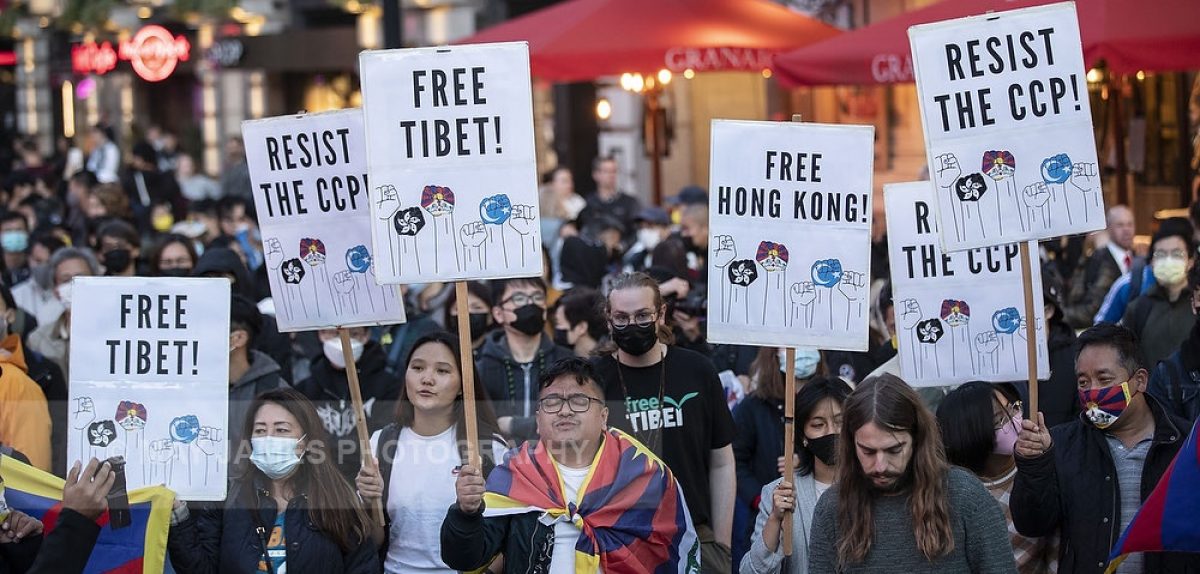

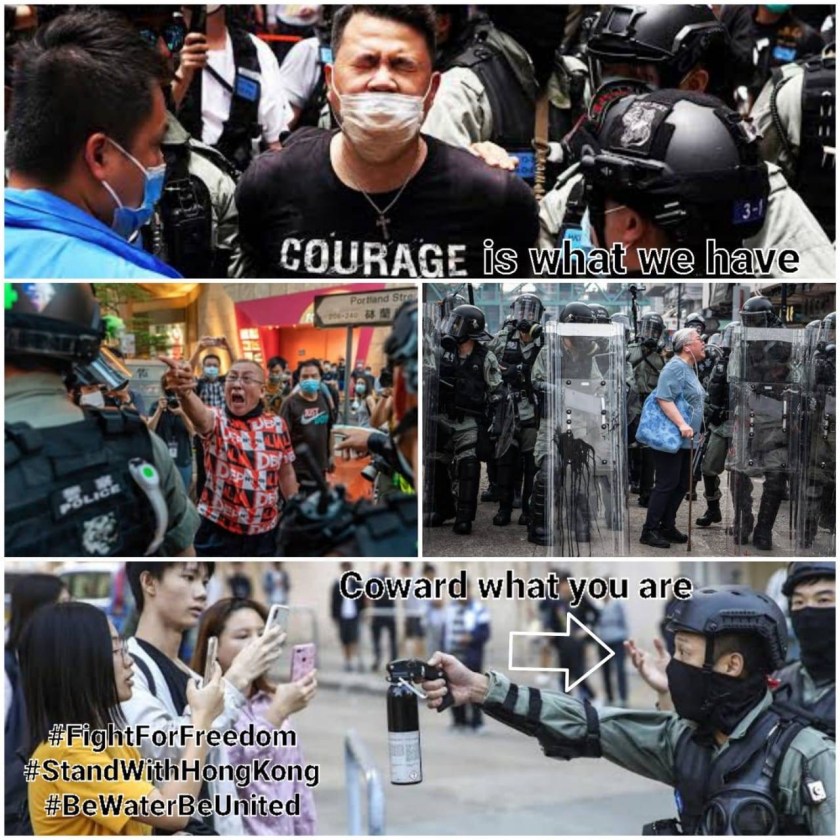
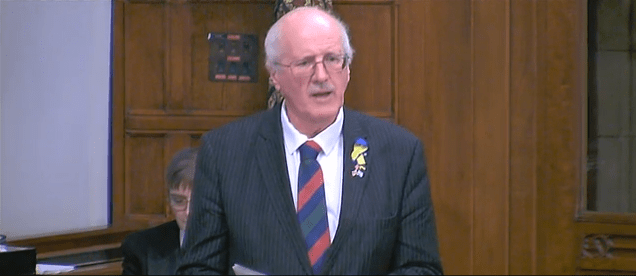

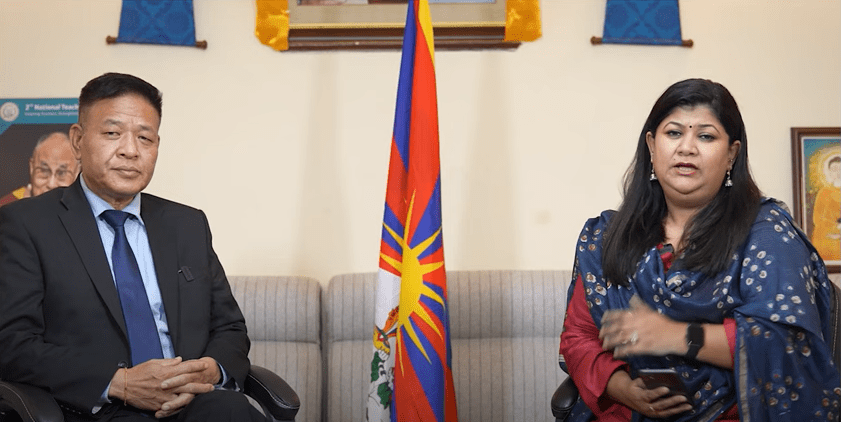


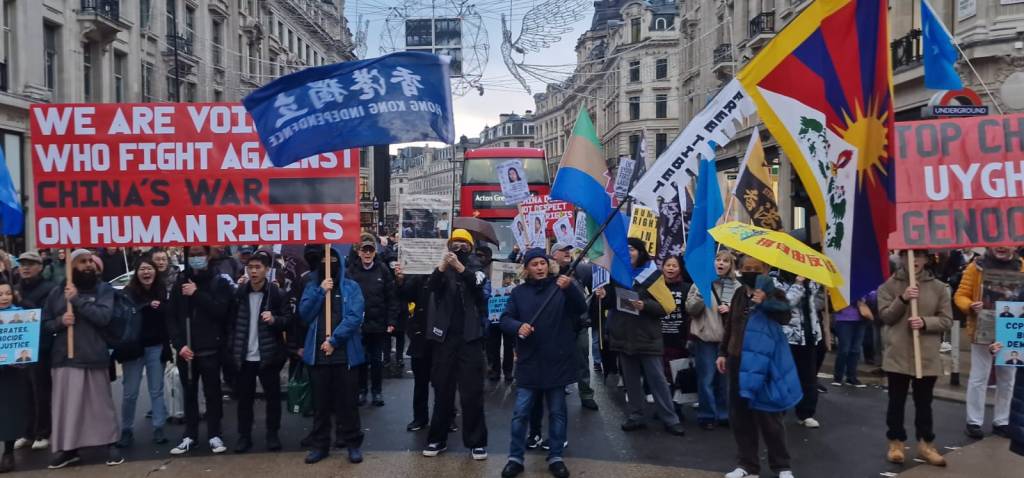
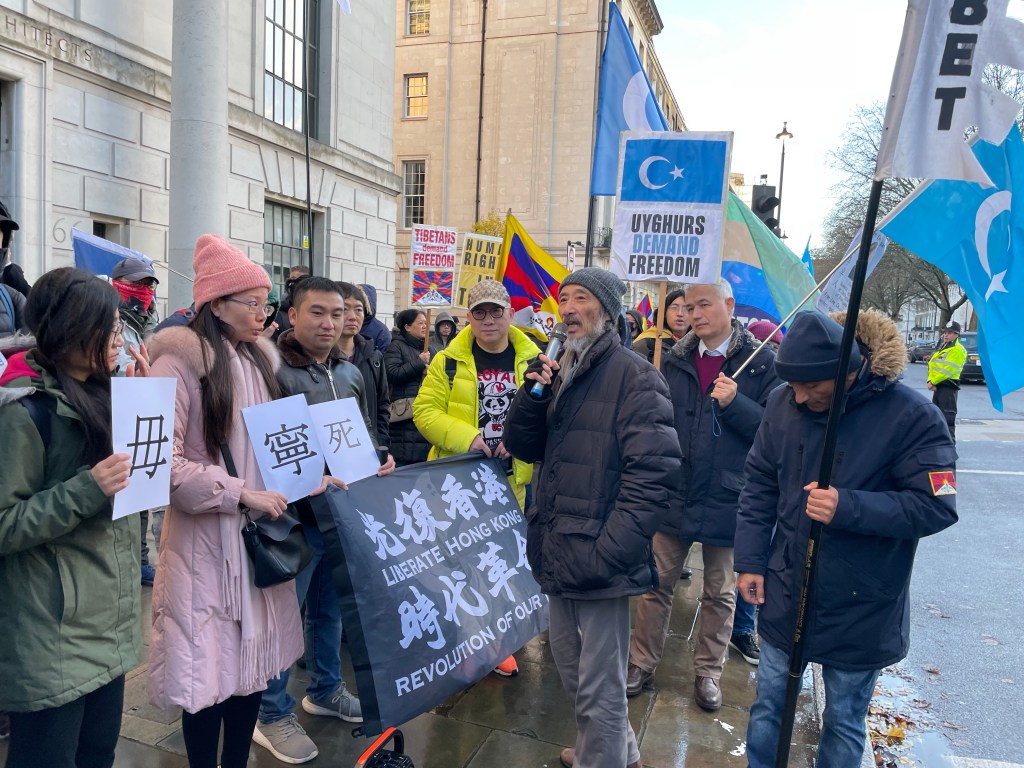
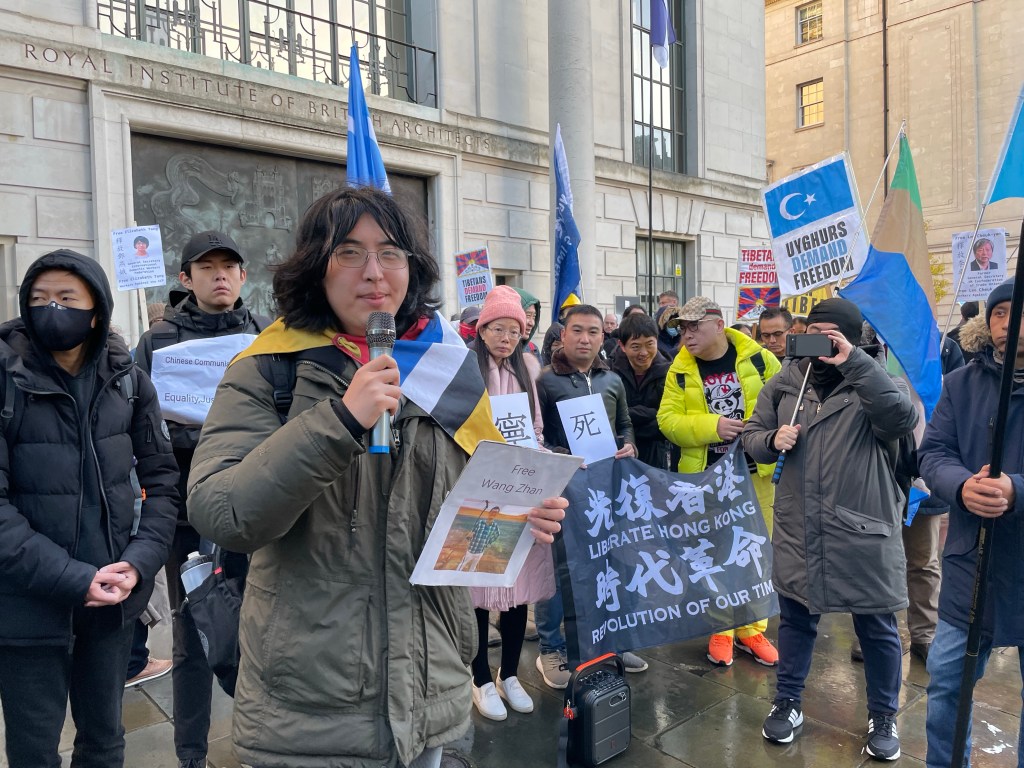


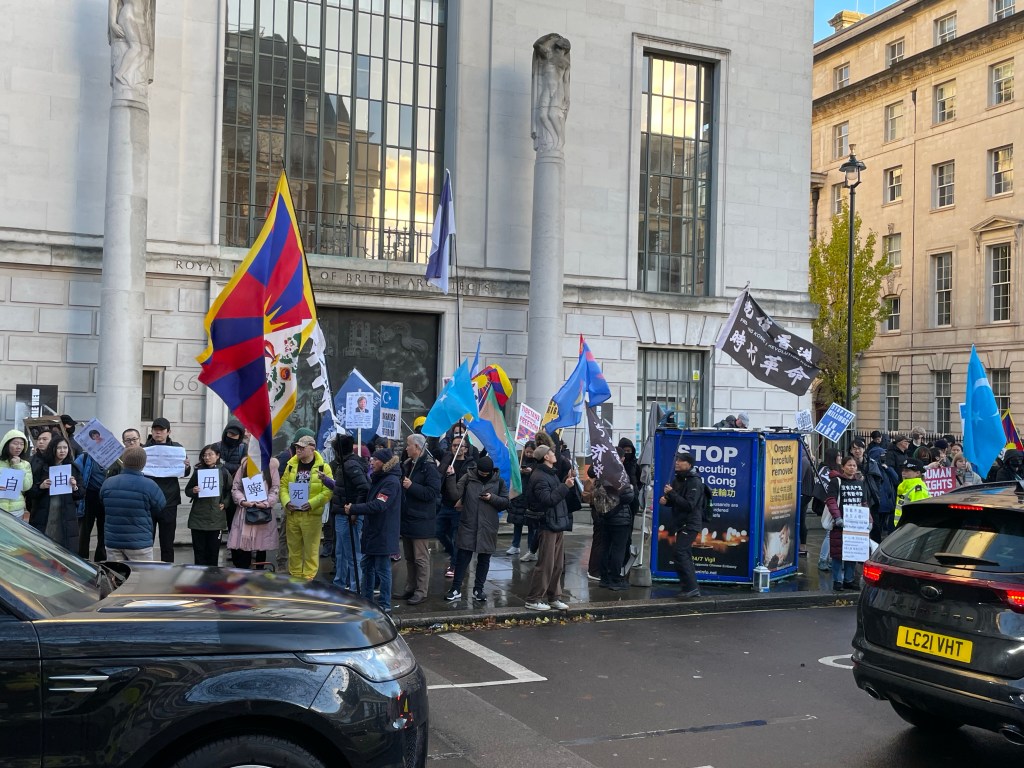

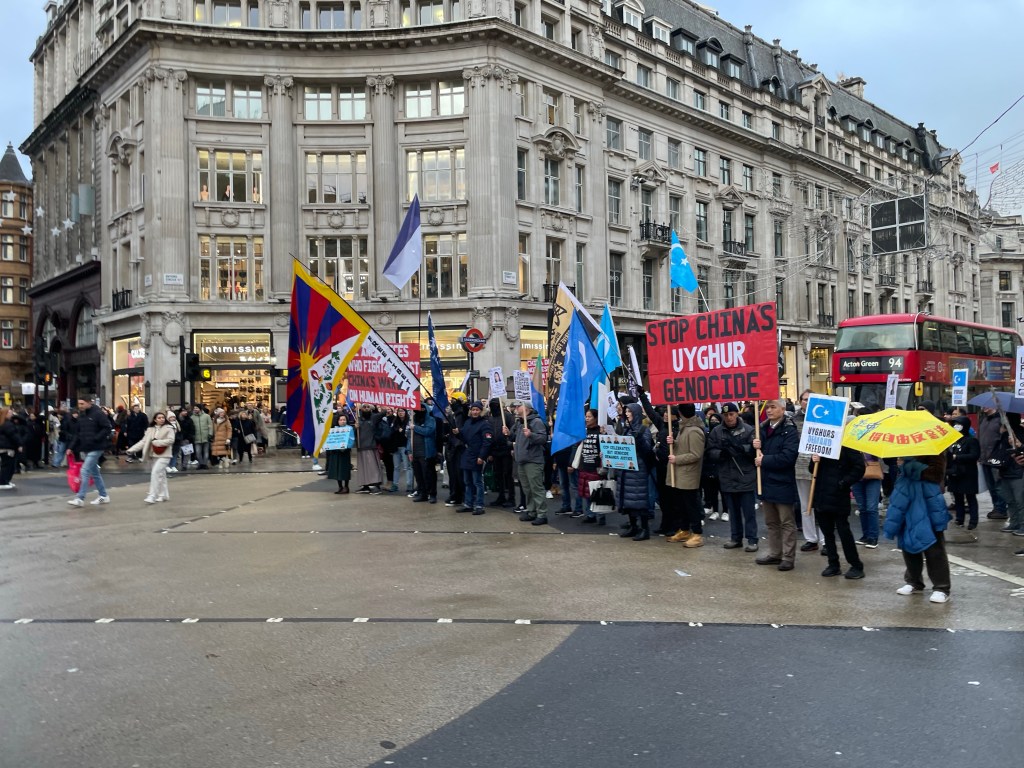


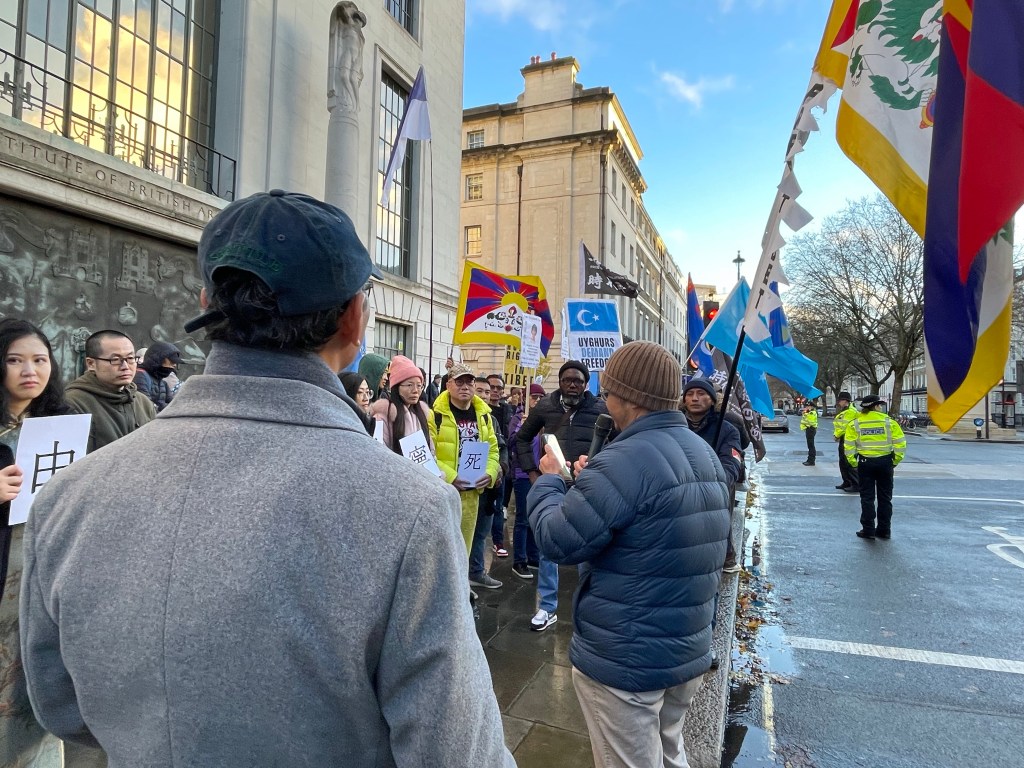


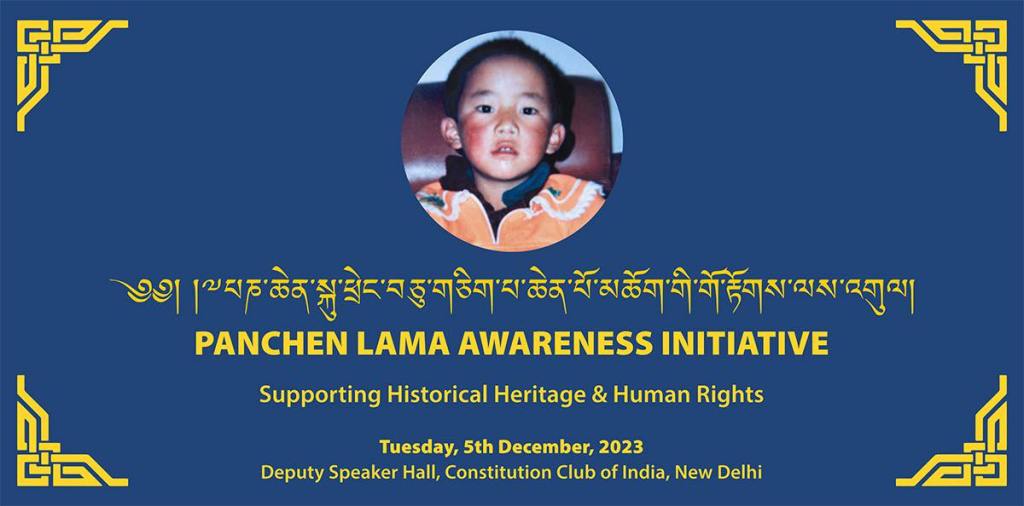


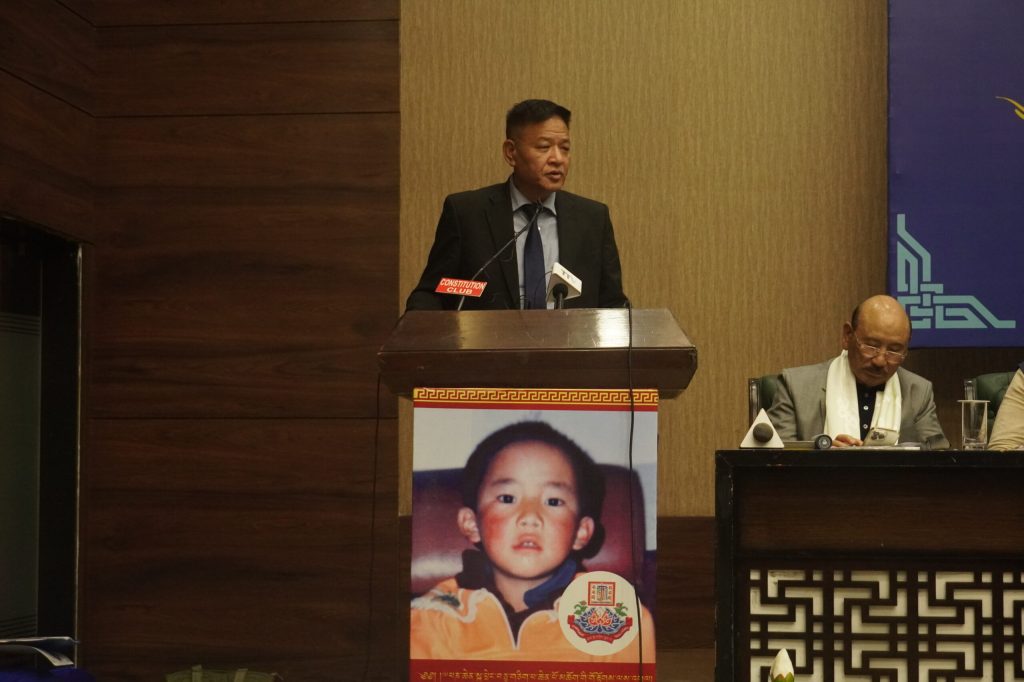
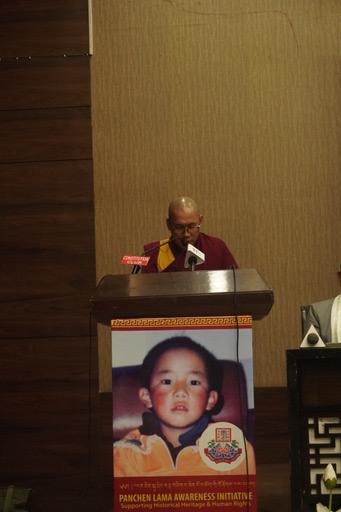
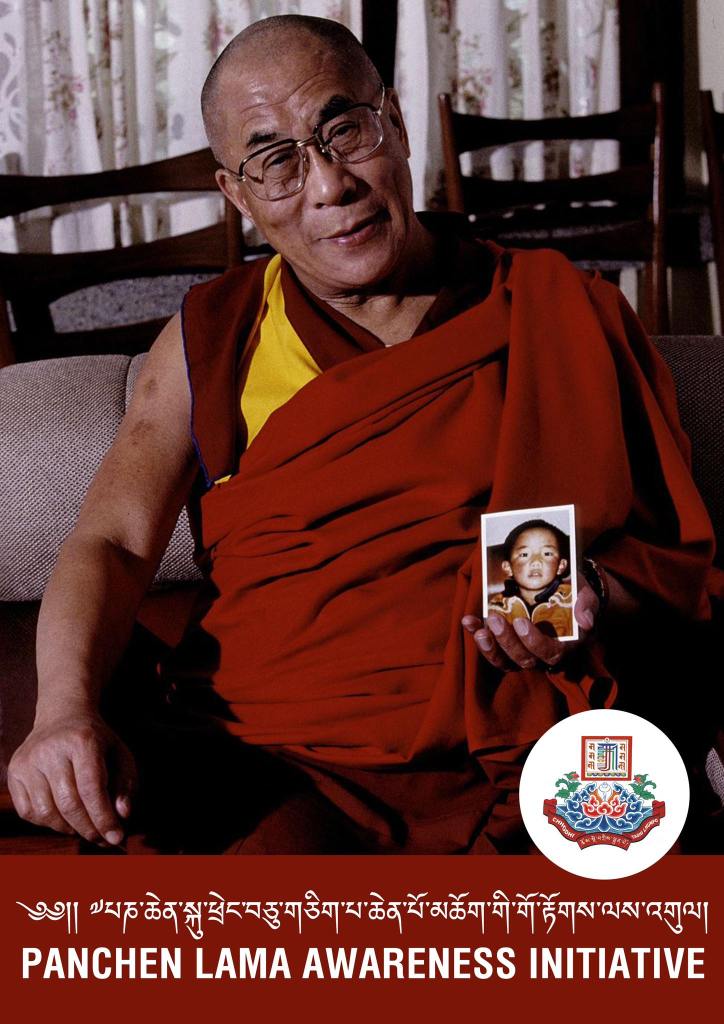
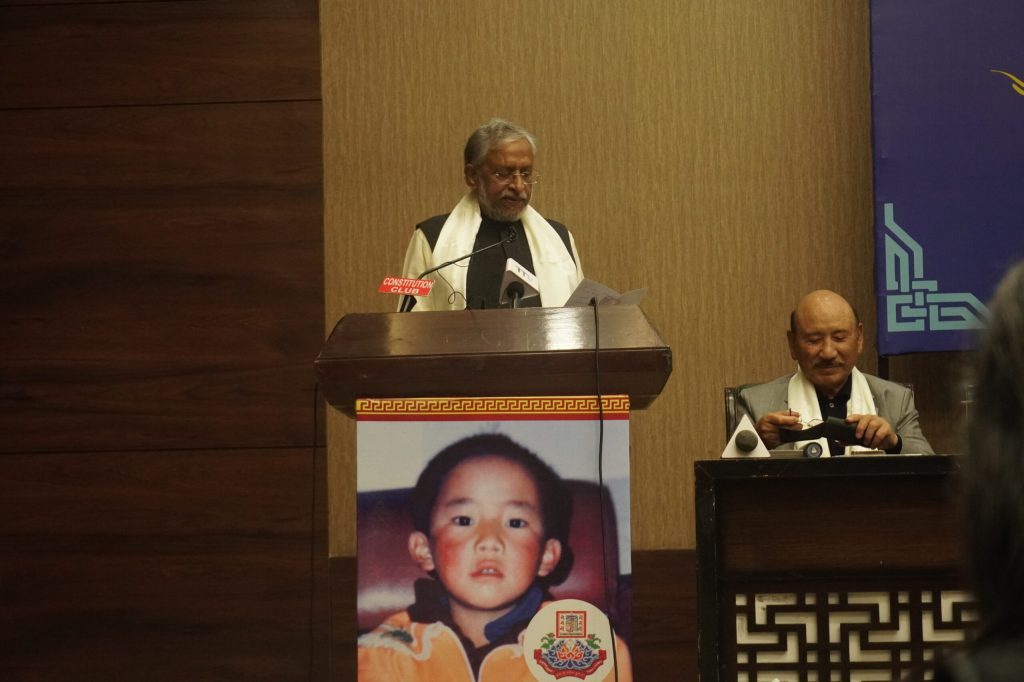

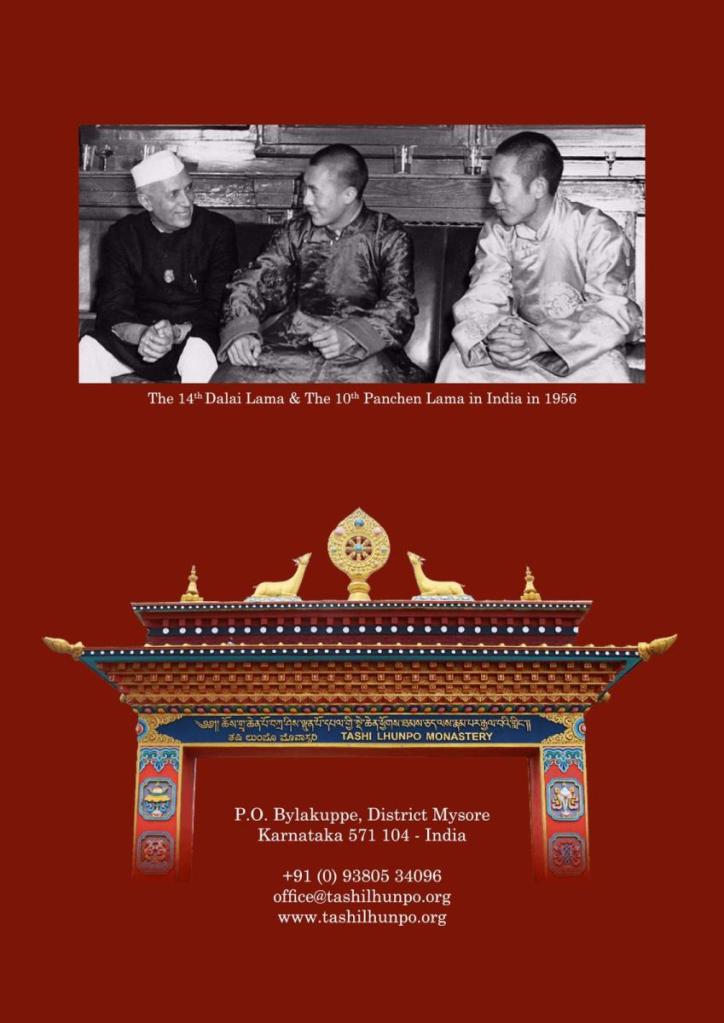
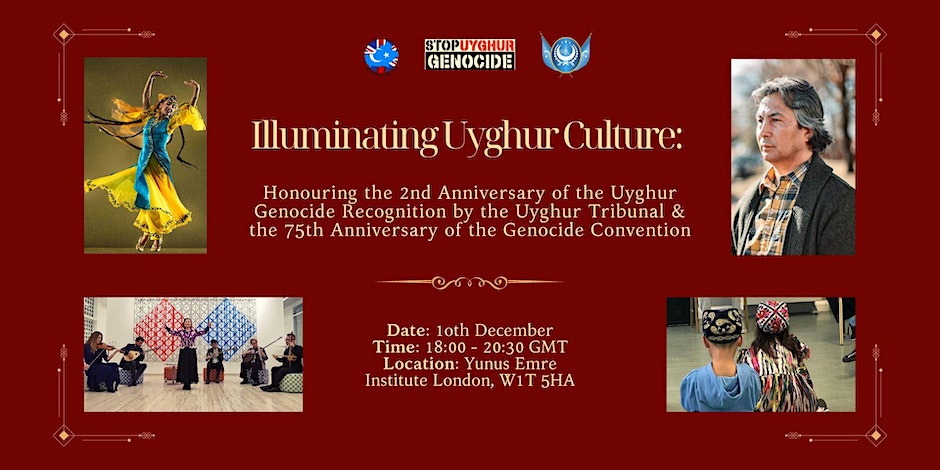


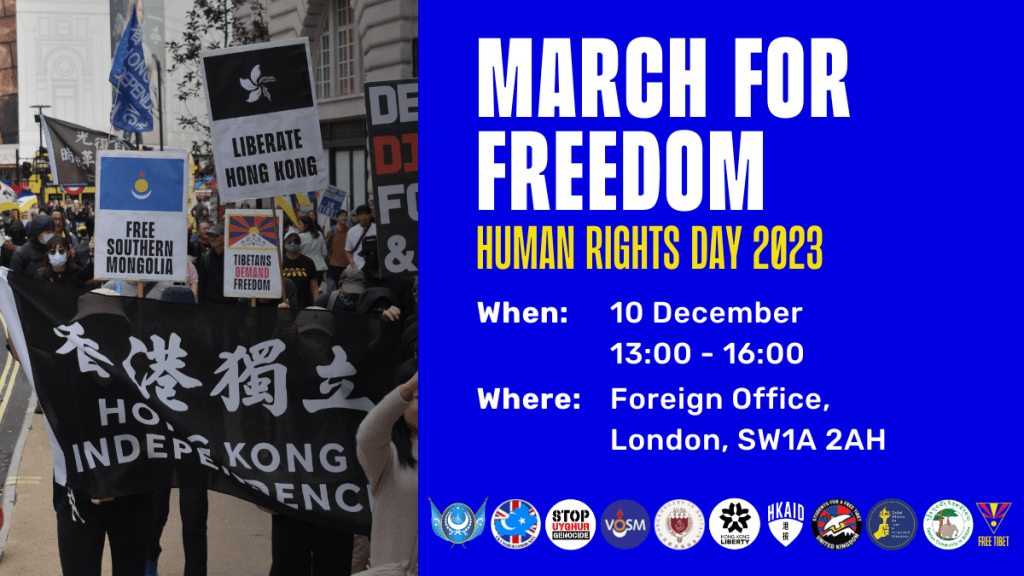
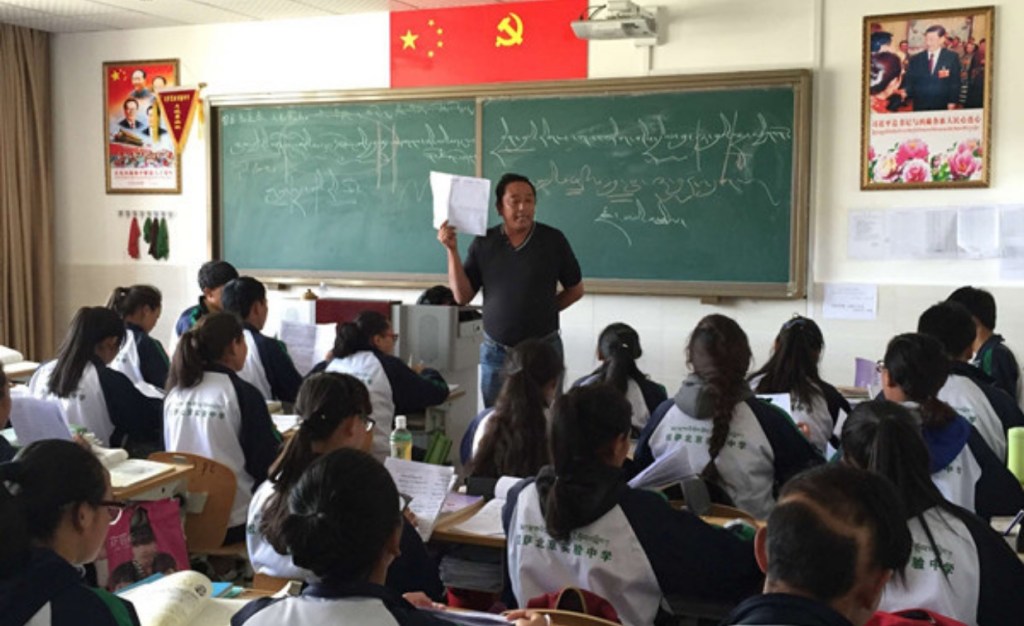

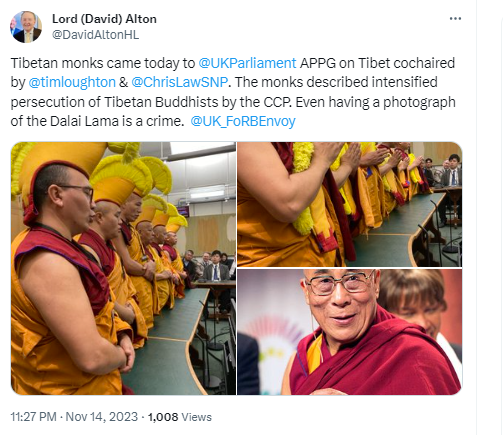


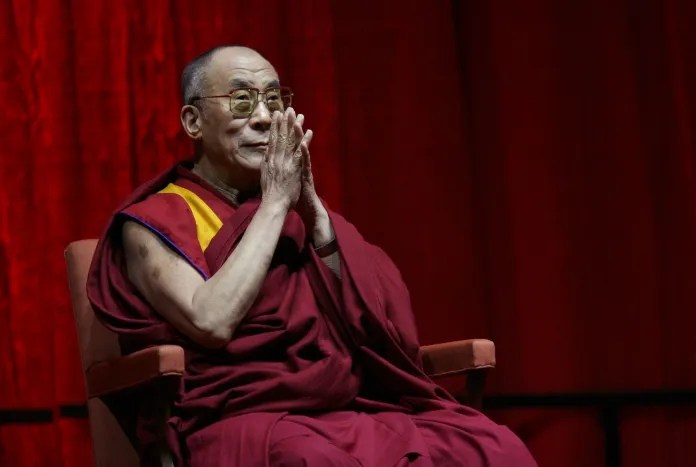

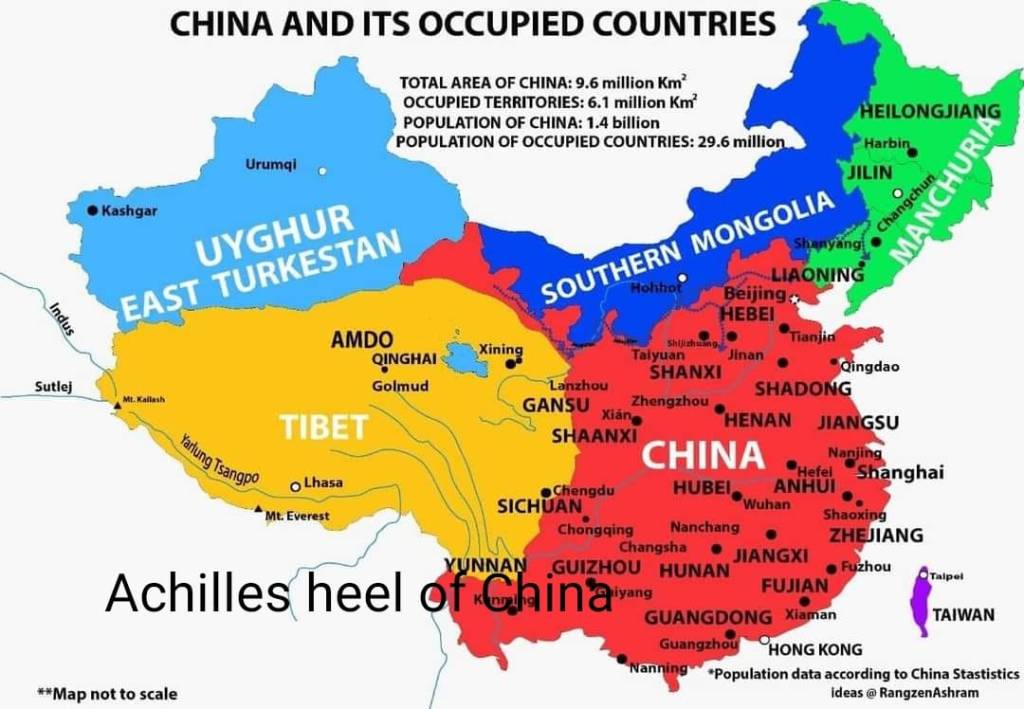
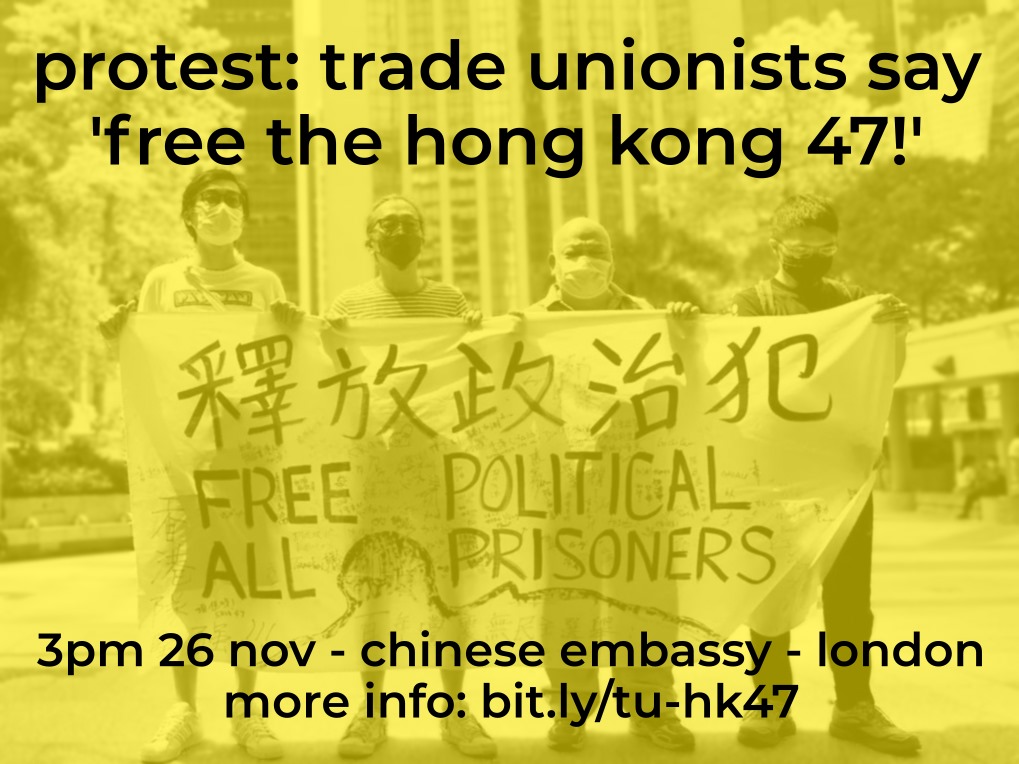
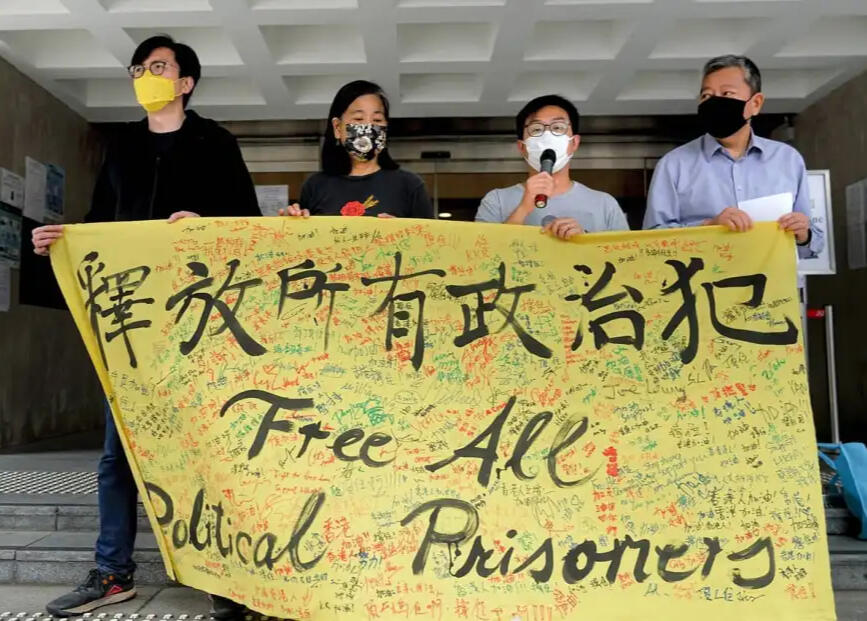
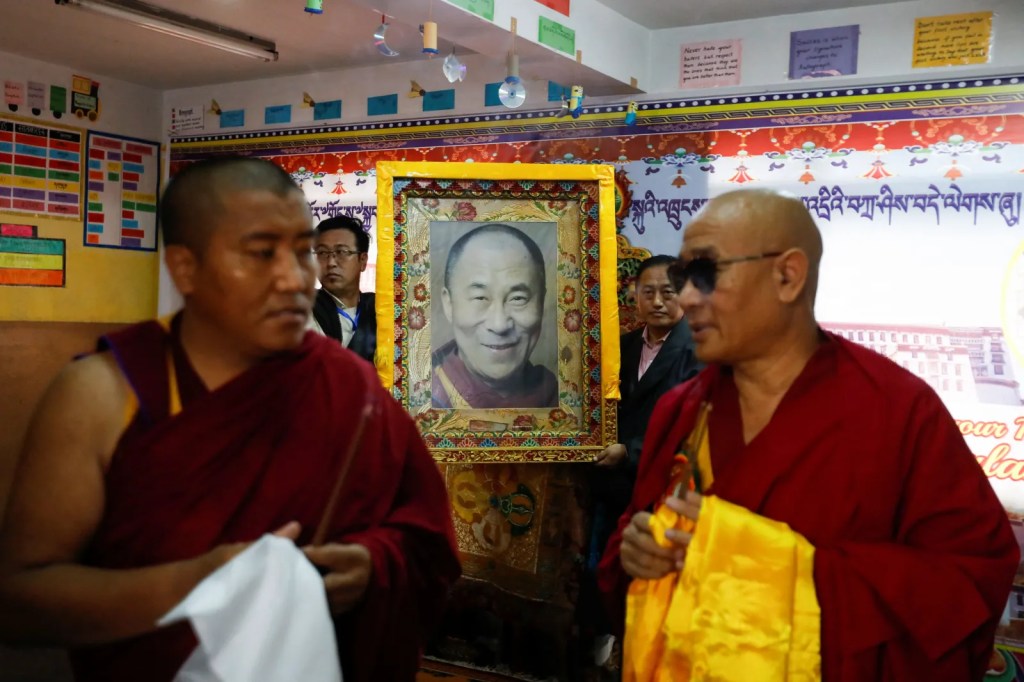


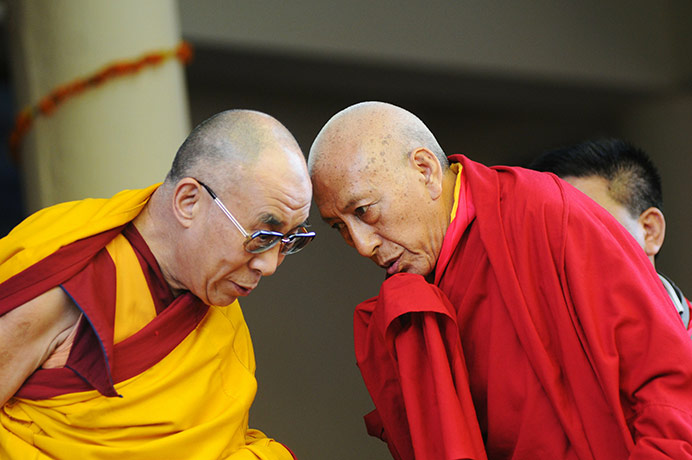


 Global Alliance for Tibet & Persecuted Minorities (GATPM)
You must be logged in to post a comment.