UK Compassionate Concert 2025: An Evening with Legendary Tibetan Singer Tsering Gyurmey

17 December 2025 | London | Tsering Passang

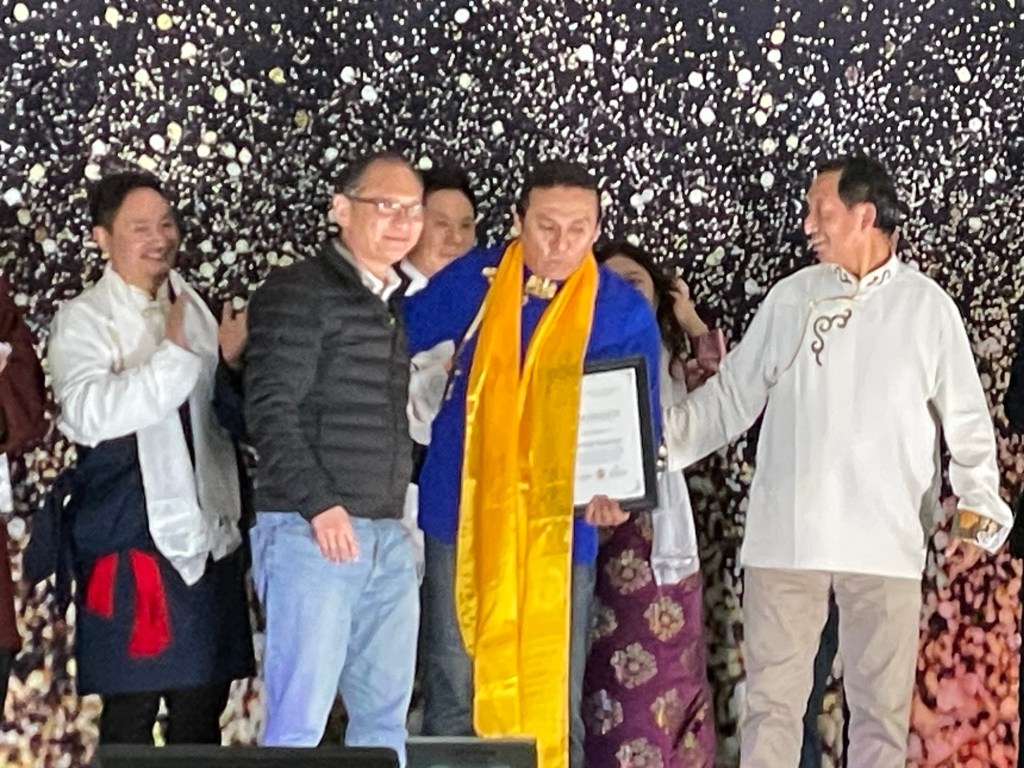
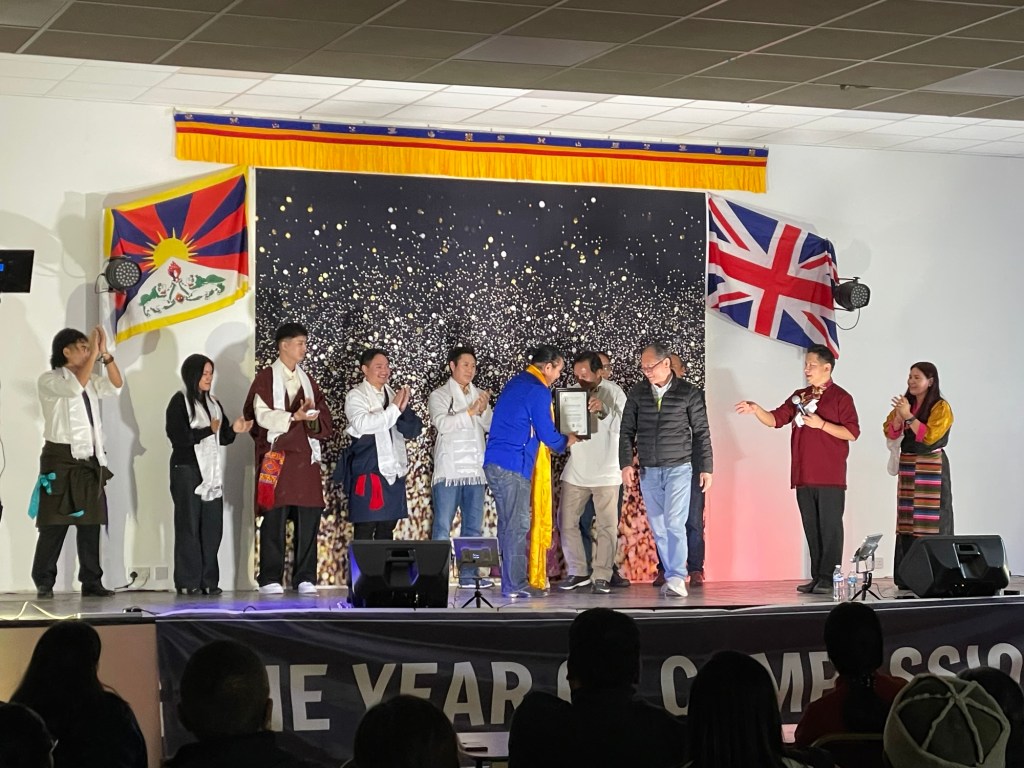
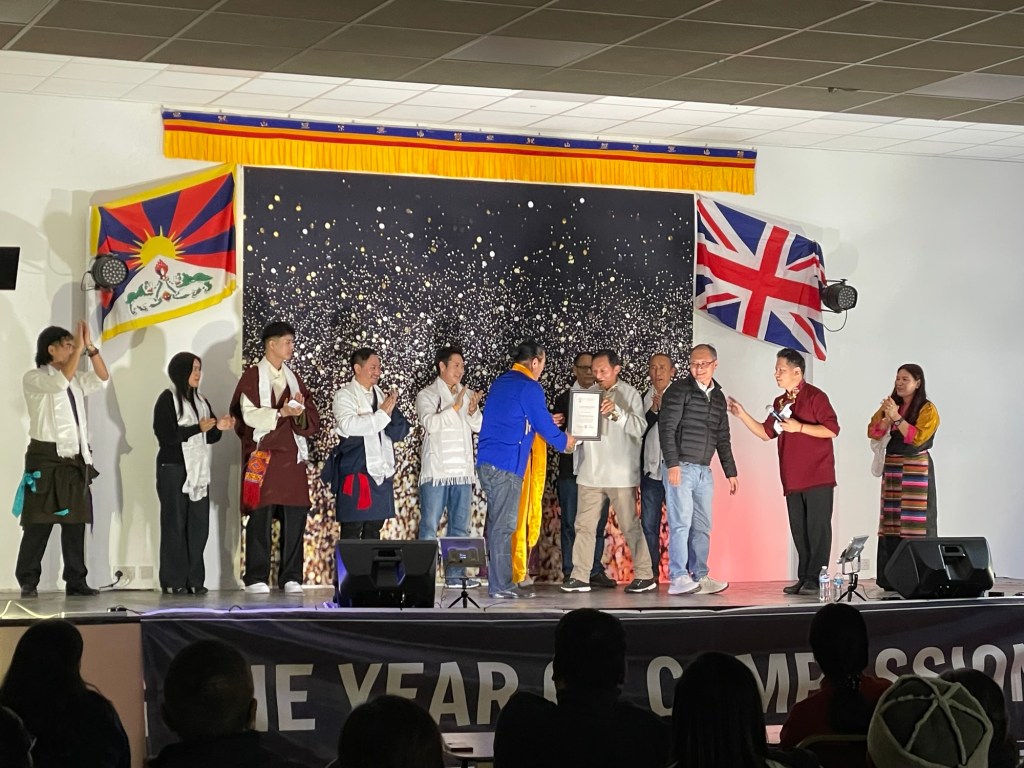
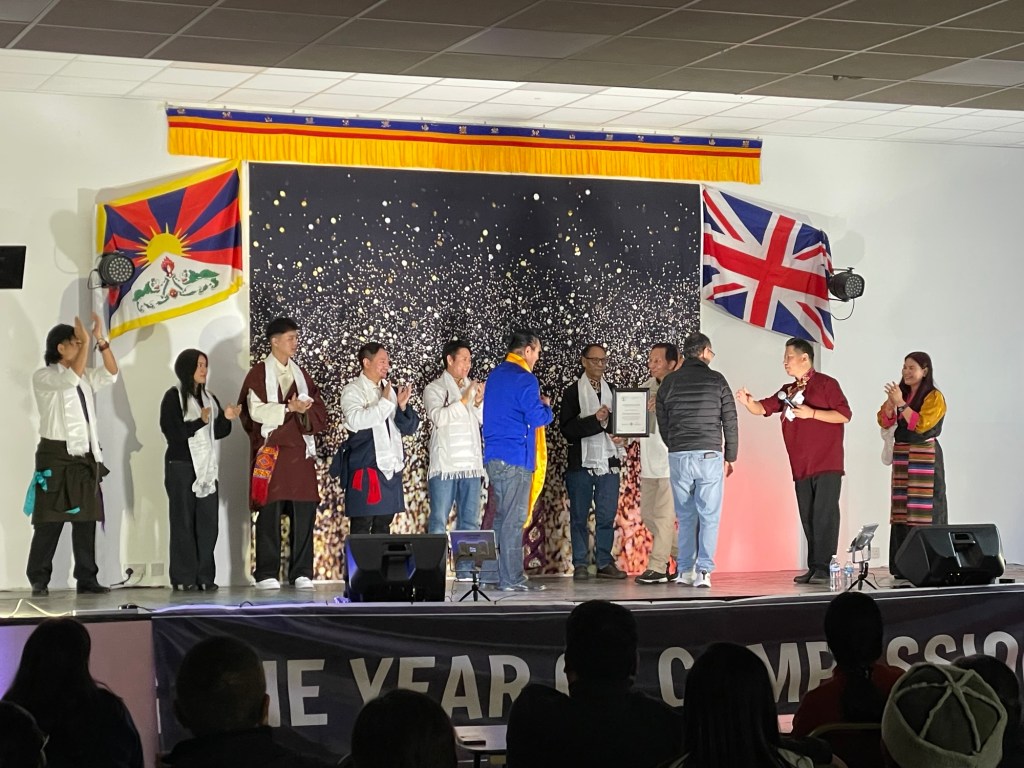
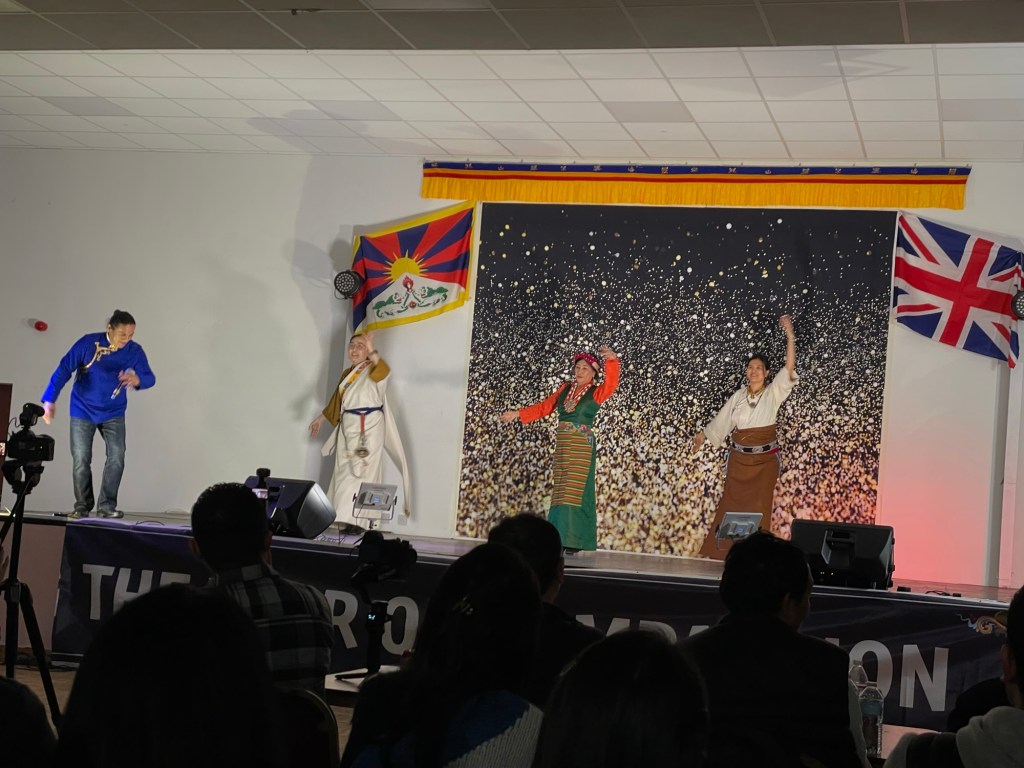
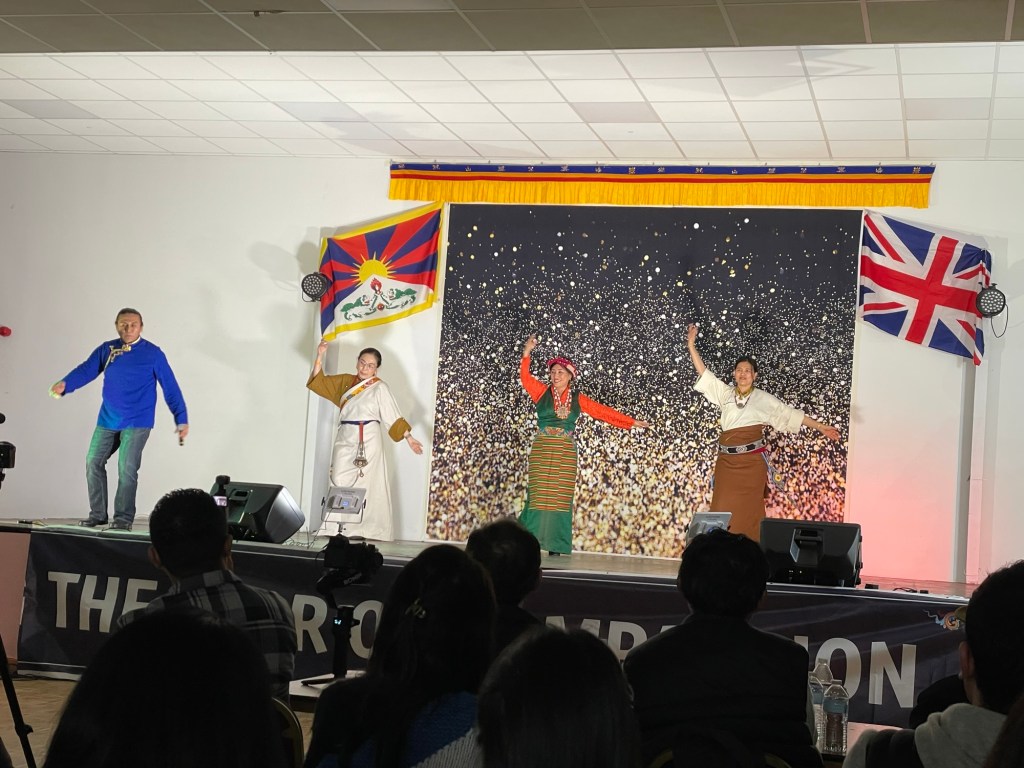
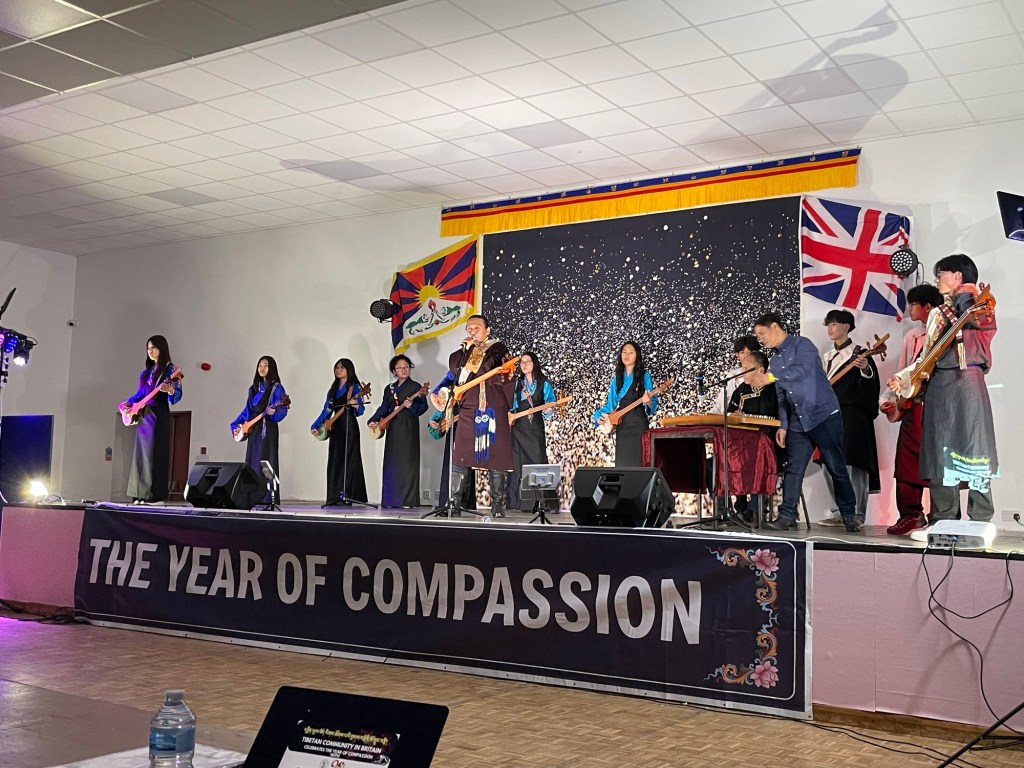
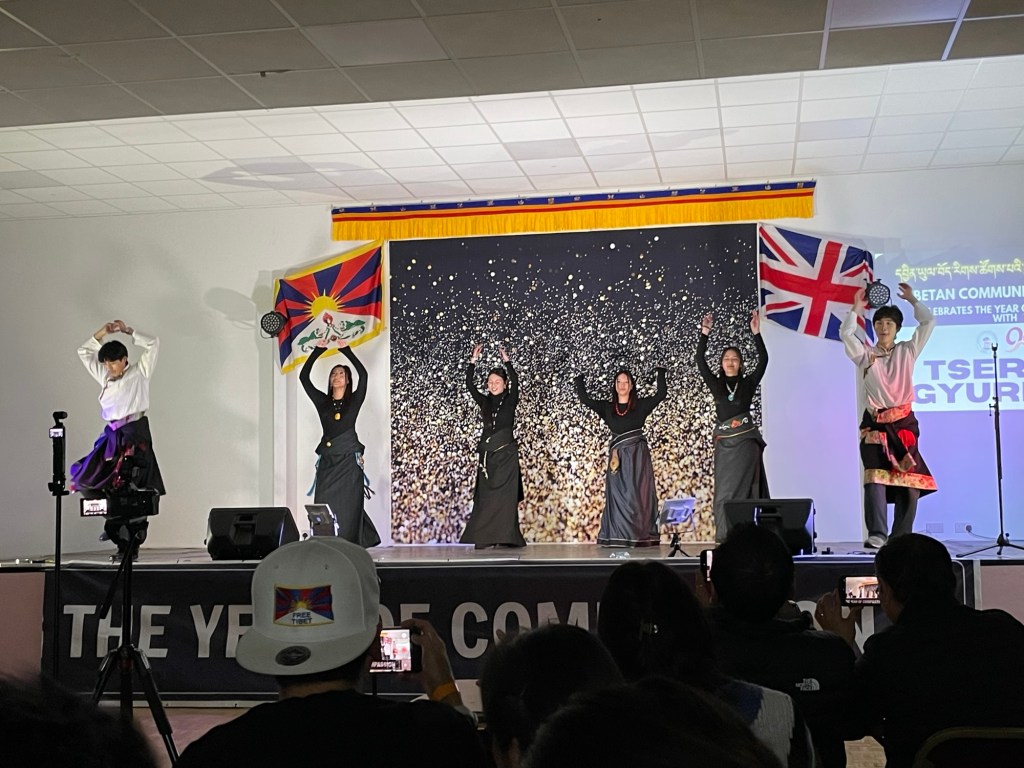
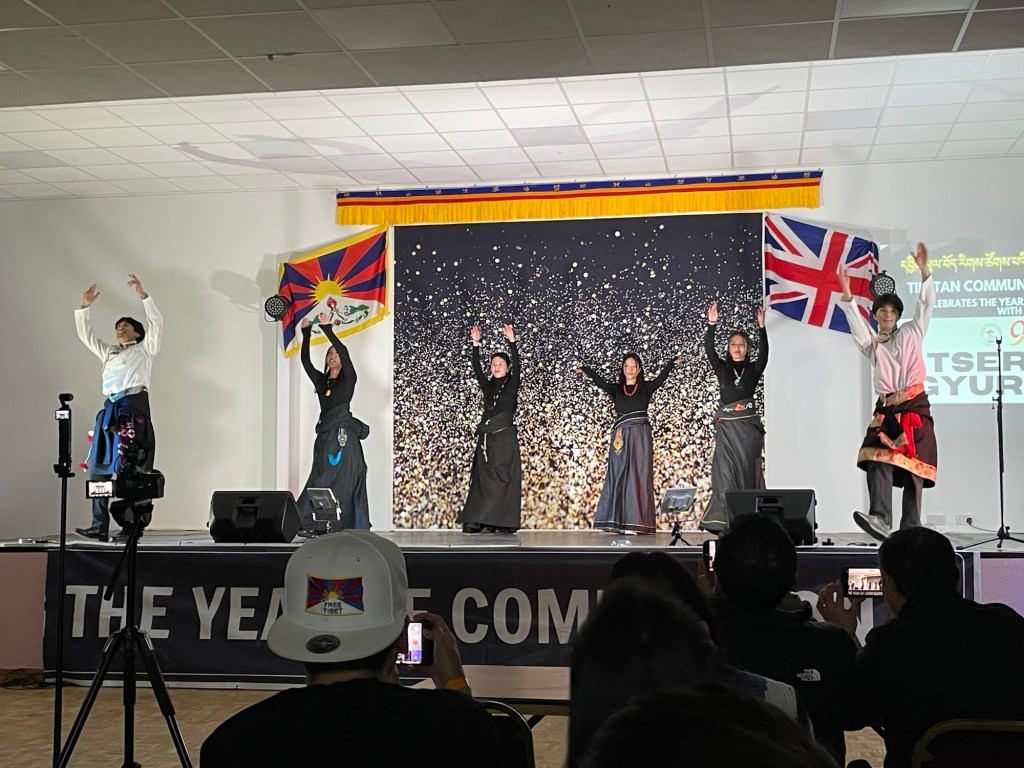
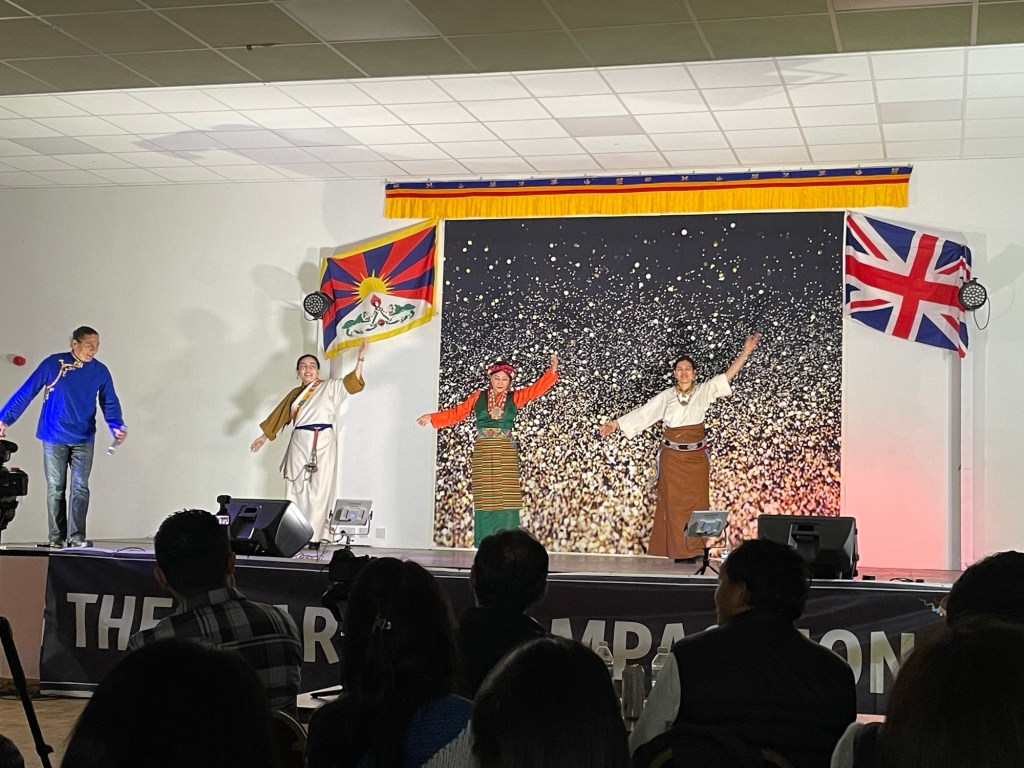
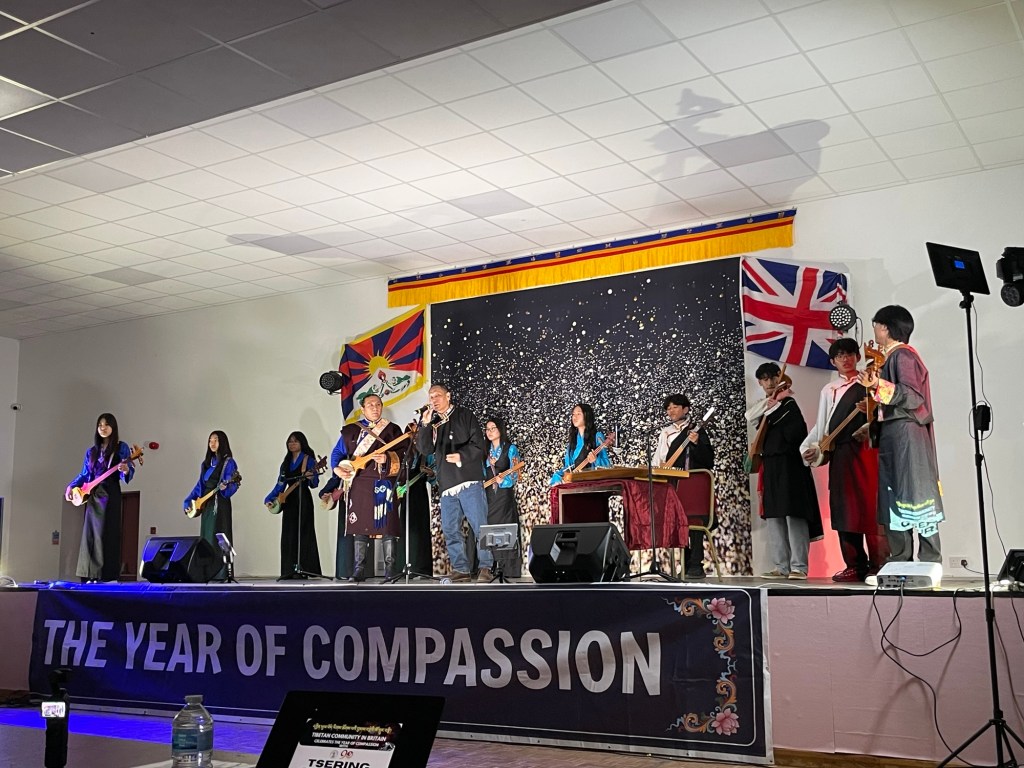
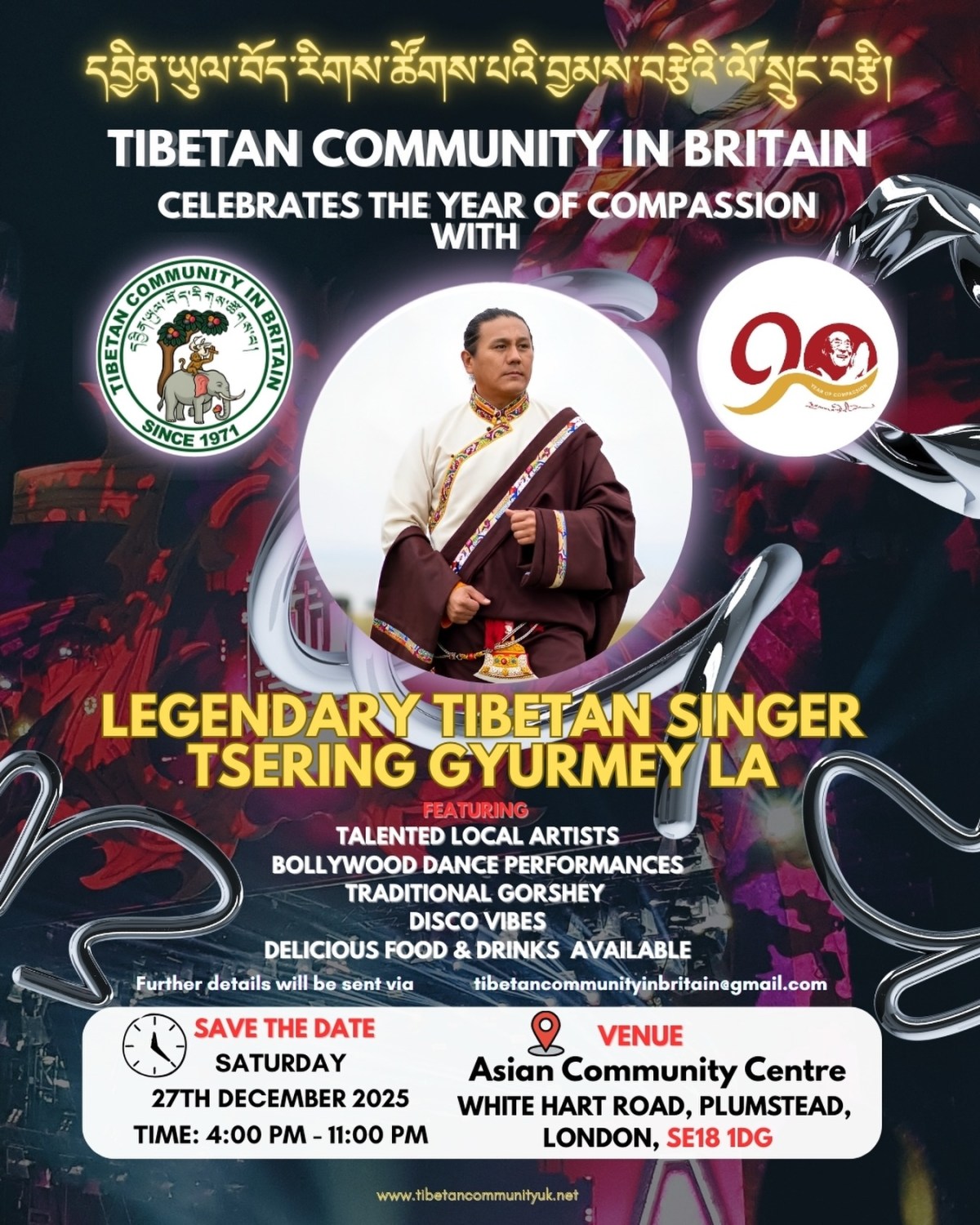
The Tibetan Community in Britain is honoured to present the UK Compassionate Concert 2025, an evening of music, memory, and meaning featuring the pioneering Tibetan singer Tsering Gyurmey. Local talented artists, Bollywood dance performances, and traditional Gorshey will also feature the evening.

This special concert, to be held on 27th December, forms part of the Year of Compassion, a series of community-led events organised in celebration of His Holiness the 14th Dalai Lama’s 90th birthday, and is held in support of the Tibetan Community Hall Project – a vital initiative to establish a permanent space for cultural continuity, community connection, and collective growth for Tibetans living in the UK.

About the Artist – Tsering Gyurmey

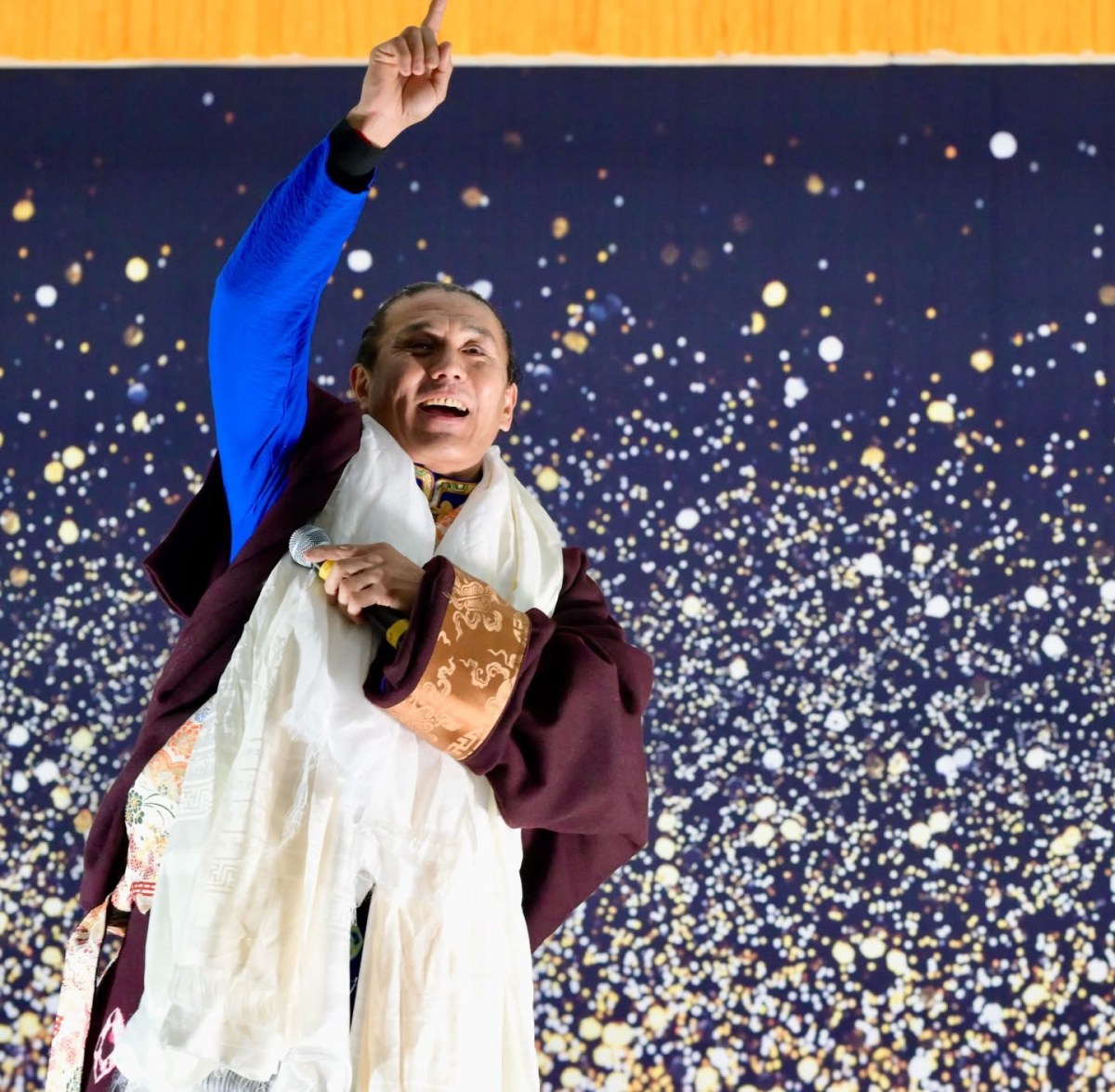
Artist Tsering Gyurmey

Tsering Gyurmey stands among the most revered and influential voices in contemporary Tibetan music. Born and raised in the Tibetan settlement of Odisha (Orissa), India, his early life was shaped by the lived realities of exile – an experience that would profoundly inform both his artistic and spiritual journey.

He received his formal education at the Central School for Tibetans, Darjeeling, where his early musical sensibilities began to take shape. Recognising his natural talent and dedication, he later joined the prestigious Tibetan Institute of Performing Arts (TIPA) in Dharamsala, where he refined his vocal artistry and deepened his understanding of Tibetan musical traditions. TIPA provided the foundation upon which he would build a lifelong career devoted to preserving and evolving Tibetan music.

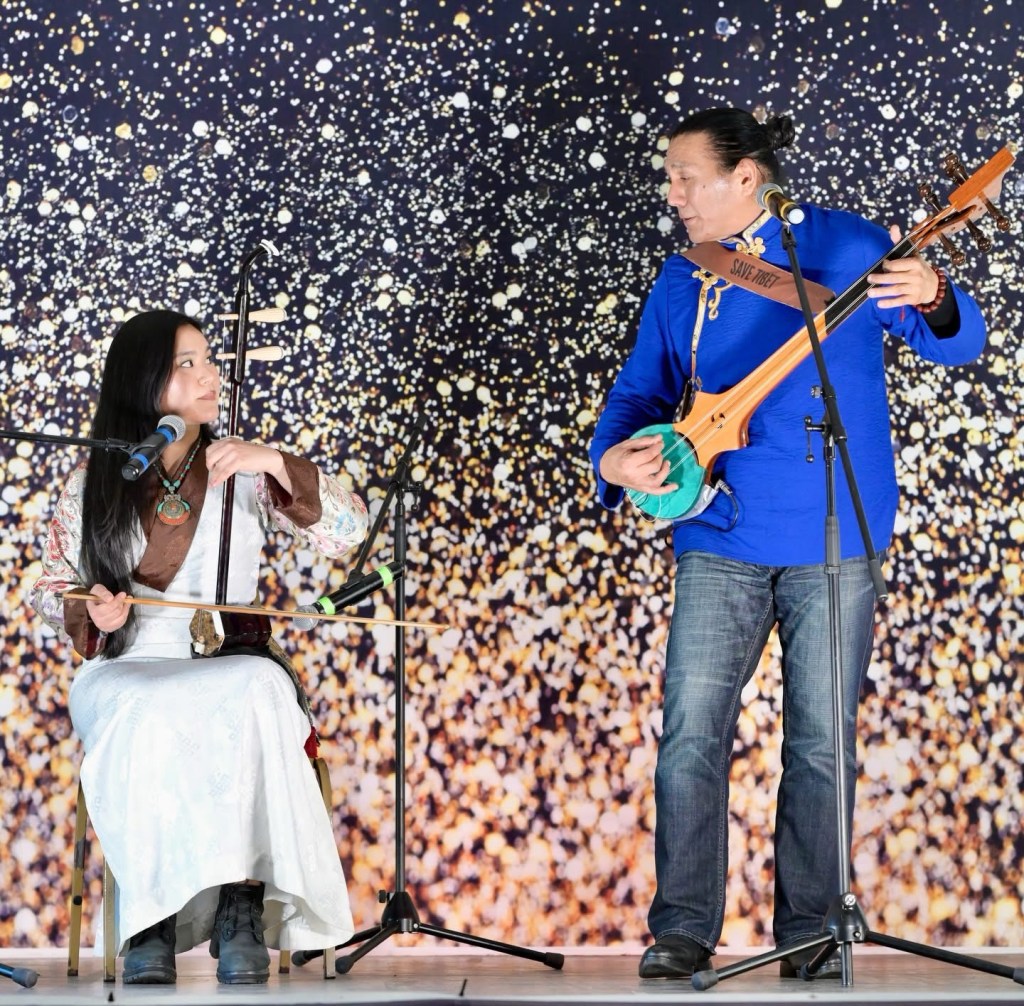
Artist Tsering Gyurmey in Nepal (Photo: http://www.facebook.com/tsering.gyurmey.3)

More than three decades ago, Tsering Gyurmey made Nepal his home, where he continues to live and create today. From Nepal, he has produced a rich and enduring body of work that seamlessly weaves traditional Tibetan melodies with contemporary musical expression. His songs explore themes of compassion, longing, resilience, devotion, and hope – echoing the emotional and spiritual experiences of Tibetans across generations and geographies.

His music has reached and touched millions of Tibetans worldwide, including in China’s occupied-Tibet, becoming an integral part of the soundscape of exile. Among his most celebrated and best-selling albums is Tsawai Lama – Root Guru, a deeply devotional work that reflects his spiritual depth and profound reverence for the guru-disciple relationship central to Tibetan Buddhism.

Renowned for his warm, resonant voice and poetic sincerity, Tsering Gyurmey has toured extensively across Asia, Europe, and North America, performing for Tibetan communities and international audiences alike. He is especially admired for his generosity of spirit– frequently collaborating and duetting with both aspiring and established Tibetan singers, from the diaspora as well as from inside Tibet – helping nurture emerging talent while ensuring the continued vitality and relevance of Tibetan music.

Musical Journey & Album Highlights

Across decades of artistic dedication, Tsering Gyurmey has released numerous Tibetan music albums that are deeply cherished by listeners in exile and beyond. His recordings are celebrated for their emotional sincerity, lyrical richness, and spiritual grounding.

His musical repertoire includes:

  • Early works rooted in traditional Tibetan folk and exile songs, reflecting the emotional landscape of settlement life in India
  • Devotional and contemplative compositions, inspired by Buddhist values of compassion, mindfulness, and inner reflection
  • Contemporary Tibetan albums blending modern arrangements with traditional melodies, resonating strongly with younger generations
  • Collaborative projects and duets with emerging Tibetan singers, offering mentorship and shared artistic expression

Notable works include the acclaimed Tsawai Lama – Root Guru, alongside other albums that reflect enduring themes of love for Tibet, spiritual devotion, and the shared experience of exile.

The Compassionate Cause

This UK Compassionate Concert is dedicated to raising funds for the Tibetan Community Hall Project, envisioned as a permanent home for:

  • Cultural preservation and celebrations
  • Community gatherings and youth engagement
  • Educational, spiritual, and social programmes

By attending this concert, audiences will not only experience an unforgettable evening of Tibetan music, but also contribute meaningfully to strengthening and sustaining the Tibetan community in Britain for generations to come.

Event details:

Date: Saturday, 27 December 2025 from 4pm to 11pm
Event: UK Compassionate Concert with Tsering Gyurmey

Ticket Prices:

  • General Ticket: £25
  • Ages 11–17: £20
  • Under 10: Free

Venue: Asian Community Centre, White Hart Road, Plumstead, London SE18 1DG
Cause: Tibetan Community Hall Project
Organiser: Tibetan Community in Britain

Tibetan Community in Britainwww.tibetancommunityuk.net

Mass Arrests, Torture Allegations and Communications Blackout Follow Tibetan Protest Against Gold Mining in Eastern Tibet

GATPM, London | 16 December 2025

The Tibet Policy Institute (TPI), under the Department of Information and International Relations (DIIR) of the Central Tibetan Administration (CTA), held a press conference on Tuesday afternoon to draw urgent attention to a rapidly deteriorating situation in Kashi village, Kham Zachukha (Sershul County), eastern Tibet. The briefing highlighted credible reports of mass arrests, enforced disappearances, torture, and a sweeping communications blackout following a peaceful protest by local Tibetans against gold-mining activities on their ancestral land.

The press conference, held at the TPI Hall in Dharamsala, was addressed by TPI Deputy Director Tempa Gyaltsen Zamlha and attended by representatives of Tibetan media as well as national and local Indian press. TPI described the unfolding situation as one of the most serious crackdowns reported in the region in recent years.

Protest Against Gold Mining Triggers Crackdown

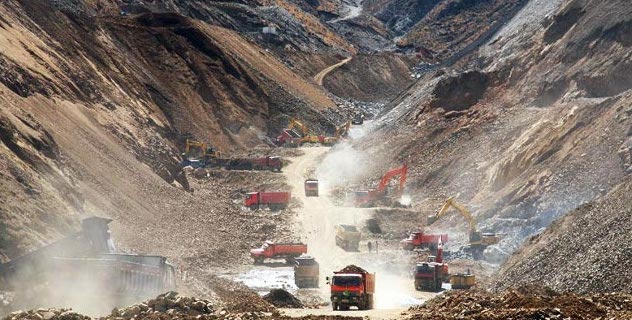
According to information received by TPI, tensions erupted on 5 November 2025 when residents of Kashi village discovered an active gold-mining operation at Serkhok, or “Gold Valley,” a site of deep ecological, cultural, and spiritual significance. Villagers confronted those involved and alerted township authorities, raising concerns about environmental destruction and the complete absence of community consent.

Central Tibetan Administration’s Press Conference on 16 December 2025 (Photo: TibetTimes.net)

Rather than addressing these legitimate concerns, local officials reportedly dismissed the villagers’ objections, asserting that the land belonged exclusively to the state and that Tibetans had “no right to interfere.” Authorities allegedly declared the villagers’ attempt to halt the mining illegal, further inflaming tensions in a region long marked by repression and marginalisation.

Night-Time Raids and Mass Detentions

On the evening of 6 November, at approximately 6:50 pm, Chinese authorities reportedly launched coordinated door-to-door raids throughout Kashi village. Local sources estimate that around 80 Tibetans were detained and transported to Sershul County for interrogation. Families later reported that several individuals remain unaccounted for, raising grave concerns of enforced disappearance under international human rights law.

Shortly after the arrests began, Kashi township was sealed off. Residents report that officials from the United Front Work Department, Public Security Bureau, armed police, and township administration jointly imposed a strict lockdown. Villagers were warned that sharing information with outsiders or higher authorities would be treated as a serious criminal offence.

Communications Blackout and Surveillance State Tactics

Security forces allegedly confiscated mobile phones, conducted invasive home searches, and imposed a communications blackout across the township. Armed police and military personnel reportedly patrol roads and public spaces, detaining individuals merely suspected of opposing the mining operation.

TPI noted that only authorised individuals are permitted to speak with journalists, while local Tibetans are explicitly prohibited from doing so – amounting to a near-total suppression of freedom of expression and access to information.

Torture, Degrading Treatment and Forced Confessions

Updated information received in December paints a deeply disturbing picture of detainee treatment. According to multiple accounts, detainees were subjected to inhuman and degrading treatment, including denial of access to toilets, prolonged sleep deprivation, and deliberate starvation. Prisoners reportedly received only one serving of cold tsampa mixed with water per day.

During violent interrogations, several detainees reportedly suffered broken ribs, kidney-related illnesses, and severe physical and psychological deterioration. Cases of tuberculosis relapse have been reported, indicating extreme stress and abuse. Although some medical examinations were conducted at Sershul County hospital, authorities allegedly withheld full medical reports, raising serious concerns about transparency and denial of medical information.

Detainees were also forced to sign written pledges committing them to silence. Others were coerced into signing fabricated statements falsely accusing fellow villagers of assaulting Chinese officials – clear indications of forced confessions and false testimony. Seven Tibetans arrested in November reportedly remain missing, with no information provided to their families.

Elderly Targeted, Surveillance Intensifies

Elderly residents were not spared. Many were arbitrarily detained, had their mobile phone records scrutinised, and were threatened before being released. Following release, several elders were repeatedly summoned for “re-education” sessions, during which authorities manually inspected their phones to monitor communications.

Residents further report that surveillance cameras and audio-recording devices have been installed inside private homes, enabling authorities to monitor conversations and daily activities – constituting systematic violations of the rights to privacy, freedom of movement, and expression.

A Pattern of Environmental and Cultural Destruction

TPI stressed that the gold-mining incident in Kashi is not isolated. Mining activities in the region reportedly date back to the 1990s, often involving collusion between local officials and private business interests. Under the banner of “development,” authorities have facilitated mining operations and dam construction that Tibetans say have devastated rivers, grasslands, and sacred landscapes.

Alongside environmental destruction, cultural and religious repression has intensified. Current restrictions reportedly include strict limits on monastic gatherings, bans on public prayer assemblies, prohibitions on circumambulation during festivals, restrictions on group gatherings, and the prevention of students from attending cultural or religious programmes during school holidays.

Condemnation from GATPM

Reacting to the unfolding crisis, Tsering Passang, speaking on behalf of the Global Alliance for Tibet & Persecuted Minorities (GATPM), issued a strong condemnation of the Chinese authorities and the Chinese Communist Party’s policies in Tibet:

“The brutal crackdown in Kashi village once again exposes the true nature of the Chinese Communist Party’s rule in Tibet – where peaceful environmental defenders are treated as criminals, communities are silenced through fear, and sacred land is sacrificed for exploitative extraction. We unequivocally condemn the mass arrests, torture, enforced disappearances, and the deliberate destruction of Tibet’s fragile environment under the guise of ‘development.’”

Passang added:

“Tibet has lived under China’s occupation since 1950, when CCP Chairman Mao Tsetung ordered the People’s Liberation Army to invade the country. Since then, Tibetans have faced systematic repression, cultural erasure, and relentless exploitation of their land and natural resources. What is happening in Kashi is not an isolated incident – it is part of a long-standing colonial policy that prioritises control and profit over human dignity, environmental protection, and the rights of indigenous peoples.”

GATPM called on democratic governments, UN human rights bodies, environmental organisations, and independent observers to urgently investigate the situation, demand the release of all detainees, and hold Chinese authorities accountable for violations of international human rights and environmental norms.

Calls for International Accountability

TPI warned that the situation in Kashi township remains “extremely tense,” with arrests ongoing and residents living in fear under total surveillance and isolation. The institute urged the international community to remain vigilant, stressing that silence and inaction only embolden further abuses.

As communications from Kashi remain heavily restricted, the full scale of the crackdown may yet be unknown. What is clear, however, is that a Tibetan community seeking to protect its land, culture, and way of life is once again being met with overwhelming force for asserting its most basic rights.

Useful Links

Central Tibetan Administration: www.Tibet.net

Tibet Policy Institute: https://tibetpolicy.net

Ganden Ngamchö Celebrated at Drepung Monastery as His Holiness the Dalai Lama is Honoured

London | 15 December 2025

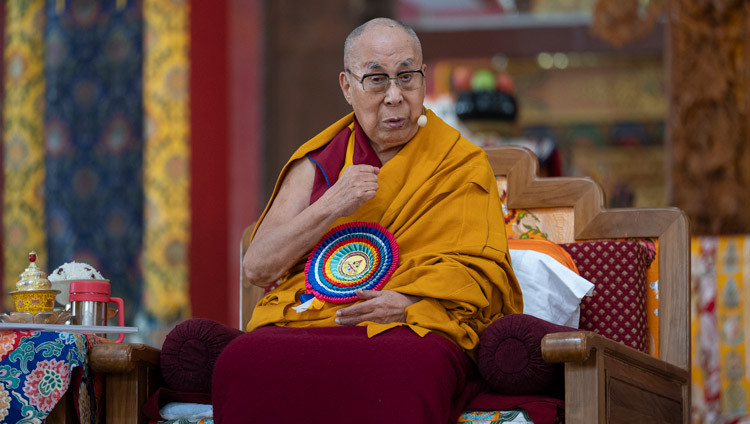
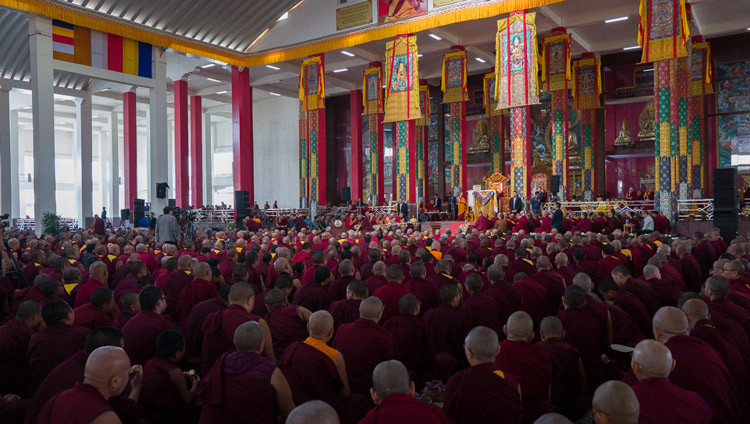
Drepung Monastery in Mundgod, south India, witnessed a deeply auspicious and historic observance of Ganden Ngamchö yesterday as His Holiness the 14th Dalai Lama presided over the annual ceremony commemorating the parinirvana of Jé Tsongkhapa, founder of the Gelug tradition of Tibetan Buddhism. The event was held at the request of the entire Gelug lineage and drew senior hierarchs, abbots, scholars, and more than 10,000 monks and devotees from across India, the Himalayan region and Bhutan.

Marking the occasion, the Gelugpa Buddhist Cultural Society presented His Holiness with a commemorative award honouring the 51st anniversary of his formal conferment of the Geshé Lharampa degree – Tibetan Buddhism’s highest scholastic qualification (equivalent to PhD in Philosophy or Theology) – in recognition of his lifelong contribution to Buddhist learning and the preservation of the Gelug tradition in exile.

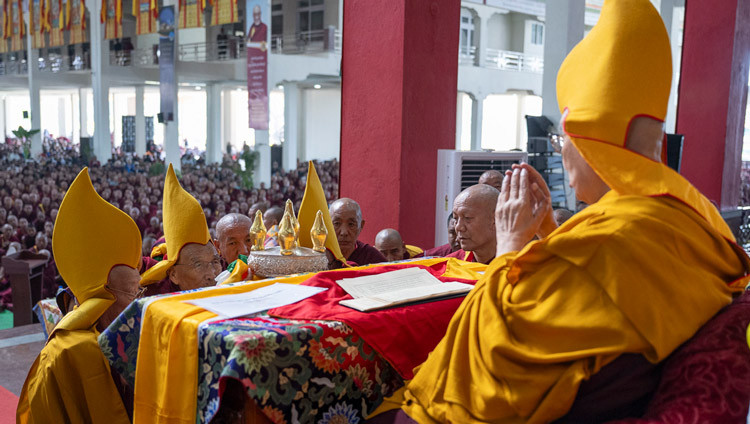
Gaden Tripa Lobsang Dorje presenting traditional offerings to His Holiness the Dalai Lama during Ganden Ngamchö Celebrations at Drepung Monastery in Mundgod, Karnataka, India on December 14, 2025. Photo by Ven Zamling Norbu (Source: DalaiLama.com)

The ceremony unfolded with traditional rituals led by the Ganden Tripa, including the offering of a ceremonial khata, the recitation of Jé Tsongkhapa’s In Praise of Dependent Origination, and the Tsari Tsog Ganachakra offering according to the Sutra tradition. This was followed by the Thirty-Seven Heaped Mandala Offering presented by the Ganden Tripa, Jangtsé Chöjé and Sharpa Chöjé. Tea and ceremonial sweet rice were distributed to the vast assembly.

Explaining the significance of the award, Geshé Jangchub Sangyé, Abbot of Ganden Shartsé Monastery, stated that as His Holiness enters his 90th year, millions of devotees worldwide are observing the milestone with prayers and celebrations. The honour was also framed within what has been described as a “Year of Compassion,” marking the 66th anniversary of His Holiness’s Lharampa Geshé examination in Lhasa in 1959, the 51st anniversary of the formal presentation of his degree in 1974, and the 50th anniversary of the establishment of the Central Board Examination of Gelugpa Universities in India.

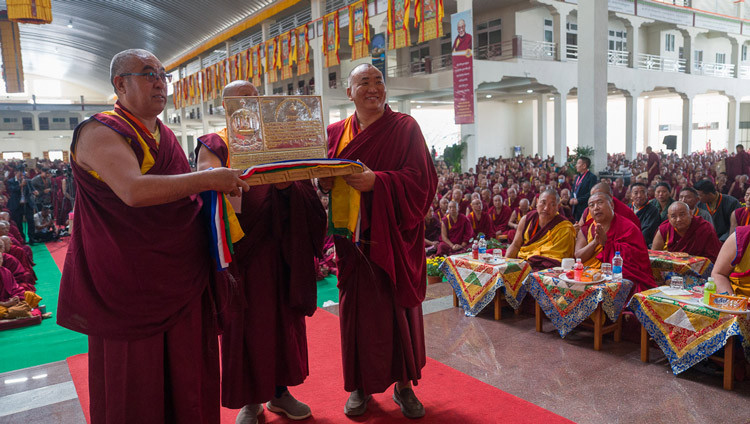
On this occasion, a newly crafted Lharampa Geshé Award, made of gold and silver on behalf of the Lhadhan Chötrul Monlam Chenmo Trust and the Gelugpa Buddhist Cultural Society, was formally presented to His Holiness in a gesture of deep gratitude and reverence.

Representatives from the Gelugpa Buddhist Cultural Society holding a commemorative award in honour of the 51st anniversary of His Holiness the Dalai Lama being formally awarded the degree of Geshé Lharampa during Ganden Ngamchö Celebrations at Drepung Monastery in Mundgod, Karnataka, India on December 14, 2025. Photo by Tenzin Choejor (Source: DalaiLama.com)

Addressing the gathering at Drepung Gomang Monastery, His Holiness reflected on the significance of the large monastic assembly in exile. “This place where our Tibetan settlements are located lies to the south-west of Tibet,” he said. “Today, members of the monastic communities have gathered here in a joyful and heartfelt manner. What does this signify? It shows that the vast and profound Buddhist teachings of the sutras and tantras – the immaculate doctrine upheld by great scholars like Nagarjuna – are being preserved by us Tibetans.”

A view of the Drepung Gomang Monastery debate ground during the Ganden Ngamchö Celebrations in Mundgod, Karnataka, India on December 14, 2025. Photo by Tenzin Choejor (Source: DalaiLama.com)

Despite the hardships endured in Tibet, His Holiness noted that devotion to religion and culture has remained resilient. “The essential point is that we Tibetans feel a deep sense of responsibility for the teachings of the Land of Snows,” he said, adding that respect for Tibetan Buddhism is steadily growing not only among Tibetans but also in China and around the world.

Highlighting contemporary relevance, His Holiness observed that while some may not approach Buddhism as a religion, there is strong interest in its methods of study, contemplation and inner development – particularly among younger generations. He also spoke of increasing dialogue with scientists, many of whom are drawn to Buddhist approaches for cultivating inner peace through a calm and disciplined mind.

Reflecting on the period following exile, His Holiness remarked that although the Dharma was nearly extinguished in Tibet, those who escaped worked tirelessly to preserve it. Today, he said, the Buddhist view, meditation and ethical conduct continue to attract global attention, demonstrating the enduring value of the Buddha’s teachings rooted in the three higher trainings.

The Ganden Ngamchö ceremony concluded with the recitation of traditional prayers, including praises to Jé Tsongkhapa and long-life prayers for His Holiness, followed by the Mig-tse-ma prayer. Carrying incense and khatas, senior lamas and abbots led a solemn procession escorting His Holiness to his private quarters.

His Holiness arrived at Drepung Monastery on 12 December after travelling from Dharamsala via Delhi to Karnataka, where he was accorded a warm reception by senior monastic leaders, civil authorities and thousands of devotees lining the roads to Mundgod.

The observance of Ganden Ngamchö at Drepung once again affirmed the enduring vitality of the Gelug tradition and His Holiness the Dalai Lama’s pivotal role in safeguarding, revitalising and sharing the Buddha’s teachings for the benefit of humanity.

The Tibetan spiritual leader went into exile in March 1959 and has since made India his home where he set up Tibet’s government-in-exile, officially known as the Central Tibetan Administration. Following the entry of the People’s Liberation Army into Tibet in 1950, His Holiness spent nearly nine years seeking a peaceful and constructive relationship with the Chinese central leadership in Beijing. Those efforts came to an abrupt end during the Tibetan national uprising, when heavy military force was used in Lhasa and tens of thousands of Tibetans gathered in a final attempt to protect their spiritual leader. As artillery fire struck the capital, His Holiness was compelled to flee Lhasa to ensure his own safety and to avert further bloodshed, beginning a life in exile dedicated to the preservation of Tibetan culture, religion and identity.

Further information available from:

Office of His Holiness the Dalai Lama: www.DalaiLama.com

Drepung Gomang Monastery: www.DrepungGomang.org

Central Tibetan Administration: www.Tibet.net 

A Voice of Courage and Compassion: Anastasia Lin Highlights North America Rally for Tibet

Tsering Passang / 12 December 2025

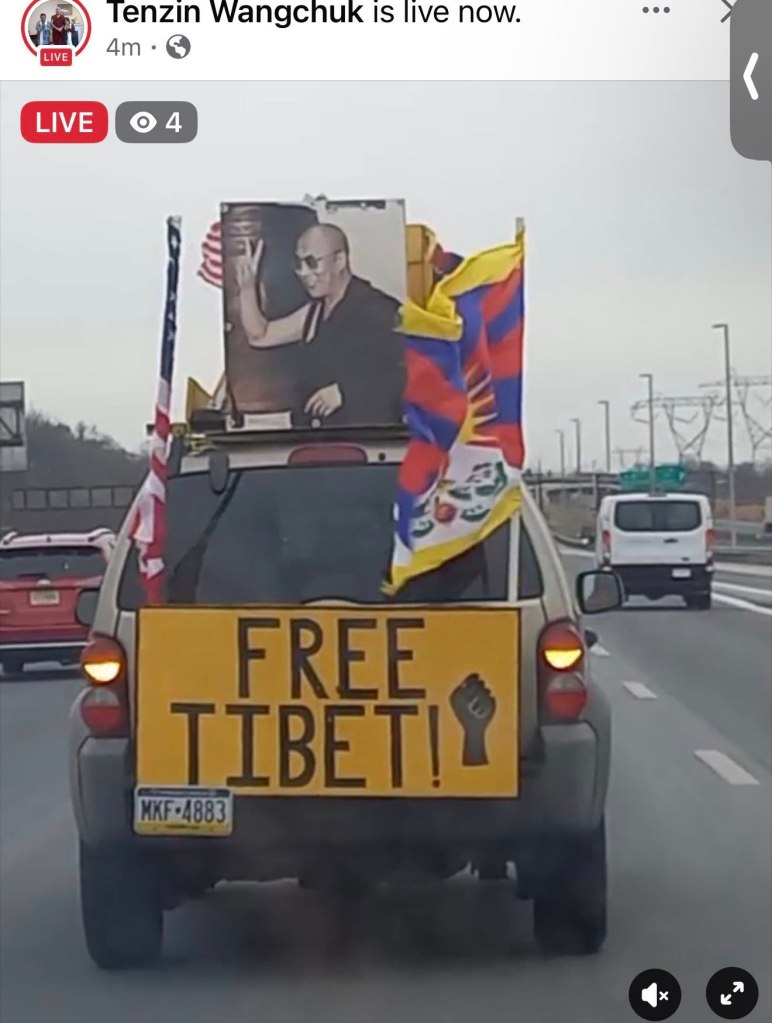
On Human Rights Day, the North America Rally for Tibet brought hundreds of supporters to the heart of the international stage – the United Nations Plaza – culminating in a daylong show of solidarity that began with a nearly 100-car convoy from Philadelphia. Organised by a coalition of Tibetan associations and advocacy groups, the rally aimed to spotlight ongoing concerns regarding China’s policies in Tibet and to amplify calls for freedom, dignity, justice, and human rights.

Screenshot

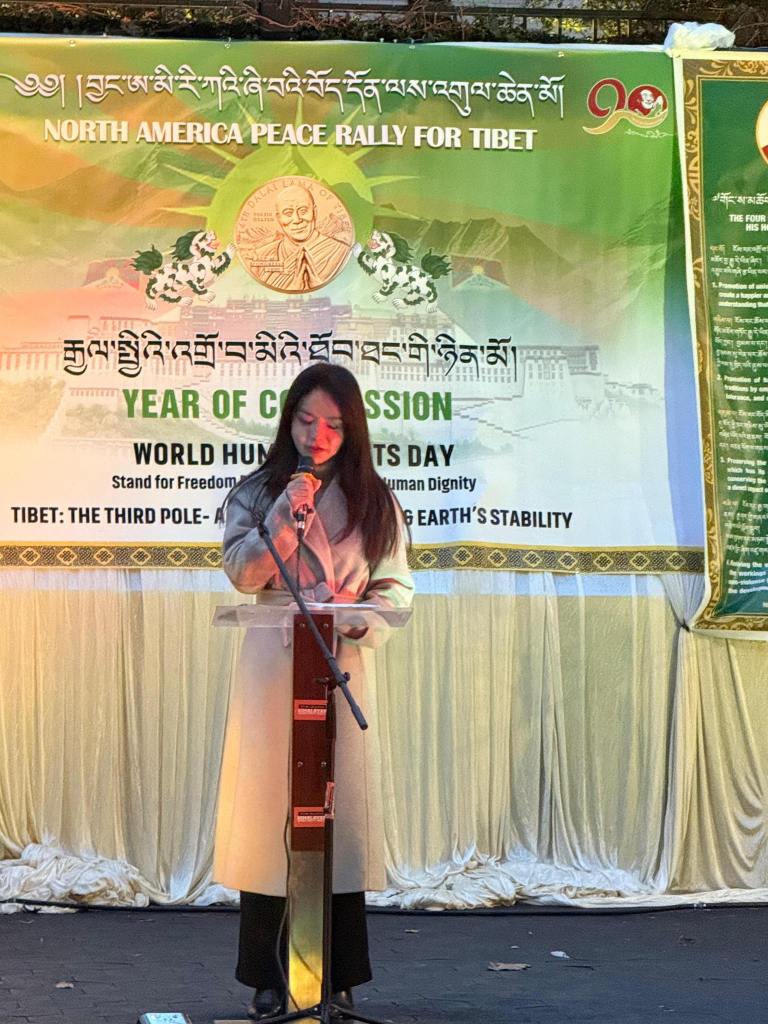
Among the many prominent speakers, one voice stood out with particular emotional force: Anastasia Lin, the Chinese-Canadian human rights advocate and former Miss World Canada, who delivered a profoundly personal and reflective speech that resonated across the diverse crowd.

An Intimate Reflection, A Universal Message

In her address, Lin – born and raised in mainland China – recounted the childhood dream that first drew her toward Tibet. She described imagining the region as a sanctuary of purity and spiritual depth, a place so peaceful and morally grounded that it inspired her youthful dream of becoming a Buddhist nun.

Her admiration for Tibet’s spiritual heritage was unmistakable. Lin spoke of Tibet not only as a cultural treasure but as a source of moral clarity for the world, a place where compassion, wisdom, and inner peace are not abstract ideals but lived traditions. Her message, rooted in sincerity and courage, touched on universal human aspirations – freedom, dignity, and the search for inner calm.

In a time of growing division, her speech served as a unifying force, encouraging the audience to look beyond politics and connect with Tibet’s story through shared human experience. Speaking with genuine emotion about beauty, suffering, and hope, Lin showed how heartfelt truth has the power to resonate widely and move people everywhere.

An Advocate Known for Her Courage

Lin’s presence carried added weight given her own history. After being crowned Miss World Canada 2015, she was barred from entering China for the global pageant, declared persona non grata by Chinese authorities due to her outspoken criticism of human rights violations. Her advocacy has since made her a globally recognised voice for those silenced or persecuted.

Her powerful speech at the rally continues that legacy.

Watch her full address here:

A Day of Solidarity From Philadelphia to the United Nations

This special rally began in Philadelphia with the Peace Rally in Honour of His Holiness the Dalai Lama at City Hall. The event featured warm welcome remarks from Tsering Jurme, President of the Tibetan Association of Philadelphia, followed by compelling speeches from Tibetan MP Tenzing Jigme, representatives from the offices of Sen. David McCormick, Governor Josh Shapiro, and Dickyi Topbhutsang of the Tibetan National Congress. Statements from Sen. John Fetterman and a citation from Mayor Cherelle Parker were also read.

From there, nearly 100 vehicles formed a spirited convoy to New York City, stopping at the Chinese Consulate before gathering at UN Plaza, where chants for peace and freedom were carried through the streets. Supporters, community members, and friends of Tibet from across North America joined in a unified call for justice and human rights.

The North America Rally for Tibet was jointly organised by:

Regional Tibetan Youth Congress (RTYC) of NYNJ, Regional Tibetan Women’s Association (RTWA) of NYNJ, Chushi Gangdruk NYNJ, Students for a Free Tibet NYNJ, US-Tibet Committee, and Tibetan National Congress (TNC) NYNJ.

Let the Message Carry Forward

Lin’s speech – alongside the contributions of many other leaders, activists, and community members – underscored the purpose of the day: to ensure Tibet’s struggle is neither forgotten nor misunderstood.

Let her message echo.
Let it open hearts.
Let it strengthen the global movement for justice and peace.

From Free Tibet to London: The Uncompromising Life of Riga Wangyal

Riga Wangyal (2 January 1946 – 10 December 2025)

Riga Wangyal after 10th December 2017 Human Rights Day Protest in London

Tsering Passang | 12 December 2025

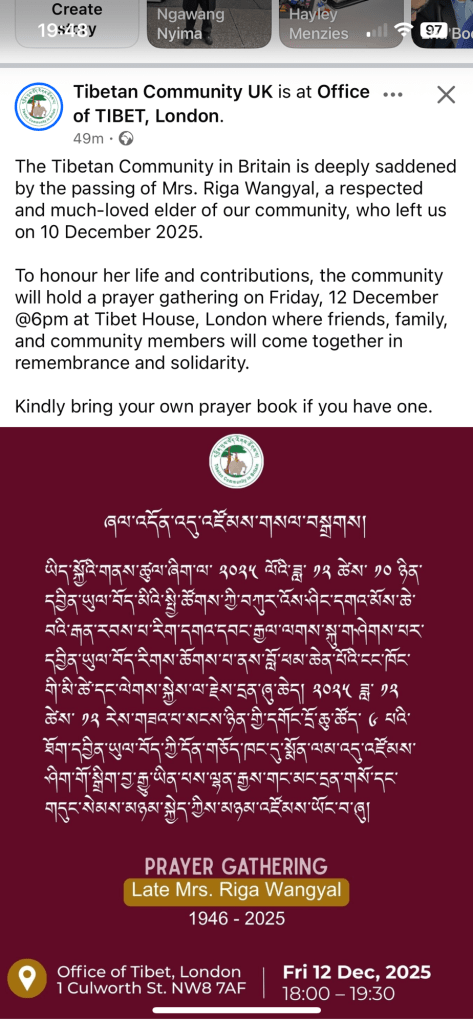
The Tibetan Community in Britain is mourning the loss of Mrs. Riga Wangyal la, a much-loved elder whose steady presence, conviction, and quiet strength shaped our community for decades. She passed away peacefully in a London hospital on 10 December 2025. Our thoughts are with her husband, Phuntsog Wangyal la, and with all her family members and relatives at this deeply difficult time.

Born in Tibet in 1946, Riga-la entered the world in a free Buddhist nation — before communist China’s invasion dramatically altered the course of Tibetan history. Though that early period was brief, it anchored her lifelong sense of identity and her unwavering commitment to Tibetan freedom.

Riga-la’s life was defined by service — to her profession, to her people, and to the Tibetan cause. After arriving in the UK and training as a nurse, she devoted her early career to caring for others, including during her years at Holloway Prison for Women, part of HM Prisons Service.

She also lived with a frankness and flair that made her unforgettable. Riga-la enjoyed her pints in local pubs, a cigarette in hand, always ready for lively — and often fierce — debates that stretched late into the evening. She was passionate and principled, especially when the conversation turned to Tibet. This was where her convictions burned brightest.

Her commitment to Tibet was lived, not merely expressed. Despite nearly six decades in the UK, Riga-la never accepted British citizenship. Her refusal was both a personal and political stand for Rangzen — full Tibetan independence from China. For her, identity and principle were inseparable, and she upheld that belief with clarity and courage.

Her devotion to community life was equally deep. Riga-la established and managed the Tibet Shop in London, next to the Tibet Foundation office — a cultural anchor, a gathering place, and a practical resource for Tibetans and friends of Tibet. She later joined the Tibet Foundation itself, serving with characteristic diligence until its closure in 2021. Whether managing the shop or supporting educational and cultural programmes, she brought sincerity, integrity, and an unrelenting sense of purpose.

Her compassion extended far beyond Britain. For several decades, Riga-la supported the education of Tibetan refugee children in Nepal, sponsoring more than a dozen students through funds she raised as part of the Tibetan Women’s Association’s educational scheme. Many of those young people grew into adulthood with opportunities made possible by her quiet generosity and steadfast commitment.

She was also a pioneering force in Tibetan women’s organising in Britain. At the request of Kasur Rinchen Khandro-la, then President of the Central Tibetan Women’s Association(TWA) in Dharamsala, she helped establish the UK chapter of the Tibetan Women’s Association in the mid-1980s. Each year on 12 March, she led commemorations of the Tibetan Women’s Uprising, ensuring that the courage and sacrifices of Tibetan women were honoured on British soil.

Her vision extended to the next generation as well. Soon after founding the UK chapter of TWA, she co-founded the first Tibetan language class for children in London, creating a vital space for young Tibetans to stay rooted in their language, identity, and heritage.

For those of us who knew her as a colleague, friend, or fellow Tibetan, Riga-la was known for her humility, directness, and steadfast dedication. She could be fiery in debate, generous in friendship, and unwavering in principle. Her absence will be felt deeply, but her legacy — woven through decades of service, conviction, and community — endures.

Later this evening, the Tibetan community in London will convene a prayer meeting in her memory.

A formal memorial service will be held at a later date.

Tim Boyle’s Flat-Earth Challenge Creates an Unexpected Opportunity to Amplify Tibet’s Untold Story

Inspired by Brainy Monkey’s reporting on Columbia Sportswear’s bold new “flat Earth” challenge, Tsering Passang explores how Tim Boyle’s headline-grabbing dare offers an unexpected opportunity to shine a brighter light on Tibet. What begins as a playful marketing stunt becomes, in this reflection, a doorway to a far more urgent story – the story of a people, a culture, and a homeland whose truths still struggle to be seen, told, and heard on the world stage.

Every now and then, a news story pops up that is amusing on the surface but revealing at a deeper level.

Recently, Tim Boyle, the billionaire CEO of Columbia Sportswear, made headlines by offering his entire three-billion-dollar company to anyone who can prove the Earth is flat. His challenge – Expedition Impossible – invites believers to find the “edge of the planet” and bring back photographic proof. It’s all part of a daring marketing campaign, but the idea has caught global attention.

For Tibetans, though, the joke is an old one.

For thousands of years, Tibetans living on the Roof of the World have laughed about how everything below them looks flat. At over 4,000 meters above sea level – where horizons stretch endlessly and clouds drift beneath your feet – the world really does appear that way. And yet, Tibetans, like the rest of humanity, long ago accepted the scientific truth: the Earth is round, no matter how flat it may look from high above the plateau.

So if any modern flat-Earther decides to chase Boyle’s mega-prize, let me offer one piece of friendly advice:

Pack a very warm Columbia jacket before heading to the Tibetan plateau. You’ll need it.

But before you begin your “expedition,” I have one important request:

If you travel to Tibet, please also tell the world what you see happening there.

Share not only the mountains and monasteries, but also the reality of life for the native Tibetans, who have lived on their land for millennia yet cannot freely speak, think, or practice their culture. Since 1950, Tibet has been under the rule of the CCP, and Tibetans continue to face severe restrictions on movement, language, belief, and expression.

Behind the grandeur of the Himalayas lies a quieter truth – one that struggles to reach global ears:

Tibetans are denied basic freedoms in their own homeland.

Their story is still not widely known.

And their voices must not be erased.

If the world has time and curiosity to entertain flat-Earth challenges, then surely it has the capacity – and responsibility – to listen to a people whose culture, identity, and dignity are at risk of being silenced.

This is why the Tibetan story must be seen, told, and heard – not only for Tibetans today, but for the future of a culture that has illuminated humanity for centuries with its wisdom, resilience, and profound spirituality.

Let us keep that story alive.
Let us keep Tibet visible.

Nobel Peace Prize Day – A Personal Reflection by Dr. Tsewang Ngodup*

In this reflective and deeply personal essay, Dr. Tsewang Ngodup explores the significance of Nobel Peace Prize Day through the lens of Tibet’s ongoing struggle and the universal quest for human dignity. Drawing on historical context, contemporary developments and his own lived experience as a Tibetan refugee, physician and community leader, Dr. Ngodup offers a powerful meditation on resilience, responsibility and hope. His narrative bridges the past and present, reminding readers that the pursuit of peace is not an abstract ideal but a daily act of courage — one shaped by memory, identity and an unwavering commitment to justice.

On December 10 2025, which is World Human Rights Day, Tibetans all over the world (except in Tibet) will celebrate the 36th anniversary of the Nobel Peace Prize being bestowed upon His Holiness the 14th Dalai Lama. On this day, His Holiness received the prestigious award in Oslo, Norway, and this catapulted Him on to the international stage. I reflected on the significance of this day. The world knows His Holiness as a global icon and messenger of world peace, mutual understanding, compassion and reconciliation. He is also the foremost relentless, enduring and persuasive advocate for Tibet and Tibetans. It has been over 75 years since Chairman Mao Zedong ordered the People’s Liberation Army to invade Tibet in October 1950. Despite all odds and general expectations, Tibetans have proven their resiliency by sustaining the struggle against a formidable opponent for so long while simultaneously transforming into a vibrant diaspora. As we rejoice the presence of His Holiness, celebrate His 90th year on this planet, and honor 2025 as the year of compassion, this day also stands as a solemn moment for Tibetans to renew our commitment to carrying on this David and Goliath story to its natural conclusion.

Dr. Tsewang Ngodup giving address at Tibetan American Foundation of Minnesota (Photo: Thor S. Anderson)

His Holiness put forward his thoughts and approach to world peace in an essay written in 1984 titled, A Human Approach to World Peace. I found the suggestions simple, yet radical and pragmatic. Some may contend that they are too idealistic and naive. Nevertheless, no one would argue, just as the title suggests, this is how humans should ideally approach any conflict or issue. In a nutshell, His Holiness calls for: a balance between material development and human values; a more compassionate, equitable society; every religion and its followers taking an active role in contributing towards world peace; and a collective awareness of the universal responsibility in promoting world peace. 

For Tibetans all over, the Nobel Peace Prize was a huge boost to their morale and an impetus to continue their effort in preserving and passing on their rich cultural heritage, and the non-violent struggle to restore the birthright of brethren living in Tibet to a life of dignity and freedom. Tibetans had hoped that this award would, somehow, be a catalyst for a resolution to the Tibet-China dispute. Since then, the global optimism for, in Bernard Bailyn’s term, “contagion of liberty”, has been replaced with democratic recession. 

Unfortunately, this decline is accelerating as evidenced by the recent rise of authoritarian regimes. We as Tibetan Buddhists, rather than becoming disheartened, should double down on our commitments, as we are a product of a tradition motivated by the philosophy of Impermanence and Compassion. To paraphrase His Holiness, no matter how dark and gloomy clouds may appear, the Sun will surely shine again.

His Holiness is one leader who walks the talk. I vividly remember, sometime in the early 1970s, reading a brief column in the Indian Express newspaper where His Holiness had expressed willingness to negotiate with the Chinese government as long as, “Tibetans inside Tibet were happy”. I was in middle school at the time and understood this to be an olive branch indicating the willingness to step down from seeking outright independence for Tibet. Of course, “happiness” can mean many things, and it is a loaded word. To me, happiness encompasses freedom, well-being and human flourishing. Subsequently, His Holiness delivered the famous Five-Point Peace Plan for Tibet when addressing the US Congress in 1987. The very next year, this was followed by the historic Strasbourg Proposal of 1988 when He spoke to the European Parliament in France. Neither of these documents mention independence. Rather, these serve as the framework (now popularly known as The Middle-Way Approach – དབུ་མའི་ལམ་ seeking genuine autonomy) for mutual understanding, consideration and respect in finding a compassionate, peaceful and lasting win-win solution to the Tibet-China conflict. It was no surprise, yet still a disappointment to all Tibetans, when China rejected The Strasbourg Proposal. Today, despite nine rounds of talks between the Chinese and Tibetan representatives during His Eminence Professor Samdhong Rinpoche’s term (2001-2011) as the Kalon Tripa (elected Tibetan political leader), there has been no concrete progress. In fact, since 2010, the impasse continues.

It has been over 65 years since His Holiness, followed by about 80,000 Tibetans, had to leave Tibet in 1959. Generations in Tibet have been born and grew up without ever having seen His Holiness. While celebrating His Holiness’s 90 glorious years, the million dollar question for those who care for Tibet is what happens to Tibet’s cause after Him. However, the faith young Tibetans in Tibet have in Him is quite remarkable. Take the case of Namkyi, who was born in 2000 in a village in north-eastern Tibet, and who, along with her sister, protested the repressive Chinese communist regime by carrying a portrait of the 14th Dalai Lama calling for His return to Tibet, and freedom for Tibetans. She did it being fully aware of the dire consequences and was imprisoned for three years. This is the manifestation of her faith in His Holiness. She and her family were not struggling for their livelihood. In October this year, Namkyi was in the Twin Cities to speak to Minnesotan Tibetans. She was dressed in traditional chupa, dignified, gentle, with a ready smile. Her large round glowing eyes instantly widened and lit up when interacting with another person. Her thoughts and speech were so moving and inspiring that tears flowed freely from those young and old listening to her. She did not mince her words when referring to His Holiness as a precious jewel and an unmatched leader while imploring the audience to remain united in following the path shown by Him in the common struggle. Her tender outside belies her grit and indomitable spirit. Namkyi went on to reminisce how, even in prison, Tibetans were discriminated against by the Han prison staff. Yet, as a true Buddhist practitioner and a follower of the Dalai Lama’s teachings, there was no hatred in her speech. She even recalled how one Han prison staff was particularly abusive to her. When she had had enough, all that Namkyi did was give this person a “dirty look” – no harsh words, no raising her voice, or spitting at the woman. She was tortured on a regular basis, made to undergo “reeducation”, coerced to express remorse for her actions and confess that she was influenced by external forces. When that did not work, a carrot was offered in the form of a proposal for her confessing to a misdemeanor to have her sentence reduced. Even as a teenager, she had the moral clarity and courage to refuse the enticement despite the deplorable prison conditions. Namkyi is proof that Tibetan intergenerational memory will carry on. She is a model, both of and for, the new Tibetan generations. Their allegiance to the institution of the Dalai Lama will not wane; the message and legacy of this Great 14th Dalai Lama will remain a potent force for generations to come.

When we gather this December 10th, let it not be just another ritualistic celebration. Along with the fun and frolicking, each one of us should reflect and resolve to completely embrace and embody our shared Tibetan identity. The need for such an action has never been this urgent. Together, we can continue the struggle, regardless of how long it takes. We may, and should, have diverse viewpoints or even disagree on the short-term tactics and/or long-term strategy; ultimately, we need to be on the same wavelength sharing our core values and one guiding “North Star” – happiness for everyone. Words and consciousness of His Holiness the Great 14th Dalai Lama will continue to reverberate from the ranges of Dauladhar far and wide, and even ricochet to the Great Walls of China. A day will come when there will be resonance in the echoes coming from Dharamshala and the mountains surrounding Tibet, strong enough to open the multitude of doors and windows adorning the Potala palace. It will usher in a breath of fresh air, light of equitable freedom and warmth of compassion for every being in Tibet, China and beyond. Until then, let us keep the steady flame for justice burning, while advancing in unison, bonded by the collective destiny as Tibetans and global citizens with universal responsibilities. Let this be a day to reaffirm our commitment, focus our attention, and come together as one people.

Dr. Tsewang Ngodup receiving holy blessings from His Holiness the Dalai Lama, 2015
(Photo: Thor S. Anderson)
Dr. Tsewang Ngodup* – physician, community leader and refugee advocate

Dr. Tsewang Ngodup is a family-medicine physician based in Minneapolis, Minnesota, with a career spanning several decades. He trained at Government Medical College in Amritsar, India, and completed his residency at Hennepin Healthcare in Minnesota.

Born into a Tibetan refugee family that fled their homeland in 1959 and resettled in India, Dr. Ngodup spent his early life there before migrating to the United States in 1997 to further his medical training; his family joined him a few years later.
Beyond his medical career, Dr. Ngodup has been deeply engaged in supporting the Tibetan diaspora. He has served as president of the Tibetan American Foundation of Minnesota (TAFM), leading cultural-preservation initiatives, community outreach and support for newly resettled Tibetans.

In recognition of his service — both as a physician caring for underserved communities and as a civic leader — he received the Civic Leadership Award from the Minnesota Department of Human Services under its Outstanding Refugees program.

His life and work trace a remarkable journey from refugee beginnings to community-builder and healer, blending medical service with cultural advocacy and a lifelong commitment to education, self-reliance and service.

Useful Links

Central Tibetan Administrationwww.tibet.net

Office of His Holiness the Dalai Lamawww.dalailama.com

Tibetan American Foundation of Minnesota (TAFM)www.tafm.org

[Book Review] The Robe and the Sword: How Buddhist Extremism Is Shaping Modern Asia by Sonia Faleiro

A Book Review Submitted by an Anonymous Contributor to Tsamtruk.com.

Two Buddhisms: How Faleiro’s New Book Separates Aggressors from the Oppressed

In the collective imagination of the West, Buddhism is frequently reduced to a monolith of serenity – a philosophy of meditation and the gentle visage of the Dalai Lama. However, in her incisive new book, The Robe and the Sword: How Buddhist Extremism Is Shaping Modern Asia, journalist Sonia Faleiro shatters this “Shangri-La” myth to reveal a darker, more complex geopolitical reality. What makes this work essential, and what defenders of the Tibetan cause should understand, is that Faleiro does not conflate the aggressors with the oppressed; rather, she draws a sharp, necessary distinction between violent nationalist monks in Sri Lanka and Myanmar, and the non-violent resistance of exiled Tibetans facing a different crisis entirely: the world’s silence.

When Media Frames Obscure Intent

The publication of an edited excerpt in The Guardian in November 2025 sparked significant debate about how the book has been packaged in the press. Following the article’s release, several observers voiced concern that using an image of the Dalai Lama to illustrate a headline about “Buddhist extremism” was misleading, given his Nobel Peace Prize status and lifelong commitment to non-violence. Other critics expressed alarm that highlighting extreme cases in Sri Lanka and Myanmar risks stereotyping the entire faith, while the non-violent struggle of Tibetans remains met with global indifference. These objections point to a real problem in media representation, but they do not reflect Faleiro’s main argument. A full reading of the text reveals her careful architecture: the Tibetan material functions not as a sidenote, but as a moral counterweight to the violence erupting elsewhere in the Buddhist world.

 The Sword: Majoritarianism and Its Victims

The “Sword” in Faleiro’s title refers primarily to the rise of violent nationalism in nations where Buddhism is the majority faith. The book provides forensic detail on Sri Lanka, where the constitution grants Buddhism the “foremost place”, and where the Sinhalese majority, approximately 75 percent of the population, has been weaponised by groups such as the Bodu Bala Sena (BBS). Tamil Hindus comprise 12.6 percent of the population, Muslims 9.7 percent, and Christians 7.4 percent. 

Faleiro catalogues the devastating impact of this radicalisation through on-the-ground reporting and interviews with survivors. In the 2018 Digana riots alone, a spasm of mob violence that Faleiro recounts with meticulous detail, over 300 homes were destroyed, more than 200 shops were looted, 20 mosques were desecrated, and a young Muslim man, Abdul Basith, a journalist, was burned alive as police stood idle. These are not abstract statistics in Faleiro’s hands; they are the material consequences of theological narratives weaponised for political gain.

Similarly, in Myanmar, Faleiro documents how monks like Ashin Wirathu have incited genocide against the Rohingya. She traces the genealogy of his 969 movement, which emerged in the early 2000s and gained massive momentum after his release from prison in 2012. Through interviews with Abbot Zero, a dissident monk who once followed Wirathu and now flees him, Faleiro reveals how nationalist Buddhist rhetoric creates a logic of existential threat that justifies mass violence. These cases serve as a stark rebuttal to the Western perception of Buddhism as a purely pacifist philosophy, and they document the role of colonial trauma, economic grievance, and state power in transforming religious identity into a tool of terror.

 The Robe: Tibet and the Crisis of Silence

Crucially, the narrative heart of the book beats in Dharamshala, India, where the Tibetan government-in-exile is based. Here, Faleiro offers a counter-narrative that validates the concerns of media critics while exposing a different tragedy altogether. For the Tibetan community, the crisis is defined not by the aggression of the monkhood, but by what Faleiro calls the “deafening silence” of the world in the face of China’s deep entrenchment and erasure.

Faleiro recounts her meeting with Lhakpa Tsering, a Tibetan refugee who set himself on fire outside a hotel in Mumbai in 2006 to protest the visit of Chinese President Hu Jintao. Now in his forties, married with children, and running a cafe in Dharamshala, Lhakpa has become a documentor of Tibetan refugee experience through theatre. Through him, the book explores the theological underpinning of Tibetan self-immolation via the Jakata tale of the Starving Tigress. In this parable, the Buddha, as a prince, encounters a tigress too weak to hunt and about to devour her own cubs. The prince leaps from a cliff, offering his body as a sacrifice: “I will kill my miserable body by casting it down into the precipice, and with my corpse I shall preserve the tigress from killing her young ones.” To sacrifice one’s body for the well-being of another, Lhakpa explains, “is the highest form of nonviolent action.”

This inclusion is vital. It distinguishes the self-sacrificial resistance of the Tibetan model from the violent aggression of the Sri Lankan model. Both claim to protect the Dharma, but one offers the self, while the other destroys the ‘other’. Yet Faleiro is careful to note a dangerous duality: this same narrative of sacrifice for the “greater good” has also been co-opted by violent monks in Sri Lanka to justify attacks on minorities as defensive acts. This juxtaposition forces readers to distinguish between sacrificial resistance of the oppressed and violent aggression of the oppressor, a distinction that much media coverage fails to maintain.

 Women’s Defiance and the Long Struggle

Faleiro also shines a light on the role of women in both resisting Chinese rule and rebuilding exile communities. In Tibet itself, nuns have been at the forefront of protests against Chinese occupation, facing imprisonment, disappearance, and death. In exile, however, women are reclaiming educational and institutional power. Faleiro profiles Tenzin Kunsel, a teacher at the Dolma Ling Nunnery who became the first nun in India to earn the Geshema degree, the equivalent of a PhD in Tibetan Buddhist Philosophy. This degree was only formally made available to women in 2012. Kunsel left Tibet because nuns in Lhasa are “not given an education” and are “only ever been taught prayers.” For women like Kunsel, education is not a luxury; it is defiance, and it represents the long-term capacity-building of the exile community. Faleiro also notes the “Kung Fu Nuns” of Nepal and the pan-Asian network of female Buddhist leaders challenging both patriarchy and authoritarianism, a trans-regional feminist Buddhism in which Tibet is a crucial node.

The Moral Crisis and the Danger of Silence

At the Library of Tibetan Works and Archives, Faleiro interviews the scholar Geshe Lhakdor, who offers a chilling paraphrase of Martin Luther King Jr.: “I don’t feel sad when bad people do bad things. I feel sad when good people don’t do anything.” Lhakdor identifies the “deafening silence of the majority” as the true danger facing Buddhism. This is the book’s core insight: that the crisis is not only one of violent extremists, but of institutional and international complicity through inaction.

Context and Consequence

Faleiro’s final reflections in Dharamshala point to a growing realisation within Buddhist communities that “merely refraining from harm is no longer enough.” The crisis we face demands what Tibetan activists and scholars have long advocated: an engaged Buddhism, one that responds to violence not only with contemplation, but with action. Yet for Tibet, this engagement faces a specific obstacle: the suffocation of religious life inside the country through shuttered monasteries, relentless surveillance, and the ban on images of the Dalai Lama. Faleiro notes the abduction of the Panchen Lama in 1995, the child recognised by the Dalai Lama as the rightful successor, and his replacement by a Beijing appointee. This move was pivotal in China’s strategy to control the reincarnation lineage and, by extension, the spiritual future of Tibetan Buddhism itself. Against this backdrop, the international silence is not neutral; it is a choice.

 Conclusion: A Call for Engaged Solidarity

The Robe and the Sword is not a blanket condemnation of Buddhism. Instead, it is a documentation of a moral crisis unfolding across Asia, with specific implications for different communities. The book illustrates that while the “Sword” is wielded by nationalists in the south, the “Robe” in Dharamshala faces the threat of irrelevance in a world moving on, indifferent to non-violent resistance.

Faleiro’s work validates the “engaged Buddhism” championed by Tibetan activists and supporters of other persecuted minorities. It demonstrates that solidarity with Myanmar, Sri Lanka, and other contexts is not only morally necessary but strategically important, because it is often easier to speak about Buddhist extremism in certain forums than about Chinese occupation of Tibet directly. Faleiro’s book gives language and framework for those linkages.

For advocates of Tibet, the message is clear: the silence in Dharamshala is not peace. It is a breathless wait for the world to speak up, to recognise that non-violence in the face of occupation is not weakness but a coherent political and spiritual choice. Faleiro reminds us that this choice demands reciprocal commitment from those beyond Tibet’s borders, in scholarship, journalism, advocacy, and policy. The task now is to ensure that Faleiro’s careful moral distinctions are not flattened by headlines, and that the Tibetan struggle remains visible within the larger story of Buddhism and resistance that she has so meticulously documented.

Milarepa (2025): Beautiful, Confusing, and Sometimes Just Baffling

A reflective Tibetan perspective on Louis Nero’s reimagining of Milarepa — a visually beautiful yet culturally unsettling film that blends creativity with controversy.

By Tsering Passang

Louis Nero’s Milarepa (2025) arrives as an ambitious, visually striking reimagining of one of Tibet’s most revered spiritual masters. Whenever someone outside our community interprets the life of Jetsun Milarepa, it naturally stirs mixed feelings – curiosity, hope, caution, and sometimes unease. After watching the film, I felt a bit of everything, though admittedly more of the latter.

Yet even before I reached the screening venue – the Italian Cultural Institute in London, something happened that set the tone for the entire viewing experience.

Image: https://altrofilm.com

Retelling Milarepa’s Life on the Way to Childcare

Driving my children to childcare, they asked where I was headed afterward. I told them I was attending a new screening of a film about Milarepa – a name that immediately animated them, as it often does. Like many Tibetan parents, I have narrated Milarepa’s story to them many times.

And so, navigating the London traffic, I told it again.

I spoke of Milarepa’s tragic childhood: how his family was left impoverished after his father’s death; how relatives seized the family’s inheritance; and how, in despair and bitterness, the young boy learned black magic to take revenge – only to recoil in horror at the destruction he caused.

Then came the heart of the story: his turning away from harm and destruction, his desperate search for the teacher Marpa Lotsawa, the severe trials imposed on him, and the years of solitary meditation in Himalayan caves that culminated in enlightenment. It is a story of profound moral transformation – one that resonates across generations.

My children listened, interjected at times, and finally asked, “So is the film the same story?”

At the time, I believed so.

Little did I know how much had been changed.

Milarepa as a Girl: A Creative Leap or a Cultural Misstep?

The film’s first major surprise is the portrayal of Milarepa as a female protagonist named “Mila” (pronounced “Meila”).

This is not a creative casting choice – it is a full rewriting of the character’s identity.

For Tibetans, this choice is deeply disorienting. Milarepa’s journey as a young boy – and later, as a renunciant who transforms immense suffering into spiritual awakening – is central to Tibetan cultural memory. Altering his gender shifts the narrative’s emotional architecture and distances the film from the historical and spiritual foundation of the story.

I asked director Louis Nero during the Q&A, and later again in conversation, why he chose to depict Milarepa as a female protagonist. He replied that the decision was entirely intentional, the altered name deliberate, and that the film was meant as a creative reinterpretation rather than a faithful rendering of the historical figure.

Creative? Undoubtedly.

Necessary? Much harder to argue.

Without a strong cultural or spiritual rationale, the shift feels unanchored – designed more for Western audiences than for those who hold Milarepa’s legacy close.

About That Sex Scene… Why? Truly, Why?

The most jarring moment in the film is a brief sexual encounter involving the protagonist. It contributes almost nothing to the development of the story, yet immediately restricts who can comfortably watch the film.

When questioned about it, the director suggested that it was not a “sex scene” per se, but an acknowledgment of sexual behaviour within monastic communities.

Regardless of intention, it felt unnecessary. It neither deepens the character’s spiritual arc nor strengthens the narrative. Instead, it introduces an awkward dissonance – especially for Tibetan families.

I had planned to take my 12-year-old daughter – because truly, with a film about Milarepa, what could go wrong?

Thankfully, I reconsidered. As it happened, my daughter didn’t feel like going either.

Milarepa’s authentic life story is the one Tibetan parents proudly pass down precisely because it embodies ethical clarity and spiritual transformation. The inclusion of a sexual moment adds nothing to this message and feels more like an insertion for dramatic tension than narrative purpose.

A Milarepa Film Without Tibetans – Not Even One

Another glaring issue is the complete absence of Tibetan representation. With a production budget of approximately €3 million, the film did not cast a single ethnic Tibetan.

Not one.

Although filmmaking should not be restricted solely by ethnicity, crafting a cinematic interpretation of Tibet’s most beloved saint – without Tibetan actors, Tibetan landscapes, Tibetan attire, or Tibetan cultural presence – is a decision that cannot be overlooked.

Filmed in Sardinia, the landscapes bear no resemblance to the Himalayas. Some of the monastic robes resemble styles associated with the Friends of the Western Buddhist Order (FWBO) rather than Tibetan monastic dress. The director later acknowledged his admiration for Sangharakshita (born Dennis Lingwood), FWBO’s founder, which clarifies the influence – but also distances the film even further from Tibetan roots.

When reimagining Milarepa’s story, maintaining at least some recognisably Tibetan elements would help anchor the narrative.

Where the Film Truly Shines

Despite its cultural and narrative departures, Milarepa does excel in several areas:

Outstanding Performances

This must be acknowledged clearly.

  • Isabelle Allen, as Mila, delivers an emotionally rich, introspective performance with remarkable sincerity.
  • Harvey Keitel and F. Murray Abraham bring depth and gravitas, grounding the story with their veteran presence.

These performances are among the film’s strongest assets, and credit is due to all three for elevating the material.

Visual Mastery

  • The cinematography is undeniably beautiful. Sardinia’s rugged landscapes, though not Tibetan, are captured with care and artistry.
  • Certain scenes showcase breathtaking compositions that make the film a pleasure to watch visually.

Production Ambition

The film’s stylistic blend – post-apocalyptic aesthetic, spiritual-fantasy atmosphere, and philosophical undertones – reflect Louis Nero’s distinctive creative vision.

If one looks closely, Milarepa’s silhouette is present – refracted through Nero’s unique, imaginative lens.

A Beautiful Film – But Not Our Milarepa

Here is my honest conclusion:

Milarepa (2025) is visually compelling, boldly imaginative, and strengthened by strong performances from its principal cast.

But culturally? Spiritually? Historically?

It drifts too far from the essence of Milarepa’s life.

When a revered Tibetan saint is reinvented as a girl, placed in a foreign landscape, dressed in non-Tibetan robes, surrounded by non-Tibetan symbolism, given an unnecessary sexual encounter, and portrayed entirely without Tibetan involvement – what remains is no longer Milarepa’s story.

What remains is a spiritual fantasy inspired loosely by his name.

Is it a bad film?
No.

Louis Nero with Tsering Passang

But is it meaningful for Tibetans hoping to see their heritage, spirituality, and cultural memory on screen? Unfortunately, no.

Milarepa’s authentic story teaches us to confront our shadows, transform anger into wisdom, and commit to profound inner practice. That message is timeless – and sacred.

Nero’s Milarepa is beautiful in many ways.

But Milarepa himself?
Only in name.

Film Details:

Title: Milarepa (2025)
Director: Louis Nero

Principal Cast:

  • Isabelle Allen
  • Harvey Keitel
  • F. Murray Abraham

Runtime: 100 minutes
Release Date: 19 June 2025 (Italy)

Production Companies:

  • L’Altrofilm (Main Producer)
  • Orwo Studios (Co-production)
  • Black Hangar Studios
  • Black Lab
  • Black VFX

Estimated Budget: €3,000,000
Worldwide Gross: $29,155

A FUTURE SHAPED BY COMPASSION – Reflections on “The Dalai Lama and the Future of Tibet: A Vision for Compassion and Resilience”

By GATPM | 20 November 2025

Hosted by The Buddhist Society in partnership with the Global Alliance for Tibet & Persecuted Minorities (GATPM)

An Evening of Insight, Reflection, and Resolve

More than 100 participants joined – both in person and online – on 19 November for an inspiring evening at The Buddhist Society, where Kasur Lobsang Nyandak, one of the most seasoned and respected Tibetan leaders of the past three decades, delivered a compelling address on the future of Tibet and the global significance of His Holiness the 14th Dalai Lama.

The Buddhist Society’s Chaplaincy opened the evening with a warm welcome and thoughtful introduction. Nyandak expressed deep appreciation for the Society’s “excellent and longstanding work” in supporting Tibet and upholding Buddhist values – setting the tone for a lecture rooted in gratitude, clarity, and shared moral purpose.

A former Minister in the Central Tibetan Administration and a prominent figure in Tibetan diplomacy, governance, and human rights advocacy, Nyandak drew upon decades of public service – from the Tibet Fund and the Tibetan Centre for Human Rights and Democracy (TCHRD) to his current role as Director of the Norbulingka Institute. His insights offered a rich, authoritative perspective on the crossroads Tibet faces today.

Kasur Lobsang Nyandak

The Fragility and Resilience of Tibetan Civilisation

At the centre of Nyandak’s remarks was a stark warning: Tibetan civilisation – celebrated for its scholarship, compassion, and spiritual depth – is under severe and escalating pressure.

He highlighted the rapid expansion of China’s colonial-style boarding schools across Tibet, where close to a million Tibetan children are separated from their families and immersed exclusively in Mandarin-language curricula. The closure of community-led private Tibetan schools has intensified this erasure.

This, he stressed, is not simply a matter of education policy: Language loss is the severing of a people from their history, their spirituality, and their capacity to imagine a collective future.

In contrast, he praised His Holiness the Dalai Lama’s far-sighted vision in the early years of exile to establish Tibetan schools across India. These institutions, he said, have served for generations as sanctuaries of language, culture, and identity – proof that compassionate leadership can sustain an uprooted nation.

Institutions That Safeguard Tibet’s Future

Nyandak identified two pillars essential to Tibet’s continuity:

  • The Dalai Lama Institution, carrying centuries of spiritual authority, moral leadership, and diplomatic wisdom.
  • The Central Tibetan Administration, the democratic government-in-exile entrusted with preserving Tibetan identity, rights, and aspirations.

Both, he argued, must remain strong, relevant, and protected for Tibetans and for the wider world, which increasingly looks to His Holiness for ethical guidance.

Nyandak reminded the audience that the Dalai Lama has long been recognised globally – not only as a religious leader but as a statesman. Historically, Dalai Lamas mediated between Tibetan, Chinese, and Mongolian realms. He referenced the 1942 letter from President Franklin D. Roosevelt to the young Dalai Lama as an early testament to Tibet’s international relevance.

Hope, Courage, and the Dalai Lama’s Enduring Vision

Nyandak distilled His Holiness’s mission into three enduring commitments:

  • to seek a peaceful resolution to Tibet’s political question,
  • to protect the unique Tibetan culture, and
  • to give hope to the Tibetan people.

The survival of Tibetan civilisation, he noted, depends on the generational protection of these values. Despite immense challenges – both inside Tibet and in exile – the Tibetan spirit continues to draw strength from them.

A Powerful Vote of Thanks: Compassion Translated into Action

Following the lecture, Tsering Passang, Founder-Chair of GATPM, offered a heartfelt Vote of Thanks. He described the evening as “a transmission of courage, clarity, and hope”, emphasising that the Year of Compassion (July 2025 – July 2026) is not merely commemorative but an urgent call to action.

He honoured The Buddhist Society’s historic solidarity with Tibet. In 1959, during Tibet’s greatest crisis, the Society offered its basement as the first office of the newly formed Tibet Society & Relief Fund – the world’s first Tibet support organisation.

“From the very beginning,” he said, “The Buddhist Society stood with Tibet.”

A Story of Compassion in Action

Passang then shared the personal story that shaped his own life. In 1996, he arrived in the UK on a scholarship supported by the Tibet Society & Relief Fund. That opportunity existed because an English Buddhist, Mr David Elsey, had witnessed a Chinese soldier point a gun at a monk inside Tibet’s holiest shrine, the Jokhang Temple – an experience that shook him to his core.

Determined to respond, Mr Elsey persuaded his Principal at Weston College, Mr Gary Williams, to establish two scholarships for Tibetan refugees, later expanded to four. Working with Mr Patrick Nash, Director of Tibet Society & Relief Fund of the UK, he also helped arrange accommodation for the students.

Passang reflected: “This story reveals a fundamental truth: Tibet’s struggle has been shaped not only by institutions, but by individuals – ordinary people who refuse to ignore injustice.”

Safeguarding Tibet’s History: The Bonhams Auction Rescue

Passang also recounted the GATPM’s recent success in securing the safe repatriation of two historically significant 1947 letters from His Holiness the Dalai Lama and the Regent of Tibet – now preserved at the Tibet Museum in Dharamsala.

These priceless documents surfaced at a Bonhams auction in London in June 2025. Addressed to Sir Basil Gould, the British Political Officer for Bhutan, Sikkim, and Tibet, they were at imminent risk of vanishing into private or inappropriate hands – potentially lost to the Tibetan people forever.

Recognising the urgency, GATPM undertook quiet but determined advocacy. Through careful communication, the Bonhams team and members of the Gould family were persuaded not only to withdraw the items from sale, but to gift them to the Tibetan community.

Passang emphasised that this outcome was far more than the preservation of historical documents: it was a victory for cultural and historical justice – clear proof that principled action, timely intervention, and respectful engagement can protect Tibet’s legacy even today.

A Call to Conscience

In closing, he reminded the audience of Tibetans in Tibet, who continue to practise their faith in secrecy under oppressive conditions. He urged all who enjoy freedom to use it with responsibility and courage: “Movements endure not through numbers alone, but through the dedication of those who remain committed.”

Audience Feedback: A Call to Action That Resonated

The emotional impact of the evening extended far beyond the room. One online attendee, J Young, later reflected: “Excellent talk tonight, Tsering. Your words at the end were outstanding – moving and an inspirational call to action. Especially your reminder that even the action of one person can make a difference, as sometimes it doesn’t feel that way. Thank you for organising this. The work you do is incredible – thank you for your deep commitment, advocacy, and action.”

This heartfelt response captured a sentiment shared widely: that compassion, when expressed through action, can change lives and shape history.

Carrying the Message Forward

The evening offered a powerful reminder that Tibet’s future is not an abstract ideal – it is shaped every day by the courage of individuals, the commitment of institutions, and the unwavering solidarity of supporters across the world.

As Nyandak underscored, Tibetan civilisation endures because people choose to act: to protect language, to defend rights, and to stand with a nation struggling to preserve its identity.

As Tibetans and friends observe the Year of Compassion, one message rises above all others: Compassion is not simply an emotion – it is a responsibility. And when translated into action, it becomes a transformative force capable of shaping history.

A Shared Commitment to the Future

The evening concluded with a renewed sense of unity and resolve. The Buddhist Society, GATPM, and all who participated left with a shared understanding: safeguarding Tibet’s future requires both collective effort and the steady, principled actions of individuals.

This gathering stood as a testament to partnership, perseverance, and the enduring belief that compassion, translated into action, remains one of humanity’s greatest strengths.

(Photos: Dawa, Karma and T Samphel)

Ten Years On: Speaking for Tibetan Refugees in Nepal at the United Nations in Geneva

A decade ago, on 4 November 2015, I had the privilege of addressing a packed room at the Palais des Nations in Geneva during Nepal’s Universal Periodic Review (UPR) at the United Nations.

Organised by the International Campaign for Tibet (ICT) and the International Federation for Human Rights (FIDH), the side event focused on one of the most vulnerable yet least visible communities in the Himalaya: the Tibetan refugees in Nepal.

Representing the Tibet Relief Fund of the UK, I endorsed the powerful joint ICT–FIDH submission and highlighted the daily hardships faced by over ten thousands Tibetans living in Nepal – many without legal identity, fearful of refoulement, and caught between Kathmandu’s growing deference to Beijing and its own historic humanitarian tradition.

Sharing the panel was the courageous Nepali human-rights defender Mandira Sharma, President of Advocacy Forum–Nepal, who dissected the human-rights shortcomings of Nepal’s brand-new 2015 Constitution, especially its failure to offer clear protection to long-term refugees. The session was expertly moderated by Vincent Metten, ICT’s EU Policy Director.

Ten years later, the issues we raised that day remain painfully relevant. Nepal still has not regularised the status of most Tibetan refugees born on its soil. Although the number of new arrivals from Tibet has dwindled in recent years, those who still attempt the perilous journey across the high passes continue to risk their lives — only to face the ever-present threat of forced return at the border.

Meanwhile, the once-vital “Gentleman’s Agreement” with UNHCR — for decades a quiet but critical lifeline ensuring safe passage — has been steadily eroded by mounting political pressure from Beijing.

Yet that Geneva gathering also proved something enduring: when committed organisations and individuals come together – Tibetan voices, Nepali advocates, and international solidarity partners – even the most marginalised community can be heard inside the highest halls of global diplomacy.

This post is published simply as a historical marker and a quiet thank-you to everyone who made that intervention possible ten years ago, and to those who continue the work today.

The struggle for dignity and safety for Tibetan refugees in Nepal is far from over – but neither is the compassion that keeps their story alive.

Tsering Passang, Founder-Char, Global Alliance for Tibet & Persecuted Minorities (17 November 2025)

Tibetan Refugees in Nepal: Concerns Raised at UN UPR Side Event in Geneva (2015)

On 4 November 2015, at a side event hosted by the International Campaign for Tibet (ICT) and the International Federation for Human Rights (FIDH) at the Palais des Nations in Geneva, Tsering Passang, representing the Tibet Relief Fund of the UK, delivered a statement in support of the joint ICT–FIDH submission on the situation of Tibetan refugees in Nepal.

Joining him on the panel was the distinguished Nepali legal scholar and human-rights defender Mandira Sharma, President of Advocacy Forum–Nepal, who spoke powerfully on the human-rights implications of Nepal’s newly promulgated 2015 Constitution, particularly its impact on refugee protection and citizenship rights.

The session was skilfully moderated by Vincent Metten, EU Policy Director of the International Campaign for Tibet.

The intervention highlighted the continuing vulnerability of the Tibetan refugee community in Nepal and urged the Government of Nepal to honour its international obligations and longstanding “Gentleman’s Agreement” with UNHCR, ensuring safe passage and protection for Tibetans fleeing persecution.

Tsering Passang’s deliberation:

  1. Situation of Tibetans in Nepal and Chinese Influence

Tibetan refugees in Nepal feel unprotected and insecure. They face an uncertain future and to an extent they feel hopelessness. Nepal is an independent country. It must allow all peoples, including the Tibetan refugees to exercise their basic rights to free speech, freedom to assembly as well as be able to display their faith and respect in their Spiritual Leader His Holiness the Dalai Lama in public spaces without any restrictions. Tibetans in Tibet are banned from such rightful activities by the Chinese authorities. Nepal must not bow down to pressure from China.

I was born and brought up in a Tibetan refugee camp in western Nepal; my father fled Tibet and my mother was born in Mustang, near the Nepal-Tibet border. I did my schooling in Nepal. So, I am very familiar with the whole situation of Tibetans in Nepal.

Today, I speak in front of you with my own personal experience as well as a development practitioner having conducted many field trips whilst working for British Tibet NGOs in India and Nepal. Whilst welcoming everyone here this afternoon I make a special note of strong interests from our Nepalese delegates, who are visible in this room. I hope we can learn from the deliberations during this year’s UPR on Nepal this week and urge all parties concerned to implement upon return home.

First, I would like to acknowledge and thank the Government of Nepal for providing shelter to the Tibetan refugees in Nepal since 1959. There are so many Nepalese government officials and human rights activists as well as individual sympathetic Nepalese friends, who are very supportive and understanding of the situation of Tibetan refugees in Nepal.

I shall begin by citing quotes by several Nepalese human rights activists. At a public forum titled “49 Years of Tibetan Refugees in Nepal” on 3rd August 2008 in Pokhara, which was organised by The Sambhad Nepal, Mr Achut Acharya of the National Human Rights Commission (NHRC) of Nepal, Regional Office in Pokhara, said, “We have not been able to treat the refugees equally. We don’t pay much attention to the Bhutanese refugees because Bhutan doesn’t have much influence on Nepalese politics. Tibetan refugees should be able to access the justice system of Nepal, if needed.”

At the same forum, Mr Sudip Pathak, President of Human Rights Organisation of Nepal (HURON), said, “Refugees in Nepal are not treated equally. The Tibetan refugees are arrested and handed back (to the Chinese authorities) but not the Bhutanese. The Government helped the Bhutanese refugees to travel to the United States of America but in the case of Tibetans, they haven’t done so.” This is in reference to the US Government’s offer to accept certain Tibetan refugees from Nepal to the US on a third-country resettlement programme but the Nepalese authorities refused to issue exit permits due to pressure from China.

With no proper documentation, Tibetan students wanting to pursue college/university education in India face hardships as they’re often required to produce necessary paperwork. Due to lack of documentation, they are either charged higher fees at ‘foreign student’s rate in dollars, which refugee parents find it impossible to support, or an option to get admission at lower ranked institutions despite their superb academic results.

Often, they face hardships when crossing the Indo-Nepal border due to lack of paperwork. In my own case back in December 1995, with my friends we experienced physical abuse at the hand of Nepal border security force. At least I could speak both the Nepalese and English but Tibetans coming from Tibet who can’t speak both the languages, experienced even more hardship. We have cases of Tibetan women being sexually abused including a nun who was raped by the Nepalese border security personnel.

  1. Impacts of Earthquake in Nepal for Tibetans

The earthquake in Nepal earlier this year resulted in a huge loss of lives of nearly 9000 Nepalese, thousands of casualties, homes and livelihoods.

Whilst the loss of Tibetan lives is very minimal at 16 compared to our Nepalese friends, the natural disaster has affected the refugee community. We are constantly in touch with our contacts in Nepal. In recent days and just this morning I was speaking to our contacts there.

What we have learned is that the school children were deeply affected. Psychological counselling, offered by UNHCR and various NGOs are proving to be very beneficial in addition to the necessity of urgent supplies of food, medicine and temporary shelter. Although some of these children are now slowly recovering, at the initial stage it was evident that their academic results suffered badly. Firstly, the schools in affected areas were closed for nearly two months and the whole country had to deal with the situation despite limited resources.

It is very encouraging that in the time of hardships, difficulties and sadness there are strong sense of solidarity whilst supporting each other. The Tibetan refugee community in Nepal received support mainly from Tibetans living abroad and their Central Tibetan Administration (CTA) in Dharamsala, northern India despite their limited resources.

Although there have been no restrictions as far as I am concerned, with the rebuilding of lives and communities bound to take time in the years ahead the Nepal authorities should continue to freely allow the flow of funds to reach the Tibetan earthquake victims in Nepal.

  1. Conclusion

There is a good contingent from Nepal to the UPR this week, led by His Excellency Kamal Thapa, Foreign Minister, who is also a Deputy Prime Minister. This is in addition to various Nepalese human rights organisations and rights activists, a very positive sign as well as it presents an opportunity for Nepal to shoulder its obligations under the international norms for its citizens and other nationals including the Tibetans in Nepal. We remain hopeful that His Excellency Kamal Thapa would be more open towards addressing the Tibetans’ plight in Nepal.

I commend this Joint Submission by the International Campaign for Tibet (ICT) and International Federation for Human Rights (FIDH) for the UN Universal Periodic Review (UPR) of Nepal for the Tibetan refugees in Nepal.

In this submission, I specifically call for rapid actions from concerned authorities on:

 Registration and legal status of Tibetans

  • Issue refugee identity certificates (RCs) to all eligible Tibetans and their children.
  • Ensure the renewal of RCs to all eligible Tibetans and their children.
  • Abolish restrictions on the rights of Tibetan residents in Nepal to work, establish businesses, travel and access education.
  • Enable children of refugees to acquire a nationality in accordance with Nepal’s obligations under the Convention on the Rights of the Child.

Freedom of Assembly and Expression

  • Protect the rights of everyone to freedom of assembly and expression, regardless of their citizenship, in accordance with international human rights law
  • ·Allow peaceful demonstrations and public gatherings of Tibetans#

Arbitrary arrest and detention

  • Refrain from arresting and detaining Tibetans for the sole reason of having exercised their rights to freedom of assembly and expression 
  • Religious and cultural rights
  • Ensure the rights of Tibetans in Nepal to practice and manifest their religion, and to participate in Tibetan cultural events

Thank you.

No More Appeasement: Why the UK Must Block China’s Mega-Embassy Now

Tsering Passang and Clara Cheung

11 November 2025 | First published in Tibetan Review

Ahead of a Nov 15 demonstration by critics of Beijing’s policies, actions, and rule in their repressed homelands, Tsering Passang* and Clara Cheung* contend that any final British government approval of China’s mega-embassy plan in Central London will not only erode British sovereignty and compromise national security, but also endanger the very communities who fled CCP repression for safety in the country.

The Chinese Communist Party (CCP) is not content with ruling within its own borders. It is exporting its authoritarian model into the heart of open democracies – Britain included.

The proposed conversion of the historic Royal Mint Court into Europe’s largest Chinese diplomatic compound is no ordinary embassy. It is a calculated strategic and intelligence hub designed to tighten Beijing’s grip on Britain’s political, economic, and social fabric.

This project threatens to erode British sovereignty, compromise national security, and endanger the very communities who fled CCP repression for safety on these shores.

Prime Minister Sir Keir Starmer and his government face a defining test. Will Labour defend Britain’s democratic principles and strategic independence – or repeat the pattern of moral and political capitulation that has too often characterised the West’s dealings with Beijing?

A Defiant Stand: The Voices of the Persecuted

On 15 November 2025, Hongkongers, Uyghurs, Tibetans, Chinese dissidents, Taiwanese communities, and British allies will unite in central London for their seventh protest against this mega-embassy plan.

This is not merely another demonstration – it is a call to conscience. For the exiled and persecuted, this project represents the physical embodiment of the regime they escaped. For Britain, it is a test of moral resolve and national sovereignty.

A Pattern of Capitulation: The 2008 Tibet Betrayal

The UK has faced such crossroads before – and chosen wrongly.

In October 2008, under Gordon Brown’s Labour government, then–Foreign Secretary David Miliband issued a Written Ministerial Statement that formally abandoned Britain’s historic position recognising China’s “special position” in Tibet under the notion of suzerainty.

Miliband declared: “Our recognition of China’s ‘special position’ in Tibet developed from the outdated concept of suzerainty. Some have used this to cast doubt on the aims we are pursuing and to claim that we are denying Chinese sovereignty over a large part of its own territory. We have made clear to the Chinese Government, and publicly, that we do not support Tibetan independence.”

He went further, calling Britain’s previous policy “an anachronism imported into the present,” and insisted that the UK did “not harbour continued designs to see the break-up of China.”

This was not a simple semantic shift. It marked a complete reversal of nearly a century of policy that had quietly acknowledged Tibet’s de facto autonomy. It was, in truth, a calculated gesture to curry favour with Beijing during the global financial crisis – a trade of moral principle for perceived economic gain.

Brown’s government sought China’s cooperation at the 2009 G20 Summit, which he hosted in London. Instead, Beijing pocketed the concession and offered nothing in return. The damage went far beyond diplomacy. It told Beijing that Britain’s moral stance was negotiable.

The CCP responded by tightening repression in Tibet and Xinjiang, and later by dismantling Hong Kong’s freedoms in open defiance of international law. That same arrogance was on display in Manchester, when Chinese consulate officials assaulted Hong Kong protesters on British soil – and then left the country without facing justice. The message was unmistakable: we can act with impunity, even here.

Britain’s Duty to Hong Kong: A Broken Promise

The 1984 Sino–British Joint Declaration is not a relic of history. It is a binding international treaty, lodged with the United Nations, guaranteeing Hong Kong’s autonomy, rule of law, and fundamental freedoms for 50 years after 1997.

Beijing’s imposition of the National Security Law in 2020 shredded that treaty, criminalising dissent and extinguishing what remained of Hong Kong’s liberty.

Britain responded honourably with the British National (Overseas) visa scheme, offering sanctuary to those escaping tyranny. More than 200,000 Hongkongers have rebuilt their lives here. Yet the construction of a vast CCP compound only miles from Parliament would place these same refugees under renewed threat – an insult to Britain’s duty of protection and to the integrity of the Joint Declaration itself.

To proceed with this embassy would not only betray the persecuted; it would betray Britain’s word as a treaty-bound democracy.

Why the Mega-Embassy Must Be Stopped: Five Clear Dangers

1. A National Security Nightmare

The Royal Mint Court sits atop vital infrastructure – including data and communication lines connecting Canary Wharf and the City of London, the financial heart of the UK. Allowing a CCP-controlled complex on this site would create an unprecedented security vulnerability. Such a facility could serve as a nerve centre for espionage, cyber operations, and data interception – enabling Beijing to penetrate Britain’s economic and governmental systems from within the capital itself.

2. A Proven Record of Espionage

MI5 has repeatedly warned that Chinese interference in the UK is “serious and growing.” Recent high-profile cases – including alleged CCP agents infiltrating Parliament and universities – underscore that warning. Granting Beijing its largest diplomatic site in Europe would not merely overlook this danger; it would legitimise and expand the very network of covert operations that British intelligence is striving to contain.

3. A Hub for Transnational Repression

The CCP’s United Front network has already been exposed for running covert “police stations” and intimidating exiles across Western democracies. A mega-embassy in London, protected by diplomatic immunity, would provide the regime with a legal shield for surveillance, intimidation, and psychological harassment of Tibetan, Uyghur, Hongkonger, and Chinese dissident communities. What should be a diplomatic mission risks becoming an operational base for transnational repression on British soil.

4. A Betrayal of Local Democracy and Heritage

The Grade II–listed Royal Mint Court, a cornerstone of Britain’s economic and architectural heritage, was twice rejected by Tower Hamlets Council for reasons of excessive scale, heritage impact, and national security risk. Those local decisions were later overturned, despite initial opposition from the Metropolitan Police. The reversal raises urgent questions about who influenced the outcome – and whether local democratic and security concerns were sidelined in favour of foreign pressure.

5. A Secretive Deal that Undermines Democracy

No independent security review or impact assessment has been made public. Yet diplomatic meetings between senior British and Chinese officials reportedly discussed the embassy project extensively. These talks were preceded by direct lobbying by President Xi Jinping during the G20 Summit in Brazil (November 2024), and further intensified following Chancellor Rachel Reeves’ visit to China in January 2025, where Beijing reportedly pressed hard for the project’s approval.

If true, this sequence suggests that political lobbying and backroom diplomacy have overshadowed due process. Such disregard for transparency and local governance mirrors the CCP’s own contempt for accountability and the rule of law. Allowing this project to proceed would repeat the 2008 Tibet mistake – surrendering principle and sovereignty for short-term political or economic convenience.

Britain cannot afford to make that error again.

Heed the Persecuted: A Warning for Every Briton

The CCP does not build embassies – it builds citadels of control. From Lhasa to Hong Kong, from Kashgar to Taipei, the pattern is consistent: infiltrate, dominate, silence.

Those who have lived under this regime recognise the signs. We are not alarmists; we are witnesses. When the CCP expands its presence, repression follows. What begins as surveillance of exiles soon becomes coercion of businesses, politicians, journalists, and ordinary citizens.

This is not a distant human-rights issue. It is a direct test of Britain’s sovereignty, democracy, and moral strength.

Break the 2008 Curse – Defend Britain’s Future

The CCP never honours agreements; it exploits weakness. Britain must learn from the 2008 Tibet betrayal, not repeat it.

By refusing permission for this mega-embassy, the government can reassert Britain’s independence, reaffirm its commitment to international law, and send a clear message: our democracy is not for sale.

Sir Keir Starmer now has the chance to draw a line and defend Britain’s moral and strategic interests. Appeasement is not diplomacy; it is surrender disguised as pragmatism.

Clara Cheung is former Hong Kong District Councillor. Tsering Passang is founder-chair of the Global Alliance for Tibet & Persecuted Minorities.

The Dalai Lama and the Future of Tibet: A Vision for Compassion and Resilience

A Special Lecture by Kasur Lobsang Nyandak, Former Minister of Tibet’s Government-in-Exile | The Buddhist Society | 19 November 2025 @6.30pm

Join us for an extraordinary evening with Kasur Lobsang Nyandak, a prominent Tibetan leader and former Minister of the Central Tibetan Administration, now serving as Executive Director of the Norbulingka Institute in Dharamsala, India. In this exclusive lecture, Kasur Nyandak will share profound insights into the Dalai Lama’s enduring legacy, the evolving political landscape, and the future of Tibet as the Tibetan diaspora celebrates 2025-2026 as the “Year of Compassion”, honouring the 90th birthday of His Holiness the Dalai Lama.

This event offers a rare opportunity for members and friends of The Buddhist Society to engage with a distinguished figure whose leadership has shaped the Tibetan cause. Kasur Nyandak’s unique perspective will illuminate the spiritual, cultural, and political dimensions of Tibet’s journey, inspiring hope and action for a compassionate future.

Proudly hosted by The Buddhist Society in partnership with the Global Alliance for Tibet & Persecuted Minorities (GATPM), this lecture promises to be a thought-provoking and inspiring exploration of Tibet’s path forward.

Don’t miss this chance to connect with a visionary leader and deepen your understanding of the Dalai Lama’s global impact and Tibet’s future.

About the Speaker:

Lobsang Nyandak is a distinguished Tibetan leader with a remarkable career spanning governance, diplomacy, and civil society. He served as the Representative of His Holiness the Dalai Lama to North America (2008–2013) and as Executive Director and later President of the Tibet Fund until 2023. A former Member of the Tibetan Parliament-in-Exile (1996–2001), he also held the position of Kalon (Minister) for Finance, Health, and Information & International Relations (DIIR) under Kalon Tripa Professor Samdhong Rinpoche’s administration. For over a decade, he contributed to the Sino-Tibetan Dialogue Task Force, including a significant secret visit to Beijing for talks with Chinese officials. In civil society, Nyandak’s leadership includes roles as General Secretary of the Tibetan Youth Congress, the largest Tibetan NGO worldwide, and Vice President and Secretary of the National Democratic Party of Tibet. As the founding Executive Director of the Tibetan Centre for Human Rights and Democracy, he has been a global advocate for the Tibetan cause, engaging with international leaders and conferences. A candidate for Sikyong (President) in the 2021 elections, Nyandak remains a pivotal voice in shaping the future of the Tibetan movement.

Link to The Buddhist Society

58 Eccleston Square, London, SW1V 1PH
Tel: 020 7834 5858
Email: info@thebuddhistsociety.org

[Defend Britain from Beijing’s Influence] JOIN the 7th United Protest: STOP the CCP’s Mega-Embassy at Royal Mint Court – A Direct Threat to UK National Security

The Global Alliance for Tibet & Persecuted Minorities (GATPM) is delighted to join this vital coalition once again and calls on every concerned individual, community, and ally to stand in solidarity. Your presence on 15 November 2025 is essential. This is our chance to expose the wrongs, amplify the voices of the oppressed, and apply sustained pressure on the UK government to permanently revoke permission for China to convert the historic Royal Mint Court into a CCP intelligence hub. The long-term consequences of inaction are severe: heightened surveillance risks, compromised national sovereignty, and the normalisation of authoritarian influence on British soil.

Event Details: Updated Route for 15 November 2025

Say NO to China’s Mega-Embassy in London!

Say NO to Secret Deals! Say YES to Freedom & National Security!

Date: Saturday, 15 November 2025

Time: 1:30 PM – 4:00 PM

TimeActivityLocation
1:30 PMGathering & March StartMonument to the Great Fire of London
2:45 PMShort Assembly & SpeechesRoyal Mint Court
3:15 PMHuman Chain for SolidarityAround Tower Bridge / Tower Hill

This is the seventh time Hongkongers, Uyghurs, Tibetans, Chinese dissidents, Taiwanese communities, and concerned British citizens have marched together. The threat has not diminished – it has intensified.

The Chinese Communist Party (CCP) seeks to transform Grade II-listed Royal Mint Court* – a symbol of British monetary heritage – into Europe’s largest diplomatic compound. Intelligence experts, former MI6 officials, and cross-party MPs have raised serious concerns:

We Say NO – Here’s Why:

  1. Critical National Infrastructure at Risk. 

The site is located directly above sub-surface data cables serving Canary Wharf and the City of London. A CCP-controlled facility here could enable interception of sensitive financial and government communications.

  1. Proven Espionage Threat
    • 2023–2024 Spy Cases: Two individuals charged with spying for China under the Official Secrets Act; one had access to Parliament. A separate case involved a suspected CCP “united front” operative with links to senior UK figures.
    • MI5 Alert (2022): The agency warned that CCP interference represents a “serious and growing” threat to UK democracy and economic security.
    • Hainan Xiandun Technology Case (2024): A CCP-linked firm was implicated in stealing UK aviation intellectual property – illustrating tactics that could be replicated from a fortified embassy.
  2. Surveillance & Intimidation Hub
    • Over 160,000 Hong Kongers have arrived in the UK under the BNO visa scheme since 2021.
    • Uyghur, Tibetan, Taiwanese, and Hong Kong diaspora communities report transnational harassment, including family threats in China and unofficial “overseas police stations” operated by CCP proxies.
    • A mega-embassy with expanded diplomatic immunity would intensify these activities.
  3. Heritage & Planning Betrayal
    • Royal Mint Court is a Grade II-listed historic site. 
    • Tower Hamlets Council rejected the plans twice on grounds of scale, heritage impact, and security.
    • The Secretary of State for Levelling Up overruled the council in December 2023 following a recovered appeal – no full public security assessment was published.
  4. Secret Deals Undermine Democracy
    • Reports suggest embassy approval could be linked to post-Brexit trade discussions.
    • No public impact assessment or independent security review has been released.

GATPM’s Call to Action

“The CCP does not build embassies – it builds fortified outposts. Royal Mint Court is not merely a building; it is a potential command centre for transnational repression. The Tibetan, Uyghur, Hong Kong, Chinese dissidents, and Taiwanese diasporas in the UK recognise this pattern: from Lhasa to Hong Kong to Taipei, the CCP uses ‘diplomacy’ as cover for control. We stand in unbreakable solidarity with our allies – because an attack on one persecuted community is an attack on all.”

— Global Alliance for Tibet & Persecuted Minorities (GATPM)

China: 90 NGOs, led by RSF, demand the release of Gui Minhai on the 10th anniversary of his kidnapping

15 October 2025 | RSF

A coalition of 90 press freedom and human rights NGOs, led by Reporters Without Borders (RSF), has called for the release of Swedish publisher Gui Minhai, founder of the Hong Kong-based publishing house Mighty Current, on the 10th anniversary of his kidnapping by Chinese agents in Thailand. The press freedom advocate has been forcibly disappeared by the regime, with no updates about his whereabouts for the past five years.

Joint Statement from Civil Society Groups on the Chinese Government’s Arbitrary Detention of Swedish publisher Gui Minhai

We, the undersigned press freedom, journalists’, human rights, international organisations, strongly condemn the Chinese government’s ongoing arbitrary detention of Swedish publisher and writer Gui Minhai on the 10th anniversary of his kidnapping.

On 17 October 2015, Gui Minhai, a founder of Hong Kong publishing house, was kidnapped by Chinese authorities in Thailand. In February 2020, he was sentenced to ten years in prison by the Ningbo Intermediate People’s Court on the alleged charge of “illegally providing intelligence to foreign countries,” which is regularly used to silence journalists and human rights defenders.

Details of his imprisonment have been kept hidden for the past five years. Gui Minhai has been denied access to his family and to consular support from the Swedish Embassy. His daughter has not been informed of his whereabouts since the date of the verdict. His current place of detention remains unknown, despite repeated requests by his daughter. The Government of the People’s Republic of China (PRC) has failed to clarify his whereabouts, further raising concerns about his physical and mental condition.

Since Mr. Gui’s conviction, Sweden has demanded the release of its citizen. However, Chinese authorities insisted that Mr. Gui had chosen not to appeal the sentence and that he had his Chinese citizenship reinstated at his own request. Under Swedish law, citizenship can only be renounced following an examination and a formal decision by the Swedish Migration Agency. The PRC’s coerced restoration of Mr. Gui’s Chinese nationality constitutes a violation of international law as well as Sweden’s sovereign rights. At the time of his arrest, Gui Minhai held only Swedish citizenship. In the past, Chinese officials have stated that foreign passports do not protect individuals who were born in the PRC, an interpretation that blatantly violates the Vienna Convention.

Mr. Gui was re-arrested while on his way to the Swedish Embassy in Beijing to be examined by a Swedish physician. He suffers from neurological symptoms that were not present before he was first taken into custody, after being rendered from Thailand to the PRC under unclear circumstances.

Throughout his detention, Gui Minhai has twice been subjected to televised forced confessions, further raising concerns about the legality of the proceedings against him. Chinese authorities are notorious for this practice, which undermines human dignity and violates the presumption of innocence that is supposedly guaranteed by the Chinese constitution.

The Gui Minhai case is emblematic of the Chinese regime’s campaign of repression against critical voices, as part of an escalating crackdown on the right to information since Chinese leader Xi Jinping came to power in 2012. China ranks 178th out of 180 in the 2025 Reporters without Borders (RSF)’s World Press Freedom Index, and is the world’s leading jailer of journalists and writers, according to data from RSF, and PEN America. It ranks ‘in crisis’ in ARTICLE 19’s Global Expression Report

Mr. Gui’s case is not an isolated one. Chinese authorities have systematically invoked “national security” as a pretext to prosecute human rights defenders, writers, publishers, and journalists—extending their reach beyond the PRC’s borders by launching police operations in neighboring countries—while the governments of third countries have bluntly allowed the repression of dissidents within their territories.

Domestically, restrictions on journalists and others who speak out against government abuses have tightened drastically, in direct contradiction of the right to freedom of expression and press guaranteed under Article 19 of the Universal Declaration of Human Rights and Article 35 of the Chinese Constitution.

Despite persistent calls from the international community for the immediate release of Gui Minhai, the Chinese government continues to ignore the urgency of the matter. This includes a November 2024 Communication from nine Special Procedures of the United Nations Human Rights Council concerning a recurring pattern of repression, including incommunicado detention and enforced disappearances, aimed at restricting the freedom of expression, which called for information on the fate and whereabouts of Gui Minhai, among others. His arbitrary detention makes a mockery of China’s international human rights obligations. Gui Minhai has committed no internationally recognized offence, yet has been subjected to harsh punishment solely for exercising his right to freedom of expression.

We urge the Chinese government to:

  • Immediately and unconditionally release Gui Minhai;
  • Guarantee Gui Minhai’s safety, psychological well-being, provide adequate and independent medical care, and share regular updates on his whereabouts and current place of detention;
  • Allow him unhindered access to contact with his daughter, Angela Gui, and other family members, including through video calls;
  • End the systemic crackdown on civil society, including harassment, arbitrary detention, enforced disappearances, and the targeting of publishers, journalists, writers, and human rights defenders.

We urge the Swedish government to:

  • Publicly and in bilateral meetings—including high-level meetings—call for the immediate release of Gui Minhai, in compliance with the Constitution of the People’s Republic of China, which prohibits unlawful detention and guarantees personal dignity;
  • Demand transparency regarding his whereabouts and ensure full access to consular support and regular consular visits;
  • Clearly communicate to Chinese authorities that continued unlawful and arbitrary detention of Gui Minhai will have serious political consequences for bilateral relations, and condition any economic collaboration on his release.

We urge the European External Action Service (EEAS), the European Commission, and the Member States to:

  • Urge the immediate and unconditional release of Gui Minhai, demand transparency on his whereabouts, and communicate that opposite actions will have serious political consequences for bilateral relations;
  • Advocate for the release of arbitrarily detained journalists, writers, and human rights defenders, including using high-level meetings to publicly call for the release of specific individuals by name;
  • Closely monitor the human rights situation in China, including through prison visits, trial monitoring, and regular public statements;
  • Condition international law enforcement interactions and rule of law cooperation with the Chinese government on the government’s dropping all charges and quashing all convictions against those wrongfully detained for peacefully exercising or advocating human rights, including press freedom and right to information;
  • Reminding China of its international obligations to respect press freedom and the right to information, as guaranteed by Article 19 of the Universal Declaration of Human Rights, which China has signed, and Article 35 of the Chinese Constitution;
  • Establish safe refuge alert systems to provide a direct and easy-to-use communication with the police or immigration officers for Chinese publishers, writers, journalists and human rights defenders who are under the threat of transnational repression. 

We urge Thai authorities to:

  • Clarify the circumstances surrounding the unlawful rendition of Gui Minhai from Thailand to the People’s Republic of China;
  • Immediately cease all actions that facilitate the repression and persecution of human rights defenders, journalists, and advocates of press freedom by the PRC within Thailand;
  • End the deportation of Chinese human rights defenders and journalists to China, in accordance with the principle of non-refoulement, to which Thailand is bound.

Signatories:

  1. ACAT-France
  2. AlterMidya
  3. Amnesty International Australia
  4. ARTICLE 19
  5. Asia Freedom Institute
  6. Association of Taiwan Journalists (ATJ)
  7. Aus-Hong Kong Connex Inc.
  8. Bay Area Friends of Tibet
  9. Cambodian Center for Independent Media (CCIM)
  10. CamboJA
  11. Campaign for Uyghurs
  12. Center for Uyghur Studies
  13. China Against the Death Penalty (CADP)
  14. China Aid Association (ChinaAid)
  15. China Rights in Action (CRA)
  16. Chinese Human Rights Defenders (CHRD)
  17. Comité de Apoyo al Tíbet (CAT), Spain
  18. Covenants Watch
  19. European Values Center for Security Policy Taiwan Office
  20. Fortify Rights
  21. Freedom House
  22. Freiheit für Hongkong e.V.
  23. Georgetown Center for Asian Law
  24. Gerakan Media Merdeka (GERAMM)
  25. Global Alliance for TIbet & Persecuted Minorities
  26. Globe International Center
  27. GreatFire
  28. Grupo de Apoio ao Tibete-Portugal
  29. Hong Kong Committee in Norway
  30. Hong Kong Democracy Council (HKDC)
  31. Hong Kong Media Overseas
  32. Hong Kong Outlanders in Taiwan
  33. Hong Kong Watch
  34. Hongkonger in Deutschland e. V.
  35. Hongkongers in Britain (HKB)
  36. Human Rights Foundation
  37. Human Rights in China
  38. Humanitarian China
  39. Independent Chinese PEN Center (ICPC)
  40. Index on Censorship
  41. International Federation for Human Rights (FIDH), within the framework of the Observatory for the Protection of Human Rights Defenders
  42. International Service for Human Rights (ISHR)
  43. Lady Liberty Hong Kong
  44. Legal Initiatives for Vietnam
  45. Media Diversity Institute
  46. National Union of Journalists of the Philippines (NUJP)
  47. New Bloom
  48. New Zealand Alliance for Victims of the Chinese Communist Regime
  49. Northern California Hong Kong Club
  50. Overseas Press Club of Cambodia (OPCC)
  51. Peace Catalyst International
  52. PEN America
  53. PEN International
  54. PEN Nederland
  55. Prachatai
  56. Reading UK Stands with Hong Kong
  57. Reporters Without Borders (RSF)
  58. Safeguard Defenders
  59. Santa Barbara Friends of Tibet
  60. Scottish Hongkongers
  61. Solidarité Chine
  62. Students for a Free Tibet
  63. Svensk Bokhandel
  64. Swedish Media Publishers’ Association
  65. Swedish PEN
  66. Taiwan Association for Human Rights
  67. Taiwan Economic Democracy Union
  68. The Asian Forum for Human Rights and Development (FORUM-ASIA)
  69. The Committee for Freedom in Hong Kong Foundation
  70. The Daphne Caruana Galizia Foundation
  71. The European Federation of Journalists (EFJ)
  72. The European Hong Kong Diaspora Alliance
  73. The Hong Kong Scots
  74. The International Federation of Journalists (IFJ)
  75. The Nest Center for Journalism Innovation and Development
  76. The Rights Practice
  77. The Swedish Publishers Association
  78. The Swedish Tibet Committee
  79. The Swedish Union of Journalists
  80. The Tibet Support Committee, Denmark
  81. Tibet Initiative Deutschland e. V.
  82. Tibet Solidarity
  83. Tibet Support Group Ireland
  84. US Hongkongers Club
  85. Uyghur Human Rights Project (UHRP)
  86. Uyghur PEN Centre
  87. Victims of Communism Memorial Foundation
  88. Victoria Hongkongers Association (Australia)
  89. World Organisation Against Torture (OMCT), within the framework of the Observatory for the Protection of Human Rights Defenders
  90. World Uyghur Congress

[Book Review] Illuminating Injustice: A Powerful Call to Action Through “The Message”

Tsering Passang

The Message, a profoundly moving and visually arresting cartoon-story book crafted by Voice of the Disappeared, stands as a powerful testament to the unyielding spirit of Tibetans living under the Chinese Communist Party’s (CCP) oppressive occupation since 1950. This concise yet deeply affecting work uses vivid illustrations and minimal text to weave a narrative that resonates with readers as young as 8, as well as adults. As a non-profit initiative, its mission is unequivocal: to illuminate the CCP’s systemic human rights abuses – not only against Tibetans but also Uyghurs, Southern Mongolians, Falun Gong practitioners, pro-democracy Chinese communities, and Hong Kong citizens – while galvanising global action to confront these injustices.

The book’s brilliance lies in its ability to distil the complexities of oppression into a universally accessible format. Its vibrant, emotive illustrations carry the weight of Tibet’s story, capturing the anguish of loss, the resilience of a persecuted people, and an enduring hope for freedom with extraordinary sensitivity. Available for free on YouTube and Instagram, the narrated YouTube version offers a seamless 7–8 minute journey through the book’s pages, with two-page spreads and optional audio narration that amplifies its emotional resonance. This digital accessibility ensures The Message reaches a global audience, transcending barriers of geography and language to foster empathy and solidarity.

More than a mere story, The Message is a rousing call to action. It implores readers to engage with and support communities enduring the CCP’s brutal regime. By sharing this book – whether through its free digital platforms or the limited printed copies, most of which are distributed at no cost – readers can amplify the voices of the oppressed and stand in solidarity with those fighting for justice. The book’s impact is further underscored by powerful endorsements from prominent figures, whose words lend urgency and weight to its message:

  • The Rt Hon. Sir Iain Duncan Smith MP, former leader of the Conservative Party and founder of the Centre for Social Justice, writes: “The story of Tibet is a deeply sad one. It is of Chinese Communist Party abuse, slavery and persecution of peaceful Tibetans. Yet the spirit of the Tibetan people has not been crushed, and hope and prayer survive. Hope that, one day, they will be free of this CCP yoke of oppression, able to live in harmony with their land.”
  • Benedict Rogers, human rights activist and author of The China Nexus: Thirty Years In and Around the Chinese Communist Party’s Tyranny, declares: “Tibet is one of the darkest corners of the world. His Holiness the Dalai Lama is one of the world’s brightest lights. It is time to stand up, speak up, and shine a light on the severe repression in Tibet. This book, this collection of stark images, does just that. Let’s unite to #FreeTibet.”
  • Simon Cheng, exiled Hong Kong pro-democracy activist and founder of Hongkongers in Britain, reflects: “Being hunted by secret police, under a one-million-dollar bounty, is a life-long honour. If the government deems the quest for democracy and freedom a crime, we embrace the charges to reveal the genuine face of social justice, unyielding to authority.”
  • Clara Cheung, artist-curator and former Hong Kong District Councillor, notes: “‘The Message’ shares more than just the story of Karma and Tenzin. It carries a profound hope for peace, justice and the enduring spirit of humanity; empowering all oppressed by the CCP. In solidarity, we will find the way out together.”
  • Sam Walton, former CEO of Free Tibet, praises: “A beautiful book with a powerful message. Carrot Cartoon’s direct and simple visual style conveys the emotions of horror, despair and hope.”
  • Tsering Passang, founder-chair of the Global Alliance for Tibet and Persecuted Minorities, emphasises: “This picture book unveils the brutal oppression of Tibet, East Turkestan, and other territories under China’s communist regime, where the CCP relentlessly silences voices and erases cultures. May these pages awaken your conscience and fuel urgent action to demand justice and defend the UN Declaration of Human Rights for Tibetans, Uyghurs, and all persecuted peoples enduring this tyranny.”

The Message is an indispensable tool for education and advocacy, compelling readers to confront uncomfortable truths and act. Its universal appeal and free accessibility make it an essential resource for schools, families, and activists. I wholeheartedly recommend The Message to anyone seeking to understand the human cost of the CCP’s actions and to join the global movement for justice. Share this book, engage with its message, and stand with Tibetans, Uyghurs, and all those fighting for freedom. Together, we can amplify the voices of the disappeared and challenge the yoke of oppression.

About Voice of the Disappeared

Voice of the Disappeared is an international collective of human rights advocates dedicated to exposing the systemic abuses perpetrated by the Chinese Communist Party (CCP) within the People’s Republic of China (PRC) and its occupied territories. Founded to give voice to those silenced by the CCP’s authoritarian rule, the organisation seeks to raise global awareness of the plight of Tibetans, Uyghurs, Southern Mongolians, Falun Gong practitioners, Hong Kong citizens, and pro-democracy Chinese communities.

The collective champions the principles of openness, truthfulness, and transparency – hallmarks of good governance that are starkly absent under the CCP’s regime. In a system where the separation of powers between government, legislature, judiciary, and media is nonexistent, the rights of ordinary citizens are routinely trampled. For too long, the democratic world has overlooked or downplayed the horrors emanating from the PRC, often granting undue leniency to the CCP’s actions. Voice of the Disappeared draws a stark parallel to George Orwell’s Nineteen Eighty-Four, not as fiction but as a chilling reflection of life under the CCP’s all-controlling dictatorship.

Since the rise of President Xi Jinping, the CCP’s global ambitions have become increasingly evident, building on a history of colonial expansion: Southern Mongolia in 1947, East Turkestan (Uyghur homeland) in 1949, Tibet in 1950, and vast maritime claims in the East and South China Seas in the 2010s. Taiwan remains a target, raising urgent questions about the CCP’s next moves. Despite signing the Universal Declaration of Human Rights, the CCP denies 28 of its 31 basic rights to Tibetans, with mainland Chinese citizens faring little better. Surveillance, fear, and the ever-present threat of being “disappeared” without trace define life under this regime, where the rule of law is subordinate to the whims of the Party.

Voice of the Disappeared seeks to hold the CCP accountable for its crimes against humanity, shining a light on the suffering of ordinary people in the PRC and its occupied territories. Through projects like The Message, the collective aims to awaken global consciences, foster solidarity, and demand justice for those enduring the CCP’s tyranny. By amplifying these voices, Voice of the Disappeared calls on the world to act, ensuring that the disappeared are neither forgotten nor silenced.

Urgent Call for Action from 52 Rights Groups on Systemic Abuses and Political Control in Hong Kong’s Prisons 

September 30, 2025 

The United Nations High Commissioner for Human Rights 

Office of the United Nations High Commissioner for Human Rights (OHCHR)
Palais des Nations
CH-1211 Geneva 10, Switzerland

Dear High Commissioner Volker Türk, 

As a coalition of 52 civil society organizations committed to human rights and the rule of law, we write collectively to urgently raise serious concerns regarding the systemic abuses occurring inside Hong Kong’s prisons, as detailed in the recent report by the Committee for Freedom in Hong Kong (CFHK) Foundation, “We Were Made to Suffer: Systemic Abuse and Political Control Inside Hong Kong’s Prisons” (September 2025). 

The report documents harrowing violations such as prolonged and punitive solitary confinement far beyond internationally accepted limits; arbitrary and excessive use of solitary confinement and isolation to punish political prisoners; systemic physical, sexual, and psychological abuse tolerated by prison officials; chronic medical neglect resulting in severe deterioration and preventable deaths; widespread degradation of prison infrastructure and hygiene; and weaponization of psychiatric detention against dissidents. More than 700 political prisoners, including prominent human rights defenders, journalists, and pro-democracy activists such as Jimmy Lai, Leung Kwok-hung, Chow Hang-tung, and Joshua Wong, remain subject to extended isolation, communication censorship, and forced indoctrination through state-run “deradicalization” programs as they languish in jail.

Some of these violations have been documented by the UN human rights mechanism, including the Working Group on Arbitrary Detention opinions on Jimmy Lai and Chow Hang-tung‘s detention. Multiple UN member states have raised concerns about Chow’s repeated solitary confinement in the UN Secretary-General’s 2025 report on reprisals

These conditions blatantly violate Hong Kong’s obligations under the International Covenant on Civil and Political Rights (ICCPR), the Convention Against Torture, the United Nations Standard Minimum Rules for the Treatment of Prisoners (“Mandela Rules”), and other binding international standards. They also constitute cruel, inhuman, and degrading treatment, and in many cases amount to torture. 

High Commissioner, we urge you to strengthen your Office’s monitoring of the human rights situation in Hong Kong and issue an independent report with findings and recommendations on Hong Kong prisons.  

In addition, we urge you to: 

  • Demand unrestrained, independent access to all Hong Kong prisons, including facilities holding political prisoners;
  • Call on the People’s Republic of China and the Hong Kong governments to immediately end all solitary confinement and isolation lasting longer than 15 days in accordance with the Mandela Rules; and
  • Condemn the systemic suppression of political dissent through imprisonment and reiterate calls for the release of all political prisoners and imprisoned human rights defenders and journalists.

We also appeal to all UN Member States to use diplomatic and economic leverage and support investigations into abuses to hold accountable those who authorize or facilitate them, including senior officials in the Correctional Services Department and the Committee for Safeguarding National Security. 

The ongoing violations inside Hong Kong’s prisons—which reflect patterns of abuse long inflicted on Chinese dissidents, Uyghurs, and Tibetans, as documented through the UN human rights mechanism—represent a profound affront to human dignity and international human rights law. We intend to submit cases to the special procedures through the mechanism and stand ready to provide further evidence and support for the international community’s efforts to ensure justice and humane treatment for all persons in custody in Hong Kong. 

Respectfully, 

Alliance for Citizens Rights

ARTICLE 19 

Australia Hong Kong Link 

Bay Area Friends of Tibet

Bonham Tree Aid CIC

Canada-Hong Kong Link

China Aid

China Rights in Action (CRA)

Committee for Freedom in Hong Kong Foundation

Committee to Protect Journalists

Dandelion Aid for Resilience & Empowerment

Fortify Rights

Freiheit für Hongkong e.V.

Global Alliance for Tibet & Persecuted Minorities

Grupo de Apoio ao Tibete-Portugal 

Hong Kong Aid (港援)

Hong Kong Committee in Norway

Hong Kong Democracy Council

Hong Kong Forum, Los Angeles

Hong Kong Human Rights Front (Taiwan)

Hong Kong Outlanders in Taiwan

Hong Kong Watch

Hong Kongers in San Francisco Bay Area

Hongkonger in Deutschland e.V. (香港人在德國協會)

Hongkongers in Britain (HKB)

Human Rights Foundation

Human Rights in China

Index on Censorship 

International Campaign for Tibet

International Tibet Network

JF Books

Lady Liberty Hong Kong (LLHK)

Lamp of Liberty

Northern California Hong Kong Club 

NY4HK

Nyc852Hker

PEN America

PEN International

Re-Water CIC

Reporters Without Borders (RSF)

Safeguard Defenders

Santa Barbara Friends of Tibet

SEArious For HKG

Students for a Free Tibet

The European Hong Kong Diaspora Alliance (歐洲香港人聯盟)

The Hong Kong Scots

The Rights Practice

Tibet Initiative Deutschland e.V. 

Toronto Association for Democracy in China

Vancouver Society in Support of Democratic Movement (VSSDM)

Victims of Communism Memorial Foundation

World Organisation against Torture (OMCT)

Cc: 

  • Working Group on Arbitrary Detention 
  • Special Rapporteur on Torture and Other Cruel, Inhuman or Degrading Treatment or Punishment 
  • Special Rapporteur on the Promotion and Protection of the Right to Freedom of Opinion and Expression 
  • Special Rapporteur on the right of everyone to the enjoyment of the highest attainable standard of physical and mental health 
  • Special Rapporteur on the situation of human rights defenders 
  • Special Rapporteur on freedom of religion or belief 
  • Independent Expert on the enjoyment of all human rights by older persons 
  • Independent Expert on protection against violence and discrimination based on sexual orientation and gender identity 
  • Special Rapporteur on violence against women and girls, its causes and consequences 
  • Working Group on discrimination against women and girls

Tibetan Groups Condemn Chinese Artist Cai Guo-Qiang for ‘Cultural Violence’ Ahead of London Exhibition

Tsering Passang

LONDON, 25 September 2025 – Tibet rights groups in the UK, including the Tibetan Community in Britain and advocacy organisation Free Tibet, have sharply criticised Chinese contemporary artist Cai Guo-Qiang for what they describe as an act of “cultural violence” following his recent pyrotechnic performance on a sacred mountain in occupied Tibet.

The firework display, staged in Shigatse – a region under Chinese occupation for more than seven decades – took place just days before the opening of Cai’s major new exhibition, Gunpowder and Abstraction 2015–2025, at London’s White Cube gallery. The use of explosive materials in a location deeply revered by Tibetans has triggered widespread anger and condemnation among Tibetan communities and supporters worldwide.

“Celebrating an artist who has blatantly caused environmental and cultural destruction in a country under occupation is deeply troubling,” said Tenzin Rabga, Campaigns Lead at Free Tibet. “We firmly believe that a gunpowder artist who uses explosive materials to blatantly disregard the sanctity of a politically and ecologically fragile region should not be celebrated on the global stage. While Cai Guo-Qiang’s explosive artwork is being celebrated in London, Tibetans in Tibet will suffer the aftermath of his actions for generations to come.”

Cai, renowned for his large-scale gunpowder art and firework installations, has long claimed that his work explores spiritual and cosmic themes. However, Tibetan groups argue that his latest performance – conducted without the consent of the local population – is a clear example of China’s ongoing cultural erasure in the region.

In addition to its cultural impact, activists warn of the environmental consequences. Known as the “Third Pole,” the Tibetan Plateau holds the largest reservoir of freshwater outside the Arctic and Antarctic and feeds many of Asia’s major rivers. Campaigners say that explosions in such a fragile ecosystem can have long-term effects – polluting water sources, disrupting local wildlife, and contributing to glacial melt.

For Tibetans, who have safeguarded the plateau for millennia, the act represents a deep violation.

“We call on White Cube to publicly acknowledge the profound controversy that now surrounds the artist due to his actions in Tibet, and we urge them to reconsider providing a platform for work that aligns with the systematic destruction of Tibetan culture. Those who benefit from and exploit the occupation of Tibet like Cai, do not deserve a platform in a prestigious art gallery like the White Cube,” said Phuntsok Norbu, Chairperson of the Tibetan Community in Britain.

The condemnation comes amid growing international concern over the repression of Tibet under Chinese rule. In its 2025 report, human rights watchdog Freedom House gave Tibet a score of 0 out of 100 for civil and political freedoms – a ranking even lower than North Korea – underscoring the extreme levels of state control and suppression.

Activists argue that institutions and audiences cannot separate Cai’s work from the wider political reality in which it was created.

“History shows us that cultural destruction has been tied to occupation and colonialism, and Environmental defenders challenging China’s exploitation there have faced long prison sentences and torture,” reads a joint statement from the UK-based Tibet advocacy groups.”

Tibetan campaigners are urging the global arts community – including curators, institutions, and fellow artists – to speak out and hold figures like Cai accountable.

“Art must never be used to mask injustice or celebrate the destruction of a repressed culture,” the groups added.

Protest at White Cube Gallery

To coincide with the preview event for Gunpowder and Abstraction 2015–2025, a peaceful protest has been organised by Tibetan activists and their allies outside the White Cube gallery in Bermondsey. The demonstration will take place today, 25 September, from 18:00 to 20:00, and aims to draw attention to what organisers describe as the “dangerous glorification” of art complicit in the erasure of Tibetan culture and environmental degradation.

Cai Guo-Qiang’s exhibition officially opens to the public on 26 September.

[CCP London Protest!] Nothing to Celebrate: SAY NO TO TRANSNATIONAL REPRESSION

1st October is NOT a celebration. It’s a day of resistance.

While the Chinese government marks this day with displays of power, for millions, it is a stark reminder of decades of oppression, violence, and fear under the rule of the Chinese Communist Party (CCP). From the streets of Hong Kong to the camps in East Turkistan (Ch: Xinjiang), from surveillance in Tibet to the silencing of Chinese dissidents abroad – the CCP’s repression doesn’t stop at China’s borders.

Join us to say NO to:

  • Transnational repression
  • Surveillance and intimidation of diaspora communities
  • The CCP’s diplomatic overreach and abuse of soft power
  • The construction of the Chinese Mega Embassy in London

We are united in resistance.

We – Uyghurs, Tibetans, Hongkongers, Taiwanese, and Chinese dissidents – stand together in solidarity to defend our freedoms, cultures, and identities from the expanding influence of the CCP.

The proposed Chinese “Mega Embassy” at Royal Mint Court isn’t just another diplomatic building. It is a symbol of authoritarian expansion. We fear it will become a hub for surveillance, harassment, and intimidation against those who dare to speak out.

Let’s take a stand, together.

✊ Bring your voice, your placards, and your community.
✊ Stand up for freedom, democracy, and human rights.
✊ Say no to fear, and yes to solidarity.

📣 Spread the word. Show up. Make noise.

#StopTransnationalRepression
#NoToCCPMegaEmbassy
#FreeUyghurs #FreeTibet #StandWithHongKong #SupportTaiwan #ProtectDissidents #HumanRightsInChina

A Memorable Visit to the Wisconsin State Assembly

Tsering Passang

On 12 August 2025, I had the great privilege of visiting the Wisconsin State Assembly in Madison, where I was deeply honoured to meet Sen. André Jacque. It was a true pleasure to pay a courtesy visit and convey my heartfelt gratitude for his unwavering dedication and exemplary service to Wisconsin’s 1st Senate District. Senator Jacque was a candidate in the 2024 Republican primary for the 8th Congressional District, reflecting his continued commitment to public service.

Sen. André Jacque and Tsering Passang

Wisconsin holds a cherished place in the hearts of many Tibetans, not only for its vibrant communities but also for its rich cultural heritage. The state is home to approximately 1,000 Tibetans, many of whom have found a warm and welcoming home in Madison and surrounding areas over the past three decades. A highlight of my visit was reflecting on the profound significance of the Deer Park Buddhist Centre in Oregon, Wisconsin. This sacred site, visited by His Holiness the Dalai Lama ten times, holds a special place in history. In 1981, it was here that the Dalai Lama delivered the first Kalachakra Teaching in the United States, a landmark moment of spiritual and cultural exchange.

Each year, on 10 March, the Tibetan National Flag is proudly raised at the City-County Building in a powerful display of #solidarity with the people of Tibet, who have endured immense hardship under the brutal occupation of Communist China for over seven decades. In recognition of the Tibetan National Uprising, the City of Madison and Dane County have declared this date Tibet Day, a meaningful gesture of support.

I am immensely grateful for the opportunity to engage with the Wisconsin State Senator during my brief visit and celebrate its rich heritage. Here’s to honouring the Badger State’s unique blend of community, culture, and progress.

Useful Link:

Senator André Jacque