Beijing’s economic and political ties with Nepal make life increasingly hard for the 10,000 Tibetans who escaped there.
Xi Jinping meets with Prime Minister of Nepal Pushpa Kamal Dahal Prachanda in 2023. Source: Foreign Ministry of the PRC.
China’s increasing influence in Nepal is no longer just a geopolitical concern—it is a pressing human rights issue that is affecting the lives of the Tibetan refugee community there. This past summer, I spent a month in Nepal and visited Tibetan refugee camps, where I witnessed firsthand the deepening challenges these exiled Tibetans face as Beijing’s grip on the country tightens. What I saw was not just a tale of economic progress, but one of growing repression—disturbingly reminiscent of the conditions Tibetans fled from their homeland over 65 years ago.
One of the most glaring signs of foreign aid in Nepal is the transformation of its infrastructure. Chinese-funded projects, from the arrival of electric buses to the construction of regional airports in Lumbini and Pokhara, are reshaping the country’s landscape and its people’s attitudes to China. While these projects may bring short-term economic benefits, they come at a heavy price: the erosion of Nepal’s sovereignty.
For decades, Nepal has balanced its delicate relationships between India and China. But as Chinese-backed initiatives increase, there is rising concern about Nepal’s long-term independence. Despite the construction of new regional international airports, foreign airlines remain hesitant to use these facilities, largely due to India’s reservations about China’s growing role in Nepal’s internal affairs. With Nepal becoming increasingly reliant on Chinese investments, the country’s foreign policy risks shifting in favour of Beijing—a shift that could have far-reaching consequences for Nepal’s autonomy.
This geopolitical shift has even more serious implications for the dwindling 10,000 Tibetan refugees living in exile in Nepal. Having escaped their homeland after China’s occupation of Tibet, where cultural suppression and persecution still prevail, many now find themselves facing similar restrictions in what was supposed to be a safe haven.
Expressions of Tibetan identity—whether through wearing a “Free Tibet” t-shirt, raising the Tibetan flag, or participating in traditional cultural practices—are being met with growing hostility. During my visit, I learned that local authorities, likely acting under pressure from Chinese interests, have begun restricting Tibetan cultural practices. Events like Gorshey (Tibetan circle dances), once public celebrations of Tibetan heritage, are now forced underground in the Kathmandu Valley. The chilling effect on these cultural activities is a painful echo of the repression that many Tibetans thought they had left behind.
A Tibetan refugee selling traditional handicraft in Nepal. Credits.
Even the deeply symbolic tradition of Lhakar (White Wednesday) is now under threat. A movement that grew out of the 2008 protests in Tibet, Lhakar is a weekly expression of Tibetan pride and identity. Every Wednesday, Tibetans speak their language, wear traditional clothing, and support Tibetan-owned businesses as an act of peaceful cultural resistance. But even these small acts of pride are being curtailed. As China’s influence in Nepal grows, Tibetans are finding it increasingly difficult to gather, celebrate, and maintain their traditions.
What is particularly troubling is the erosion of the very freedoms Tibetan refugees believed they would find in exile. The rights they sought—freedom of expression, freedom from fear, and the ability to preserve their identity—are being undermined. The parallels between the repression they fled in Tibet and the mounting pressure they face in Nepal are becoming too striking to ignore.
This growing threat to the rights of Tibetan refugees must be a matter of global concern. The international community cannot afford to stay silent. China’s expanding influence in Nepal has implications that go beyond mere infrastructure deals—it strikes at the heart of human rights and cultural survival. Tibetan refugees in Nepal have a fundamental right to express their cultural identity, free from persecution or interference.
The time for action is now. Media outlets, human rights organisations, and governments around the world must shine a light on this pressing issue. As China continues to reshape Nepal’s political and social landscape, the global community has a responsibility to ensure that Tibetans in exile can live free from oppression and preserve their rich cultural heritage. Their struggle is not just about one displaced community—it is about defending the universal values of freedom, dignity, and the right to exist as a people.
The fight for Tibetan freedom is far from over. As the founder and chair of the Global Alliance for Tibet & Persecuted Minorities, I call on the international community to stand up for the Tibetan refugees in Nepal and recognise the growing threat posed by China’s influence. Tibetans’ cultural identity and their right to live free from oppression are worth defending—because their fight is a fight for the fundamental human rights we all cherish.
Recent developments in European museums, specifically the Musée du quai Branly and the Musée Guimet in Paris, have sparked controversy over their presentation of Tibet as “Xizang.” This renaming aligns with Beijing’s political narrative, raising concerns about how Western cultural institutions are increasingly vulnerable to external political pressures. The use of “Xizang” is emblematic of China’s international campaign to shape global discourse on Tibet, a campaign driven by the establishment of the Xizang International Communication Centre.
The term “Xizang,” which translates to “Western Treasure House,” is the official Chinese designation for Tibet and is heavily promoted by Beijing to reinforce its sovereignty claims. For years, China has sought international adoption of the term, as part of a broader strategy to control the narrative surrounding Tibet’s history, culture, and political status.
China’s Renewed Global Communication Strategy
Tibet, a landlocked Buddhist region with a rich cultural and religious heritage, has long been at the centre of conflict with the People’s Republic of China (PRC). Tibetans view their language, religion, and identity as distinct, while China claims Tibet as an inseparable part of its territory. This narrative became official after China’s 1950 military invasion, which culminated in the full annexation of Tibet following the Dalai Lama’s exile to India in March 1959. In response to China’s aggression, Tibetans resisted, first with poorly-equipped weapons in the 1950s, and later through guerrilla warfare by voluntary fighters operating from Mustang, Nepal from 1960 until 1974. The Central Tibetan Administration, also known as the Tibetan government-in-exile, has called for genuine autonomy for decades, though Beijing has consistently rejected these appeals.
Recently, China launched the Xizang International Communication Centre, a key initiative in its ongoing effort to reshape global perceptions of Tibet. Operating under the Chinese government’s Tibet propaganda apparatus, the centre’s primary goal is to promote Beijing’s preferred version of Tibet’s history and its integration into China. This effort extends beyond domestic propaganda, aiming to influence international media, academia, and cultural institutions by disseminating a narrative aligned with China’s political stance on Tibet.
This communication centre is part of China’s broader strategy to expand its “soft power” and shape global opinions. Through institutions like these, China seeks to redefine international understanding of Tibet, often downplaying Tibetans’ calls for greater autonomy and historical claims to independence. The international adoption of “Xizang” is viewed as a key victory in this campaign.
Musée du quai Branly and Musée Guimet: A Case of Influence
Against this backdrop, two respected Parisian institutions – Musée du quai Branly and Musée Guimet, both renowned for their focus on world cultures – have come under scrutiny for using the term “Xizang” and “Himalayan World” respectively in their exhibits on Tibet. While both museums are respected for their dedication to cultural preservation and education, critics argue that their decision to use “Xizang” reflects undue influence from Beijing, potentially compromising the historical integrity of their displays.
The Musée du quai Branly in Paris (Photo/Branly Museum)
Adopting this terminology is seen by many as an implicit endorsement of China’s political agenda. It risks erasing the distinct cultural and historical identity that Tibetans and their supporters have fought to preserve. By using “Xizang” in place of “Tibet,” these institutions appear to align themselves with China’s narrative, raising concerns about the role of Western museums in maintaining objective representations of global histories.
Facade of Guimet Museum, dressed by Chinese artist Jiang Qiong Er, in central Paris in 2024 (Photo/Miguel Medina/AFP)
The Role of Cultural Institutions in Historical Representation
Museums are powerful custodians of culture, history, and knowledge, playing a crucial role in shaping public understanding. They are often viewed as impartial entities that educate the public on complex historical narratives. However, the cases of Musée du quai Branly and Musée Guimet demonstrate that even cultural institutions are not immune to political influence.
Pressure to align with international diplomatic or economic relationships can lead to decisions that prioritise geopolitical considerations over historical accuracy. The decision to refer to Tibet as “Xizang” may be perceived as a concession to China’s growing global influence, potentially at the expense of Tibet’s distinct identity and history.
This shift is part of a broader trend of Beijing’s expanding political reach into cultural and educational spaces around the world. The controversial Confucius Institutes in various Western countries provide another example of China’s soft power tactics. By influencing how Tibet is represented in prestigious Western institutions, China is gaining ground in its effort to control the international narrative about the region.
The Implications of Political Influence on Cultural Narratives
The consequences of this political influence are significant. For Tibetans and advocates of self-determination, the use of “Xizang” represents more than a simple linguistic change; it symbolises the erasure of their cultural and historical identity. Tibet has a long history of resistance and calls for independence, and the adoption of China’s terminology risks diminishing the visibility of this struggle on the global stage.
Furthermore, the willingness of Western institutions to adopt Beijing’s terminology raises questions about how far cultural organisations are willing to compromise their integrity under external pressure. Museums, which should offer unbiased presentations of history, now risk becoming conduits for state-sponsored narratives.
Conclusion
The decision by Musée du quai Branly and Musée Guimet to use “Xizang” in reference to Tibet underscores the growing political influence that Beijing exerts on global cultural institutions. This shift is occurring against the backdrop of China’s broader efforts, exemplified by the Xizang International Communication Centre, to reshape global discourse surrounding Tibet. As China expands its reach, cultural institutions worldwide face a crucial choice: whether to uphold their commitment to historical accuracy and independence or yield to political influence. This decision will not only impact the representation of Tibet but could also set a precedent for how global narratives are shaped in the future.
*Tsering Passang, London (UK) is the founder and chair of the Global Alliance for Tibet & Persecuted Minorities.
Photo: Geneviève GarrigosPhoto: Geneviève Garrigos(Image source: Phayul – Tibetans in Paris, France protests in front of Musée Guimet on Saturday (Photo/X)
To mark this year’s 75th founding anniversary of the People’s Republic of China, a coalition of UK-based Tibetan, Hong Kong, Southern Mongolia, Taiwanese and Uyghur communities are staging a public protest in London to highlight atrocities being committed in Communist China’s occupied territories. Rights groups and NGOs such as Free Tibet, World Uyghur Congress and Global Alliance for Tibet & Persecuted Minorities, whilst supporting these communities, condemn China’s continued brutal crackdown on human rights defenders in China and its occupied territories.
’75 Years of the CCP, 75 Years of Repression; Oppose the super-Embassy’ of the People’s Republic of China in the UK.
Date: Tuesday, 1st October 2024 | From 6.30pm – 8pm
Venue: Royal Mint Court (in Tower Hamlets), London, EC3 4QN
(Note: The Royal Mint Court in Tower Hamlets is the proposed site of the super-Embassy of the People’s Republic of China).
Speakers will remind the CCP regime and the international community about China’s atrocities being committed in its occupied nations, including in East Turkestan and Tibet.
Please join us, show your support and solidarity with the peoples of East Turkistan, Hong Kong, Southern Mongolia, Taiwan and Tibet.
Delegates from 28 Buddhist centres across nine European countries reaffirmed that the recognition of reincarnations, including Tibet’s spiritual leader – His Holiness the Dalai Lama, should be governed by Tibetan traditions, not by external authorities like Beijing.
The conference also urged the global community to reject any Chinese-appointed spiritual figures, emphasising religious autonomy and calling for solidarity in defending Tibetan Buddhist practices from political interference.
The Fourth Europe Tibetan Buddhism Conference, held in Belgium from September 13-14, 2024, conveyed a clear stance on the Dalai Lama’s reincarnation—a central issue for both Tibetan and Western Buddhists.
7th August 2024, GATPM – By Tsering Passang from Pokhara, Nepal
New avenue paves way for meaningful actions for the Tibetan people after the American Bar Association’s adoption of Resolution 502 on Tibet, the first resolution on Tibet in ABA history.
The ABA House of Delegates, the association’s policymaking body, convened to debate key policy issues at the ABA Annual Meeting in Chicago. Photo Courtesy: American Bar Association (ABA)
A major landmark development for the Tibetan people comes after the American Bar Association (ABA), a body consisting of over 400,000 US lawyers and legal professionals, adopted a resolution on Tibet, on the first day of its Annual General Meeting, held in Chicago, the national headquarters of the ABA, from 5th to 6th August. The policy making body, known as the House of Delegates (HOD), encompasses 590 delegates from ABA entities and state, local and speciality bar associations.
Proposed by the International Law Section (ILS) of the American Bar Association (ABA) to the House of Delegates, the Resolution 502 received a resounding support from the delegates at the AGM with no objections on the 5th of August.
Sara Sandford, Attorney and a former Chair of the ILS, commented: “The American Bar Association stood up for rule of law and protection of human rights when it adopted a resolution urging the United States Department of State Office of Global Criminal Justice to conduct an independent re-evaluation of reported atrocities being committed in Tibet in violation of the People Republic of China’s international obligations. It further calls for the endorsement of a recommendation made by the International Commission of Jurists for a Special Rapporteur to be appointed at the United Nations to further discuss and address the situation in Tibet. With Tibet and its people facing these conditions since the 1950’s it is so important that the ABA stand up and call for urgent action. Time is of the essence.”
Regina M. Paulose, an international criminal law attorney and Co-Chair of the International Criminal Law Committee in ILS said: “We welcome this great news. We look forward to the future actions by the ABA and its entities in promoting dialogue and conversations about the rule of law, justice, and accountability related to Tibet.”
Tsering Passang, Founder and Chair of the Global Alliance for Tibet & Persecuted Minorities (GATPM), said: “I am very delighted by this excellent news of Resolution 502 adopted by the ABA, first on Tibet in its history. This is a new avenue for the Tibetans to pursue justice in the eyes of international laws. We hope that concerned stakeholders, including the UN and the US will pay heed to the ABA’s Resolution 502 and ensure some meaningful actions for Tibetan people, who have been seeking justice for far too long, well over six decades. I take this opportunity to thank the American Bar Association and its members.”
The American Bar Association (ABA) was founded in 1878 on a commitment to set the legal and ethical foundation for the American nation. Today, it exists as a membership organisation and stands committed to its mission of defending liberty and pursuing justice.
In a significant diplomatic development, Mrs. Tsering Yangkey, a seasoned civil servant from the Central Tibetan Administration (CTA) in Dharamsala, has been appointed as the new Representative of His Holiness the Dalai Lama to the United Kingdom. This marks the first time in 15 years that a senior Tibetan civil servant from Dharamsala will head the Office of Tibet in London.
The Office of Tibet, responsible for maintaining diplomatic relations with the UK, Ireland, Northern Europe, and the Baltic States, will be under Yangkey’s stewardship as the UK experiences a political shift. This appointment follows the Labour Party’s landslide victory earlier this month under Prime Minister Sir Keir Starmer, ending the Conservative Party’s 14-year rule.
Mrs. Tsering Yangkey’s new role also signifies a milestone as she becomes the second Tibetan woman diplomat to serve as the Dalai Lama’s Representative to the UK. Her extensive experience within the CTA positions her as an exemplary ambassador for Tibetans in the UK. Tibetans and supporters eagerly anticipate her contributions to the Tibetan cause.
Distinguished Career of Secretary Tsering Yangkey
Born on June 15, 1971, in the Mundgod Tibetan Settlement, South India, Tsering Yangkey began her career with the CTA in 1996 as Under Secretary in the Department of Religion and Culture. Over the years, she has held several key positions:
Deputy Secretary, Department of Religion and Culture (1999)
Joint Secretary, Department of Finance (2007)
Joint Secretary, Department of Health (2008)
Director, Tibetan Institute of Performing Arts (2012)
Additional Secretary, Tibet Policy Institute (2014)
Additional Secretary, Department of Information and International Relations (2016)
Director, Tibet Policy Institute (2018)
Secretary, Tibetan Election and Public Service Commission (2019 – present)
Yangkey’s progression through various departments of the CTA highlights her dedication and multifaceted expertise, making her well-suited for her new diplomatic role in London.
The Tibetan community and their supporters in the UK, Ireland, Northern Europe and the Baltic States look forward to Yangkey’s leadership in fostering stronger diplomatic relations and advancing the cause of Tibetan people’s rights and justice. Her appointment is a testament to the growing recognition and support for Tibetan leadership on the global stage, currently led by Sikyong Penpa Tsering, President of the Central Tibetan Administration.
Congratulations to Tsering Yangkey on her new role as the Representative of His Holiness the Dalai Lama to the UK. Her extensive experience and dedication promise to bring a renewed focus and vigour to the Office of Tibet in London.
Alors que tous les regards sont tournés vers la Palestine et l’Ukraine, je crois que nous commettons la plus grande erreur de l’histoire : oublier ce qui se passe au Tibet.
Le Tibet, une région de l’Himalaya, est un sujet de discorde et de répression sous la domination chinoise depuis des décennies. La politique du gouvernement chinois au Tibet a été marquée par un contrôle strict, une répression culturelle et des violations des droits de l’homme.
La situation au Tibet reste désastreuse, avec une répression continue et des violations des droits humains de la part du gouvernement chinois. Malgré la condamnation internationale, la Chine continue de maintenir un contrôle strict sur la région, supprimant la culture, la religion et l’identité tibétaines. Le sort du peuple tibétain appelle une attention mondiale continue et un plaidoyer en faveur de ses droits et libertés.
Aujourd’hui, j’ai eu le plaisir d’interviewer Tsering Passang. Il est lui-même un réfugié tibétain et le fondateur et président de l’Alliance mondiale pour le Tibet et les minorités persécutées.
Tsering Passang, Founder and Chair, Global Alliance for Tibet & Persecuted Minorities
Pourquoi soutenir le Tibet ?
Le Tibet, historiquement connu pour son identité culturelle et religieuse unique, a conservé une certaine indépendance jusqu’au milieu du XXe siècle. Le tournant s’est produit en 1950 lorsque la nouvelle République populaire de Chine, dirigée par le Parti communiste, a envahi le Tibet. La signature ultérieure de l’Accord en dix-sept points en 1951 visait à garantir l’autonomie tibétaine sous souveraineté chinoise, mais de nombreux Tibétains affirment que l’accord a été contraint et que ses promesses n’ont pas été tenues.
Aujourd’hui, j’ai eu l’honneur de m’entretenir avec Tsering Passang, un pionnier en matière de promotion de la résolution du conflit au Tibet.
Né dans des camps de réfugiés tibétains dans l’ouest du Népal, son père était membre de la guérilla tibétaine basée au Mustang, près de la frontière Népal-Tibet, dans les années 1960 et 1970. Après avoir terminé ses études dans une école pour réfugiés tibétains au Népal et en Inde, il est venu au Royaume-Uni grâce à un programme de bourses. Il a travaillé en étroite collaboration avec les combattants de la résistance tibétaine et a consacré sa vie à défendre les droits des minorités persécutées : “En 2020, j’ai fondé l’Alliance mondiale pour le Tibet et les minorités persécutées, une plateforme pour faire avancer la cause du Tibet en organisant des séminaires et des manifestations pour mettre en lumière les violations des droits de l’homme et les dissidences politiques par la Chine dont sont victimes les communautés persécutées, notamment les Tibétains, les Ouïghours, les Hongkongais et les Mongols du Sud.” Explique Tsering
Tsering Passang nous en dévoile davantage: “Après la fondation de la République populaire de Chine (RPC) le 1er octobre 1949, le sort du peuple tibétain a changé à jamais. La promesse du leader communiste chinois Mao Tsé Toung d’une soi-disant « libération pacifique » du Tibet des impérialistes étrangers a abouti à une invasion militaire illégale à grande échelle des terres bouddhistes pacifiques avec l’assujettissement total du peuple tibétain, qui se poursuit encore aujourd’hui. Plus d’un million de Tibétains ont perdu la vie depuis que la Chine communiste est arrivée au Tibet pour les « libérer ».”
Aujourd’hui, la situation concernant les violations des droits de l’homme au Tibet reste un sujet de grande préoccupation, avec des rapports continus faisant état de répression et de persécution de la part des autorités chinoises. Selon le score de liberté mondiale 2024 de Freedom House, le Tibet arrive en tête des pays/régions les moins libres.
Beaucoup de gens qui ne connaissent pas le Tibet pourraient considérer cela comme un simple cas classique d’impérialisme. Cependant, l’invasion forcée du Tibet par la Chine devrait constituer une préoccupation majeure pour le monde entier.
En laissant la Chine occuper le Tibet, nous permettons l’extinction possible d’une belle culture qui revêt une grande importance pour le bouddhisme. Le Tibet est une terre sainte, et que l’on soit religieux ou non, il est impossible de nier l’importance du bouddhisme. En tant qu’Occidentaux, nous connaissons tous le 14e Dalaï Lama, un chef spirituel qui prône la compassion et la non-violence.
Pourtant, la seule présence de la Chine menace la culture religieuse du Tibet et ses écosystèmes naturels :
“Les autorités chinoises mettent en œuvre des projets de développement à grande échelle au Tibet, notamment le développement d’infrastructures, d’exploitation minière et de barrages hydroélectriques, sans consultation ni consentement des communautés tibétaines locales.
Ces projets conduisent souvent à des réinstallations forcées, à des confiscations de terres, à des atteintes à l’environnement, la dégradation et la perturbation des moyens de subsistance traditionnels. Le dernier projet de barrage controversé dans le comté de Dege, à l’est du Tibet, submergera les monastères bouddhistes tibétains et 50 villages et déplacera près de 100 000 personnes. Les monastères tibétains menacés de destruction sont ceux de Wonto (Wangdui), Tashi, Gonsar, Yena (Yinnan), Rabten et Khardho.
Le monastère de Wonto et ses anciennes peintures murales remontent au 14ème et 15ème siècle.” ajoute-t-il
Pourquoi un Occidental s’en soucierait-il ? Ces valeurs que nous avons mentionnées ont valu au Dalaï Lama un prix Nobel, mais ont globalement contribué à rendre le monde meilleur. L’intégration des valeurs bouddhistes et du cadre du Dalaï Lama dans notre monde a contribué à repousser les limites de la médecine occidentale, de l’éducation et des droits de l’homme.
Par exemple, grâce à l’inclusion de la méditation dans la médecine, pratique promue par les bouddhistes comme moyen d’atteindre l’illumination, des études ont montré des taux de rémission extrêmes pour des maladies que les médicaments à eux seuls ne pouvaient guérir.
L’étude 2020 de l’Institut national de la santé montre que plus de 51 % des patients atteints de cancer qui ont mis en œuvre la méditation via une application ont ensuite été déclarés indemnes de cancer.
Le Tibet possède également certains des arts les plus fascinants au monde, qui sont également liés à leurs croyances religieuses.
Les thangkas sont des peintures complexes en forme de rouleaux sur coton ou soie, représentant souvent des divinités bouddhistes, des scènes de la vie du Bouddha, des mandalas ou des chefs spirituels comme le Dalaï Lama. Ces peintures portatives servent à la fois d’outils pédagogiques et d’aides à la méditation, ce qui les rend indispensables à la pratique religieuse tibétaine.
Si vous n’êtes pas convaincu de l’importance de l’art tibétain, je vous invite à revisiter « Avatar, le dernier maître de l’air », une émission télévisée qui a captivé des millions de téléspectateurs et qui s’inspire grandement de la culture tibétaine, en particulier de son architecture, ses valeurs monastiques, et la promotion de la paix.
Songer au fait qu’une série à succès occidentale serait presque entièrement basée sur la culture tibétaine vous donnerait une idée de la richesse de l’art et de la culture de ce pays.
Et pourtant, une fois de plus, détruire l’identité du Tibet est un objectif fixé par la Chine :
“Les politiques chinoises favorisent l’assimilation de la culture tibétaine à la culture chinoise à majorité ethnique Han. Ces politiques comprennent l’imposition du mandarin comme langue principale d’enseignement dans les écoles, la marginalisation de la langue tibétaine et la promotion d’une propagande chinoise qui porte atteinte à l’identité culturelle tibétaine. La mise en œuvre de l’admission forcée de près d’un million d’enfants tibétains dans des internats coloniaux à la chinoise depuis l’arrivée au pouvoir de Xi Jinping est un sujet de grande préoccupation, qui, selon nous, est une stratégie à long terme visant à annihiler l’identité, la langue, la culture et la culture tibétaines ainsi que son Histoire.” insiste Tsering.
Les implications sur les droits de l’homme dans notre oubli du Tibet
Les cyniques diront que de nombreuses cultures vivent et meurent et que le Tibet ne fait pas exception.
Cependant, le problème au Tibet n’est pas seulement la mort d’une culture, mais aussi le fait que la répression chinoise contre le Tibet est inhumaine.
“L’une des plus grandes préoccupations concernant le Tibet à l’heure actuelle est la répression continue et les violations des droits de l’homme auxquelles le peuple tibétain est confronté. Malgré l’attention internationale et les efforts de sensibilisation, les autorités chinoises continuent d’appliquer des politiques intrusives qui restreignent la liberté de religion, d’expression et de réunion, ainsi que les droits culturels et linguistiques. Les informations faisant état de détentions arbitraires, de torture, de réinstallations forcées et de dégradation de l’environnement au Tibet sont profondément troublantes et soulignent le besoin urgent d’agir pour remédier à ces abus systémiques.“explique Tsering Passang
En février de cette année, il y a eu une exposition au Tibet sur l’auto-immolation promue par l’Administration centrale tibétaine. Nous avons tous entendu parler de cette façon brutale de mourir. S’auto-immoler est une façon pour les Tibétains de montrer aux impérialistes chinois qu’ils ne peuvent pas rester sur cette terre si elle doit être piétinée par les autorités étrangères.
L’auto-immolation de Jamphel Yeshi était l’un des cas les plus médiatisés parmi plus de 150 actes similaires commis par des Tibétains depuis 2009, tous pour protester contre la domination chinoise. Son acte a apporté une couverture médiatique importante et une attention internationale à la cause tibétaine.
Il y a eu des centaines d’auto-immolations au Tibet depuis celle-ci, notamment le chanteur tibétain de 25 ans Tsewang Norbu qui s’est auto-immolé en 2022 et il semble que la communauté internationale n’en parle pas beaucoup.
Au-delà de leur propre mort, les Tibétains sont injustement arrêtés, pourchassés sans arrêt et meurent dans des conditions suspectes.
Passang a partagé une histoire très poignante sur un tel cas :
“Tulku Tenzin Delek Rinpoché, un leader bouddhiste tibétain vénéré, était connu pour ses efforts visant à promouvoir la culture tibétaine, l’éducation et la conservation de l’environnement à Lithang, dans l’est du Tibet.
Cependant, son activisme a fait de lui une cible des autorités chinoises, qui l’ont accusé d’être impliqué dans un attentat à la bombe en 2002, accusations qu’il a niées avec véhémence.
Malgré les appels internationaux réclamant sa libération et les inquiétudes concernant son état de santé, Tulku Tenzin Delek Rinpoché a été condamné à mort en 2002. Son procès a été largement critiqué pour son iniquité et son manque de transparence. Suite aux pressions intenses exercées par les organisations de défense des droits humains et les gouvernements, sa peine a ensuite été commuée en réclusion à perpétuité. Cependant, il est resté incarcéré dans des conditions difficiles et sa santé s’est rapidement détériorée.
Les efforts pour obtenir sa libération se sont poursuivis pendant des années, des militants du monde entier luttant pour la justice et soulignant son cas comme emblématique des problèmes plus larges auxquels sont confrontés les Tibétains sous la domination chinoise. Malgré ces efforts, Tulku Tenzin Delek Rinpoché est décédé tragiquement en prison en 2015 dans des circonstances suspectes, suscitant l’indignation et de nouveaux appels à la responsabilisation.”
Cette histoire montre que les Tibétains ne sont même pas autorisés à parler de ce qui se passe au Tibet. À moins qu’ils ne soient prêts à risquer la prison :
“Les Tibétains détenus en raison de leurs convictions politiques ou religieuses risquent d’être torturés, maltraités et privés du droit à une procédure régulière.
Des rapports indiquent que les détenus tibétains sont soumis à des coups, à des décharges électriques et à du stress chronique, et d’autres formes de torture pour obtenir des aveux ou faire taire la dissidence.
Les avocats chinois qui veulent aider les Tibétains dans leurs représentations juridiques sont mis à l’écart ou bien on les menace de leur enlever leur permis de séjour s’ils continuent à aider les Tibétains.”
Ils sont très efficacement réduits au silence par le gouvernement chinois, qui charge régulièrement des fonctionnaires de « visiter » les foyers tibétains et de surveiller les familles de très près.
Cela rend toute personne susceptible d’être jetée en prison si le gouvernement estime qu’elle est contre la domination chinoise.
Lancée vers 2011, la campagne « Solidifier les fondations » vise à renforcer le contrôle du Parti communiste chinois (PCC) sur la société tibétaine. Cette campagne vise à éliminer la dissidence, à promouvoir la loyauté envers le parti et à assurer la stabilité dans la région. L’un des éléments essentiels de cette initiative est le programme de « séjour chez l’habitant », dans le cadre duquel des cadres du gouvernement, souvent des Chinois Han, sont envoyés vivre avec des familles tibétaines pendant de longues périodes.
Les employés du gouvernement s’engagent également dans l’éducation politique, enseignant aux familles les politiques du PCC et l’importance de la loyauté envers le parti. Ils distribuent du matériel de propagande et encouragent la participation aux activités du PCC, visant à endoctriner les Tibétains avec l’idéologie du parti communiste chinois.
Il s’agit d’une atteinte massive à la vie privée, mais ce n’est pas le seul outil de l’arsenal chinois.
“Les Tibétains sont confrontés à d’importants obstacles pour voyager, tant au Tibet qu’à l’étranger. Les autorités chinoises exigent que les Tibétains obtiennent un permis pour voyager en dehors de leur zone locale, et ceux perçus comme politiquement sensibles se voient souvent refuser l’autorisation de voyager. Cependant, les Chinois Han de Chine continentale peuvent voyager librement à travers n’importe quelle partie du Tibet sans restrictions.” commente Tsering Passang, démontrant que les Tibétains ne sont pas en sécurité à tout moment et ne peuvent pas fuir le pays aussi facilement que vous et moi pourrions nous rendre à l’aéroport.
La réponse de la communauté internationale face à ce qui se passe au Tibet est largement insuffisante.
Au cours de cet entretien, je sens que Tsering Passang est reconnaissant du soutien offert par la communauté internationale, mais en tant qu’Occidentale moi-même, je trouve que nous pourrions faire bien plus, mais nous avons choisi de ne pas le faire afin de préserver l’économie. relations avec la Chine.
Il semble que Tsering Passang soit d’accord avec mon sentiment selon lequel les pays occidentaux donnent la priorité à leurs relations économiques avec la Chine plutôt qu’à la survie du Tibet :
“Certains observateurs affirment que l’engagement économique de la communauté internationale avec la Chine a donné la priorité au commerce et aux investissements plutôt qu’aux préoccupations en matière de droits de l’homme, ce qui a conduit à une réticence à défier la Chine sur les questions liées au Tibet.“
L’influence économique croissante de la Chine et son rôle de puissance économique mondiale ont compliqué les efforts visant à lutter contre les violations des droits de l’homme au Tibet.
Ce qui est surprenant, c’est que l’Amérique et l’Europe tentent activement de faire pression contre la Chine sans s’attaquer à l’une des plus grandes violations des droits de l’homme qui se produisent dans le monde.
Tsering Passang voit comment la communauté internationale pourrait réagir de manière plus proactive – pour eux et pour le Tibet : “Personnellement, je souhaite et j’exhorte l’Inde et le Royaume-Uni à exercer leurs liens historiques avec le Tibet indépendant, avant l’invasion du Tibet par la Chine communiste, et soulever la question du Tibet au plus haut niveau afin de trouver une solution politique significative et durable au conflit sino-tibetais. J’espère que New Delhi et Londres créeront un groupe de travail spécial et travailleront en étroite collaboration avec Washington DC, Bruxelles et d’autres partenaires de premier plan dans le monde pour restaurer le Tibet en tant qu’État tampon entre la Chine et l’Inde dans le but d’assurer la paix et la stabilité dans la région himalayenne.” Il avoue.
Alors que la Chine prend davantage de contrôle sur les marchés occidentaux et s’implante en Afrique, il est difficile de dire dans quelle mesure les représailles et le soutien occidentaux envers le Tibet sont possibles.
Tsering Passang partage l’espoir d’un avenir meilleur pour le Tibet.
Entre autres choses, il souhaite une véritable autonomie pour le peuple tibétain, un “dialogue significatif ” pour aider à accélérer la résolution entre la Chine et le Tibet, une justice face à la “détention arbitraire, la torture, les déplacements forcés et les restrictions sur les relations entre la Chine et le Tibet“.
Dans mon cas, je souhaite mettre à profit ma vie pour écrire le plus possible sur des gens comme Tsering Passang, qui militent pour la liberté d’un pays oublié de l’Europe. J’aimerais voir les gens en savoir plus sur le Tibet et s’engager dans cette cause car elle tourne autour de la protection de ce qui compte pour nous tous, en particulier pour les Tibétains : l’harmonie.
Suzanne Latre est la rédactrice en chef du Parisien Matin. Elle est une romancière publiée avec une formation en politique, diplomatie et droit. Elle est spécialiste des relations européennes et porte un intérêt particulier aux affaires irlandaises et françaises. Elle est également directrice de Spokz People, une organisation qui soutient le bien-être des personnes handicapées.
18th June 2024 / Dharamshala: A high-level bipartisan delegation from the United States visited the Central Tibetan Administration (CTA) and met with Tibetan leadership today on the eve of their much-anticipated meeting with His Holiness the Dalai Lama.
Tibetans receiving the delegation in traditional style at the Kangra Airport. Photo / Tenzin Phende / CTA
Rep. Michael McCaul, the Chairman of House Foreign Affairs Committee, led the delegation that comprises Rep. Nancy Pelosi (D-CA), Speaker Emerita; Rep. Mariannette Miller-Meeks (R-IA), House Veterans Affairs Committee; Rep. Gregory Meeks (D-NY), Ranking Member, House Foreign Affairs Committee; Rep. Nicole Malliotakis (R-NY), House Ways and Means Committee; Rep. Jim McGovern (D-MA), House Rules Committee; and Rep. Ami Bera (D-CA), House Foreign Affairs Committee. The delegation was accompanied by their family members and staff.
Upon arrival at Kangra Airport, members of the U.S. delegation were accorded a warm welcome reception by Kalon (Minister) Norzin Dolma of the Department of Information & International Relations (DIIR) and her aides made up of Secretary Karma Choeying, Representative Dr Namgyal Choedup from the Washington-based Office of Tibet, Secretary of the Bureau of His Holiness the Dalai Lama in New Delhi Dhondup Gyalpo, Dharamshala Tibetan Settlement Officer Kunchok Migmar, and CTA’s Protocol Officer Tenzin Paljor.
Rep. Michael McCaul, the Chairman of the House Foreign Affairs Committee, speaking to the media.
Speaking to the media at the Airport, Congressman McCaul said, “We are very excited to see His Holiness tomorrow to talk about many things, including the bill that just passed out of Congress that basically says that the United States of America stands with the people of Tibet.” The Representative further assured that the bill would be signed by POTUS when the media asked.
In addition, to honour their dedicated support and commitment to finding solutions to the longstanding Tibet-China conflict, a throng of Tibetan residents, including young students and members of various NGOs, lined both sides of the road before the Hyatt Regency hotel to warmly greet the visiting U.S. legislators.
The delegation then stopped at Gangchen Kyishong to tour CTA premises following a short stay at the hotel, where they briefly met with CTA leadership, namely Sikyong Penpa Tsering, Speaker Khenpo Sonam Tenphel, Tibetan Justice Commissioner Tenzin Lungtok, Deputy Speaker Dolma Tsering Teykhang, Education Kalon Tharlam Dolma, Security Kalon Dolma Gyari, DIIR Kalon Norzin Dolma, Election & Public Service Commissioner Wangdu Tsering Pesur, Standing Committee Members of the Tibetan Parliament in Exile, and Secretaries of CTA Departments and Offices.
As part of their visitation programme at CTA, the delegation visited the Tibetan Parliament in Exile and the Tibet Museum.
Later in the evening, CTA will host a dinner reception at the Tibetan Institute of Performing Arts (TIPA) in honour of the visiting lawmakers from the United States.
Speaker Khenpo Sonam Tenphel presenting a ceremonial scarf to Rep. Michael McCaul, the Chairman of House Foreign Affairs Committee.Sikyong Penpa Tsering interacting with Rep. Michael McCaul, the Chairman of House Foreign Affairs Committee, during the reception.Tibetan Justice Commissioner Tenzin Lungtok presenting ceremonial scarf to a member of the delegation.
The 2024 Lok Sabha elections in India have concluded with significant outcomes. Here’s a comprehensive analysis by renowned Political Strategist, Psephologists, Dr. Bhushan Jadhav PHD Political Science MBA Finance.
Election Overview:
The elections saw a high voter turnout across the country, conducted in seven phases. A notable increase in millionaire candidates was observed, with 93% of the winning candidates being MILLIONAIRE.
The BJP secured 240 seats, falling short of the majority mark of 272, indicating a need for coalition support.
The Congress and other parties forming the INDIA bloc showed a strong performance, securing 233 seats.
State-Wise Results and Statistics:
Uttar Pradesh (UP): The BJP’s seat count in UP fell from 64 in 2019 to 33, while the Samajwadi Party emerged as a significant player, winning 43 seats.
Maharashtra: The MVA (Maharashtra Vikas Aghadi) showed an advantage, indicating effective collaboration among Congress, Uddhav Thackeray, and Sharad Pawar.
West Bengal: Mamata Banerjee successfully defended her stronghold, with her party securing 30 seats.
Tamil Nadu: The state witnessed a complete sweep by the opposition, with 39 seats going to the INDIA bloc.
Analysis of Political Dynamics:
The rural vote played a crucial role, with the BJP losing a third of its rural constituencies, reflecting discontent over jobs and inflation.
Economic Impact: The stock market showed a record high performance as exit polls triggered optimism, but the final results led to a more cautious approach.
Alliances: The BJP’s reliance on allies like the TDP and JD(U) has become more pronounced, with these parties pressing for significant roles such as the Speaker of the Lok Sabha.
Key Takeaways:
The election results indicate a shift in the political landscape, with the BJP needing to form a coalition government.
The rise of the INDIA bloc suggests a growing demand for change and accountability.
Economic concerns, particularly in rural areas, have significantly influenced the election outcomes.
This analysis provides a snapshot of the current political scenario post the 2024 Lok Sabha elections, reflecting the complexities and dynamics of India’s democracy.
Internal Security Challenges: India’s internal security landscape is complex, influenced by both external and domestic factors. The country faces various challenges such as:
Insurgencies: Persistent insurgencies in regions like Jammu and Kashmir, the Northeast, and Central India pose significant threats.
Cross-border Terrorism: There is an ongoing concern about cross-border terrorism, particularly from neighboring countries like Pakistan.
Cybersecurity: With rapid digitization, cybersecurity has become a critical area, with threats of cyber-attacks, espionage, and data theft.
Organized Crime: Issues like human trafficking, drug trafficking, and organized crime continue to challenge law enforcement agencies.
Foreign Policy Challenges: India’s foreign policy is navigating a dynamic global environment with several challenges:
Geopolitical Tensions: Ongoing conflicts like the Russia-Ukraine war and Israel-Hamas tensions impact India’s foreign policy decisions.
China’s Assertiveness: The rise and assertiveness of China remain the most significant external challenge, affecting India’s strategic and border policies.
India’s Geopolitical Strategy: Navigating the Dragon’s Ascent
In the intricate chessboard of global geopolitics, India finds itself at a crossroads, particularly in its approach to China’s rising assertiveness and the delicate situation with Taiwan. The BJP-led NDA coalition government, freshly mandated in 2024, stands before a multifaceted challenge that will test its diplomatic acumen and strategic foresight.
The Dragon’s Shadow: China’s Growing Dominance
China’s ascendancy in the international arena has been marked by a blend of economic prowess and military might, casting a long shadow over the Indo-Pacific region. The new Indian government must tread a path that balances assertiveness with pragmatism.
Border Disputes: The Perennial Thorn
The India-China border dispute remains a thorny issue, with sporadic tensions flaring up along the Line of Actual Control (LAC). The government’s strategy seems to be one of strengthening crisis management mechanisms and creating buffer zones to prevent skirmishes from escalating. The emphasis on diplomatic dialogue and military disengagement suggests a preference for peaceful resolution, albeit backed by a readiness to defend territorial integrity.
Conclusion: Charting a Course Amidst Turbulent Waters
The BJP-led NDA government’s handling of China’s dominance and aggression, its nuanced policy towards Taiwan, and the approach to the border dispute will be pivotal in shaping India’s geopolitical destiny. The path ahead is fraught with challenges, but also ripe with opportunities to affirm India’s position as a major player on the world stage. The government’s ability to navigate these complex dynamics with a blend of strategic patience and proactive diplomacy will determine the success of its foreign policy in the years to come.
Global Alliances: Balancing relationships with major powers and forming strategic alliances are crucial for India’s global positioning.
BJP NDA Government’s Approach: The BJP-led NDA government aims to address these challenges through various policies and initiatives:
Economic Growth: The government’s focus on making India the third-largest economy by 2027 and strengthening economic resilience.
UNSC Membership: Pursuing permanent membership in the United Nations Security Council is a key foreign policy goal.
Security Reforms: Emphasis on counterterrorism measures and modernizing the military and security infrastructure to deal with internal and external threats.
In conclusion, India’s path ahead is marked by a mix of traditional and non-traditional security challenges. The BJP-led NDA government’s policies are expected to focus on economic growth, strategic alliances, and security reforms to navigate these challenges effectively. The government’s ability to balance domestic security concerns with its foreign policy ambitions will be critical in determining India’s future trajectory on the global stage.
The political landscape of India has seen a significant transformation from the BJP’s solo majority in 2014 and 2019 to the coalition dynamics of the NDA government in 2024. Here’s the differences:
2014 & 2019: The Era of BJP’s Dominance
In 2014, the BJP emerged as a formidable force, securing a majority on its own with 282 seats, marking the end of unstable coalition governments. This victory was attributed to a wave of support for Narendra Modi’s leadership and his promise of economic reform and good governance. The party replicated its success in 2019, crossing the majority mark with 303 seats, reinforcing its position and the public’s faith in its policies.
2024: The Coalition Compromise
The 2024 general elections have painted a different picture. Despite winning the elections, the BJP-led NDA’s victory feels like a defeat due to the reduced number of seats compared to previous years. The BJP managed to secure only 240 seats, necessitating a coalition with the NDA to form the government. This outcome reflects a shift in voter sentiment and suggests a desire for a more inclusive and diverse government.
Key Differences Between the Governments
Majority vs. Coalition: The BJP’s standalone majority in 2014 and 2019 provided a strong mandate, allowing for decisive policymaking. In contrast, the 2024 coalition will require consensus and compromise, potentially leading to more moderate and inclusive policies.
Policy Implementation: A strong BJP government had the liberty to implement policies with relative ease. The NDA coalition might face challenges in policy implementation due to differing ideologies and priorities among alliance partners.
Foreign Policy: The BJP’s robust approach to foreign policy might see adjustments as the coalition government balances the diverse perspectives of its partners, especially concerning sensitive issues like relations with neighboring countries.
Economic Reforms: Economic reforms that were aggressively pursued by the BJP might see a slower pace or a different direction as the coalition government seeks to accommodate the economic visions of its constituent parties.
Impact of Elections on the Indian Stock Market
The recent elections have had a noticeable impact on the Indian stock market. After the Bharatiya Janata Party (BJP) secured a narrow victory, the stock market experienced its most significant drop since 2020. This reaction was attributed to the BJP losing its parliamentary majority, which has led to a coalition government. Despite this initial reaction, the market’s performance is closely tied to the broader economic policies and stability that the new government will pursue.
The question of India’s emergence as a superpower and its position among the top three economies globally is multifaceted, involving economic growth, political stability, and geopolitical dynamics.
India’s Economic Trajectory
India’s economy has shown remarkable resilience and growth, outpacing other major economies. It surpassed the UK as the fifth-largest economy and is projected to overtake Japan and Germany to reach the third spot by 2027. This growth is driven by a combination of factors, including a digital revolution, infrastructure development, and policy reforms. However, challenges such as unbalanced growth and unrealized demographic potential remain.
Political Landscape Post-Elections
The recent elections have resulted in a coalition government, which may affect the pace and implementation of economic policies. While the BJP remains the largest party, it will need to navigate coalition politics, which could introduce complexities in decision-making and policy execution. This political shift could impact investor confidence and the execution of reforms necessary for India to achieve its economic ambitions.
Superpower Status and Global Ranking
The notion of India becoming a superpower is supported by its economic indicators and global analysts’ predictions. Goldman Sachs has forecasted that India could become the world’s second-largest economy by 2075, and other projections suggest its purchasing power could surpass that of the U.S. by 2050. These predictions underscore India’s potential, but they also highlight the long-term nature of such a transformation.
Impact of Election Results
The ‘shock’ election results have been interpreted as a win for democracy but also as a setback for the Modi government’s strong mandate. The results have reaffirmed the unpredictable nature of Indian politics and the resilience of its democracy. While the BJP’s reduced majority could complicate its economic agenda, it is not necessarily a derailment of India’s path to becoming a superpower.
Conclusion
India’s potential to emerge as a superpower and one of the top three economies is evident from its current growth trajectory and the optimistic forecasts by global analysts. However, the recent election results have introduced a new element of uncertainty. The coalition government will need to maintain political stability and continue pushing for economic reforms to realize this potential. The journey to superpower status is a long-term process, and while the recent political developments may pose challenges, they do not negate India’s upward economic trend and its prospects on the international stage. The key will be how effectively the new government can navigate these challenges and capitalize on India’s inherent strengths.
Dr. Bhushan Jadhav
This is a comprehensive analysis of the 2024 Indian Election Results by renowned Political Strategist, Psephologists, Dr. Bhushan Jadhav PHD Political Science MBA Finance.
Today, on May 17, 2024, millions of Tibetan Buddhists worldwide are marking the 29th anniversary of China’s enforced disappearance of Gedhun Choekyi Nyima, His Serenity the 11th Panchen Lama of Tibet. Protests are being held in towns and cities across the globe, calling on the Chinese authorities to end the state persecution of Buddhists in China’s occupied Tibet.
Gedhun Choekyi Nyima, recognised as the reincarnation of the previous 10th Panchen Lama by His Holiness the Dalai Lama in accordance with Tibetan Buddhist tradition, vanished at the tender age of six in 1995, along with his family and a prominent Tibetan Buddhist master.
Born on April 25, 1989, Gedhun Choekyi Nyima’s public recognition by the Dalai Lama on May 14, 1995, was swiftly followed by his mysterious disappearance on May 17 of the same year. Alongside him vanished his parents and Venerable Jadrel Rinpoche, the Head of Tashi Lhunpo Monastery in Shigatse, Tibet, who was secretly in contact with the Dalai Lama regarding the search for the 11th Panchen Lama. Venerable Jadrel Rinpoche had been appointed by the Chinese Government to lead the Panchen Lama Search Committee.
China subsequently announced its own candidate, Gyaincain Norbu, as the 11th Panchen Lama, causing widespread skepticism and concern among Tibetans, who view Beijing’s involvement in their ancient religious tradition as politically motivated.
For Tibetan Buddhists, Gedhun Choekyi Nyima, recognised by the Dalai Lama, remains the legitimate reincarnation of the previous Panchen Lama. However, despite persistent requests for information, his whereabouts remain unknown to all except Chinese authorities. At the time of his disappearance, Gedhun Choekyi Nyima became the world’s youngest political prisoner.
The unresolved fate of the 10th Panchen Lama, who passed away under mysterious circumstances in 1989, also weighs heavily on the minds of Tibetans. Many suspect foul play by Chinese authorities, further deepening distrust and resentment.
The significance of the Panchen Lama in Tibetan society cannot be overstated. Successive Panchen Lamas have played vital roles in both the spiritual and temporal spheres of Tibetan life. Tashi Lhunpo Monastery, founded in 1447, serves as the traditional seat of the Panchen Lama, symbolising the historical and cultural importance of this lineage.
The 10th Panchen Lama made significant contributions to the Tibetan people’s welfare, particularly during the turbulent period following China’s occupation of Tibet. Despite initial collaboration with Chinese authorities, including roles in political committees, the 10th Panchen Lama later courageously criticised Communist Party policies in Tibet, documenting his findings in the famous 70,000-character petition.
This petition, a comprehensive indictment of Chinese policies in Tibet, remains a poignant reminder of the Panchen Lama’s unwavering commitment to his people’s well-being. Despite facing persecution, imprisonment, and public humiliation, he continued to advocate for Tibetan rights and cultural preservation.
The Chinese government’s interference in Tibetan religious affairs, exemplified by its manipulation of the Panchen Lama selection process, represents a blatant violation of religious freedom. By appointing its own candidate, Beijing seeks to control the Tibetan Buddhist hierarchy for political ends, undermining the spiritual authority of recognised leaders like the Dalai Lama and the legitimate Panchen Lama.
In light of these ongoing injustices, the international community, including nations like India, the United Kingdom and the United States, must continue to stand in solidarity with the Tibetan people. Upholding religious freedom and respecting Tibetan cultural heritage are essential principles that transcend geopolitical interests.
India, with its rich cultural heritage and historical ties to Tibet, can play a pivotal role in advocating for Tibetan rights and promoting dialogue between Tibetans and Chinese authorities. By supporting the Dalai Lama and the Tibetan community, India reaffirms its commitment to justice, peace, and the preservation of diverse religious traditions.
Tsering Passang, human rights activist, is the founder and chair of the Global for Tibet & Persecuted Minorities. He can be reached via www.Tsamtruk.com / @Tsamtruk (X / formerly twitter).
Venerable Ngakchen Rinpoche, Deputy Abbott and a senior Buddhist master at Tashi Lhunpo Monastery, south India, addressing at the Foreign Correspondents’ Club of South Asia in Delhi:
FILE – In this April 5, 2017, file photo, Tibetan spiritual leader the Dalai Lama greets devotees at the Buddha Park in Bomdila, Arunachal Pradesh, India. More than 150 Tibetan religious leaders say their spiritual leader, the Dalai Lama, should have the sole authority to choose his successor. A resolution adopted by the leaders at a conference on Wednesday, Nov. 27, 2019, says the Tibetan people will not recognize a candidate chosen by the Chinese government for political ends. ( AP Photo/Tenzin Choejor, File)
Although it is more than 2500 years since the Buddha lived and taught in India, the essence of his teaching remains as relevant today as it was then. While modern science has developed a sophisticated understanding of the physical world, Buddhist science has devoted itself to developing a detailed, first-person understanding of many aspects of the mind and emotions, areas still relatively new to modern science. I believe that a synthesis of these two approaches has great potential to lead to discoveries that will enrich our physical, emotional and social well-being.
As a Tibetan Buddhist monk, I consider myself an heir to the Nalanda Tradition. The way Buddhism was taught and studied at Nalanda University represents the zenith of its development in India. If we are to be 21st century Buddhists, it is important that we engage in the study and analysis of the Buddha’s teachings, as so many did there, instead of simply relying on faith.
Buddha Purnima or Vesak commemorates Buddha Shakyamuni’s birth, enlightenment and passing away, and is considered the most sacred day in the Buddhist calendar. On this auspicious occasion, I offer fellow Buddhists everywhere my good wishes in leading meaningful lives filled with warm heartedness and compassion.
By Tsering Passang, founder and chair, Global Alliance for Tibet & Persecuted Minorities
“The enforced disappearance of the 11th Panchen Lama is a serious human rights issue that violates the basic dignity and rights of Tibetan people and the freedom to practice their religious and cultural identity.” – Ven. Kelkhang Rinpoche, General Secretary of the India-based Tashi Lhunpo Monastery
For the past 29 years, Tibetans and Buddhist followers have been waiting patiently for a glimpse of Gedhun Choekyi Nyima, The 11th Panchen Lama – Tibet’s second highest spiritual leader after His Holiness the Dalai Lama.
Born 25th April 1989, Gedhun Choekyi Nyima was recognised as the reincarnation of the 10th Panchen Lama by His Holiness the Dalai Lama as per the Tibetan Buddhist tradition, on 14th May 1995. Within days of his public recognition, on 17th May, the six-year old Gedhun Choekyi Nyima disappeared with his parents and Jadrel Rinpoche, Head of Tashi Lhunpo Monastery in Shigatse, who was in secretly in touch with the Dalai Lama in India regarding the 11th Panchen Lama’s search. Jadrel Rinpoche was appointed as the Head of the Panchen Lama Search Committee, entrusted by the Chinese Government.
Six months later, China announced its own 11th Panchen Lama, Gyaincain Norbu as the reincarnation of the previous 10th Panchen Lama.
For Tibetan Buddhists, the Dalai Lama’s recognised 11th Panchen Lama, Gedhun Choekyi Nyima is the true reincarnation of the previous 10th Panchen Lama. Despite repeated requests for access, the whereabouts of the Dalai Lama’s recognised Panchen Lama is not still known to anyone to this day, except to the Chinese authorities. At the time of his disappearance in 1995, Gedhun Choekyi Nyima became the world’s youngest political prisoner.
The mysterious death of the 10th Panchen Lama in 1989 is still a fresh memory to many of his followers. Tibetans suspect foul play by the Chinese authorities over their spiritual leader’s untimely death 35 years ago.
Significance of The Panchen Lama
Lobsang Trinley Lhündrub Chökyi Gyaltsen, The 10th Panchen Lama
The successive throne holders of the Panchen Lama lineage have contributed immensely to the temporal and spiritual traditions of Tibet. Tashi Lhunpo Monastery, founded in 1447 by the 1st Dalai Lama, is the traditional monastic seat of the Panchen Lama. It is a historically and culturally important Buddhist monastery based in Shigatse, Tibet’s second-largest city.
The 10th Panchen Lama’s significant contribution to the cause of the Tibetan people both in temporal and spiritual traditions, especially at a time of critical danger of being wiped out by the Chinese Communist regime cannot be discounted easily.
Following the illegal invasion of Tibet by the People’s Republic of China, and with the subsequent escape of the Dalai Lama into exile in India, in March 1959, the Chinese government courted the 10th Panchen Lama and appointed him as Chairman of the Preparatory Committee for the establishments of the Tibet Autonomous Region (TAR). In 1960, Beijing named him Vice-Chairman of the National People’s Congress (NPC) of the People’s Republic of China (PRC) in order that he acts as the spokesperson for Chinese policy in Tibet.
Formally established in 1965, the Tibet Autonomous Region (TAR) became Beijing’s newly-designed political entity aimed at splitting the whole Tibetan Nation into several regions. Other traditional Tibetan regions including Amdo (north-east) and Kham (east) were incorporated into neighbouring Chinese provinces such as Qinghai, Gansu, Yunnan and Sichuan. For Tibetans, Tibet comprises Dotoe (Kham), Domed (Amdo) and Utsang (central) – the three Cholkhas.
The Panchen Lama’s 70,000-character petition
After official tours across various places in Tibet, the 10th Panchen Lama started documenting his findings, started in Shigatse and completed in Beijing. Along with his recommendations, the Panchen Lama submitted the findings to Chinese Premier Zhou Enlai in 1962 – widely known as the 70,000-character petition.
In his official report, the Panchen Lama denounced the draconian policies and actions of the Chinese Communist Party (CCP) in Tibet. He also criticised the Great Leap Forward and a multitude of “inept orders” on the part of the CCP which had caused chronic food shortages.
In Beijing, the Panchen Lama also urged Mao Tsetung to “put an end to the abuses committed against the Tibetan people, to increase their food rations, to provide adequate care for the elderly and the poor, and to respect religious liberty.” Mao listened to him but did nothing to address the matters raised.
According to British journalist Isabel Hilton, the 70,000-character petition remains the “most detailed and informed attack on China’s policies in Tibet that would ever be written.”
For several decades, the Panchen Lama’s petition remained hidden from all but the very highest levels of the Chinese leadership, until one copy surfaced in 1996. In January 1998, to coincide with the 60th anniversary of the birth of the late 10th Panchen Lama, an English translation by Tibet expert Prof. Robert Barnett entitled A Poisoned Arrow: The Secret Report of the 10th Panchen Lama, was published by the London-based Tibet Information Network (TIN), now a defunct news research agency on Tibet.
In 1964, the 10th Panchen Lama was publicly humiliated at Politburo meetings, dismissed from all posts of authority, declared ‘an enemy of the Tibetan people’, and later imprisoned. At the time he was 26 years old. The Tibetan spiritual leader’s situation worsened when the Cultural Revolution started. The Chinese dissident Wei Jingsheng, who was a former Red Guard, published in March 1979 a letter under his name but written by another anonymous author denouncing the conditions at Qincheng Prison, where the 10th Panchen Lama was in captivity. In October 1977 the Panchen Lama was released, but held under house arrest in Beijing until 1982. After his release, the Panchen Lama served as Vice Chairman of the National People’s Congress.
Tseten Wangchuk, a senior Tibetan journalist working for the Voice of America’s (VOA) Tibetan section in the United States, reported that during a 1980 meeting between the Secretary of the Communist Party Hu Yaobang and the Panchen Lama, the latter told Hu “how much he was moved by his reforms, and remarked that had the suggestions of the 70,000-character petition been put in place when they were proposed, the problems in Tibet would not have endured.
The 70,000-character petition was founded on the principle that the specific characteristics of Tibet should be taken into account. This premise was central to the policies of Deng Xiaoping in China during the 1980s and allowed the Panchen Lama to introduce numerous liberalisations into Tibet. However, in early 1992, the CCP removed the concession concerning the “specific characteristics” of Tibet, and current policy monitors religious practices and the monasteries, limits the instruction of Tibetan language, and has since suppressed some of the religious and cultural liberalisations implemented by Hu Yaobang and requested by the Panchen Lama.
In March 1999, during the annual commemoration of Tibetan National Uprising of Lhasa in 1959, the Dalai Lama declared that “the 70,000-character petition published in 1962 by the former Panchen Lama constitutes an eloquent historical document on the policies carried out by the Chinese in Tibet and on the draconian measures put in place there.”
In brief, pushing aside his own personal safety issues, and for the sake of the Tibetan people’s identity, spiritual practice and survival of the unique way of life, the 10th Panchen Lama struggled fearlessly and unrelentingly for their preservation and promotion. He rebuilt Tibet’s religious and cultural heritages and worked hard in the interests of Tibetans, for which he gained high prestige among the Tibetans. His efforts have spread far and wide from Tibet into the Himalayan regions, and through these into the wider world. The previous 10th Panchen Lama has dedicated his whole life to Tibet and Tibetan people.
Why is Communist China interfering in the religious affairs of the Tibetan people?
The 10th Panchen Lama and the 14th Dalai Lama in 1954. The two Tibetan spiritual leaders were 16 and 19 years old respectively.
The “Article 36” of the Constitution of the People’s Republic of China guarantees “Citizens of the People’s Republic of China enjoy freedom of religious belief. No state organ, public organization or individual may compel citizens to believe in, or not to believe in, any religion; nor may they discriminate against citizens who believe in, or do not believe in, any religion.”
In the “Note on the Memorandum of Genuine Autonomy for the Tibetan People”, a follow-up clarification note submitted by the Envoys of His Holiness the Dalai Lama to the Chinese Government after the eighth round of talks in 2008, it states, “The spiritual relationship between master and student and the giving of religious teachings, etc. are essential components of the Dharma practice. Restricting these is a violation of religious freedom. Similarly, the interference and direct involvement by the state and its institutions in matters of recognition of reincarnated lamas, as provided in the regulation on management of reincarnated lamas adopted by the State on July 18, 2007 is a grave violation of the freedom of religious belief enshrined in the Chinese Constitution.”
The Dalai Lama and Panchen Lama share a warm and friendly relationship and have previously served as mentors and apprentices. They hold the highest decision-making power on the issue of reincarnation, and each had participated in the process of recognising each other’s reincarnation. If one of them passes away, the other has undertaken the responsibility of searching for the reincarnated soul boy of the other and vice-versa.
In his memoir, “Surviving The Dragon: A Tibetan Lama’s Account of 40 Years Under Chinese Rule”, Arjia Rinpoche, former member of the 11th Panchen Lama Search Committee, wrote, “As for the people of Tibet, no matter how politics changed, for them the Dalai Lama and the Panchen Lama remained the sun and the moon. To this day they believe that the reincarnations of both must be mutually recognised to be valid.”
Arjia Rinpoche, Abbott of the renowned Kumbum Monastery in Amdo, north-east Tibet, who had come to the United States via Guatemala as a political exile, wrote in his memoir, “Tibetans clearly wanted the Fourteenth Dalai Lama to be the final arbiter of the identity of the true reincarnation of the Panchen Lama.”
The real intention of the Chinese Government’s appointment of Gyaincain Norbu as the 11th Panchen Lama as opposed to the Dalai Lama’s chosen candidate is crystal clear – a political matter.
After the Chinese government’s official announcement of its 11th Panchen Lama on 29th November 1995, Arjia Rinpoche, who was to become his personal tutor, recalled the remarks made by Ye Xiaowen, Director of the State Administration for Religious Affairs, “When the Dalai Lama announced the name of his chosen candidate, the government immediately sent out charter jets, usually reserved for members of the Politburo, to the birthplaces of the three final candidates in the Naqu district of Tibet. They put the boys and their families on the three jets and whisked them away into hiding.”
On their return to Beijing from Lhasa, in the chartered plane, dumbfounded Arjia Rinpoche recalled Ye Xiaowen stating, “When we made our selection we left nothing to chance. In the silk pouches of the ivory pieces we put a bit of cotton at the bottom of one of them, so it would be a little higher than the others and the right candidate would be chosen”. Gyaincain Norbu’s parents are CCP officials.
In 2019, Gyaincain Norbu was made Head of the China Buddhist Association. The Chinese government will use its chosen Panchen Lama to tour the world and is expected to speak on freedom of religion enjoyed by everyone in China.
During Ye Xiaowen’s directorship at the State Administration for Religions Affair, not only did we see persecutions of Buddhists, Christians, Muslims and Falun Gong followers but he was instrumental in appointing Gyancian Norbu as the 11th Panchen Lama.
Further under Ye’s watch, he declared “State Religious Affairs Bureau Order No. 5” that attempted to reduce the influence of the 14th Dalai Lama and other foreign groups on the reincarnations in Tibet.
Chinese government over the years has made concerted efforts to bring down the image of the Dalai Lama by labelling him as “separatist”. The CCP has also banned the photos of the Dalai Lama and possessing his photos is considered as an act of crime.
At the heart of all these things is the issue of reincarnation of the Dalai Lama. For years the Chinese government has been grooming its own Panchen Lama. It is most likely that he will play an instrumental role in deciding the reincarnation of the next Dalai Lama in China. This is expected to lead to two Dalai Lamas in the future if the current Dalai Lama decides to keep the tradition of reincarnation of the Dalai Lama continues.
The fact of the matter is that the issue of reincarnation of the Dalai Lama is not limited to China and the Dalai Lama but it now has larger geopolitical consideration with security implications in the Himalayan regions.
The US has shown its full support for Tibet on the reincarnation issue i.e. whatever the Tibetan people decide to choose. It has, in late 2020, passed the Tibet Policy and Support Act (TPSA) and it sends a strong message to China that the US stands steadfast with the Dalai Lama and the Central Tibetan Administration (aka Tibetan Government-in-exile) on the issue of Tibetan reincarnation.
Home to millions of Buddhists, especially Tibetan Buddhism, the great nation of India too can play a supporting role to His Holiness the Dalai Lama as well as to the Central Tibetan Administration towards the continuity of the Dalai Lama’s reincarnation system as per the Tibetan tradition.
I am very saddened to learn of the untimely death of Chime Tseyang-la earlier today in Delhi. Chime-la is one of the few Tibetan women in the senior leadership post, who was serving as the Secretary at the Department of Religion and Culture, Central Tibetan Administration (CTA) in Dharamsala.
The leaderships and staff of the Central Tibetan Administration during the prayer ceremony to mourn the demise of Secretary Chime Tseyang. (Photo: Tibet.net)
According to the Circular released by the CTA Cabinet Office, Chime Tseyang-la died this morning at 6am at a hospital in Delhi, where she was receiving treatment. An official prayer service was held to mourn her death by the small Tibetan civil service and leadership in Dharamsala in the afternoon of her death. According to Tibet.net, “Cabinet Secretary Tsegyal Chukya Dranyi read a brief biography of the late Secretary and officiating Sikyong Tharlam Dolma Changra, the Kalon of Department of Education, conveyed her sadness at the painful news and asked everyone to offer prayers for the departed Secretary.”
From my professional dealing with Chime-la, especially when she was heading the Sponsorship and Scholarship Section at the Department of Education, CTA, I found her not only professional and soft spoken, but genuinely an open, friendly and good person. Furthermore, I observed her passion in making a difference to the Tibetan refugee community through her civil service profession. I met Chime-la on multiple occasions during my India trips, including in 2008, 2010, 2012 and 2014, when I was working for the Tibet Relief Fund.
My prayers for the deceased soul, thoughts and condolences with Chime-la’s family at this very difficult time. Om Mani Padme Hung.
Tsering Passang, London (UK)
Brief bio of Secretary Chime Tseyang (Source: CTA)
Secretary Chime Tseyang was born to Pema Losel and Jodon in Chauntra Tibetan Settlement, Himachal Pradesh, on 1 August 1972 and did her primary and elementary schooling from CST Chauntra and CST Paonta, respectively. She completed her secondary and higher secondary education at CST Mussoorie and later pursued her Bachelor of Arts from GCG Government College for Girls in Chandigarh.
Following graduation, she worked at Dolma Ling Nunnery and Institute for over two and a half years before joining the Central Tibetan Administration in 2000 as Under Secretary at the Department of Education. She was promoted to Deputy Secretary on 19 November 2004 and to Joint Secretary on 13 October 2010 at the Education Department where she served almost 16 years in total. On 1 September 2016, Secretary Chime Tseyang was promoted to the post of Additional Secretary and was transferred to Department of Information and International Relations, where she was subsequently promoted to Secretary post on 17 August 2020. On 1 September 2021, she was appointed as the Secretary of the Department of Religion and Culture. The departed Secretary was survived by her husband, Tenzin Lungtok, the Justice Commissioner of the Tibetan Supreme Justice Commission, and their daughter.
In this candid interview with Tashi Wangchuk, Senior Editor at Radio Free Asia (Tibetan), Tsering Passang, who is the founder and chair of the Global Alliance for Tibet & Persecuted Minorities (GATPM), shares his viewpoints, strategies and analysis on China-Tibet Conflict. Passang also speaks on challenges posed by China’s ongoing Information War on Tibet, as well as cyber attacks and online harassments he personally experienced, whilst campaigning for the rights of the Tibetans and other persecuted communities under Communist China’s rule.
Passang says that the Global Alliance for Tibet & Persecuted Minorities was started off as an online platform in summer 2020 during COVID-19, when he initially hosted webinars on Tibet and Human Rights in China by inviting scholars, parliamentarians, and human rights and political activists to raise awareness.
Commissioned by the Royal Borough of Greenwich (RGB), the Museum of London Archaeology (MOLA) delivered the two-year Woolwich Heritage Programme with the finale celebrations event held in Woolwich on 5th April. The day-long Woolwich Heritage celebrations included talks, heritage tours and Tibetan cultural dance performance.
Tibetan cultural performance at The Woolwich Library Centre / 5th April 2024 (Photo: Gyan Tamang)
Woolwich, a thriving English town located in southeast London, is the headquarters of the Royal Borough of Greenwich. The town’s location on the River Thames led to its status as an important naval, military and industrial area; a role that was maintained throughout the 16th to 20th centuries. Woolwich is one of 68 High Streets Heritage Action Zones across England, and one of only five in London, receiving a portion of the £95 million government-funding. Delivered by Historic England, the fund is aimed at unlocking the potential of high streets across England, fuelling economic, social and cultural recovery and breathing new life into town centres for future generations.
As part of the Royal Borough of Greenwich’s two-year Woolwich Heritage Programme (2022 – 2024), the Museum of London Archaeology (MOLA) also delivered four-short introductory training courses in Buildings Archaeology to Woolwich residents. MOLA’s partners, Our Hut designed and implemented a programme of events including exhibitions, family workshops, walking tours and school workshops focused on the architecture of Woolwich Town Centre. Furthermore, a film night was held at Tramshed, including a century of archive footage of Woolwich, as well as showcasing two contemporary films, ‘Woolwich Speaks’ by Crixus Productions and ‘Future Proof’, commissioned by Our Hut and made by students from Thomas Tallis School working with Foreign Body Productions. Our Hut’s amazing month-long exhibition was on display at The Woolwich Centre Library, from 8th March to 8th April.
The day-long Woolwich Heritage celebrations on 5th April included children’s activities, heritage tours, and talks at Woolwich Front Room and The Woolwich Centre Library. Woolwich HSHAZ Steering Committee member, Richard Buchannan, a retired electrical design Engineer and member of the District Antiquarian Society, gave a talk on ‘A Woolwich Experience’ in the morning.
Photo: Two sisters Choekyi and Chonyi / 5th April 2024 (Photo: Gyan Tamang)
In the afternoon, Tsering Passang, another Steering Committee member of the Woolwich HSHAZ, who is also the founder and chair of the Global Alliance for Tibet & Persecuted Minorities, spoke on Tibet’s connection with Woolwich dating back to the 1910s, as well as the small Tibetan community in the Royal Borough. Born in a refugee camp in Nepal, Passang came to England in 1996 on a scholarship programme, and later moved to Woolwich in 2007.
Tsering Passang and Dr. Katrina Foxton / Woolwich Front Room / 5th April 2024 (Photo: Londonney)
A Gist of Tsering Passang’s Tibet Talk:
I am delighted to support the Royal Borough of Greenwich’s two-year Woolwich Heritage Programme, delivered by the Museum of London Archaeology (MOLA) and partners, bringing a great benefit to the local community, promoting and celebrating diversity, cultures and heritage in the borough. After being asked to join the Steering Committee of the Woolwich HSHAZ, whilst it was an honour for me to give back to the local community, I was initially wondering how best I can contribute to realise the noble objectives of the Woolwich Heritage Programme in the borough. To be honest, I had very little interest and understanding of the building heritage when I first joined the Steering Committee, however, this changed over time. Bringing people together through music and dance is something I continued to express, as someone who is a recent arrival to the area from a different cultural background. I am very glad that it was taken positively by Dr. Katrina Foxton, Engagement Project Officer for Museum of London Archaeology, and Rob Trimmer of the Royal Borough of Greenwich, recognising Tibet’s intangible cultural heritage, which is so important to the Tibetans living in this beautiful and historical borough. This is well reflected in my brief chat with Dr Foxton, [watch from 42:43] filmed by Londonney.
Intangible cultural heritage such as music and dance attract and bring people together, especially for the newer communities in the borough. Whilst enhancing the understanding of each other’s cultures, we can celebrate and embrace diversity, heritage and histories in the Royal Borough of Greenwich. Public spaces such as the Beresford Square in the heart of Woolwich should be used more often to showcase cultural performances by various communities living in the Royal Borough of Greenwich, which can contribute towards the long term objectives of the Woolwich High Street Heritage Action Zone project.
Tibet’s connection with Woolwich: When Britain was willing to aid the Tibetans in the beginning of the 20th century, as part of modernising Tibet, the previous 13th Dalai Lama’s experiment with modern education resulted in the British welcoming four young Tibetan students from Lhasa, dubbed ‘Rugby Boys’, aged between 12 and 15, in April 1913. The two younger Tibetan students – Sonam Gonpa Gongkar and Rigzin Dorje Ringang received some of their training in Woolwich – at the Royal Military Academy and the Royal Arsenal during and after the First World War.
After China’s occupation of Tibet, His Holiness the Dalai Lama escaped into exile in India, in March 1959; some 80,000 Tibetans followed him. In the early 1980s, a young Tibetan family moved to Woolwich. The following decades saw more Tibetans moving to the riverside town, and today about 200 Tibetans are living in Woolwich and neigbhouring towns. Over the past 15 years, the Greenwich Tibetan Association set up the Tashiling Tibetan School, which is being run within the borough’s premises at weekends, providing free Tibetan language and cultural education to the young Tibetan children. The Woolwich Centre Library has also become an important hub for Tibetan children’s learning activities in recent years. These language and cultural activities are voluntarily run by members of the local Tibetan community.
Furthermore, the Royal Borough of Greenwich raised the Tibet Flag for the first time in the Woolwich Town Hall in September 2015, to accord a warm welcome reception to His Holiness the Dalai Lama, when the Tibetan spiritual leader was visiting The O2 Centre in North Greenwich to give public talks and Buddhist teachings to over 10,000 people that year. Since 2020, successive elected Mayors of the Royal Borough of Greenwich have been raising the Tibet Flag at the Town Hall in the month of March to show support and solidarity with the people of Tibet, particularly those Tibetans living within the borough. This noble gesture shown by the Royal Borough of Greenwich sends out a strong message to China’s brutal regime that Britain stands firm on freedom, justice, democracy and human rights of the Tibetan people.
Acknowledgement: I would like to thank Dr. Katrina Foxton, Engagement Project Officer at Museum of London Archaeology, and Mr. Rob Timmer of the Directorate of Regeneration, Enterprise & Skills, Royal Borough of Greenwich, amongst others, for giving me an opportunity to serve on the Steering Committee of the Woolwich High Street Heritage Action Zone (HSHAZ) over the past two years. This opportunity has presented me with a new learning experience whilst building some new alliances for Tibet.
*Tsering Passang, Founder and Chair of the Global Alliance for Tibet & Persecuted Community, served on the Steering Committee of the Woolwich High Street Heritage Action Zone (HSHAZ) Project, from April 2022 to April 2024, on recommendation from the Royal Borough of Greenwich to Museum of London Archaeology (MOLA).
Youdon Lhamo, President of Greenwich Tibetan Association (GTA), played a vital role in facilitating the Tibetan cultural performance at The Woolwich Centre Library / 5th April 2024Tibetan performers at The Woolwich Centre Library / 5th April 2024
Woolwich, a thriving English town located in southeast London, is the headquarters of the Royal Borough of Greenwich. It has excellent transport links and the London City Airport is only five minutes by Docklands Light Railway (DLR) service. The town’s location on the River Thames led to its status as an important naval, military and industrial area; a role that was maintained throughout the 16th to 20th centuries.
Woolwich is one of 68 High Streets Heritage Action Zones across England, and one of only five in London, that will be given a new lease of life thanks to a £95 million government-funded programme. The fund is being delivered by Historic England and will unlock the potential of high streets across England, fuelling economic, social and cultural recovery and breathe new life into town centres for future generations.
I joined the Steering Committee of the Woolwich High Street Heritage Action Zone (HSHAZ) in April 2022, on recommendation from the Royal Borough of Greenwich to the MOLA team. I first moved to Woolwich in 2007 and have remained in close association with the Royal Borough to this day. I am delighted to support this important Woolwich Heritage project undertaken by the MOLA and partners, bringing a great benefit to the local community, promoting and celebrating diversity, cultures and heritage in the Royal Borough.
As well as talking about the Tibetans residing in the Royal Borough of Greenwich, Greenwich Tibetan Association “GTA” and their ongoing activities, I will also be recollecting memories of the past, including the two young Tibetan students who received some of their training in Woolwich in the 1910s in the historic buildings! When Britain was willing to aid the Tibetans in beginning of the 20th century, as part of modernising Tibet, the previous 13th Dalai Lama’s experiment with modern education resulted in the British welcoming four young Tibetan students from Lhasa, dubbed ‘Rugby Boys’, aged between 12 and 15, in April 1913. Two of the young boys received some of their training in Woolwich – at the Royal Military Academy and the Royal Arsenal during and after the First World War.
About sixty years later, in 1981-82, a young Tibetan family moved to Woolwich. The following decades saw more Tibetans moving to the riverside town, and today about 200 Tibetans are living in Woolwich and neigbhouring towns. Over the past decade or so, the Greenwich Tibetan Association set up the Tashiling Tibetan School, which is being run within the borough’s premises at weekends, providing free Tibetan language and cultural education to the young Tibetan children. The Woolwich Centre Library has become an important hub for Tibetan children’s learning activities in recent years. These language and cultural activities are voluntarily run by members of the local Tibetan community.
Elected Councillors proudly share that the Royal Borough of Greenwich hosts the largest group of Tibetans in the whole of the UK. Local MPs and the Councillors are equally sympathetic and supportive of the Tibetan people and their just cause; the Tibet Flag is hoisted at the Town Hall every year in March, in show of support and solidarity with them. The Tibet Flag was first raised in the Town Hall in September 2015 to accord a warm welcome reception to His Holiness the Dalai Lama, when the Tibetan spiritual leader gave public talks and Buddhist teachings at The O2 Centre to over 10,000 people in September that year.
Group Photo: Cllr. Averil Lekau (Deputy Leader, Royal Borough of Greenwich), Youdon Lhamo (GTA President), Cllr. Dr. Dominic Mbang (Mayor, Royal Borough of Greenwich), Cllr. David Gardner (former Deputy Leader, Royal Borough of Greenwich) and Tsering Passang (Steering Committee member, Woolwich High Street Heritage Action Zone) during “Losar” – Tibetan New Year Celebrations at Asian Community Centre, 9th February 2024, organised by Greenwich Tibetan Association (GTA).
The riverside town has also attracted small businesses run by Tibetan entrepreneurs, including Kailash Momo Restaurant, the first Tibetan restaurant in the Royal Borough, which was opened in 2011. Several other eateries – Rewa Sushi and Momo Bar and Wow Sushi London were opened in the past few years. Iro Sushi Woolwich is the latest venture by two young Tibetans living in the Royal Borough.
The Greenwich Tibetan Association will present Tibetan Dance Performance and Fashion Walk in traditional Tibetan costumes from 15:30 until 16:30 to round up the celebrations in The Woolwich Centre Library, 35 Wellington Street, London SE18 6HQ. All welcome to these free events!
Both Beijing and Dharamsala frequently reiterate their ‘sincerity’ in the search for a resolution of the China-Tibet conflict. As an ordinary Tibetan I welcome any positive moves from either side.
Since the Chinese and Tibetan officials in Beijing, Lhasa and Dharamsala all claim to work in the interests of all ordinary Tibetans, both those residing inside Tibet and in exile, it should be possible for leaders of both parties to show real courage and make bold political decisions to resolve the Tibet problem once and for all.
Following the Dalai Lama’s recent official delegation, led by Kasur Lodi Gyari, to meet with Du Qinglin, Head of the United Front Work Department of the Communist Party of China (CPC) Central Committee, the Special Envoy for the Tibetan Leader described the latest round of dialogue as “one of the most difficult sessions.” In his press statement he went on and said, “In the course of our discussions we were compelled to candidly convey to our counterparts that in the absence of serious and sincere commitment on their part, the continuation of the present dialogue would serve no purpose.”
Recent international pressure on the authorities in Beijing had given some hope to Tibetans around the world that the latest round of dialogue might have a more positive outcome. The press statement by the Dalai Lama’s Special Envoy was an unusually forthright admission of the delegation’s failure and reflected the growing frustration in Dharamsala at the lack of sincerity in Beijing. Chinese officials have in the past been quick to accuse the Tibetan side of a lack of “sincerity” but the entire world can now see that the truth is the opposite: it is China which lacks sincerity and shows no desire for settlement. It should also be noted that over the years the Tibetan side has made many compromises and concessions from its original demand for independence but this is not enough. China wants complete capitulation.
As a concerned Tibetan I would like to present my thoughts to both parties for some possible “tangible” results. The leadership in Dharamsala now has to consider seriously the strong message from the Chinese side and the Tibetan Government-in-Exile (TGiE) must be bold in its decision-making.
Proposed agenda for meaningful results
If we are ever to have tangible results from meetings to resolve the China-Tibet conflict then the next agenda should – in my view – include the following points:
1. Dharamsala should note China’s real concern that the Tibetan issue remain as an “internal affair” of the PRC and should not internationalise it. This could mean His Holiness the Dalai Lama stops travelling overseas whilst serving as the political leader of the Tibetan people as such trips attract international media attention. Beijing sees this as overtly political even though Dharamsala may view this differently.
2. The Tibet Support Groups (TSG) Desk based at the TGiE’s Department of Information and International Relations (DIIR) which maintains close links with Tibet Support Groups around the world should be closed down. His Holiness and the TGiE should detach themselves from political links with all International Tibet Support Groups and from World Parliamentarians Groups for Tibet whilst Dharamsala engages in direct dialogue with the Central Leadership in Beijing.
3. The political interest and quasi-diplomatic roles, which are currently being carried out by the various Offices of Tibet around the world, should have its “mission review” thoroughly whilst Dharamsala engages in direct dialogue with Beijing. Such Offices are currently in Australia, Belgium, India, Japan, Russia, South Africa, Switzerland, U.K. and U.S.A.
Whilst the above steps are being taken, the Central Leadership in Beijing, in agreement with His Holiness the Dalai Lama and the TGiE, should work to establish:
1. An Intermediary Agency in Beijing, representing His Holiness the Dalai Lama and the TGiE.
2. An Intermediary Agency in Dharamsala, representing the Central Government of the People’s Republic of China (PRC).
3. Joint-Intermediary Agencies in Lhasa, representing both the PRC, His Holiness the Dalai Lama and the TGiE.
4. Through the Intermediary Agencies, both sides should make joint contributions towards aid, education, social and economic development both inside Tibet and amongst Tibetans living in the Diaspora.
5. Formal exchange schemes between Dharamsala and Beijing should be developed, including conferences on research and scholastic work amongst the Tibetan Buddhist and Bon religious masters, scholars of history and medical practitioners. Both sides should give serious thought towards facilitating the learning and sharing of the valuable and masterly works of the rich cultural history of Tibet.
6. Formal and informal relationships between ordinary Tibetans from inside and outside Tibet need to be fostered and should include cultural exchanges such as exhibitions, the visits of traditional and modern performing artists, and traditional and modern artists, including thangka painters.
Through the above steps some “tangible” and practical progress may be achieved in areas in which both Chinese and Tibetans have concerns. Political solutions may take longer. Such steps would also lead to the building of confidence and trust whilst fully engaging in creating a genuine and conducive environment for progress which Dharamsala has been calling for some time. Proper negotiations need to be based on “Ume Lam” (Middle-Way approach), which means not splitting Tibet (all the three traditional provinces i.e. Amdo, Kham and U-Tsang must be under one political entity) from the Great Motherland, the People’s Republic of China.
Whilst the political negotiations continue, leaders on both sides should give sincere thoughts to establishing the Intermediary Agencies to serve all Tibetans. If the above or similar suggestions are not agreeable to both sides then I seriously wonder whether there is any point in Dharamsala or Beijing “talking the talks” on the China-Tibet conflict.
Convincing the Chinese authorities while not alienating Tibetans and Tibet supporters
Merely voicing occasional appeals and sending out circulars urging Tibetans and Tibet support groups not to engage in public protests during the visit overseas of Chinese dignitaries, or slamming the recent activities of the Tibetan Youth Congress has failed to convince officials in Beijing. Moreover it sends mixed messages to Tibetans and their supporters throughout the world which can alienate those who are most actively committed to and participating in the freedom struggle for Tibet. Instead, show concrete actions and not just written circulars or appeals.
Time for a New Direction and Making Hard Decisions
In the event of a stalemate and failure to progress then I think Dharamsala has to remodel its existing political structures and perhaps adopt a new direction, whereby people can freely share their strongly-held views. This means that they should not be required to accept uncritically every statement by His Holiness. Such passivity adversely hinders the democratisation of Tibetan society by rendering it politically immature. People who genuinely hold alternative views from those of the Dalai Lama should not be slammed or denounced as unpatriotic. Tibetans need to grow up politically. We need to revise the “Charter” and separate Chos-Sid, religion and politics.
Tibetans cannot forever live sustained by ‘hope’ alone. As we approach fifty years in exile we have to make the most difficult decision, not only for the present generation of Tibetans but for future generations. Even so, we may not find a lasting political solution to the issue of Tibet for another fifty years.
During a Tibetan gathering in London in 2005, when a delegation of Tibetan Parliamentarians from Dharamsala was visiting the UK, I called for a policy review on ‘Ume Lam’ (Middle-Way approach), as adopted by the Tibetan Parliament-in-Exile towards a resolution of the China-Tibet conflict. Once again, I wish to reiterate my previous call as there is no sign of progress between Dharamsala and Beijing.
Complete retirement for the Dalai Lama
Whilst presently enjoying “semi-retirement”, His Holiness recently declared that he is much looking forward to “complete retirement” from the Tibetan political scene. We should seriously note this, while celebrating his massive achievements in many walks of life. The achievement that eludes him is a political solution to the China-Tibet conflict. His Holiness has led the Tibetan nation since the age of 16 and the failure in this area cannot be put down to any lack of effort or goodwill. But His Holiness deserves a rest and it is time for other leaders to emerge and put forward alternative proposals.
Tibetan people’s interest comes first
In short, I urge the Tibetan and Chinese leaders in Lhasa, Beijing and Dharamsala to put the interests of Tibet’s people first in keeping with their claims to ‘serve’ our interests and welfare. If you have courage, show it now. Let there be no more lingering.
*The writer was an independent candidate for Europe seats in the 2005 General Election for the 14th Session of the Tibetan Parliament-in-Exile, graduated from a British University in Information Technology. Tsering served on the Council of Tibetan Community in Britain as its Culture Secretary from 2002 to 2006. He worked for London-based Tibet Foundation from 2001 to 2007, which supports Tibetans inside Tibet, India and Nepal. Currently, Tsering is working for Tibet Relief Fund (UK).
Led by Hong Kong Democracy Council, an important joint statement was released on 22nd March, signed by 145 Hong Kong community groups, advocacy organisations, and civil society partners worldwide, to oppose Article 23, which is set to be enforced in Hong Kong on Saturday, 23rd March 2024 following an expedited passage. The Global Alliance for Tibet & Persecuted Minorities are proud to join Hong Kong Democracy Council and its coalition in the condemnation of Hong Kong and China’s officials, who are responsible for undermining the rule of law in Hong Kong.
Joint Statement to Oppose Article 23
We, the undersigned organizations, firmly oppose the passage of the Safeguarding National Security Bill, commonly referred to as “Article 23,” set to be enforced in Hong Kong this Saturday, March 23. We condemn the Hong Kong S.A.R. government’s plan to dismantle Hong Kong’s autonomy under the guise of “national security,” which further exacerbates the existing crackdown on human rights.
Article 23’s vague and broad definitions of crimes adversely impact not only individuals facing political arrests and prosecutions, but also everyone else in Hong Kong. The law opens the door to further arbitrary arrests and detentions while escalating censorship, creating a global chilling effect.
Article 23 is designed to impact an unprecedentedly wide range of people. The law, for example, defines the crime of “espionage” as applicable to those who, “with intent to endanger national security,” obtain, collect, or possess information that is “directly or indirectly useful to an external force” (clause 41). It also broadly criminalizes acts with “seditious intention,” which includes an intention to bring anyone in Hong Kong “into hatred, contempt or disaffection” against the Chinese and Hong Kong governments, institutions or constitutional order. With such low thresholds for prosecutions, Article 23 could provide a pretext for even more politically-motivated prosecutions and convictions.
Article 23 exacerbates the persecution of political prisoners and compounds the existing human-rights violations under the National Security Law (N.S.L.). The new legislation reinforces a separate judicial process for political cases, which involves appointed national security police officers in addition to handpicked prosecutors and judges, and deprives suspects of important procedural protections that were once available under Hong Kong’s legal system. Political prisoners charged under the N.S.L. have already been routinely denied bail, subjected to months of pre-trial detention, and deprived of the right to a jury trial. The new law further undermines these procedural rights by allowing the police to not only extend the period of detention without charge from the current 48 hours to a further 14 days, but also limit suspects’ access to counsel.
In addition to those facing political persecution, international businesses and Hong Kongers not directly involved in politics will also feel the impact of Article 23, as the law intensifies existing censorship. Following the N.S.L., the Hong Kong government forced major media outlets, such as Stand News and Apple Daily, to shut down. With the passage of Article 23, investigative journalism and reporting on “sensitive” political issues – given the broad definitions of “state secrets” and “sedition” – become even riskier. Article 23’s chilling effect on the freedom of expression extends to the Hong Kong diaspora globally, as the new law applies to Hong Kong residents anywhere in the world. The law’s extraterritorial implications will undoubtedly set the stage for heightened transnational repression.
The S.A.R. government expedited the passage of Article 23 despite mounting international pressure to uphold human rights. The U.N. Human Rights Committee issued a list of recommendations in 2022, urging the S.A.R. government to prioritize human rights. During the Universal Periodic Review on China in January this year, eight U.N. member states also called on the People’s Republic of China to repeal or review the N.S.L. Despite these clear and urgent appeals, the S.A.R. government opted to expedite the passage of Article 23 – clearing all legislative hurdles within 50 days of the initial public consultation.
We call on governments around the world and the international community to:
Impose sanctions on Hong Kong and Chinese officials responsible for undermining the rule of law in Hong Kong, particularly those involved in the passage of the two pieces of “national security” legislation;
Review the status of the Hong Kong Economic and Trade Offices globally, with an eye towards shuttering their operations;
Offer asylum and other humanitarian pathways and provide temporary travel documents to Hong Kong human-rights defenders, especially those who have been labeled by S.A.R. authorities as “absconders” and are likely to face passport cancellation in the near future.
Signatories:
1. 29 Principles
2. AfricaHongKongFrance (AHKF)
3. Arizona for Hong Kong
4. ARTICLE 19
5. Asian Lawyers Network (ALN)
6. Assembly of Citizens’ Representatives, Hong Kong
7. Association of Cosmopolitan Culture Action Taichung
8. Association of Hong Kongers in Western Australia
9. Athenai Institue 10. Aus-Hong Kong Connex Inc
11. Australia Capital Hong Kong Association
12. Australia Hong Kong Link
13. Australia Tibet Council
14. Australian and New Zealand Alliance for Victims of the Chinese Communist Regime
15. Bay Area Friends of Tibet
16. Befria Hongkong (Sweden)
17. Birmingham HongKongers
18. Blossom Community HK CIC
19. Bonham Tree Aid CIC
20. Bristol Hongkongers
21. Britons in Hong Kong
22. Campaign For Uyghurs
23. Canada-Hong Kong Link
24. Center For Uyghur Studies
25. Chicago Solidarity with Hong Kong (CSHK)
26. Chinese Human Rights Defenders (CHRD)
27. Coalition of Students Resisting China
28. Committee For Freedom in Hong Kong Foundation
29. Committee to Protect Journalists
30. Czechs Support Tibet
31. Democracy for Hong Kong (D4HK)
32. Dialogue China
33. European Belarus Foundation
34. European Values Center for Security Policy
35. Fight for Freedom. Stand with Hong Kong.
36. Finnish Hongkongers
37. Flow HK
38. Formosan Association for Human Rights
39. Frankfurt Stands With Hong Kong
40. Free Tibet
41. Free Uyghur Now
42. Freedom House
43. Freiheit für Hongkong e.V. (FfHK)
44. Friends of Hong Kong (Calgary)
45. Fundacíon Para la Libertad de Nicaragua
46. Germany Stands with Hong Kong
47. Global Alliance for Tibet & Persecuted Minorities
48. Grupo de Apoio ao Tibete – Portugal
49. HKersUnited
50. Hong Kong Aid
51. Hong Kong Affairs Association of Berkeley
52. Hong Kong Committee in Norway
53. Hong Kong Democracy Council
54. Hongkonger Community Center (HKCC Brisbane)
55. Hongkonger in Deutschland e.V.
56. Hongkongers in Britain (HKB)
57. HongKongers in Leeds
58. Hong Kongers in San Diego
59. Hong Kongers in San Francisco Bay Area
60. Hong Kong Forum, Los Angeles
61. Hong Kong International Alliance Brisbane (HKIA Brisbane)
62. Hong Kong Media Overseas (HKMO)
63. Hong Kong Outlanders in Taiwan
64. Hong Kong Scots
65. Hong Kong Social Action Movements in Boston
66. Hong Kong Student Advocacy Group – NYU
67. Hong Kong Watch
68. Human Rights in China
69. Human Rights Network for Tibet and Taiwan (HRNTT)
70. Humanitarian China
71. Humanosh USA
72. India Tibet Friendship Society NAGPUR
73. Internationale Gesellschaft für Menschenrechte (IGFM)
74. International Tibet Network
75. Khmer Movement for Democracy
76. KONGcentric
77. Lady Liberty Hong Kong (LLHK)
78. Lamp of Liberty
79. Le Comité pour la Liberté à Hong-Kong 80. Liberté au Tibet (France)
81. Lion Rock Café (New York)
82. Manchester Stands With Hong Kong
83. McMaster Stands With Hong Kong
84. New School for Democracy (NSD Taiwan)
85. New Yorkers Supporting Hong Kong (NY4HK)
86. North America Taiwanese Professors’ Association (NATPA)
87. Northern California Hong Kong Club
88. North East Hongkongers Club – U.K.
89. Norwegian Tibet Committee 90. Nottingham Stands With Hong Kong
91. NYC852HKER
92. Ontario Hong Kong Youth Action
93. PMGI [Peace Media & Good Governance Institute]
94. Power to Hongkongers 95. Reading UK Stands with HK
96. Reporters Without Borders (RSF)
97. Santa Barbara Friends of Tibet
98. Scottish Hongkongers
99. SEArious For HKG (Seattle)
100. South Sudan Democratic Alliance (SSDA)
101. Southampton Hongkongers
102. Stand with HK@JPN
103. Students for a Free Tibet International
104. Students for a Free Tibet – Boston
105. Students for a Free Tibet- India
106. Students for a Free Tibet – Japan
107. Students for a Free Tibet – Middletown High School
108. Students for a Free Tibet – Minnesota
109. Students for a Free Tibet – New York/New Jersey
110. Students for a Free Tibet -Toronto
111. Students for Hong Kong
112. Sutton Hong Kong Culture & Art Society
113. Swedish Tibet Committee
114. Swiss Tibetan Friendship Association
115. Taiwan Association for Human Rights
116. Taiwan East Turkestan Association (TETA)
117. Taiwan Forever Association
118. Taiwan Hong Kong Association
119. Taiwan Labour Front
20. Taiwan Youth Association for Transitional Justice and Kiōng-Seng
121. Taiwanese Association In Japan
122. Texans Supporting Hong Kong (TX4HK)
123. Tibet Initiative Deutschland e.V.
124. Tibet Justice Center
125. Tibet Solidarity
126. Tibet Support Group Ireland
127. Tibet Support Committee, Denmark
128. Tibetan Youth Association in Europe (TYAE)
129. Uniting HongKongers (Australia)
130. Unrepresented Nations and Peoples Organisation (UNPO)
131. US Hongkongers Club
132. Uyghur Academy International
133. Uyghur American Association
134. Uyghur Center for Human Rights and Democracy
135. Uyghur Human Rights Project
136. Vancouver Activists of Hong Kong (VAHK)
137. Vancouver Hong Kong Forum Society
138. Vancouver Society in Support of Democratic Movement (VSSDM)
ACTION: Please contact your local MPs and urge them to sign the EDM 530.
Treatment of Tibetan protesters in Dege County, Tibet
EDM (Early Day Motion)530: tabled on 19 March 2024 by Chris Law MP
That this House strongly condemns the recent brutal crackdown on peaceful Tibetan protesters in Dege County, Tibet; calls for an immediate and irreversible halt to the construction of Kamtok Hydroelectric Dam, as well as the forced relocation of more than 2,000 local Tibetans from their ancestral lands; acknowledges the courage of local Tibetans who have shared evidence, including videos, depicting desperate appeals, mass arbitrary detentions and the deployment of People’s Armed Police, despite internet surveillance and the risk of detention and imprisonment for communication with Tibetans abroad, especially during protests; expresses deep concern over the police violence and ongoing restrictions on communication in Dege, as well as the looming threat of forced relocation and the destruction of six ancient monasteries with significant universal heritage value; recognises the lack of genuine and meaningful integration of Tibetans’ profound knowledge and reverence for local sacred mountains in land-use planning and political decision-making; and therefore strongly urges the Government to call on the Chinese government to immediately and unconditionally release all individuals detained in connection with these events, provide medical treatment for all those injured until full recovery, immediately and irreversibly halt construction of all hydropower dams in Tibet without the consent of the local population and consideration of Tibetans’ knowledge of social, cultural and ecological implications, and immediately end the security crackdown in Dege County.
Tsering Passang, Founder and Chair, of the Global Alliance for Tibet & Persecuted Minorities, said: “Thank you Chris Law MP for tabling this timely Early Day Motion in the UK Parliament by drawing attention to the current plight of the 2000 Tibetans, who are being brutally crackdown by the Chinese authorities in their hometown of Dege for exercising their free speech. We hope the UK Parliament and Government as well as the Chinese authorities pay heed to Chris Law and his colleagues’ calls for positive actions for the affected Tibetans in Dege. China’s authorities must release the Tibetans immediately.”
Last month, on 15th February, Washington DC-based Radio Free Asia reported that at least 300 Tibetans gathered outside Dege County Town Hall to protest the building of the Gangtuo dam, which is part of a massive 13-tier hydropower complex on the Drichu River with a total planned capacity 13,920 megawatts. The dam project is on the Drichu River, called Jinsha in Chinese, which is located on the upper reaches of the Yangtze, one of China’s most important waterways.
Tibetans in Dege county in southwestern China’s Sichuan province protest the Chinese government’s construction of a hydropower dam on the Drichu River, Feb. 14, 2024. / Photo: RFA
On Wednesday, 6th March, ‘Why Tibet Matters’ – an important topic chosen for a public discourse was held in an English town of Woolwich, which the local Tibetans say had historical connection with the independent Tibet over a century ago.
Woolwich is a thriving town in southeast London, England, within the Royal Borough of Greenwich. It is currently a home to over 100 Tibetans, which is the single largest concentration of Tibetans in one borough in the whole of UK. The town’s location on the River Thames led to its status as an important naval, military and industrial area; a role that was maintained throughout the 16th to 20th centuries.
Photo: Jamyang
Historical connections between Tibet and Great Britain goes long back to the late 1800s and early 1900s, especially during the Great Game, when British and Russian empires had a rivalry over influence in Central Asia, primarily in Afghanistan, Persia, and Tibet.
For the isolated Tibetan Buddhists, the Younghusband Expedition to Tibet (1903-04) gave them the first taste of what a powerful western military force was like. Britain’s brief invasion of Tibet eventually taught the Tibetans a lesson that one cannot remain in isolation in this interdependent world. So, after nearly three years of exile in India, on 13th February 1913, His Holiness the 13th Dalai Lama made the Decree on Tibet’s Independence upon his return to Lhasa, Tibet’s capital.
As Britain was willing to aid the Tibetans, as part of modernising Tibet, the 13th Dalai Lama’s experiment with modern education resulted in the British welcoming four young Tibetans from Lhasa, dubbed ‘Rugby Boys’, aged between 12 and 15, in April 1913. Two of the young boys also received some training in Woolwich – at the Royal Military Academy and the Royal Arsenal.
Photo: Jamyang
After long negotiations, Great Britain and Tibet signed The Simla Treaty of 1913-14, which also included the McMohan Lines, the demarcation of today’s border between India and Tibet. Tibetans still abide by this signed treaty with a foreign country, which was negotiated by Henry McMahon, foreign secretary of British India and the chief British negotiator of the conference at Simla. However, since China’s illegal occupation of Tibet in the 1950s, Communist China has been causing real problems in the Indo-Tibet border region, which has today resulted in the deployments of over a million military personnel and sophisticated military hardwares on both sides, readying for war.
Watch the proceedings, filmed by Londonney here:
Speakers who took part in this discourse:
Tsering Passang, Founder and Chair, Global Alliance for Tibet & Persecuted Minorities; Former Chairman of Tibetan Community in Britain
Damian Sirso, UK Coordinator, Voluntary Tibet Advocacy Group (V-TAG)
Ugyan Norbu, Former General Secretary of Tibet Society & Relief Fund of the UK; Former Treasurer of Tibetan Community in Britain
Dr. Tara Urquhart, Culture Secretary and Youth Coordinator, Tibetan Community in Britain
Phuntsok Norbu,Former Vice Chairman of Tibetan Community in Britain; Former Vice President of Regional Tibetan Youth Congress-Chandigarh, moderated this panel discussion.
Photo: Jamyang
Before the welcome and opening remark, the organisers released a short 8-minute video in reflection of China’s occupation of Tibet as well as the continued suppression of religious freedom and enforced colonial-style residential schooling for Tibetan children from the age of 6 to 18 with the long term goal of annihilation of the Tibetan language, identity, culture and history.
Photos: Penpa Sirso
The free event held at Woolwich-Tramshed, was voluntarily organised and sponsored by Ugyan Norbu, Phuntsok Norbu, Jamyang, (Former Council Member – Campaign Coordinator, Web Designer and Administrator – Tibetan Community in Britain), and Tsering Passang to promote the Tibetan issue through public discourse.
Photos: Londonney
A public discourse: Why Tibet Matters at Tramshed Woolwich London / By Tenzin Dhargyal
Tibetan National Uprising Day
Following the illegal invasion of Tibet by Communist China in the 1950s, the present 14th Dalai Lama was forced into exile in India, where the Tibetan leader established Tibet’s ‘Government-in-exile’ – officially known as the ‘Central Tibetan Administration’. Some 80,000 Tibetans followed their leader into exile.
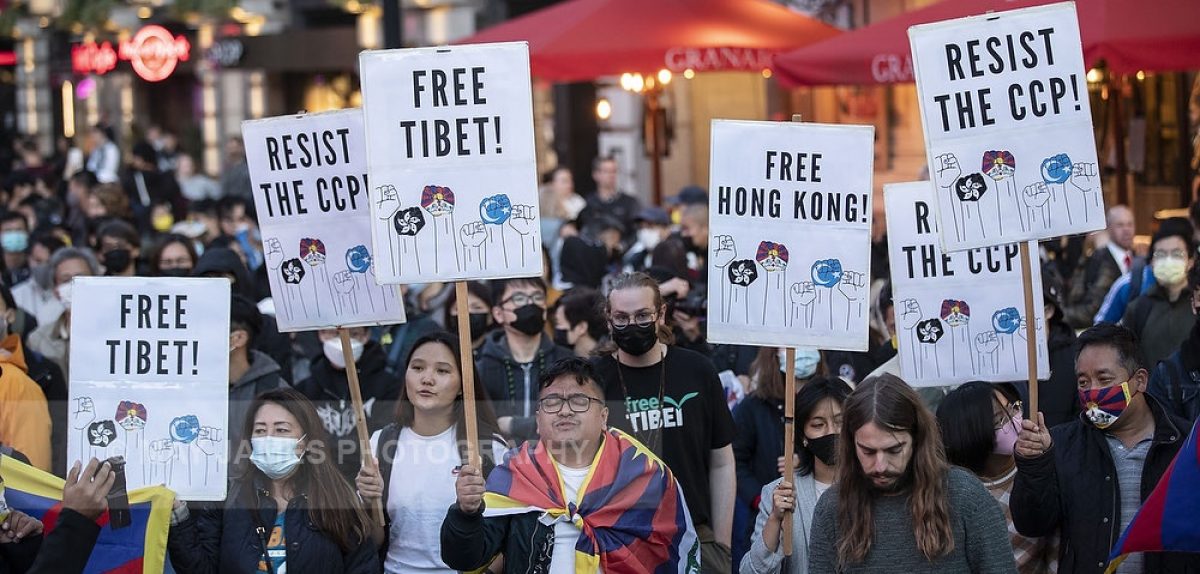


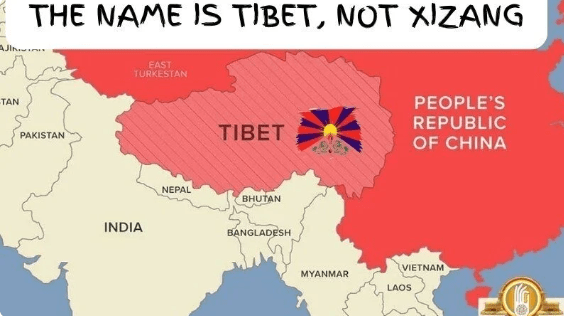
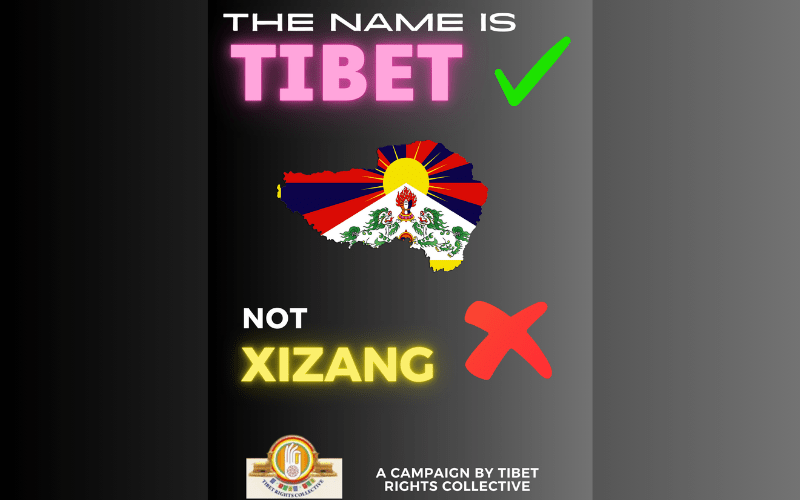

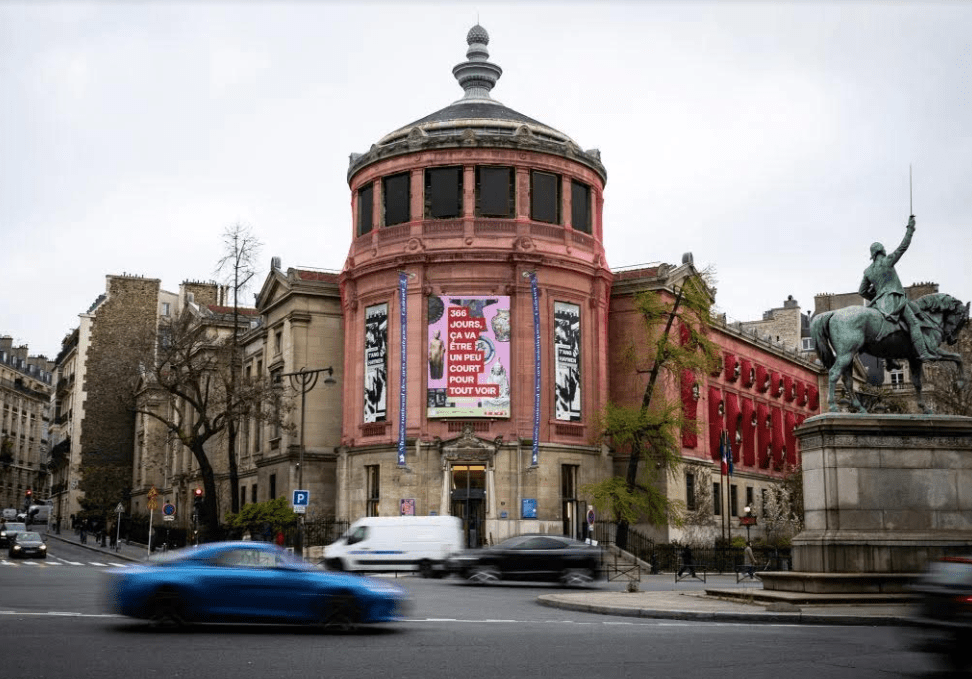
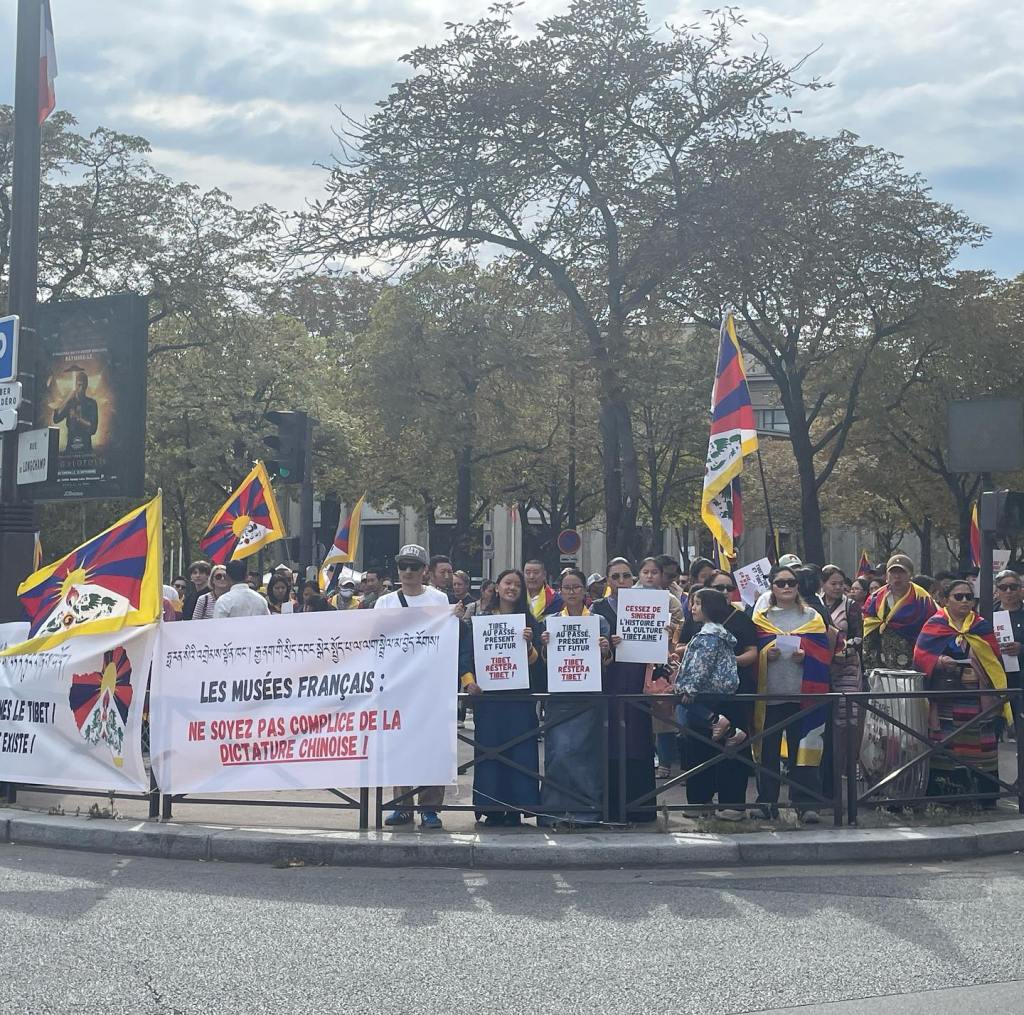


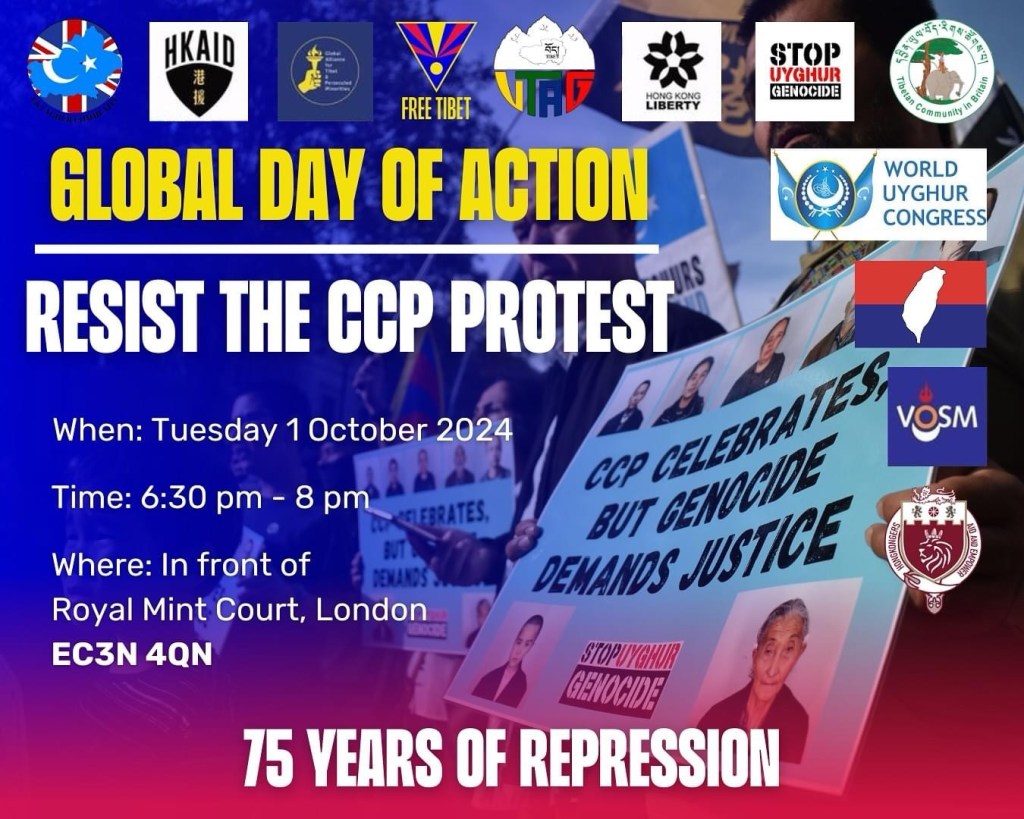
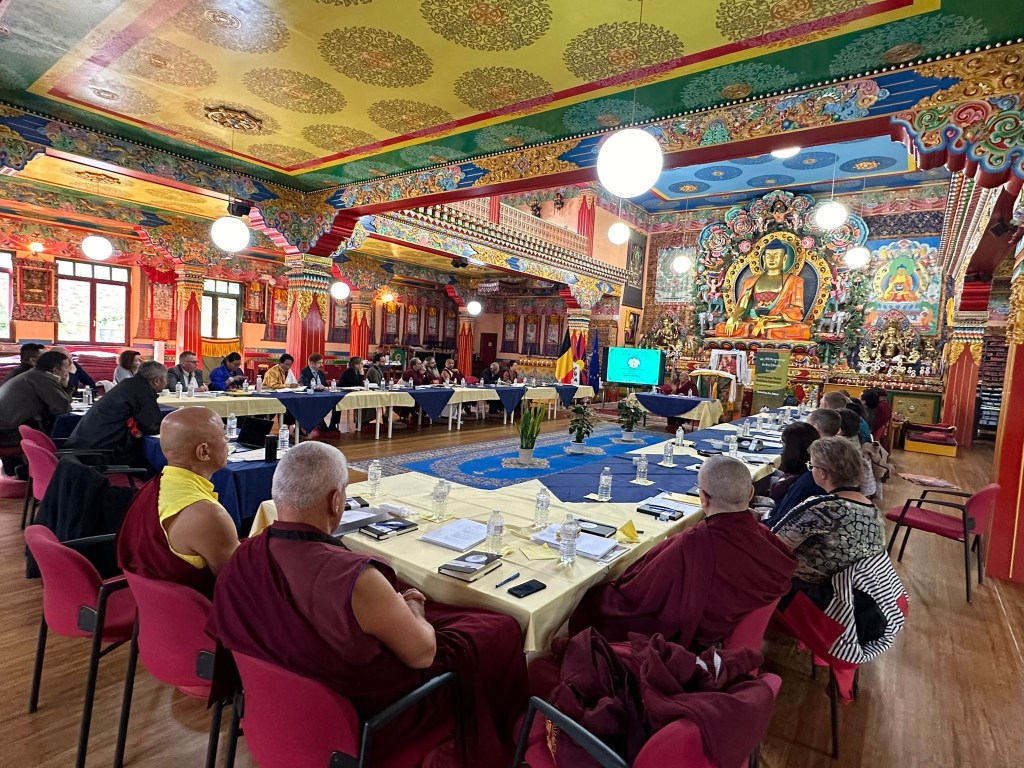
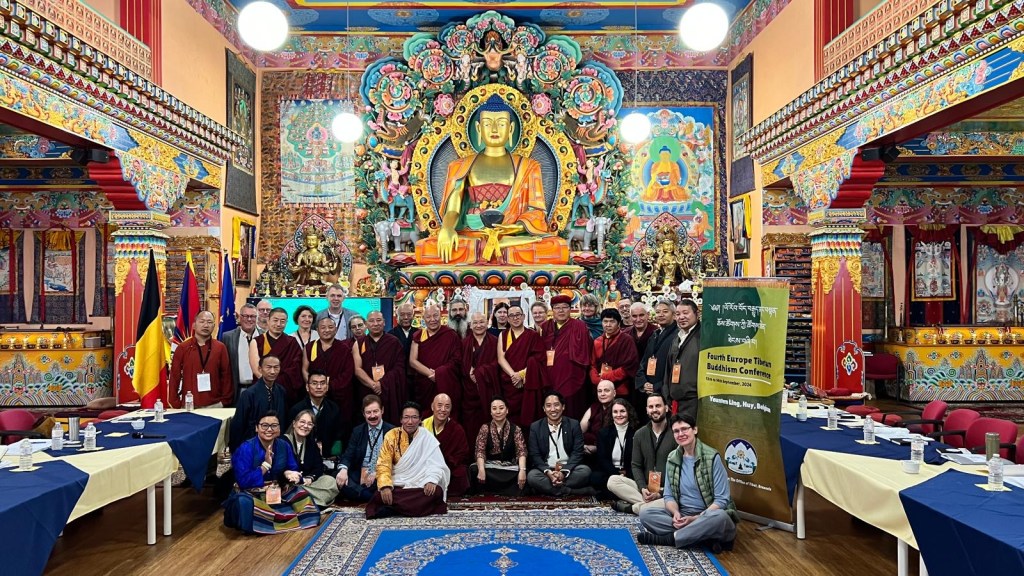
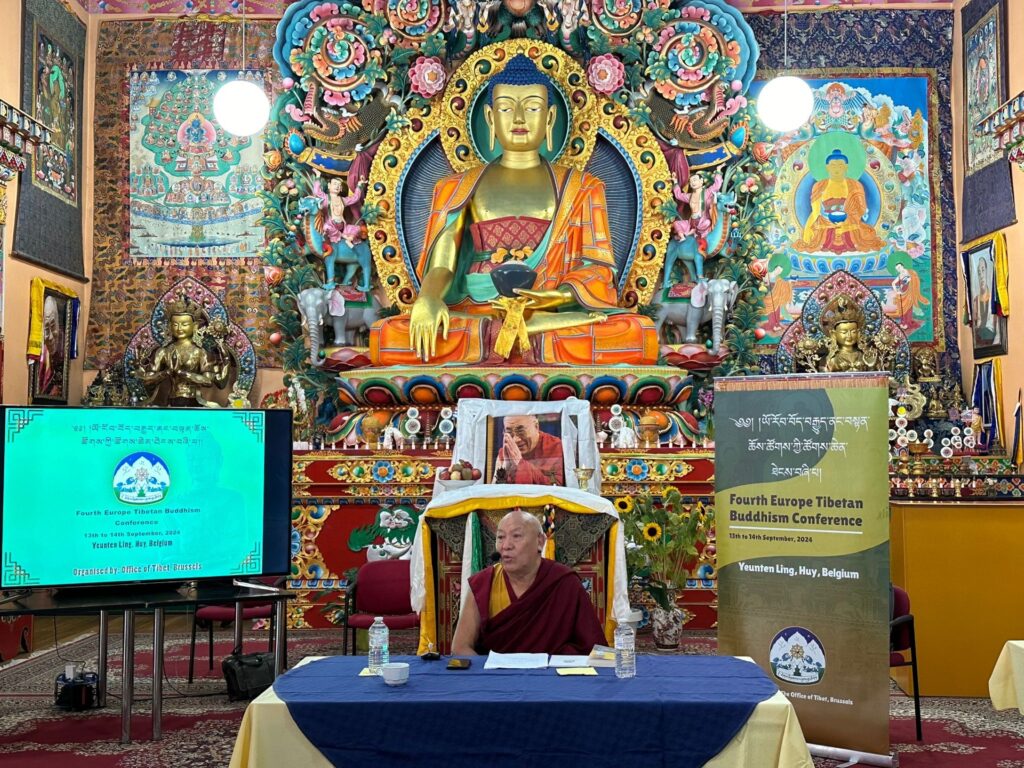
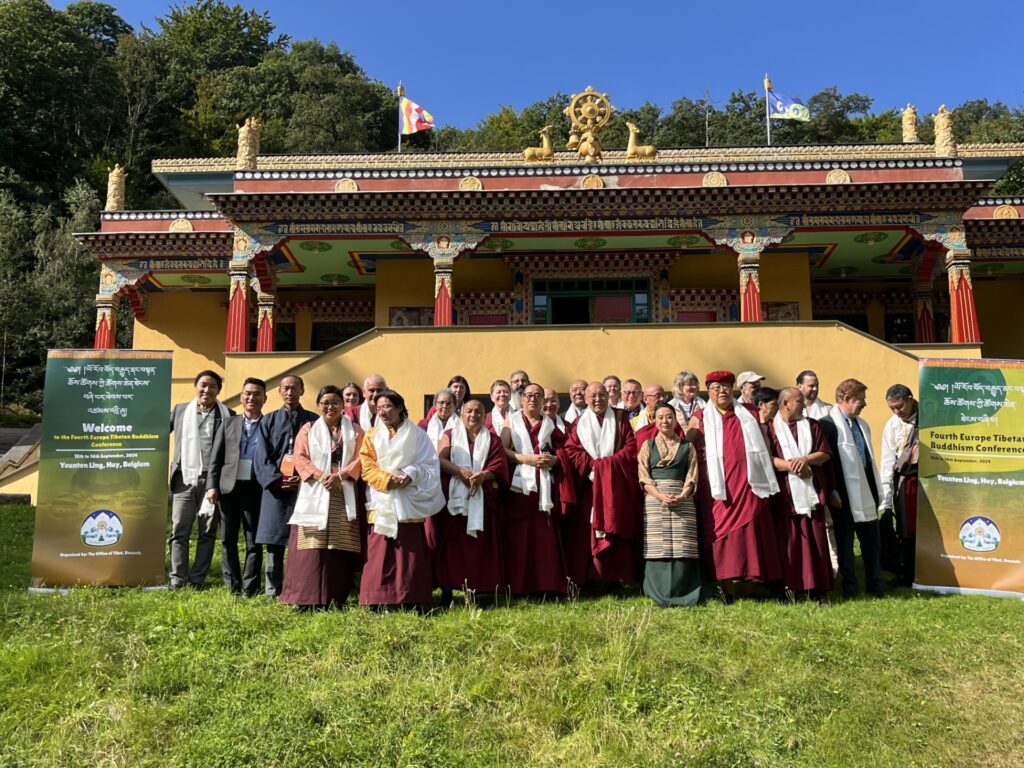

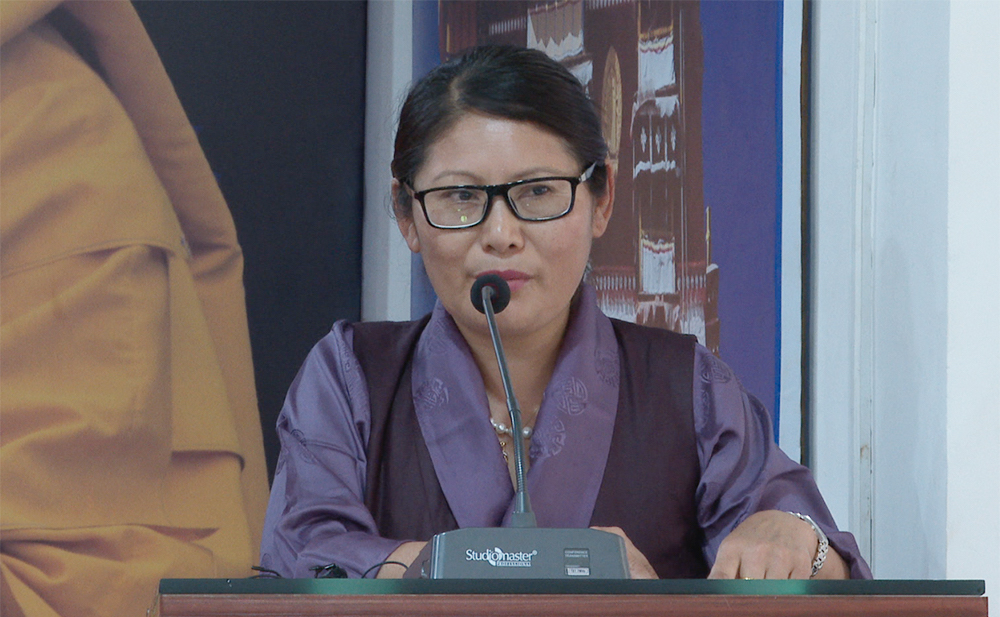
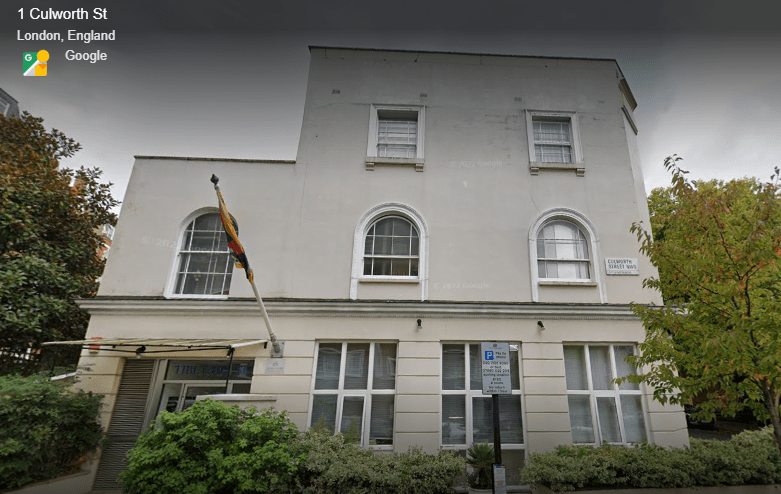

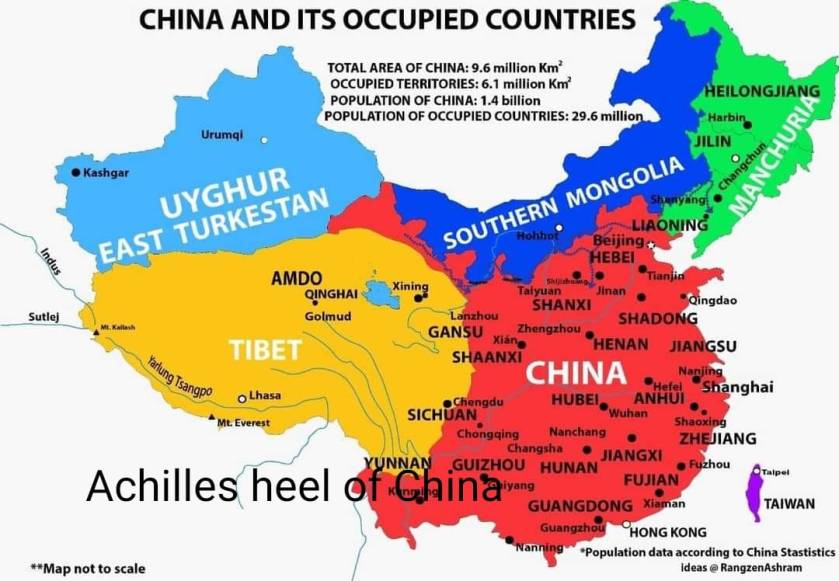
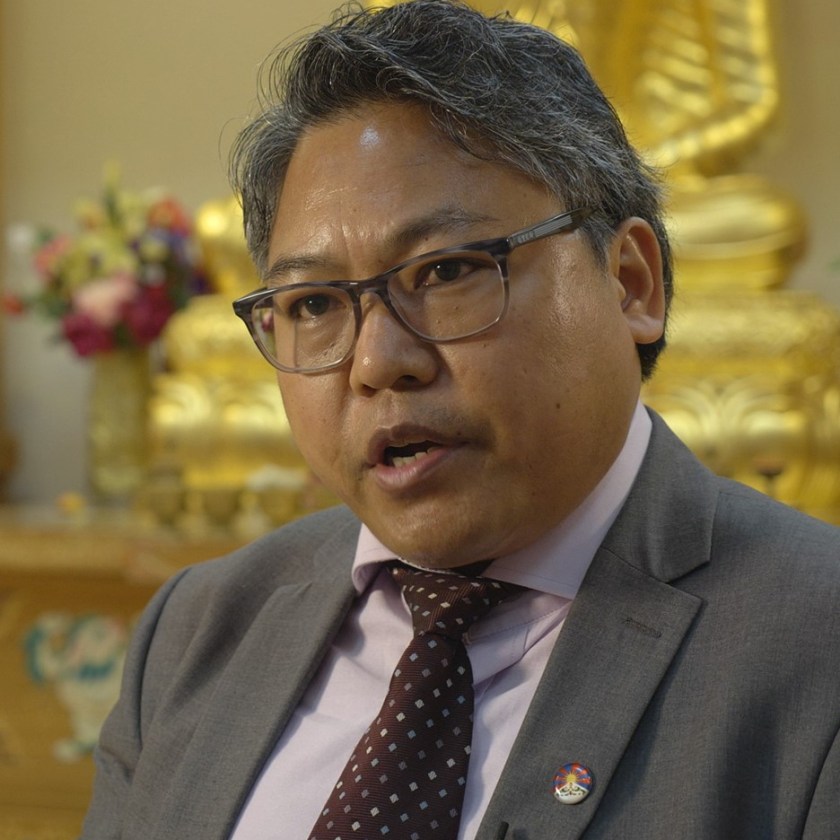


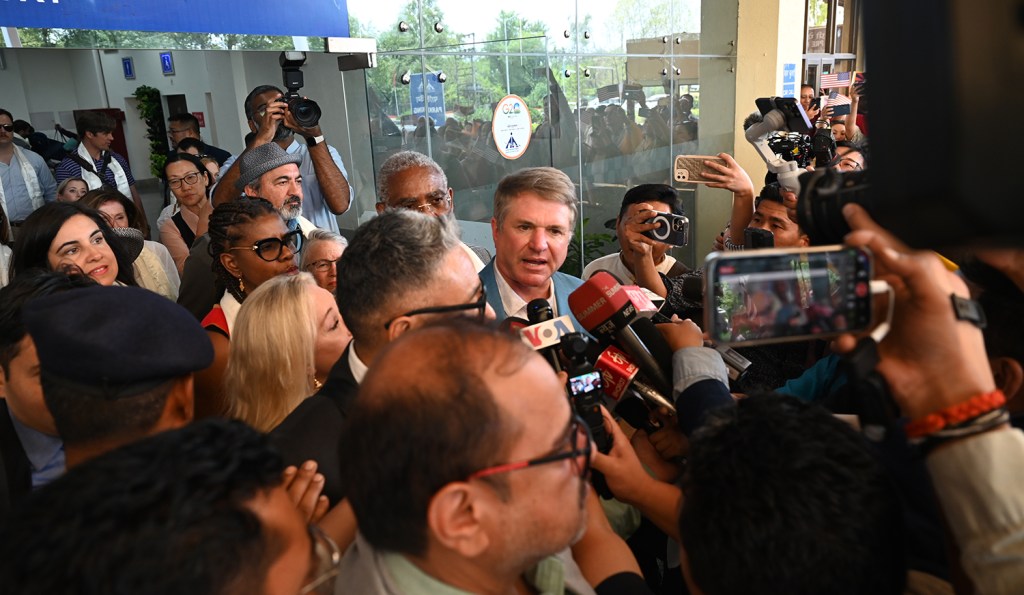
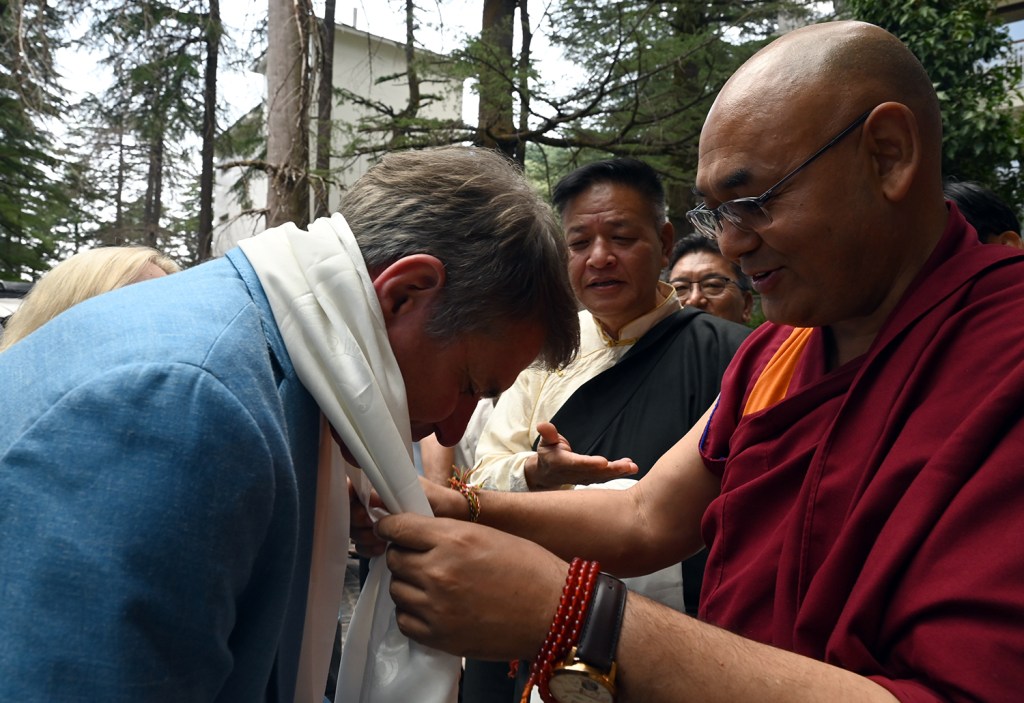
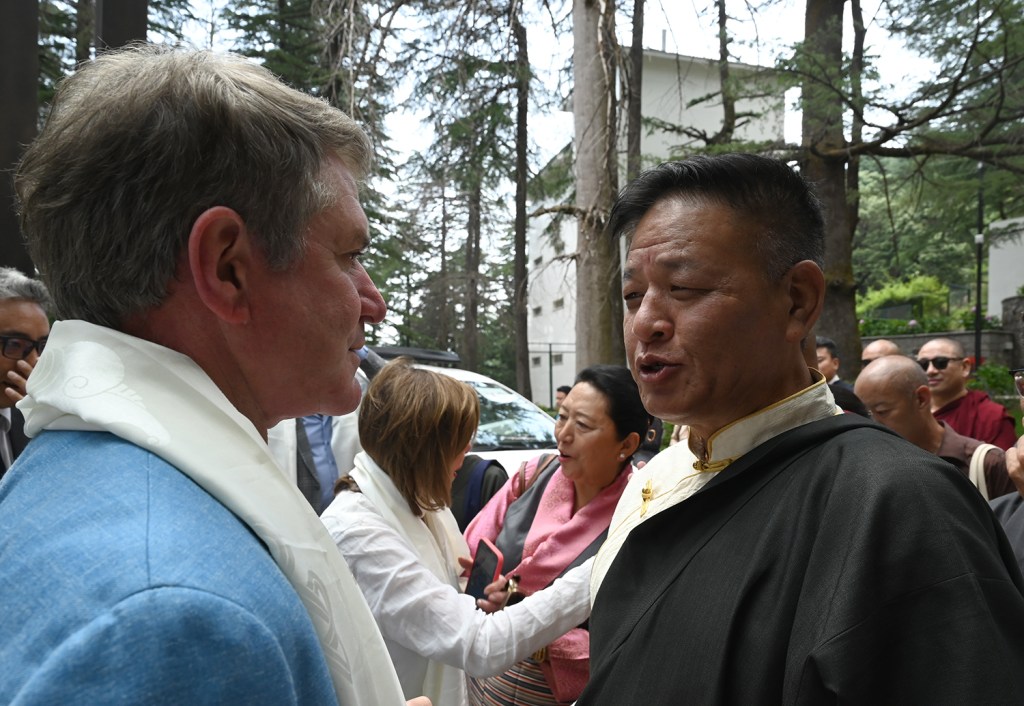



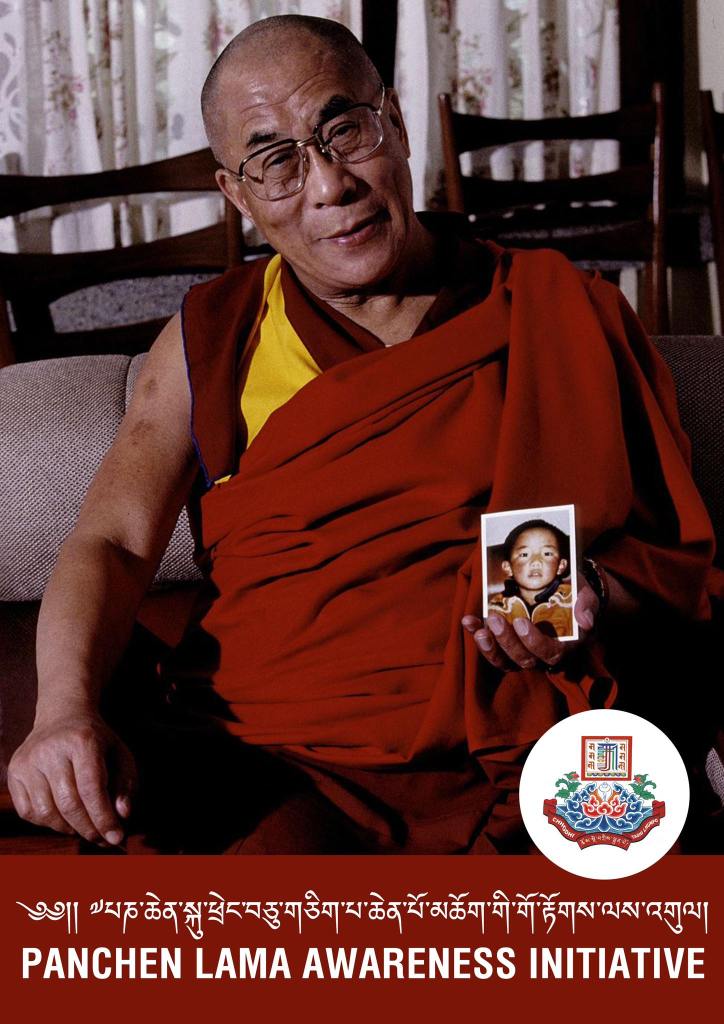
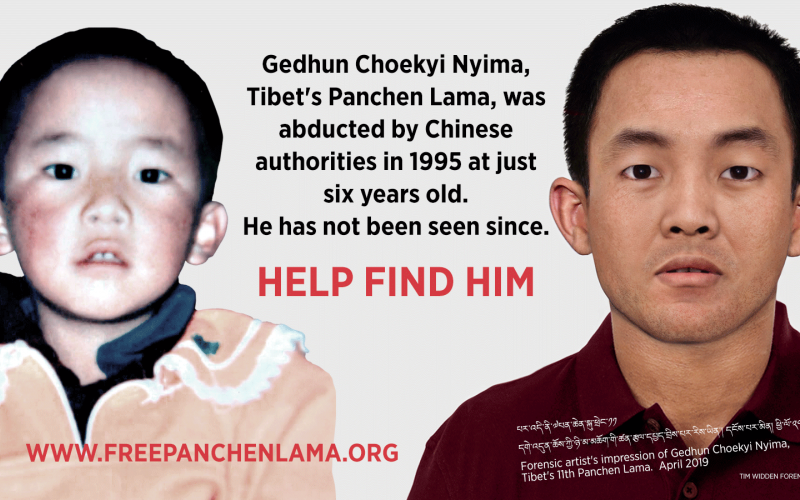
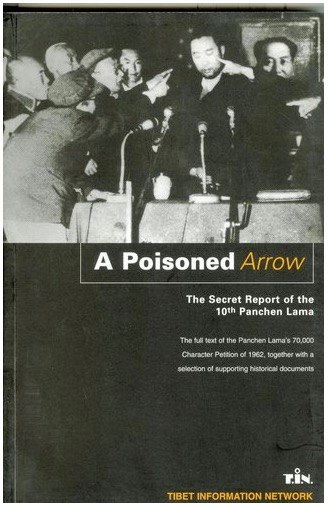
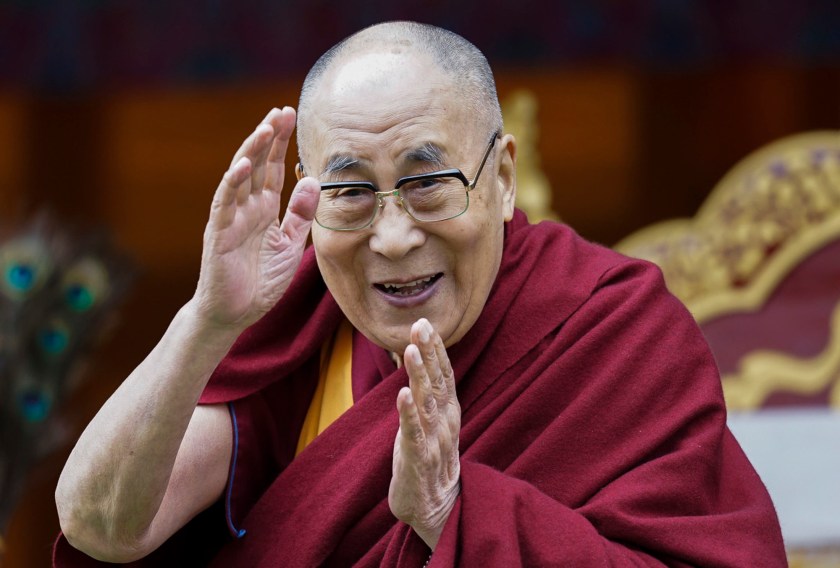
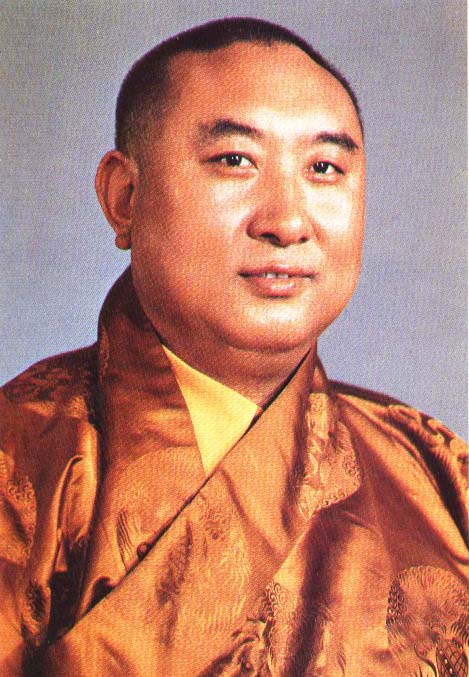
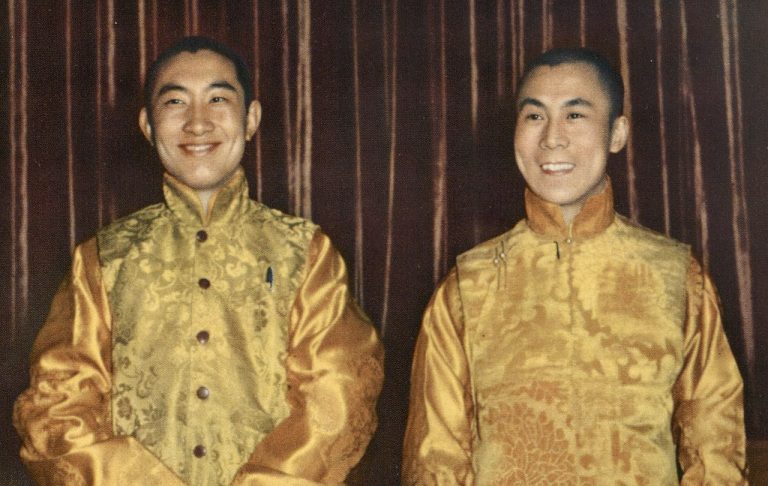

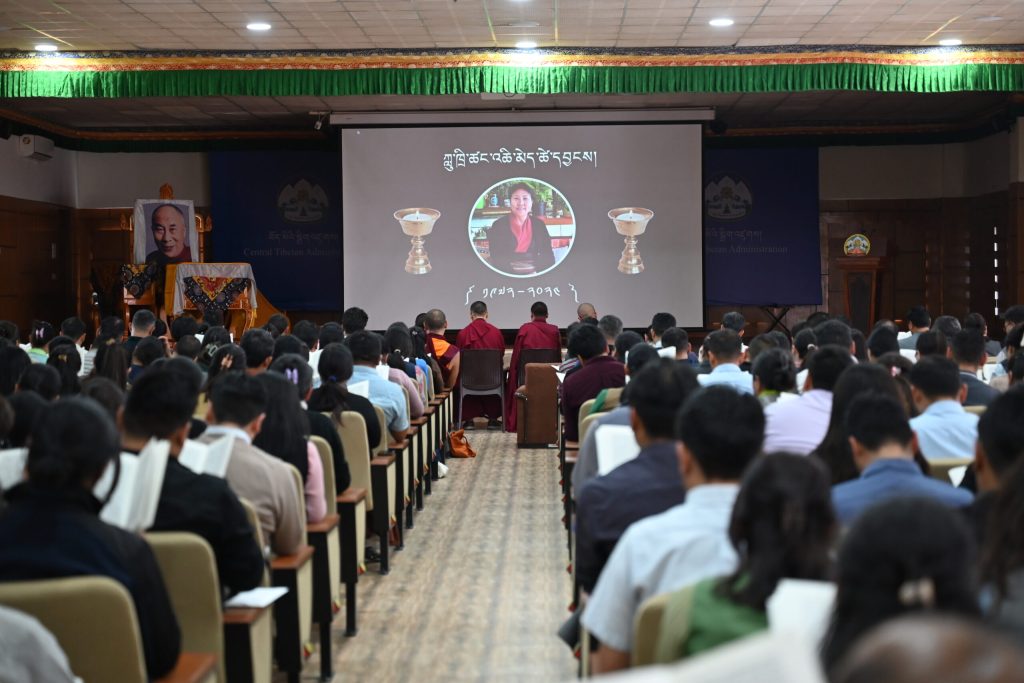


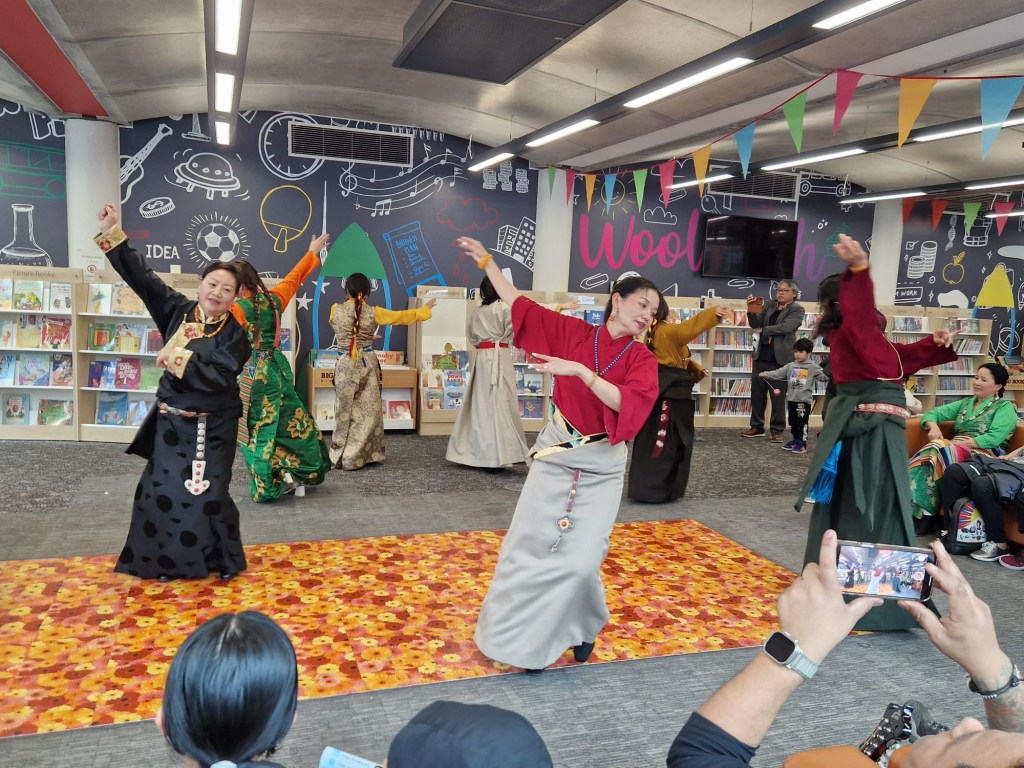
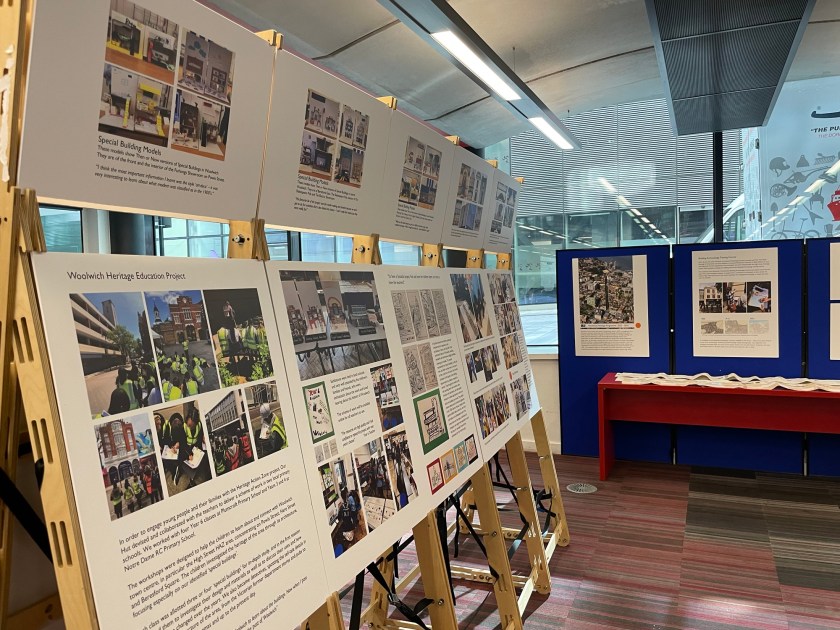


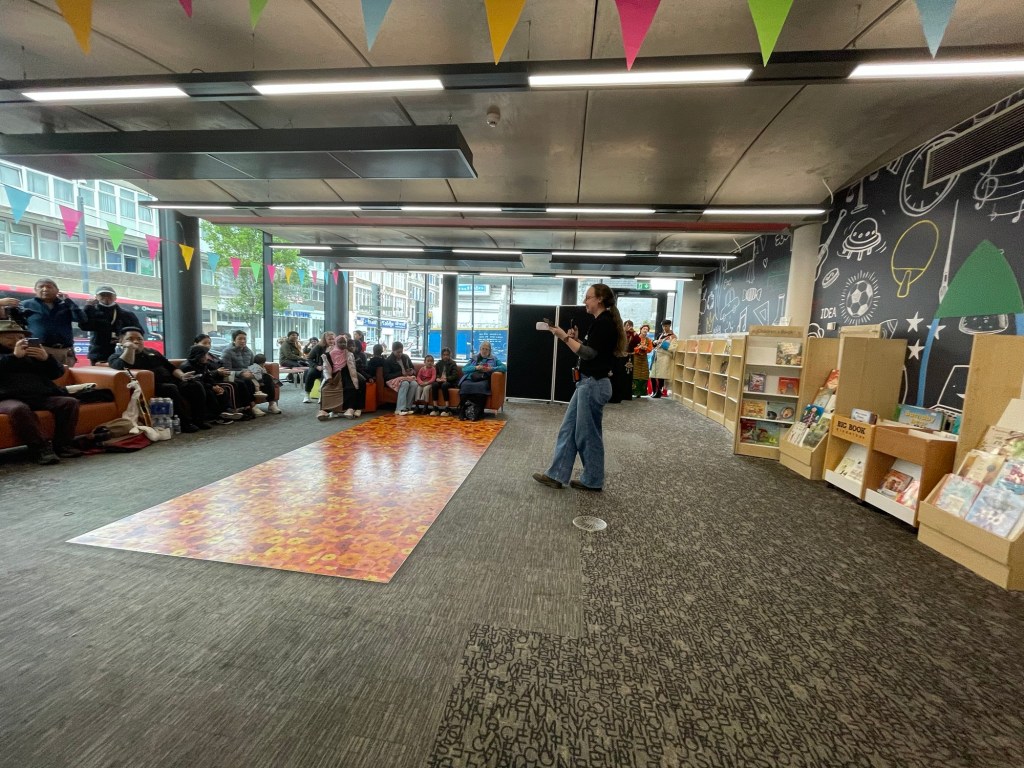
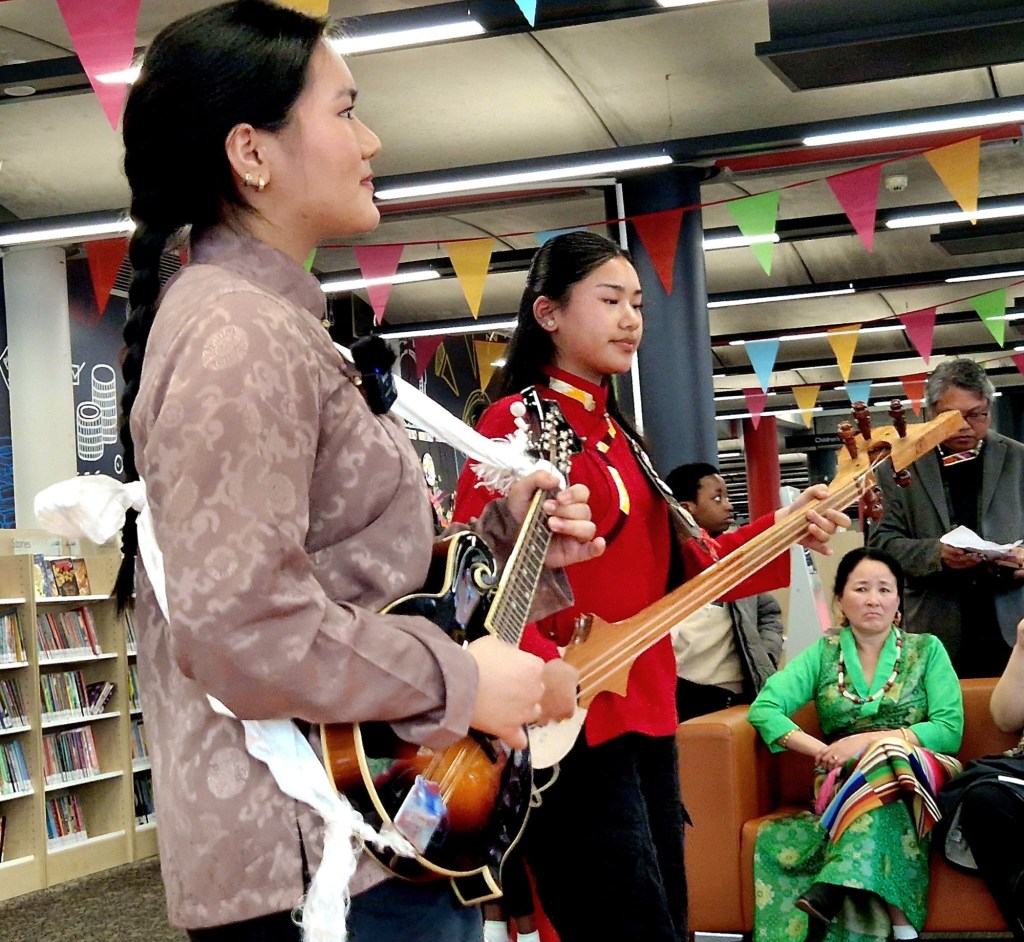
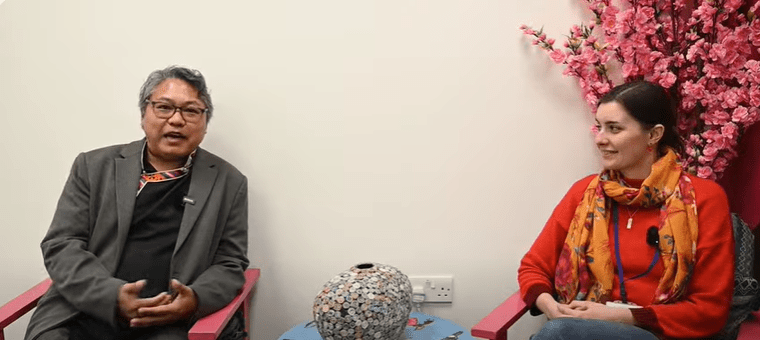
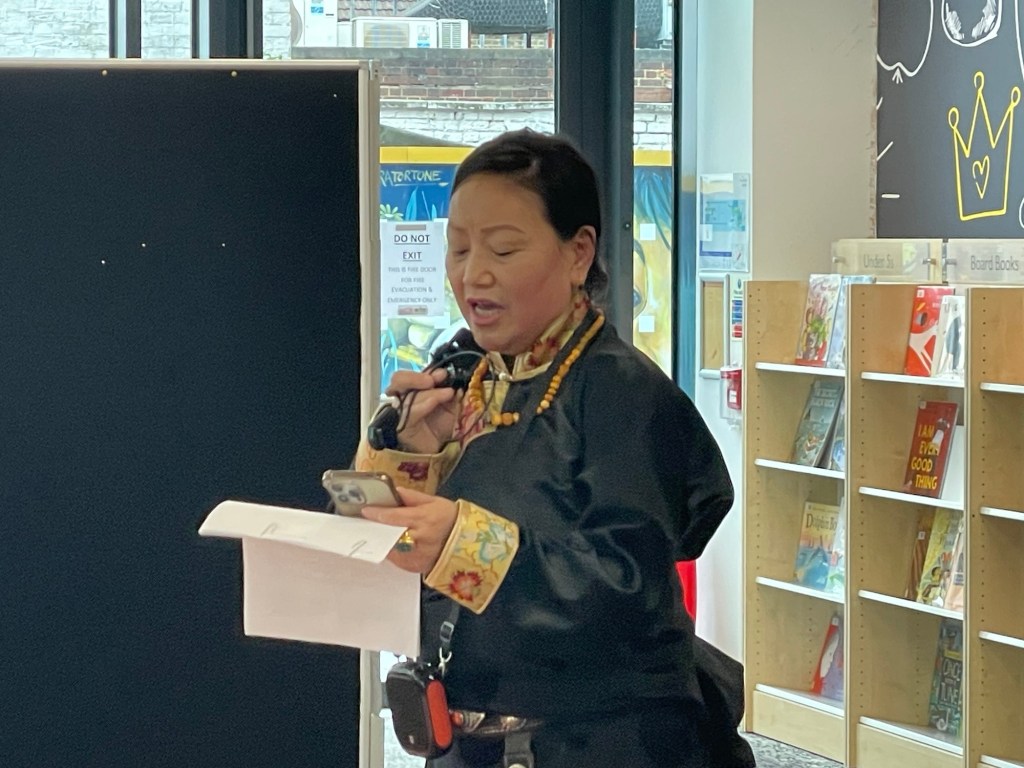
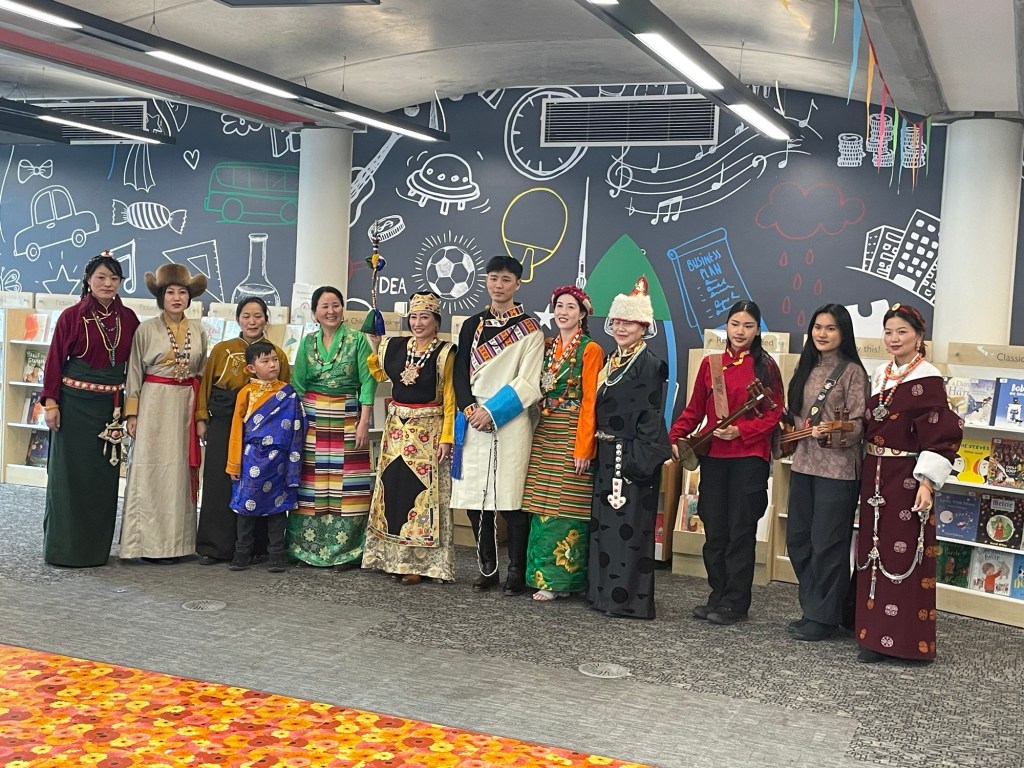
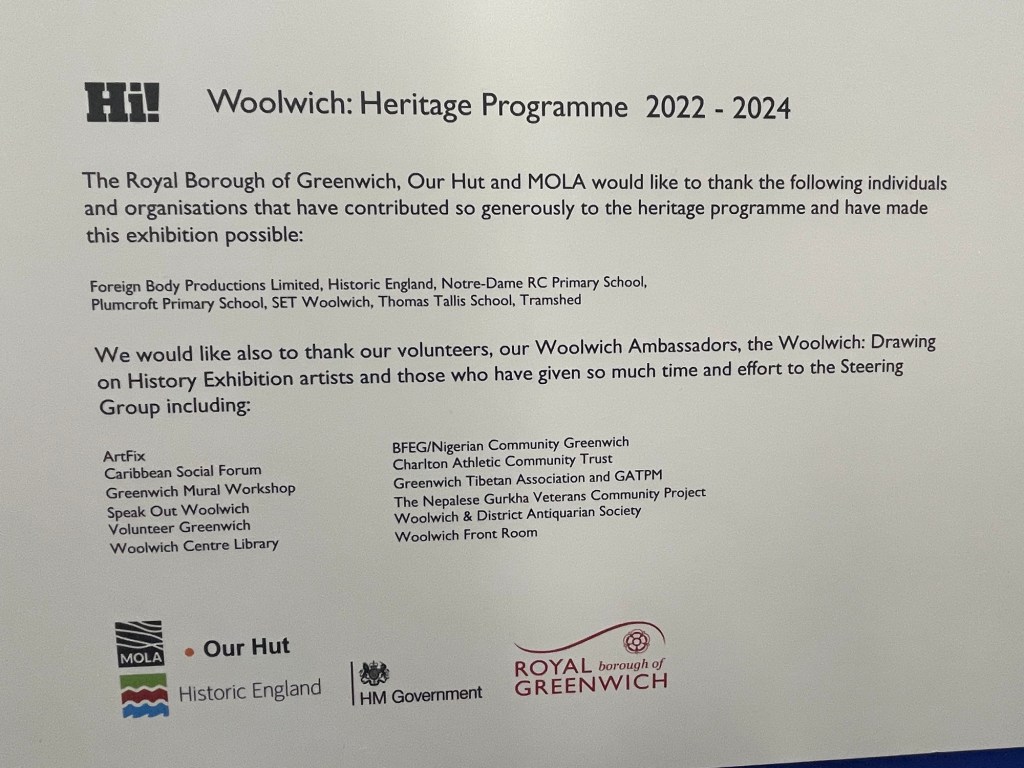

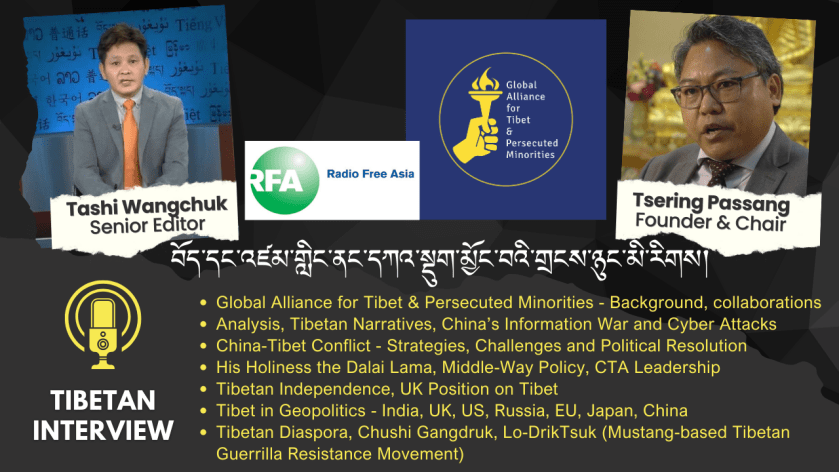








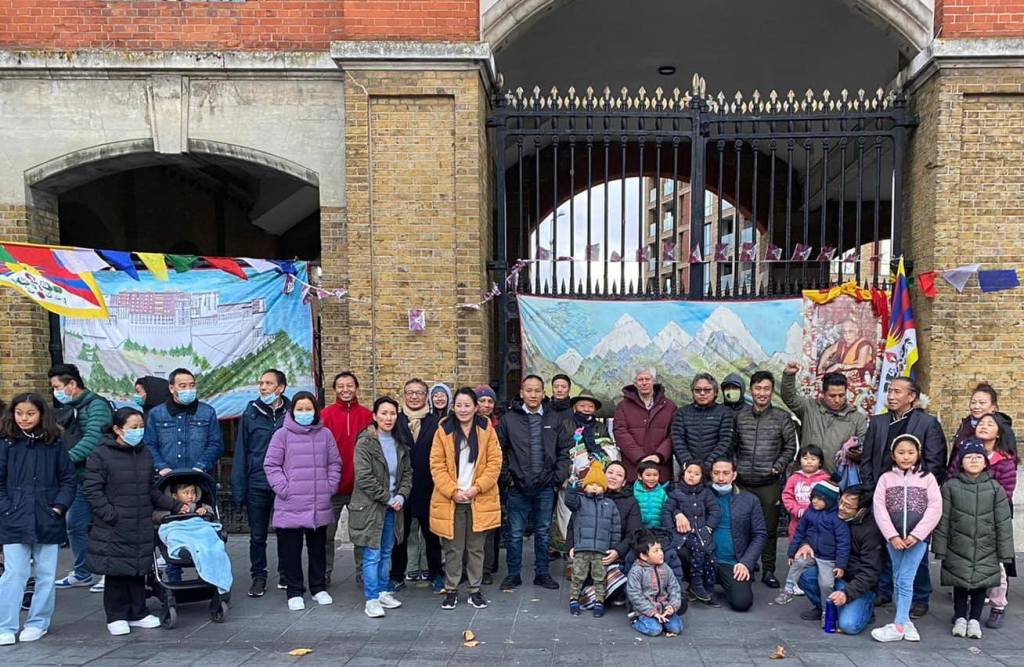



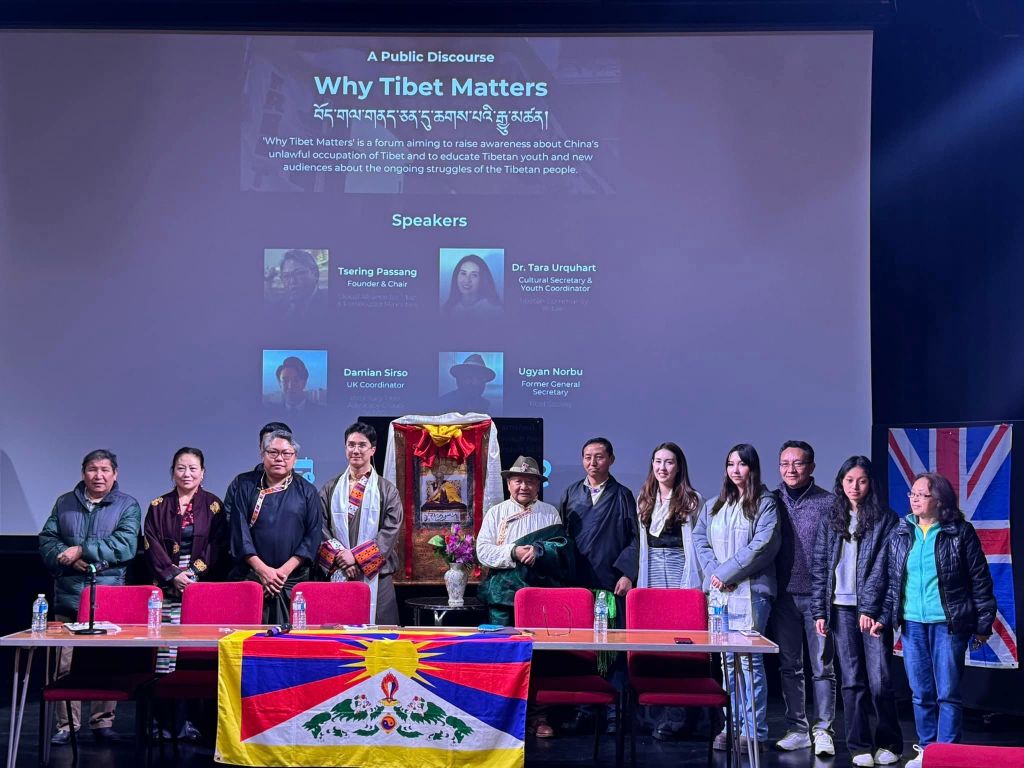
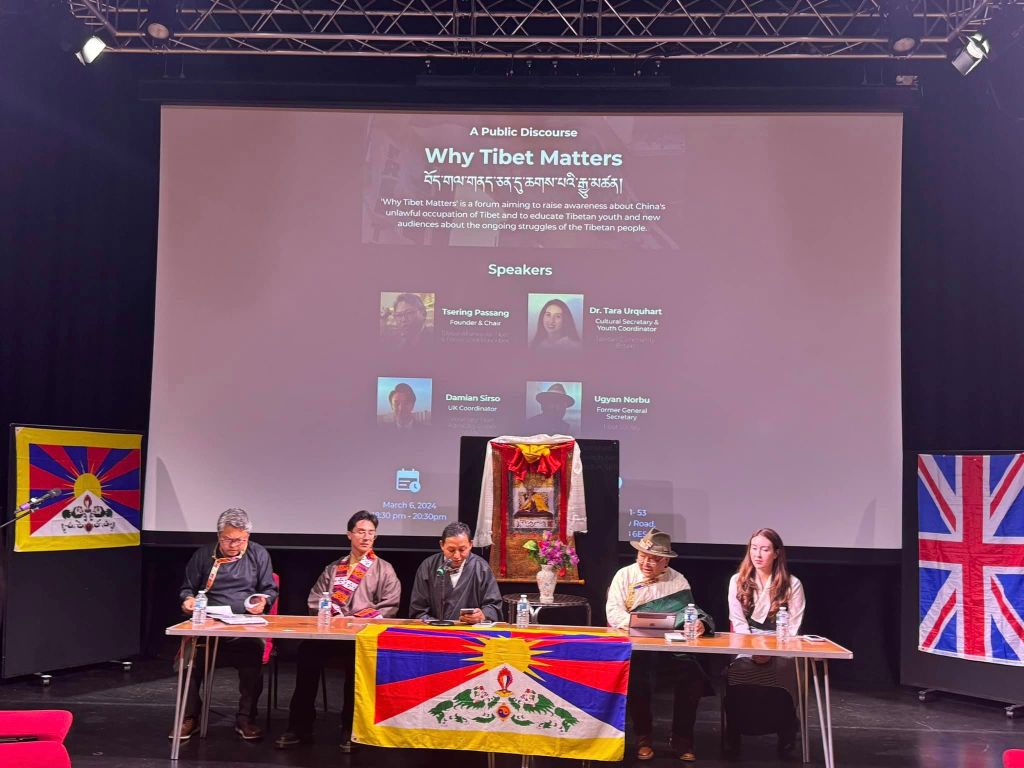





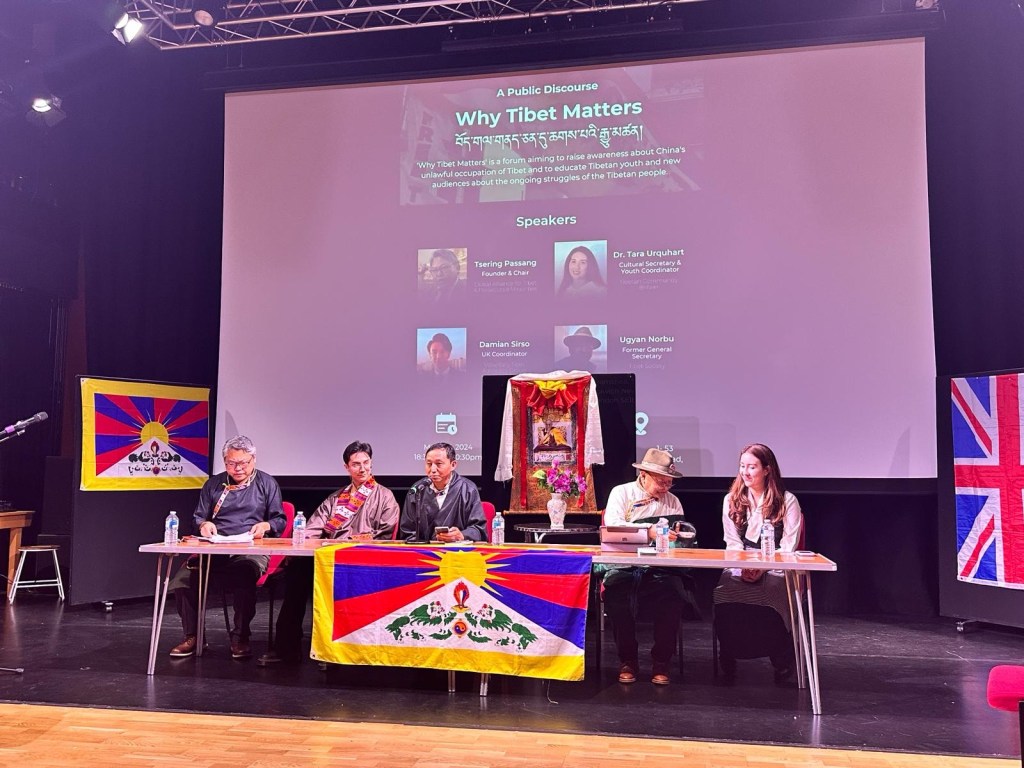


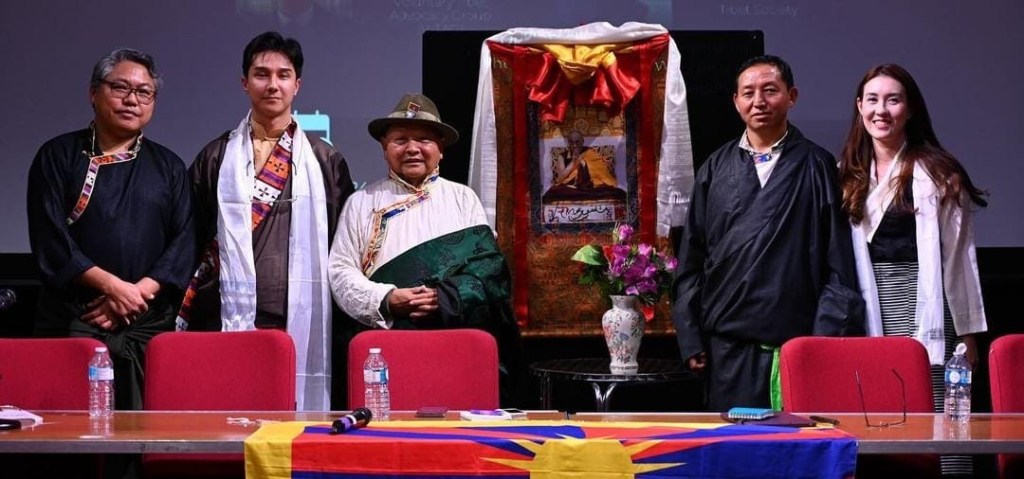
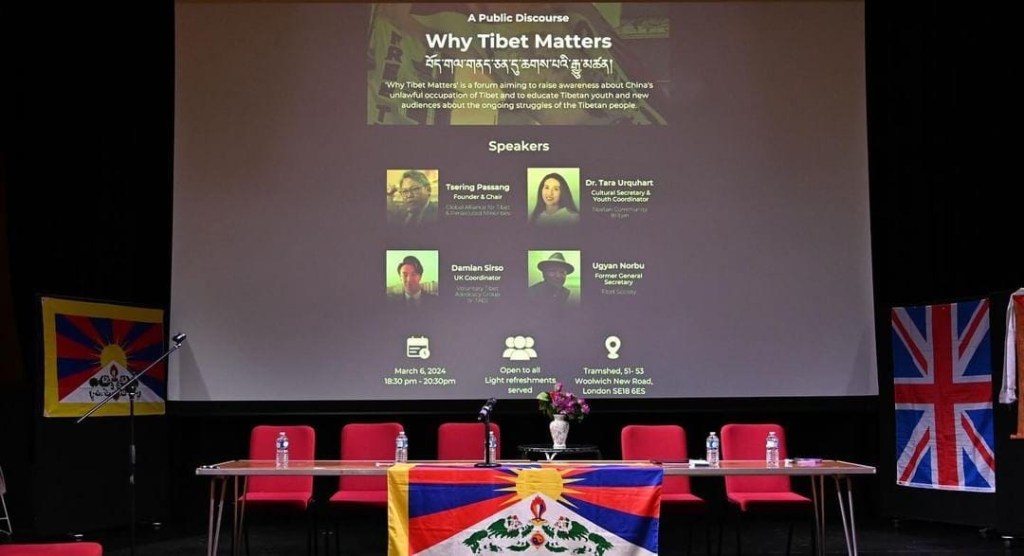
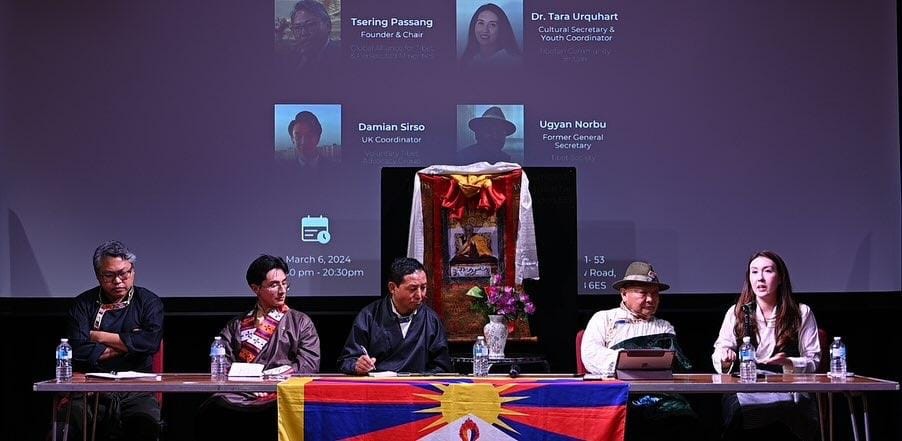


You must be logged in to post a comment.