The Global Alliance for Tibet & Persecuted Minorities (GATPM) urgently calls on friends and supporters worldwide to stand in solidarity with the Tibetan refugee community in northern India. A catastrophic snowstorm has severely impacted the nomadic Tibetan families in Ladakh’s Jangthang region, causing immense loss and hardship.
These resilient communities, who have preserved their traditional way of life for generations, now face an unprecedented crisis. The storm has claimed the lives of over 4,140 livestock, devastating more than 240 families who depend entirely on these animals for their livelihood. Sheep, goats, and yaks provide not only sustenance but also economic stability through wool and dairy products. With this massive loss, their very survival is at risk.
Sikyong Penpa Tsering, President of the Central Tibetan Administration (CTA) makes the urgent appeal in Tibetan language for assistance.
Why This Matters
Living in one of the harshest environments, these Tibetan families now struggle to meet their daily needs. The loss of livestock means:
No source of income from wool and dairy products.
Severe food shortages as their primary means of sustenance is wiped out.
Threats to their traditional way of life, deeply intertwined with nomadic herding.
Increased vulnerability to extreme weather conditions with limited resources for recovery.
How You Can Help
GATPM urges all our friends and allies to respond immediately to the Central Tibetan Administration’s (CTA) appeal. Here’s how you can make a difference:
Donate Now: The Central Tibetan Relief Committee (CTRC) has launched an emergency crowdfunding campaign to provide essential aid to affected families. Your generous contribution can help provide food, shelter, and long-term support for rebuilding livelihoods.
Contact the CTA Directly: If you are in India, please reach out to your nearest Tibetan Settlement Office for donation and relief coordination. If you are outside India, kindly get in touch with the nearest Office of Tibet – London, UK.
Spread the Word: Share this urgent appeal with your networks, social media platforms, and local communities. Raising awareness is just as crucial as direct financial support.
Act Now – Show Your Solidarity
This is not just about financial assistance – it is about showing our collective compassion and standing with a community that has already faced immense hardships. The Tibetan people have long fought for their dignity and survival, and in this moment of crisis, they need your support more than ever.
Let us come together to help these Tibetan families rebuild their lives. Your support today can make a world of difference.
Tsering Passang Founder & Chair Global Alliance for Tibet & Persecuted Minorities (GATPM)
P.S. The Global Alliance for Tibet & Persecuted Minorities (GATPM) are not raising funds for the affected Tibetan families. We are simply helping to promote the urgent appeal made by the Central Tibetan Administration on 4th April 2025.
In a powerful display of solidarity, 46 Indian Members of Parliament (MPs) have signed a Joint Declaration reaffirming their unwavering support for the religious and cultural rights of the Tibetan people. The declaration underscores Tibetans’ fundamental right to determine the reincarnation of His Holiness the Dalai Lama without external interference. This landmark initiative follows an intensive advocacy effort led by the Tibet Advocacy Alliance-India, according to a press release issued by the alliance earlier today.
The declaration asserts: “We come together to send a resounding message to China: we stand with the Tibetan people in support of their right to religious and cultural freedoms.”
The Tibet Advocacy Alliance-India, a coalition of leading Tibetan NGOs, worked closely with MPs throughout an advocacy week in New Delhi, stressing the urgent need to safeguard Tibetan religious traditions and cultural heritage. The initiative highlights the deep respect and admiration for His Holiness the Dalai Lama across India’s political and public spheres.
Several MPs publicly voiced their strong support for Tibet’s religious autonomy:
Raju Bista, MP (West Bengal): “His Holiness the Dalai Lama’s contributions to religious harmony and global peace extend beyond the Buddhist community. The authority to determine the next Dalai Lama rests solely with His Holiness and those he designates. My fellow MPs and I stand firmly with Tibetans in their pursuit of religious and cultural freedoms.”
Dr. Sasmit Patra, MP (Odisha): “The reincarnation system in Tibetan Buddhism is rooted in the continuity of the Dalai Lama’s noble legacy. The sole authority on succession matters lies with His Holiness and the Tibetan people—no external forces should interfere.”
Sujeet Kumar, MP (Odisha): “China’s attempt to control the Dalai Lama’s reincarnation is deeply ironic—an atheist regime dictating religious traditions. This is a direct assault on Tibetan culture and identity.”
Dr. Lobsang Yangtso, Tibet Advocacy Alliance-India: “The strong support from Indian MPs sends a clear message of solidarity to the Tibetan people. Their commitment to His Holiness the Dalai Lama’s spiritual leadership strengthens our ongoing efforts.”
This declaration represents a crucial step in countering China’s attempts to manipulate Tibetan religious and cultural institutions. The Tibet Advocacy Alliance-India remains committed to ensuring that Tibetan religious rights are upheld at the highest levels of governance. Member groups within the alliance include the Tibetan Youth Congress, Tibetan Women’s Association, National Democratic Party of Tibet, Students for a Free Tibet-India, and the International Tibet Network.
India has long served as a sanctuary for Tibet’s exiled community. The Central Tibetan Administration (CTA), Tibet’s government-in-exile, is headquartered in Dharamsala, Himachal Pradesh. His Holiness the 14th Dalai Lama first set foot on Indian soil exactly 66 years ago, on 31 March 1959, after fleeing Tibet. Around 80,000 Tibetans followed their spiritual leader into exile, with many remaining in India to this day. The Tibetan diaspora has since expanded, with over 150,000 Tibetans now settled in approximately 20 countries across five continents.
India has played a pivotal role in supporting the aspirations of the Tibetan people under the leadership of the Dalai Lama. The Joint Declaration by Indian MPs is yet another reaffirmation of this enduring commitment to Tibet’s cultural and religious heritage.
Voice for the Voiceless is the latest book by His Holiness the 14th Dalai Lama of Tibet, who turns 90 in July this year. Tsamtruk.com is delighted to publish this book review, submitted by a Tibet supporter. Thank you!
Voice for the Voiceless: Over Seven Decades of Struggle with China for My Land and My People
A Political Manifesto for Tibet’s Struggle
Part One: The Dalai Lama’s Succession – A Matter for Tibetans, Not China
“Voice for the Voiceless: Over Seven Decades of Struggle with China for My Land and My People” is clearly the Dalai Lama’s most political book to date. At 90 years old, he writes with the weight of history on his shoulders, fully aware that this may be his last major statement on Tibet’s struggle. The book reads like a final political testament, an urgent call to action for Tibetans and the world alike.
He poses two key questions:
“Were the Chinese ever serious about substantive negotiations on Tibet? What lessons should we learn from our history of dealing with the People’s Republic of China thus far for the future of our struggle for freedom?”
The Dalai Lama makes it abundantly clear that his successor will be born in exile, beyond Beijing’s reach:
“Since the purpose of a reincarnation is to carry on the work of the predecessor, the new Dalai Lama will be born in the free world so that the traditional mission of the Dalai Lama—that is, to be the voice for universal compassion, the spiritual leader of Tibetan Buddhism, and the symbol of Tibet embodying the aspirations of the Tibetan people—will continue.”
This is an explicit rejection of China’s attempts to control his reincarnation, a strategy it has already used to install a puppet Panchen Lama. China has long recognised that control over Tibetan Buddhism means control over Tibet itself. In 2015, Zhu Weiqun, then Chairman of China’s Committee for Ethnic and Religious Affairs, admitted: “Whoever has the name of the Dalai Lama will control political power in Tibet.”
The Chinese Communist Party (CCP) is an atheist regime with no legitimate claim over Tibetan spiritual affairs. Yet, as the Dalai Lama warns, China is determined to exploit reincarnation for political ends. Tibetans must remain vigilant.
The cover of the Dalai Lama’s new book ‘Voice for the Voiceless’ (left), and the Tibetan Buddhist spiritual leader holding a copy of his book (right), in undated photos. (Image: RFA)
Part Two: A Call to Action – Supporting the Tibetan Cause
The Dalai Lama does not present Voice for the Voiceless as a mere historical record but as a demand for renewed global support. The struggle for Tibet is not over, and the Dalai Lama is explicit about the need to preserve Tibetan identity:
“One clear lesson we know from history is this: If you keep people permanently unhappy, you cannot have a stable society.”
Tibetans face cultural annihilation under Beijing’s rule. The CCP has systematically dismantled Tibetan institutions, forced children into Mandarin-language boarding schools, and flooded Tibet with Han Chinese settlers. The Dalai Lama warns of “coercive policies of assimilation” that threaten the very existence of Tibetan culture.
Unfortunately in the West, Tibet has faded from the political agenda. Tibetan Buddhism is now firmly established with many centres representing many of the traditional lineages inside Tibet. However the depiction of Buddhism in pop culture has changed, reflects this increasingly cynical shift, in The White Lotus, Patrick Schwarzenegger’s character sneers:
“Buddhism is for cowards. They’re afraid… Don’t get attached, don’t have desires, don’t even try.” This reflects a growing trend of dismissing Buddhism as passive, apolitical, and irrelevant—a convenient narrative for those who would prefer to ignore Tibet’s plight. The Dalai Lama’s book is a direct challenge to this apparent indifference. People who practice Buddhism could be a powerful voice to support Tibet.
Governments must take a firm stand. While the United States has passed legislation affirming Tibetans’ right to choose their own spiritual leaders, the Trump administration is proposing cuts to foreign aid that directly undermine Tibetans in exile.
Disappointingly, the UK’s response has long been tepidly prioritising trade with China over human rights. A December 2023 parliamentary debate saw Foreign Office Minister Anne-Marie Trevelyan state that the Dalai Lama’s succession is a matter for “the relevant religious authorities.” But without explicit international political opposition, Beijing will continue its efforts to erase Tibetan sovereignty without obstacles.
The Dalai Lama has spent decades advocating a peaceful resolution, yet he clearly understands that after he is gone, the patience of Tibetans has worn thin with the lack of progress.
Part Three: A History of Betrayal – China’s Broken Promises and the Brutal Reality of Occupation
The heart of the book is its historical account of Tibet’s betrayal at the hands of China. He recounts the 1950 invasion, when the People’s Liberation Army crossed the Drichu River and occupied Chamdo. He recalls the crushing disappointment of the 1951 Seventeen-Point Agreement, signed under duress:
“You can imagine my shock.”
Despite early attempts at negotiation—including a 1954 meeting with Mao Zedong—the Dalai Lama soon realised China had no intention of honouring its promises:
“The promises and assurances received in Beijing turned out to be empty.”
The suffering of the Tibetan people worsened in the following decades. The Dalai Lama describes writing directly to Mao three times as Tibetans endured mass repression:
“During the many disasters and unspeakable acts against Tibetans that were to follow, I wrote three times to Chairman Mao, the third time ensuring that my letter was personally delivered. There was never an answer.”
His exile in 1959 marked the beginning of Tibet’s global fight for recognition. Yet, even now, negotiations with Beijing remain futile. His envoy’s talks with Chinese officials between 2002 and 2010 ended with Beijing shutting down all dialogue:
“Our clarification document was presented at the ninth round of discussions in January 2010. It turned out to be the end of the conversation. Formal dialogue has not resumed since.”
The Dalai Lama also reflects on his hopes for Xi Jinping, recalling his father’s opposition to the Tiananmen crackdown and his own mothers reported Buddhist beliefs.
“So I had hopes that President Xi would have more personal empathy for the Tibetan people. In fact, when it was announced that Xi Jinping would visit Delhi in 2014, I even communicated my wish to meet him in person. Unfortunately, nothing came of this gesture.”
China’s stance on Tibet has only hardened, with mass surveillance, arbitrary detentions, and the destruction of Tibetan cultural sites continuing at an alarming rate.
Xi Jinping is clearly prepared to wait out this Dalai Lama before attempting to anoint a Chinese CCP-approved successor, who will not be recognised by Tibetans or western followers.
Conclusion: The Time for Silence is Over
Voice for the Voiceless is not just a history book; it is a warning.
In 1951, the city of Lhasa had a population of just over 30,000, while the entire Tibetan army consisted of approximately 8,500 soldiers, compared to the invading People’s Liberation Army with more than 80,000 battle-hardened soldiers. The demographic changes in Tibet show a huge influx of Han Chinese settlers into Tibet. More recently, there are reports that since 2021, up to a million children are being removed from their families to be placed in Mandarin-only boarding schools, and in Kham (eastern Tibet), mass deforestation by China is reported to have destroyed more than 50% of forests. Before the Chinese invasion, there were over 2,500 monasteries in Tibet, but afterward, the Chinese government kept only 70 or so in existence, a reduction of more than 97%. The number of monks and nuns in Tibet also saw a drastic reduction, from about 110,000 to approximately 7,000.
The Dalai Lama is acutely aware that China is playing the long game. Tibetans are being systematically erased from their homeland, and without international pressure, Beijing could achieve its goal.
The Dalai Lama’s gentle approach has kept Tibet’s plight on the world stage, but Tibetans need more than words. The Middle Way Approach—seeking autonomy rather than full independence—was always a compromise, but even this has been rejected by China.
Tibetans continue to resist, whether through direct activism or quiet defiance. Yet, without international support, they face an impossible battle.
The Dalai Lama’s message to the world is clear:
“Finally, regardless of whatever happens, we must never lose faith in humanity.”
But faith alone is not enough. The world must act to save Tibet.
London | 26 March 2025 | GATPM – The Global Alliance for Tibet & Persecuted Minorities (GATPM) has issued an urgent appeal to US Secretary of State Marco Rubio, calling for the reinstatement of US funding for the Central Tibetan Administration (CTA) and the preservation of critical federal grants to Voice of America (VOA) and Radio Free Asia (RFA), including their Tibetan-language services.
In a letter addressed to Secretary Rubio, GATPM Founder and Chair Tsering Passang expressed deep concern over the recent announcement to discontinue these vital funding streams. He warned that such cuts would severely weaken Tibetan resistance to Beijing’s oppression and embolden the Chinese Communist Party’s (CCP) efforts to erase Tibet’s cultural and linguistic identity.
“As the son of a veteran of the Tibetan resistance movement in Mustang, I make this urgent appeal with deep conviction,” wrote Passang. “While my father spent a decade in the rugged Himalayan mountains fighting for Tibet’s freedom, my battlefield is different. From London, I work to counter China’s disinformation campaigns and advocate against the Chinese Communist Party’s (CCP) brutal oppression.”
The letter (see below) highlights the CCP’s ongoing atrocities in Tibet, including mass surveillance, suppression of religious freedoms, and the forced assimilation of nearly a million Tibetan children into state-run boarding schools. It underscores that US-funded Tibetan-language services of RFA and VOA remain a critical lifeline for Tibetans living under Beijing’s repressive regime, providing access to uncensored news, democratic discourse, and cultural preservation efforts.
A Crucial Bridge Between Tibetans Inside and Outside Tibet
Passang emphasised that RFA and VOA’s Tibetan-language services serve as a crucial bridge between Tibetans inside Tibet and those in exile. In a region where independent journalism is systematically suppressed, these broadcasts provide one of the only means for Tibetans inside Tibet to connect with the outside world. They expose the CCP’s human rights violations, environmental destruction, and military expansionism while offering exiled Tibetans an avenue to maintain ties with their homeland. Tibetan-speaking populations across the Himalayan belt and beyond also benefit from these vital services.
“Eliminating funding for these essential services would weaken US efforts to counter Beijing’s growing influence, particularly in the Indo-Pacific,” Passang warned. “Preserving RFA and VOA’s Tibetan services is not just a strategic necessity – it is a moral imperative.”
The appeal also emphasises Tibet’s historical ties with the United States, referencing the Mustang resistance fighters who once aligned with US strategic interests in the 1960s and 1970s. Passang argues that withdrawing such crucial support now would betray America’s long-standing commitment to human rights and democracy, further strengthening China’s authoritarian grip.
He urged Secretary Rubio and the Trump administration to uphold the principles enshrined in the Reciprocal Access to Tibet Act (2018) and the Tibetan Policy and Support Act (2020) – legislative measures signed into law during President Trump’s first term that reaffirmed America’s commitment to Tibet.
“At this critical juncture, the world looks to the United States to uphold fundamental freedoms and resist authoritarian oppression,” said Passang. “The Tibetan people have always been genuine admirers and time-tested allies of America. Our younger generations must be empowered to carry forward their parents’ legacy of resisting CCP oppression and defending freedom, justice, and global peace.”
The Global Alliance for Tibet & Persecuted Minorities urges the US government to reverse its decision and continue standing firmly with the Tibetan people in their struggle for freedom.
For media inquiries, please contact: Tsering Passang | info@gatpm.com Global Alliance for Tibet & Persecuted Minorities http://www.Tsamtruk.com/gatpm
GATPM Chair Tsering Passang’s Letter to Secretary of State Marco Rubio:
25th March 2025
The Honourable Marco Rubio Secretary of State US Department of State 2201 C Street NW Washington, D.C. 20510
USA
Urgent Appeal: Safeguard Support for Tibet and Critical US-Funded Media Services
Your Excellency Secretary of State Marco Rubio,
May I first extend my sincere congratulations on your appointment as Secretary of State in President Trump’s administration. Tibetans worldwide deeply appreciate your unwavering support for our just cause and your steadfast commitment to human rights and democracy. I was encouraged by your recent letter to our Sikyong reaffirming that US policy on Tibet remains unchanged and your continued backing of Tibet and its people.
However, I write with profound concern regarding the recent decision to discontinue financial aid to the Central Tibetan Administration (CTA) and withdraw US federal grants to Voice of America (VOA) and Radio Free Asia (RFA), including their Tibetan-language services.
As the son of a veteran of the Tibetan resistance movement in Mustang – a movement that directly aligned with US strategic interests in the 1960s and 1970s – I make this urgent appeal with deep conviction. While my father spent a decade in the rugged Himalayan mountains fighting for Tibet’s freedom, my battlefield is different. From London, I work to counter China’s disinformation campaigns and advocate against the Chinese Communist Party’s (CCP) brutal oppression and its atrocities.
Since the illegal occupation of Tibet in 1950, Beijing’s systematic policies have led to the deaths of an estimated 1.2 million Tibetans and the near-eradication of our cultural and religious identity. Today, China continues its assault on Tibetan heritage through mass surveillance, suppression of religious freedoms, and the forced assimilation of nearly a million Tibetan children into state-run boarding schools designed to erase their identity. The International Commission of Jurists (ICJ) in their 1959 and 1960 reports recorded Communist China’s crimes against the Tibetan people and our culture, which amounts to genocide as per the Genocide Convention of 1948.
The abrupt defunding of Tibetan services on RFA and VOA would be a devastating setback for freedom and justice. These platforms serve as a crucial bridge between Tibetans inside Tibet and those in exile, providing a rare source of uncensored news, democratic discourse, and cultural preservation. Inside Tibet, where independent journalism is systematically suppressed, these broadcasts are lifelines for millions. They expose the CCP’s human rights violations, environmental destruction, and military expansionism while offering Tibetans hope and connection to the outside world. Tibetan-speaking populations across the Himalayan belt and beyond also benefit from these vital RFA and VOA Tibetan services.
Eliminating funding for these essential services would weaken US efforts to counter Beijing’s growing influence, particularly in the Indo-Pacific. Preserving RFA and VOA’s Tibetan services is not just a strategic necessity – it is a moral imperative. These broadcasts are vital in preserving the Tibetan language and culture, which Beijing seeks to erase.
For decades, VOA and RFA have provided a voice to Tibetans who risk everything to stay informed. Weakening these services would embolden Beijing’s propaganda machine and further silence a marginalised people fighting for their survival.
My father and his fellow freedom fighters made significant sacrifices for regional stability, aligning with America’s core values of democracy and human rights. However, US-China relations shifted under President Nixon, prioritising economic engagement over the democratic ideals America has long championed. Today, China openly challenges international norms, making it more crucial than ever for the US to stand with the Tibetan people and their allies. Supporting the Tibetan diaspora remains essential in countering CCP expansionism and upholding American strategic interests.
Having been born and raised in refugee camps in Nepal, I have firsthand experience of the profound impact of these critical services on Tibetan communities. For many refugees, VOA and RFA broadcasts remain their sole independent source of information. The Mustang resistance, in which my father and his comrades courageously participated, was not only a fight for Tibet’s freedom but also a contribution to regional stability — a goal that remains aligned with America’s global mission.
I acknowledge and deeply appreciate your long-standing commitment to Tibet and your leadership in countering CCP influence. During his first term, President Trump made significant strides by signing the Reciprocal Access to Tibet Act (2018) and the Tibetan Policy and Support Act (2020), reinforcing America’s commitment to Tibet. These measures sent a clear message to Beijing that the United States stands firmly with the Tibetan people. We now hope that President Trump’s administration will uphold and strengthen this support.
At this critical juncture, the world looks to the United States to uphold fundamental freedoms and resist authoritarian oppression. Your Excellency, as a seasoned statesman and champion of democracy, I urge you to use your influence to reinstate and enhance funding for the Central Tibetan Administration and maintain vital federal grants for RFA and VOA’s Tibetan services. The Tibetan people have always been genuine admirers and time-tested allies of America. Our younger generations must be empowered to carry forward their parents’ legacy of resisting CCP oppression and defending freedom, justice, and global peace.
Withdrawing such crucial support would only serve Beijing’s interests, strengthening an oppressive regime that seeks to undermine the rules-based international order.
I respectfully urge you to champion this cause and reinforce America’s unwavering commitment to democracy, human rights, and press freedom.
Thank you for your time and consideration of this urgent appeal.
Yours sincerely,
(Signed)
Tsering Passang Founder & Chair Global Alliance for Tibet & Persecuted Minorities
An Urgent Appeal by Tsering Passang, Founder & Chair of the Global Alliance for Tibet & Persecuted Minorities:
I write with deep concern regarding alarming reports of potential funding cuts that could severely impact vital US-funded broadcasters such as Radio Free Asia (RFA) and Voice of America (VOA). These media outlets have long been critical sources of uncensored news for communities oppressed by authoritarian regimes, including Tibetans inside Chinese-occupied Tibet.
RFA’s Tibetan language service has played an indispensable role in delivering truthful reporting from within Tibet — a region where Beijing’s repressive control has stifled independent journalism. RFA’s ability to connect with Tibetans in real-time, despite China’s extensive censorship, has been vital in exposing human rights abuses, religious persecution, and environmental destruction in Tibet.
At a time when the Chinese Communist Party (CCP) is aggressively escalating its disinformation campaigns worldwide, shutting down or weakening RFA would be a strategic misstep with far-reaching consequences. The United States has repeatedly reaffirmed its commitment to countering Beijing’s malign influence, particularly in the Indo-Pacific region. Ensuring the continuity of RFA’s operations is directly aligned with this objective.
Moreover, the continuation of RFA and VOA’s Tibetan language services is not only a geopolitical necessity — it is also a moral imperative. These broadcasts provide a rare and vital platform for Tibetan language preservation, helping sustain a culture that the CCP has relentlessly sought to erase through colonial-style boarding schools and other assimilation tactics.
I strongly urge US authorities, particularly Congress and the Trump administration, to reconsider any funding cuts that threaten the essential work of RFA and VOA. Weakening these platforms would embolden Communist China’s propaganda machine, silence marginalised voices, and undermine the United States’ strategic interests in promoting democracy and free speech worldwide.
Now more than ever, the world must stand firm in defence of press freedom and amplify the voices of those striving to expose the truth. The continuation of RFA’s Tibetan language service is crucial to this cause.
We at the Global Alliance for Tibet & Persecuted Minorities urge President Trump and the US Congress to uphold America’s proud tradition of supporting freedom of speech and protecting oppressed communities — and to ensure RFA’s Tibetan language service continues its invaluable work at this critical time.
Tsering Passang Founder & Chair Global Alliance for Tibet & Persecuted Minorities
Luke de Pulford, Co-founder and Executive Director of the Inter-Parliamentary Alliance on China (IPAC) delivering a powerful speech at the Tibet Rally in Whitehall 10th March 2025 Photo: Tibetan Community UK
“Confront the stark realities that challenge the very essence of Tibetan identity,” said Luke de Pulford, Co-founder and Executive Director of the Inter-Parliamentary Alliance on China (IPAC), addressing a powerful gathering in Whitehall on 10th March 2025.
The rally, held directly opposite Downing Street, drew several hundred British Tibetans, supporters, and human rights defenders to mark the 66th anniversary of the Tibetan National Uprising Day. This commemoration remembers the tragic events of March 10th 1959, when Tibetans rose against the invading People’s Liberation Army (PLA) of Communist China. The rally was jointly organised by the Tibetan Community in Britain, Free Tibet, and the Global Alliance for Tibet & Persecuted Minorities (GATPM).
In his speech, Luke de Pulford urged attendees to confront the harsh realities threatening Tibetan identity. He condemned Beijing’s systematic efforts to erase Tibetan language, culture, and religious practices — including the coercive assimilation of Tibetan children in colonial-style boarding schools.
“Despite its rich cultural legacy, Tibet has endured severe human rights violations,” de Pulford said. “The United Nations General Assembly has passed resolutions expressing grave concerns about the violation of the Tibetan people’s fundamental human rights and freedoms. As early as 1959, the UN highlighted the suppression of Tibet’s distinctive cultural and religious life.
“More recently, reports indicate that around one million Tibetan children are compelled to attend state-run boarding schools, separated from their families and taught primarily in Mandarin Chinese. This, as we all know, is a large-scale programme aimed at assimilating Tibetans into the majority Han culture, contravening international human rights standards.”
De Pulford emphasised that the campaign for Tibet is not only about self-determination but also about defending universal human rights. He asserted that the UK has a moral duty to ensure Tibet’s plight is neither forgotten nor ignored.
As the Executive Director of IPAC, Luke de Pulford has consistently championed democracy and human rights in the face of China’s expanding influence. IPAC unites lawmakers worldwide to defend freedom and counter Beijing’s threats to the rules-based international order.
Full Transcript of Luke de Pulford’s Address on 10th March 2025:
“Dear friends and esteemed guests,
As we gather to commemorate Tibet National Day, we rightly honour a land of profound spirituality and cultural richness. Yet, we must also confront the stark realities that challenge the very essence of Tibetan identity.
Tibet has been a beacon of unique cultural and spiritual traditions for centuries. Dr. Lobsang Sangay, former Sikyong (President) of the Central Tibetan Administration, once said “The issue of Tibet is not just about six million Tibetans; it’s about justice, human rights, and freedom that we all cherish.”
That we ALL cherish. We have heard words like these spoken often. So often that their significance may pass us by. Living in the UK, few of us have to confront the loss of those cherished rights. As a result, many have forgotten their value.
But the former Sikyong’s sentiment touches upon something crucial to those of us who believe in human solidarity. The quest to preserve Tibetan heritage is not just a matter for the people of Tibet, indeed, it is not a matter for the people of China or any other single body of peoples. It is an imperative for us all.
And that imperative is urgent.
Despite its rich cultural legacy, Tibet has endured severe human rights violations. The United Nations General Assembly has passed resolutions expressing grave concerns about the violation of the Tibetan people’s fundamental human rights and freedoms. As early as 1959, the UN has highlighted the suppression of the distinctive cultural and religious life of the Tibetan people.
More recently, reports indicate that around one million Tibetan children are compelled to attend state-run boarding schools, separated from their families and taught primarily in Mandarin Chinese. This, as we all know, is a large-scale programme aimed at assimilating Tibetans into the majority Han culture, contravening international human rights standards.
The issues don’t stop with egregious human rights abuses. Even the land bears the scars of oppression.
China’s plans to construct a massive hydroelectric dam on the Yarlung Tsangpo River threatens to disrupt the river’s natural flow, impacting agriculture and access to drinking water downstream.
It’s so serious that it could impact India and Bangladesh, which have both raised concerns. A recent earthquake in Tibet highlighted the seismic risks associated with such large-scale infrastructure projects. The 6.8 magnitude quake resulted in significant casualties and damage to reservoirs, underscoring the potential dangers of constructing dams in this seismically active region.
So, why don’t we hear more about this? Why isn’t it front-page news?
It is true that the international community has increasingly voiced concerns over the situation in Tibet. In October 2024, Australia, the United States, and 13 other countries criticised China at the United Nations for alleged human rights abuses in regions including Tibet, urging China to uphold its international human rights obligations. This is one of many recent statements, including those made by members of IPAC globally. It’s also encouraging to see pro-Tibet protests in Taiwan today, for the first time ever.
But it’s not enough. For too long, Tibet has languished in the “too difficult” pile, hampered by its perception internationally as a conflict over territory. Beijing is very successful with this strategy. Have you ever noticed a pattern? Every time Beijing persecutes a minority, they justify it with reference to sovereignty and territory? Beijing’s leaders have worked hard on the Tibet issue, to muddy the waters, making it a “complicated territorial dispute” in the minds of foreign onlookers.
Friends, my experience is this: when an issue becomes a dispute about Chinese territory, we lose. Think of Hong Kong. Think of East Turkestan. Think of Inner Mongolia.
This is not because people don’t care about sovereignty questions. It’s because the barriers to entry are too high. In order to debate an issue where sovereignty is disputed, some knowledge of the history of the region is required. Think of the Falkland Islands. In order to take a reasoned position, it’s essential to know about their history of ownership and development, even when disputed by both sides. Friends, not everyone in Parliament knows about the history of the Falkland Islands, and this is a UK overseas territory. If they don’t know about a UK territory, how many do you think know the history of Tibet? Beijing understands this, which is why they seek to cloak their persecution in sovereignty related issues.
Let’s be clear: separating children from their families has nothing to do with sovereignty. Destroying natural habitats and places of cultural importance has nothing to do with sovereignty. Mass forced labour has nothing to do with sovereignty.
Now, while some of the issues are unavoidably about sovereignty, it’s important to emphasise that the campaign for Tibet isn’t solely a campaign for self-determination. It’s a campaign against violations of UNIVERSAL rights.
Our politicians, at all levels, have no excuse for failing to decry these heinous abuses, and friends, it is up to us to hold their feet to the fire to ensure that they do.
So, as we observe Tibet National Day, it is imperative to reaffirm our commitment to supporting the Tibetan people’s struggle for human rights, environmental preservation, and cultural integrity. This involves:
Awareness: Educating the global community about the environmental and cultural threats facing Tibet. I can’t emphasise this enough. In a political environment where MPs aren’t picking this up for fear of making a mistake, we need to be teaching them all about Tibet, patiently, methodically, with objectivity and persistence.
Advocacy: Urging governments and international bodies to hold China accountable for human rights violations in Tibet. This means deploying sharp-edged parliamentary tools to force a government response. It also means speaking to your MPs. You all have that right. If you haven’t done it, why not? Now is the time, and it really makes a difference.
Solidarity: Standing with Tibetan communities in their peaceful efforts to preserve their heritage and identity.
As the Dalai Lama once said: “If you think you are too small to make a difference, try sleeping next to a mosquito.” So, in the spirit of resilience and determination, let us honour our collective responsibility by advocating for a Tibet where human rights are respected, cultures are preserved, and the environment is protected.
Tibet Flag Raising outside the Town Hall, Woolwich, London (UK) / 10th March 2025 Photo: Brian Aldrich Photography / Royal Borough of Greenwich
The Royal Borough of Greenwich reaffirmed its unwavering support for the Tibetan people on March 10, 2025, as Deputy Mayor Cllr. Linda Bird led the annual Tibetan national flag-raising ceremony at Woolwich Town Hall. This solemn yet powerful event, which takes place every year, highlights the borough’s solidarity with Tibet’s ongoing struggle for freedom, justice, and human rights.
The ceremony also served as a tribute to His Holiness the Dalai Lama, Tibet’s revered spiritual leader and Nobel Peace Laureate, who will celebrate his 90th birthday this July. In recognition of his lifelong dedication to non-violence, compassion, and the pursuit of justice, participants in the event paid homage to his contributions toward global peace and Tibetan self-determination.
The Royal Borough of Greenwich is home to the largest Tibetan community in any single borough across the United Kingdom, with over 200 Tibetans residing in the area. Each year, the Tibet flag-raising ceremony marks Tibetan National Uprising Day, commemorating the historic uprising of March 10, 1959, when thousands of Tibetans in Lhasa, Tibet’s capital, stood against Chinese occupation. The brutal crackdown that followed forced His Holiness the Dalai Lama and thousands of Tibetans to flee into exile, leading to the establishment of a Tibetan government-in-exile in Dharamsala, India.
The Deputy Mayor and the Deputy leader of the Royal Borough of Greenwich reiterated their continued support and solidarity with the people of Tibet and the Dalai Lama for steadfast non-violent struggle for freedom and justice.
This year’s event carried particular significance, as 2025 marks the 66th anniversary of Tibetan National Uprising Day. The occasion saw Tibetans, local residents, activists, and dignitaries gather at Woolwich Town Hall in a solemn show of unity, standing together in support of Tibet’s peaceful struggle.
Deputy Mayor Cllr. Linda Bird, who raised the Tibetan national flag outside the Town Hall, emphasized Greenwich’s enduring commitment to human rights and justice.
Tsering Passang, Coordinator of the Tibet Flag Raising event and Chair of the Global Alliance for Tibet & Persecuted Minorities, expressed deep gratitude for the Royal Borough of Greenwich’s steadfast support.
“We deeply appreciate the unwavering support of the Royal Borough of Greenwich and its leaders in standing with Tibet,” he stated. “This annual Tibet flag-raising ceremony not only honours those who made sacrifices for Tibet’s freedom but also strengthens our collective resolve to advocate for justice, human rights, democracy, and equality.”
Members of the Greenwich Tibetan Association (GTA) were also present, many wearing traditional Tibetan attire, further showcasing the community’s cultural heritage and pride. The association extended its heartfelt thanks to the Mayor’s Office and local officials for their continued solidarity.
The Tibetan National Uprising of 1959 remains a defining moment in Tibet’s modern history. The demonstration against Chinese rule in Lhasa resulted in a violent crackdown, with thousands of Tibetans killed or imprisoned. The uprising ultimately led to the Dalai Lama’s escape into exile, where he established the Central Tibetan Administration (CTA) in India, advocating for Tibet’s autonomy and human rights.
Despite decades of international appeals, Tibet remains under Chinese control, with severe restrictions on religious freedom, cultural expression, and political dissent. Human rights groups have repeatedly raised concerns about the forced assimilation of Tibetans, the destruction of monasteries, and the imprisonment of activists who dare to speak out against the Chinese government.
Over the years, events like the Tibet flag-raising in Greenwich have helped keep the issue of Tibet alive in global discussions. They serve as a reminder that Tibetans in exile, along with their supporters worldwide, remain committed to seeking justice through non-violent means.
Tibet Flag Raising outside the Town Hall, Woolwich, London (UK) / 10th March 2025 Photo: Brian Aldrich Photography / Royal Borough of Greenwich
We are writing to invite you to another important public protest on Saturday, 15th March 2025 from 3pm to 5pm, at Royal Mint Court, Tower Hamlets. This large protest, jointly organised with over twenty community and human rights groups, is a call to action for everyone who values free speech, human rights, and democracy.
The People’s Republic of China (PRC) plans to establish a massive “super-embassy” at Royal Mint Court, Tower Hamlets, London EC3N 4QN – against the will of the local council and residents. This project is not just an invasion of physical space but a direct threat to the sanctity of our democratic values. By overriding the earlier decisions of local elected councillors, the Labour government is appeasing Beijing’s autocratic regime while trampling on British principles of governance and democracy.
Why This Protest Matters
This embassy is far more than a diplomatic mission. It represents an alarming expansion of China’s authoritarian influence. If allowed to proceed, it will serve as a hub for surveillance, intimidation, and coercion against critics of the PRC – including Tibetans, Uyghurs, Hongkongers, and others in the UK.
The government’s decision to approve this embassy despite serious safety concerns previously raised by the Metropolitan Police is deeply troubling. Initially, the police objected to the project, citing inadequate space for large-scale protests, but reportedly under the government’s pressure, the Met Police has changed its position. A sudden reversal in their stance, based on questionable reasoning, has paved the way for this dangerous development. We must respond decisively, proving through our overwhelming presence that this site is unsuitable and that our right to free speech is non-negotiable.
A Growing Threat to Democracy
The establishment of this “super-embassy” sends a chilling message: that Britain is willing to compromise its democratic ideals to placate a foreign dictatorship. This protest is an opportunity to stand together against the PRC’s growing authoritarianism and assert that Britain’s democratic spaces will not be sacrificed.
Stand with Us on 15th of March
By attending this protest, you will:
Defend Free Speech: Safeguard the UK’s right to peaceful protest against oppressive regimes.
Amplify the Voices of the Oppressed: Show solidarity with Hongkongers, Tibetans, Uyghurs, Taiwanese, and pro-democracy advocates persecuted by the PRC.
Demand Accountability: Urge our government to uphold human rights and British democratic values.
What to Expect
Powerful Speeches: Hear from prominent politicians, activists, and community leaders.
United Communities: Join over 20 groups, including Hong Kong Watch, Tibetan Community in Britain, Stop Uyghur Genocide, Hongkongers in Britain, Taiwan Democracy and China Deviants standing in solidarity.
A Historic Moment: Together, we will send an unignorable message to our government and the world.
Practical Details
Date: Saturday, 15th March 2025
Time: 3:00 PM – 5:00 PM
Location: Royal Mint Court, Tower Hamlets, London EC3N 4QN
(Nearest Underground: Tower Hill)
Bring your family, friends, and everyone who believes in democracy and human rights. Our strength lies in our numbers. Let us take to the streets and show the government that Britain will not stand for the encroachment of authoritarianism.
Together, We Can Make a Difference
This is a critical moment to defend the UK’s democratic spaces and stand against the PRC’s oppressive regime. By uniting, we will show that the voices of free people cannot be silenced. The government’s decision to approve this embassy despite widespread opposition must not go unanswered.
Let’s make history together. See you on 15th March. Stand strong for free speech, human rights, and democracy.
Yours in Solidarity,
Phuntsok Norbu Chairman, Tibetan Community in Britain
On 10th March, an important event titled “The Importance of Genocide Recognition” was sponsored by Rosie Duffield MP, providing a vital platform for parliamentarians and affected communities to address ongoing genocide concerns. The meeting, held at Portcullis House, UK Parliament, from 9 am to 11 am, was attended by Fleur Anderson MP, Minister for Northern Ireland, alongside representatives from the Alliance for the Prevention of Atrocity Crimes and the Congress of Nations & States (CNS). Representatives from Hazara (Afghanistan), Dega (Vietnam), Irob and associated Tigrayan groups, Biafra (Nigeria), and Rohingya (Myanmar) made representations at the meeting, which was coordinated and moderated by James Joseph, Director of The Duty Legacy.
The Global Alliance for Tibet & Persecuted Minorities (GATPM) took this opportunity to submit its powerful statement, Genocide Recognition in Tibet: A Moral and Legal Imperative. This statement urges the UK Government and Parliament to adopt a leadership role in advancing resolutions and actions that hold China accountable for its systematic persecution and cultural destruction of the Tibetan people, echoing the International Commission of Jurists (ICJ) 1959 Report and the follow-up 1960 ICJ Report.
Tsering Passang, Founder and Chair of GATPM, welcomed this opportunity, stating: “Raising the issue of Tibet’s genocide in the UK Parliament is a significant step in our ongoing pursuit of justice. The atrocities committed against Tibetans clearly meet the Genocide Convention 1948 definition. We urge the UK Government to take a principled stand in holding China accountable and ensuring justice for the Tibetan people.”
GATPM’s statement highlights the urgent need for international recognition of the atrocities in Tibet as genocide, underscoring both the moral duty and the legal obligations of democratic nations to respond. By supporting such measures, the UK can demonstrate its commitment to justice, human rights, and the protection of persecuted minorities worldwide.
Genocide Recognition in Tibet: A Moral and Legal Imperative
Statement by the Global Alliance for Tibet & Persecuted Minorities (GATPM)
10th March 2025
We extend our sincere gratitude to Honourable Rosie Duffield MP for hosting this important event, “The Importance of Genocide Recognition,” at Portcullis House, UK Parliament.
We appreciate the opportunity to present this Statement and commend her dedication to addressing crimes against humanity, including the ongoing genocide in Tibet.
Fleur Anderson MP, Minister for Northern Ireland, engaging with the affected communities in the UK Parliament on 10th March 2025; Photo: CNS
Today marks the 66th anniversary of the Tibetan National Uprising Day, when tens of thousands of Tibetans rose up in Lhasa, Tibet’s capital, on 10 March 1959 against the invading People’s Liberation Army (PLA) troops of China to protect their leader, His Holiness the 14th Dalai Lama, and to defend their nation’s sovereignty. In remembrance of this historic resistance, we reaffirm the urgent need for the international community to recognise and act upon the genocide in Tibet.
For over seven decades, Tibet has suffered under the brutal and illegal occupation of the People’s Republic of China (PRC). In its landmark 1959 report, “The Question of Tibet and the Rule of Law”, the International Commission of Jurists (ICJ) found that China had committed acts of genocide in Tibet, stating that “acts of genocide had been committed in Tibet in an attempt to destroy the Tibetans as a religious group.” The report documented mass killings, systematic destruction of Tibetan culture and religious institutions, and deliberate efforts to erase Tibet’s national identity. The ICJ’s 1960 follow-up report reinforced these findings, concluding that China’s policies in Tibet amounted to genocide under the 1948 Genocide Convention (ICJ Report, 1959; ICJ Report, 1960).
Today, the evidence of genocide is clearer and more urgent than ever. China’s policies of forced assimilation, including its colonial-style boarding school system, represent the latest chapter in its ongoing destruction of Tibetan identity. Up to one million Tibetan children, some as young as four years old, have been forcibly separated from their families and placed in state-controlled institutions where they are systematically denied their language, history, and cultural rights. This mass removal and forced indoctrination are deliberate acts aimed at severing Tibetan identity from future generations.
Religious Persecution: A Continuing Genocidal Policy
China’s systematic persecution of Tibetan Buddhism remains a core pillar of its genocidal policies. Since the ICJ’s report over six decades ago, Beijing has intensified its repression of Tibetan religious life. Monasteries – once the heart of Tibetan culture – are under constant surveillance, and monks and nuns are arbitrarily detained for peaceful expressions of faith. The Chinese Communist Party (CCP) has criminalised the possession of images of the Dalai Lama, with severe punishments meted out to those caught venerating Tibet’s spiritual leader.
Reports from the United Nations Special Rapporteur on Freedom of Religion or Belief have documented Beijing’s relentless crackdown on Tibetan religious practices, including the forced “Sinicization” of Buddhism, where monks and nuns are subjected to re-education programmes that demand loyalty to the Communist Party over their spiritual beliefs. The demolition of Larung Gar and Yarchen Gar in Serta, eastern Tibet – two of the world’s largest Buddhist learning centres – illustrates the CCP’s intent to eradicate independent Tibetan religious institutions. Additionally, the CCP has assumed control over the identification and recognition of reincarnate Tibetan Buddhist masters, including the Dalai Lama and the Panchen Lama, in a blatant attempt to dismantle the centuries-old Tibetan Buddhist tradition.
Why Genocide Recognition Matters
Legal Precedent and Accountability
The 1948 Genocide Convention defines genocide as acts committed with the intent to destroy, in whole or in part, a national, ethnical, racial, or religious group. The evidence – documented over decades, including by the International Court of Justice (ICJ) – proves that China’s actions in Tibet meet this threshold. Yet, the international community has failed in its legal and moral obligation to hold China accountable.
The ICJ’s 1959 report recommended that UN Member States take action to ensure Tibet’s plight was properly examined under international law. However, despite these clear recommendations, the world has remained largely silent while China continues its systematic cultural and demographic genocide in Tibet.
The UK’s Moral and Political Obligation
Britain has a unique historical responsibility toward Tibet, having maintained formal diplomatic relations with Tibet prior to the founding of the Chinese Communist Party (CCP). The UK Government has a duty to recognise the ongoing genocide in Tibet and take a leadership role in addressing this crisis at the United Nations, the Human Rights Council, and within multilateral forums such as the G7 and G20.
A Call for Policy Change
Recognition of genocide in Tibet must lead to concrete policy measures, including:
Formal recognition of Tibet as an occupied country, challenging China’s false narrative of Tibet’s “peaceful liberation.”
Reinforcing Tibet’s autonomy and its right to self-determination aligns with the UK’s Indo-Pacific strategy to ensure a free, open, and rules-based order.
Targeted sanctions against Chinese officials and entities responsible for crimes against Tibetans.
International legal action, including referrals to the International Criminal Court (ICC) or the International Court of Justice (ICJ).
Parliamentary resolutions recognising the ongoing genocide in Tibet, similar to the genocide designations on Uyghur Muslims on China’s occupied-East Turkestan.
Support for Tibetan refugees and human rights defenders to ensure their safety and ability to advocate for justice.
A Crisis That Demands Action
We cannot stand by while an ancient civilisation is systematically erased. If the world is serious about its commitment to “Never Again,” it must recognise and respond to the ongoing genocide in Tibet. Silence and inaction embolden state perpetrators like the People’s Republic of China (PRC), paving the way for further atrocities.
The Global Alliance for Tibet & Persecuted Minorities (GATPM) calls on the United Kingdom Government and the UK Parliament to take a leadership role in securing resolutions and actions to hold China accountable for its crimes against the Tibetan people. Enduring over seven decades of injustice is not only immoral but also emboldens perpetrators worldwide.
History will judge those who remained silent. The time to act is now.
Issued by:
Global Alliance for Tibet & Persecuted Minorities (GATPM)
A meaningful and enriching few days at the stunning University of Stirling in Scotland, where I had the privilege of participating in the Challenges and the Future of Minority and Indigenous Rights Protection Conference (March 5 – 7, 2025). Engaging with lawyers, interdisciplinary scholars, activists, community leaders, and human rights advocates from Asia, Africa, the Americas, the UK, and Europe was not only a valuable learning and sharing experience but also an opportunity to build lasting connections and allies for our respective causes.
As a Tibetan participant and speaker representing the Global Alliance for Tibet & Persecuted Minorities (GATPM), I spoke on “Land Rights in Tibet”, addressing the continued illegal occupation of Tibet by the People’s Republic of China (PRC) since 1950. I highlighted how the Chinese government’s land grabs, forced displacement of Tibetan nomads, and exploitation of Tibet’s natural resources are carried out without the consent of the Tibetan people – violating fundamental human rights and jeopardising Tibet’s cultural and environmental sustainability.
The conference, co-hosted by the University of Stirling and the Congress of Nations and States (CNS), created a dynamic space where diverse voices were heard and where shared struggles resonated across communities. The CNS Declaration, adopted at the conference, reaffirms the collective commitment of Peoples, Nations, and States to self-determination, cultural preservation, and peaceful conflict resolution. It underscores the urgent need for the implementation and enforcement of international law to protect Indigenous and persecuted communities.
“Gathering in spaces like this is a powerful act of resistance. It strengthens our collective voice and reminds us that while our struggles may be different, our fight for justice, dignity, and self-determination unites us all.”
Grateful to the University of Stirling and CNS for hosting such an impactful event – one that will leave a lasting impression and fuel our collective efforts to safeguard the rights of Tibetans and Indigenous Peoples worldwide.
Challenges and The Future of Minority and Indigenous Rights Protection Conference March 5 – 7, 2025
DECLARATION
TAKING NOTE that the Congress of Nations and States co-hosted a conference with the University of Stirling titled “Challenges and The Future of Minority and Indigenous Rights Protection” from March 5 – 7, 2025 in Stirling, Scotland;
RECALLING the challenges and inter-generational trauma Peoples face as a result of genocide, crimes against humanity, forced displacement, forced evictions, ecocide and other forms of environmental destruction, and the destruction of tangible and intangible cultural heritage, and destruction of their ancestral lands;
NOTING that the discussions in the conference highlighted the ability of law to resolve issues, but the lack of implementation, lack of enforcement, and lack of political will have frustrated potential remedies for Peoples around the world, on local, national, regional, and international levels;
AFFIRMING Peoples right to self-determination found in the UN Declaration on Granting Independence to Colonial Countries and Peoples, UN International Covenant on Civil and Political Rights, UN International Covenant on Economic, Social and Cultural Rights, and the UN Declaration on the Rights of Indigenous Peoples;
AFFIRMING that states are obligated to prevent and punish the crime of genocide under The Convention on the Prevention and Punishment of the Crime of Genocide, customary international law, and the Rome Statute of the International Criminal Court;
HEREBY DECLARE that as Peoples, Nations, and States:
We will continue to foster connections and community with each other in order to share lived experiences and learn from each other;
We will continue to gather in forums dedicated to both academic and non-academic audiences in order to raise awareness, promote scholarship and interest in the challenges facing our communities;
We will continue to promote awareness of our tangible and non-tangible cultural heritage where possible and ensure that we support the inclusion of local Peoples in places where we hold our meetings;
We will continue to support the tangible and non-tangible cultural heritage of the local communities where we hold our meetings;
We urge all Peoples, Nations, and States to work seriously towards resolving conflicts and disagreements peacefully through dialogue, cooperation, and other peaceful means.
10th March 2025 | 9:30 am – 10:45 am Town Hall, Woolwich, London | Royal Borough of Greenwich
Tibet Flag raised at Town Hall, Woolwich / Photo: Royal Borough of Greenwich 6th March 2024
The Royal Borough of Greenwich will reaffirm its support for the Tibetan people as Deputy Mayor Cllr. Linda Bird raises the Tibetan national flag at Woolwich Town Hall on 10th March 2025. This annual event underscores the borough’s commitment to Tibet’s resilience and its peaceful struggle for freedom, justice, and human rights. It also pays tribute to His Holiness the Dalai Lama, Tibet’s spiritual leader and Nobel Peace Laureate, who will celebrate his 90th birthday in July this year.
With over 200 Tibetans calling the borough home, Greenwich has the largest Tibetan community in any single borough across the UK. Tibetans in Greenwich will join their compatriots and supporters worldwide in marking the 66th anniversary of Tibetan National Uprising Day – a historic moment when Tibetans in Lhasa, Tibet’s capital, rose against China’s occupation in 1959.
The event will feature a Buddhist prayer for world peace, the hoisting of the Tibetan national flag, and addresses from dignitaries, including the UK-based His Holiness the Dalai Lama’s Representative.
The Greenwich Tibetan Association (GTA) extends its sincere gratitude to the Mayor’s Office and the Royal Borough of Greenwich for their continued support and solidarity with the Tibetan people through this annual tradition.
Tsering Passang, Coordinator of the Tibet Flag Raising event and Chair of the Global Alliance for Tibet & Persecuted Minorities, commented: “We deeply appreciate the unwavering support of the Royal Borough of Greenwich and its leaders in standing with Tibet. This annual Tibet flag-raising ceremony not only honours those who made sacrifices for Tibet’s freedom but also strengthens our collective resolve to advocate for justice, human rights, democracy, and equality.”
As we welcome the Year of the Wood Snake – 2152 on 28th February 2025, I extend my warmest Losar Tashi Deleg to you and your loved ones! May this Tibetan New Year bring joy, strength, and prosperity to all.
Losar is a time to honor our rich heritage, from the golden era of Tibet’s Dharma Kings to the resilience and determination of our people today. It is also a moment to renew our collective commitment to justice and freedom, especially for those still suffering under China’s brutal rule.
This year holds special significance as we celebrate the 90th birthday of His Holiness the Great 14th Dalai Lama on 6th July – a milestone that reminds us of his lifelong dedication to peace, compassion, and the Tibetan cause. His wisdom continues to guide and inspire us in our struggle for truth and justice.
On this occasion, I extend my heartfelt gratitude to all supporters, parliamentarians, NGOs, human rights activists, political leaders, and allies who stand in solidarity with Tibet and other persecuted communities. Your unwavering support strengthens our movement and amplifies our voices on the global stage.
With your continued solidarity, the Global Alliance for Tibet & Persecuted Minorities (GATPM) remains steadfast in its mission to champion human rights, freedom, and justice. As we step into this new year, let us reaffirm our shared resolve to stand for Tibet and all those enduring persecution.
Thank you for your commitment and support. May the spirit of Losar inspire us to move forward with courage, unity, and determination!
Losar Tashi Deleg!
With gratitude and determination,
Tsering Passang Founder & Chair Global Alliance for Tibet & Persecuted Minorities (GATPM)
Come and join the Tibetan Freedom March and Commemoration Event in London on March 10th to show your support and solidarity with the Tibetan people. For more than six decades, Communist China has tightly controlled Tibet and its brutal repression continues. This must stop. Stand for Justice, Freedom, Human Rights and Democracy.
Protest – Tibetan Freedom March
Venue – 10 Downing Street, London SW1A 2AA
Date/Time – 10th March 2025, Monday / Gathering from 11:00am
Speeches and protest march towards Chinese Embassy start at 11:45 am.
Protest and demonstration in front of the Chinese Embassy from 13:00 to 14:00.
Events – Speeches, Commemoration Songs, Tea and Momo (on sale).
Keeping The Flame Alive: Why Tibetans Worldwide Commemorate March 10th
(By Tsering Passang)
From time to time, Tibet was invaded by foreign powers. After the Communist Party of China (CCP) came to power and with the establishment of the People’s Republic of China (PRC), Mao Tsetung declared the so-called “peaceful liberation” of Tibet from foreign imperialists, on 1st October 1949.
Soon, the People’s Liberation Army (PLA) marched into Tibet. For Tibetans, this was the beginning of modern China’s invasion of Tibet in the post Second World War era.
“Seventeen-Point Agreement”
On 23rd May 1951, the “Seventeen-Point Agreement” was signed between the representatives of the independent Tibetan Government in Lhasa and the Chinese Communist Government in Peking. Tibetans have always maintained that the agreement was signed by the Tibetan representatives “under duress”.
After the occupation of eastern Tibet’s provincial capital, Chamdo, the People’s Republic of China (PRC), on 23 May 1951, forced Tibet to sign the 17-point “Agreement on Measures for the Peaceful Liberation of Tibet”. The alternative, the occupying forces said, was immediate military operation in the remaining parts of Tibet. Photo adapted from Claude Arpi exhibition.
His Excellency Lukhangwa, the lay Tibetan Prime Minister, plainly told Chinese Representative Zhang Jingwu in 1952 that the Tibetan “people did not accept the agreement”. Nevertheless, His Holiness the 14th Dalai Lama of Tibet, who was a young teenager at the time, decided to work with the Chinese “in order to save my people and country from total destruction”, as he wrote in his memoir, ‘My Land and My People’.
For eight years, the Dalai Lama tried to abide by the terms of that document. The Tibetan Leader even relieved his Prime Minister Lukhangwa from his post, who had made no secret of his staunch opposition to the Chinese aggression.
Foreign trips and meetings with Chinese, Indian leaders
In 1954, the young Dalai Lama visited Peking. During his nearly 6 months’ stay the Dalai Lama had meetings with many Chinese leaders including Chairman Mao Tsetung and Premier Chou En-lai on a few occasions. Both of them gave assurances to him on Tibet’s good future.
In 1956, at the invitation of the Mahabodhi Society of India, the Dalai Lama travelled to India to join the 2500th Birth Anniversary Celebrations of Lord Buddha. During his India trip, the Dalai Lama had meetings with the Indian Prime Minister Pandit Jawaharlal Nehru and discussed Tibet.
The Dalai Lama later expressed his intention to seek asylum in India but Nehru advised the Tibetan Leader to return and work within Tibet.
At the same time, the Chinese Premier Chou En-lai travelled to Delhi where he met both Nehru and the Dalai Lama and urged the young Tibetan leader to return to Tibet. Finally, the Dalai Lama returned to Lhasa.
Tension rising in Lhasa, Tibet’s capital
By early 1959, a large number of the PLA troops entered central Tibet – about 20,000 were stationed in Lhasa alone. The tension was now rising in the Tibetan capital. Tens of thousands of Tibetans from east Tibet were retreating towards Lhasa while fighting continued in the east.
In early March 1959, the PLA invited the Dalai Lama to attend a planned cultural show at its headquarters without any Tibetan bodyguards.
The date for the theatrical show was set for 10th March.
The general public in Lhasa became suspicious and over 30,000 Tibetans gathered at the Norbu Lingkha, the summer palace of the Dalai Lama, for his security and requested him not to attend the show.
The Dalai Lama, who was then 24, faced a difficult dilemma. In his autobiography, ‘My Land and My People’ the Dalai Lama wrote, “…as if I was standing between two volcanoes, each likely to erupt at any moment. On one side, there was the vehement, unequivocal, unanimous protest of my people against the Chinese regime; on the other hand, there was the armed might of a powerful and aggressive occupying force.”
With the huge crowd surrounding the Norbu Lingkha palace, it was almost impossible for the Dalai Lama to leave.
The PLA generals were enraged when three of the Dalai Lama’s ministers told them that he would not be attending. A couple of days later, the Chinese army fired two mortars at the summer palace.
With the situation at boiling point, on the night of 17th March, the Dalai Lama decided to leave Lhasa immediately. According to his autobiography, the Dalai Lama, disguised as an ordinary soldier, rode out of his palace on horseback “unchallenged [and moved] towards the dark road beyond”.
Tibet in Exile
After nearly two weeks of a treacherous journey, with protection provided by the volunteer Tibetan resistance forces, the Dalai Lama reached safety in India, on 31st March 1959.
Some 80,000 Tibetan refugees followed him into India, Nepal and Bhutan.
The young and charismatic Dalai Lama re-established the Tibetan Government-in-exile (officially known as the Central Tibetan Administration) currently based in Dharamsala, northern India.
A staunch believer in democracy, the Dalai Lama has introduced this western democratic system into Tibetan society, little by little since 1960.
In 2011, the Dalai Lama decided to fully relinquish his previously inherited political leadership, which had been sustained for nearly 400 years, by passing the historic seal to the directly elected Sikyong (otherwise known as the President) Dr. Lobsang Sangay (a legal scholar from Harvard University), of the Central Tibetan Administration.
Under his amazing leadership, the Dalai Lama established a network of Tibetan settlements, schools, hospitals, monasteries, nunneries as well as cultural institutions to provide vital education, healthcare, welfare needs and cultural preservation in India, Nepal, and Bhutan.
Internally, his visionary leadership in exile for the Tibetan society has kept its identity and culture alive. Externally, especially after receiving the Nobel Peace Prize in 1989, the Dalai Lama gained new celebrity status on the global stage which helped to promote the Tibetan issue.
His message of peace and non-violence for resolving conflicts, promotion of religious harmony and human values got greater recognition.
The present 14th Dalai Lama, who turns 90 in July, is not only a Tibetan spiritual leader but a highly respected moral leader on the world stage.
Since coming into exile, Tibetans in India and around the world observe this poignant 10th March anniversary every year to condemn China’s repression in Tibet whilst remembering those who died in their struggle for freedom.
In Dharamsala as well as in major Tibetan settlements across India, the official functions include recitation of Buddhist prayers and singing of political Tibetan songs.
Every year, the President of the Central Tibetan Administration (CTA) and the Speaker of the Tibetan Parliament in exile issue official political statements on this day.
These are available on the CTA website www.tibet.net. The TibetTV – www.TibetOnline.tv also live webcast the official proceeding on this day.
Non-governmental Tibetan organisations such as the Tibetan Youth Congress (TYC), which call for Rangzen (Independence of Tibet), often organise political demonstrations worldwide around this historic date.
This can include demonstrations outside the Chinese Embassy in Delhi or engaging in hunger strikes in front of the United Nations in New York to draw their attention to the Tibetan plight.
This year in London, the Tibetan Community in Britain, Free Tibet and Global Alliance for Tibet & Persecuted Minorities are staging protest march from Whitehall to the Chinese Embassy in Portland Place, followed by Commemoration Event at Indian YMCA near Goodge Street.
The day will also bring Tibetans across the European countries in The Haque where a massive rally is being planned – calling for end of China’s occupation of Tibet under the banner of ‘Europe Stands with Tibet’. Americsn basketball star Enes Kanter Freedom is scheduled to address the rally along with Kalon Rinzin Dolma, Minister for the Department of the Information and International Relations (DIIR) of the Central Tibetan Administration amongst other leading speakers.
Foreign Secretary David Lammy welcomes China’s foreign affairs minister Wang Yi ahead of a meeting at the Foreign, Commonwealth and Development Office in London. (James Manning/PA)
On the 112th anniversary of the Proclamation of Tibet’s Independence, the Global Alliance for Tibet & Persecuted Minorities (GATPM) calls on Britain and China to address Tibet’s unresolved status and ongoing human rights violations.
“13th February 2025 marks the 112th anniversary of the Proclamation of Tibet’s Independence by the Great 13th Dalai Lama, following the expulsion of Qing imperial forces. This reaffirmed Tibet’s sovereign status – one that remained intact until Communist China’s illegal invasion in 1950. For Tibetans worldwide, this historic proclamation remains a cornerstone of their enduring struggle for freedom and international recognition.
We urge British Foreign Secretary David Lammy to raise Tibet and the Chinese government’s ongoing human rights violations during his meeting with Chinese Foreign Minister Wang Yi in London. We also hope that Secretary Lammy recalls GATPM’s policy submission – Strategic and Security Implications for the UK in the Indo-Pacific Region: A Policy Proposal on Tibet. A key recommendation in this proposal is the strategic necessity of restoring Tibet as a buffer state between India and China to ensure long-term peace and stability in the region, a point strongly reinforced in the recent joint Op-Ed by Lord Alton and Chris Law MP, ‘The UK has a strategic and moral imperative to support Tibet,’ published in PoliticsHome.com last month.
The timing of Minister Wang Yi’s visit to London on this significant anniversary underscores Tibet’s unresolved status. His meeting with Foreign Secretary Lammy also takes place against the backdrop of Britain’s historical engagements with Tibet during the British India era, including the 1904 Younghusband Expedition and subsequent treaties that shaped Tibet’s diplomatic standing. As senior British and Chinese diplomats convene, it is imperative that Tibet’s rightful place in history, its strategic significance, and the ongoing plight of the Tibetan people remain firmly on the agenda.”
With growing global concerns over China’s increasing assertiveness, the UK has a responsibility to uphold democratic values and advocate for Tibet’s rightful status. The Global Alliance for Tibet & Persecuted Minorities urges the British government to reaffirm its commitment to human rights and international law by addressing Tibet’s past, present, and future.
13th February 1913 – 13th February 2025: Why Tibetans Commemorate the 112th Anniversary of the Proclamation of Tibet’s Independence?
In his Proclamation of the Tibetan Independence, on 13th February 1913, His Holiness the Great XIII Dalai Lama, declared: “Tibet is a country with rich natural resources; but it is not scientifically advanced like other lands. We are a small, religious, and independent nation. To keep up with the rest of the world, we must defend our country. In view of past invasions by foreigners, our people may have to face certain difficulties, which they must disregard. To safeguard and maintain the independence of our country, one and all should voluntarily work hard. Our subject citizens residing near the borders should be alert and keep the government informed by special messenger of any suspicious developments. Our subjects must not create major clashes between two nations because of minor incidents.”
The proclamation was made after the Great Thirteenth Dalai Lama returned to Tibet from exile in India, in January 1913. At the time of the Dalai Lama’s return to his landlocked Tibetan Kingdom, the Manchu dynasty had been dissolved in the course of the Chinese revolution. For nearly forty years afterwards, Tibetans enjoyed self-rule – only for it to come to an end in 1949, after Communist China’s Mao Tsetung declared “peaceful liberation” of Tibetans from the foreign imperialists.
For Tibetans, Mao’s declaration was not only a brutal attack on Buddhist religion and the Tibetan culture but an illegal occupation of their peaceful nation by the giant neighbour, People’s Republic of China. The Tibetan people have a proud history of independence with the successive Dalai Lamas enjoying spiritual patronage over Mongols and Chinese emperors.
Just as it did more than a thousand years ago, today, a doring (pillar) stands outside the Jokhang Temple in Lhasa, Tibet’s capital city. On its stone sides the Tibet-China Treaty of 821-822 AD is carved, signifying the legacy of a free and independent Tibet.
“Tibetans shall be happy in the land of Tibet, and Chinese shall be happy in the land of China,” reads a key text in the treaty, clearly describing the borders between Tibet and China.
For those who haven’t read the Proclamation of Independence Issued by the Great XIII Dalai Lama, please see below:
PROCLAMATION ISSUED BY H.H. THE DALAI LAMA XIII, ON THE EIGHTH DAY OF THE FIRST MONTH OF THE WATER-OX YEAR (1913)
Translation of the Tibetan Text
“I, the Dalai Lama, most omniscient possessor of the Buddhist faith, whose title was conferred by the Lord Buddha’s command from the glorious land of India, speak to you as follows:
I am speaking to all classes of Tibetan people. Lord Buddha, from the glorious country of India, prophesied that the reincarnations of Avalokitesvara, through successive rulers from the early religious kings to the present day, would look after the welfare of Tibet.
During the time of Genghis Khan and Altan Khan of the Mongols, the Ming dynasty of the Chinese, and the Ch’ing Dynasty of the Manchus, Tibet and China cooperated on the basis of benefactor and priest relationship. A few years ago, the Chinese authorities in Szechuan and Yunnan endeavored to colonize our territory. They brought large numbers of troops into central Tibet on the pretext of policing the trade marts. I, therefore, left Lhasa with my ministers for the Indo-Tibetan border, hoping to clarify to the Manchu emperor by wire that the existing relationship between Tibet and China had been that of patron and priest and had not been based on the subordination of one to the other. There was no other choice for me but to cross the border, because Chinese troops were following with the intention of taking me alive or dead.
On my arrival in India, I dispatched several telegrams to the Emperor; but his reply to my demands was delayed by corrupt officials at Peking. Meanwhile, the Manchu empire collapsed. The Tibetans were encouraged to expel the Chinese from central Tibet. I, too, returned safely to my rightful and sacred country, and I am now in the course of driving out the remnants of Chinese troops from DoKham in Eastern Tibet. Now, the Chinese intention of colonizing Tibet under the patron-priest relationship has faded like a rainbow in the sky. Having once again achieved for ourselves a period of happiness and peace, I have now allotted to all of you the following duties to be carried out without negligence:
Peace and happiness in this world can only be maintained by preserving the faith of Buddhism. It is, therefore, essential to preserve all Buddhist institutions in Tibet, such as the Jokhang temple and Ramoche in Lhasa, Samye, and Traduk in southern Tibet, and the three great monasteries, etc.
The various Buddhist sects in Tibet should be kept in a distinct and pure form. Buddhism should be taught, learned, and meditated upon properly. Except for special persons, the administrators of monasteries are forbidden to trade, loan money, deal in any kind of livestock, and/or subjugate another’s subjects.
The Tibetan government’s civil and military officials, when collecting taxes or dealing with their subject citizens, should carry out their duties with fair and honest judgment so as to benefit the government without hurting the interests of the subject citizens. Some of the central government officials posted at Ngari Korsum in western Tibet, and Do Kham in eastern Tibet, are coercing their subject citizens to purchase commercial goods at high prices and have imposed transportation rights exceeding the limit permitted by the government. Houses, properties and lands belonging to subject citizens have been confiscated on the pretext of minor breaches of the law. Furthermore, the amputation of citizens’ limbs has been carried out as a form of punishment. Henceforth, such severe punishments are forbidden.
Tibet is a country with rich natural resources; but it is not scientifically advanced like other lands. We are a small, religious, and independent nation. To keep up with the rest of the world, we must defend our country. In view of past invasions by foreigners, our people may have to face certain difficulties, which they must disregard. To safeguard and maintain the independence of our country, one and all should voluntarily work hard. Our subject citizens residing near the borders should be alert and keep the government informed by special messenger of any suspicious developments. Our subjects must not create major clashes between two nations because of minor incidents.
Tibet, although thinly populated, is an extensive country. Some local officials and landholders are jealously obstructing other people from developing vacant lands, even though they are not doing so themselves. People with such intentions are enemies of the State and our progress. From now on, no one is allowed to obstruct anyone else from cultivating whatever vacant lands are available. Land taxes will not be collected until three years have passed; after that the land cultivator will have to pay taxes to the government and to the landlord every year, proportionate to the rent. The land will belong to the cultivator.
Your duties to the government and to the people will have been achieved when you have executed all that I have said here. This letter must be posted and proclaimed in every district of Tibet, and a copy kept in the records of the offices in every district.
From the Potala Palace.
(Seal of the Dalai Lama)”
Source (and further reading): Tibet: A Political History, Tsepon W.D. Shagapda, New Haven, 1967, pp. 246-248.
With profound sadness, Tibetans around the world mourn the passing of Gyalo Thondup, a veteran Tibetan political figure and elder brother of His Holiness the 14th Dalai Lama, who dedicated his life to the Tibetan struggle for freedom. He passed away on Saturday, 8 February 2025, at Taktser House in Kalimpong in West Bengal, India, at the age of 97.
Born in 1928 in Taktser, Amdo, Gyalo Thondup played a pivotal role in shaping modern Tibetan politics in exile. A central figure in diplomatic, intelligence, and resistance efforts, he forged crucial alliances with India, the United States, and other global powers to garner support for Tibet’s cause.
A Life Committed to Tibet’s Freedom
Gyalo Thondup pursued his early education in Nanjing, China, where he became fluent in Standard Chinese and Chinese history. During this period, he met influential Chinese leaders, including Chiang Kai-shek. However, as the Communist revolution unfolded in 1949, he left Nanjing and, by 1952, had relocated to Kalimpong, India, where he became a leading strategist in the Tibetan resistance movement.
He was instrumental in recruiting Tibetan fighters who received CIA training in the United States. His leadership helped establish the Mustang-based Tibetan Resistance Movement, which played a vital role in resisting the Chinese occupation. His political maneuvering also helped secure the passage of three crucial United Nations General Assembly resolutions on Tibet (1959, 1961, and 1965), bringing global attention to Tibet’s plight.
During the Dalai Lama’s escape to India in 1959, Gyalo Thondup worked closely with Indian Prime Minister Jawaharlal Nehru, ensuring the safe passage and resettlement of Tibetan refugees. He later initiated direct talks with Deng Xiaoping in 1979, marking a shift from armed resistance to diplomatic engagement with China. His efforts paved the way for continued negotiations between Tibetan envoys and Chinese leadership in the decades that followed.
Gyalo Thondup served as Kalon Tripa (Chairman) of the 9th Kashag (Cabinet) of the Central Tibetan Administration (CTA) from 1991 to 1993 and as the Kalon (Minister) of the Department of Security during the 10th Kashag. His contributions to Tibet’s governance in exile were significant, shaping Tibetan politics for generations.
The Dalai Lama and his second-eldest brother Gyalo Thondup in December 2023. This image was released by the Office of HIs Holiness the Dalai Lama – http://www.dalailama.com.
The Legacy of His Struggles
Gyalo Thondup documented his remarkable journey in his book, The Noodle Maker of Kalimpong: The Untold Story of My Struggle for Tibet (2015), which provided an insider’s account of the Tibetan resistance and international diplomacy. In this work, he reflected on the hardships of exile and the complexity of the Tibetan cause, which can simply be summed up: Tibet’s struggle is not just about a nation lost, but about the survival of a civilisation, a way of life, and a spiritual heritage that has much to offer the world.
His book remains a crucial historical record of Tibet’s modern struggle and his personal sacrifices to ensure the Tibetan identity endures.
Tributes from Tibetan Leaders
On 9 February, the Office of His Holiness the Dalai Lama held a memorial prayer at Tashi Lhunpo Monastery in Bylakuppe, South India.
“It is with deep sorrow that I share the passing of my elder brother, Gyalo Thondup. The primary purpose of the offerings made to the monks gathered here today for his memorial service is to honour his life and legacy. My brother worked with immense dedication and courage, and his determination was truly remarkable. Through these memorial offerings, we pray for his auspicious rebirth, specifically as a Tibetan, where he may continue to serve the cause of Tibet, as he so deeply desired. I too make this prayer on his behalf.”
Sikyong Penpa Tsering, the political leader of the CTA, honoured his legacy, posting on X (formerly Twitter):
“It is with deep sorrow that we, the CTA and the Tibetan people, mourn the passing of Gyalo Thondup la, the elder brother of His Holiness the Dalai Lama. A towering figure in Tibet’s history, he lived a meaningful life defined by his unparalleled contributions to the Tibetan cause. His legacy will continue to inspire generations to come. May he attain a swift rebirth and continue his virtuous legacy.”
Speaker Khenpo Sonam Tenphel of the Tibetan Parliament-in-Exile also paid tribute:
“With a heavy heart, we mourn the demise of Gyalo Thondup, esteemed elder brother of His Holiness the Dalai Lama. His lifelong dedication to the Tibetan cause and his remarkable contributions will be remembered with deep gratitude, inspiring our unwavering pursuit of justice and freedom for Tibet.”
Former Sikyong, Dr. Lobsang Sangayposted on X (formerly twitter):
“I am deeply saddened to hear the demise of Trisur Gyalo Thondup la. He was a patriot who dedicated his whole life for the cause of Tibet. He played an instrumental role during the most difficult phase of Tibetan history. I have had the privilege of meeting him several times and gave me wise and insightful advice. My profound condolences.”
A Nation in Mourning
On 10 February, the Central Tibetan Administration (CTA) leadership and staff gathered at the Sikyong Hall in Dharamsala, northern India, to offer condolences and honour Gyalo Thondup’s contributions. Officiating Sikyong Tharlam Dolma Changra stated:
“As we embarked on our journey of exile in India following the illegal occupation of our homeland by the PRC, none of us possessed the understanding or resources necessary to sustain ourselves or our struggle in a foreign land. In the face of these formidable challenges, Kalon Trisur Gyalo Thondup devoted himself tirelessly, making significant efforts to garner support from international governments, including those of India and the United States.”
Postponement of Pokhara Lodrik Jampaling Tibetan Settlement’s 50th Anniversary Celebration
In light of this immense loss, the Pokhara Lodrik Jampaling Tibetan Settlement’s Golden Jubilee celebrations, originally planned for 22 and 23 February 2025, have been postponed until after the traditional 49-day mourning period. As a mark of respect and mourning, the Lodrik Jampaling residents will observe a special prayer service on 11 February at 8:00 AM in front of the Kagyur Temple.
A statement from the Lodrik Jampaling Golden Jubilee Celebration Organising Committee:
“We take this moment to acknowledge Kungoe Gyalo Thondup’s immense contributions to Tibet’s cause and his special connection to the Lodrik people. His loss is deeply felt, and our condolences are extended to his family during this difficult time.”
Gyalo Thondup’s unwavering dedication, political acumen, and lifelong sacrifices have left an indelible mark on Tibetan history. His tireless pursuit of Tibetan freedom, identity, and international support will continue to inspire generations.
May his soul find peace, and may his legacy endure.
China’s global track record of transnational repression is well documented. From surveilling dissidents abroad to intimidating their families back home, the CCP has long used its embassies as operational bases for silencing critics. This embassy would be no exception. Tibetans, Uyghurs, Hongkongers, Taiwanese, and pro-democracy activists in the UK have already faced threats from Chinese authorities. Allowing China to establish a sprawling intelligence hub in London would embolden its efforts to monitor, harass, and suppress those seeking freedom and justice.
On February 8th, a coalition of persecuted communities and human rights defenders will gather outside the Royal Mint Court in London to protest China’s proposed ‘super-embassy.’ This massive diplomatic compound – covering nearly 700,000 square feet – is not just an embassy but a strategic outpost for Beijing’s authoritarian influence in the heart of the UK. The Labour government must heed the voices of those who have directly suffered under the Chinese Communist Party (CCP) and take a decisive stand against this alarming project.
Prominent human rights advocates and MPs, including former Security Minister Tom Tugendhat, Labour MP Blair McDougall, Shadow Justice Secretary Robert Jenrick, and Benedict Rogers – co-founder of Hong Kong Watch and Deputy Chairman of the Conservative Party Human Rights Commission – are expected to address the rally, which is anticipated to draw several thousand attendees.
A Plan Rejected by Local Authorities and Residents
When China purchased the historic Royal Mint Court site in 2018, its intention was clear: to build its largest embassy in Europe. However, in 2022, the Tower Hamlets Council unanimously rejected the proposal, citing security risks and strong opposition from local residents. In addition to security concerns raised by the secret services, the Metropolitan Police also highlighted concerns over the site’s lack of space for safe public demonstrations. Yet, despite these warnings, the Labour government under Prime Minister Sir Keir Starmer has signalled its willingness to push the project forward, disregarding the valid objections of local residents, elected officials, and human rights advocates.
On 14th January 2025, Foreign Secretary David Lammy and Home Secretary Yvette Cooper wrote to the Planning Inspectorate, backing the embassy plans. Soon after, it emerged that the Tower Hamlets Council had also changed its position, aligning with the Labour government’s pro-Beijing stance. This disturbing reversal raises serious questions: Why has local opposition been overridden? What changed within the Metropolitan Police to cause them to withdraw their objections? Most importantly, why is the UK government ignoring the voices of those who have suffered at the hands of the CCP?
A Direct Intervention by Xi Jinping
This development is not just about local planning; it is about the UK’s sovereignty and democratic values. In August 2024, Chinese President Xi Jinping personally raised the embassy issue with Prime Minister Keir Starmer over a phone call, applying direct political pressure. Shortly after, the British government called in the planning application, effectively undermining the Tower Hamlets Council’s original decision to reject it. This move mirrors the centralised authoritarianism seen in China, where local voices and democratic institutions are routinely overruled by the state. The Labour government’s kowtowing to dictator Xi Jinping sets a dangerous precedent, weakening UK democracy and paving the way for future authoritarian encroachments.
A Hub for Transnational Repression
China’s global track record of transnational repression is well documented. From surveilling dissidents abroad to intimidating their families back home, the CCP has long used its embassies as operational bases for silencing critics. This embassy would be no exception. Tibetans, Uyghurs, Hongkongers, Taiwanese, and pro-democracy activists in the UK have already faced threats from Chinese authorities. Allowing China to establish a sprawling intelligence hub in London would embolden its efforts to monitor, harass, and suppress those seeking freedom and justice.
Recent events have made the dangers of China’s influence even clearer. Beijing has assisted Russia’s invasion of Ukraine by supplying military equipment and helping Moscow evade sanctions. It has signed a security agreement with Hungary, allowing Chinese police to operate freely in a European capital. Hong Kong authorities have placed bounties on overseas activists and harassed their families. If the UK allows this embassy to be built, it would signal weakness in the face of rising authoritarianism and compromise national security.
The Need for Collective Resistance
The Global Alliance for Tibet & Persecuted Minorities (GATPM), along with 27 human rights organisations, has taken decisive action to oppose this project. In November 2024, the GATPM submitted an urgent petition to Deputy Prime Minister Angela Rayner and other key government officials, calling for the rejection of China’s ‘super-embassy’ plans on the grounds of human rights and public safety. Just last month, a coalition of Hongkongers delivered a letter to Angela Rayner’s office in Manchester, yet the government remains unresponsive. It is clear that we must make our voices louder.
That is why we are taking to the streets on February 8th. This protest is not just about opposing a building – it is about defending democracy, free speech, and the right of all people to live without fear of persecution. We call on every supporter of human rights and British sovereignty to stand with us.
Join Us in Defending Democracy
The decision on this embassy’s fate is imminent. If we do not act now, Britain risks becoming a safe haven for authoritarian influence. We urge all those who believe in democracy, human rights, and the rule of law to join us in protest:
Date: Saturday, February 8, 2025 Time: 2:00 PM – 4:00 PM Location: Royal Mint Court, Tower Hamlets, London EC3N 4QN
We must not let Beijing’s authoritarian grip extend further into British society. This protest is a moment for unity, for resistance, and for making clear that the UK will not bow to intimidation. The voices of Tibetans, Uyghurs, Hongkongers, Taiwanese, mainland Chinese dissidents and all persecuted communities must be heard – and they must not be silenced by political convenience.
Our message to the UK government is simple: Say NO to China’s ‘super-embassy.’ Stand up for democracy. Stand up for human rights. Stand up for Britain’s sovereignty.
Together, we can make a difference. See you on February 8th.
Tsering Passang, founder and chair of the Global Alliance for Tibet & Persecuted Minorities, is based in London (UK). Visit Tsering’s blog: www.Tsamtruk.com
Jay Ng, a human rights advocate and business consultant from Hong Kong, is the founder of Freedom Card.
As the media buzzes about China’s recent AI release, DeepSeek platform reportedly far cheaper than existing technologies like ChatGPT and already impacting market dynamics I am profoundly alarmed by its broader implications. While artificial intelligence holds immense potential to transform humanity for the better, it must never be weaponised to enforce government censorship or spread disinformation. Tragically, DeepSeek epitomises such misuse, posing a serious threat to freedom of expression and access to truthful information.
Analysis of DeepSeek’s functionality reveal disturbing trends: the chatbot systematically censors or distorts discussions on critical issues such as the Tibetan struggle for freedom, the Uyghur genocide, and the Dalai Lama’s teachings. In their place, it propagates Chinese Communist Party (CCP) narratives, undermining global awareness of human rights abuses in China. This raises profound concerns for communities already enduring persecution, as well as for all who value free and open access to information.
The CCP’s strategic deployment of DeepSeek to manipulate narratives is a stark reminder of its long-standing efforts to control the global information space. By embedding disinformation into cutting-edge technology, Beijing aims to whitewash its record of oppression while silencing those who resist authoritarian rule. This is not merely an assault on the truth; it is an affront to human progress, spiritual growth, and the universal values that thrive on diverse perspectives.
For persecuted communities such as Tibetans and Uyghurs, DeepSeek’s impact is devastating. It erases their lived experiences and replaces them with state-approved fabrications, effectively rewriting history. For the wider world, it poses an existential threat to intellectual freedom, creating an ecosystem where AI platforms dictate what can and cannot be discussed. The danger is magnified by the global proliferation of such tools, which risk normalising censorship and propaganda as acceptable features of artificial intelligence.
This moment demands an urgent and united response. Governments, international organisations, civil society, and tech leaders must work together to expose and counter the use of AI for authoritarian purposes. Transparency in AI development and deployment must become a universal standard. Equally important is the amplification of voices that regimes like the CCP seek to suppress, ensuring their truths are not erased but instead find solidarity across the globe.
As we navigate the evolving landscape of artificial intelligence, we must insist that technology serves humanity rather than subjugating it. Platforms like DeepSeek must not be allowed to advance oppression. Instead, we must champion AI’s potential to enlighten, liberate, and unite, reaffirming our commitment to human rights, intellectual freedom, and justice for all.
*Tsering Passang, founder and chair of the Global Alliance for Tibet & Persecuted Minorities, is based in London (UK). Visit Tsering’s blog: www.Tsamtruk.com
An Urgent Appeal by Chairs of the Global Alliance for Tibet & Persecuted Minorities (Tsering Passang) and Tibetan Community in Britain (Phuntsok Norbu) – Join Us on the 8th of February to Defend Free Speech and Democracy at Royal Court Mint site in Tower Hamlets to protest against the Chinese Communist Party’s (CCP) proposed “Super-Embassy” in the UK, which is set to be the largest foreign mission in Europe if it goes ahead.
Dear Friends and Supporters,
We are writing to you as the Chairs of the Tibetan Community in Britain and the Global Alliance for Tibet & Persecuted Minorities (GATPM) to invite you to an urgent and vital public protest on Saturday, February 8th, 2025, in East London. This protest, jointly organised with over 27 community and human rights groups, is a call to action for everyone who values free speech, human rights, and democracy.
The People’s Republic of China (PRC) plans to establish a massive “super-embassy” at Royal Mint Court, Tower Hamlets, London EC3N 4QN – against the will of the local council, residents, and even the Metropolitan Police. This project is not just an invasion of physical space but a direct threat to the sanctity of our democratic values. By overriding the decisions of local elected councillors, the Labour government is appeasing Beijing’s autocratic regime while trampling on British principles of governance and democracy.
Why This Protest Matters
This embassy is far more than a diplomatic mission. It represents an alarming expansion of China’s authoritarian influence. If allowed to proceed, it will serve as a hub for surveillance, intimidation, and coercion against critics of the PRC – including Tibetans, Uyghurs, Hongkongers, and others in the UK.
The government’s decision to approve this embassy despite serious safety concerns raised by the Metropolitan Police is deeply troubling. Initially, the police objected to the project, citing inadequate space for large-scale protests. A sudden reversal in their stance, based on questionable reasoning, has paved the way for this dangerous development. We must respond decisively, proving through our overwhelming presence that this site is unsuitable and that our right to free speech is non-negotiable.
A Growing Threat to Democracy
The establishment of this “super-embassy” sends a chilling message: that Britain is willing to compromise its democratic ideals to placate a foreign dictatorship. This protest is an opportunity to stand together against the PRC’s growing authoritarianism and assert that Britain’s democratic spaces will not be sacrificed.
Stand with Us on February 8th
By attending this protest, you will:
Defend Free Speech: Safeguard the UK’s right to peaceful protest against oppressive regimes.
Amplify the Voices of the Oppressed: Show solidarity with Hongkongers, Tibetans, Uyghurs, Taiwanese, and pro-democracy advocates persecuted by the PRC.
Demand Accountability: Urge our government to uphold human rights and British democratic values.
What to Expect
Powerful Speeches: Hear from prominent politicians, activists, and community leaders.
United Communities: Join over 27 groups, including Free Tibet, Stop Uyghur Genocide, and Hongkongers in Britain, standing in solidarity.
A Historic Moment: Together, we will send an unignorable message to our government and the world.
Practical Details
Date: Saturday, 8th February 2025
Time: 2:00 PM – 4:00 PM
Location: Royal Mint Court, Tower Hamlets, London EC3N 4QN
Bring your family, friends, and everyone who believes in democracy and human rights. Our strength lies in our numbers. Let us take to the streets and show the government that Britain will not stand for the encroachment of authoritarianism.
Together, We Can Make a Difference
This is a critical moment to defend the UK’s democratic spaces and stand against the PRC’s oppressive regime. By uniting, we will show that the voices of free people cannot be silenced. The government’s decision to approve this embassy despite widespread opposition must not go unanswered.
Let’s make history together. See you on February 8th. Stand strong for free speech, human rights, and democracy.
Yours in Solidarity,
Phuntsok Norbu Chairman, Tibetan Community in Britain
I have long observed the complexities of global leadership and the impact of U.S. policies on international affairs. With President Donald Trump’s decisive victory in the November 2024 presidential election, coupled with Republican control of the U.S. Congress, there is no doubt that his leadership will continue to leave an indelible mark on the world stage. While I respect the democratic process that brought President Trump back into the White House, it is essential to reflect on some of his decisions and their implications for global peace and human dignity.
President Trump’s decision to withdraw U.S. participation from the World Health Organisation (WHO) and the Paris Climate Accord remains deeply regrettable. The United States, as a founding member of the United Nations in 1945, has historically played a pivotal role in fostering international cooperation and addressing global challenges. The WHO, despite its flaws, remains a critical institution in addressing pandemics and ensuring global health security. Similarly, the Paris Climate Accord represents a collective commitment to combating climate change — an existential threat to humanity. By stepping away from these multilateral efforts, the U.S. risks ceding its leadership role at a time when global challenges demand unified action.
One of the most significant appointments of President Trump’s new administration is Senator Marco Rubio as the Secretary of State. This decision is a welcome one, as Rubio’s firm stance on China aligns with the urgent need to address Beijing’s growing authoritarianism and human rights abuses. As a longstanding critic of the Chinese regime’s oppressive policies, Rubio’s leadership at the State Department signals a robust U.S. commitment to confronting China’s challenges to global stability and supporting those who suffer under its brutal regime. This appointment is a timely and strategic move that reflects President Trump’s recognition of the gravity of the situation and the need for experienced and principled leadership in global diplomacy.
Authoritarian regimes, such as those in China and Russia, continue to challenge the global peace order, undermine democracy, and violate human dignity. China’s continued oppression of Tibetans, Uyghurs, Southern Mongolians, Hongkongers, and other persecuted minorities, along with its increasingly aggressive stance on Taiwan, poses a significant threat to international stability. Russia’s actions, from its ongoing war in Ukraine to its suppression of dissent at home, further underscore the need for strong, principled leadership from democratic nations. The United States, with its unparalleled influence, must lead by example and rally the global community to stand against such injustices.
President Trump’s first term in office made notable contributions to supporting human rights through the signing of critical U.S. laws on Tibet, Uyghurs, and other persecuted communities. These legislative actions have provided much-needed support and recognition for those enduring severe repression under authoritarian regimes. By enacting these measures, President Trump has sent a clear message of solidarity with oppressed peoples and a commitment to confronting human rights abuses.
Despite these concerns, there are reasons for optimism as we look ahead to President Trump’s leadership in his second term. He has repeatedly expressed his determination to end the Russia-Ukraine conflict, a step in the right direction to save human lives, and this must be welcomed. His administration’s efforts in the Middle East, particularly the Abraham Accords, have contributed to historic strides toward peace and cooperation in a region long marred by conflict. These achievements highlight the potential for pragmatic diplomacy and bold initiatives to foster greater understanding and collaboration among nations.
It is vital, however, that the Trump administration adopts a multilateral approach to address global challenges. Strengthening partnerships with allies in the UK, Europe, Australia and Asia — including India, Japan, Taiwan and others — will be essential in countering disinformation campaigns, protecting free speech, and upholding democratic values. The collective strength of these alliances can serve as a powerful force against the rising tide of authoritarianism and threats to the international rules-based order.
As President Trump begins this new chapter of his presidency, I hope his administration will prioritise the betterment of humanity not only within the United States but across the globe. The U.S. has a unique responsibility to champion democracy, uphold human rights, and combat authoritarianism. By embracing these values and working with international partners, President Trump has the opportunity to solidify his legacy as a leader who advanced global peace and prosperity.
In a world fraught with challenges, from climate change to rising authoritarianism, the need for visionary leadership has never been greater. I urge President Trump and his administration to seize this moment to reaffirm America’s commitment to a just and equitable world order, one that uplifts the oppressed and ensures a brighter future for generations to come.
Tsering Passangis founder and chair of the UK-based Global Alliance for Tibet & Persecuted Minorities. Tsering’s blog: www.Tsamtruk.com
Join Us to Defend Free Speech – Say No to China’s “Super-Embassy” in London!
📅 Date: Saturday, 8th February 2025 Time: 2 – 4pm 📍 Location: Royal Mint Court, Tower Hamlets, London EC3N 4QN
The UK’s Space for Free Speech is under threat. Over 28 communities and human rights groups are uniting for a powerful demonstration against the proposed “super-embassy” of the People’s Republic of China in Tower Hamlets – a project set to receive approval from Sir Keir Starmer’s government despite being twice rejected by the elected Tower Hamlets Council, local residents, and even the Metropolitan Police.
The decision follows pressure from China’s dictator Xi Jinping, who reportedly lobbied the British Prime Minister during an official meeting in Brazil last November. The government’s approval would ignore the voices of our communities, jeopardise public safety, and send a chilling message about prioritising authoritarian regimes over democratic principles.
💬 Stand with us to send a clear message:
We will not allow our neighbourhoods to host tools of intimidation and suppression.
We will protect the Space for Free Speech in our country.
Future protests will grow stronger, louder, and larger.
Anticipate powerful speeches from leading British politicians, activists, and community leaders. Together, we’ll show the government that public outrage cannot be ignored.
A huge turnout is crucial to demonstrate the strength of our collective voice. Let’s show the government – and the world – that we stand united against the encroachment of authoritarianism in our democratic spaces.
🛑 Be there. Make history. Defend democracy. 🛑
Spread the word, bring your friends and family, and let’s make this a day the government won’t forget.
Together, we can show the numbers!
List of communities and human rights groups involved in the “Space for Free Speech” protest:
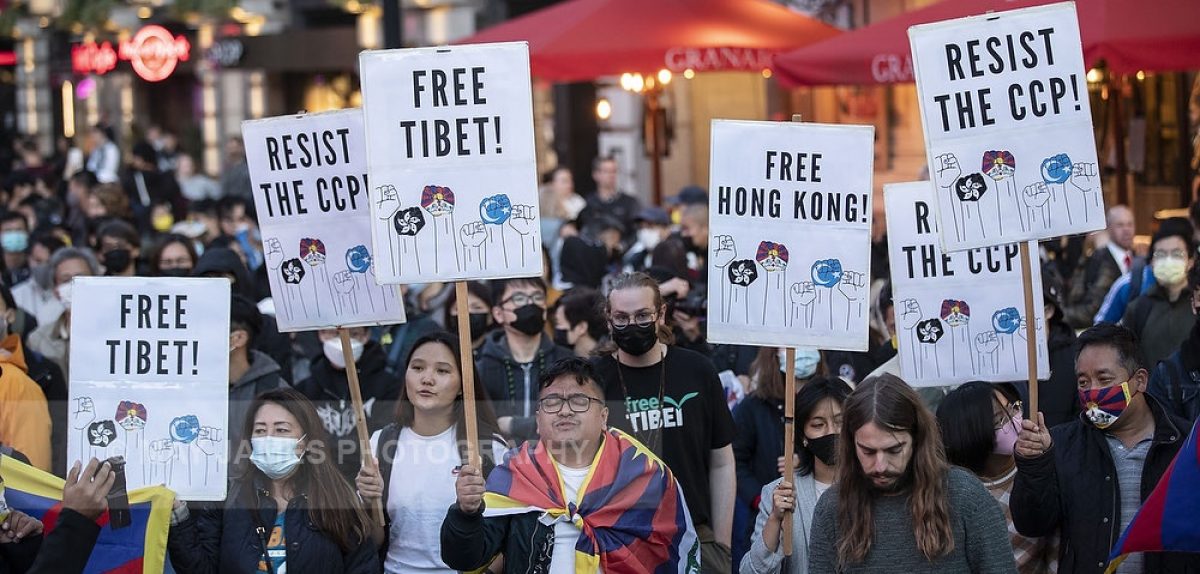


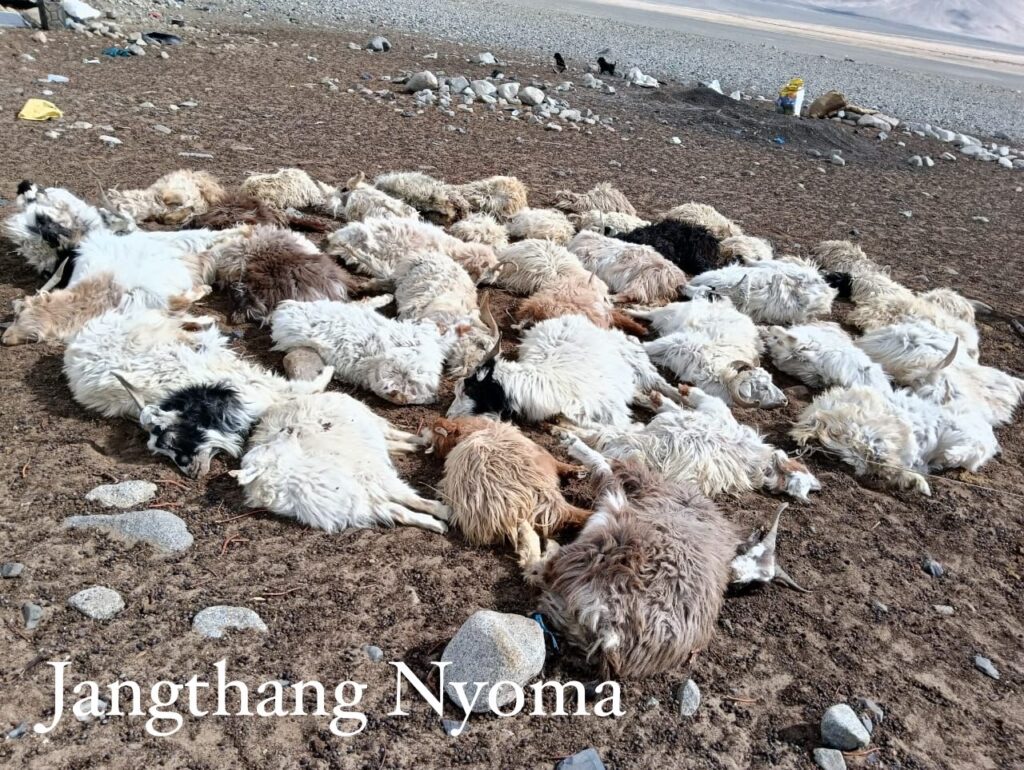
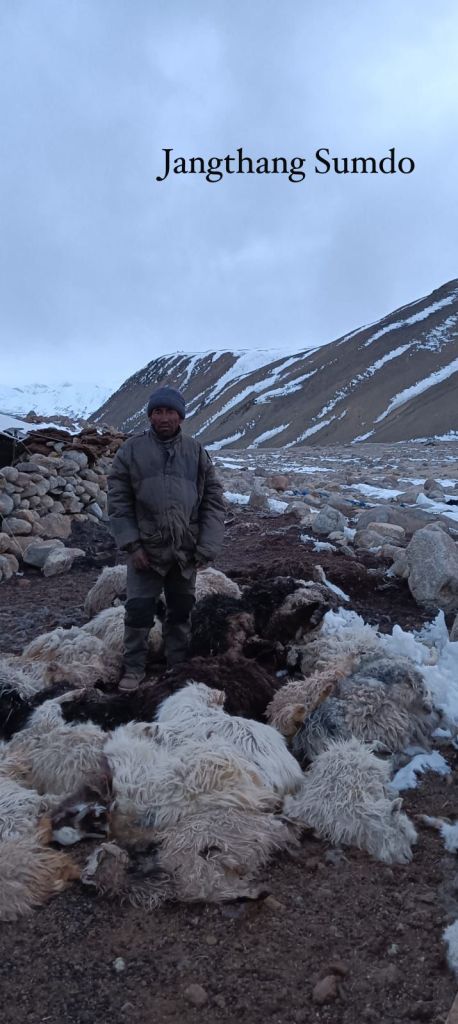

![[Book Review] Voice for the Voiceless: Over Seven Decades of Struggle with China for My Land and My People](https://tsamtruk.com/wp-content/uploads/2023/01/dalailama.jpeg?w=1200)

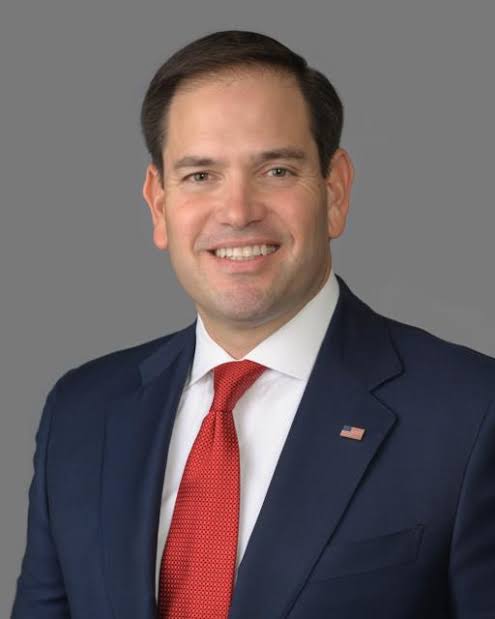


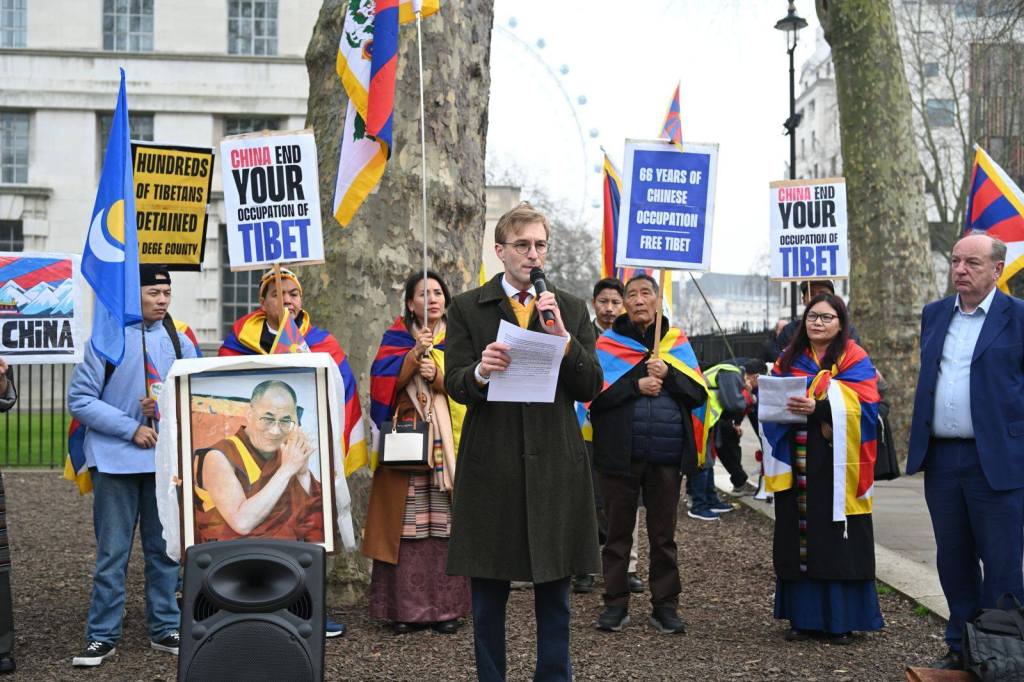
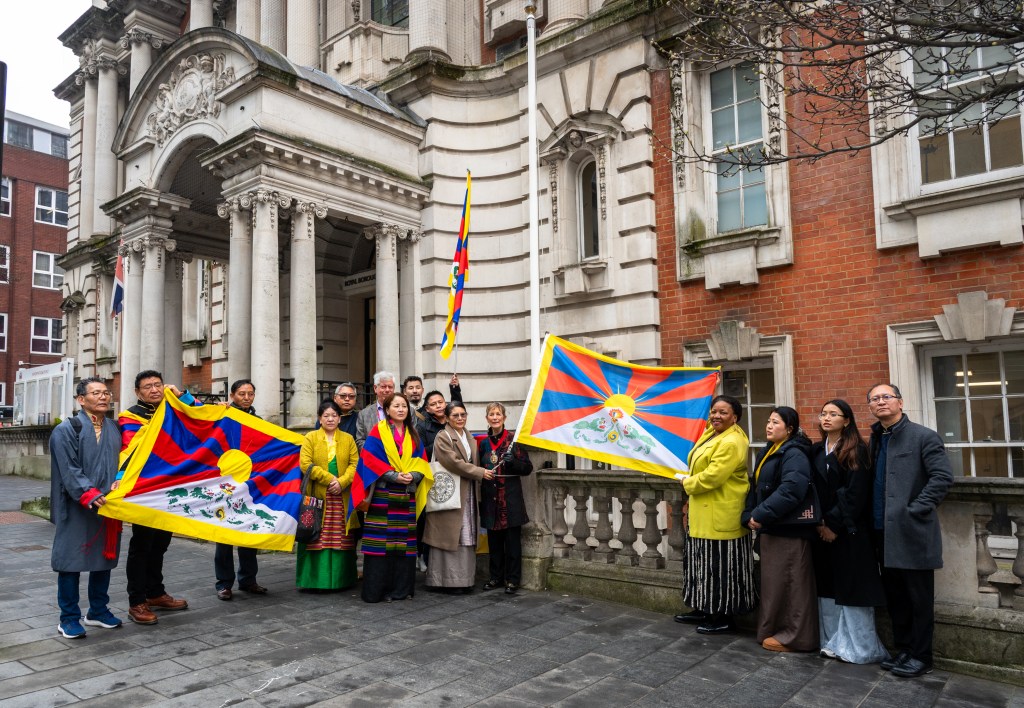

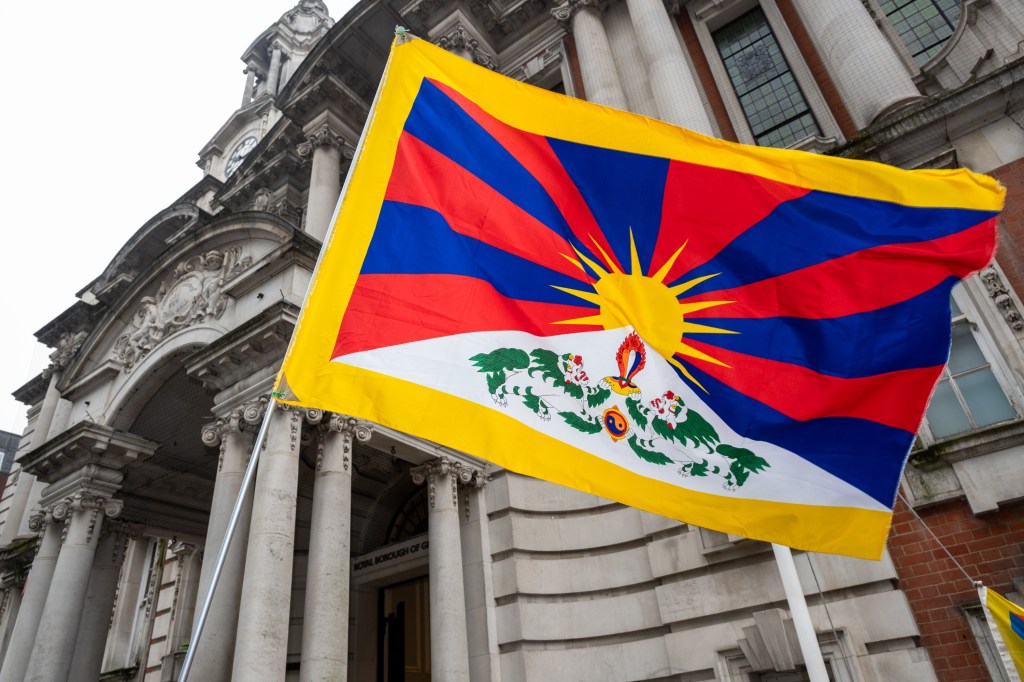
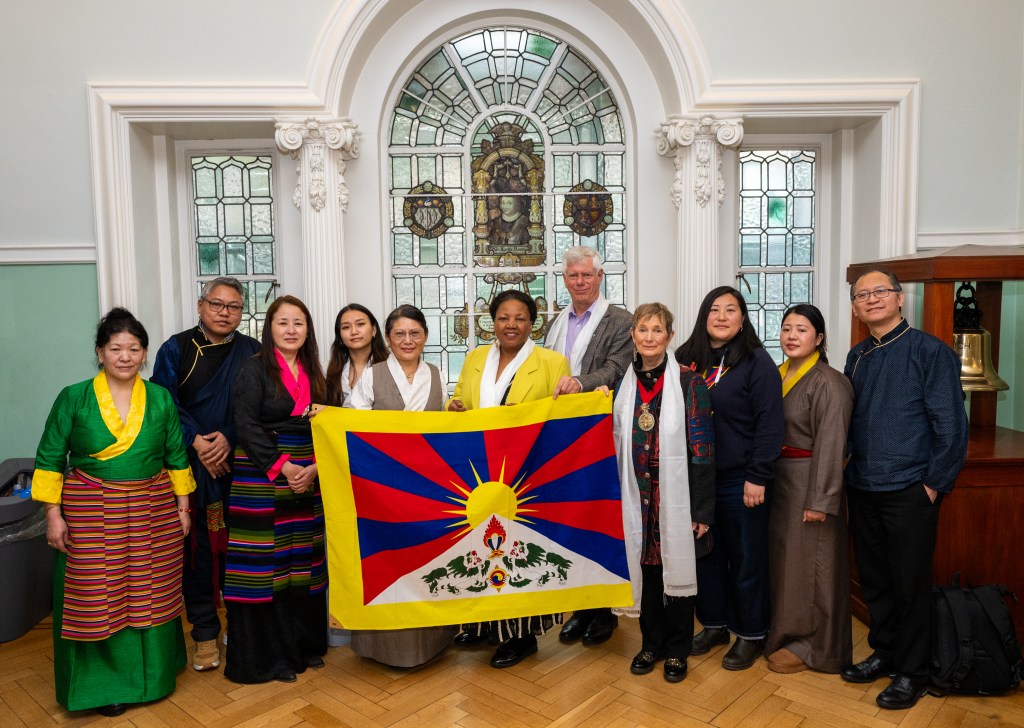
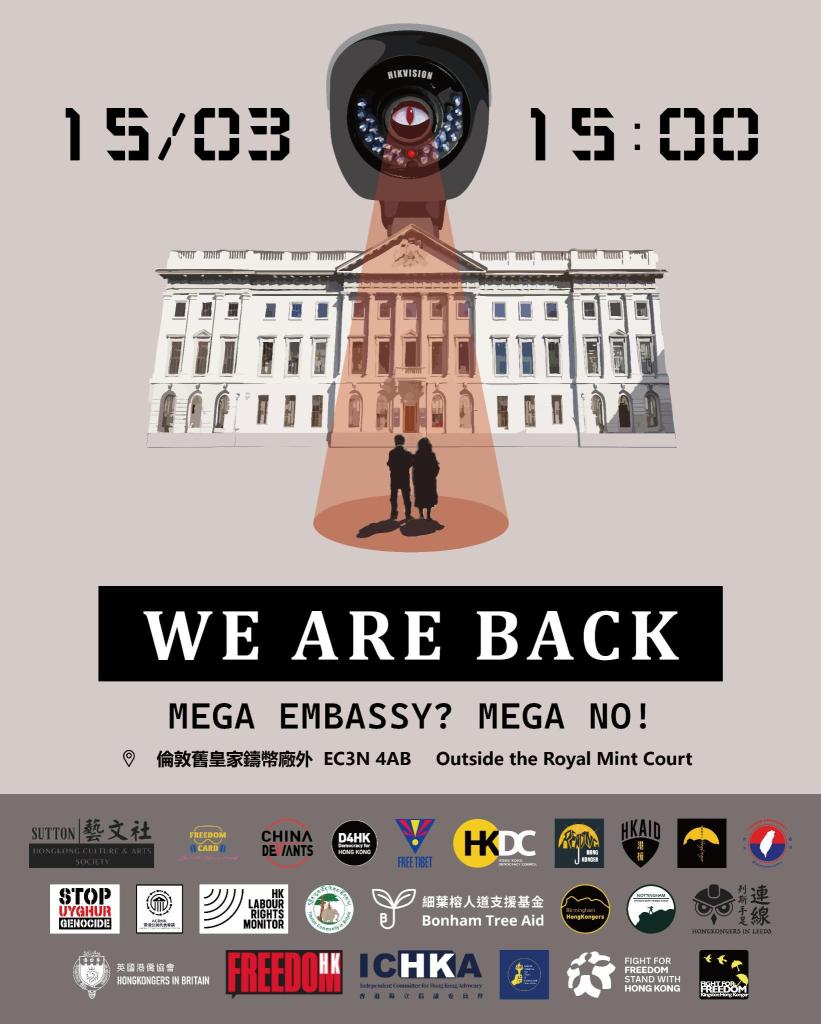
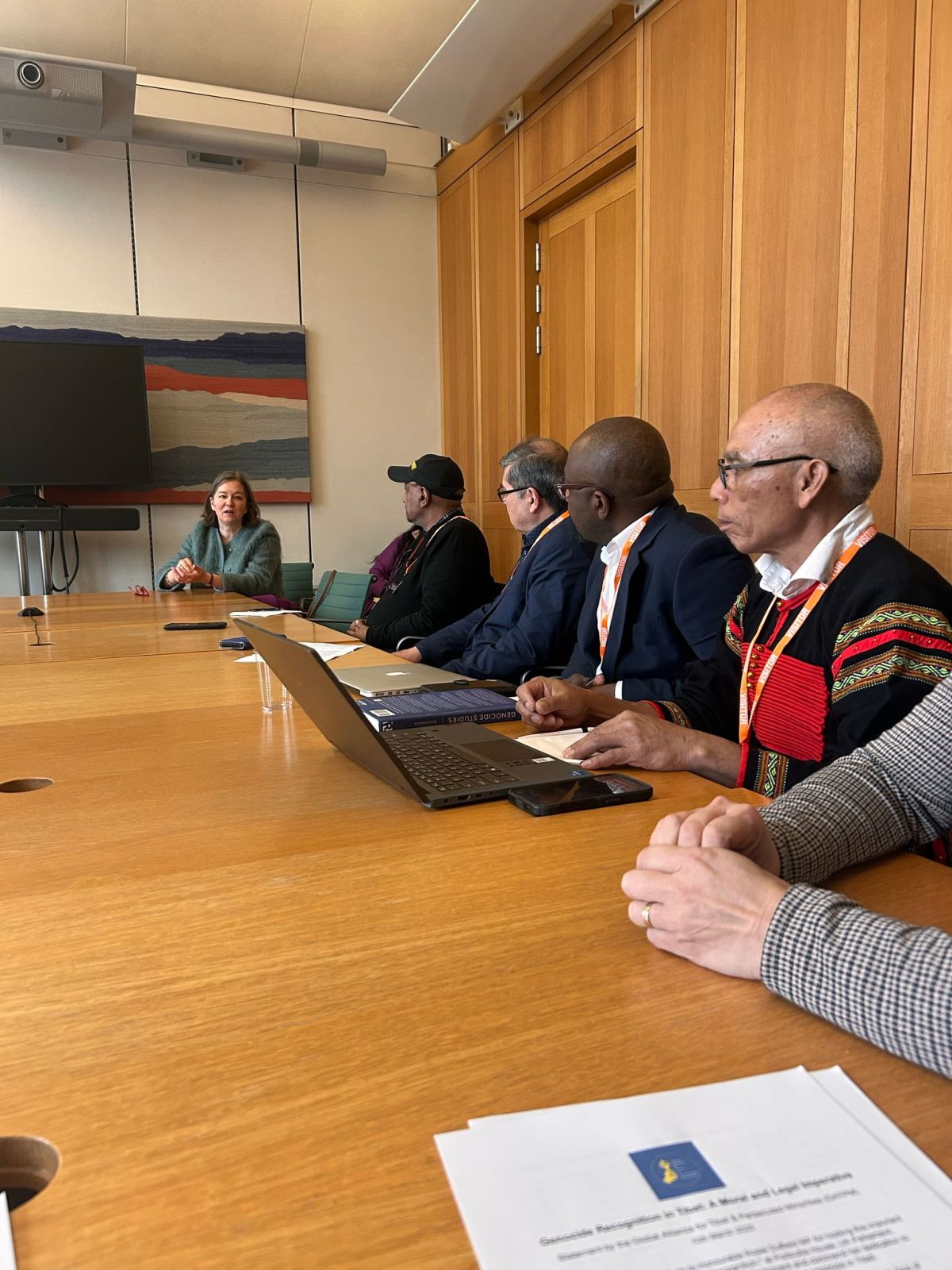
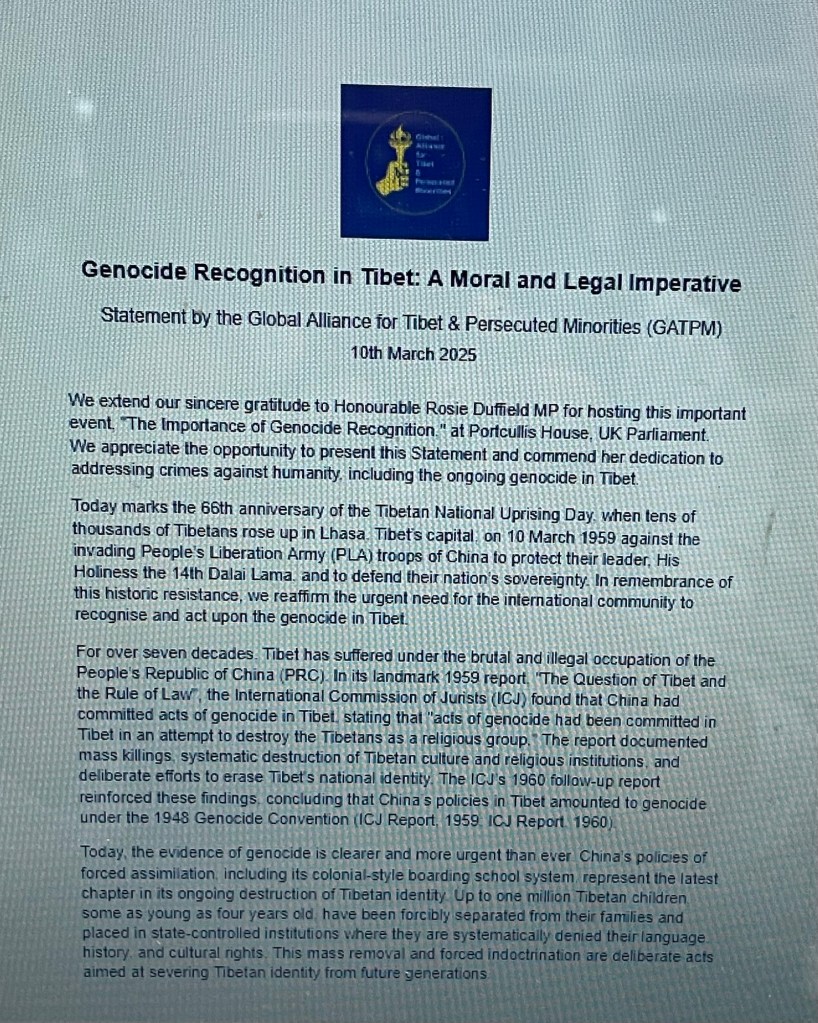


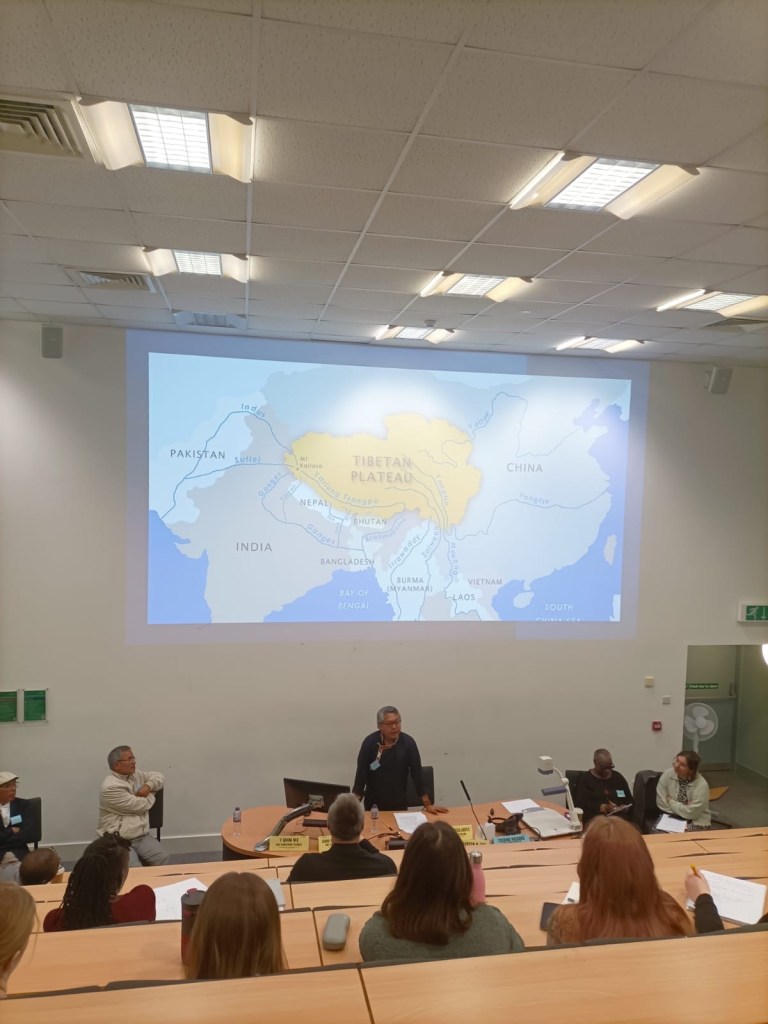


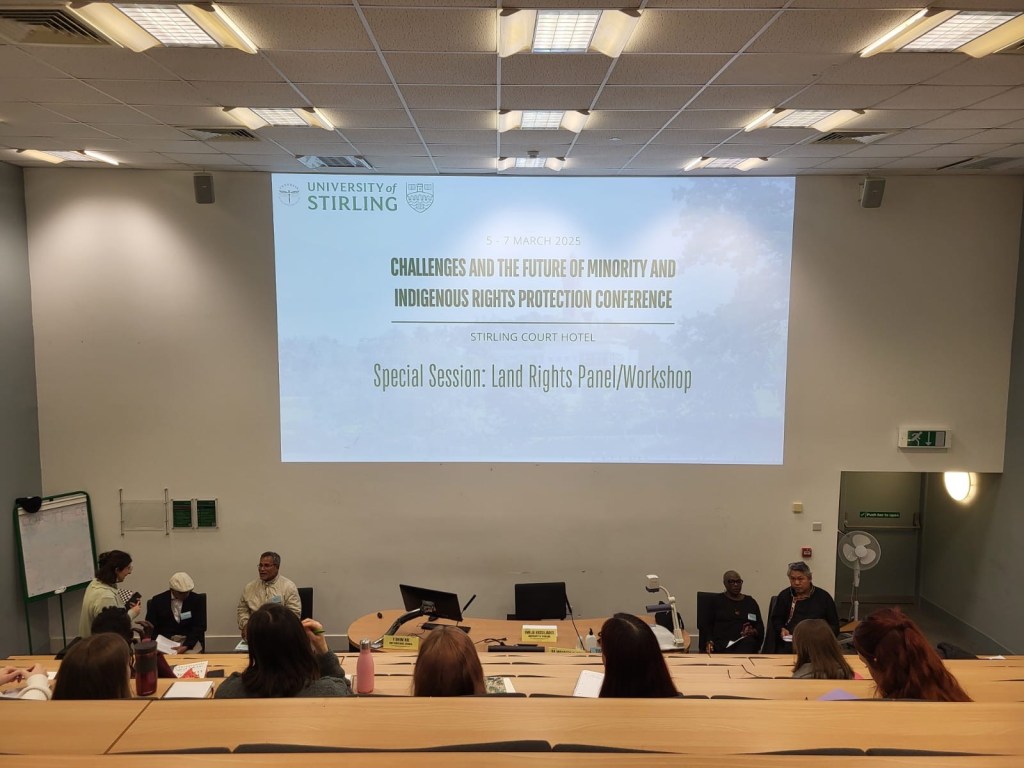


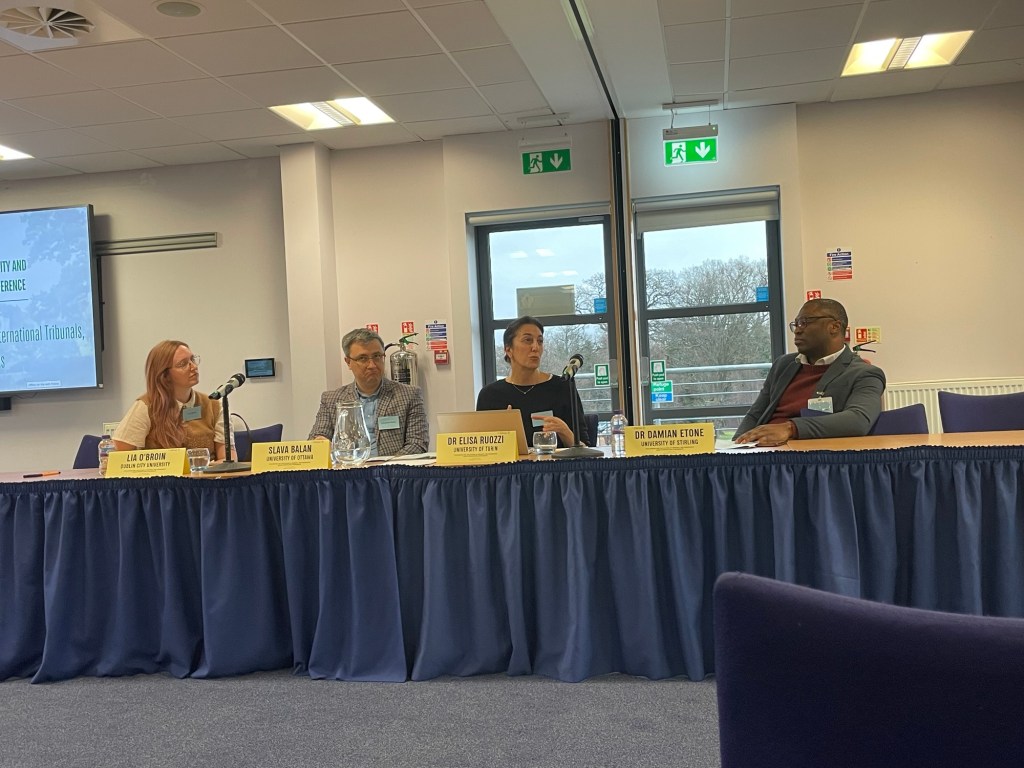
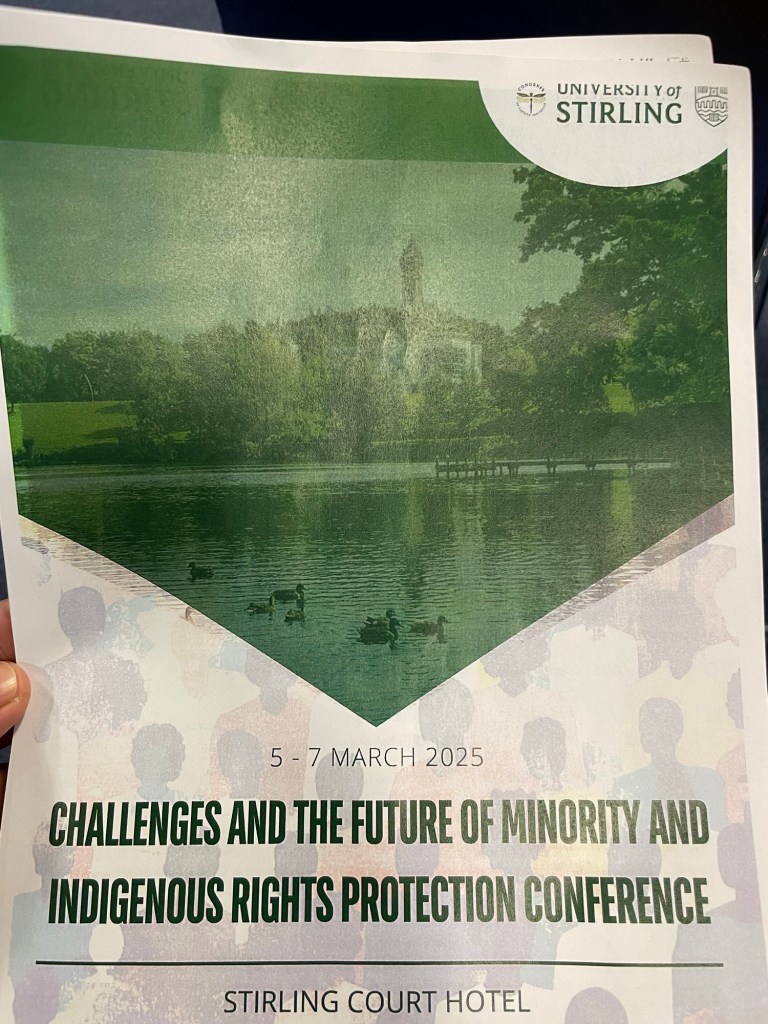
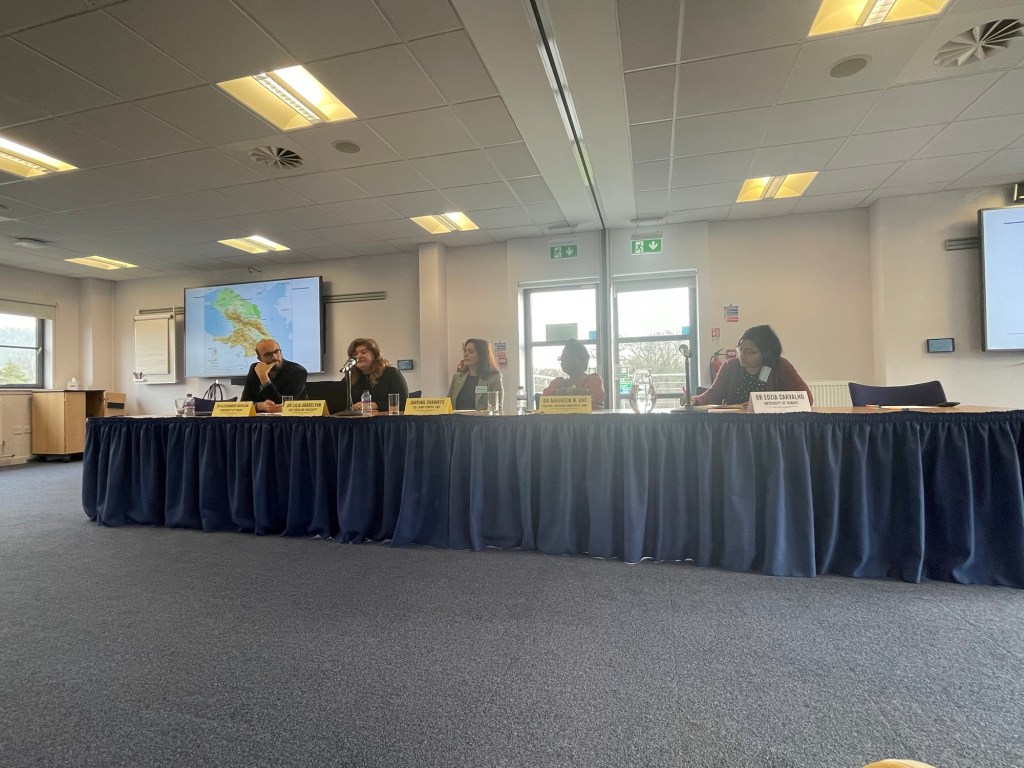


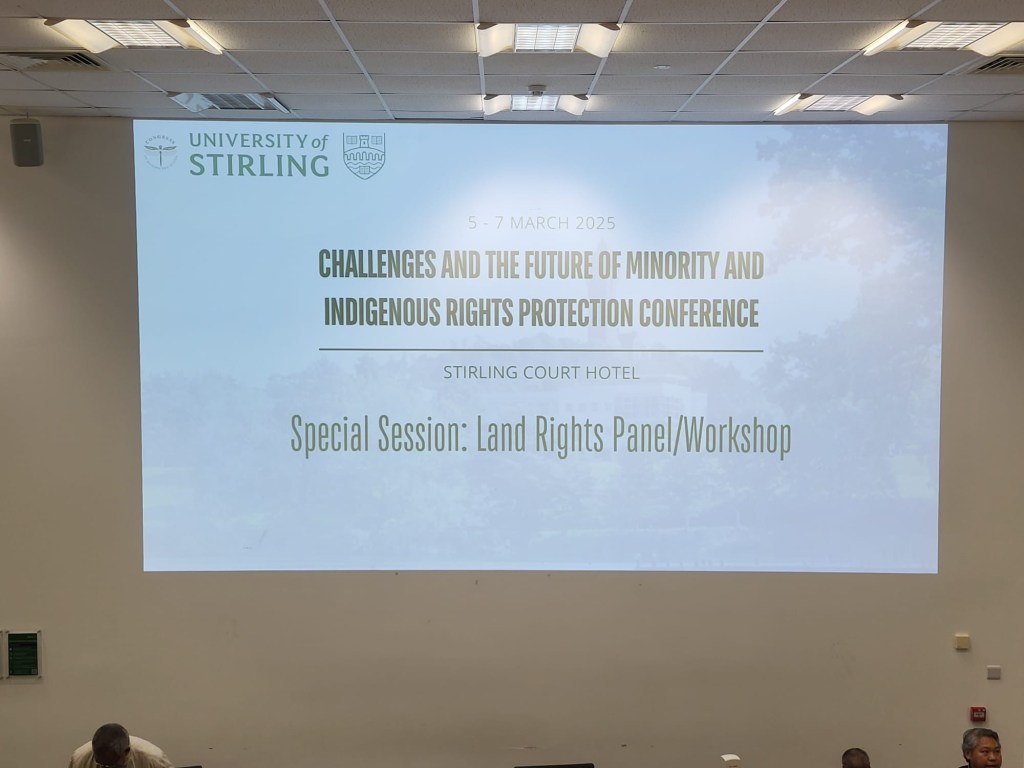

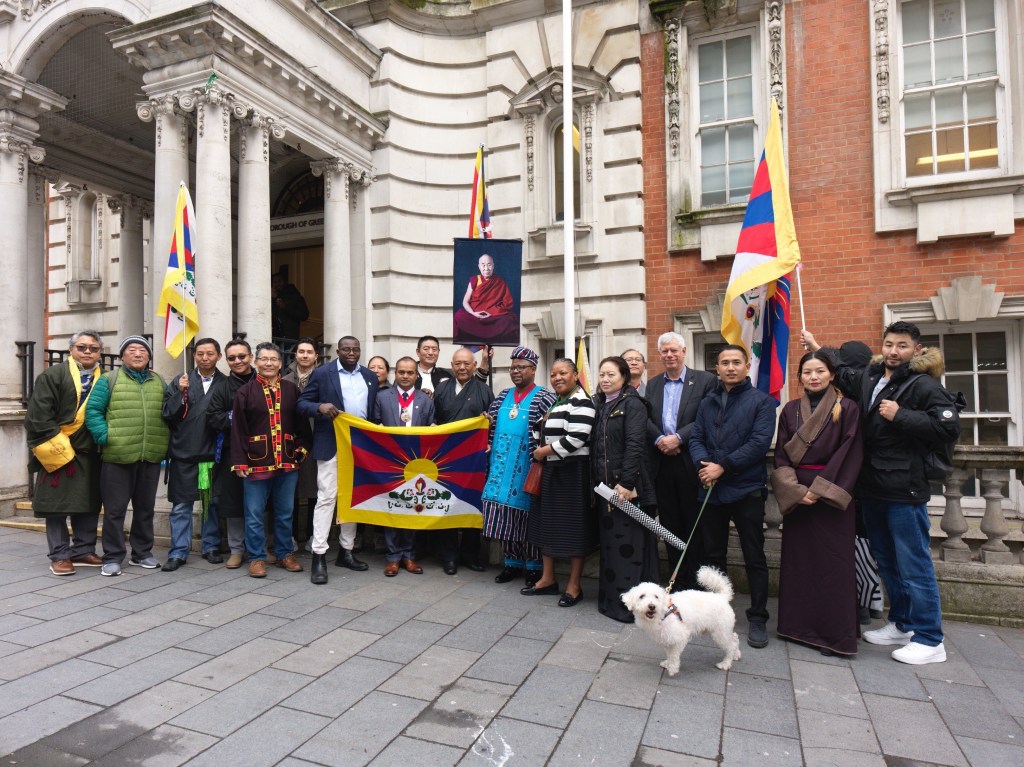

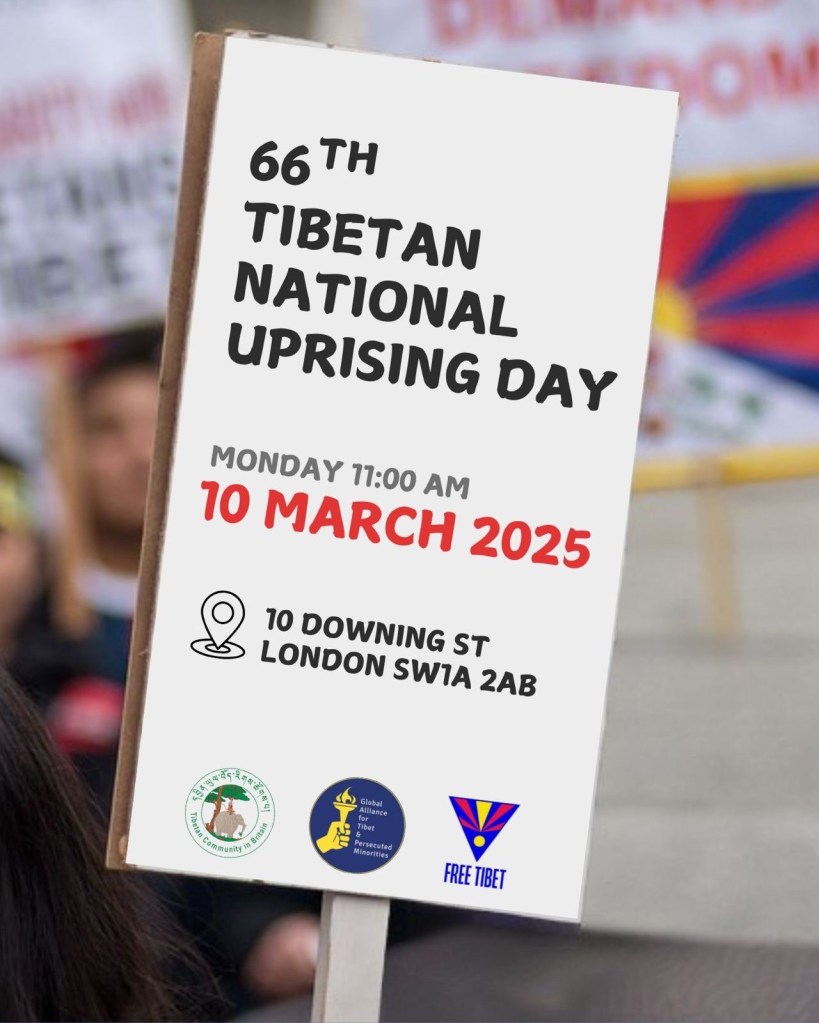

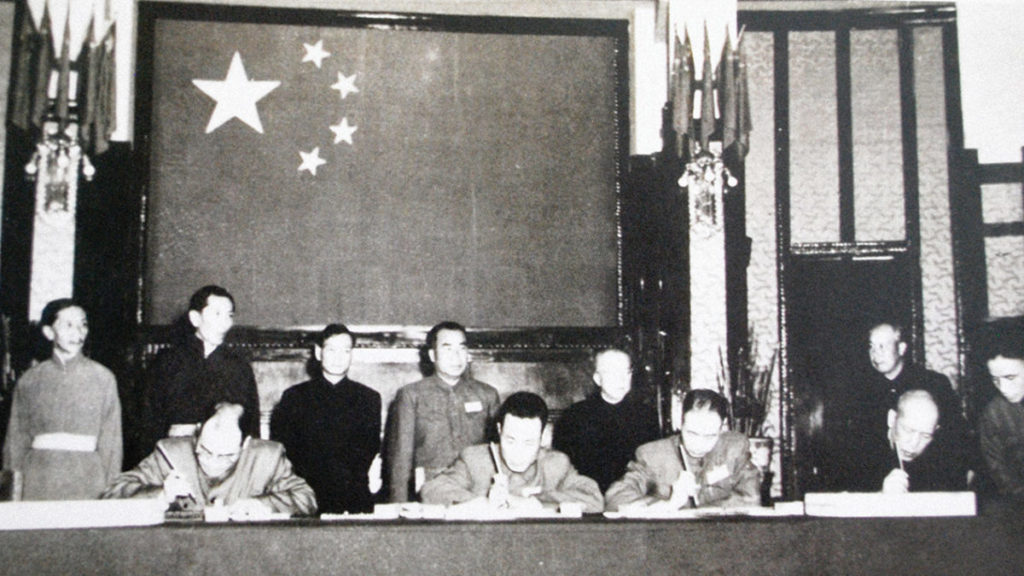

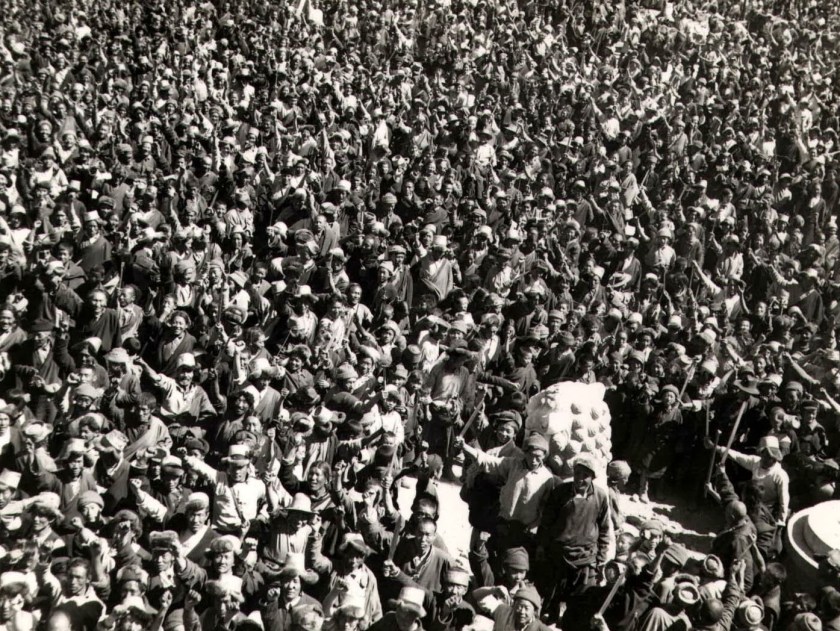
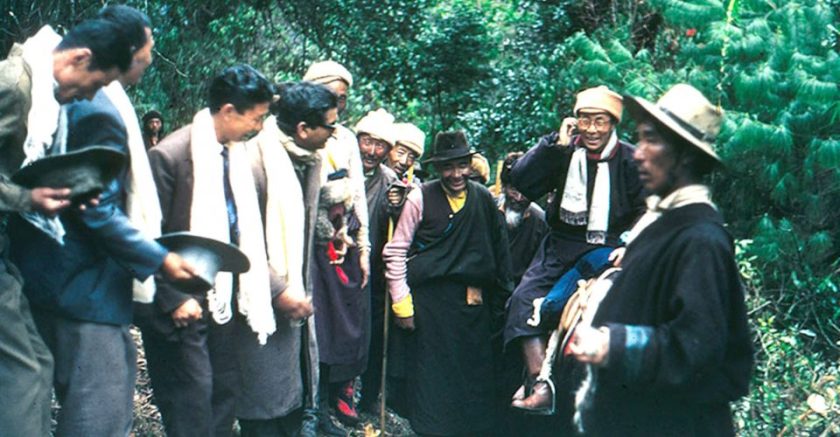


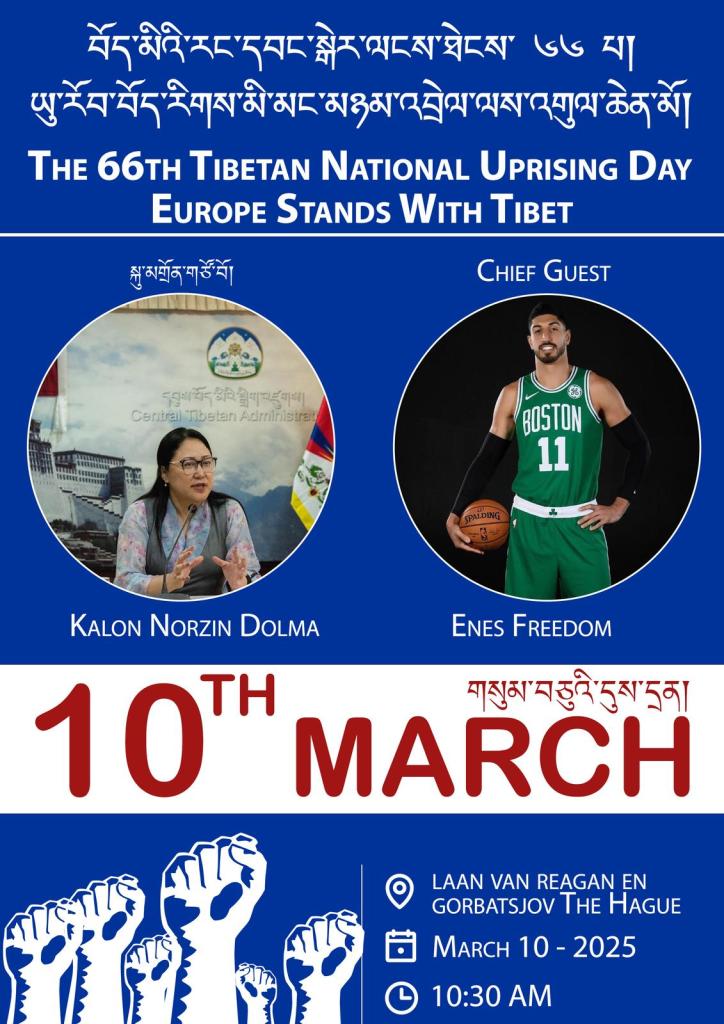
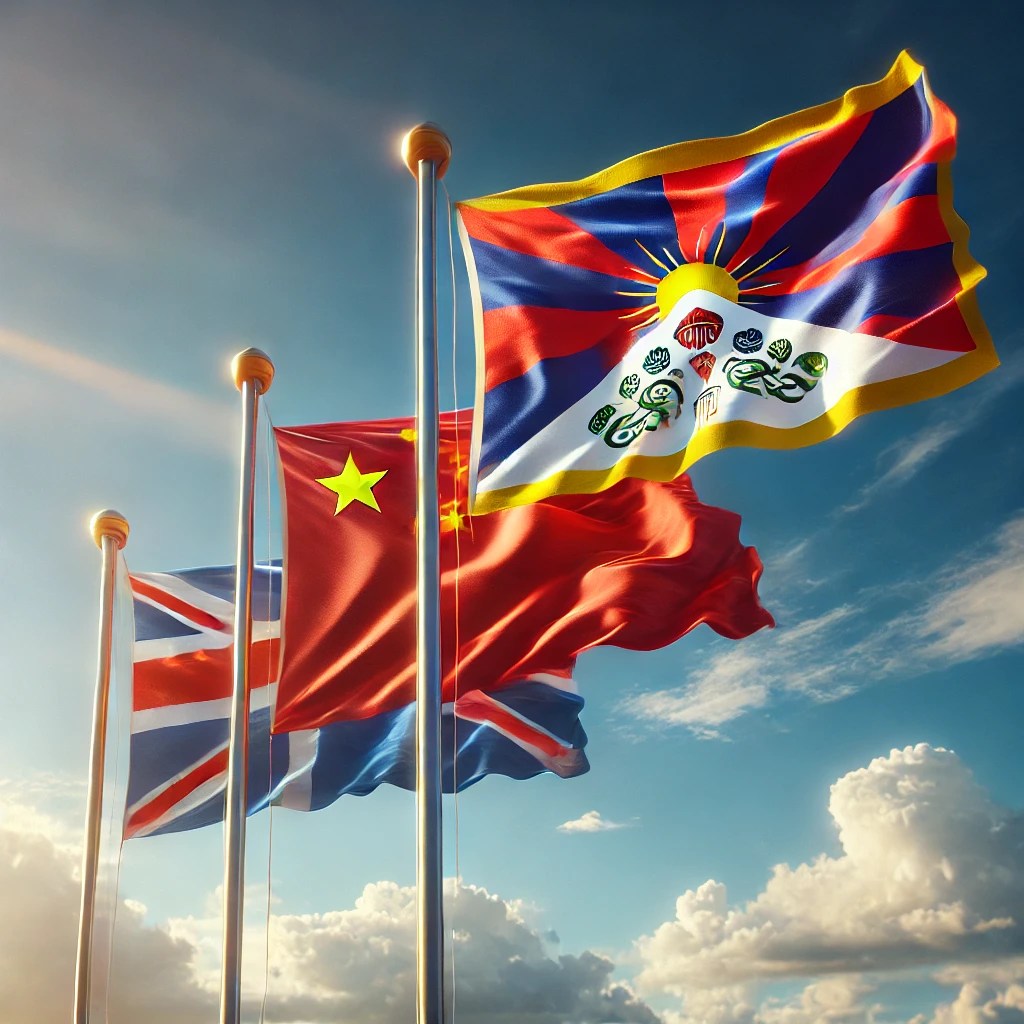

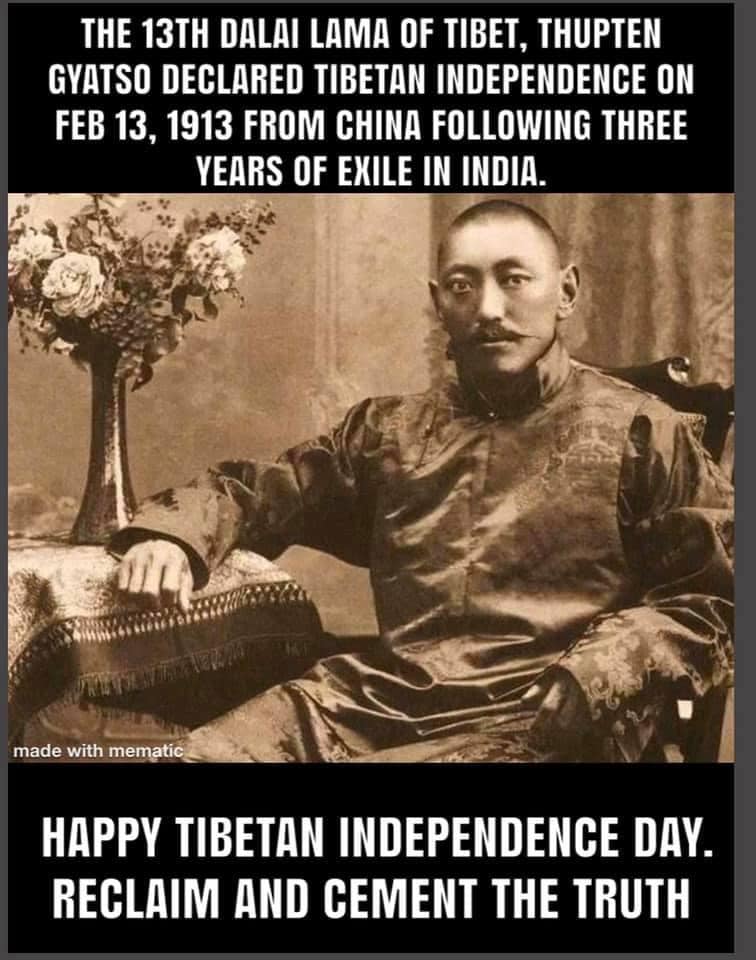

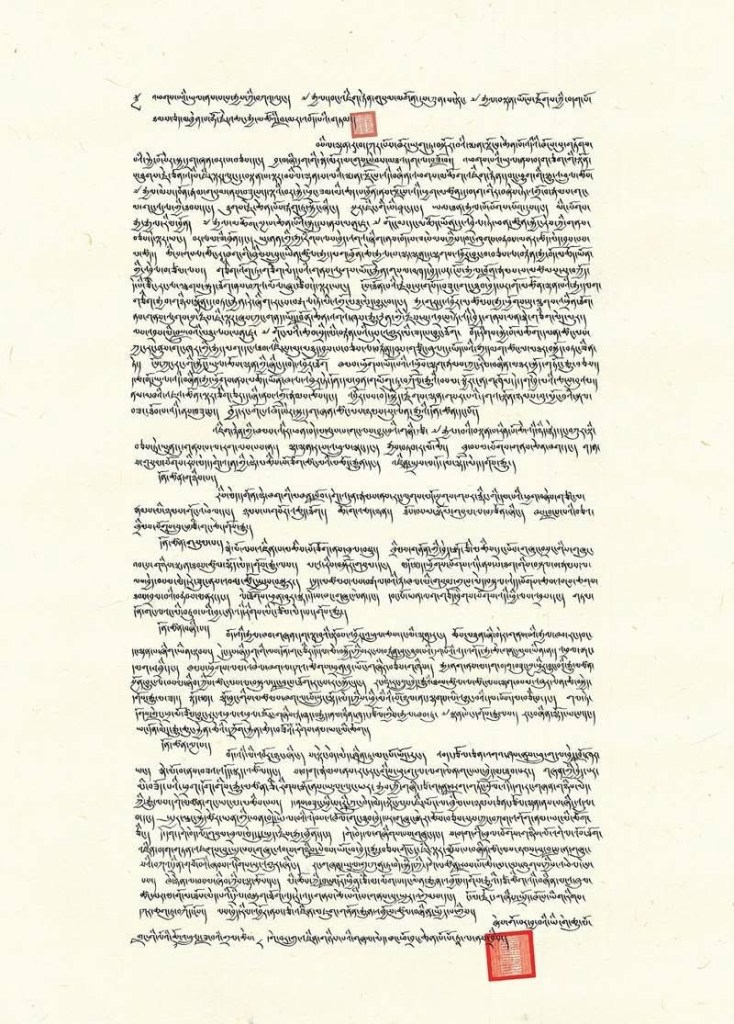





 Global Alliance for Tibet & Persecuted Minorities (GATPM)
You must be logged in to post a comment.