Young children from London-based Tibetan Community are gearing up for their Annual School Show, on Saturday 17th June from 2pm, at the Asian Community Centre (Plumstead), White Hart Road, London SE18 1DG.
The Tibetan children will be exhibiting what they had learned during the year in a two-hour public programme, which starts at 3pm. The programme will be conducted by the children themselves, after a brief introduction by a senior teacher.
Children from four classes – Lhasa, Norbulingka, Potala and Yumbu Lhakhang, will give presentations on Tibetan history, language, grammar, songs, music and dances.
This Free Entry event is open to anyone and it is expected to attract a large number of people, especially those who love Tibetan culture and music. The venue is open to the public from 2pm onward with various fun games for kids and guests. (Please do bring some change!)
Delicious Tibetan dinner (£5 per head), freshly cooked by the parents, is expected to be served around 6.30pm, after the cultural show. Drinks, ice creams etc. can be purchased at a nominal price at the counter. There will be raffle draw with amazing prizes too!
Organisers of this year’s event have assured that there will be plenty of time for those who love Gorshey, the popular Tibetan circle dance, after the dinner! The event finishes at 11pm.
It is going to be a memorable day for everyone. So, come and have fun with your friends and family at the Asian Community Centre!
About the London School of Tibetan Language & Culture (LSTLC)
The school has history dating back to the early 1990s, when a small number of Tibetan children initially attended Tibetan language class at the Tibet House, when Kasur Kesang Takla was the Representative of His Holiness the Dalai Lama at the Office of Tibet, London. Late Gan Tsering Dhundup Gonkatsang was the first Tibetan Language Teacher who taught the Tibetan children for many years.
As the small London-based Tibetan Community grew over the past decade, the weekend Tibetan language class had to adapt to the changing situation. After a year-long rigorous efforts made by all concerned stakeholders to bring the small Tibetan Community together to a more centrally located Tibetan learning centre, the London School of Tibetan Language and Culture was formally inaugurated, on Sunday 11th September 2016, at John F Kennedy Special School in Stratford, east London. Currently, there are four teachers and 47 children who attend the LSTLC, which is now based at School 21. The children come from the Greater London region and neighourbouring counties, including Hertfordshire and Surrey. The school accepts admission from Year 1 students or 6 years-old and above.
Volunteer teachers from Tibetan Community UK facilitate the Teaching & Learning of Tibetan language (reading, writing and spoken), history, traditional music and dance to the children, most of whom are born in this country. These weekly sessions are held on Sundays from 10am to 1pm in Stratford, east London, during school term-time (an equivalent of 36 Sundays annually). Additional sessions are also held to prepare for special events. The school begins with Morning Assembly, when children recite Buddhist prayers and give presentations, followed by three 45-minutes sessions for Tibetan history, language and music.
Written Ministerial Statement (UIN HCWS822) made on 6 June 2023
The Rt Hon Tom Tugendhat, Conservative MP for Tonbridge and Malling, currently holds the Government post of Minister of State (Home Office) (Security).
“Last November, I committed to update the House on the response to media reporting of unofficial Chinese ‘police service stations’. The Minister for Crime, Policing and Fire reiterated this commitment in April.
The Rt Hon Tom Tugendhat, Conservative MP for Tonbridge and Malling, currently holds the Government post of Minister of State (Home Office) (Security).
Reports by the non-governmental organisation Safeguard Defenders claimed that there were three Chinese ‘police service stations’ in the UK – in Croydon, Glasgow, and Hendon. Further allegations have been made about an additional site in Belfast.
These reports alleged that, whilst these ‘police service stations’ are officially set up in countries across the world to conduct administrative tasks to support Chinese nationals residing abroad, they are also used to monitor and harass diaspora communities and, in some cases, to coerce people to return to China outside of legitimate channels.
The Police have visited each of the locations identified by Safeguard Defenders, and carefully looked into these allegations to consider whether any laws have been broken and whether any further action should be taken. I can confirm that they have not, to date, identified any evidence of illegal activity on behalf of the Chinese state across these sites. We assess that police and public scrutiny have had a suppressive impact on any administrative functions these sites may have had.
However, these ‘police service stations’ were established without our permission and their presence, regardless of whatever low level administrative activity they were performing, will have worried and intimidated those who have left China and sought safety and freedom here in the UK. This is unacceptable.
The Chinese authorities regularly criticise others for what they see as interference in their internal affairs. Yet, they felt able to open unattributed sites without consulting the UK Government. It is alleged that this was a pattern repeated around the world.
The Foreign Commonwealth and Development Office have told the Chinese Embassy that any functions related to such ‘police service stations’ in the UK are unacceptable and that they must not operate in any form. The Chinese Embassy have subsequently responded that all such stations have closed permanently. Any further allegations will be swiftly investigated in line with UK law.
I hope that this clarifies what we know about these alleged ‘police service stations’ and the action that we have taken. The 2023 Integrated Review Refresh makes clear that we want to engage and partner with China on key issues where it is in our national interest to do so. However, the UK will always put national security first.
Let me be clear, any attempt by any foreign power to intimidate, harass or harm individuals or communities in the UK will not be tolerated. This is an insidious threat to our democracy and fundamental human rights. That is why I asked the Defending Democracy Taskforce to review the UK’s approach to transnational repression to ensure we have a robust and joined up response across government and law enforcement. Understanding and combatting this kind of interference is a key pillar of our Taskforce’s efforts.
The National Security Bill, now in its final stages, represents the biggest overhaul of state threats legislation in a generation, and will drastically improve our tools to deal with the full range of state threat activity, regardless of where it originates. The Bill contains provisions that will leave those seeking to coerce, including through threats of violence, for, or with the intention to benefit, a foreign state liable to prosecution in a way that they currently are not. Those convicted could face up to 14 years in prison. I urge Parliament to quickly pass the Bill so its powers can be used to clamp down on foreign interference and transnational repression.
I look forward to working closely with this House to further protect our democracy.”
China’s communist regime is increasingly subverting procedures and norms related to human rights at global forums, including the United Nations, intending to advance its agenda and minimize scrutiny of its violations, according to experts and advocates.
“Beijing will continue to write its own narratives, including on human rights, by framing a new order as she sees it, which would be entirely different from the U.S.-led allies’ perspective in the coming years,” Tsering Passang, the founder and chairman of the advocacy group Global Alliance for Tibet and Persecuted Minorities, told The Epoch Times in an email.
Several Chinese state-run media and online resources tout China’s endorsement of human rights forums and its advocacy and promotion of global human rights. In contrast, the free world has published numerous reports—including testimonies by victims who fled China—about Chinese state-perpetuated violations within and outside the country.
Experts highlight the narrative warfare this situation brings to the multilateral forums where the Chinese regime identifies every attempt of the West to hold it or its allies accountable for their human rights violations as an attack against Beijing’s foreign policy. While the regime uses the concepts of human rights in its narratives, its goal is to defend its communist policies and criticize the free world.
Benedict Rogers, the co-founder and chief executive of the Hong Kong Watch and the author of the new book “The China Nexus,” believes that, in some ways, today’s global human rights are at the mercy of Chinese foreign policy agendas.
“To a certain extent, yes, and as a P5 member of the Security Council, it can wield its veto power,” Rogers told The Epoch Times in an email. “The reason, for example, the crises in Myanmar and North Korea have not received more attention is, at least in part, because China uses its influence to protect them diplomatically and politically.”
The Chinese regime has continuously come to the rescue of its allies despite their records of human rights violations. For example, until 2020, Beijing vetoed the United Nations Security Council’s most severe and potentially effective draft resolutions against the Syrian regime 16 times, according to the Syrian Network for Human Rights (SNHR).
The SNHR, in a report in July 2020, alleged that these vetoes have led to the killing of “nearly a quarter of a million Syrians” and the “arrest of nearly 150,000 others, and the spread of impunity.”
Sophie Richardson, the China director of Human Rights Watch, wrote in a paper (pdf) published by Brookings in 2020 that the Chinese regime in recent years had ratified many core U.N. human rights treaties, has served as a member of the U.N. Human Rights Council (HRC), and also seconded Chinese diplomats to positions within the U.N. human rights system.
“Particularly under President Xi Jinping’s leadership, the Chinese government does not merely seek to neutralize U.N. human rights mechanisms’ scrutiny of China, it also aspires to neutralize the ability of that system to hold any government accountable for serious human rights violations,” Richardson wrote in her paper titled “China’s Influence on the Global Human Rights System.”
She emphasized that the “rights-free development” Beijing endorsed in China is now being established as a Chinese foreign policy tool worldwide.
“Increasingly Beijing pursues rights-free development worldwide, and tries to exploit the openness of institutions in democracies to impose its world view and silence its critics,” wrote Richardson.
Passang said the Chinese Communist Party (CCP) had used its veto power in recent years to prevent international intervention in issues it considers internal affairs, such as the situation in Tibet or Xinjiang.
He believes that the U.N. system has lost focus of the noble objectives with which it was founded and appears to work in favor of more powerful nations today.
“In my view, the People’s Republic of China (PRC) has benefited the most amongst any nation in the U.N. ever since the CCP’s PRC was given the U.N. permanent seat after replacing the Nationalist’s Republic of China (Taiwan) by the U.S. and its allies.
“Let’s not forget the Kuomintang of the Republic of China (ROC), now Taiwan, was a founding member of the United Nations after the Second World War,” Passang said.
General view at the opening of the UN Human Rights Council’s 44th session on June 30, 2020 in Geneva. – Hong Kong’s chief executive defended China’s sweeping national security law for the city before the United Nations, urging the international community to “respect our country’s right to safeguard national security.” (Photo by Fabrice COFFRINI / AFP) (Photo by FABRICE COFFRINI/AFP via Getty Images)
‘A Chinese Slush Fund’
China is the second largest donor to the United Nations after the United States. Critics say that Beijing uses these funding channels for its agendas, including winning over the opinion of countries that rely on it economically.
According to Rogers’s book, “The China Nexus,” China announced in 2016 that it would donate a billion dollars to the U.N., with a payment of $20 million per year, “ostensibly for peace, security and development.”
“According to the former U.S. ambassador to the U.N. Economic and Social Council, Ambassador Kelley Currie, $10 million of this goes straight into the office of the U.N. secretary-general, ‘basically for his personal use to do whatever he wanted, with no oversight from anybody other than his office and the Chinese government,’” Rogers told The Epoch Times, adding that Currie told him in person that the U.N. Department of Economic and Social Affairs, in particular, has turned into a “Chinese fiefdom” run by a Chinese official for many years.
The other half of the $20 million a year given by China to the United Nations goes to this department, specifically to advance China’s Belt and Road Initiative within the U.N. system, he said.
“Ambassador Currie describes this as ‘a Chinese slush fund.’ China has also learned to manipulate the G77 caucus of developing countries, which has 134 members, making it the majority caucus in the General Assembly. This enables China to mobilize resistance to resolutions critical of its human rights record and manipulate the system,” said Rogers.
The Atlantic Council, in a report last year, focussed on China’s modus operandi in Global South or sub-Saharan Africa, Latin America, and the Middle East. It said China pursues a global discourse favorable to its agendas by fostering “buy-in from leaders” in the region for Chinese-defined norms.
“This includes its principles of ‘non-interference’ in other countries’ internal affairs and on a concept of ‘human rights’ that actively subordinates personal and civic freedoms in favor of state-centered economic development. It is meant to stand in opposition to a Western human rights framework that China criticizes as having been used for interventionist ends, for example, in Afghanistan and Iraq,” said Kenton Thibaut, Atlantic Council’s China fellow and the report’s author.
Passang said that Beijing also interferes in the domestic affairs of countries that rely on Chinese aid and investment.
“For example, China’s monetary assistance to Nepal has one commitment required from the recipient country … Nepal’s authorities must not allow the Tibetan refugee community there to engage in any political, human rights, and religious activity related to Tibet and the Dalai Lama, which Beijing deems political,” said Passang, adding that merely wearing a “Free Tibet” t-shirt in Nepal has become an issue today in the Himalayan nation.
“This is not so different from what the Tibetans in China’s occupied Tibet experience day to day.”
Canada’s Ambassador and Permanent Representative to the United Nations Marc-Andre Blanchard speaks during General debate of the 74th session of the United Nations General Assembly on September 30, 2019 at the United Nations Headquarters in New York City. (Photo by Johannes EISELE / AFP) (Photo credit should read JOHANNES EISELE/AFP via Getty Images)
‘Battle of Values’
At the core of China’s foreign policy, supposedly based on global human rights, is its agenda to gain worldwide supremacy and spread its antagonistic worldview to everything liberal held by the West. Experts said this growing battle of values requires that the West speedily braces itself for this narrative warfare on global human rights.
“Certainly, the world is now facing a choice between authoritarianism and freedom, and the authoritarian narrative is clearly led by China and Russia. The free world has to wake up to this battle of values,” said Rogers.
Beijing has created the South-South Human Rights Forum, whose last conference was held on Dec. 8, 2021. It was organized by the State Council Information Office of the Ministry of Foreign Affairs, and the attendees included various former national leaders, officials, and academics. The forum’s website discusses the CCP’s ideas of democracy, Xi’s call for stronger South-South cooperation, and Beijing’s economic assistance to developing countries participating in its Belt and Road Initiative (BRI).
Providence Magazine by the Washington-based Institute of Religion and Democracy reported that one of the participants, Chinese political scientist Zhang Weiwei of Fudan University, talked about the need for collective human rights over individual human rights. He said that individual human rights like “freedom of speech” can be restricted in the interest of collective rights.
Another participant, Tom Zwart, a professor at Utrecht University in the Netherlands, contended that human rights must be dissociated from “liberalism.” He defined international human rights as a “liberal social engineering project” that was losing its hold.
Passang said today’s battle of values exists because of the divided international response on human rights issues, particularly on CCP-perpetuated violations.
“Different countries and international organizations have varying levels of concern and prioritization regarding human rights. There is often a lack of consensus on how to respond to the CCP’s actions, leading to a divided international response. Some countries may prioritize engagement and dialogue or remain silent, while others may opt for more confrontational approaches,” he said.
Passang said it is still not too late for the international community, led by the United States, to act quickly to bring true justice to all U.N. member nations and those regions annexed by the Chinese regime, such as Tibet and East Turkestan.
“If [left] unchecked and [we] let the rogue regime such as the CCP in China go with the status quo, the world will become a very dangerous place to live in the decades ahead. We must act—act soon,” he said.
Venus Upadhayaya
*Venus Upadhayaya reports on wide range of issues. Her area of expertise is in Indian and South Asian geopolitics. She has reported from the very volatile India-Pakistan border and has contributed to mainstream print media in India for about a decade. Community media, sustainable development, and leadership remain her key areas of interest.Twitter: @venusupadhayaya
Tibetan activist leaders expressed support and solidarity with Chinese people in China and around the world.
On Sunday 4th June, protests and rallies were held across the United Kingdom to mark the 34th anniversary of the Tiananmen Square Massacre. On this day in 1989, the peaceful demonstrators, mainly students, young men and women, were brutally crushed down by the CCP authorities when at least a thousand were massacred, many more thousands injured in Beijing. The hardliner rulers of the CCP regime ordered at least 300,000 armed troops to engage in a bloody crackdown on their own people, who were simply calling for more freedom and democracy for the Chinese people in China.
China’s authorities continue to conceal information on the events of this period and ruthlessly crush any modern protests associated with the pro-democracy movement in China as well as in other regions, including in Hong Kong. Up until 2020, Hong Kong was the only part of China where the anniversary related to the Tiananmen Massacre event could be commemorated. However, after Beijing’s imposition of the National Security Law, the citizens in Hong Kong today can no longer publicly commemorate the anniversary.
Several hundred thousands of Hong Kong citizens, especially the young people, had already fled and continue to leave their homelands into exile for safety, fearing brutal crackdown by the CCP’s authorities for their pro-democracy activities in recent years. Countries such as the UK, the US, Canada and Australia have become their new homes from where their fightback for pro-democracy and freedom in Hong Kong is pursued. In the UK, protests and rallies were held across many cities, including in Manchester, Sheffield and Nottingham to commemorate the day.
In London, the China Deviants, which comprised young Chinese from mainland China as well as from Hong Kong, organised a protest and rally in Trafalgar Square once again, where hundreds of people attended from 5pm to 7pm. Many of the organisers wore face masks to conceal their identity for fear of reprisals from the CCP authorities back home in China and Hong Kong against their families, for organising the anniversary event, banned by the Chinese authorities.
Speakers from various groups, including Global Alliance for Tibet & Persecuted Minorities, World Uyghur Congress, Voice of Southern Mongolia, Inter-Parliamentary Alliance on China (IPAC) as well as young students and activists from mainland China, Hong Kong and Manchuria, condemned the CCP’s regime for its atrocities and crimes committed against humanity. They called for joint actions to defeat the CCP regime.
Whilst expressing his support and solidarity, Tsering Passang, Founder and Chair of the Global Alliance for Tibet & Persecuted Minorities, said: “As we observe the 34th anniversary of the Tiananmen Square Massacre or the June Fourth Massacre, we remember all those brave young men and women, students as well as other individuals, for the ultimate sacrifices they had made for all people in China – who called for democracy and freedom of speech.
“People of China’s occupied nations such as Tibet, East Turkistan and Southern Mongolia, also must continue our campaign for freedom by fostering stronger relations with our friends from China, Hong Kong and Taiwan, and challenge the CCP regime altogether. By coming together also means we become a stronger voice for our respective causes and one day we can defeat the brutal regime.”
The Tibetan activist also said, “Today, nearly a million Tibetan children from the age of 4 to 18 are being forcefully admitted in colonial-style residential schools by the CCP authorities with the core objective to sinicise the Tibetans – in other words – a last resort towards the annihilation of Tibetan identity, language and culture.”
“Since Xi Jinping came to power, we have seen an increased crackdown on ordinary people across China, Tibet and East Turkistan. I do not need to mention the curtailment of freedoms of the Hong Kong people, especially after the CCP regime imposed the National Security Law”, the Tibetan activist added.
Passang also said that Tibetan spiritual leader Dalai Lama fully supported the young Chinese students’ pro-democracy movement back in 1989, who issued “strongest condemnation of the Chinese government and their policy of brutalizing their own people” whilst offering “his unconditional support for the youngsters on the Square”.
The March
At 7pm, the protesters marched towards the Chinese Embassy via Piccadilly Circus, Regents Street and Oxford Circus, passing the landmark BBC building. On the march, the protesters chanted loud slogans such as “Down Down Xi Jinping” “Free China” “Democracy in China” “Free Tibet” “Free Hong Kong” “Free East Turkistan” and “Free Taiwan” whilst carrying banners and big posters.
Rally outside London-Chinese Embassy
The rally outside the Chinese Embassy was held from 8pm to 10pm. This part of the protest and candle-lit vigil was organised by Amnesty International UK and June Fourth Sparks, which was attended by over 500 people. The protest was also aimed to highlight current intimidation of Chinese/Hong Kong people in the UK.
Speakers included Chinese, Hong Kong, Uyghur and Tibetan activists. Tenzin Kunga, Chairman of Tibetan Community UK, spoke at the rally, sharing Tibetan people’s solidarity and support with the Chinese people around the world in their fight for freedom and democracy in China.
Voices from Victims’ Mothers of the Tiananmen Massacre were heard through story-telling and poetry readings during the rally in Chinese and English. This was followed by a candle-lit vigil.
Sacha Deshmukh – Photo: Amnesty International
In the joint press release, Amnesty International UK’s Chief Executive, Sacha Deshmukh said:
“The anniversary of the brutal Tiananmen crackdown is a stark reminder of the lengths to which the Chinese authorities will go to silence dissent.
“Protest continues to be ruthlessly crushed in both mainland China and in Hong Kong, with the long arm of Chinese state repression extending far beyond its borders to communities living in the UK.
“The UK government must defend Hong Kong and mainland Chinese people living here from Beijing’s efforts to intimidate and silence them – it’s vital their rights to peaceful protest and freedom of expression are protected.”
Dr Shao Jiang, June Fourth Sparks’ co-founder, said:
Photo: Dr. Shao Jiang, a Student Leader at the Pro-Democracy Movement in Beijing in 1989
“The 1989 movement was a movement for human rights, freedom, democracy and equality for all. Its goal was for every person to enjoy equal political, economic, social and cultural rights.
“Over the past four years, the Chinese authorities’ refusal to release the truth about the Covid-19 pandemic and its suppression of doctors, journalists and activists’ efforts to investigate it and call for scientific methods to prevent the outbreak and protect people, has resulted in the loss of many lives, including some of the mothers of those who took part in the 1989 protests and became activists themselves.
“The spirit of resistance in Tiananmen and in other places has never died. The dignity and courage of the ‘tank man’ are embodied in the movement to defend people’s rights and a new citizen movement, labour movement and movement against the Chinese Communist Party, as well as the feminist movement whose spirit keeps inspiring us in our struggles ahead.”
For a united workers campaign for the people of China, Taiwan, Hong Kong, Tibet & the Uyghur Region.
A coalition of labour movement and human rights organisations are holding their first meeting for a new campaign which aims to bring together activists in the UK to develop solidarity with workers, oppressed nationalities and others whose democratic rights are threatened or being denied by the Chinese Communist Party and its regime. This important meeting will be held in London on 3rd June.
Introductory speakers include Vicky Blake, President (2020 – 2022) of the University and College Union (UCU), and other leading activists from Hong Kong and China. This will be followed by discussion and amendments on founding statement and other proposals on policies and actions.
The meeting will discuss and vote on proposals to establish a new campaign organisation, based on the draft platform that the meeting co-sponsors agreed, with a Steering Committee to lead on organising campaign activities.
This meeting is also expected to bring together solidarity campaigners to discuss creating a common labour movement campaign in the UK, to unite wherever possible in order to organising an active solidarity for the struggles of workers and oppressed and marginalised people in China for liberation, democracy and equality.
The organisers said, “Last year’s explosion of dissent in the Blank Paper Protests, originating in resistance and revolt against the abuse of Foxconn workers in Zhengzhou’s “iPhone City” and the murderous neglect of Uyghurs in Urumchi, reminds us of the struggles, and the enormous potential power, of China’s workers and oppressed people. The CCP dictatorship has been challenged by Chinese people in a way not seen for decades. Now is the time for a step change in our solidarity to them.”
They also added, “It is increasingly clear that the UK government cannot be trusted to give consistent and meaningful support to those fighting for democratic and workers’ rights in China, Hong Kong, Tibet and the Uyghur Region. Instead it uses these issues to promote nationalist paranoia and xenophobia; justify increased armaments expenditure; and advance Western big business interests. We must therefore base our efforts on the labour movement and grassroots international solidarity, independent from big business interests and the governments that serve those interests.”
The inaugural meeting, supported by a number of solidarity and labour movement organisations, will hear from leading campaigners and trade unionists, discuss the situation, and consider proposals to establish an ongoing joint campaign. All participants will discuss and decide the campaign’s programme and activities. They aim to initiate a joint campaign to build unity:
For democratic and workers’ rights across China and its occupied territories: the rights to free speech, to organise and protest, to form opposition parties to the state and the CCP, to organise independent unions and for the right to strike, to practise any religion or none.
For social justice and economic democracy for the Chinese, Hong Kong, Uyghur, Tibetan and Taiwanese people.
For equality and liberation for women, LGBT people, disabled people, and racialised minorities, and the abolition of the hukou system that discriminates against working-class migrants.
For freedom from repression, and the democratic right to self-determination, for Tibet, the Uyghurs, and Hong Kong.
For environmental protections, including just transition to halt climate change.
Against exploitation, oppression and environmental degradation in other countries affected by China’s economic imperialism and arms sales to tyrants.
None of these struggles benefit from superpower rivalries, xenophobia or threats of war. The campaign should therefore also:
Support the right of threatened nations such as Taiwan to defend their self-determination and to receive arms necessary for that defence from whatever forces are willing to supply them, while opposing armament drives and sabre-rattling by the imperialist camps of China, Russia and the US and their military and security alliances.
Fight racism against people of East & South-East Asian backgrounds.
Oppose the UK government’s racist anti-migrant policies and demand safe routes, sanctuary and equality for refugees fleeing repression, violence and authoritarianism – whether at the hands of the Chinese state or anywhere else in the world. Defend the rights of migrants & refugees who have already come to the UK, and support their inclusion & integration into the local workers’ movement.
To these ends, the campaign’s activities would include:
Organise and support protest and direct action against the Chinese state and its embassies and representatives, and against businesses complicit in repression and exploitation.
Work to win the argument for solidarity within the labour movement and the left, and to engage our trade unions and political organisations in this solidarity.
Encourage and support workers’ action in the global supply chains that connect the working classes here and in China and its occupied territories.
Discussion, debate and education within the left and labour movement on all these issues.
To carry out practical aid tailor made to the communities within the struggles in the UK.
Initial Campaign Sponsors:
Labour Movement Solidarity with Hong Kong
Power to Hongkongers
Red Roots Collective
Peter Tatchell Foundation
Democracy for Hong Kong
Left Chinese Student Association
Uyghur Solidarity Campaign (UK)
Alliance for Workers’ Liberty
Wessex Solidarity
Global Alliance for Tibet & Persecuted Minorities (GATPM)
June 4 Sparks
Join this important inaugural meeting on Saturday, 3rd June from 1.30pm to 5pm at Birkbeck, University of London, Malet Street, London WC1E 7HX
Twenty-four years ago, on 13th May 1999, His Holiness the Dalai Lama opened and consecrated the Tibetan Peace Garden. This only Tibetan monument in the heart of London, was commissioned by Tibet Foundation and built on land kindly provided by Southwark Council. It has been donated to the people of Britain for all to enjoy.
The Tibetan Peace Garden has a unique location. The park in which it is built houses the Imperial War Museum and so attracts large numbers of visitors from all over the UK and abroad. It is within walking distance of Waterloo Station and is close to the Houses of Parliament, Lambeth Palace, the London Eye, the South Bank Centre and Tate Modern.
The Tibetan Peace Garden honours one of the principal teachings of His Holiness – the need to create understanding between different cultures and to establish places of peace and harmony in the world. It is hoped that it will create a deepening awareness of His Holiness’s thoughts and words.
This Garden of Contemplation (Samten Kyil) is a place where anyone can come and enjoy a time of peace and tranquility. For the spiritually minded, this is no longer an ordinary place, because it has been both consecrated and blessed by His Holiness the Dalai Lama to have a spiritual life of its own.
As part of the 24th anniversary of the Tibetan Peace Garden this year, the eight visiting monks from India-based Tashi Lhunpo Monastery, on Wednesday 24th May, prayed for World Peace and for the long life of His Holiness the Dalai Lama. They also conducted Rabney – a Buddhist blessing. Friends from Southwark Council, local offices and Buddhist centres, including from Jamyang, Kagyu Samye Dzong and Lelung Dharma Centre joined the anniversary event. A small contingent of Tibetans from Belgium and Tibetan Community UK also attended the Buddhist prayer for World Peace.
HE Lelung Rinpoche, Founder and Spiritual Director of Lelung Dharma Trust, assigned Tsering Passang, a volunteer, who is also Founder and Chair of Global Alliance for Tibet & Persecuted Minorities, to organise this year’s anniversary event. Passang said: “It’s so wonderful to support the good work of HE Lelung Rinpoche and the Lelung Dharma Trust ensuring His Holiness the Dalai Lama’s message of Peace is continuously spread throughout the world. The monks from Tashi Lhunpo Monastery really made this year’s anniversary a special one with their presence at the Tibetan Peace Garden.”
Passang read out His Holiness the Dalai L ama’s Message, which is inscribed on the Stone Pillar in four different languages – Tibetan, English, Hindi and Chinese – in the Tibetan Peace Garden.
“We human beings are passing through a crucial period in our development.
Conflicts and mistrust have plagued the past century, which has brought immeasurable human suffering and environmental destruction. It is in the interests of all of us on this planet that we make a joint effort to turn the next century into an era of peace and harmony.
May this peace garden become a monument to the courage of the Tibetan people and their commitment to peace.
May it remain as a symbol to remind us that human survival depends on living in harmony and always choosing the path of non-violence in resolving our differences.”
HIS HOLINESS THE 14TH DALAI LAMA
After the closing of the Tibet Foundation in 2021, the Lelung Dharma Trust agreed to and is committed to upkeep of the Tibetan Peace Garden in cooperation with the Southwark Council.
The visiting monks from Tashi Lhunpo Monastery in south India are currently on their 50th anniversary of UK Tour 2023. The original Tashi Lhunpo Monastery in Shigatse (Tibet) is the official seat of the Panchen Lamas. Gedhun Choekyi Nyima, who is the genuine reincarnation of the previous 10th Panchen Lama, recognised by His Holiness the Dalai Lama, has been missing since May 1995. For more, please read Tsering Passang’s piece – China Must Return the Stolen Tibetan Child – The 11th Panchen Lama
Location
The Tibetan Peace Garden
Geraldine Mary Harmsworth Park
St George’s Road
London SE1 6ER
Mainline train: London Waterloo; the garden is around 10 minutes’ walk from the station
Thanks to the amazing work of the International Coalition to End Transplant Abuse in China (ETAC), scholars and legal experts around the world, as well as the independent China Tribunal have all established that the Chinese State has “sanctioned forced organ harvesting from prisoners and prisoners of conscience in the People’s Republic of China”.
Watch this short video clip that explains the illegal organ harvesting taking place in PRC.
Extensive reports since 2006 have documented the scale and severity of state-sanctioned forced organ harvesting from prisoners and prisoners of conscience in the People’s Republic of China. Independent reporting and pressure from international medical and governmental institutions have prompted the Chinese government to announce multiple reforms. Official statements claim that reforms are designed to bring China’s transplantation system into line with international standards and enable China’s transplantation system and professionals to gain international legitimacy and acceptance. Despite these claims and the gradual development (since 2010) of a voluntary organ donation system, evidence continues to emerge regarding largescale and severe human rights violations in the sourcing of organs for transplants in China.
The most recent and comprehensive assessment of the evidence about forced organ harvesting in China was conducted by the China Tribunal. This was an independent people’s tribunal established to investigate forced organ harvesting from prisoners of conscience in China and determine what criminal offences, if any, have been committed by state or state-approved bodies, organisations or individuals in China that may have engaged in forced organ harvesting. The Tribunal’s Final Judgment, delivered in June 2019, unanimously found that forced organ harvesting continues in China.
In August 2021, 12 UN Special Rapporteurs and human rights experts issued a correspondence to China regarding credible evidence of forced organ harvesting from ethnic, religious and linguistic groups. The correspondence was made public and the UNOHCHR issued a press release.
FINDINGS OF THE CHINA TRIBUNAL
“Forced organ harvesting has been committed for years throughout China on a significant scale.”
“Falun Gong practitioners have been one—and probably the main—source of organ supply.”
“In regard to the Uyghurs, the Tribunal had evidence of medical testing on a scale that could allow them, amongst other uses, to become an ‘organ bank’.”
“Commission of Crimes Against Humanity against the Falun Gong and Uyghurs has been proved beyond reasonable doubt.”
“The Tribunal has no evidence that the significant infrastructure associated with China’s transplantation industry has been dismantled and absent a satisfactory explanation as to the source of readily available organs concludes that forced organ harvesting continues till today.”
International Coalition to End Transplant Abuse in China (ETAC)
The International Coalition to End Transplant Abuse in China (ETAC) is a coalition of lawyers, academics, ethicists, medical professionals, researchers and human rights advocates dedicated to ending forced organ harvesting in China.
The principal object for which the International Coalition To End Transplant Abuse in China (ETAC) has been established is to advance and promote the education of human rights and values with the goal of ending human rights violations associated with organ trafficking involving forced organ harvesting from prisoners of conscience in China and seeking justice for the victims of forced organ harvesting.
“The [Communist] regime’s ghoulish and inhumane practice of robbing individuals of their freedom, throwing them in labor camps or prisons, and then executing them and harvesting their organs for transplants is way beyond the pale of comprehension and must be opposed universally and ended unconditionally.”
Exactly 72 years ago, on 23rd May 1951, the “Seventeen-Point Agreement” was signed between the representatives of the independent Tibetan Government in Lhasa and the Chinese Communist Government in Peking.
Tibetan delegation signing the 17-Point Agreement. Front row right to left: Ngapoi Ngawang Jigme, Sonam Wangdu, Thuptan Tenthar, Thuptan Lekmuun, Tenzin Thondup. Back row left to right: Chen Yun, Zhu De, Li Jishen. Photo: Wikipedia.org
Tibetans have always maintained that the “agreement” was signed by their representatives “under duress”. His Excellency Lukhangwa, the lay Tibetan Prime Minister, plainly told Chinese Representative Zhang Jingwu in 1952 that the Tibetan “people did not accept the agreement”. Nevertheless, His Holiness the 14th Dalai Lama of Tibet, who was a young teenager at the time, decided to work with the Chinese “in order to save my people and country from total destruction”, as he wrote in his memoir, ‘My Land and My People’.
For eight years, the Dalai Lama tried to abide by the terms of that document. The Tibetan Leader even relieved his Prime Minister Lukhangwa from his post, who had made no secret of his staunch opposition to the Chinese aggression.
In 1954, the young Dalai Lama visited Peking. During his nearly 6 months of stay in mainland China the Dalai Lama had meetings with many Chinese leaders, including Chairman Mao Tsetung and Premier Chou En-lai on a few occasions. Both of them gave assurances to him on Tibet’s good future.
However, the Chinese leaders did not keep their words. The situation across Tibet was getting worse as Tibetan resistance against the invading PLA forces led to fierce fighting. The young Dalai Lama finally escaped Tibet into exile in March 1959 in India, where he set up the Tibetan Government-in-exile.
His Holiness the Dalai Lama’s first press conference in India, in Mussoorie in 1959, repudiating the 17 Point Agreement which was signed under duress in Beijing on May 23, 1951.
Sikyong Penpa Tsering, President of the Central Tibetan Administration, has been saying that the 17-point “Agreement” is “illegal” under the international law. On the 63rd anniversary of the Tibetan National Uprising, Sikyong Penpa Tsering delivered his administration’s Official March 10th 2022 Statement and said, “When the Chinese communist assumed power on 1 October 1949, it announced the so-called “peaceful liberation” of Tibet. Soon after in 1950, the overwhelming Chinese communist forces attacked Chamdo and defeated the Tibetan army. The whole of Tibet was brought for the first time under its occupation after coercing Tibetans to sign the 17-Point Agreement in 1951.
THE AGREEMENT OF THE CENTRAL PEOPLE’S GOVERNMENT AND THE LOCAL GOVERNMENT OF TIBET ON MEASURES FOR THE PEACEFUL LIBERATION OF TIBET
The Tibetan nationality is one of the nationalities with a long history within the boundaries of China and, like many other nationalities, it has done its glorious duty in the course of the creation and development of the great motherland. But over the last hundred years and more, imperialist forces penetrated into China, and in consequence, also penetrated into the Tibetan region and carried out all kinds of deceptions and provocations. Like previous reactionary Governments, the KMT [Kuomintang] reactionary government continued to carry out a policy of oppression and sowing dissension among the nationalities, causing division and disunity among the Tibetan people. The Local Government of Tibet did not oppose imperialist deception and provocations, but adopted an unpatriotic attitude towards the great motherland. Under such conditions, the Tibetan nationality and people were plunged into the depths of enslavement and suffering.
In 1949, basic victory was achieved on a nation-wide scale in the Chinese people’s war of liberation; the common domestic enemy of all nationalities–the KMT reactionary government–was overthrown; and the common foreign enemy of all nationalities–the aggressive imperialist forces–was driven out. On this basis, the founding of the People’s Republic of China and of the Central People’s Government was announced. In accordance with the Common Programme passed by the Chinese People’s Political Consultative Conference, the Central People’s Government declared that all nationalities within the boundaries of the People’s Republic of China are equal, and that they shall establish unity and mutual aid and oppose imperialism and their own public enemies, so that the People’s Republic of China may become one big family of fraternity and cooperation, composed of all its nationalities. Within this big family of nationalities of the People’s Republic of China, national regional autonomy is to be exercised in areas where national minorities are concentrated, and all national minorities are to have freedom to develop their spoken and written languages and to preserve or reform their customs, habits, and religious beliefs, and the Central People’s Government will assist all national minorities to develop their political, economic, cultural, and educational construction work. Since then, all nationalities within the country, with the exception of those in the areas of Tibet and Taiwan, have gained liberation. Under the unified leadership of the Central People’s Government and the direct leadership of the higher levels of People’s Governments, all national minorities have fully enjoyed the right of national equality and have exercised, or are exercising, national regional autonomy.
In order that the influences of aggressive imperialist forces in Tibet may be successfully eliminated, the unification of the territory and sovereignty of the People’s Republic of China accomplished, and national defence safeguarded; in order that the Tibetan nationality and people may be freed and return to the big family of the People’s Republic of China to enjoy the same rights of national equality as all other nationalities in the country and develop their political, economic, cultural, and educational work, the Central People’s Government, when it ordered the People’s Liberation Army to march into Tibet, notified the local government of Tibet to send delegates to the Central Authorities to hold talks for the conclusion of an agreement on measures for the peaceful liberation of Tibet.
In the latter part of April 1951, the delegates with full powers from the Local Government of Tibet arrived in Peking. The Central People’s Government appointed representatives with full powers to conduct talks on a friendly basis with the delegates of the Local Government of Tibet. The result of the talks is that both parties have agreed to establish this agreement and ensure that it be carried into effect.
The Tibetan people shall be united and drive out the imperialist aggressive forces from Tibet; that the Tibetan people shall return to the big family of the motherland–the People’s Republic of China.
The Local Government of Tibet shall actively assist the People’s Liberation Army to enter Tibet and consolidate the national defences.
In accordance with the policy towards nationalities laid down in the Common Programme of the Chinese People’s Political Consultative Conference, the Tibetan people have the right of exercising national regional autonomy under the unified leadership of the Central People’s Government.
The Central Authorities will not alter the existing political system in Tibet. The Central Authorities also will not alter the established status, functions and powers of the Dalai Lama. Officials of various ranks shall hold office as usual.
The established status, functions, and powers of the Panchen Ngoerhtehni shall be maintained.
By the established status, functions and powers of the Dalai Lama and of the Panchen Ngoerhtehni is meant the status, functions and powers of the 13th Dalai Lama and of the 9th Panchen Ngoerhtehni when they were in friendly and amicable relations with each other.
The policy of freedom of religious belief laid down in the Common Programme of the Chinese People’s Political Consultative Conference will be protected. The Central Authorities will not effect any change in the income of the monasteries.
The Tibetan troops will be reorganised step by step into the People’s Liberation Army, and become a part of the national defence forces of the Central People’s Government.
The spoken and written language and school education of the Tibetan nationality will be developed step by step in accordance with the actual conditions in Tibet.
Tibetan agriculture, livestock raising, industry and commerce will be developed step by step, and the people’s livelihood shall be improved step by step in accordance with the actual conditions in Tibet.
In matters related to various reforms in Tibet, there will be no compulsion on the part of the Central Authorities. The Local Government of Tibet should carry out reforms of its own accord, and when the people raise demands for reform, they must be settled through consultation with the leading personnel of Tibet.
In so far as former pro-imperialist and pro-KMT officials resolutely sever relations with imperialism and the KMT and do not engage in sabotage or resistance, they may continue to hold office irrespective of their past.
The People’s Liberation Army entering Tibet will abide by the above-mentioned policies and will also be fair in all buying and selling and will not arbitrarily take even a needle or a thread from the people.
The Central People’s Government will handle all external affairs of the area of Tibet; and there will be peaceful co-existence with neighboring countries and the establishment and development of fair commercial and trading relations with them on the basis of equality, mutual benefit and mutual respect for territory and sovereignty.
In order to ensure the implementation of this agreement, the Central People’s Government will set up a military and administrative committee and a military area headquarters in Tibet, and apart from the personnel sent there by the Central People’s Government it will absorb as many local Tibetan personnel as possible to take part in the work. Local Tibetan personnel taking part in the military and administrative committee may include patriotic elements from the Local Government of Tibet, various district and various principal monasteries; the name list is to be prepared after consultation between the representatives designated by the Central People’s Government and various quarters concerned, and is to be submitted to the Central People’s Government for approval.
Funds needed by the military and administrative committee, the military area headquarters and the People’s Liberation Army entering Tibet will be provided by the Central People’s Government. The Local Government of Tibet should assist the People’s Liberation Army in the purchases and transportation of food, fodder, and other daily necessities.
This agreement shall come into force immediately after signatures and seals are affixed to it.
[Signed by the representatives of the Central People’s Government and the Local Government of Tibet on 23 May 1951]
The Leaders of the Group of Seven (G7) met in Hiroshima for their annual Summit, from 19th to 21st May 2023. The Group of Seven is an intergovernmental political forum consisting of Canada, France, Germany, Italy, Japan, the United Kingdom and the United States; additionally, the European Union is a “non-enumerated member.” It is organised around shared values of pluralism, liberal democracy, and representative government.
It is evident from this year’s G7 Hiroshima Leaders’ Communiqué that the Leaders of these advanced economies are more united than ever before in their “determination to meet the global challenges of this moment and set the course for a better future.” The Communiqué states: “Our work is rooted in respect for the Charter of the United Nations (UN) and international partnership.”
The G7 Leaders’ Communiqué also highlighted China’s violations of human rights, including in Tibet, Xinjiang (East Turkistan) and Hong Kong, adding, “We will keep voicing our concerns about the human rights situation in China, including in Tibet and Xinjiang where forced labor is of major concern to us. We call on China to honor its commitments under the Sino-British Joint Declaration and the Basic Law, which enshrine rights, freedoms and a high degree of autonomy for Hong Kong.”
In its comprehensive Communiqué, the G7 Leaders reiterated their “commitment to achieving a world without nuclear weapons with undiminished security for all, through taking a realistic, pragmatic, and responsible approach”. Tibetan spiritual leader and the 1989 Nobel Peace laureate, His Holiness the Dalai Lama, who has been an avowed campaigner for “demilitarization throughout the world and the elimination of all nuclear weapons” for decades, issued a welcome statement.
“I wholeheartedly welcome the recent statement from the G7 Leaders’ summit in Hiroshima, Japan, calling for a “world without nuclear weapons”. This joint statement reflects the reality that we live in an increasingly interdependent world, and represents an opportunity to make this 21st century an era of peace and cooperation.
FILE – In this April 5, 2017, file photo, Tibetan spiritual leader the Dalai Lama greets devotees at the Buddha Park in Bomdila, Arunachal Pradesh, India. More than 150 Tibetan religious leaders say their spiritual leader, the Dalai Lama, should have the sole authority to choose his successor. A resolution adopted by the leaders at a conference on Wednesday, Nov. 27, 2019, says the Tibetan people will not recognize a candidate chosen by the Chinese government for political ends. ( AP Photo/Tenzin Choejor, File)
As an avowed campaigner for demilitarization throughout the world and the elimination of all nuclear weapons, I firmly believe this to be a positive initiative. In January 2022, when the Five Nuclear-weapon States made a joint pledge affirming that a nuclear war cannot be won and must never be fought, I warmly commended their action.
In these times of uncertainty and upheaval across many parts of the globe, it is vitally important that all of us make earnest and concerted efforts to resolve problems through dialogue and diplomacy. Therefore, commitments like the one by the G7 countries represent a powerful message and recognition of the urgency of putting an end to the threat that these weapons pose to humanity.
A world without nuclear weapons is necessary and possible. In our interconnected world, violence brings suffering even to those far from the conflict. I sincerely hope that we can all remember the oneness of humanity, and recall that harming anyone with violence, including the use of nuclear weapons harms us all.
I pray that this 21st century becomes a more compassionate, peaceful and harmonious world.
“Don’t come back until you’re able to help others”. With these words of his master in his mind, Phuntsog Wangyal, a teenage monk left Tibet in 1958 with the dream of soon returning to his homeland.
Phuntsog Wangyal, Founding Trustee of Tibet Foundation, is a former Representative of His Holiness the Dalai Lama based at The Office of Tibet in London and a former Member of the Assembly of Tibetan People’s Deputies in India (Tibetan Parliament in Exile). In July 2009 he was awarded the ‘Friendship Medal’ by the Mongolian government, in recognition of efforts to restore the traditional culture and heritage of Mongolia. In 2014, Phuntsog Wangyal was awarded an Honorary Doctorate degree by the School of Oriental & African Studies (SOAS), University of London where he is a Honorary Fellow.
Түүний үйл хэргийг үнэлж Монгол улсын Ерөнхийлөгчөөс “Найрамдал” медалиар шагнажээ.
Phuntsog Wangyal was a founding trustee of Tibet Foundation, a UK charity that has made a significant contribution towards education, health-care and economic and spiritual development amongst the Tibetan communities across Asia. He served as the charity’s Chairman and Director for many decades.
Born in 1944, Mr Wangyal became a monk and studied Buddhism in Tibet at a young age. In 1959 he escaped amid an arduous journey to India, where he was educated at St Joseph’s College and later at Delhi and Jawaharlal Universities, graduating with an MA and MPhil in Politics and International Relations. Following this he became the Assistant Director of the Library of Tibetan Works and Archives in Dharamsala established by His Holiness the Dalai Lama.
In 1973 he came to London where he conducted research on the life of the 13th Dalai Lama and the concept of reincarnation, and taught Tibetan language at SOAS. For many years he served the Tibetan community as a council member and later as its chairman. In 1980 he returned to Tibet as a member of a pivotal delegation sent at the request of His Holiness the Dalai Lama as part of a fact-finding delegation, followed by interviews and accounts of his visit including the BBC documentary series ‘The World About Us’. In 1981 he was appointed the London Representative of His Holiness the Dalai Lama, and the Office of Tibet was established.
In 1985 Mr Wangyal founded Tibet Foundation, which has since become one of the most highly respected Tibetan charities to date, offering practical, long-term support to Tibetans living both inside Tibet as well as India and Nepal.
He has also catalysed support for Mongolians in the revival of their Buddhist tradition and practice across Mongolia. In July 2009 he was awarded the “Friendship Medal” by the Mongolian President for the Foundation’s significant contribution to the development of cooperation between Mongolia and the United Kingdom, in recognition of efforts to restore its traditional culture and spiritual heritage.
Mr Wangyal has travelled internationally and written many articles on Tibet and Tibetan Buddhism, including ‘The Influence of Religion on Tibetan Politics’, The Tibet Journal 1975; ‘The Tibetans: two perspectives on Tibetan-Chinese Relations’, Minority Rights Group 1983; ‘Tibet and Development’, Tibet Foundation Newsletter 2004; ‘Tibetan Buddhism’, Encyclopaedia of Peace 2008.
Mr Phuntsog Wangyal received an honorary doctorate at the 2014 SOAS Graduation Ceremony, University of London. The Tibet Foundation was set up in 1985 and closed in 2021.
Tibetans in diaspora observed the 28th anniversary of the forced “disappearance” of their spiritual leader – The 11th Panchen Lama – on 17th May 2023. In London, a vigil was held outside the Chinese Embassy from 6pm to 8pm.
To coincident with the anniversary, the All-Party Parliamentary Group (APPG) for Tibet in UK Parliament released a Statement of concern, seeking “details about his whereabouts and welfare”, whilst calling for “his immediate release”.
“This is a growing sign of support for the Tibetan spiritual leader, who was chosen by the Dalai Lama as per the Tibetan Buddhist tradition”, says Tsering Passang, Founder and Chair of Global Alliance for Tibet & Persecuted Minorities.
In show of his support and solidarity with the Tibetan Community, Lord Alton, a highly respected Crossbench Peer in the House of Lords, tweeted on 16th May:
Tibetans and their supporters staged a peaceful vigil outside the London-based Embassy of the People’s Republic of China, on 17th May from 6pm to 8pm. The day is marked by the Tibetan diaspora and their supporters worldwide as the 28th anniversary of the forced “disappearance” of their spiritual leader – The 11th Panchen Lama. They were demanding the Chinese authorities to release their spiritual leader.
On 14th May 1995, Gedhun Choekyi Nyima (born 25th April 1989) was recognised as the reincarnation of the 10th Panchen Lama by His Holiness the 14th Dalai Lama as per the Tibetan Buddhist tradition. Within days of his public recognition, on 17th May, then six-year old Gedhun Choekyi Nyima disappeared with his parents and Jadrel Rinpoche, Head of Tashi Lhunpo Monastery in Shigatse (Tibet). Jadrel Rinpoche was secretly in touch with the Dalai Lama in India regarding the 11th Panchen Lama’s search. He was appointed as the Head of the Panchen Lama Search Committee, entrusted by the Chinese Government. [Read more on why China Must Return the Stolen Tibetan Child – The 11th Panchen Lama]
Tibetans and their supporters protesting outside the Chinese Embassy in London on 17th May 2023
Posted on social media, India-based Tashi Lhunpo Monastery stated that they’re very concerned “about his wellbeing”. They pray for their spiritual leader’s safe return “back to the seat of the Panchen Lama, Tashi Lhunpo Monastery.”
Support for the Tibetan Buddhist leader is growing worldwide. The All-Party Parliamentary Group (APPG) for Tibet in the UK Parliament released a Statement of concern on this 28th anniversary. The Group said: “On 17 May 1995 China disappeared the then six-year old Gedhun Choekyi Nyima, who was recognised by the Dalai Lama, along with his family. He became the world’s youngest political prisoner then. He has not been seen since. Today marks 28 years since he went missing.”
The Parliamentary Group for Tibet further added, “We are deeply concerned about Tibet’s 11th Panchen Lama, Gedhun Choekyi Nyima, who recently turned 34 years old.
“In line with the demands by Reverend Zeekgyab Rinpoche, Abbot of Tashi Lhunpo Monastery, the traditional seat of Panchen Lama, who recently visited the UK parliament, we would like to urge the Chinese government to provide details about his whereabouts and welfare and call for his immediate release.”
Tenzin Kunga, Chairman of Tibetan Community UK and gave an opening speech and introduced the speakers.
Members of Tibet Community UK protesting outside the Chinese Embassy London, 17th May 2023; Tenzin Kunga (Chairman, Tibetan Community UK – bearing loudspeaker and Tibet flag) and Tenzin Khunga (General Secretary, Tibetan Community UK – bearing loudspeaker on right)
Mr Enghejirgalang Uriyanghai, Chairman & Founder of the Voice of Southern Mongolia (VOSM) UK gave a short speech. Whilst sharing solidarity with the Tibetan people, Enghejirgalang stated that Southern Mongolia will always stand with the people of Tibet. He said that the Panchen Lama is also a spiritual leader for the Mongolian Buddhists and called on the Chinese authorities for his immediate release.
During their two-hour vigil outside the Chinese Embassy, Tibetans and their supporters shouted loud slogans such as – “Release Release Panchen Lama”, “Free Panchen Lama”, “Free Tibet – China Out of Tibet”.
Tenzin Kunga, Chairman of the Tibetan Community in Britain, said: “It is outrageous that China blatantly disappears a Tibetan child along with his family from the face of earth, keeping them incommunicado for the past 28 years, and yet it is not held accountable by the international community for its actions in denying basic rights to a child. For far too long the Chinese communist regime has escaped meaningful scrutiny. It is high time the UN and the international community demand China to provide the whereabouts of Tibet’s Panchen Lama Gedhun Choekyi Nyima and release him immediately.”
Members of Tibet Community UK protesting outside the Chinese Embassy London, 17th May 2023
Tsering Passang of Global Alliance for Tibet & Persecuted Minorities (bearing I love Tibet scarf); Photo: Ignye
Adding his voice on this poignant day, Tsering Passang, Founder and Chair of the Global Alliance for Tibet & Persecuted Minorities, said: “We need to keep up the pressure and call out China for its continued gross violation of human rights including the freedom of religion in Tibet. We will keep coming back to the Chinese Embassy and send a loud and clear message to China’s brutal regime that we will not forget the atrocities and crimes committed against the Tibetans. Our resistance will continue until justice is secured for our people in Tibet as well as for all those who are still facing persecutions in China and its occupied territories.”
Tibetan National Anthem was sung at the start of the rally. The peaceful vigil ended with a Buddhist Prayer of Truth, specially composed by the 14th Dalai Lama.
UN Committee Questioned China on Situation of Tibetan Women in Tibet.
UN Committee on Elimination of Discrimination Against Women Questions China on Situation of Tibetan Women in Tibet
Geneva: A group of 23-member expert committee reviewed China on the implementation of the UN International Convention on Elimination of Discrimination Against Women, on 12 May 2023, in the ongoing 85th session of the Committee commenced on 8 May 2023. In line with the review of China by the UN Committee on Elimination of Discrimination Against Women (CEDAW) in its 85th session, Tibet groups, namely the Tibet Bureau, Tibetan Women Associations and Tibet Advocacy Coalition group made submissions to the committee on Tibet, individually. Furthermore, an oral joint statement to draw the committee’s attention to the situation of Tibetan women was delivered on the first day of the session held on 8 May 2023.
Representative Thinlay Chukki and UN Advocacy Officer Kalden Tsomo of the Tibet Bureau along with President of Tibetan Women Association Tenzing Dolma and Tibet Advocacy Coalition’s coordinator Gloria Montgomery took part in the review session on China.
With reference to the situation of Tibetan women in Tibet, the experts questioned China on a wide range of pertinent issues, including the forcible removal of Tibetan nomads and herders; Tibetan women subjected to military-style vocational training, low-skilled and low-paid employment; participation of women in public and diplomatic service, including Tibetan women; legal grounds for confiscation of passports, including women in Tibet; access to education in Tibetan language and issues on mental health safeguard for Tibetan children in residential schools.
During the day-long review session, the UN experts raised numerous pressing questions to the Chinese delegations concerning the situation of women in China and regions under its control including Tibet, and in special administrative areas: Hong Kong and Macau. More than 40 members of Chinese delegations attended the session. However, the delegations, yet again, failed to give sufficient responses to the experts, resulting in repeated interventions from the chair and the country’s rapporteur reminding the delegations to provide “specific replies” to the questions raised by the experts.
Raising the issues of forcible removal of Tibetan nomads, farmers and herders from their ancestral land, the expert raised, “In the name of creating employment opportunities, Tibetans, including women are subjected to military-style vocational training in Tibet”. She further referred to the findings by the UN Special Rapporteur on Contemporary forms of Slavery that an extensive labour transfer program has shifted mainly farmers, herders and other rural women workers into low-skilled and low-paid employment. In light of these issues, the expert asked China to a) provide concrete figures of Tibetan farmers, herders and nomads who have been forcibly removed from their lands within the last decades and provide gender aggregated data; b) Reasons for providing Tibetan rural women workers with low skilled and low paid employment training under labour transfer program; c) Indicate a number of Tibetan women subjected to forced labour transfer program across China. The large team Chinese delegation could not respond to the issue raised by the expert during the session.
Expert members of CEDAW called upon China to provide information on the situation of Tibetan women in Tibet, along with a long list of issues.
In accordance with the state’s obligation to take necessary measures to eliminate discrimination against women in political and public life, the expert raised the issue of circumstances surrounding the limited participation of women in political and public spheres. The expert asked China to indicate efforts to increase women participation or candidates for political positions and in the diplomacy corps, including Tibetans. Responding to the Chinese delegation’s hazy replies to the question raised by an expert, the chair rapporteur had to point out the delegation’s response to explicitly raise “how many of these (Chinese women) in public life are Tibetans, Uyghur…”?
The expert asked Chinese delegations to clarify and provide information on issues related to the confiscation of passports and identity documents. While acknowledging the experts’ awareness of problems faced by women, including in Tibet, on restrictions of movement, the expert asked Chinese delegations on conditions under which individuals are restricted to travelling abroad; legal grounds that state agents confiscate the passports and identity documents of the individuals. Following the un-concise response by the Chinese delegation, the expert promptly flagged-up that the question raised by the expert had not been answered.
In light of ongoing large-scale assimilatory policy by China in Tibet through residential schools, the expert raised the issue of mental health and aggregated data of Tibetan children in “forced residential schools” in Tibet.
Furthermore, the experts questioned China over the situation of women subjected to state-led interethnic marriages, the situation of women human rights defenders, including protection from harassment, punishment and retaliation against their work and the state’s support to the work of civil society organisations and Non-Governmental Organisations.
The Peace Garden was commissioned by Tibet Foundation and built on land kindly provided by Southwark Council. It has been donated to the people of Britain for all to enjoy.
His Holiness the Dalai Lama opened the Tibetan Peace Garden on 13th May 1999 when several thousand people attended the ceremony.
The Tibetan Peace Garden honours one of the principal teachings of His Holiness – the need to create understanding between different cultures and to establish places of peace and harmony in the world. It is hoped that it will create a deepening awareness of His Holiness’s thoughts and words.
His Holiness with key artists and people involved with the Tibetan Peace Garden.
This Garden of Contemplation (Samten Kyil) is a place where anyone can come and enjoy a time of peace and tranquillity. For the spiritually minded, this is no longer an ordinary place, because it has been both consecrated and blessed by His Holiness the Dalai Lama to have a spiritual life of its own.
Reminder, symbol, sanctuary, offering, zone of peace and inner content, or simply just a garden – it is our aspiration that you enjoy the Tibetan Peace Garden and find in it a place of inspiration and delight.
Kalachakra Mandala
The Garden serves to create a greater awareness of Buddhist culture. At its heart is the Kalachakra Mandala (2) associated with world peace. Merely to gaze on this Mandala is said to confer something of its blessing and power to transform, and here, cast for the first time in bronze, it rests as the central focus for the garden.
Near to the Garden’s entrance, is a stone pillar known as the Language Pillar (1). Carved into each side of this pillar is a special message from His Holiness the Dalai Lama (see below) in Tibetan, English, Chinese and Hindi. The pillar design is based on the Sho Pillar, a 9th-century treaty stone in Lhasa acknowledging the rights of both Tibet and China to co-exist in peace. The three carved steps at the top of the pillar represent peace, understanding and love.
The contemporary western sculptures (3, which are set on a north, south, east, west axis), representing the four elements Air, Fire, Earth and Water, and the language pillar with its carving in four languages of a message for the millennium by His Holiness the Dalai Lama, form a symbol of the harmony that can be created between different people and cultures.
Around the Mandala are 8 meditation seats which represent the noble eightfold path: right view, thought, speech, action, livelihood, effort, mindfulness and concentration.
The garden also stands as a monument to the courage of the Tibetan people and their patient commitment to the path of non-violence and peace. It will remind us too that Tibet’s culture is a treasure of our common heritage, and how vital it is that it be kept alive.
The inner gardens (4) are planted with herbs and plants from Tibet and the Himalayan regions, while the pergola is covered with climbing plants, including jasmine, honeysuckle and scented roses. The surrounding area is landscaped and planted with trees in a collaborative venture that involved the Borough of Southwark and the local community.
Message from His Holiness the Dalai Lama inscribed on the Stone Pillar in four different languages: Tibetan, English, Hindi and Chinese.
“We human beings are passing through a crucial period in our development.
Conflicts and mistrust have plagued the past century, which has brought immeasurable human suffering and environmental destruction. It is in the interests of all of us on this planet that we make a joint effort to turn the next century into an era of peace and harmony.
May this peace garden become a monument to the courage of the Tibetan people and their commitment to peace.
May it remain as a symbol to remind us that human survival depends on living in harmony and always choosing the path of non-violence in resolving our differences.”
HIS HOLINESS THE 14TH DALAI LAMA
Location
The Tibetan Peace Garden has a unique location. The park in which it is built houses the Imperial War Museum and so attracts large numbers of visitors from all over the UK and abroad. It is within walking distance of Waterloo Station and is close to the Houses of Parliament, Lambeth Palace, the London Eye, the South Bank Centre and Tate Modern.
The Tibetan Peace Garden
Geraldine Mary Harmsworth Park
St George’s Road
London SE1 6ER
Mainline train: London Waterloo; the garden is around 10 minutes’ walk from the station
Parking: There are very few parking facilities nearby, and we do not advise driving to the garden. The nearest NCP is at Elephant & Castle Shopping Centre, Elephant Rd
His Holiness the 17th Gyalwang Karmapa Ogyen Trinley Dorje’s Visit to Tibetan Peace Garden in London, on 22 May 2017, Organised by Tibet Foundation. Introduction by Tibet Foundation’s Trustee Tsering D. Gonktasang (right to HH the 17th Karmapa) and Jamyang Dhondup (Tibet Foundation’s Manager – left to HH the 17th Karmapa)
The Man Behind the Tibetan Peace Garden– Phuntsog Wangyal
The story of Tibetan Peace Garden is incomplete without the introduction of the key figure behind this peace monument initiative in the heart of London – Phuntsog Wangyal.
Phuntsog Wangyal (left) with Tibetan monks and Ven. Doboom Tulku (former private secretary to the Dalai Lama – on right) and His Royal Highness The Prince of Wales at Highgrove House, 3rd June 2002.
Phuntsog Wangyal was a founding trustee of Tibet Foundation, a UK charity that has made a significant contribution towards education, health-care and economic and spiritual development amongst the Tibetan communities across Asia. He served as the charity’s Chairman and Director for many decades.
Born in 1944, Mr Wangyal became a monk and studied Buddhism in Tibet at a young age. In 1959 he escaped amid an arduous journey to India, where he was educated at St Joseph’s College and later at Delhi and Jawaharlal Universities, graduating with an MA and MPhil in Politics and International Relations. Following this he became the Assistant Director of the Library of Tibetan Works and Archives in Dharamsala established by His Holiness the Dalai Lama.
In 1973 he came to London where he conducted research on the life of the 13th Dalai Lama and the concept of reincarnation, and taught Tibetan language at SOAS. For many years he served the Tibetan community as a council member and later as its chairman. In 1980 he returned to Tibet as a member of a pivotal delegation sent at the request of His Holiness the Dalai Lama as part of a fact-finding delegation, followed by interviews and accounts of his visit including the BBC documentary series ‘The World About Us’. In 1981 he was appointed the London Representative of His Holiness the Dalai Lama, and the Office of Tibet was established.
In 1985 Mr Wangyal founded Tibet Foundation, which has since become one of the most highly respected Tibetan charities to date, offering practical, long-term support to Tibetans living both inside Tibet as well as India and Nepal.
He has also catalysed support for Mongolians in the revival of their Buddhist tradition and practice across Mongolia. In July 2009 he was awarded the “Friendship Medal” by the Mongolian President for the Foundation’s significant contribution to the development of cooperation between Mongolia and the United Kingdom, in recognition of efforts to restore its traditional culture and spiritual heritage.
Mr Wangyal has travelled internationally and written many articles on Tibet and Tibetan Buddhism, including ‘The Influence of Religion on Tibetan Politics’, The Tibet Journal 1975; ‘The Tibetans: two perspectives on Tibetan-Chinese Relations’, Minority Rights Group 1983; ‘Tibet and Development’, Tibet Foundation Newsletter 2004; ‘Tibetan Buddhism’, Encyclopaedia of Peace 2008.
Mr Phuntsog Wangyal received an honorary doctorate at the 2014 SOAS Graduation Ceremony, University of London. The Tibet Foundation was set up in 1985 and closed in 2021.
Tibetan Peace Garden and Lelung Dharma Trust
Before its closure in 2021, the Tibet Foundation approached the Lelung Dharma Trust via-a-vis the Tibetan Peace Garden and the two organisations agreed to ensure the upkeep of this peace initiative in cooperation with the Southwark Council.
On its website, the Lelung Dharma Trust said: “We are committed towards preserving and supporting this important Tibet landmark in London through close coordination with the Southwark Council.” In 2022, a major event was hosted at the Tibetan Peace Garden by the Lelung Dharma Trust. A short video taken during a joint visit to the Tibetan Peace Garden by concerned officials from Southwark Council, Tibet Foundation and Lelung Dharma Trust.
On Wednesday, 24th May from 12.30pm to 1pm, Tashi Lhunpo monks will pray for world peace at the Tibetan Peace Garden as part of the 24th anniversary. All welcome.
Tibetans and human rights campaigners call for the release of Tibet’s second highest spiritual leader after the 11th Panchen Lama was abducted by the Chinese authorities in May 1995.
Tibetans worldwide are staging peaceful demonstrations on 17th May to mark the 28th anniversary of the forced “disappearance” of Gedhun Choekyi Nyima, the 11th Panchen Lama, Tibet’s second highest spiritual leader. Read the article by Tsering Passang – China Must Return the Stolen Tibetan Child – The 11th Panchen Lama
Born 25th April 1989, Gedhun Choekyi Nyima was recognised as the true reincarnation of the 10th Panchen Lama by His Holiness the 14th Dalai Lama as per the Tibetan Buddhist tradition, on 14th May 1995.
Within days of his public recognition by the Dalai Lama, on 17th May 1995, the six-year old Gedhun Choekyi Nyima disappeared with his parents and Jadrel Rinpoche, Head of Tashi Lhunpo Monastery in Shigatse (Tibet), who was in secretly in touch with the Dalai Lama in India regarding the 11th Panchen Lama’s search. Jadrel Rinpoche was appointed as the Head of the Panchen Lama Search Committee, entrusted by the Chinese Government.
Last month, on the 34th birth anniversary of the 11th Panchen Lama, the Office of India-based Tashi Lhunpo Monastery and the Central Association for the Panchen Lama released a three-page official Statement. They said: “As devotees of the Panchen Lama Lineage and in general Tibetan Buddhism, it is our birth right to practice our faith and since the Panchen Lama is our Root Teacher, and since he is vital to the preservation and promotion of Tibetan Buddhism, we shall continue to fight for his release from the clutches of the Chinese Communist designs.”
Press Event and Demonstration in Geneva, Switzerland
As part of the global campaign to secure the release of the Tibet’s spiritual leader who has been missing since 1995, a Press Event is being planned at the Geneva Press Club on 16th May from 11am to 12pm.
Organised by the Tibetan Community of Geneva, the Press Event will be addressed by Thinlay Chukki, Geneva-based Representative of His Holiness the Dalai Lama at the Tibet Bureau, His Eminence Zeegkyab Rinpoche, Abbot of Tashi Lhunpo Monastery in South India, and Adrien Zoller, President of Geneva for Human Rights.
The Tibetan Community of Geneva will also stage a public demonstration at the Place des Nations, UN, Geneva on 17th May from 11am to 3pm, where over a thousand Tibetans are expected to take part.
Geneva: The Tibet Bureau and the Tibetan Women’s Association delivered a joint statement on the situation of Tibetan Women in Tibet during a UN public briefing for the 85th session of the Committee on Elimination of Racial Discrimination (CEDAW), held on 08 May 2023. The 23-member expert committee will review the status of the implementation of the International Convention on the Elimination of all Forms of Discrimination Against Women by China on Friday, 12 May 2023.
UN Advocacy Officer Kalden Tsomo speaking at the panel. Photo: CTA
Representative Thinlay Chukki along with the UN Advocacy Officer Kalden Tsomo and the President of Tibetan Women’s Association (Central) Tenzing Dolma participated in the meeting and met with the UN committee’s members and apprised them of the situation of Tibetan women in Tibet under China’s control.
During the window of a two-min oral briefing opportunity, on behalf of the Tibet Bureau and Tibetan Women Association, UN Advocacy Officer of the Tibet Bureau Kalden Tsomo highlighted Chinese discriminatory policies and patterns impacting the Tibetan women in Tibet, disproportionately. Concerning the issues of residential schools in Tibet aimed at assimilation of Tibetan children into Han majority culture, she raised harassment and sexual abuses in residential schools in Tibet are “alarming”. Furthermore, she brought forward the UN experts’ attention to the situation of Tibetan rights defenders; the continued enforced disappearance of XIth Panchen Lama of Tibet Gedhun Choekyi Nyima along with his mother Dechen Choedon and the forced eviction of Tibetan nuns from Yachen Gar, one of the Tibetan Buddhist learning centres for female Buddhist practitioners. She said, “Between 2017 and 2018, over thousands of Tibetan nuns from Yachen Gar were evicted, subjecting them to military drill training sessions”. Since 2009, 159 Tibetans, including girls and women, have self-immolated as a political protest against Chinese repression in Tibet, she added.
In conclusion, she urged the committee to press China: to stop persecution and discrimination against Tibetans, including women and girls; to allow Tibetan children to learn its culture, language and religious traditions and to reassess its discriminatory policies and suppression of Tibetan people, which have led to a cycle of protests and unrest in Tibet.
In view of the review session of the treaty body, the Committee on Elimination of Racial Discrimination (CEDAW), The Tibet Bureau and the Tibetan Women’s Association have made a detailed written submission on the situation of Tibetan women in Tibet under China’s rule. Click here for written submission of the Tibet Bureau Geneva and click here for report submission of TWA.
China signed and ratified the Convention on the Elimination of all Forms of Discrimination Against Women in 1980. The treaty body’s experts held the last review of China in 2014. The ongoing 85th session of the CEDAW commenced on 8th May and will be concluded on 26th May. The Tibet team will take part in the remaining China-related sessions in a public and private setting as well.
This report, filed by the Tibet Bureau (Geneva), was first published on Tibet.net
Secretary of State Antony Blinken has publicly expressed concerns about reports of China gathering DNA from Tibetans, making him the senior-most US official to raise the issue to date.
As the featured speaker at Freedom House’s annual Freedom Awards on May 9, 2023, Blinken stated: “We’re also concerned by reports of the spread of mass DNA collection to Tibet as an additional form of control and surveillance over the Tibetan population.”
In September 2022, Citizen Lab reported that China’s police may have gathered about 920,000 to 1.2 million DNA samples in the Tibet Autonomous Region—which spans around half of traditional Tibet—over the prior six years. Those figures represent one-quarter to one-third of the region’s total population.
That same month, Human Rights Watch said that China’s authorities were systematically collecting DNA from residents of the TAR, including by taking blood from children as young as 5 without their parents’ consent.
Blinken’s statement met with an accusatory response from China’s Foreign Ministry spokesperson. However, the International Campaign for Tibet welcomed the Secretary’s remarks.
“Throughout its brutal occupation of Tibet, China has used Tibet as a laboratory for relentless methods of social control, including this horrific campaign of mass DNA collection,” said ICT, an advocacy group based in Washington, DC and Europe.
“The best way to protect Tibetans from China’s authoritarian rule is to push for a peaceful resolution to China’s illegal occupation of Tibet. The US can and must do that by passing the bipartisan Promoting a Resolution to the Tibet-China Conflict Act that is currently in both houses of Congress.”
According to Citizen Lab, China’s DNA collection program is unrelated to criminal justice. “[O]ur analysis indicates that for years police across Tibet have collected DNA samples from men, women, and children, none of whom appear to be criminal suspects,” Citizen Lab says in its report.
Police are also not targeting specific groups like activists or government critics. Instead, they are collecting DNA from entire communities.
Similarly, Human Rights Watch says in its report that, “There is no publicly available evidence suggesting people can decline to participate” in the DNA collection, “or that police have credible evidence of criminal conduct that might warrant such collection.”
Some of Human Rights Watch’s most disturbing findings involve blood collection from children. That includes the taking of blood from kindergarten students in Tibet’s capital of Lhasa, and the collection of DNA from all boys ages 5 and older in a Tibetan township of Qinghai province.
At a press briefing today, May 10, China’s Foreign Ministry Spokesperson Wang Wenbin responded to a question about Blinken’s remarks by claiming they “mean nothing except manufacturing sensational news items.”
Wang then accused the US military of collecting genomic data of Chinese, Arabs and “European Aryans.”
“We call on the [People’s Republic of China] to stop these repressive policies and respect the fundamental freedoms of Tibetans,” Zeya tweeted.
Freedom House, the watchdog group that held the Freedom Awards, has also raised consistent alarms about China’s abuses in Tibet.
The organization previously honored the Dalai Lama at the awards. In 1991, it presented the Tibetan spiritual leader with the Advancing Human Liberty Award.
Earlier this year, Democrats and Republicans in both chambers of Congress reintroduced a bill that can help peacefully resolve the occupation.
The Promoting a Resolution to the Tibet-China Conflict Act will pressure China to resume negotiations with the Dalai Lama’s envoys for the first time since dialogue between the two sides stalled in 2010.
The legislation will recognize that Tibetans have the right to self-determination and that Tibet’s legal status is yet to be determined under international law.
6th May 2023 | Thekchen Chöling, Dharamsala, HP, India –
On the auspicious occasion of his coronation His Holiness the Dalai Lama has written to King Charles III to offer his warm congratulations.
His Holiness the Dalai Lama and Prince Charles walking on the grounds of Clarence House in London, UK, on June 21, 2012.Photo: OHHDL
“May Your Majesty live long,” he wrote, “and the peoples of the United Kingdom enjoy happiness and prosperity.
“Having been privileged to enjoy your friendship for many years, I am confident that you will continue to accomplish this great responsibility with kindness and affection, dedicated to the service of others.
“Today,” His Holiness added, “the international community is going through very challenging times. I believe we must make concerted efforts to achieve a more compassionate, peaceful world by resolving problems like the gap between rich and poor and protecting the natural environment of this planet that is our only home, in the spirit of the oneness of humanity.
His Holiness concluded his letter: “I wish you every success in meeting the challenges and opportunities that lie ahead in fulfilling the hopes and aspirations of the British people and contributing to the creation of a more peaceful world, free of violent conflict.”
Until recent weeks, the thought of having to defend the moral character of the Dalai Lama would have seemed absurd. Ever since he led the Tibetan people as a 24 year old through the shattering crisis of China’s invasion of Tibet, he has been one of the world’s most enduring symbols of moral leadership. He has lived his entire life in the public eye as a hardworking global champion of peace and nonviolence. Even now in his twilight years, he continues to spread his message of compassion and kindness every passing day.
Yet recently, along with Tibetans around the world, I felt an urgent need to speak up on the Dalai Lama’s behalf as the global media rushed to publish sensational headlines suggesting indecent behavior. With little heed to due diligence, media organizations pounced on an opportunity to cast an incriminating spotlight on an awkward public encounter with a young boy in India.[1] The televised event took place on stage in Dharmasala on February 28th. A month and a half later, a selectively edited video surfaced online accompanied by salacious text that created the impression of sexual impropriety.[2]Overnight, defamatory headlines appeared in respected publications world-wide and public slander exploded online with allegations of sexual abuse.
The viral video was in fact a short clip from a much longer interaction that was extraordinary for very different reasons. With his mother and grandfather seated on stage beside the Dalai Lama, the young boy first receives an affectionate bump on the forehead for formally presenting gifts on behalf of the honorary guests assembled. The Dalai Lama then looks up and reflects out loud that this exchange brings to mind his early childhood with his late brother Lobsang Samten — his one designated friend and playmate during an otherwise isolated childhood as a spiritual leader-in-training that began at the age of four. He proceeds to demonstrate how he and his brother once tussled with their heads.
Later in the program, the young boy approaches the microphone once more and requests a hug from the Dalai Lama. While the mother feigns exasperation and the audience is amused, the Dalai Lama acquiesces with a warm embrace. Then the 87-year old awkwardly makes an attempt at a jocular display of affection. He first requests a peck on the lips and then — to the shock of the world — he blithely sticks out his tongue and says in his halting English, “suck my tongue.”
Seen through the norms of our hypersexualized global culture, the video of the interaction is uncomfortable to watch. Even though the boy and his mother have both given media interviews expressing joy in having had this encounter with the Dalai Lama,[3] the viral video depicts an imbalance in power that leads viewers to associations with the well-known history of child abuse in many religious contexts.[4] There is also a slow-motion uncertainty as both the Dalai Lama and the boy seem not to know how to conclude this awkward performance of affection. Then by sticking out his tongue, the Dalai Lama reaches back to a gesture of play from his Tibetan traditional culture that can only be seen as bizarre for the rest of the world.
But for Tibetans from the Dalai Lama’s generation — those like my parents who had spent their formative years in an isolated Tibet — the episode was utterly free of any suspicion of abuse. In a traditional culture that does not sexualize the tongue, they could not discern what the world found offensive in this video. It was bewildering for them to learn that this innocuous encounter had turned the world’s opinion against the Dalai Lama. Many of the Tibetan elders who were asked to watch the video — from New York to Ladakh — did not hear a lewd request, but rather an innocent tease to a young boy. He was being asked to “chele sa” (eat my tongue) as was the way grandparents expressed to small children, “That’s it — all I have left to give you is my tongue.”
Taken out of both cultural and situational context, this tragic collision of norms points to a vast cultural gap that Slavoj Žižek has weighed in to describe as an otherness that is an “impenetrable abyss.”[5] What looks disturbing through one cultural lens is seen as entirely innocent through another. This ineradicable gap, together with the information economy of the digital media and the herd mentality that comes with our short modern attention span, presented a perfect storm for discrediting the symbol of the Tibetan movement.
The point of the viral video clip, it goes without saying, was to damage the image of someone China’s leaders have long publicly reviled and quietly feared. Since the Tibetan government was declared to continue in exile in India in 1959, an ongoing campaign has been conducted to malign the Dalai Lama as a respected public figure and the symbolic leader of Tibet.
This time, the attack on the Dalai Lama struck a chord. Within ten days of the public uproar, the BBC ran a breathless story on the Dalai Lama incident reigniting “Tibet’s ‘slave’ controversy.” While the term ‘slave’ appears in the sensational headline, the author buries inside the article an oblique acknowledgement of common knowledge that slavery did not exist in Tibet. Rather, Tibet’s society was comprised of people working on “estates owned by nobles, monasteries or the state” to whom taxes were paid. This desultory revelation, along with historian Tsering Shakya’s commentary on the absence of enslavement in Tibetan society, comes after a BBC shout-out to the Chinese government for recently creating ‘Tibetan Serf Emancipation Day.’ Chinese nationalist propaganda has now been dignified in mainstream media as “a long-running controversy over Tibetan history.”[6]
The startling uptick in anti-Tibet political sentiment converges with an underlying bias in the global public discourse that has contributed to the traction of the recent controversy surrounding the viral video. With the issue of Tibet stereotyped as a politically correct and hackneyed cause célèbre of global celebrities, and the Dalai Lama himself typecast as a globe-trotting religious figure carrying a message many see as naïve and underwhelming against the hard-nosed political challenge of the rising superpower of China, the real moral and political stakes of the question of Tibet have long been eviscerated by the chattering classes.
For Tibetans everywhere, this episode has felt like a collective near-death experience. Never before had it been so clear how little the Dalai Lama was understood. Over decades in exile as the world’s most famous refugee, he has often been depicted as a caricature: so much was projected onto him and so often his name was invoked and used for the interests of others — vast and small, institutional and geopolitical. And at the end of his astonishing life, the world seemed ready to abandon him without a second glance.
For Tibetans, the Dalai Lama was never the two-dimensional figure who appeared on magazine covers or who smiled back from billboards. We all grew accustomed to his buoyant manner of speech as he spoke to thousands in packed arenas in his lurching, disconnected English sentences, often punctuated by his laughter at his own linguistic limitations.
But in the world of his native Tibetan language, the Dalai Lama appeared as an entirely different person. In Tibet, he was legendary by his early 20s. No one could remember a rising intellectual star who shone so brightly and at the same time possessed the ineffable qualities to carry the weight of a nation on his shoulders. From my youth, I remember how he spoke with transcendent grace at lightning speed, in thrilling glass-cut paragraphs, with the kind of precise, incisive clarity that left no doubt that his was the sharpest mind in the room. Even today, when he speaks in Tibetan, the Dalai Lama’s voice drops several registers and his personality transforms. His lighthearted demeanor is gone. In its place is a gravitas and unyielding focus that shows us that the suffering of others is fiercely present in his heart. All through his lifetime, he has commanded authority not only because of his political and spiritual inheritance but also because of his ability to convince a tired and beleaguered people to join him on his personal moral journey.
It has been in the Tibetan language that the Dalai Lama has transmitted a set of instructions on finding a pathway through an indifferent world as a dispossessed people. Even under brutal and paralyzing oppression, he modeled a vision of forgiveness as a form of empowerment. It was a lesson that both defined the Tibetan movement and touched the struggles of dispossessed people in every forgotten corner of the world.
I have seen this in my fieldwork as a researcher of territorial autonomy and self-governance. I saw it in the eyes of the Kurdish community organizer I met in a tiny nonprofit office just over an hour away from Mosul, Iraq, during the height of the suicide bombings. He had been working in obscurity painstakingly translating the Dalai Lama’s works into the Kurdish language. “This,” he said, “is what our people need to know.” He proudly showed me his manuscript.
I also saw it in the Karen spiritual leader I met deep inside the war-torn Karen state, in what had been the world’s longest-running insurgency in modern times before a ceasefire was established in their armed conflict against the Myanmar government. After a day of sitting in meditation alongside a thousand meditators, he called me in so he could recount the importance of the Dalai Lama and the Tibetan cause for his own reimagining the Karen fight for self-determination.
And I felt this in the intensity of the Sahrawi law student I met in the Moroccan-occupied territory of Western Sahara. He had been missing classes and was on track to drop out because he spent all of his time at bloody protests that went unnoticed by the world. As he pressed a book about the Sahrawi people into my hands, he said that knowing how the Dalai Lama had made the Tibetan struggle visible to the world gave him a reason to continue to fight for his people — through law instead of violence on the streets. He now felt less alone.
In other words, what the Dalai Lama passed on to Tibetans has spawned a movement of movements, teaching the dispossessed everywhere to see themselves not as victims, but as empowered by their own intrinsic seeds of potential in an interdependent reality that is in a constant state of motion and change. His model has shown a vision of how to inhabit this imperfect world, how to transcend the staggering injustices of global politics and the arbitrariness of history, and how to honor and remain committed to goals that cannot be completed in a lifetime.
Nowhere has this wisdom spread so far or flourished so deeply as in Tibet itself. In the three decades that I have been working inside Tibet, I have witnessed the bright faith of Tibetans grow only more self-assured and more determined. For every self-immolator who perishes calling for the long life of the Dalai Lama, there are countless other Tibetans who grow even more determined to choose a life-affirming path for remaking the Tibetan world.
They teach the Tibetan language at night when they are barred from teaching during the day. They travel as far as needed to provide decent healthcare to all remote Tibetan communities when the state apparatus has long called it quits. They convince their communities to join them in protecting the land and the wildlife even when it requires putting their lives on the line. Tibetans inside Tibet, in other words, are doing the hard work of preparing themselves to become the best stewards of their homeland when no one else seems to believe in their capacity to self-rule.
This Tibetan determination has been fueled by a resolute faith in the vision of the Dalai Lama. It was not surprising when Tibetans in Tibet reacted with joy when the decades-old ban on the Dalai Lama’s image was suddenly lifted so that the viral video and the international condemnation could circulate in the Chinese cybersphere.[7] Overnight, the viral video garnered over 180 million views inside the PRC. But for Tibetans in Tibet, the storm of global moral censure simply underlined how little the Dalai Lama was understood, even internationally.
For Tibetans in exile as well as the peoples across the Himalayas, this global controversy has brought them closer not only to the Dalai Lama but also to each other as a struggle. For the first time, mass rallies and demonstrations in support of the Dalai Lama have spontaneously broken out from Ladakh to Sikkim to the disputed territory of Arunachal Pradesh. The global condemnation may have caused a collective near-death experience for many Tibetans. But it also created a new sense of time and space across all Tibetan and Himalayan communities — inside and outside Tibet — that is giving rise to a regeneration of the Tibetan political movement.
The question that remains is what the symbol of the Dalai Lama and his ideas will mean for the rest of the world. One of the tragedies of his defamation is that it grows out of a caricature that was manufactured by those who never understood him or had any sense of the true measure of his life. Will the Dalai Lama be seen through their cynical eyes and be projected as a declining global celebrity open for ridicule as media clickbait? Or will the world find the decency to rise above its worst impulses and honor a life that has been given entirely to the task of growing the best of ourselves as living beings on this planet?
After all, this global moral crisis in truth illuminates less about the character of the Dalai Lama than it does about ourselves and the kind of human community we are choosing to become.
Tashi Rabgey, Research Professor of International Affairs, George Washington University
April 2023
[1] Media organizations reacted instantaneously to a statement made by the Private Office of the Dalai Lama expressing regret for the incident. The apology was not an admission of wrongdoing but a regret that the meeting might have caused any hurt. This aligns with the Tibetan cultural practice of putting the needs and interests of others first and taking on the burden of negative sentiment, regardless of the circumstances.
[2] The edited video clip was uploaded with salacious text to the Twitter account YinSun@NiSiv4 on April 8th, 2023. The clip itself had first appeared days earlier on YouTube and on Change.org in a petition created by, among others, “Joseph R. Biden.” Within days, bots propelled the video clip to 7 millions views.
[4] For survivors of child sexual abuse, it is understandable that the optics of the viral video could trigger traumatic responses. However, many civic organizations have now condemned the allegations against the Dalai Lama of any such abusive intent, including from the RAHI Foundation, a nationally prominent and pioneering organization in India for survivors of child sexual abuse. Their statement on 22nd April states that there is no indication of sexual abuse, in intent or impact, in the encounter between the Dalai Lama and the boy on stage. https://drive.google.com/file/d/17wEL5ZtZRwFrtwkTVe_5qctjy44ClR4h/view?lt_utm_source=lt_admin_share_link See also Joshua Brallier Shelton, ‘Opinion: We need to think about the Dalai Lama’s actions very carefully,’ Tricycle, April 17, 2023.
Tashi Rabgey is Research Professor of International Affairs at the Elliott School where she directs the Research Initiative on Multination States (RIMS) and the Tibet Governance Lab (Tibet GovLab).
Dr. Tashi Rabgey
Rabgey’s primary research focuses on asymmetric governance, territoriality and the problems of contemporary statehood in the People’s Republic of China. Her interdisciplinary work draws on the fields of political and legal anthropology, international legal theory, contemporary Tibetan studies and comparative Chinese law. In conjunction with RIMS, she is also developing comparative research on asymmetric statehood, regional autonomy and self-governance in Kurdistan (Iraq) and the Basque Country (Spain).
From 2008-2014, Rabgey led the development of the TGAP Forum, a research initiative that engaged policy researchers from the Chinese State Council in Beijing, as well as global academic partners including Harvard, Université du Montréal à Québec (UQÀM), McGill and the University of Oslo. The seven-year TGAP process developed new insights and strategies for developing research into the institutional structure and dynamics of China’s policymaking in Tibet.
Her current writing projects include a long term political study of the Chinese state, as well as studies of territoriality, the rescaling of governance, the regionalization of public interests and demands in the People’s Republic of China. She is also completing a project on legal pluralism, nationality law and the effects of sovereignty in post-democratization Taiwan.
Before joining the Elliott School, Professor Rabgey was a faculty member of the University of Virginia East Asia Center where she was co-director of the University of Virginia Tibet Center. She held a lectureship in contemporary Tibetan studies and taught in comparative politics and global development studies. She is also cofounder of Machik, a nonprofit organization that has been developing strategies for creative development and social innovation in Tibet for over twenty years.
She holds a Ph.D. from Harvard University, as well as law degrees from Oxford and Cambridge where she was a Rhodes scholar. Following her LL.M. in public international law, she pursued advanced studies in comparative Chinese law at the Center for Asian Legal Studies at Faculty of Law of University of British Columbia.
She was a Fellow in the Public Intellectuals Program of the National Committee on US-China Relations from 2011-2013. Rabgey is currently Visiting Professor at the University of Kurdistan in the KRG (Kurdistan Region of Iraq).
FILE – In this April 5, 2017, file photo, Tibetan spiritual leader the Dalai Lama greets devotees at the Buddha Park in Bomdila, Arunachal Pradesh, India. More than 150 Tibetan religious leaders say their spiritual leader, the Dalai Lama, should have the sole authority to choose his successor. A resolution adopted by the leaders at a conference on Wednesday, Nov. 27, 2019, says the Tibetan people will not recognize a candidate chosen by the Chinese government for political ends. ( AP Photo/Tenzin Choejor, File)
On this auspicious remembrance of Lord Buddha’s birth, enlightenment and mahaparinirvana, I am pleased to convey my greetings to fellow Buddhists across the world.
Vajrasana, the Adamantine Seat, as Bodhgaya is known in our scriptures, is the most sacred of Buddhist pilgrimage sites associated with Shakyamuni Buddha, our compassionate and founder-teacher of our spiritual tradition. It was here that the Buddha attained Enlightenment (Mahabodhi), following which he bestowed teachings on the Four Noble Truths, the Thirty-seven Factors of Enlightenment, and others. The key to his teachings are instructions to discipline the mind for the benefit of sentient beings as infinite as space.
The heart of the Buddha’s teaching is the combined practice of compassion and wisdom. The practice of bodhicitta, the altruistic spirit of enlightenment, is the essence of all his teaching. The more we become acquainted with a concern for the welfare of others, the more we will regard others dearer than ourselves. We will recognise our dependence on each other and will remember that all 8 billion people in the world today are same in wishing to be happy and to avoid suffering.
Lord Buddha
Therefore, on this special occasion, I urge my spiritual brothers and sisters to be warm-hearted and lead a meaningful life, to be dedicated to the welfare of others. Warm heartedness is the key to peace and harmony in the world.
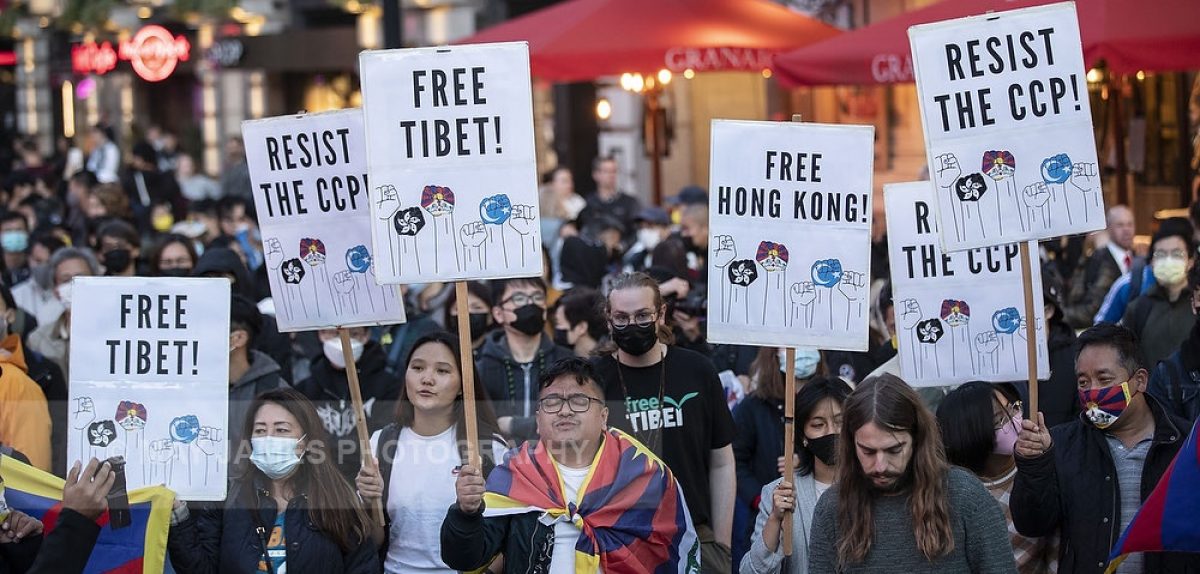
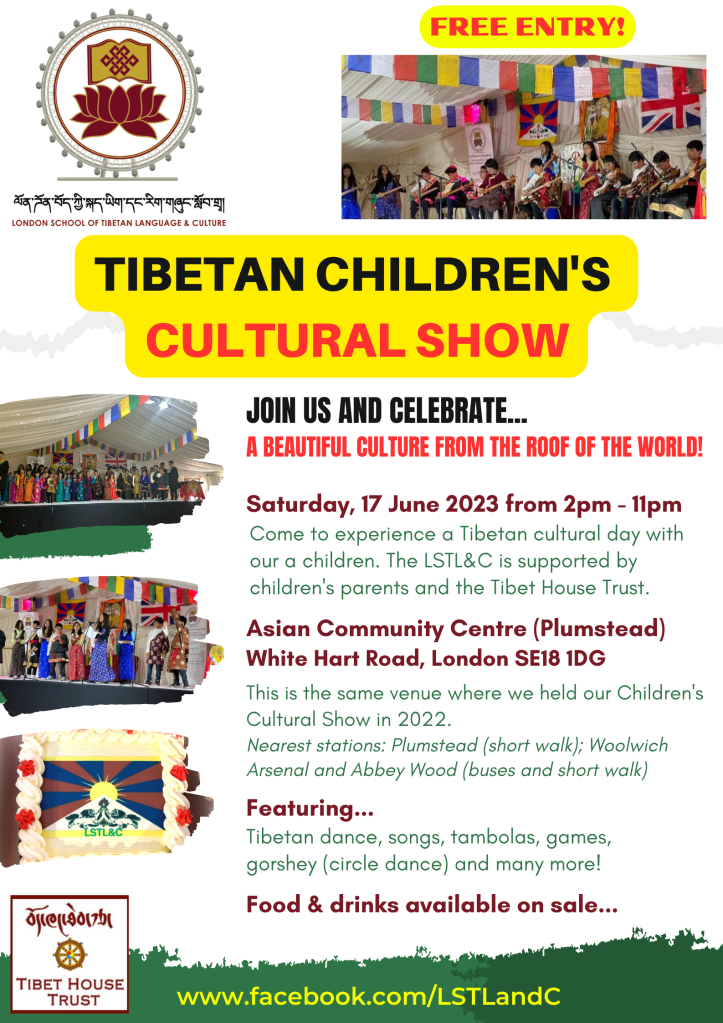


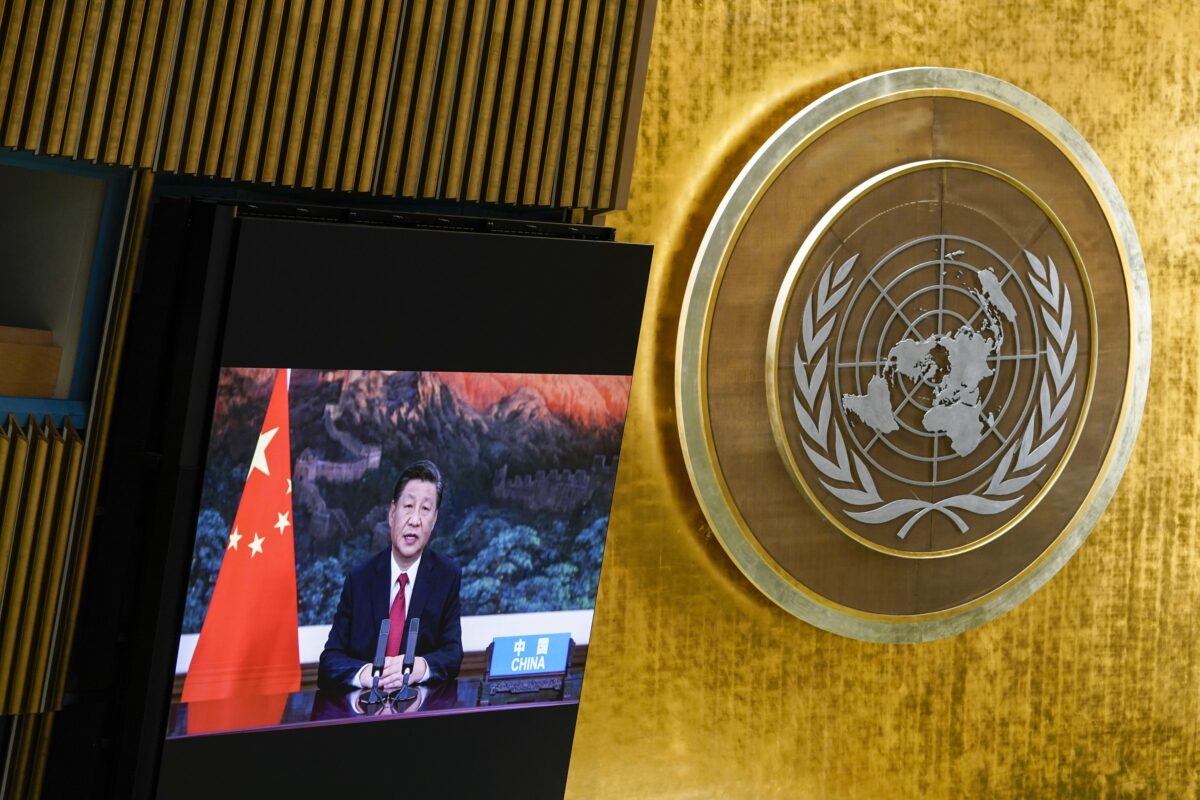
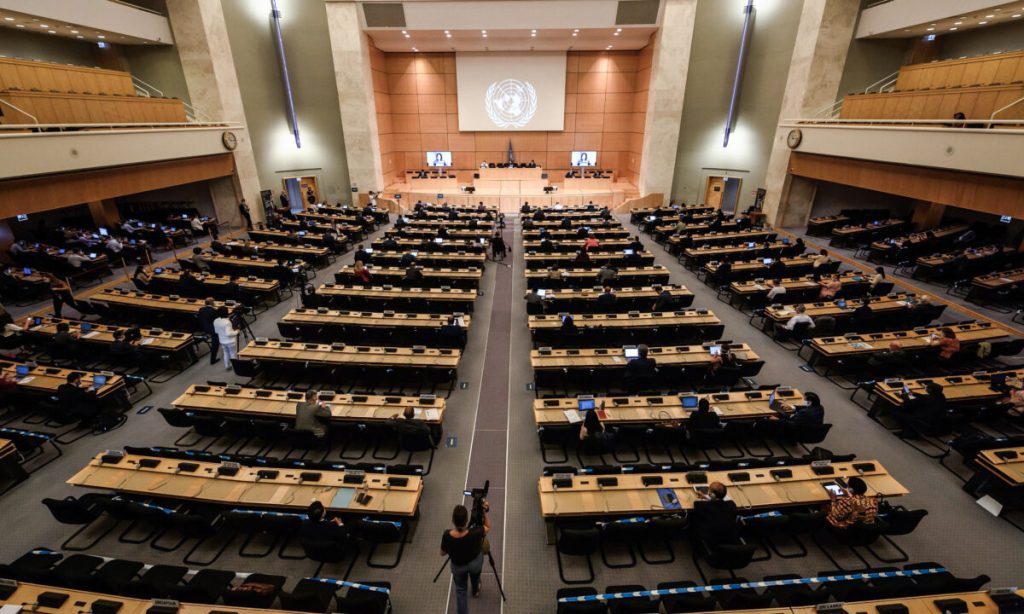
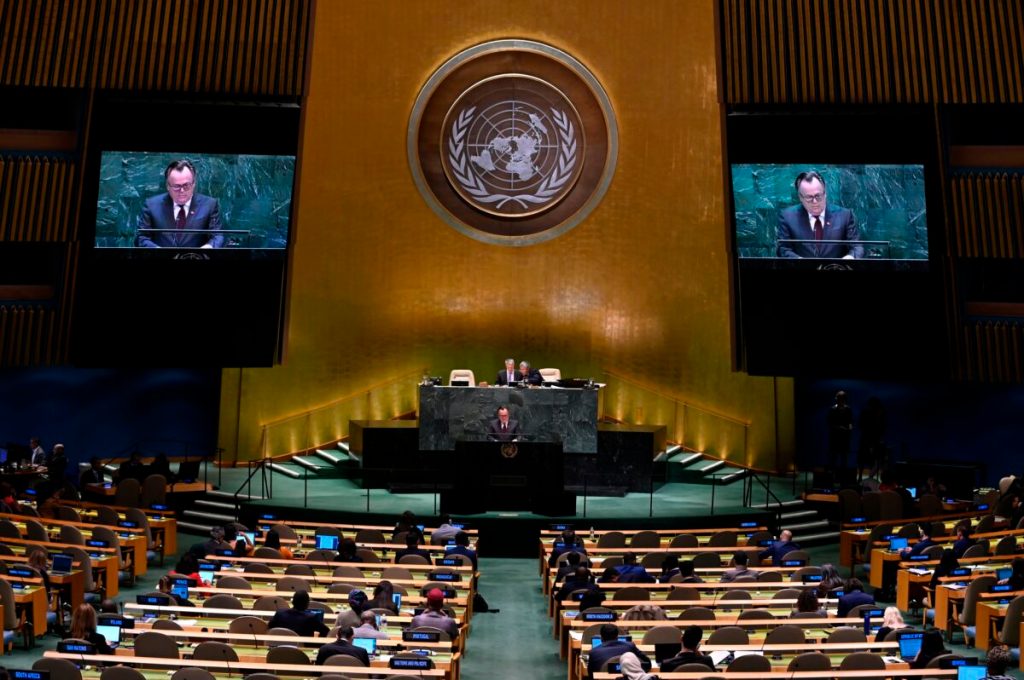
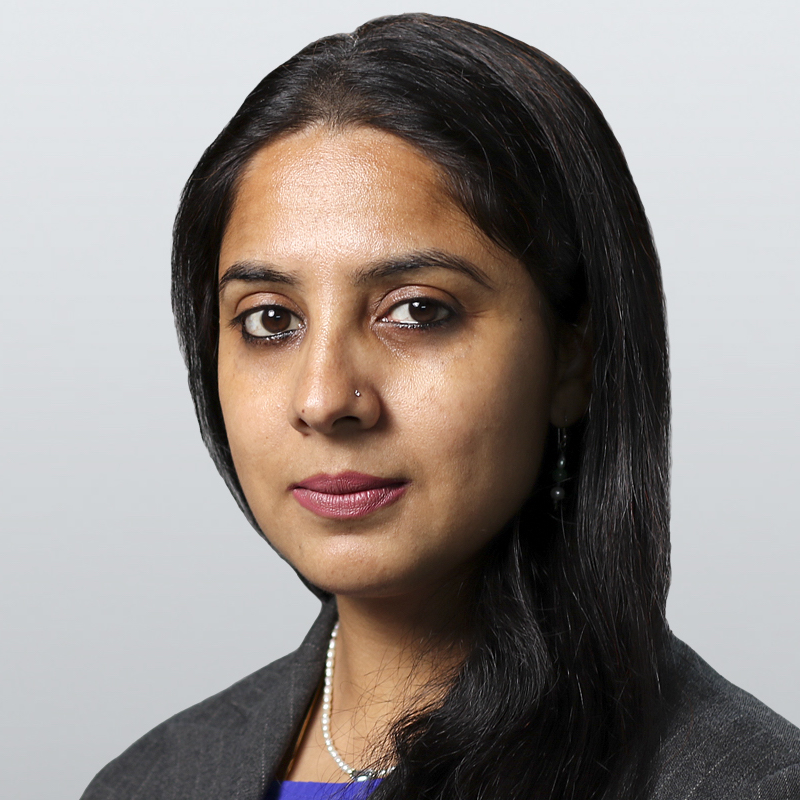


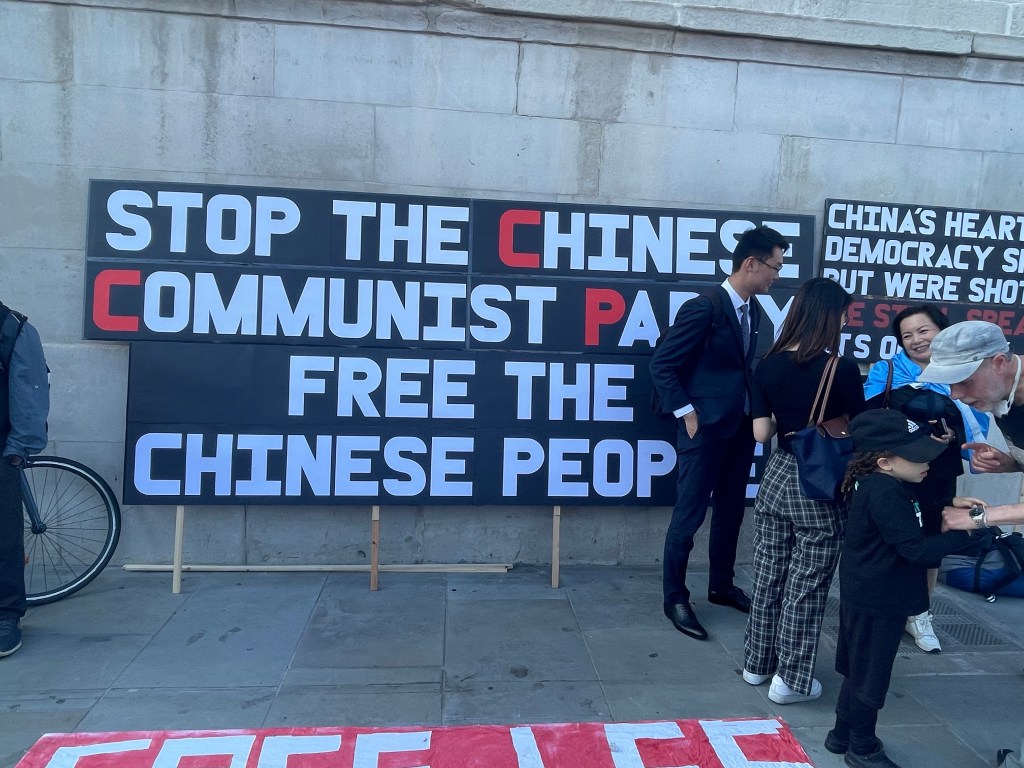


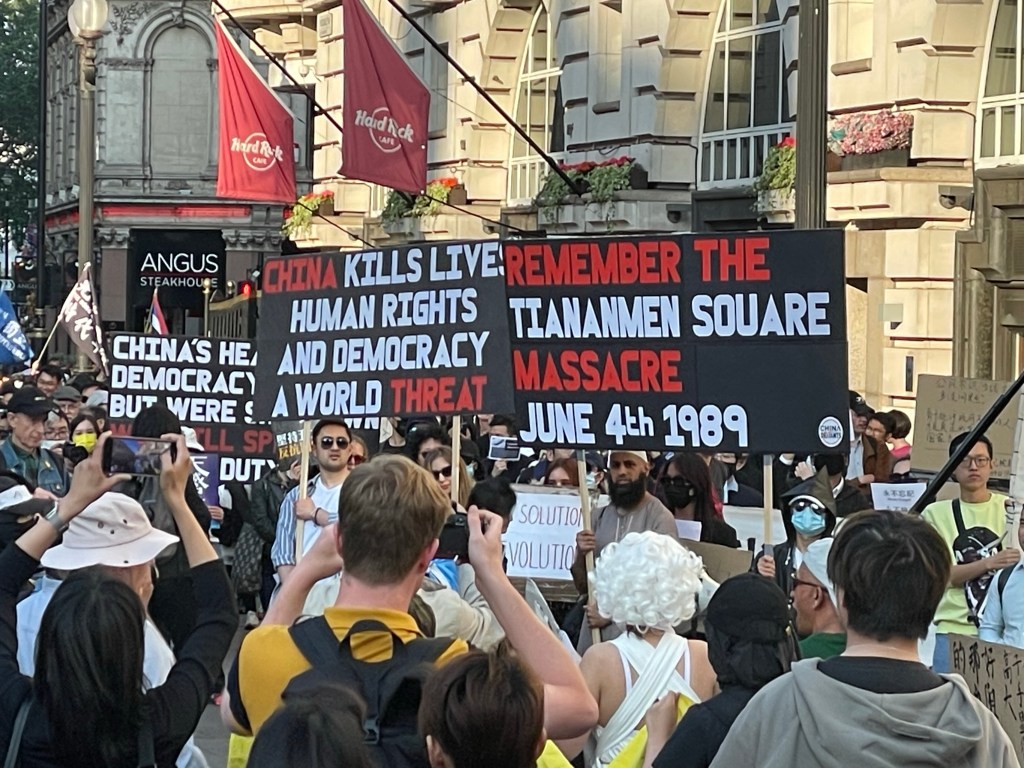

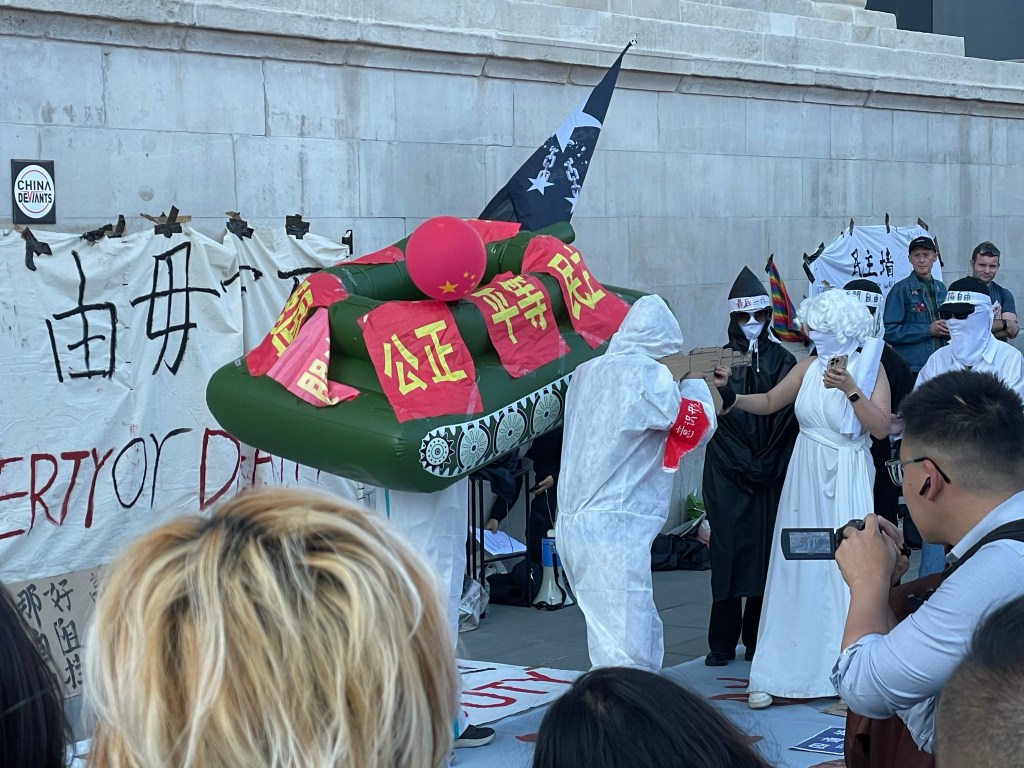
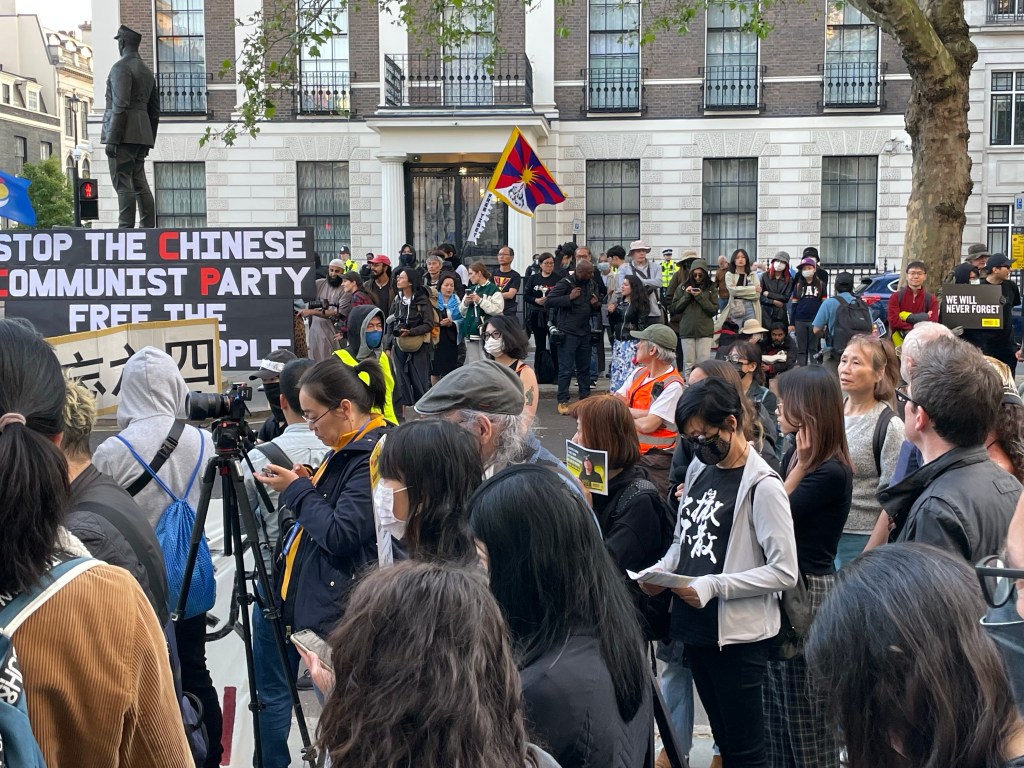
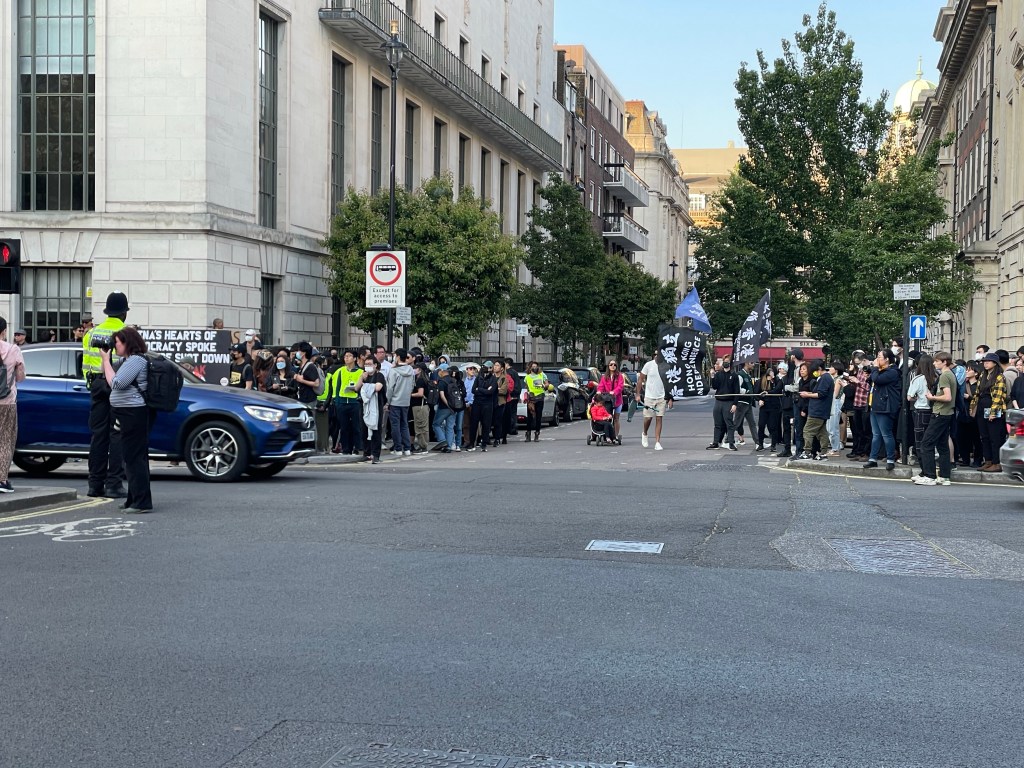
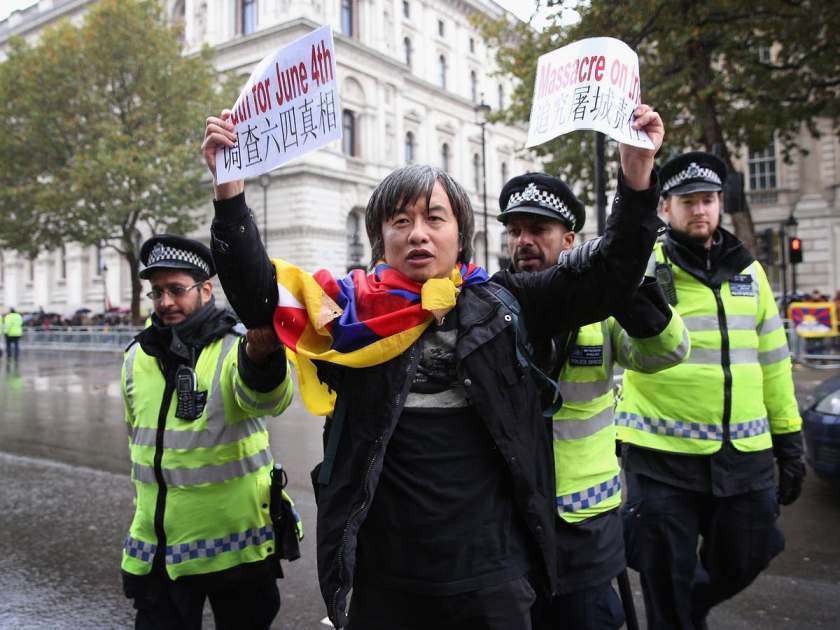
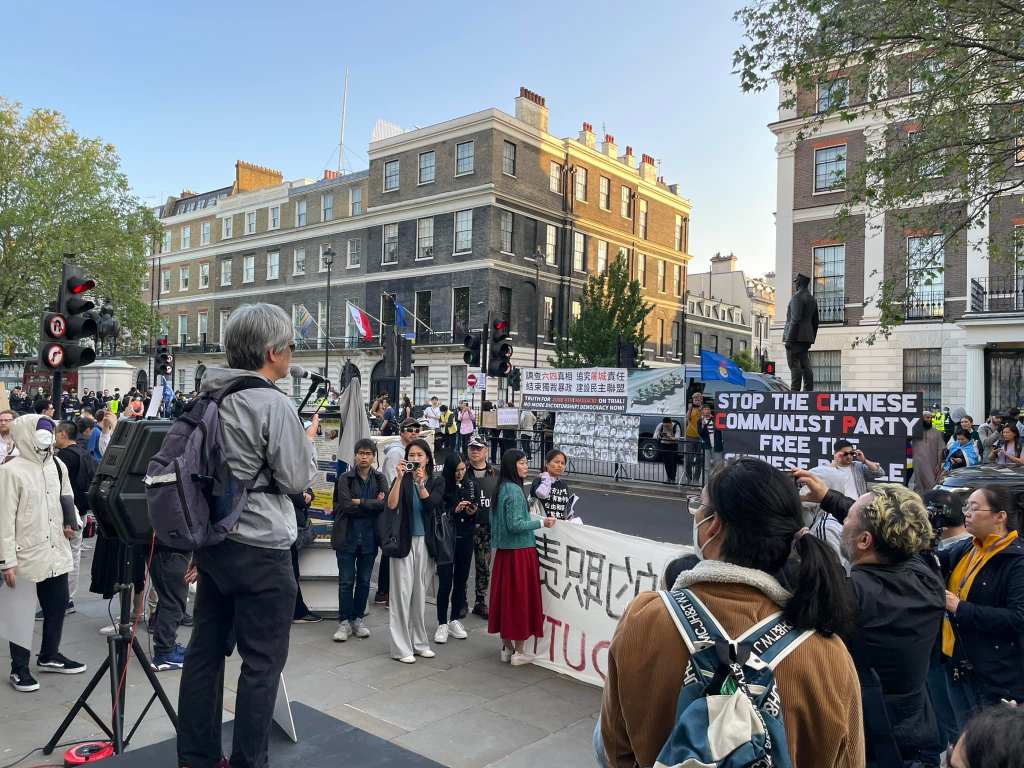
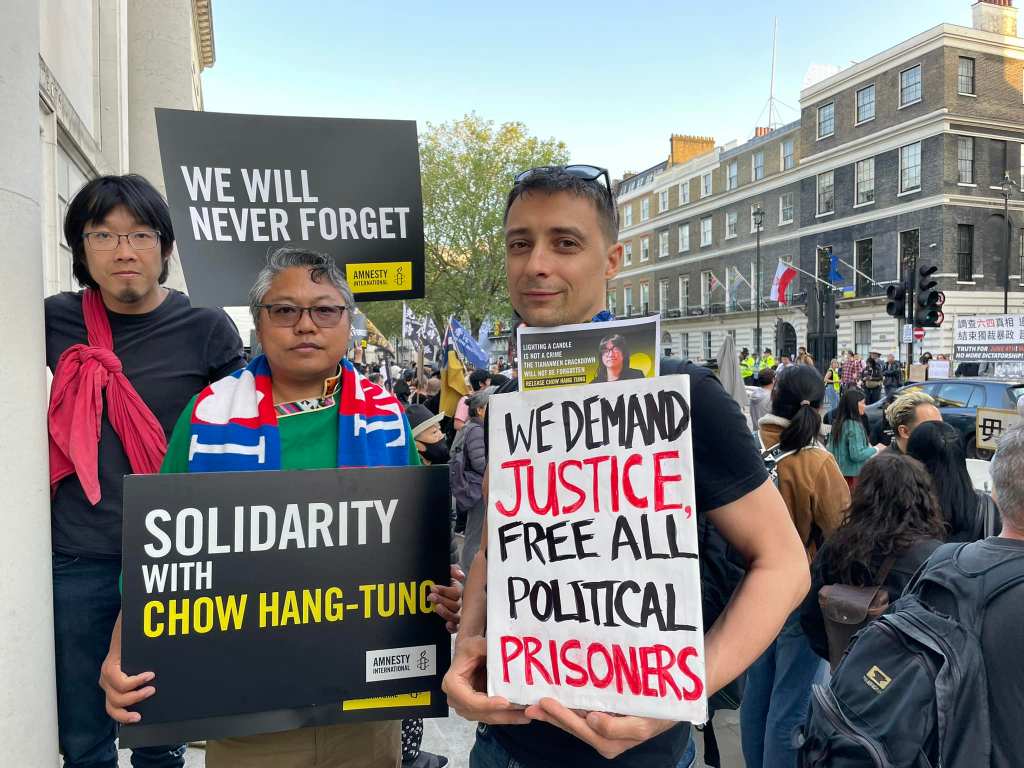

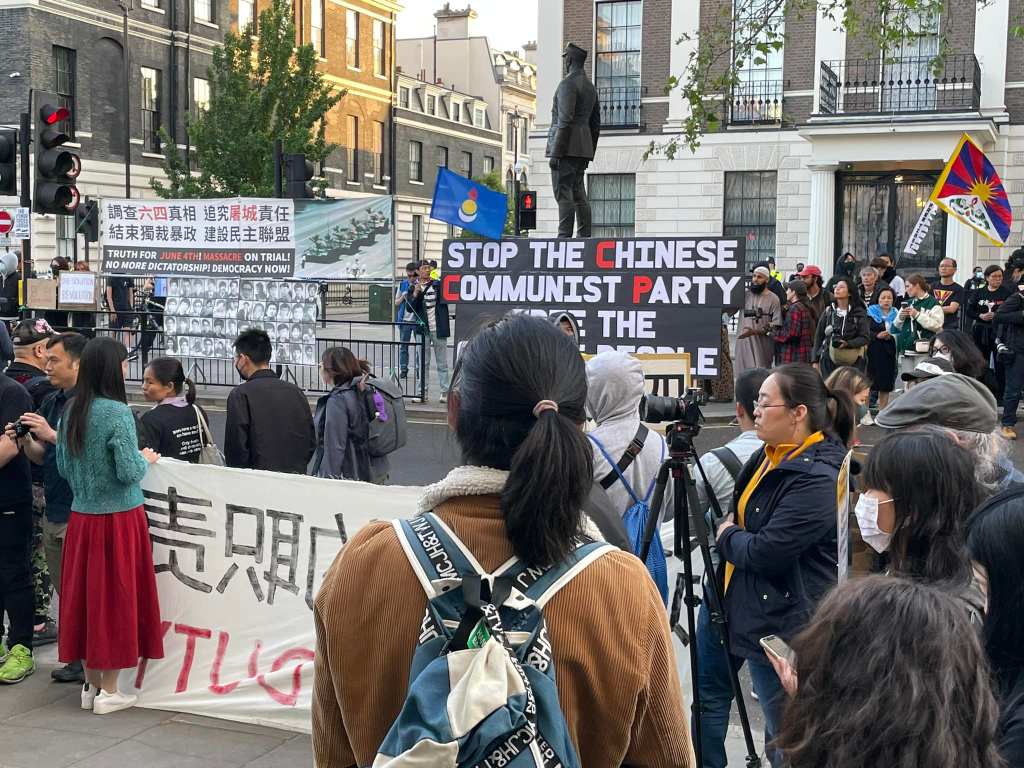


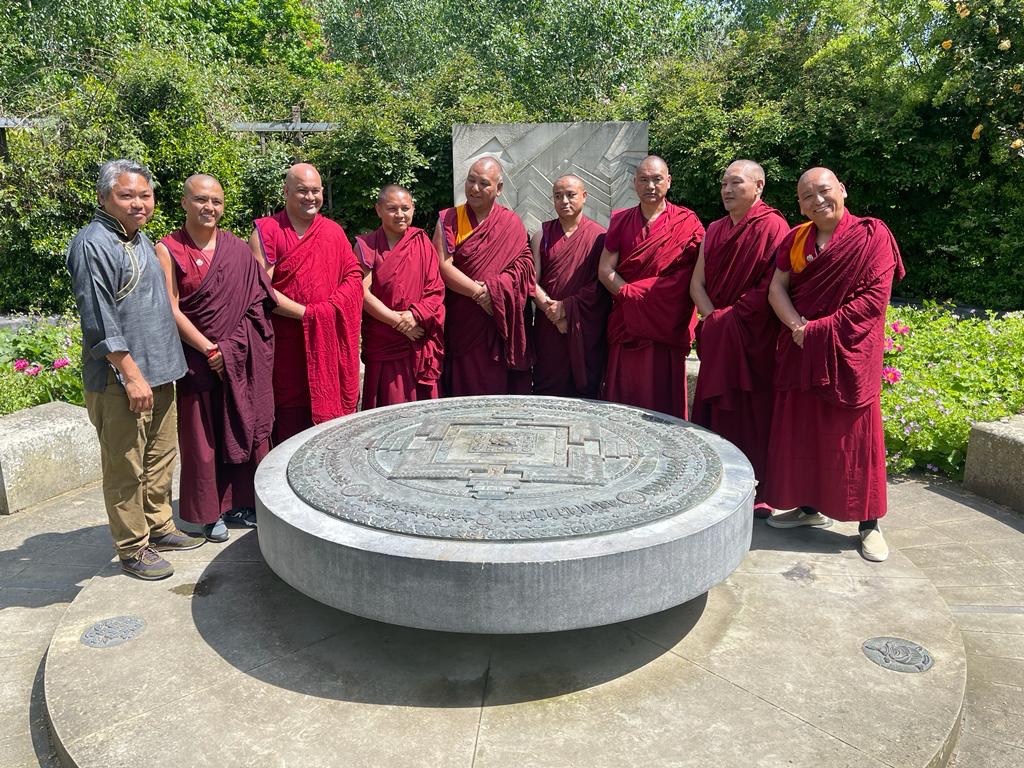
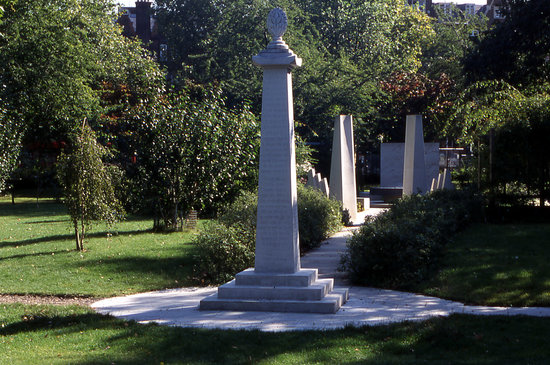

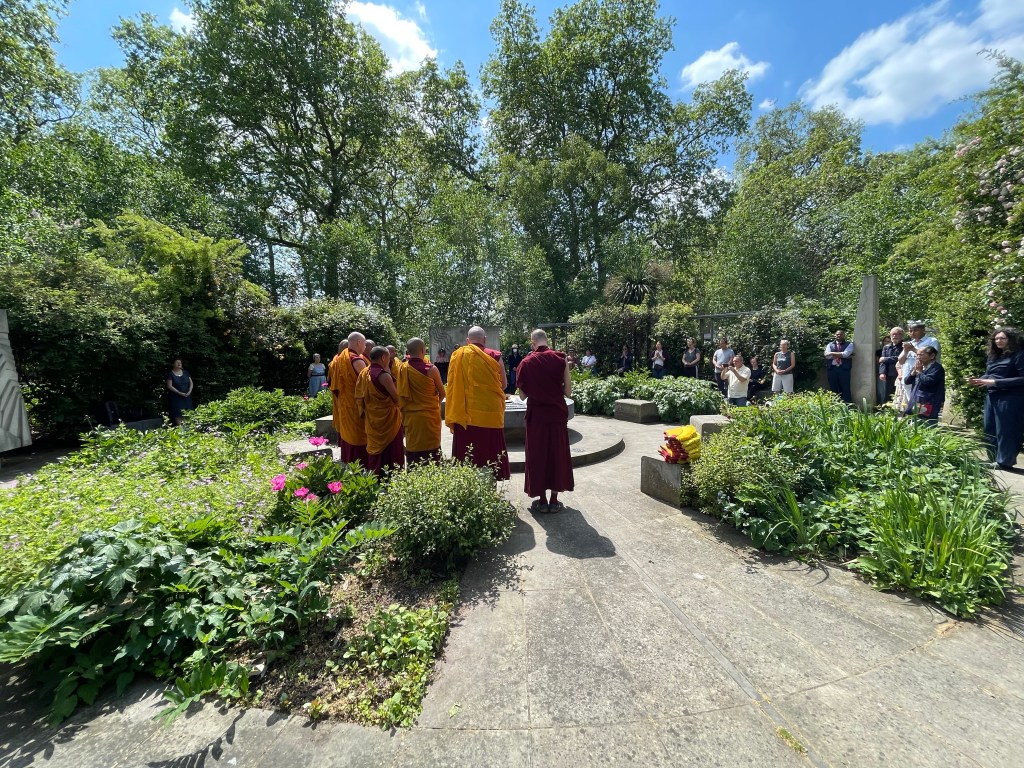
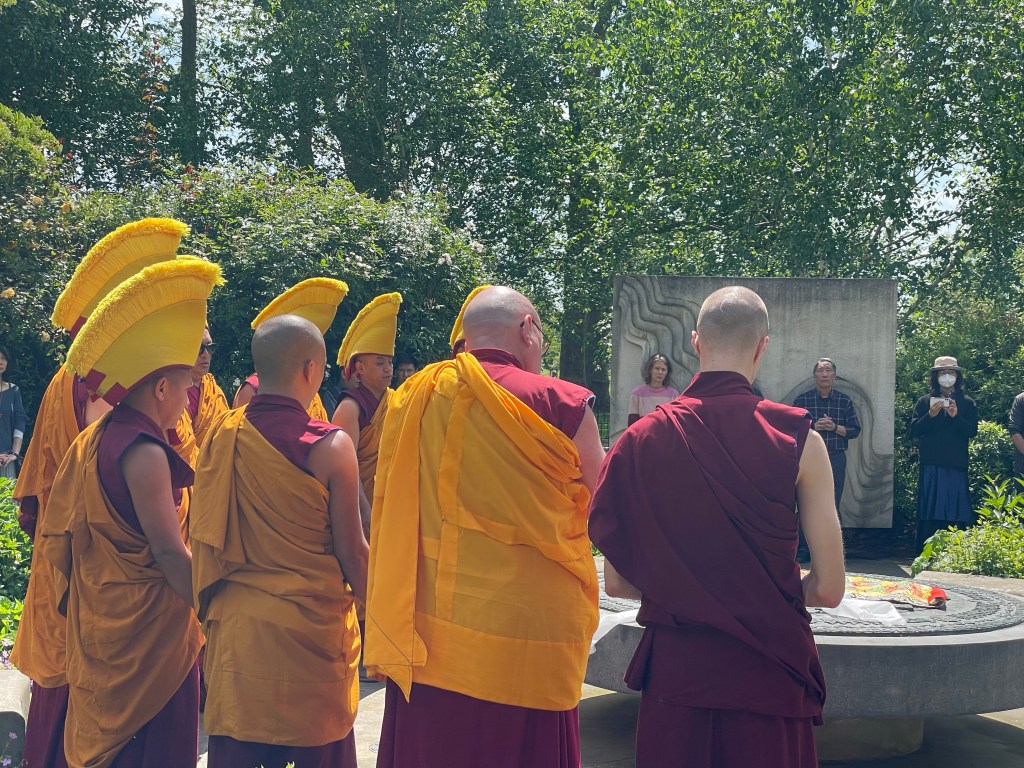
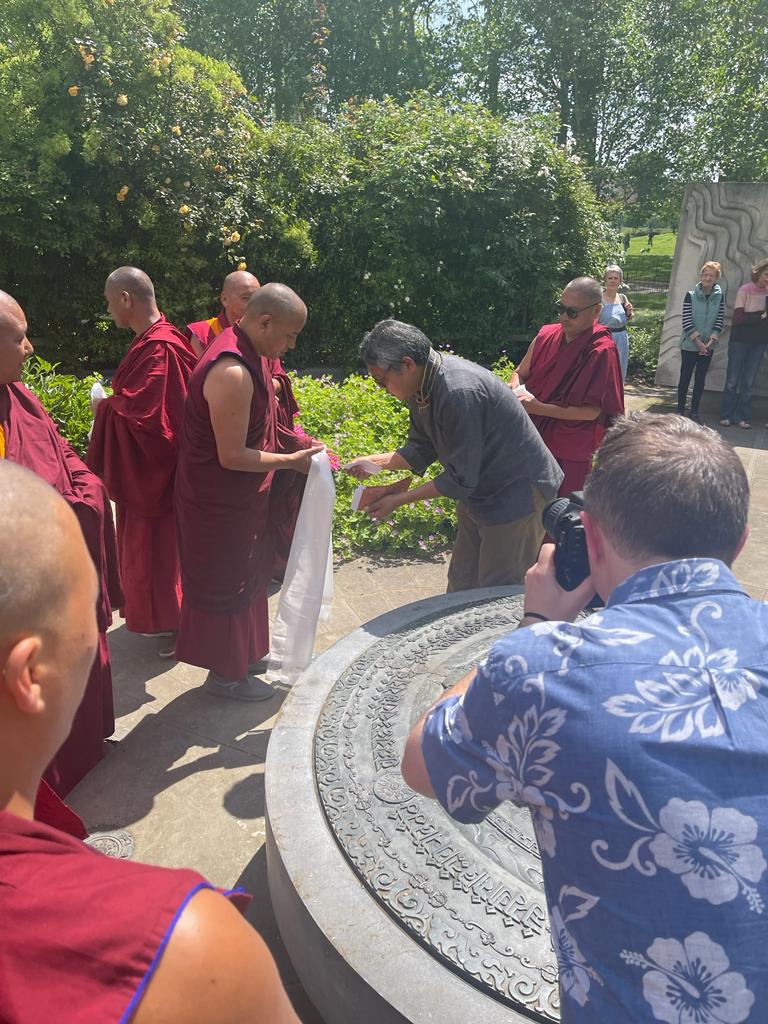


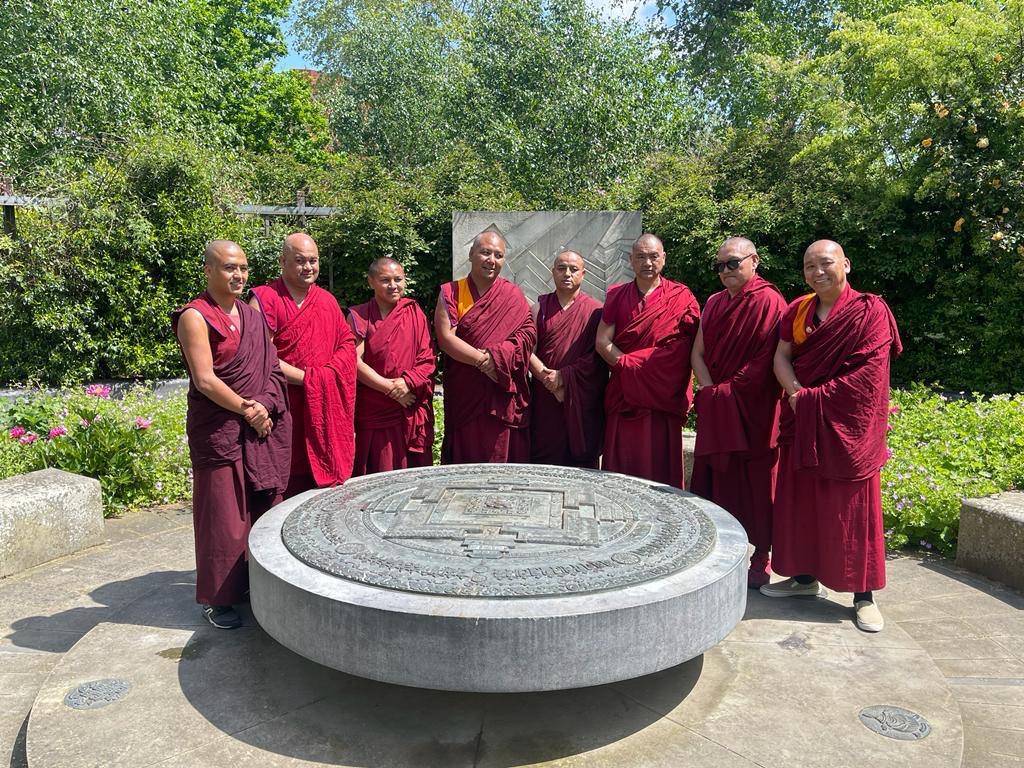
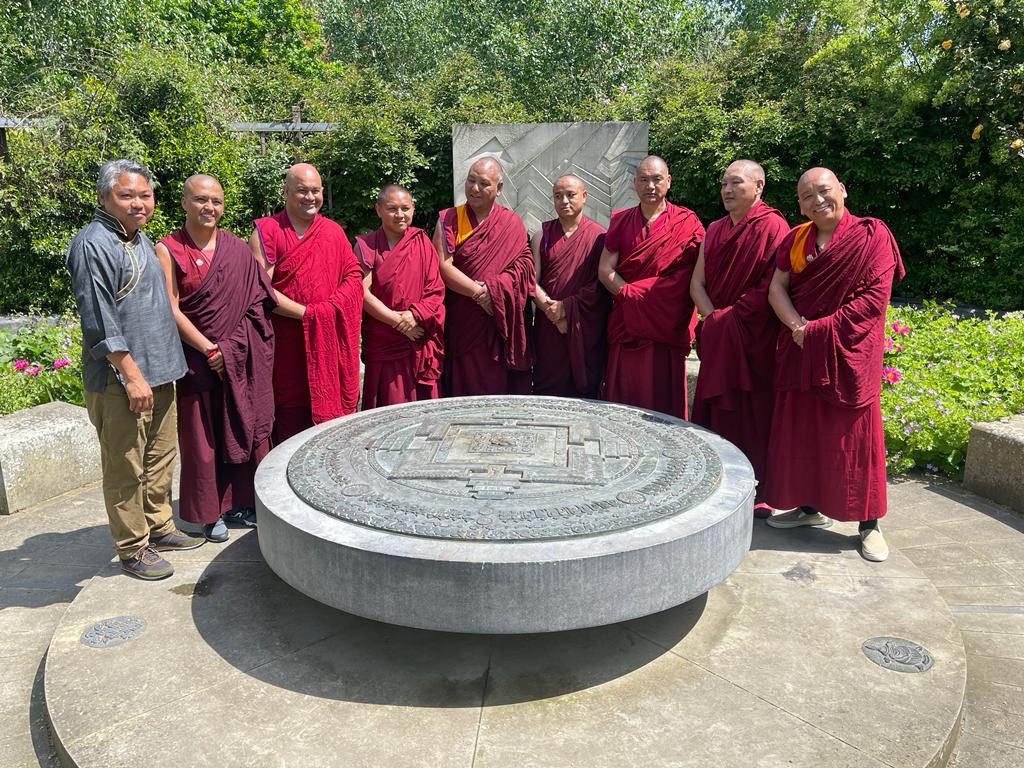
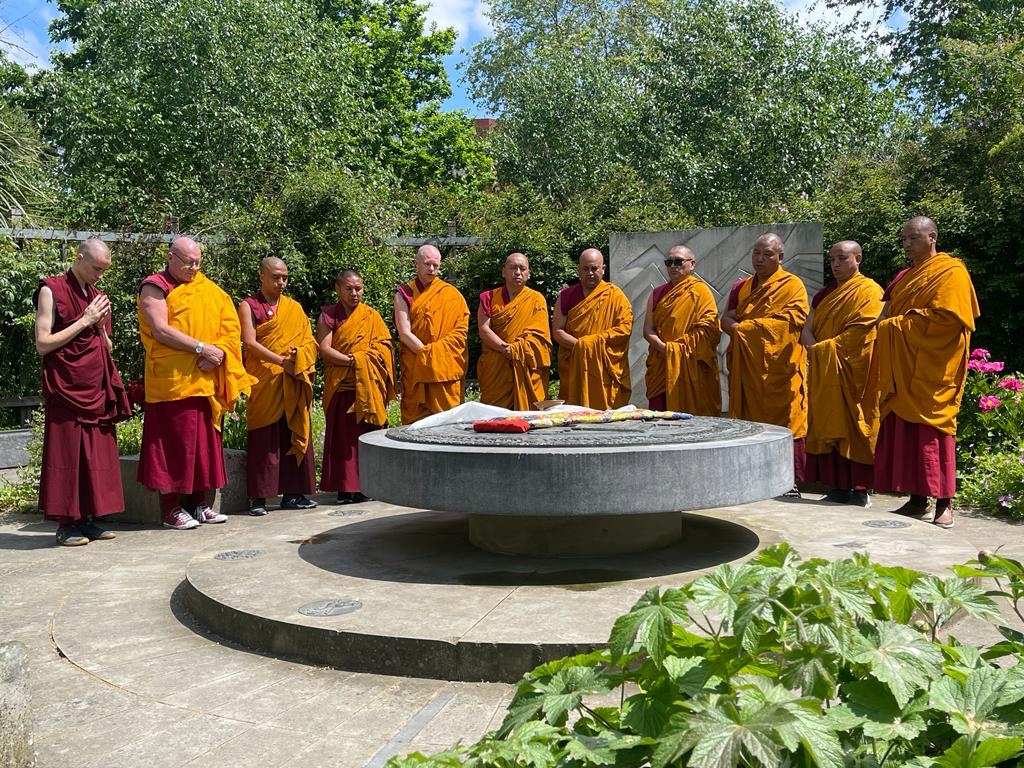


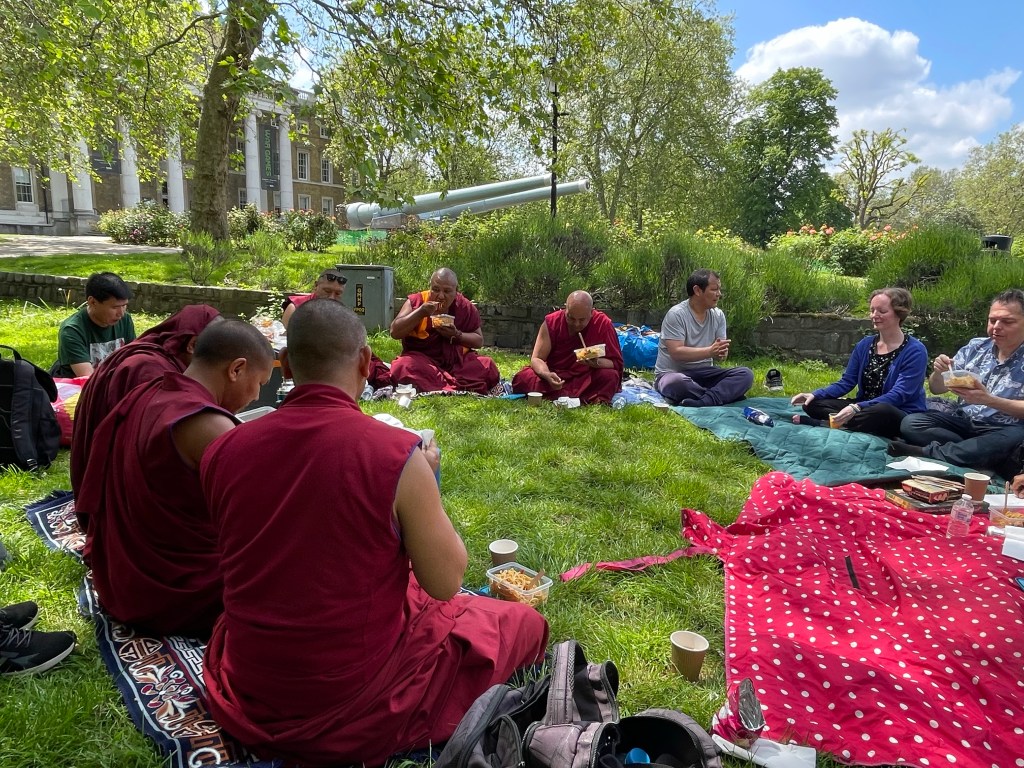

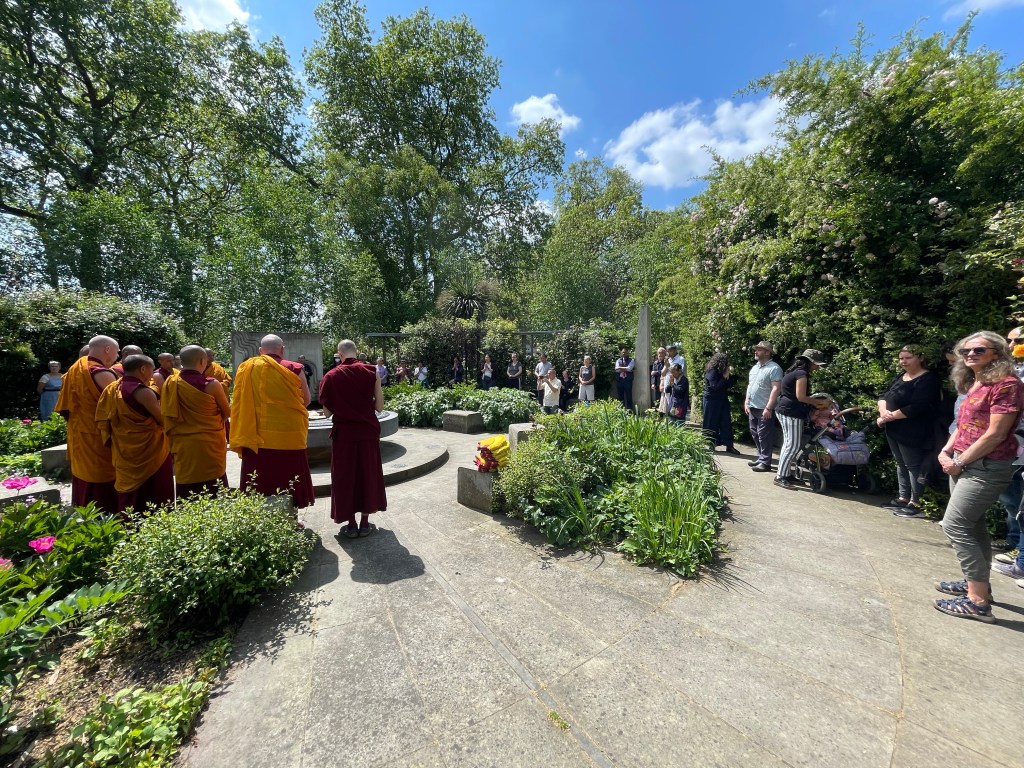
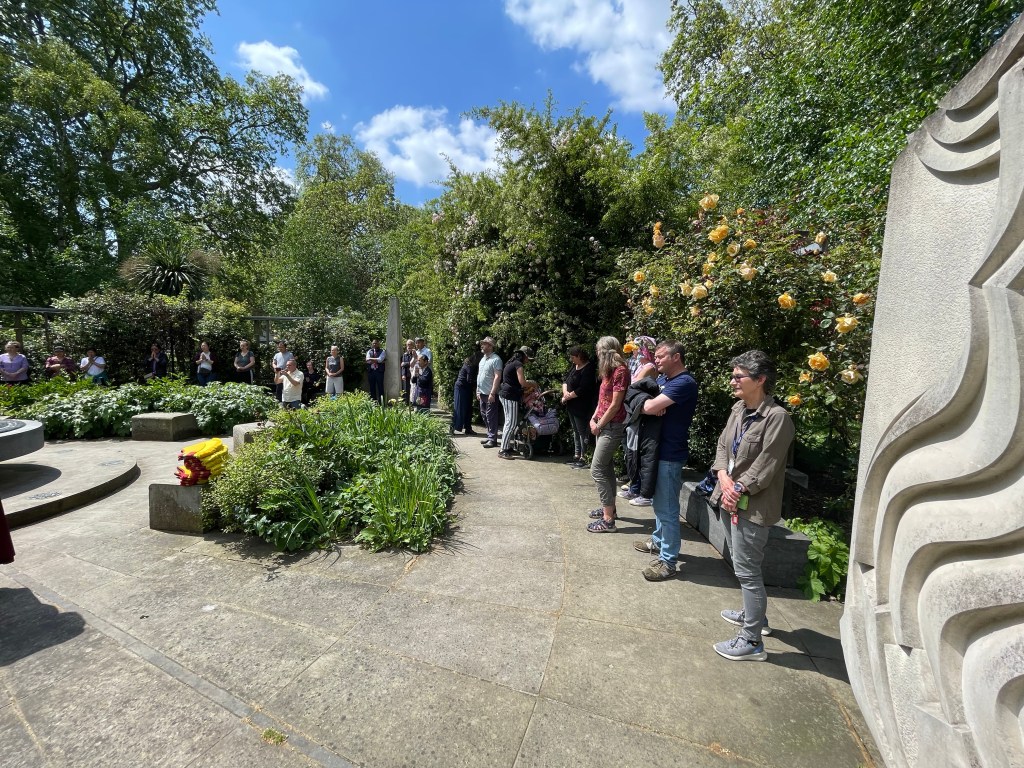
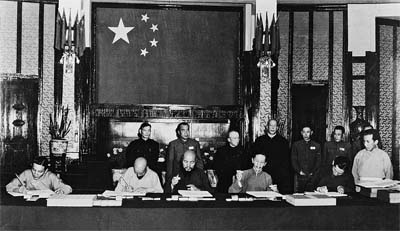
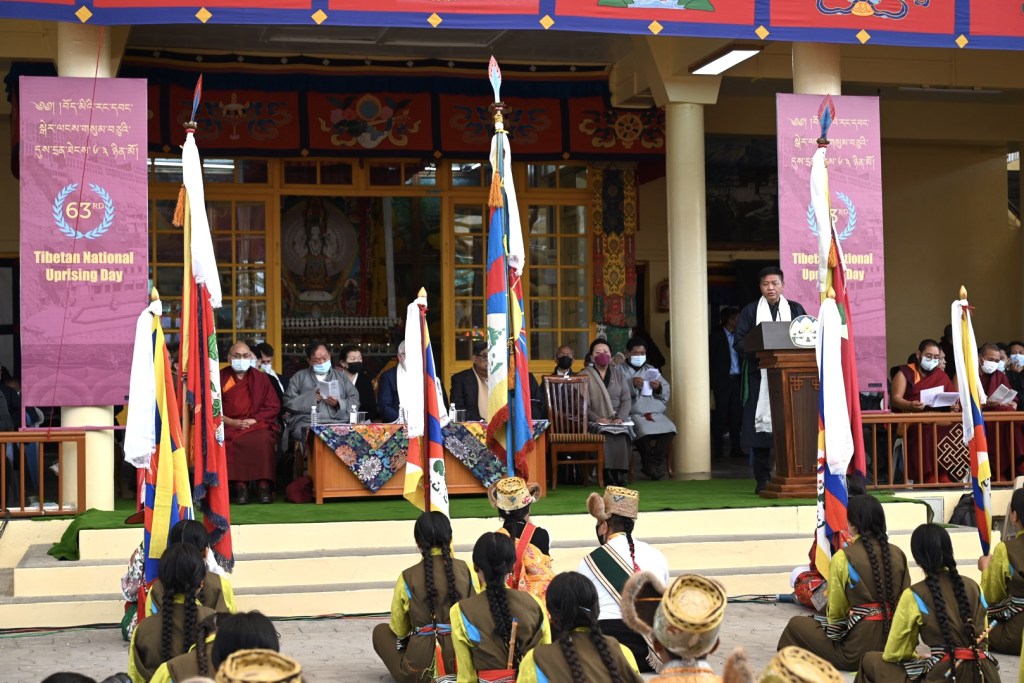
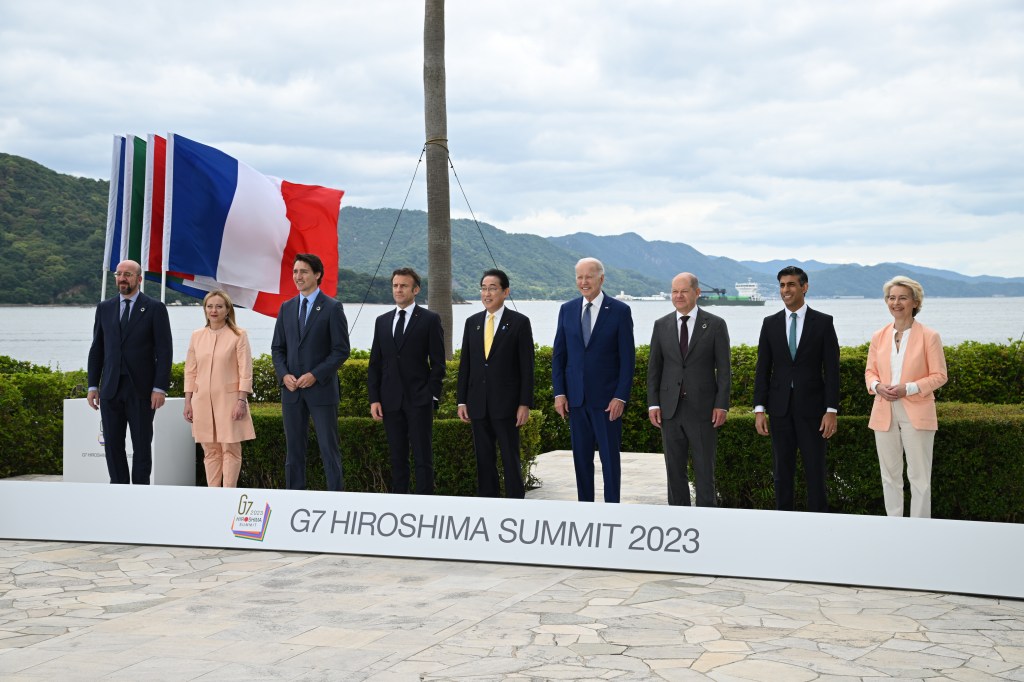
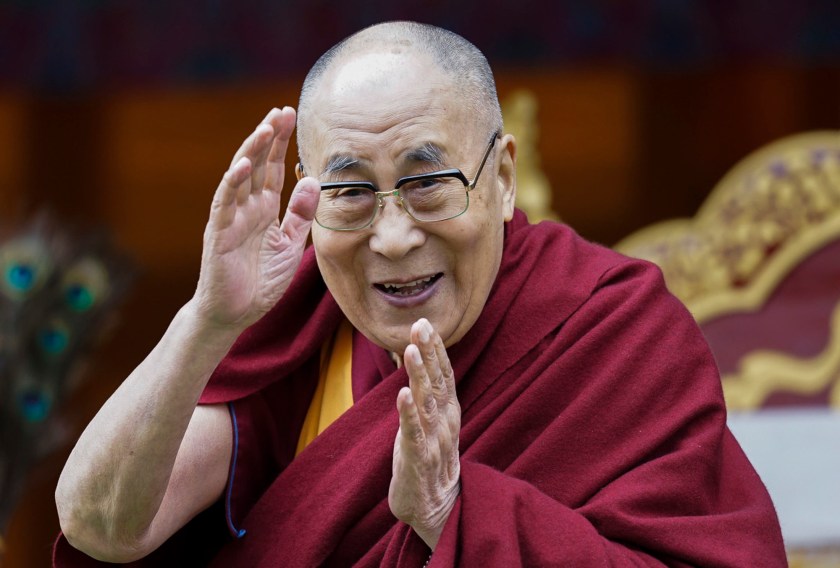

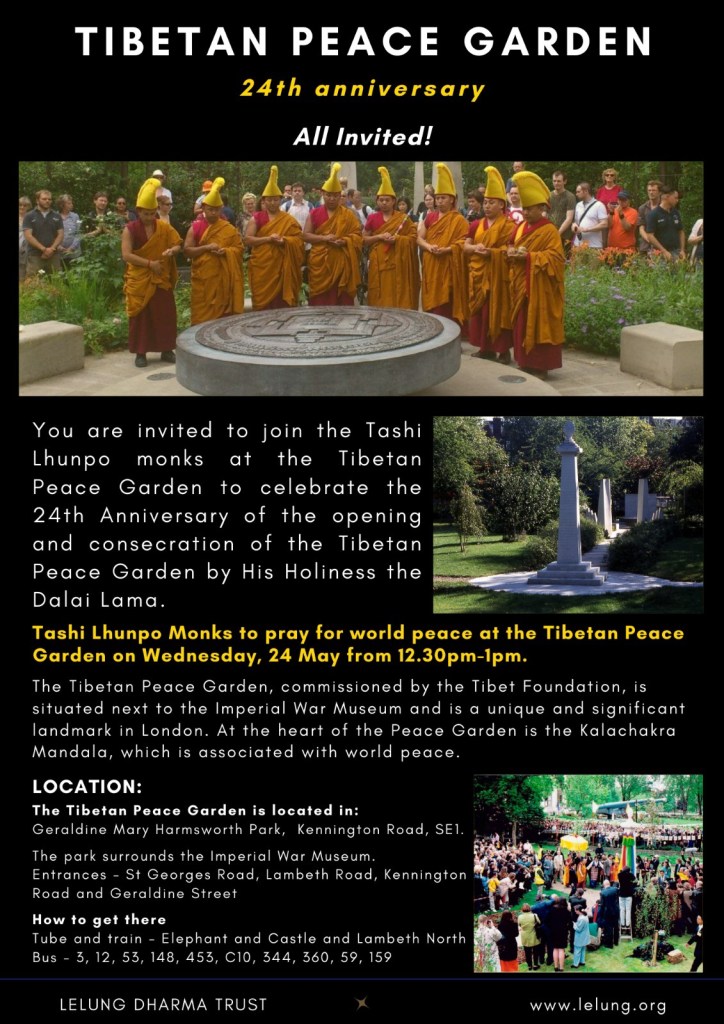
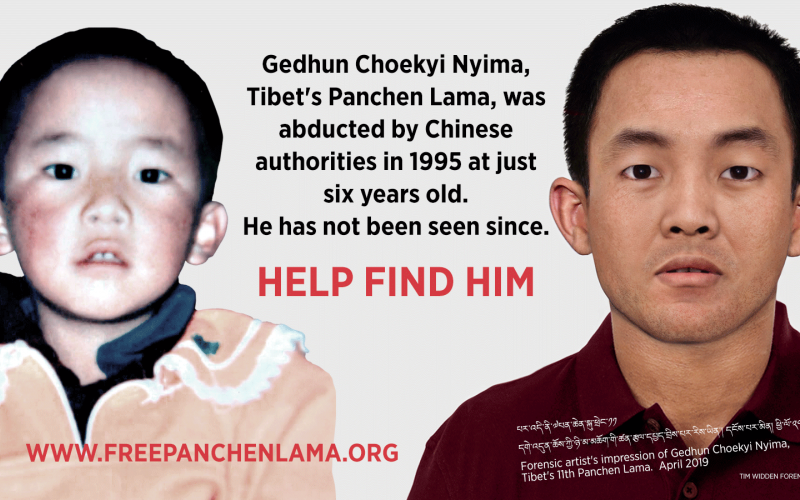
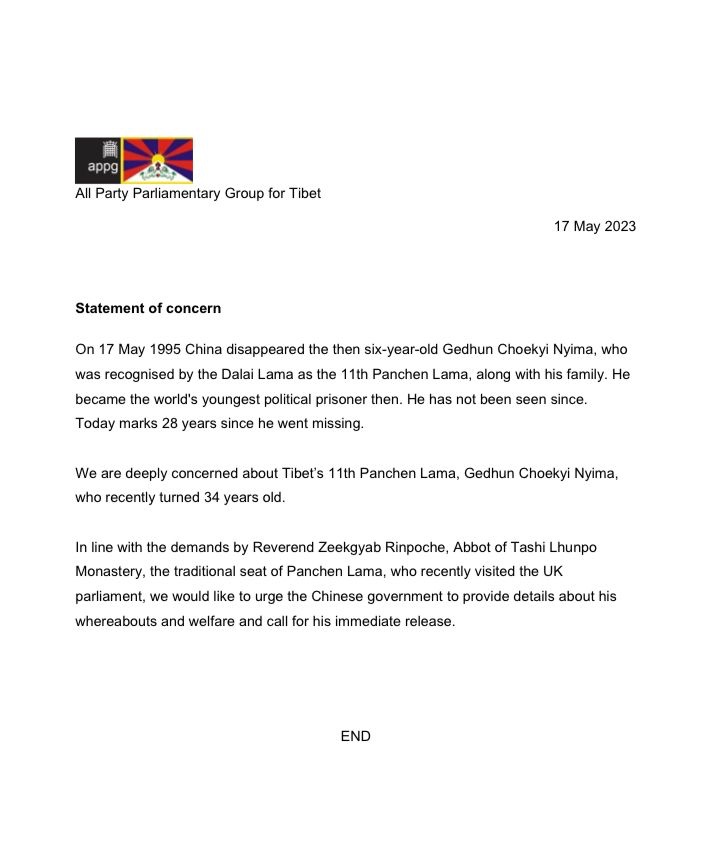

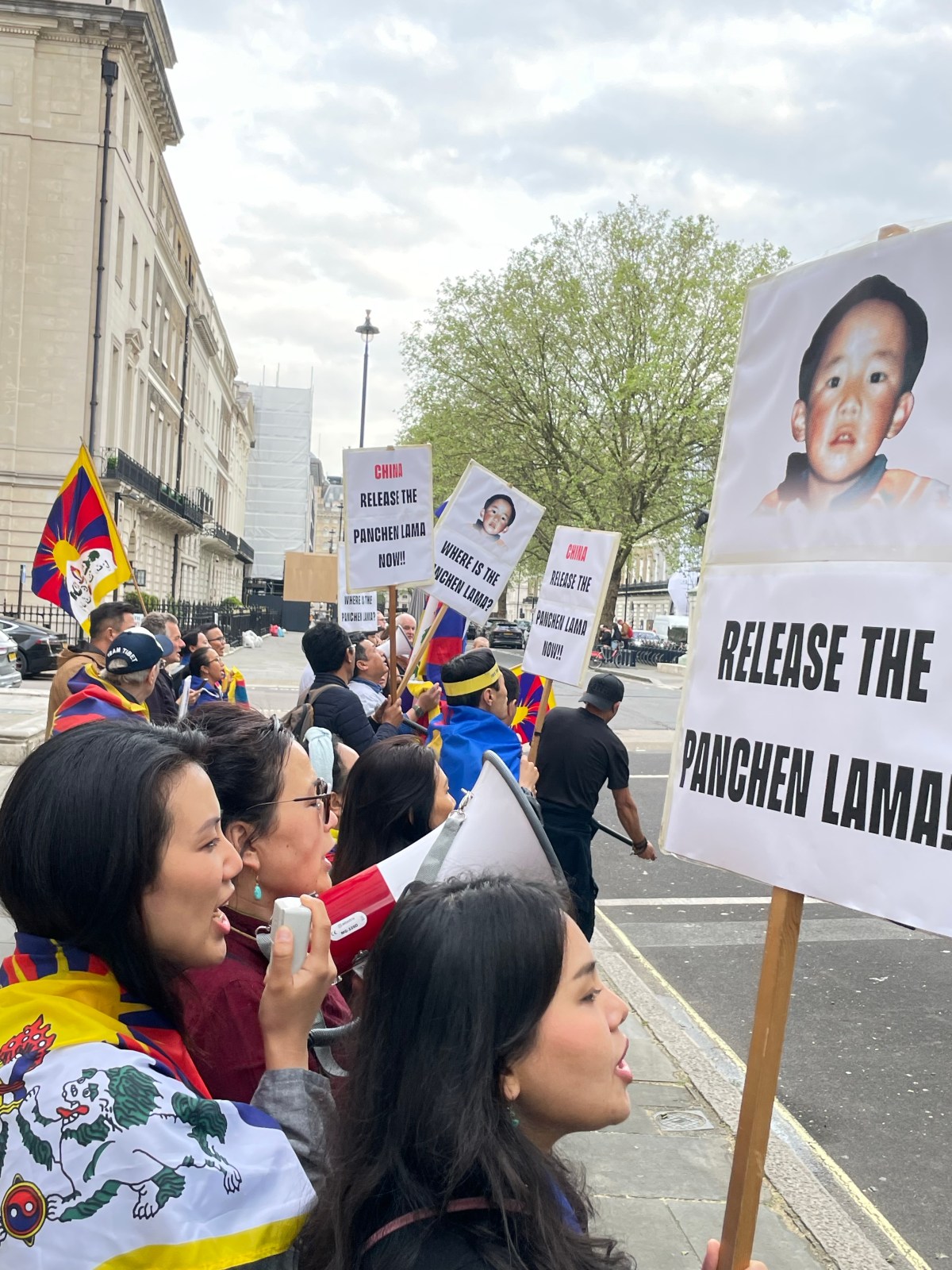
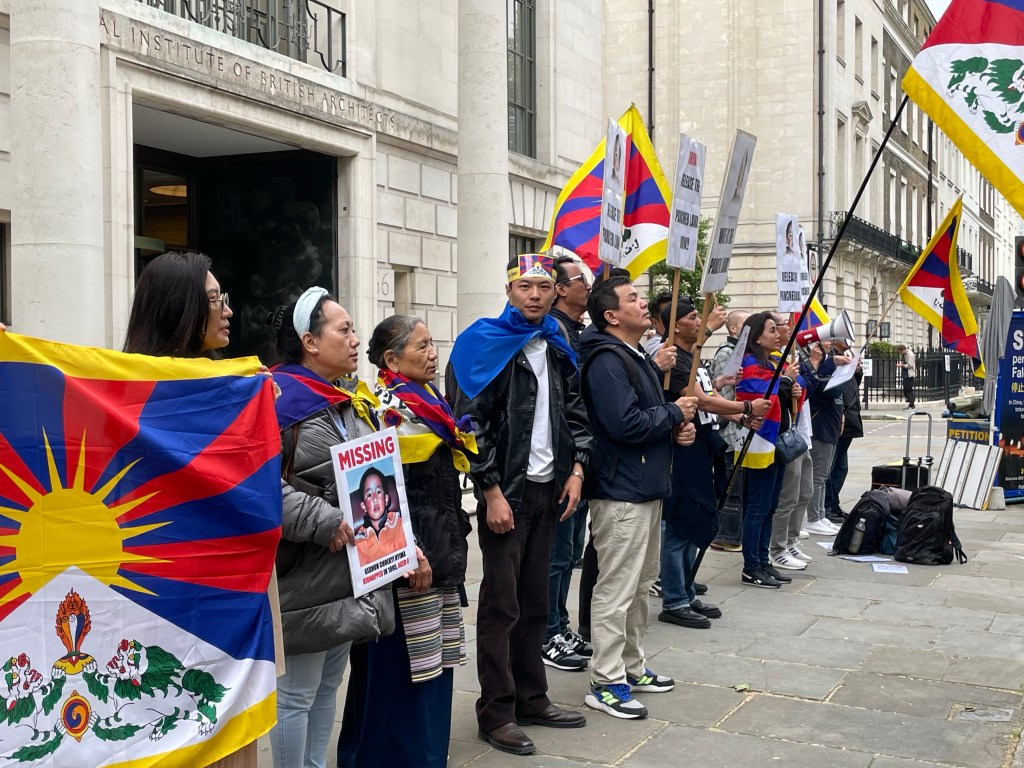
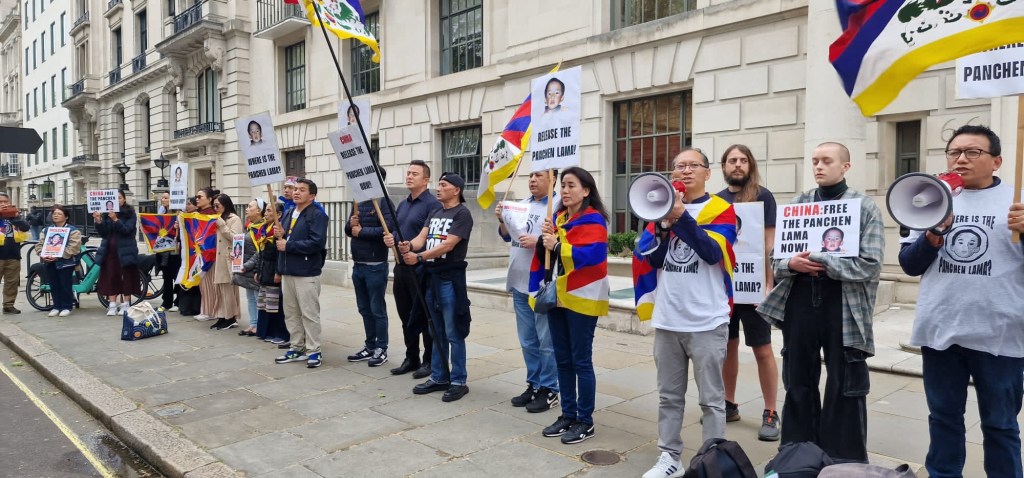
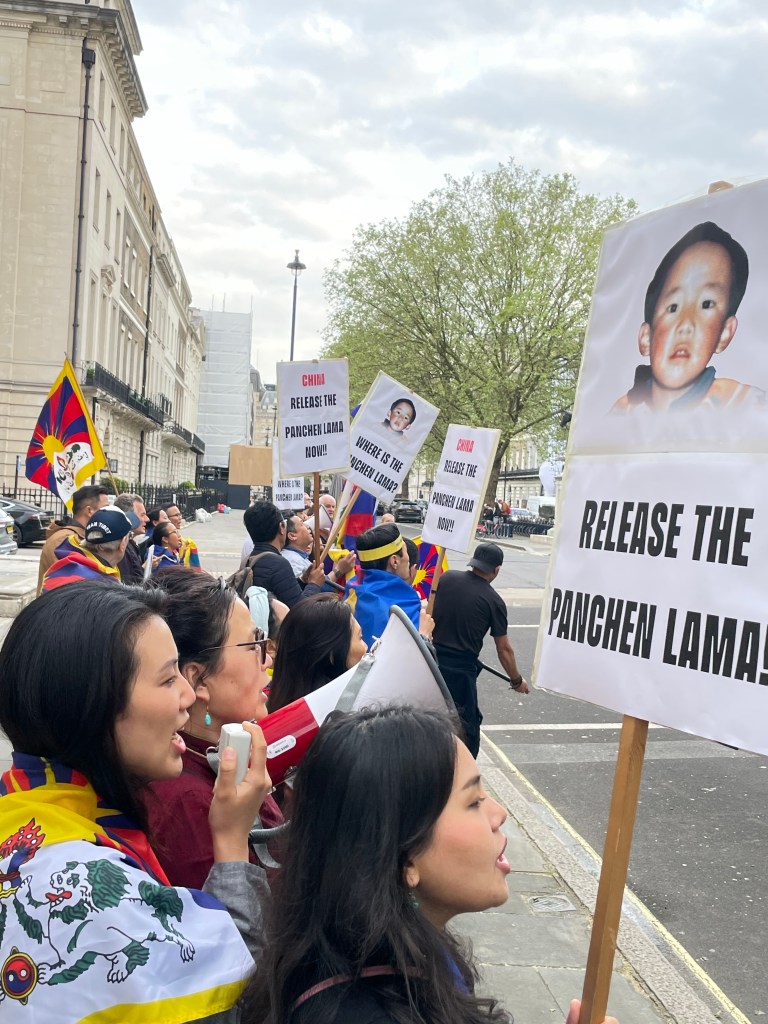
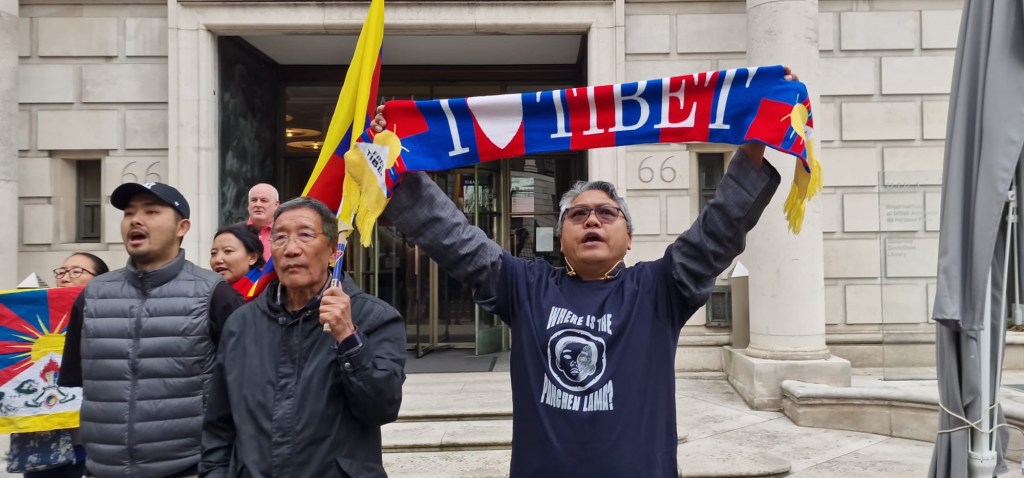
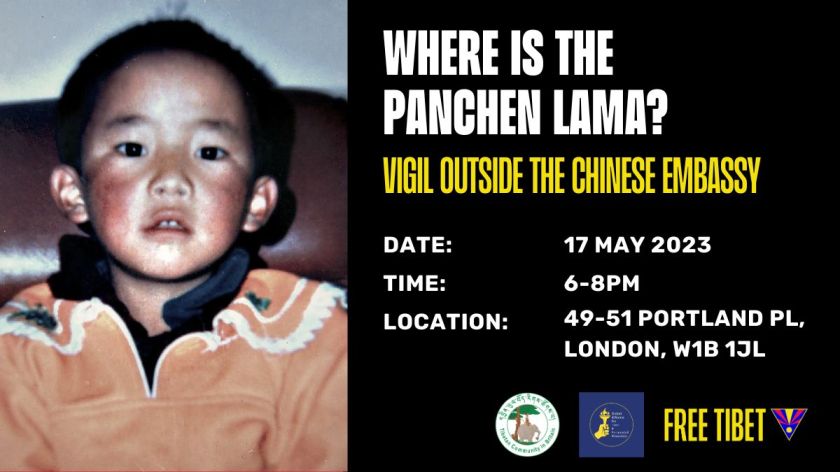

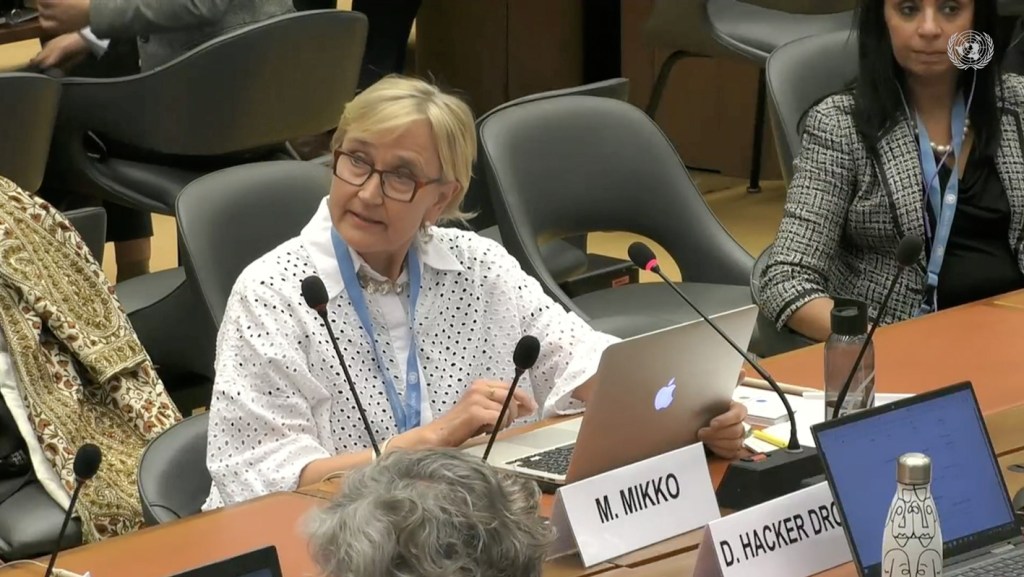
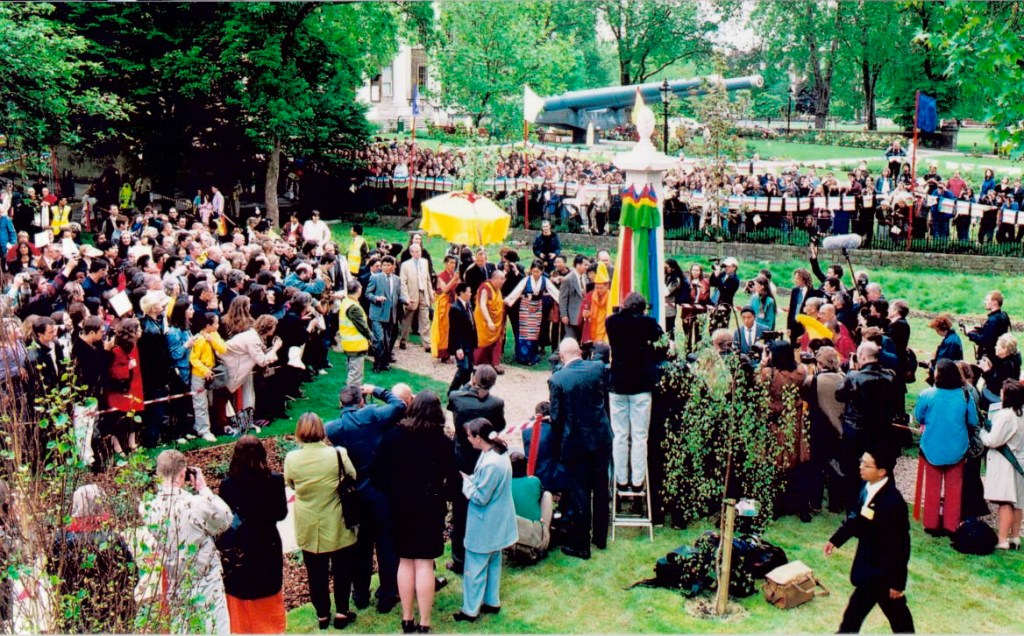

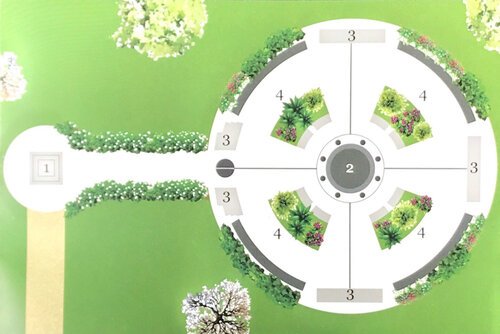
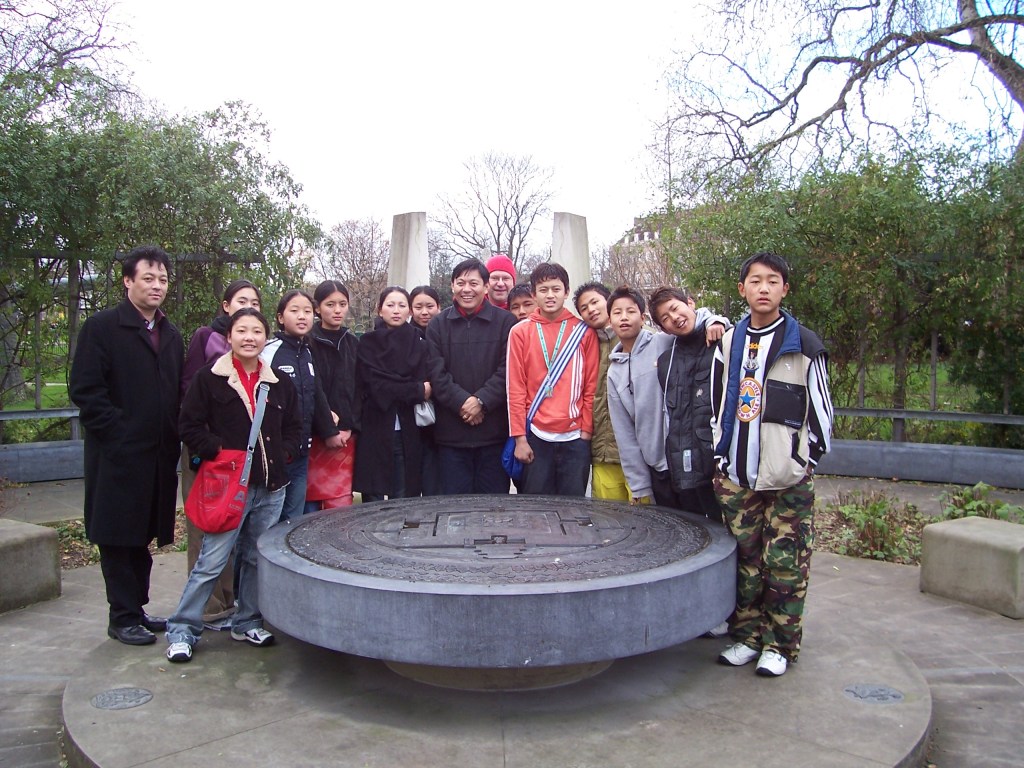
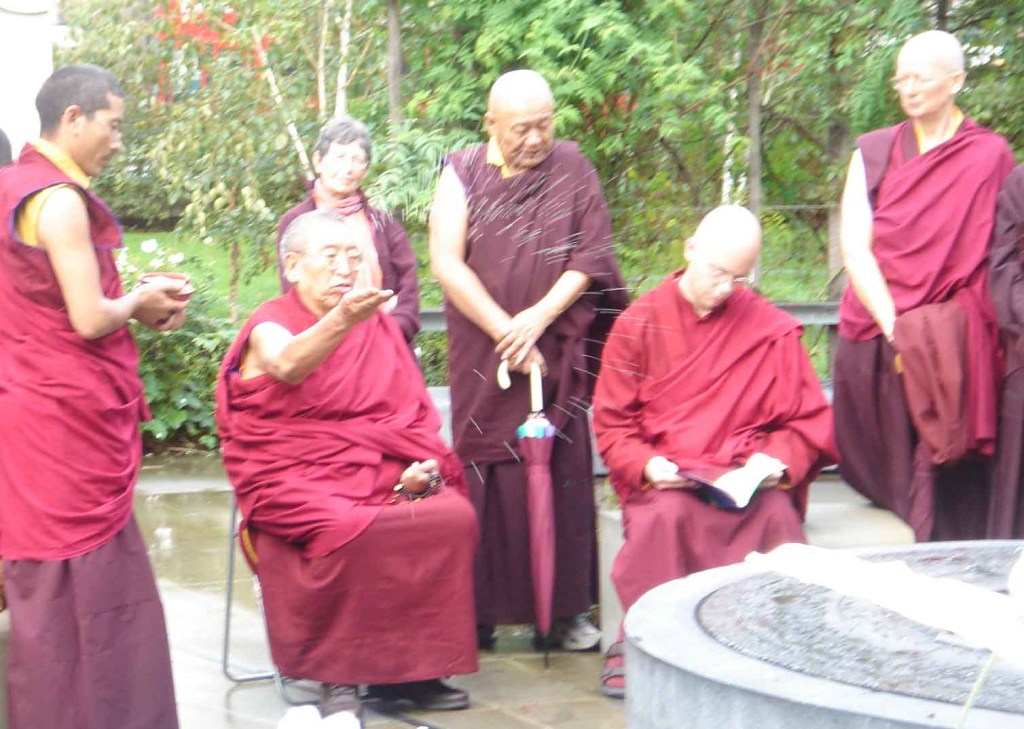
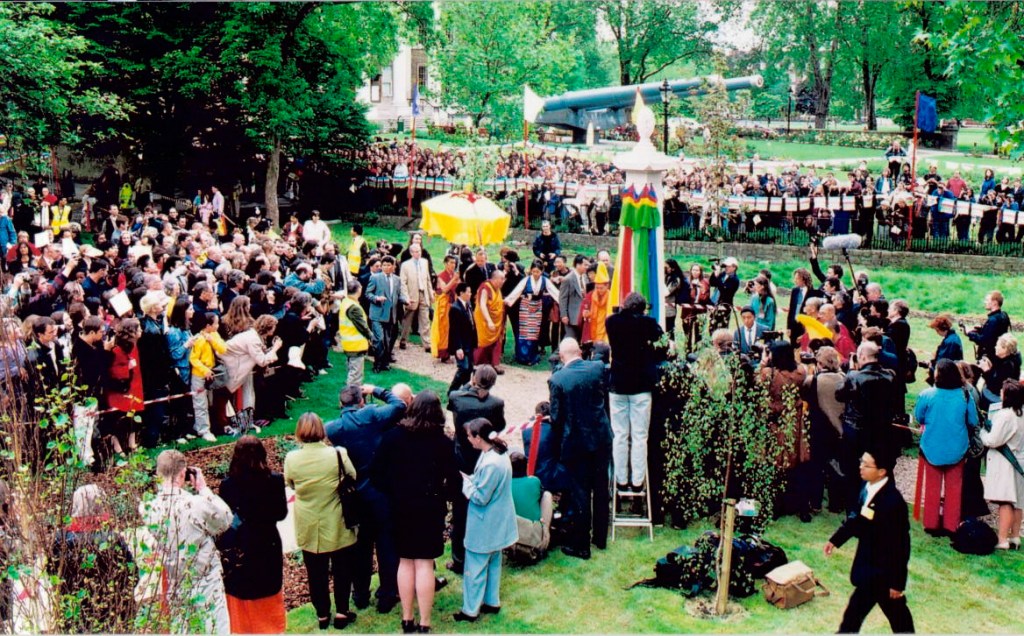

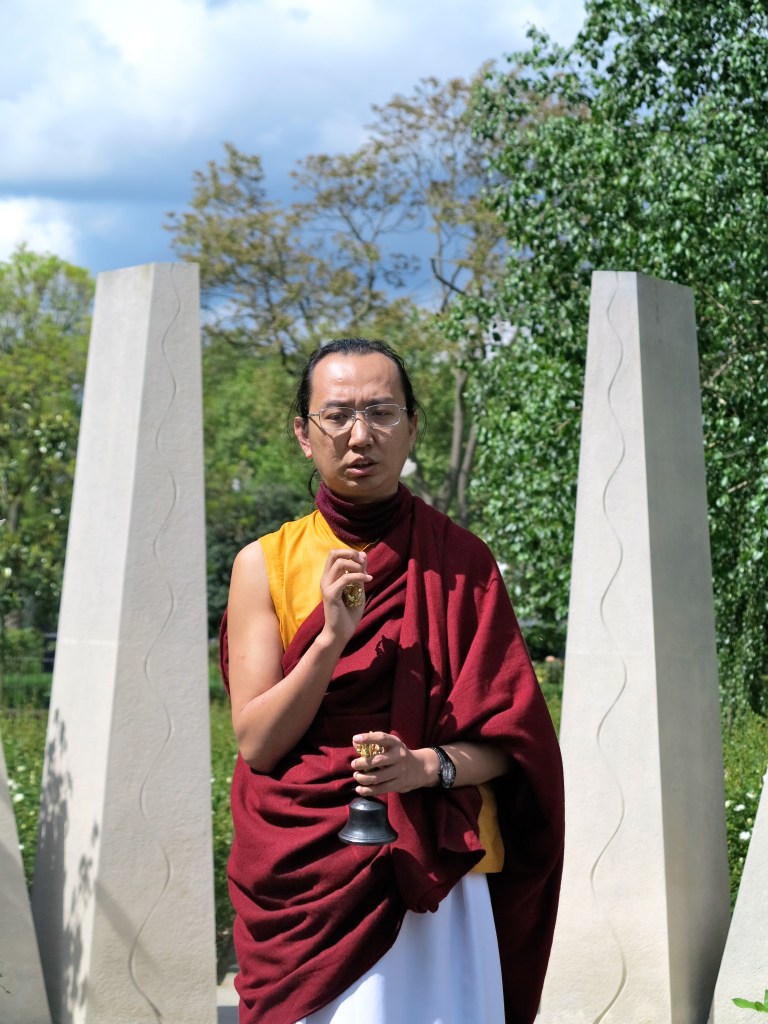
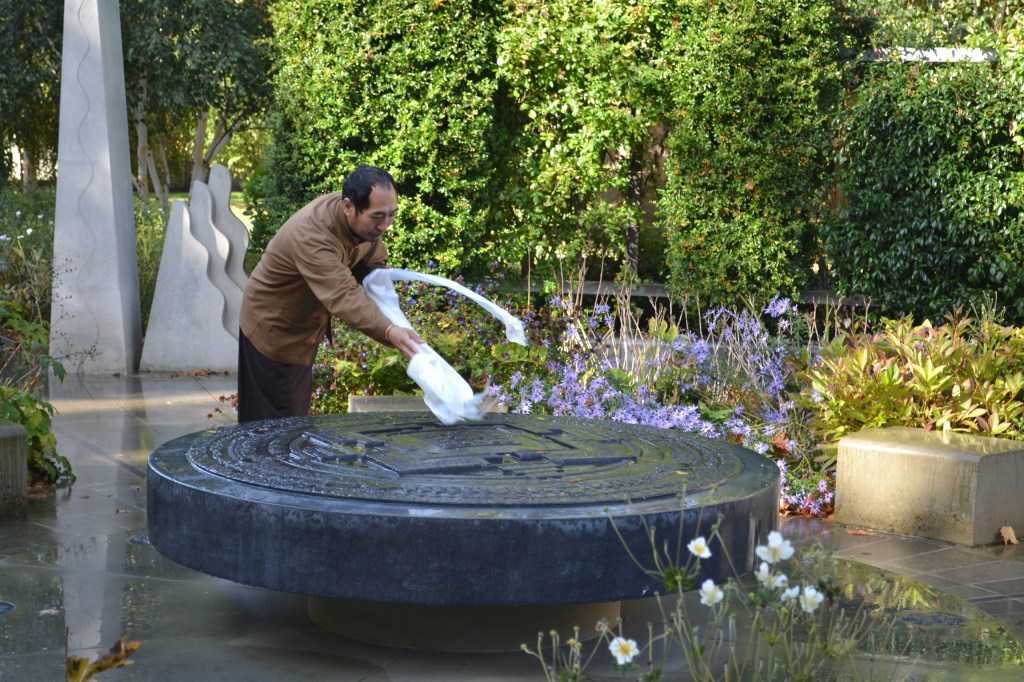
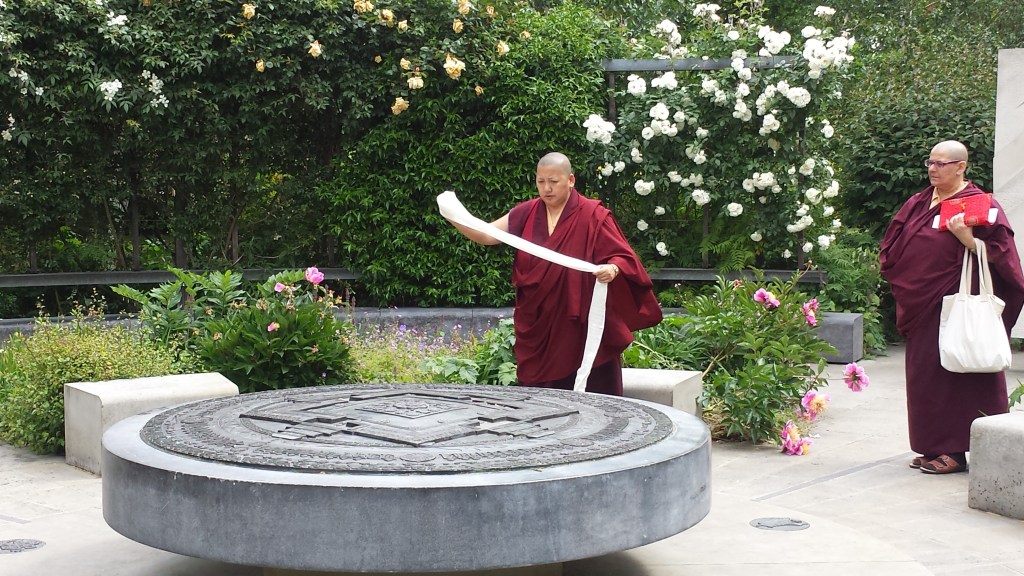
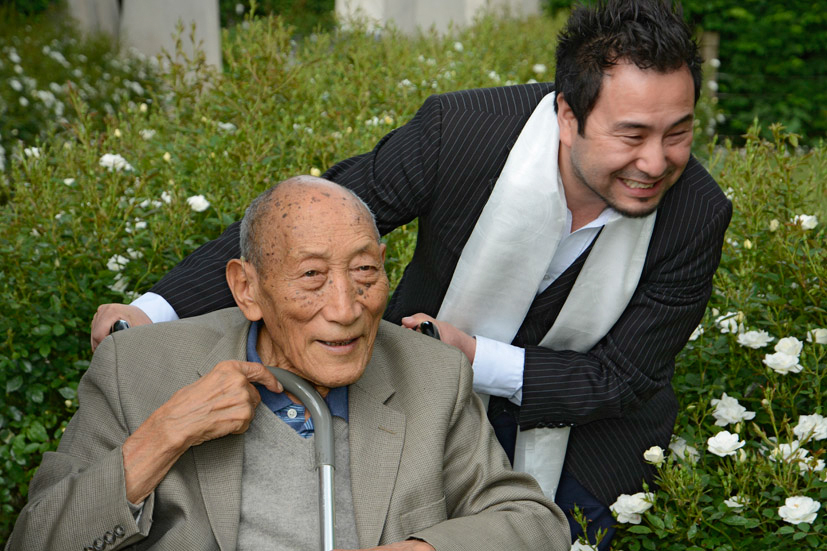
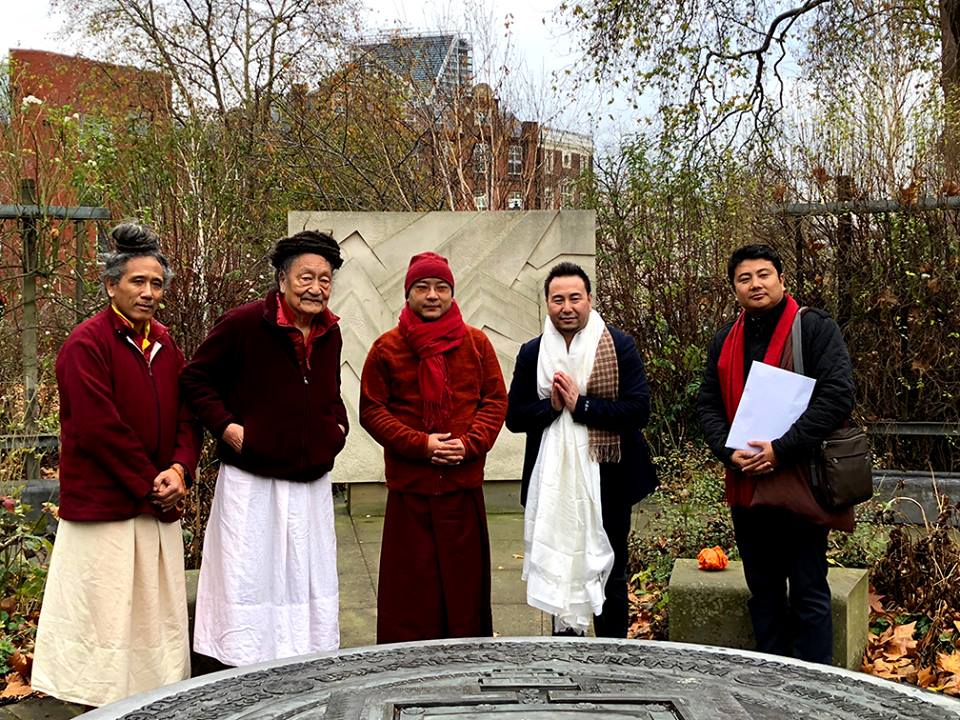
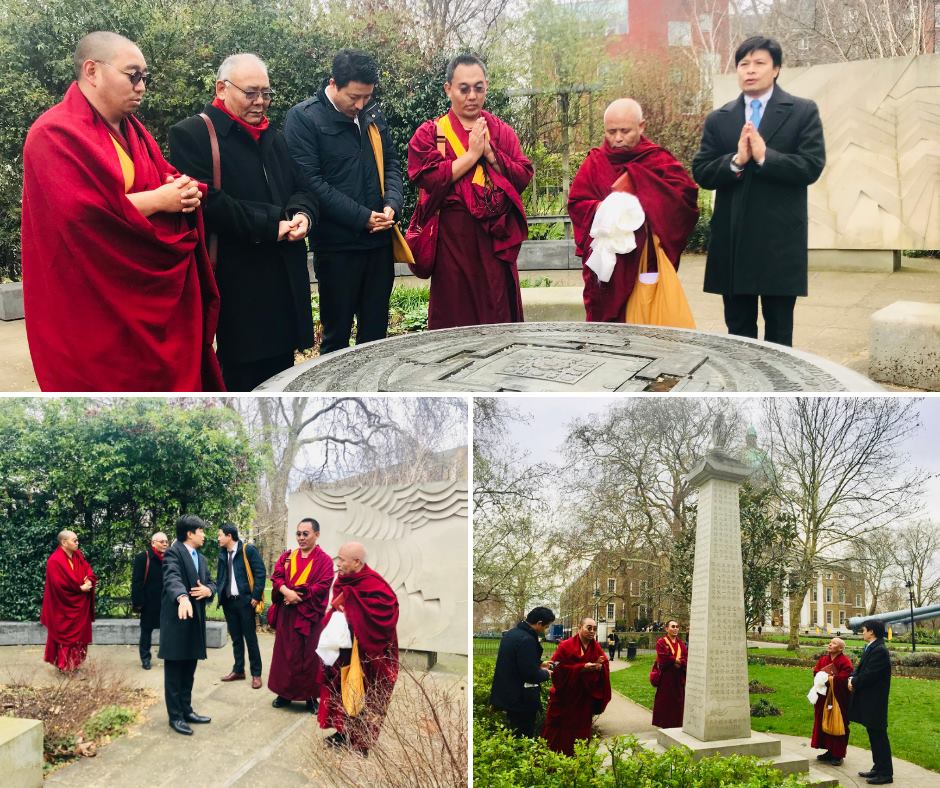
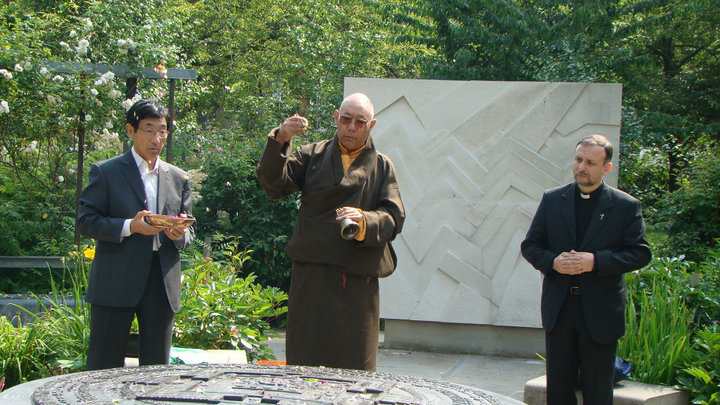
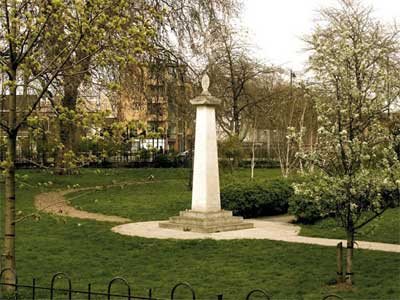
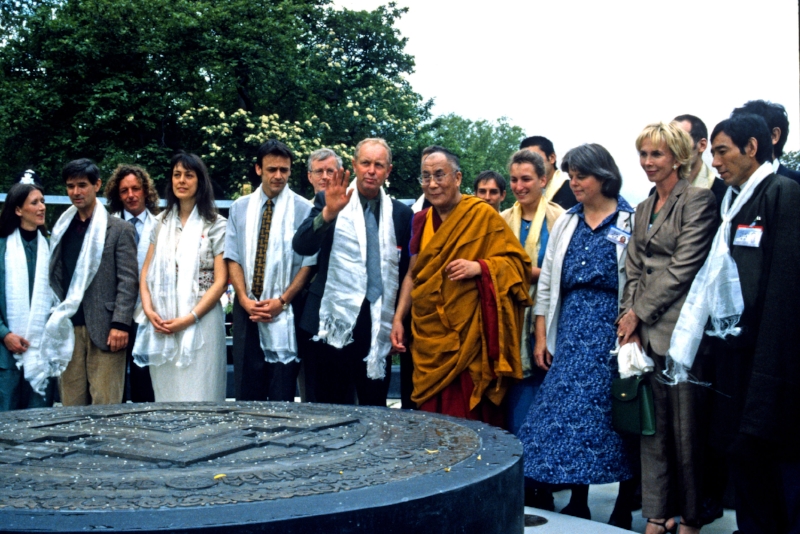
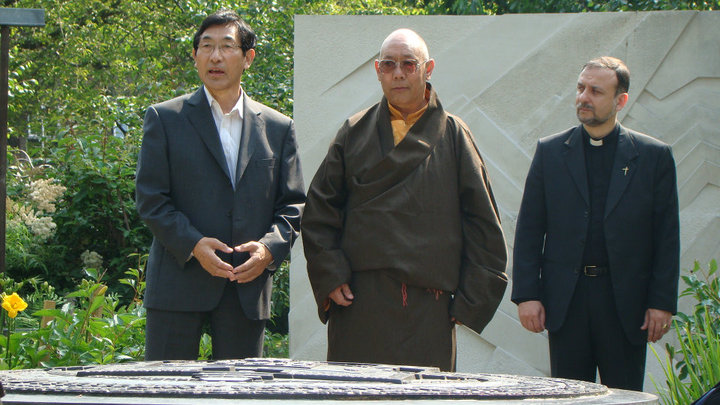


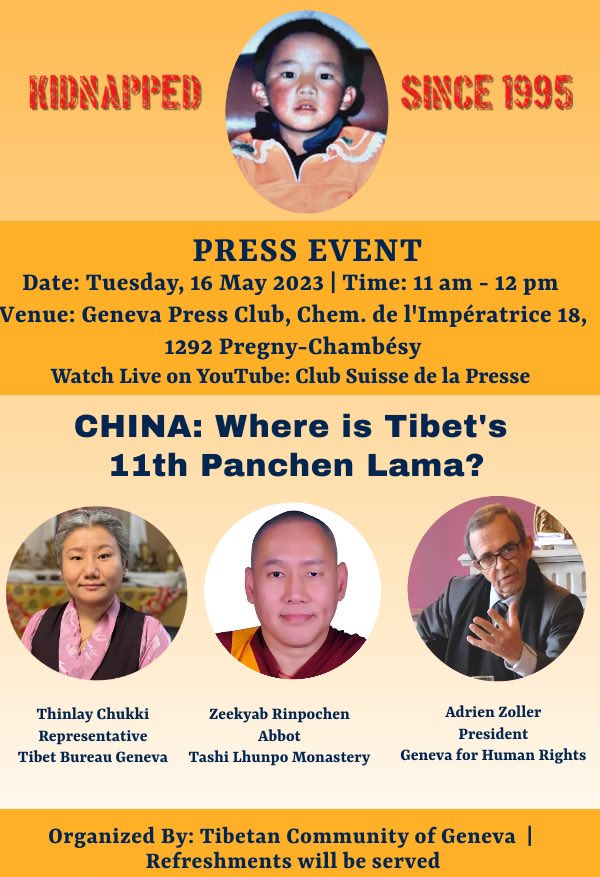
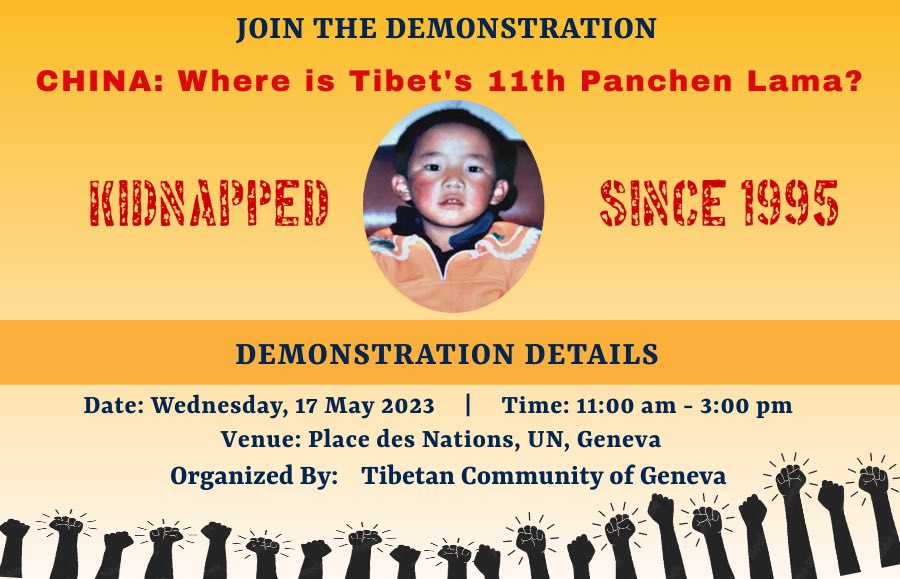
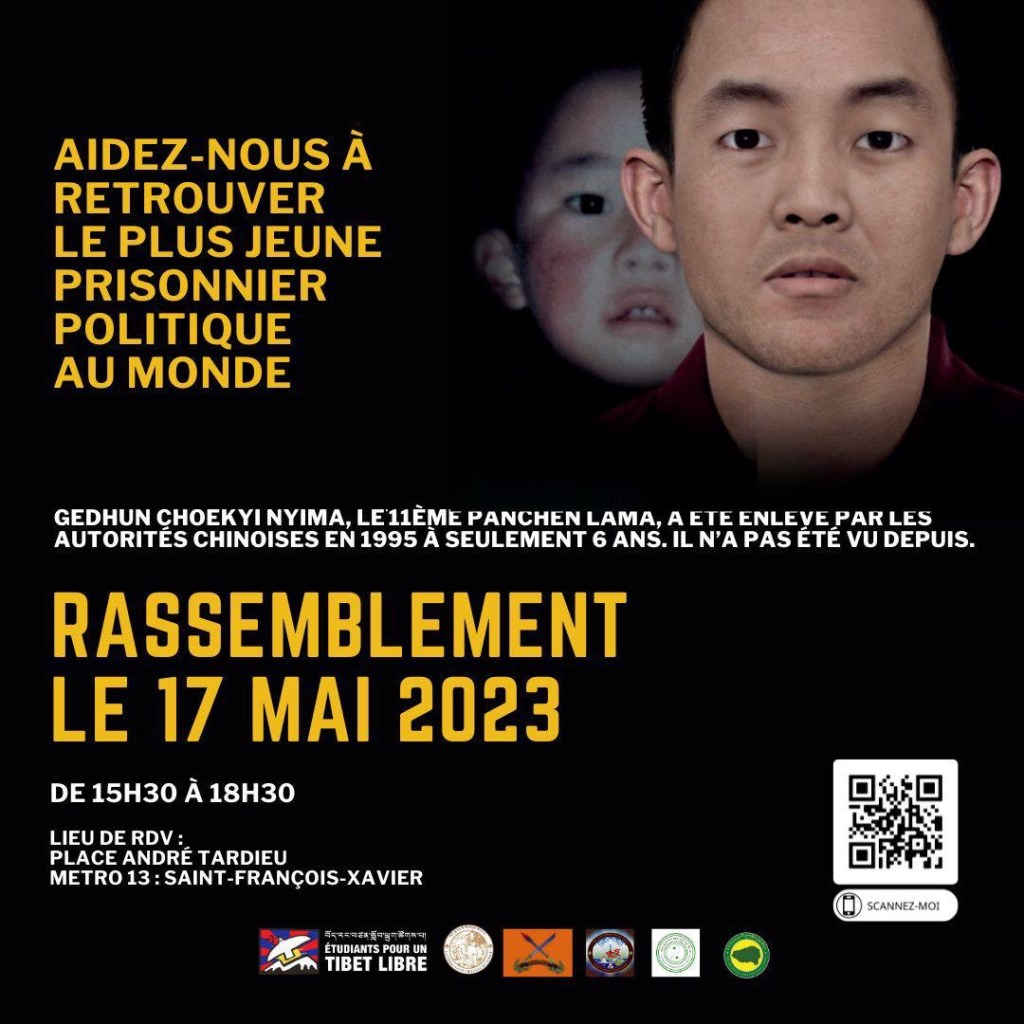

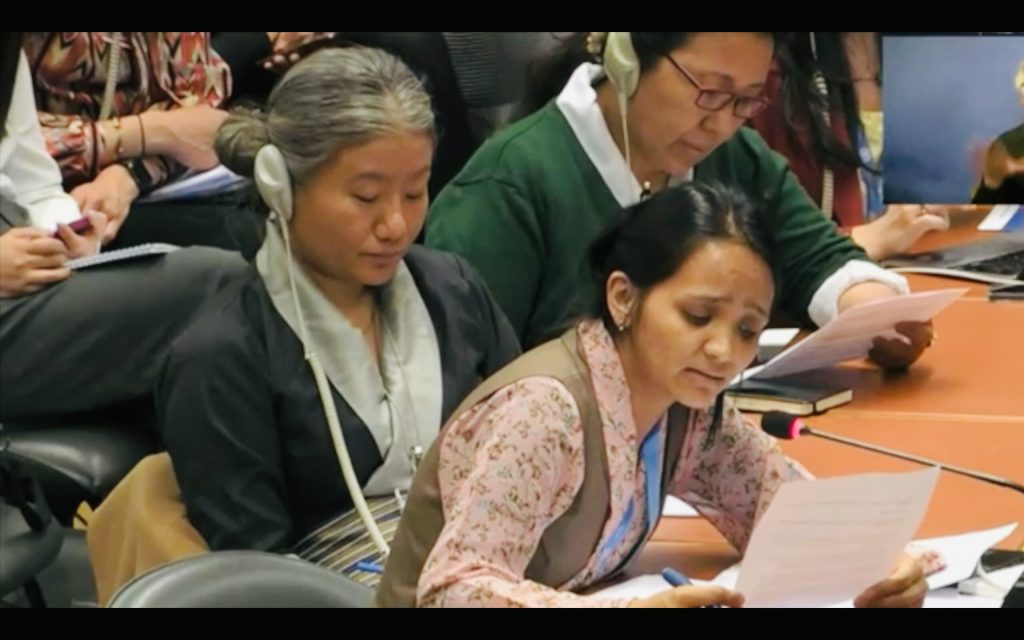
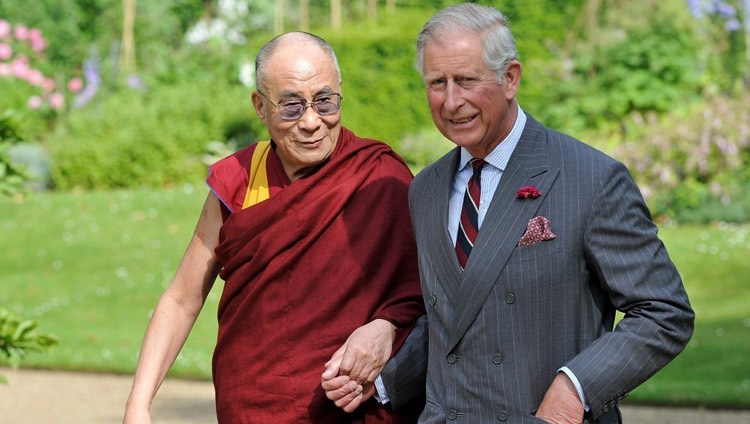


 Global Alliance for Tibet & Persecuted Minorities (GATPM)
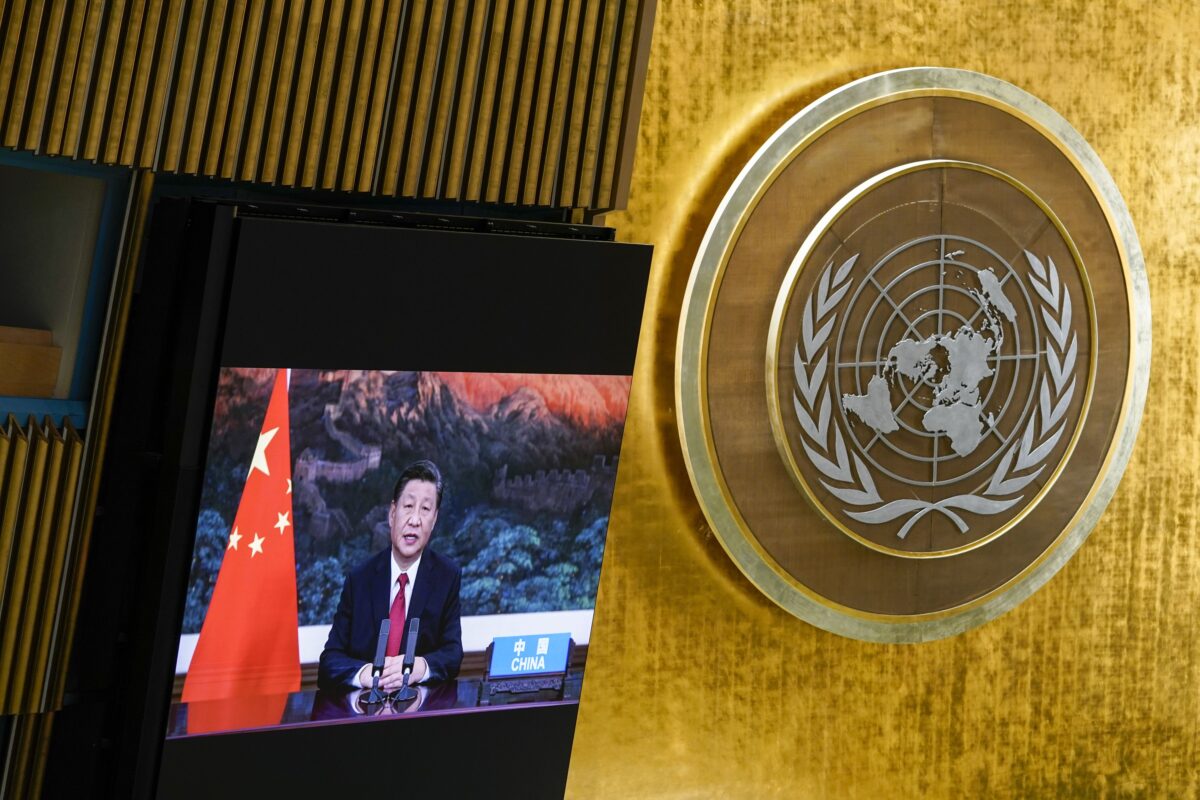
You must be logged in to post a comment.