Sikyong Penpa Tsering, the elected leader of the Central Tibetan Administration (aka Tibetan Government-in-exile), arrived in London this morning.
Sikyong greeted by members of Tibetan Community UK, Chairman Tenzin Kunga | Photo: Tsamtruk
He was accorded a very warm welcome reception by a small contingent of his fellow countrymen and women from the Tibetan Community UK and The Office of Tibet at the world’s busiest London Heathrow Airport. After the traditional welcome, Sikyong Penpa Tsering was escorted by His Holiness the Dalai Lama’s Representative Sonam Frasi and Secretary Lochoe Samten of The Office of Tibet to central London.
Photo: Office of Tibet, London
London resident Youdon Lhamo, who was born in Tibet, is amongst those who welcomed the Tibetan leader at the airport. She said: “I’m so happy to meet and greet Sikyong Penpa Tsering la. I came here simply because I wanted to convey our Sikyong a very warm welcome to England. I really appreciate and thank our Sikyong for his tireless work for the Tibetan cause”.
Youdon Lhamo with Sikyong Penpa Tsering
This is Sikyong Penpa Tsering’s first UK trip since he became Sikyong, the elected leader of the Central Tibetan Administration, in May 2021. Amongst official engagements during his short UK visit, Sikyong Penpa Tsering will deliver an address to the Oxford Union on Tibet.
The Oxford Union: This year also marks The Oxford Union’s Bicentenary year. Founded in 1823 at a time when The University of Oxford restricted students from discussing certain topics, The Union continues to uphold the principle of free speech through the exchange and debate of a wide range of ideas and opinions, presented by a diverse range of speakers – some inspiring, others controversial.
The Oxford Union has a rich history and a long tradition of bringing together world leaders, thinkers and influencers across politics, religion, science and the arts. Ronald Reagan, Jimmy Carter, Richard Nixon and Bill Clinton, His Holiness the Dalai Lama, Mother Theresa, Archbishop Desmond Tutu, Albert Einstein and Stephen Hawking are just some of the famous figures that The Oxford Union had the honour of hosting.
According to its website, The Oxford Union invites speakers from around the world and across the political spectrum, and always provides members the opportunity to challenge the speaker during events.
More recently, the Union has hosted Morgan Freeman, Dame Judi Dench, Sir Ian McKellen, Natalie Portman, Stephen Fry, Anna Wintour, Buzz Aldrin, Michael Jackson, Shakira, Senator John McCain, General David Petraeus, Malala Yousafzai, Sepp Blatter, Nancy Pelosi and David Cameron, to name but a few.
After his UK engagements, Sikyong Penpa Tsering will travel across the pond to the US and Canada on 1st February. The Tibetan leader is due for a longer UK visit in the spring when he is expected to give an address to the Tibetan Community.
Who is Penpa Tsering?
Born in India in 1967, Penpa Tsering is a leading Tibetan politician. He is the second democratically elected Sikyong of the Central Tibetan Administration. He succeeded the last Sikyong Lobsang Sangay on 27 May 2021. Penpa Tsering was also the elected Speaker of the Tibetan Parliament in Exile for two terms between 2008 and 2016.
He was first elected to the Parliament of the Central Tibetan Administration (CTA) in 1996. After serving two terms until 2006, Tsering became the speaker of the 14th and 15th Parliament between 2008 and 2016.
He contested in the 2016 Sikyong election against the then incumbent Sikyong Lobsang Sangay.
After conceding defeat in the Sikyong election, Penpa Tsering was appointed the North America Representative of the Dalai Lama, Representative to The Office of Tibet, Washington, D.C. in July 2016.
Sikyong Penpa Tserin has spoken about “resolving the issue of Tibet”, “taking care of the welfare of Tibetans in exile”, pursuing “all possible ways to communicate with China,” “facilitating a visit of the Dalai Lama to China,” and advocating for the release of “Panchen Lama Gedhun Choekyi Nyima and all other political prisoners”.
DrukTalk Podcast: A Special interview Sikyong Penpa Tsering, President of Tibetan Government in Exile, on Tibet-China Conflict and prospect, Tibetan advocacy work in the United Kingdom and Europe, Tibetan youth and VTAG and many more.. (31st January 2023)
DrukTalk Podcast: Sikyong Penpa Tsering at Oxford University (31st January 2023)
Sikyong Penpa Tsering | Leader of Tibet address | Oxford Union
The first film of Tibet, by Captain John Noel from the 1922 British expedition to Mount Everest, which was led by Brigadier General Charles Bruce. This silent film with captions is split into five parts telling the story of the 1922 Everest expedition, from commencement in Darjeeling, and the employment of porters to the record-breaking climb at the end. The sections are: ‘The Long Road to Tibet’, ‘Our Adventures in Tibet’, ‘A strange religious dance festival in Tibet’, ‘Laying Siege to the Great Mountain’ and ‘The Assault on the Mountain’.
The main aim of the 1922 expedition was to make the first ascent of Mount Everest; they took bottled oxygen with them on this expedition. There are two attempts in May via the North Ridge. The first by Mallory, Morshead, Norton and Somervell is without oxygen and reaches 26,985ft. The second by Geoffrey Bruce and Finch reaches 27,300ft and sets a new altitude record. On a post-expedition tour in 1923 a reporter asked George Mallory why he wanted to climb Mount Everest; it is here that he gives his infamous reply “Because it is there.” Following the success of this film in 1922, Noel funded a subsequent 1924 Everest expedition from which he captured even more extensive footage. This would become the acclaimed documentary The Epic of Everest, which was restored and re-released by the BFI in 2013.
London-based Tibet Watch and Free Tibet launched their latest report titled ‘Desecration in Drago County: Destruction of Tibetan Religious Heritage, Arbitrary Detentions and Torture’ at the UK Parliament on Monday, 23rd January.
John Jones (Free Tibet); Navendra Mishra MP; Fiona Bruce MP; Kate Saunders (Tibet Watch) Photo: Free Tibet
This Report Launch was attended by Fiona Bruce MP, Prime Minister’s Special Envoy for Freedom of Religion or Belief and Navendra Mishra MP, Vice Chair of The All-Party Parliamentary Group for Tibet, who hosted the special event. Welcoming the guests, Navendra Mishra MP said: “It makes for a difficult reading but is important. The real victims are the people who live in Tibet.”
Whilst acknowledging the authoritative talk by Tibet specialist Kate Saunders, who is also a Trustee of Tibet Watch, Fiona Bruce MP stated that she was very much impressed by this latest report. The Prime Minister’s Special Envoy promised to take a copy of the Report to the Foreign Office and raise the matter with her colleagues. Fiona Bruce, who is an MP from the ruling Conservative Party, is currently the Chair of the International Religious Freedom or Belief Alliance (IRFBA). She promised to share the latest findings and concerns with her counterparts of the 42 member-countries IRFBA.
A senior staff from Free Tibet and a native Tibetan from Drago County also spoke and answered questions from the audience. The session was moderated by Navendra Mishra MP, who belongs to the Labour Party.
In its Executive Summary, Tibet Watch and Free Tibet highlighted new evidence of the scale of destruction, the consequences for local Tibetans, and an intensified level of securitisation that local Tibetans have described as a second ‘Cultural Revolution’ in China’s illegally occupied Tibet.
The report also mentions sites and objects of deep religious and historical significance to the local Tibetan community which were targets of a series of demolitions.
Local Tibetans in Drago County have been detained, tortured and subjected to ‘re-education’ for reasons as minor as showing distress at the demolitions.
According to Free Tibet’s social media post, the report is the culmination of “18 months of research, from sourcing rare images and conducting interviews to commissioning satellite imagery and drone footage”. The full report is available on Free Tibet and Tibet Watch websites.
Tsering Passang, Founder and Chair of Global Alliance for Tibet & Persecuted Minorities, who attended the Launch event said: “I was very pleased to take part in the Report Launch by Tibet Watch and Free Tibet. Whilst the event facilitated the meeting with like-minded peoples, including from various human rights groups, think tanks, students and parliamentarians, I learned some new information about China’s recent destruction of Tibet’s historical religious sites as well as ill-treatment of Tibetans for their fundamental beliefs. The hard work of the Tibet Watch researchers has come across very clearly through this report. At a time when securing information from Tibet is not only very challenging, but risky too, this latest Tibet Watch report does give much needed impetus and authenticity to the desperate situation that was not fully reported earlier mainly due to total State control and restrictions. I thank all those who have contributed for this amazing report.”
Ever since the illegal occupation of Tibet by the People’s Republic of China over 70 years ago, the brutal communist regime continues its colonial and cultural genocide policies in Tibet. This must be stopped.
Terminate Twinning Towns and Cities Schemes between the UK and PRC – A Statement by GATPM
The Global Alliance for Tibet & Persecuted Minorities (GATPM) supports the timely calls to terminate the twinning towns and cities schemes between the United Kingdom (UK) and the People’s Republic of China (PRC).
Whilst we recognise the significance of these twinning schemes between countries globally which also enhances the promotion of cultural understanding, cooperation, people to people exchanges and share each other’s values amongst many other benefits, but the Chinese Communist Party (CCP) and its brutal regime utilise such scheme to legitimise their brutal rule built on violence, intimidation and crackdowns against its own people as well as those in occupied neighbouring countries.
In Tibet and East Turkestan (Ch: Xinjiang Uyghur Autonomous Region), the CCP and its brutal regime are still implementing hardline policies against the Tibetans and the Uyghur Muslims. In China proper, the persecution of Falun Gong and Christian faith groups are living examples of the deliberate crushing of what should be private beliefs by the Chinese regime. And the organ harvesting of innocent Falun Gong practitioners and other persecuted minorities represents a serious crime being committed by the Communist Chinese State. The curtailment of fundamental rights and freedoms, including free speech, enjoyed by the people of Hong Kong for centuries, is the latest example of the CCP regime’s direct interference and gross violations of human rights in Asia.
Mao Tsetung, regarded as the most prominent figure of the Chinese Communist Party in modern history, enjoyed absolute power. Mao’s catastrophic actions against his own people were ruthless and inhumane. He did not hesitate to deploy any means within his power to defeat his opponents. His fatal policies incurred immeasurable losses – of people, traditions and artefacts – not only in mainland China but across China’s occupied territories, which include Tibet, East Turkestan and Southern Mongolia. The Great Famine alone, from 1959 to 1962, cost 20 million lives or more.
In the memoirs of Mao Tsetung’s personal physician, Dr Zhisui Li’s The Private Life of Chairman Mao, he records that Mao “did not care” when millions of people were dying during the Great Famine. Recalling Mao’s ruthlessness, Dr Li wrote: “In 1957, in a speech in Moscow, Mao said he was willing to lose 300 million people – half of China’s population. Even if China lost half its population, Mao said, the country would suffer no great loss. We could produce more people.”
President Xi Jinping, who has recently anointed himself on a par with Mao Tsetung, is another crazed Chinese dictator in the 21st century. Contrary to his talk of “win-win” schemes, through his Belt and Road Initiative (BRI) projects in countries around the world Xi Jinping is plainly pursuing his expansionist global ambition. Xi’s political and military intentions behind the BRI projects are poised to cause severe threats to global peace and security. Awareness of the reprehensible and ongoing actions carried out by the CCP under Xi Jinping is crucial at a time when the regime is exporting its malign activities outside mainland China, including here in the UK.
The Spanish-based human rights organisation, Safeguard Defenders, recently reported:
“In addition to the previously revealed 54 stations, Safeguard Defenders documented the declared establishment by local Chinese public security authorities of at least 48 additional Chinese Overseas Police Service Stations, bringing the total to 102 with an overall claimed in-country presence in 53 countries.”
At least three such Chinese Overseas Police Service Stations are deployed in the UK, according to Safeguard Defenders, which constantly engage in the surveillance of Chinese nationals as well as all those who are human rights activists, including British citizens.
The free world must do all it can to stop the CCP from using its economic muscle to hoodwink gullible leaders into supporting its self-interested aims, which run counter to freedom and democracy. The CCP and its rogue leaders must be held accountable for their crimes against humanity over the past 100 years.
We therefore urge the Sheffield City Council and all other stakeholders, including the UK government, to defer and terminate twinning towns and cities schemes with the People’s Republic of China until Beijing respects the fundamental values such as human rights, religious freedom, democracy, equality, justice and free speech.
The Global Alliance for Tibet & Persecuted Minorities (GATPM) is a UK-based NGO which seeks to highlight gross violations of human rights and curtailment of political and religious freedoms, including in China.
ISSUED BY:
Tsering Passang, Founder and Chairman
Global Alliance for Tibet & Persecuted Minorities (GATPM)
By John Billington, Former Chairman of Tibet Society UK and Former Goodwill Ambassador of Tibet Foundation UK | Published byPhayul
His Holiness the Dalai Lama grants a private audience to John Billington at the former’s residence in Dharamshala on December 3, 2022. (Photo/John Billington)
The Tibet Museum is an impressive addition to the CTA’s headquarters at Gangchen Kyishong. Nga popa yin ང་བོད་པ་ཡིན། (I am a Tibetan)or Ngan-tso popa yin ང་ཚོ་བོད་པ་ཡིན། (we are Tibetan)greets the visitor, with the addition: Di ngan-tso-i lo-gyu re འདི་ང་ཚོ་ཡི་ལོ་རྒྱུས་རེད། (this is our story). Although familiar with the unjust sufferings inflicted on Tibet for more than sixty years I am still moved to tears by the story.
In His Holiness the Dalai Lama’s first formal “10th March Statement” in 1961 he makes a clear message: “I appeal to our sponsors and to the [UN] Assembly to get the Chinese to vacate their aggression and to help restore the independence of Tibet…” And he appeals to the Tibetan people inside Tibet “to keep up their spirit and resolve to regain their independence”. As we all know, since 1987 the message has been modified to an acceptance of “genuine autonomy” within China’s defensive protection – something vaguely akin to the Patron-Priest (Cho-Yon) relationship of Tibet with the Mongol and Manchu dynasties in the distant past. This change in Tibet’s aimed-for status is hugely important and is now generally known as “MWA” (Middle Way Approach). In my recent visit to Dharamsala I struggled to understand exactly what this MWA means since I would very much like to support His Holiness whom I love and revere just as if I were Tibetan myself. Sadly, I remain unconvinced.
I was honoured on 3rd December 2022 to have a private audience with His Holiness. We are men of almost identical age and have seen some improvements, but also much suffering and many wars in our long life-times. It grieves me not to be able to agree with His Holiness’s changed policy and I hope someone will come forward and explain to me why “genuine autonomy” is to be preferred to independence, since I have not been able to understand the logic or reasoning behind the change. But meanwhile I must accept the Buddha’s advice: “Test every proposition for yourself and do not agree with it just because the Buddha spoke it.”
The school which I attended in England 70 years ago had the motto: “Mediocria firma” (Latin for The middle way is best) so I am very familiar with the concept of the middle way. It was the family motto of Lord Francis Bacon, a scientist and philosopher, contemporary with William Shakespeare, who promoted the method of scientific induction – that is the respect for any questioning of a held thesis. The held thesis in this case is the MWA. I question it.
The Middle Way approach works if the opposing parties are decent and reasonable people who are willing to compromise. His Holiness, in my view, is a Mahatma – a Great Soul – whose mind is elevated and who thinks on a timeless plane. His role-model to some extent has been Mahatma Gandhi. Gandhi’s struggle was with the British – an essentially decent and kind people with a strong sense of fair play. When British rule was no longer valued, Britain and India parted company but remained friends. But China is not Britain. China’s rule in Tibet has been oppressively cruel, destructive and exploitatory. Over seventy years they have shown no hint of mercy or compromise. It is written into the Chinese DNA that they, as a people, are superior to all other nations. Their Emperors were the Sons of Heaven, their lands knew no boundaries. Their immediate neighbours (including Tibet) were the Inner Barbarians and the far-flung world outside were the Outer Barbarians. The leaders of the CCP inherit these characteristics of supposed superiority. The Chinese people are our brothers and sisters and like His Holiness I wish them well, but they have never throughout history treated Tibetans as equals.
During my recent visit I strove to understand how Tibetans can believe that all this will suddenly change if the CCP falls. I spoke with senior members of the CTA but emerged none the wiser. There was vague talk that if genuine autonomy does not work ” we can change our policy” but that is wishful thinking. The younger people I spoke with parotted the words of His Holiness, that “human beings are essentially gentle” creatures, because we have neither the talons of eagles nor the teeth and claws of tigers. This, in my view, is flawed logic and does not stand up to questioning. Tibetan myth has it that we are descended from a monkey ancestor and the myth is astute in that it anticipates Charles Darwin’s Theory of Evolution and Natural Selection in the 19th century. So, are monkeys gentle creatures? Well, like all species, they can be, but they can also (and do) fight wars. They can hurl coconuts at one another. Mankind has evolved from monkeys and has the capacity for both gentleness and ferocity. Man – more than any other creature – has developed weapons of terrifying violence. Stones became bows and arrows, then swords and guns, and then tanks and aeroplanes to drop bombs. And then we invented nuclear weapons and un-manned drones to fight for us. Can the human species be described as “essentially gentle”? Does such a definition tally with Chinese behaviour in Tibet? If not, how can Tibetans ever trust China to honour any agreement? I put this to my young friends and they were silent. I reminded them of our proverb: The price of freedom is eternal vigilance and of Edmund Burke’s famous dictum: For evil to prosper it is only necessary that good men do nothing. In other words, if we are passive we invite attack since evil always takes the initiative and preys upon weakness. No-one could answer me on this. This worries me.
The best account I know of the religious promptings in human beings is The Varieties of Religious Experienceby William James. William James was an American Psychologist and well versed in Buddhism, and his series of lectures was published in Edinburgh in 1902. Five of James’s lectures deal with Saintliness and The Value of Saintliness. I will quote briefly:
“Aggressive members of society are always tending to become bullies, robbers and swindlers…
Appeals to magnanimity, sympathy or justice are folly when we are dealing with human crocodiles and boa-constrictors.“
We must not give up hope of a change of heart in the bullies (he argues):
“We have no right to speak of human crocodiles and boa-constrictors as incurable beings…”
But we need to be wary of them:
“Momentarily considered the saint may waste his tenderness and be the dupe and victim of his charitable fever, but the general function of his charity in social evolution is vital andessential. If things are ever to move upward, some one must be ready to take the first step andassume the risk of it.”
James’s words exactly describe His Holiness’s position. In any Utopian vision of the world, the saint must accept that he will be taken advantage of. But most of us do not live in Utopia, and the boa-constrictors and crocodiles lie in wait for the unsuspecting innocent. They cannot be trusted.
At some point the communist regime in China will fall. But we do not know what will succeed it. In the seventy years during which the Chinese have occupied Tibet there is no sign that Tibetan suffering has melted hearts of stone.
Throughout history Tibet has served as a buffer state between Asia’s two greatest powers – India and China. His Holiness’s vision of Tibet as a Zone of Peace would continue to keep space between these two super-powers, while serving also as a bridge to bring them together. Such a role is wholly in keeping with Tibet’s essentially peaceful Buddhist culture. As a country of huge area but small population Tibet could not defend its borders alone. Treaties and alliances with neighbouring countries will be essential. A Central Asian Treaty Organization (CATO) consisting of Tibet, India, China, Russia, Nepal, Bhutan. East Turkestan, Southern Mongolia and Myanmar, supplemented perhaps with support from Japan, U.S.A. and Australia who have valid interest in the peace of this area, would be necessary to guarantee the integrity of Tibet’s borders. My main point is that the defence of Tibet’s integrity cannot be left to China alone.
I spoke three phrases in Tibetan in my audience with His Holiness. “Nga yeh nang-pa yin” ང་ཡང་ནང་པ་ཡིན་(I too am a Buddhist) and “Nga popa nang-shin yin” ང་བོད་པ་ནང་བཞིན་ཡིན་(I am just like a Tibetan). My last words were spoken more in sorrow than in hope: “Lha gya-lo…lha gya-lo” ལྷ་རྒྱལ་ལོ། ལྷ་རྒྱལ་ལོ།
Note:The author is the former Chairman of the Tibet Society UK and Former Goodwill Ambassador of the Tibet Foundation.
A British Viewpoint on China’s occupation of Tibet and East Turkistan An interview with Mr. John Billington, the Goodwill Ambassador for Tibet Foundation and Former Chairman of the Tibet Society
The former chairman of The Tibet Society, UK, John Billington and Australian political activist Drew Pavlou talks to Tibet TV on the need to an increased awareness on the situation in Tibet to the global audience.
Former Chinese communist leader Jiang Zemin presided over an extraordinary clampdown on faith groups, particularly the spiritual group Falun Gong, during which the regime deployed tools and tactics that laid the groundwork for the development of China’s modern digital authoritarianism, according to experts and advocates.
Former Chinese dictator Jiang Zemin at the Great Hall of the People in Beijing, China on Nov. 8, 2012. (Feng Li/Getty Images)
Jiang died on Nov. 30 at the age of 96 years in Shanghai, due to leukemia and multiple organ failure, according to Chinese state media.
While his death has prompted some analysts to positively recount his alleged contributions to China’s economic development, others point to Jiang’s role in boosting the communist country to the detriment of the United States and the West.
Meanwhile, advocates and experts have drawn attention to Jiang’s mass human rights violations—atrocities that persist in China today.
Falun Gong practitioners at a rally in front of the Chinese embassy in New York City on July 3, 2015, to support the global effort to sue Jiang Zemin. (Larry Dye/Epoch Times)
Violations
“His biggest demerits: of course the Falun Gong persecution starting 1999 with pogroms, [and] ruling China through corruption and messing around with ethics,” Frank Lehberger, a Europe-based sinologist and analyst of Chinese Communist Party policies, told The Epoch Times in an email.
The spiritual practice Falun Gong, which includes meditative exercises and moral teachings focused on the principles, truthfulness, compassion, and forbearance, surged in popularity in the 1990s. Perceiving this to be a threat to his grip on power, Jiang launched an expansive campaign of suppression that resulted in millions of adherents detained for their beliefs.
Jiang also ordered the forced organ harvesting from persecuted groups, particularly Falun Gong practitioners, Lehberger noted. Detained Falun Gong practitioners were found to be the main source of organs for this horrific practice used to supply China’s large transplant market.
The former leader’s sweeping oppressive policies thus laid the foundation for other CCP campaigns of repression towards Tibetans, Uyghurs, Mongolians, and those in Hong Kong, noted Lehberger.
Jiang is the first CCP leader to face lawsuits in national as well as international courts.
In 2009, Jiang and four high-ranking CCP officials were indicted at the national Spanish court for committing crimes of genocide and torture against Falun Gong practitioners.
In 2003, three Tibet support groups jointly filed a criminal lawsuit in Spain’s High Court, accusing Jiang and Li Peng, both of whom had retired as China’s president and parliament chief, respectively, of committing genocide and crimes against humanity in Tibet.
Tsering Passang, the founder and chairman of the advocacy group Global Alliance for Tibet and Persecuted Minorities, noted Jiang’s role in crushing the Tibetan Buddhist faith.
The Panchen Lama, the second most significant religious figure in Tibetan Buddhism after the Dalai Lama disappeared at the age of 6 in May 1995 during Jiang’s rule in China, reportedly abducted by the regime. Since then, there has been no news about him or his family. In 2018, the U.S. State Department in an official statement called for his immediate release.
“In Tibetan tradition, the Panchen Lama and the Dalai Lama have a vital role of recognizing each other’s reincarnation. Beijing appointed its own Panchen Lama six months later in November 1995. This all happened during the reign of … Jiang Zemin who had absolute authority,” Passang told The Epoch Times over text message.
He added that even the 17th Karmapa, the spiritual head of the 900-year-old Karma Kagyu branch of Tibetan Buddhism, had to dramatically escape from Tibet in 2000 during Jiang’s regime as the spiritual leader was restricted from pursuing his Buddhist education in Tibet.
Lehberger also noted that Jiang ordered the establishment of China’s Great Firewall, the regime’s vast internet censorship and surveillance apparatus. This laid the foundation for the regime’s digital dictatorship, later perfected under the rule of current CCP leader Xi Jinping. It also paved the way for today’s “bio-medical COVID dictatorship,” he said.
On the economic front, Jiang’s policies kickstarted the regime’s rampant intellectual property theft, spawning cheap Chinese counterfeits that have since flooded the global market, according to Lehberger. The expert also blamed Jiang for China’s widespread environmental destruction and predatory capitalism.
Problem with Democracy
French historian and author Claude Arpi relayed accounts of Jiang’s poor comprehension of democracy during his state visits abroad. Hosts had faced problems when rights protestors shouted slogans at the then-leader.
“On March 25, 1999, Jiang Zemin was on an official visit to Switzerland. On that day, as he arrived at the parliament in Bern, the Chinese [leader] saw some pro-Tibetan protestors in front of the building with ‘Free Tibet” banners. He got very angry,” said Arpi, now based in India.
“Inside the parliament, he addressed the Swiss lawmakers and said: ‘Today, Switzerland has lost a friend’.”
Arpi mentioned that a few years after this incident, a Swiss diplomat told him that Jiang’s anger continued even during the state banquet with the Swiss president later that evening.
“Jiang Zemin was still so angry that he refused to eat to the great embarrassment of his hosts, who tried to explain what ‘democracy’ was about. In vain!” said Arpi.
Passang participated in protests during Jiang’s state visit to London in 1999, and was detained by the city’s police for over six hours.
“In Cambridge (I did not attend the protest there) the Chinese security/secret service were literally seen directing the British police to contain Tibet protesters,” he said.
“There was no doubt that the policing was beyond reasonable—it was heavy-handed,” he said, adding that the local police later issued apologies for its policing.
Chinese President Xi Jinping (L) talks to China’s former president Jiang Zemin (R) during the closing of the 19th Communist Party Congress at the Great Hall of the People in Beijing on October 24, 2017. Xi Jinping’s name was added to the Communist Party’s constitution at a defining congress, elevating him alongside Chairman Mao to the pantheon of the country’s founding giants. / AFP PHOTO / WANG ZHAO (Photo credit should read WANG ZHAO/AFP via Getty Images)
Factional Politics
Observers note that Jiang was the leader of a faction within the CCP known as the “Shanghai gang,” in reference to eastern coastal city on which Jiang has a political stranglehold.
Factional politics had a key role in the political and economic policies of the Chinese regime. As long as Jiang was in power, his Shanghai gang not only dominated national politics but his city also received preferential economic treatment from the central leadership, said analyst Srijan Shukla of Observer’s Research Foundation in a 2021 paper titled “Rise of Xi Gang.”
“A study conducted in 2002 showed how over …12 years (1990-2002), Shanghai received 19.8 billion yuan more in state grants and loans than its chief domestic competitor, the city of Tianjin. This preferential treatment also resulted in more flows of Foreign Direct Investment (FDI) into Shanghai than any other Chinese city,” wrote Shukla, adding that between 1978 and 2002, 86 percent of FDI inflows into China went to the east coast.
Even after stepping down as leader, Jiang was able to control politics from behind the scenes as a factional head, analysts say.
Lehberger said that Jiang manipulated and hobbled his successor Hu Jintao until 2012, although Jiang had officially retired from all his posts in 2004.
When Xi came to power in 2012, Jiang hoped that his faction could do the same and “manipulate him as some sort of ‘puppet,’” said Lehberger.
Passang noted that Jiang’s death may be good news for Xi.
“His death may be detrimental to his supporter base in the party which means a full opportunity for Xi Jinping,” he said
Lehberger noted that there were rumors in mid-November that Jiang had died, and suggested that Xi had decided to divulge it at a time when historic mass COVID protests were rocking China. But he conceded that there was no way to prove the rumors.
The analyst believes that Xi will now start purging the most influential players left in the Shanghai fraction. “Because it seems Jiang had some sort of tacit agreement on Xi holding still, postponing major persecutions, until Jiang’s death,” said Lehberger.
*Venus Upadhayaya reports on wide range of issues. Her area of expertise is in Indian and South Asian geopolitics. She has reported from the very volatile India-Pakistan border and has contributed to mainstream print media in India for about a decade. Community media, sustainable development, and leadership remain her key areas of interest.
Join the London protest to show your support and solidarity with the Tibetans, the Uyghurs and the Hongkongers who are still being persecuted in their homelands by the brutal Chinese Communist regime.
Every year on 10th of December, the world celebrates Human Rights Day, the very day when, in 1948, the United Nations General Assembly adopted the Universal Declaration of Human Rights (UDHR).
Supported by various human rights organisations, London-based Tibetan, Uyghur and Hong Kong communities are staging a public protest to highlight the continued gross violations of human rights committed by the Chinese State in their home countries. Speakers from these communities will share their own stories and call upon the UK government and others to take strong action against the brutal CCP regime.
The Chinese Communist Party (CCP) is one of the world’s greatest human rights abusers. From violently crushing calls for democracy in Hong Kong, to erasing Tibetan identity, to committing genocide against the Uyghurs – they represent a global threat to international standards of human rights. Xi Jinping has recently secured his third term in office and it is certain that his regime will engage in further crackdowns on all persecuted communities in China and its occupied territories over the next five years. So, it is vital that we speak up.
The protest will start in Whitehall, opposite 10 Downing Street, the heart of the UK Government and it ends at the Embassy of the People’s Republic of China, 49 Portland Place, London W1B 1JL.
Protest 2: Meet outside London Apple Store, Oxford Circus by Labour Movement Solidarity with Hong Kong (UK)
Organised by the Labour Movement Solidarity with Hong Kong (UK) this first lobby will be at London’s Regent Street Apple store on December 10 at 1pm. The protesters will then join others at the Chinese Embassy.
Publicity shared by the Labour Movement Solidarity with Hong Kong states: “, “Since the #Foxconn revolt and following the #Urumqi tragedy hundreds of thousands of workers and students have taken to the streets across #China.
“We need to mobilise in solidarity – not only to demand that the Apple Corporation ends their complicity with the anti-worker policies of the Chinese regime but also to support all Chinese workers and students currently fighting against the dictatorial and authoritarian regime.”
The publicity further added, “This Saturday we will be going ahead with a protest outside Apple Store at 1pm and afterwards joining the Chinese dissident student group China_Deviants at their picket at the Embassy.”
Protest 3:London Human Rights Day – They Shouldn’t Be Forgotten by China Deviants
China Deviantsjoin in forces with likeminded causes to mark the International Human Rights Day on 10th December this year in London. China Deviants stand with all the voiceless peoples in China, who cannot speak for themselves. China Deviants also stand with the Hongkongers, Tibetans, Uighurs, feminist activists and workers’ rights. Please join us from 2pm to 5pm outside the Embassy of the People’s Republic of China, 49 Portland Place, London W1B 1JL.
China Deviants is a decentralised non-profit organisation. We are committed to awakening the Chinese people against the dictator, letting the Chinese people and the international community realise that: a non-elected government cannot represent the voice of the Chinese people. We need democracy and freedom, and we reject dictatorship. We hope to unite more siblings and work together for the realisation of democratic China.
Rights groups have condemned China and its official agents in the UK for committing savage acts against peaceful protesters on 16th October in Manchester, north-west of England.
A group of human rights protesters, who belong to China’s persecuted communities from Hong Kong, Tibet and East Turkestan, staged a peaceful protest outside the Chinese Consulate in Manchester. Their aim is to draw the world’s attention to Xi Jinping’s brutal oppressions in China’s occupied territories.
The protest coincided with the ongoing National Congress of the People’s Republic of China, which began on 16th October in Beijing. Delegates at the National Congress are expected to extend dictator Xi Jinping’s term in Office for at least another five-year as China’s president. Xi was anointed as the Secretary General of the Communist Party of China in November 2012. A few months later in March 2013, he became the President of the People’s Republic of China.
Outside the Chinese Consulate in Manchester, bandits wearing facemasks approached the peaceful protesters, who then dismantled the protest banners and removed them. CCP agents then used force and dragged some of the protesters inside the Chinese Consulate’s compounds, where they started beating them mercilessly. Footages of the brutal acts were all shared on news and social media channels.
Picture source: Matthew Leung / Chase News / Reuters
China’s persecuted communities are convinced that the Chinese regime resorting to such illegal acts on foreign soil is simply to silence its critics overseas. They also believe that CCP agents were attempting to kidnap dissidents overseas and bring them back to China and its occupied territories to face the consequences for their opposition against the Chinese Communist Party.
So, it is pertinent that rights groups join in forces and stage protests in London and Manchester to showcase their solidarity with the China’s persecuted communities whilst highlighting the brutal Chinese regime’s violent acts.
Through these forthcoming protests in London and Manchester, rights groups will also urge the UK government once again to take appropriate action against the Chinese Embassy and its agents for their illegal acts on British soil.
Nobody in the UK should feel threatened or threatened by any forces, including China, for simply exercising their basic democratic rights such as free speech through peaceful protests.
Rights groups – Hong Kong Aid, Free Tibet, Britons in Hongkong, Global Alliance for Tibet & Persecuted Minorities, Good Neighbour Church England and Hong Kong Liberty are all involved in the London protest. There will be rallies in Whitehall and outside the Chinese Embassy. The protesters will march to the Chinese Embassy after their rally in Whitehall.
London Protest – 23rd October 2022
Date: Sunday, 23rd October 2022Time: 4pm Meeting point: Montgomery Statue SW1A 2AT (Opposite 10 Downing Street, Whitehall) Destination: Chinese Embassy, 49 Portland Place, London W1B 1JL
Manchester Protest – 23rd October 2022
Sunday, 23rd October 2022 at 4pm St. Peter’s Square Manchester (for details please click the link)
Joint Statement of Manchester Hongkongers and Organisations on Violent Attack on Peaceful Protestors at Chinese Consulate in Manchester: 16 October 2022
We express our deepest concern about the violence inflicted by the Chinese Consulate upon peaceful Hong Kong protesters in Manchester today. Such violence is in clear violation of UK citizens’ freedom of expression and right to security. It should by no means be tolerated.
As shown by several online footage, a peaceful protest was held outside the Chinese Consulate in Manchester by a group of Hong Kong pro-democracy protesters on a public pavement in front of the Consulate. Video evidence showed several men walking out from the Consulate and brutally destroying personal properties of the protesters. The protester was subsequently dragged behind the gates of the Consulate and beaten aggressively by a gang of at least five to six men.
This appalling incident evidenced that the Chinese Government’s oppressive arms are not confined only within its claimed territories, but reaching far beyond to the British streets.
We strongly urge the Foreign, Commonwealth & Development Office, and our Foreign Secretary James Cleverly MP to investigate the violation of international law in this violent incident.
Any brute force and violence to peaceful protesters should not be tolerated. We strongly condemn the savage acts committed by members of staff of the Chinese Consulate in Manchester, of illegal detention of British Nationals, and exploitation of individual’s right to liberty and security, along with their freedom of assembly and demonstration.
Our thoughts are with those peaceful protesters in Manchester.
British Ambassador Simon Manley delivered a general remark after a vote on the situation of human rights in the Xinjiang Uyghur Autonomous Region (aka East Turkistan), on 7th October 2022 at the 51st Session of the UN Human Rights Council. The Global Alliance for Tibet & Persecuted Minorities welcomed the continued support from United Kingdom and likeminded countries.
“Thank you, Mr President
Ambassador Simon Manley delivered a general remark after a vote on the situation of human rights in the Xinjiang Uyghur Autonomous Region, China | Photo: Foreign, Commonwealth & Development Office
Permit me to make a few remarks after the vote in relation to the Draft Decision to hold a debate on the Human Rights Situation in Xinjiang.
Members of the core group that proposed the Decision align themselves with this statement.
Let me begin by thanking every member of this Council who voted in favour of the Draft Decision, as well as every nation which co-sponsored the draft. We welcome the support of each and every one of you.
Our aim in proposing this Draft Decision was to bring before the Council an issue, which clearly warrants this Council’s attention. No state should be free to avoid scrutiny over allegations of possible crimes against humanity, whatever their region, whatever their size, or whatever their influence. And to be clear, that includes the UK.
It has been clear from talking to colleagues over recent weeks, that almost everybody in this room acknowledges that there are serious concerns about the human rights situation in Xinjiang. The recent OHCHR assessment confirms these concerns with meticulous rigour, drawing extensively on first-hand testimonies and information published by Chinese authorities.
While the Decision was not adopted, the many discussions around the draft decision in Geneva and in Human Rights Council member capitals, have served to highlight the scale, and the nature, of the terrible violations being faced by Uyghur and other Muslims in Xinjiang.
It was therefore correct for the Core Group to seek a debate at the Council. To have done otherwise would have been to ignore the plight of those subjected to arbitrary detention, torture or ill-treatment, forced labour, sexual and gender-based violence, forced sterilisations and enforced disappearance. It would have been to disregard the testimony of those who have experienced these violations first hand and helped to bring them to light, despite huge personal risk. It would have been to look the other way, when faced with allegations of possible crimes against humanity, committed against huge numbers of people from minority groups based on their ethnicity and religion.
Mr President, dear colleagues,
Problems don’t go away by ignoring them. So, we will continue to raise our concerns about the human rights situation in Xinjiang, in international fora. We will continue to urge China to change course, and to cease the practices which the OHCHR assessment has described to us, in such clear and disturbing detail. And we will not forget the plight of the Uyghurs in China.
More and more Tibetans are now exploiting modern technology for good. They record events happening in their localities and share with people around the world through YouTube and other social media channels.
Today, we are pleased to share a video blog by Dolma Lhamo from India – His Holiness the Dalai Lama’s Teaching in Lingshed Village, Ladakh!
After a gap of several years due to COVID-19 lockdowns, His Holiness the Dalai Lama travelled to Ladakh in August 2022 where the Tibetan spiritual leader gave Buddhist teachings to his followers.
Ladakh, often referred to as a “Little Tibet”, is a favourite place of His Holiness the 14th Dalai Lama. Tibetans and the Ladakhi people share the same Tibetan Buddhist cultural and religious traditions. His Holiness the Dalai Lama is highly revered in this northern region of India too.
This year the Tibetan spiritual leader gave Buddhist teachings at the Lingshed Gonpa, a Gelugpa Buddhist monastery which is located in the south west of Shaam region of Leh district. Ladakh is a Union Territory of India. Lingshed Gonpa is one of the most prominent and oldest monasteries of Ladakh.
It was founded in the 1440s by Changsem Sherab Zangpo on a holy site. Changsem Sherab Zangpo was a disciple of noted Tibetan perceptor Je Tongkhapa, It is said that Shesrab Zangpo, having founded karsha and Phugtal monasteries to the south of Lingshed travelled across Hanuma-la (a pass), where he had to spend a night, from where he saw an “auspicious shining light” shining on a rock on hillside at Lingshed. He built a stupa over that rock and this became the sanctum sanctorum of the monastery.
In 1779, the Ladakh king Tsewang Namgyal bestowed upon the lands of Lingshed and its surrounding villages to Lobsang Gelek Yeshi Dragpa, the 3rd incarnate of the Ngari Rinpoche lineage. Ever since then, the monastery belonged to the religious estate of Ngari Rinpoche and hence the present head of the monastery is Tenzin Chogyal, the 16th Ngari Rinpoche and the youngest brother of the XIV/ Dalai Lama.
Lingshed Monastery is popularly known as” Skubum TashiOdbar”. Skubum meaning: “A Hundred Thousand Images/Statues” and Tashi Odbar: “An Auspicious Shining Light”.
How to reach: It takes around 8 hours to reach Lingshed from Leh. You have to cross Wanla and then, Shirshir la. You will reach at Photoksar. From there, you have to cross Singye la and it takes half an hour to one hour to reach Lingshed.
On 29th September 2022, Dharamsala-based Central Tibetan Administration (aka Tibetan Government-in-exile) issued a Statement affirming its position on the issue of the Dalai Lama’s reincarnation.
FILE – In this April 5, 2017, file photo, Tibetan spiritual leader the Dalai Lama greets devotees at the Buddha Park in Bomdila, Arunachal Pradesh, India. More than 150 Tibetan religious leaders say their spiritual leader, the Dalai Lama, should have the sole authority to choose his successor. A resolution adopted by the leaders at a conference on Wednesday, Nov. 27, 2019, says the Tibetan people will not recognize a candidate chosen by the Chinese government for political ends. ( AP Photo/Tenzin Choejor, File)
In its Statement, the Kashag of the Central Tibetan Administration, said, “The system of recognising reincarnated spiritual beings is a religious practice unique to Tibetan Buddhism. The fundamental thought behind this philosophy is to accept the principle of life after death.
“No government nor any individual has the right to interfere in this matter.”
For full statement, please see below and visit the CTA’s website.
Kashag’s Position on the Issue of Reincarnation of His Holiness the 14th Dalai Lama
The government of the People’s Republic of China adopted the so-called law on ‘Management Measures for the Reincarnation of Living Buddhas in Tibetan Buddhism’, in 2007. Since then, the PRC has taken over the management of all monastic administrations and in particular, took complete control over the power to recognise reincarnated Lamas/Living Buddhas, and continue to use it to meet their political ends.
Moreover, the PRC government, in real-time, conducts workshops, discussion forums, talk shows and uses various means to promote a false narrative on the issue of reincarnation in general; and on the reincarnation of the present Dalai Lama in particular. These activities are conducted on all the ordained and laity throughout Tibet.
It is also a fact that the issue of reincarnation of His Holiness the Dalai Lama continues to be discussed within our community and without as well. Therefore, The Kashag/Cabinet of the Central Tibetan Administration felt the need to present this Position Paper for everyone’s information.
The Kashag has firm belief that His Holiness will live to the ripe age of 113 as per propitious prescient and the repeated assurances of His Holiness the Dalai Lama.
The system of recognising reincarnated spiritual beings is a religious practice unique to Tibetan Buddhism. The fundamental thought behind this philosophy is to accept the principle of life after death.
While extending our sincere appreciation and thankfulness to those freedom-loving democratic countries around the world, including the United States of America for their complete endorsement of His Holiness’s thoughts on this matter; we will pursue with due diligence to obtain similar support from as many like-minded countries as possible.
With regards to the reincarnation of His Holiness the Dalai Lama, His Holiness’s repeated statements since 1969, the official pronouncement of September 24, 2011, or any guidance in future is inherently discretionary. No government nor any individual has the right to interfere in this matter.
This religious activity has to be conducted as per the responsibilities that His Holiness the Dalai Lama enshrines and entrusts. We have full confidence in the leadership of the Central Tibetan Administration at the time to take responsibility as entrusted.
The Kashag is in the process of working on other related matters that need to be addressed concerning this issue.
Ever since the Chinese Communist Party came to power in 1949 through military force the People’s Republic of China celebrates 1st October as their National Day. But for the peoples of East Turkestan and Tibet this was the beginning of dark period.
Exactly 73 years ago on this day, Mao Tsetung ordered the People’s Liberation Army (PLA) to invade Tibet and East Turkistan. Tibetans and Uyghurs resisted their occupations and they have been enduring unimaginable sufferings under the brutal CCP regimes over the past seven decades. Under Xi Jinping dictatorship, the freedoms the people of Hong Kong enjoyed for generations had snatched away through force.
So, to mark this dark day in history, London-based Hong Kong, Tibetan and Uyghur communities staged “Resist CCP Day” protest on 1st October to highlight the Chinese regime’s atrocities and their continued gross violations of human rights in the occupied territories.
The rally kicked off in Piccadilly Circus at 6pm where protesters chanted “Free Tibet”, “Free East Turkestan”, “Free Hong Kong”, “Free Southern Mongolia” and “Free Hong Kong”. They also sang their respective countries national anthems. Prominent speakers from Uyghur, Free Tibet and Hong Kong movements spoke at the rally.
Honourable Tim Loughton MP, Chair of The All-Party Parliamentary Group on Tibet & Member of Inter-Parliamentary Alliance on China (IPAC)
In his video message to the ‘Resist CCP Day’ London rally, Tim Loughton, Co-Chair of The All-Party Parliamentary Group on Tibet (APPG Tibet) and Member of the International Alliance on China (IPAC), said, “I’m one of the seven British parliamentarians who have been sanctioned by the Chinese government, something that we all wear as a badge of honour.
“In Parliament, in world assemblies, in parliaments across the world, parliamentarians like myself have joined together, through associations like IPAC, to make sure that China is firmly on the agenda of governments throughout the world and those governments take action to make sure that China’s abuses inside and outside of China don’t go unnoticed, that they are called out and that they have consequences. And that’s why in the UK parliament we’ve been bringing in legislation which restricts those tentacles of the Chinese Communist government involved in the infrastructure projects we have in the UK, in the business boardrooms and increasingly in our universities and in our schools.”
The senior MP from the ruling Conservative Party also added, “Our cause is a just one – the freedom- and peace-loving people of Tibet, the Uyghurs and in Hong Kong will triumph eventually. And we will succeed. And we will carry on the fight.”
Tim Loughton is a long time advocate on Tibet and other persecuted minorities in the UK Parliament.
Please watch Tim Loughton’s full video message.
Message from Tim Loughton MP
“Hello, my name is Tim Loughton. I’m the MP for East Worthing and Shoreham in Sussex; I’m the Co-Chair of the All-Party Parliamentary Group for Tibet.
But most importantly of all, I’m one of the seven British parliamentarians who have been sanctioned by the Chinese government, something that we all wear as a badge of honour.
Now I’m sorry I can’t be with you at your Resist CCP Day march. I wish everybody there the very best and we’re very supportive of everything you are there to do and all the campaigning that you do, day in, day out.
The last year has again been one of wholesale human rights abuses by the Chinese Communist Party government,
– whether it be the continued abuses of the Tibetan people within Tibet for now more than 62 years and Tibetans throughout the world;
– whether it be the notorious human rights abuses and what we have defined as genocide against the Uyghur people in Xinjiang;
– or of course the increasing oppression and suppression of freedom-loving people in Hong Kong, many of whom are leaving that part of the world and coming out of China to the UK and other parts of the world, to seek the freedom that they’ve been used to for so many generations.
So, we will continue to call China out.
In Parliament, in world assemblies, in parliaments across the world, parliamentarians like myself have joined together, through associations like IPAC, to make sure that China is firmly on the agenda of governments throughout the world and those governments take action to make sure that China’s abuses inside and outside of China don’t go unnoticed, that they are called out and that they have consequences.
And that’s why in the UK parliament we’ve been bringing in legislation which restricts those tentacles of the Chinese Communist government involved in the infrastructure projects we have in the UK, in the business boardrooms and increasingly in our universities and in our schools.
We’re going to continue calling them out and it’s really important that the organisations represented here today take that important message out into the communities, out into the country and out into countries around the world to stand up against Chinese oppression.
Because that is the only thing that they take notice of, and it needs to lead to action and consequences.
We’ve seen what happens when the world looks the other way with the recent Russian invasion and brutal violence against the people of Ukraine.
And of course, China is looking with evil violent eyes at Taiwan as well.
And it’s really important that first of all Russia does not get its way in Ukraine, which will only give confidence to China to think they could get their way with Taiwan.
That’s why it’s so important that all the Western democracies continue to support Ukrainian people because the fight is not just for the people of Ukraine, it’s for freedom and democracy throughout the world.
And we’ve seen by the failure of the Chinese government to condemn those blatantly violent actions by the Russians in Ukraine what their real intentions are.
So, the fight goes on.
I send our very best wishes on behalf of me and all of the All-Party Parliamentary Group for Tibet members and many other parliamentarians throughout Westminster.
Our cause is a just one – the freedom- and peace-loving people of Tibet, the Uyghurs and in Hong Kong will triumph eventually.
Contact: Tsering Passang, Founder and Chairman, Global Alliance for Tibet & Persecuted Minorities (GATPM) | Email: info@gatpm.com
A Statement by the Global Alliance for Tibet & Persecuted Minorities concerning Tibet, East Turkestan and Hong Kong
The Global Alliance for Tibet & Persecuted Minorities condemn Pakistan and other China-puppet countries for their recent Joint Statement concerning Tibet, Xinjiang (East Turkestan) and Hong Kong. Pakistan delivered the Joint Statement on behalf of a Group of 68 countries at the 51st session of the UN Human Rights Council, on 26th September 2022.
Tsering Passang, Chair and Founder of the Global Alliance for Tibet & Persecuted Minorites, issues a Statement condemning China-puppet countries, including Pakistan for their Joint Statement at the UN Human Rights Council concerning Tibet, Xinjiang (East Turkestan) and Hong Kong
China’s puppet countries, led by Pakistan, deliberately portray Tibet and East Turkestan as “China’s internal affairs” but this is historically inaccurate. Tibet, a landlocked Buddhist nation with a population of six million, and East Turkestan (Ch: Xinjiang), a peaceful Uyghur Muslim nation, were independent countries before Communist China’s illegal occupation and annexation. After coming to power in 1949 Mao Tsetung ordered the People’s Liberation Army (PLA) to invade Tibet and East Turkestan on 1st October 1949. Both Tibet and East Turkestan resisted their occupation and are held only by military force. The CCP does not speak for the Tibetan or Uyghur peoples.
Over a million Tibetans died as a direct result of Communist China’s illegal occupation. In its 2022 Annual Report, the independent watchdog organisation, Freedom House reported Tibet as the least free countries in the world alongside South Sudan and Syria. Right now, nearly a million Tibetans, many as young as six, are forcefully being entered into China’s colonial boarding schools with the long-term object of annihilating Tibetan identity, language, culture, history, and their religion. The Chinese authorities are collecting DNA samples of Tibetan children, some as young as three, without their parents’ consent. This is a matter of great concern, and it must be stopped.
The Uyghur Tribunal, an independent tribunal in London, made a ruling in 2021 that the Chinese State has committed genocide against the Uyghur Muslims and other minorities. Whilst welcoming this independent ruling, governments and parliaments worldwide have condemned the Chinese State for genocide against the Uyghurs and other minorities.
Pakistan and other China-puppet countries must also not ignore the ongoing gross violations of human rights in Hong Kong. Like any other people in the world, the people of Hong Kong should be allowed to continue to enjoy their fundamental rights as enshrined in the UN Declaration on Human Rights and which the CCP agreed to recognise at the time of the handover from the U.K. in 1997.
The CCP’s expansionist aims to deny freedom of expression and belief to both Buddhist Tibet and Muslim East Turkestan while utilising its soft power to fuel infrastructure development projects in China-puppet countries including Pakistan, and at the same time seeks to annex Taiwan and gain absolute control of the South China Seas in defiance of international law. Such double standards cannot be ignored. All member states on the UN Human Rights Council must carry out their duty and moral responsibility to defend and protect human rights violations, wherever this is taking place, including in within China, Tibet, East Turkestan, and Hong Kong.
The Global Alliance for Tibet & Persecuted Minorities condemn Pakistan and other China-puppet countries as members of the UN Human Rights Council for failing to uphold the very principles of the UN Charter on Human Rights. China must be held accountable for its gross violations of human rights in the territories it controls, and Pakistan and other China-puppet countries must stop pandering to the dictators and blindly supporting brutal regimes in China and Russia.
-Ends-
Joint Statement delivered by Pakistan on Behalf of a Group of 68 countries at the 51st session of the Human Rights Council, on 26th September 2022
“Mr. President,
I have the honor to speak on behalf of 68 cross-regional countries. Respect for sovereignty, independence and territorial integrity of states and non-interference in internal affairs of sovereign states represent basic norms governing international relations. Xinjiang, Hong Kong and Tibet related issues are China’s internal affairs. We oppose politicization of human rights and double standards, or interference in China’s internal affairs under the pretext of human rights.
We maintain that all parties should abide by the purposes and principles of the Charter of the United Nations, adhere to the principles of universality, impartiality, objectivity and non-selectivity, and respect the right of the people of each state to choose independently the path for development in accordance with their national conditions. All human rights should be treated with the same emphasis, with sufficient importance attached to economic, social and cultural rights and the right to development in particular.
Today human beings are faced with multiple challenges including the COVID-19 pandemic. The international community should uphold multilateralism, strengthen solidarity and coordination, and respond jointly to global challenges, advance world peace and development, and promote and protect human rights.
Thank you, Mr. President.”
List of Co-sponsors:
Algeria, Antigua and Barbuda, Bahrain, Belarus, Benin, Bolivia, Burkina Faso, Burundi, Cambodia, Cameroon, Central African Republic, China, Comoros, Congo, Cuba, Djibouti, Dominica, DPRK, Egypt, El Salvador, Equatorial Guinea, Eritrea, Ethiopia, Gabon, Gambia, Guinea, Guinea-Bissau, Iran, Iraq, Kiribati, Kyrgyzstan, Lao PDR, Lebanon, Libya, Mali, Mauritania, Morocco, Mozambique, Myanmar, Nepal, Nicaragua, Niger, Pakistan, Palestine, Papua New Guinea, Russian Federation, Sao Tome and Principe, Saudi Arabia, Serbia, Sierra Leone, Solomon Islands, Somalia, South Sudan, Sri Lanka, Sudan, Suriname, Syria, Tajikistan, Togo, Turkmenistan, UAE, Uganda, Uzbekistan, Vanuatu, Venezuela, Yemen, Zambia, Zimbabwe
A coalition of UK-based rights groups have written to Prime Minister Liz Truss ahead of the China’s National Day. The 1st of October is celebrated as the official founding anniversary of the People’s Republic of China since the Chinese Communist Party came to power in 1949 after defeating the Nationalist Party through brutal force.
Chairman Mao Tsetung on 1st October 1949 declared the invasion of Tibet and East Turkistan. Ever since the illegal occupation of these peaceful countries, the people of Tibet and East Turkistan continued to endure inhuman sufferings to this day. They continue to fightback the brutal CCP regime through peaceful means. It is time we support all the persecuted communities under the Chinese rule including the people of Hong Kong.
Joint Letter to the UK Prime Minister:
September 27 2022
Rt. Hon Elizabeth Truss MP,
Office of the Prime Minister
10 Downing Street
London, SW1A 2AA
Dear Prime Minister,
We write to you as representatives and members of Uyghur, Tibetan, and Hongkonger advocacy movements to draw your attention to the threats that our communities and peoples face, and to request the support of this new UK government.
On 1 October, the Chinese government will mark 73 years since the formation of the People’s Republic of China. There will be festivities in Beijing, but our communities will not be celebrating. The past 73 years have seen Chinese authoritarianism evolve, harden and metastasise. As you noted during your campaign to become Prime Minister, the Chinese government poses a grave threat to the human rights of all living under its rule, and also beyond these borders.
Tibet, invaded in 1950, remains under occupation and is now seeing its unique religion, culture, language and way of life being systematically eradicated. Close to one million Tibetan children between the ages of four and eighteen have been forced into colonial boarding schools and pre-schools, where they face intense indoctrination. Meanwhile, Tibetan people have been forced to live under constant surveillance and face arrest, detention and torture for criticising the government or expressing their Tibetan identity.
These oppressive methods of control have been replicated in the Uyghur region, which has been turned into a high-tech totalitarian open-air prison. Uyghur people have suffered repression and crackdowns for decades, but since 2017 the Chinese government has been perpetrating a genocide against them. This has involved state-mandated programmes of forced sterilisations and abortions, an Orwellian network of digital and in-person surveillance, forced labour and child separations. Millions of Uyghurs have now been held in concentration camps from which reports of torture, systemic sexual violence and even organ harvesting have emerged.
Hongkongers have paid a painfully high price for the international community’s indifference to the Chinese government’s human rights violations. Whilst Hongkongers’ rights and freedoms have been eroded for decades, their oppression has become drastically more overt since 2014. In 2019 hundreds of thousands of pro-democracy activists took to the streets; they were met with state-mandated mob attacks, police brutality and live ammunition. Following these protests, and the international community’s failure to take action to protect Hongkong’s democracy, the draconian National Security Law was introduced. This law has since been used to suppress freedom of press, freedom of speech, judicial independence and all forms of political opposition.
Left unchecked, these violations will endanger international human rights standards and affect not only those living under Chinese Communist Party rule, but also people in the UK. As the new Prime Minister of the UK, we urge you to draw on the concerns you raised during the leadership campaign and show global leadership and action. We are therefore asking for your newly formed government to implement the following concrete steps:
To place sanctions on CCP officials responsible for the oppression our communities face, including the architect of repression in Tibet and the Uyghur region, Chen Quanguo
To introduce a UK-wide ban on companies that enable China’s human rights abuses, including, Hikvision and Dahua, which are facilitating and profiting from the atrocities taking place across Tibet, the Uyghur region and Hong Kong
To introduce meaningful legislation to tackle forced labour – as has been widely reported in both Tibet and the Uyghur region – in UK supply chains
To urge China to cease all policies that threaten our peoples’ religion, language, culture and way of life, including closing down the residential boarding schools system in Tibet
A formal recognition that the Chinese government is carrying out genocide against the Uyghur people.
The Chinese government’s threat to our way of life is more severe than ever. It is crucial that your government engages with our communities’ concerns in a meaningful and sustained way. We request a meeting between yourself, the new Secretary of State for Foreign, Commonwealth and Development Affairs and representatives from our communities to discuss how we can work together to secure change for our people that continue to suffer under CCP rule.
A coalition of UK-based Tibetan, Hong Kong and Uyghur communities are staging a public protest in central London to highlight the CCP regime’s continued brutal crackdown and curtailment of freedom of speech and human dignity in their countries.
British rights groups and NGOs such as Free Tibet, World Uyghur Congress and Global Alliance for Tibet & Persecuted Minorities are supporting these communities, who are calling for their basic freedoms, human dignity and democracy.
Resist the CCP Day – Joint London Rally
Date: Saturday, 1st October 2022 | From 6.00pm – 9.00pm
6pm – We meet in Piccadilly Circus (Piazza), where a brief ceremony will be held.
7pm – We begin our march from Piccadilly Circus (Piazza) to the Chinese Embassy, 49 Portland Place, London W1B 1JL. We march via Regent Street and Oxford Circus.
The Main Rally will be held at 8pm opposite The Chinese Embassy. Speakers from concerned communities will remind the CCP regime about China’s continued atrocities in their occupied nations.
Please join us, show your support and solidarity with the peoples of East Turkistan, Hong Kong and Tibet.
To mark the 73rd founding anniversary of the People’s Republic of China
A coalition of UK-based Tibetan, Hong Kong and Uyghur communities are staging a public protest in central London to highlight the CCP regime’s continued brutal crackdown and curtailment of freedom of speech and human dignity in their countries.
British rights groups and NGOs such as Free Tibet, World Uyghur Congress and Global Alliance for Tibet & Persecuted Minorities are supporting these communities, who are calling for their basic freedoms, human dignity and democracy.
Resist the CCP Day – Joint London Rally
Date: Saturday, 1st October 2022 | From 6.00pm – 9.00pm
6pm – We meet in Piccadilly Circus (Piazza), where a brief ceremony will be held.
7pm – We begin our march from Piccadilly Circus (Piazza) to the Chinese Embassy, 49 Portland Place, London W1B 1JL. We march via Upper Regent Street and Oxford Circus. The Main Rally will be held at 8pm opposite The Chinese Embassy. Speakers from concerned communities will remind the CCP regime about China’s continued atrocities in their occupied nations.
Please join us, show your support and solidarity with the peoples of East Turkistan, Hong Kong and Tibet.
NEW DELHI–The Communist regime in China has started an arbitrary collection of DNA from residents in many towns and villages throughout the Tibetan region, according to a new report.
This picture taken on March 1, 2018 | Photo: JOHANNES EISELE/AFP via Getty Images
The Central Tibetan Administration based in Dharamshala, India, said that these efforts indicate the extent of the regime’s surveillance state, describing DNA sampling as a long-term tactic to control the Tibetan population.
“The [Chinese regime’s] escalation of the illicit collection of Tibetan’s DNA samples for the purpose of ‘crime detection’ originates from its desperate attempts to establish legitimacy to rule Tibet, and therefore such efforts are solely meant to secure their stability,” Tenzin Lekshay, spokesperson of Central Tibetan Administration, also called the Tibetan government-in-exile, told The Epoch Times.
Human Rights Watch, a New York-based non profit said in a Sept. 5 report that the Chinese regime is systematically collecting blood samples for DNA collection across the regime–even from children at kindergartens.
This comes along with a significant increase in “policing,” according to the Human Rights Watch, which cited government reports of 2019 from the region’s police calling for bids from contractors to build DNA databases or announcing the construction of one. The report said that the ongoing efforts are to “establish police presence” at the grassroots level throughout the Tibetan region.
“China is a surveillance state where they are putting so much money on internal security. Inside Tibet, China installed more security cameras than doors and windows,” said Lekshay.
Since 2008, due to increased surveillance at the border, only a handful of Tibetans could escape to neighboring India unlike in previous years, according to Lekshay.
“China’s collection of genetic samples without consent violates Tibetan rights under international law and strengthens its already ruthless surveillance regime,” he said.
Tibetans pray outside Jokhang Monastery ahead of Tibetan New Year’s Day in Lhasa, Tibet on February 28, 2014. (Jacky Chen/File Photo/Reuters)
Tsering Passang, the chairman of the advocacy group Global Alliance for Tibet and Persecuted Minorities, said the communist regime was stepping up efforts to repress the local population.
“The mass DNA collection is probably their last resort to control Tibetans through biotechnology,” said Passang, adding that the DNA sampling shows that the Chinese regime believes the Tibetans have become too political.
The Human Rights Watch study said that the latest campaign carried out in January was called “The Three Greats” meaning, “Great One-by-one Inspection, Great Investigation, and Great Mediation.” This campaign involved police in the newly-established village police stations visiting each household and questioning residents about their views.
Reports about the Chinese regime collecting genetic information in Tibet and other regions are not new. In 2017, Human Rights Watch reported about the collection and acceleration of the indexing of DNA in the northwest Xinjiang region for a nationally-searchable database.
Work on the latter titled the “Forensic Science DNA Database System” started in the early 2000s as part of a larger police information project known as the Golden Shield, according to Human Rights Watch.
The Australian Strategic Policy Institute (ASPI) issued another study in 2020 about the Chinese regime building the world’s larrgest police-run DNA database in close collaboration with industry partners from across the globe.
“Yet, unlike the managers of other forensic databases, Chinese authorities are deliberately enrolling tens of millions of people who have no history of serious criminal activity,” said the report.
Venus Upadhayaya reports on wide range of issues. Her area of expertise is in Indian and South Asian geopolitics. She has reported from the very volatile India-Pakistan border and has contributed to mainstream print media in India for about a decade. Community media, sustainable development, and leadership remain her key areas of interest.
London [UK], September 4 (ANI): Tsering Passang, a London-based Tibetan rights activist, said that democracy is one of the best gifts Dalai Lama has given to the people of Tibet.
However, he added that the Chinese Communist Party has become the No. 1 enemy of democracy, freedom and justice as persecution continues in China, Tibet and East Turkistan.
The radical political reforms, introduced by the Dalai Lama on September 2, 1960, became the watershed period for Tibetans. Ever since that, this date has been celebrated as Tibetan Democracy Day among the Tibetan diasporas.
Tibetans worldwide celebrate their 62nd “Democracy Day” on September 2. As part of the Tibetan Democracy Day celebration, speeches and traditional cultural performances are organised each year on this day.
Mangtso Sar-zhe, a specially composed Tibetan Democracy song, is also sung on this day to cherish the Dalai Lama’s gift to his people. Tibetans elect their political leaders directly through elections.
Tsering Passang, Global Alliance for Tibet & Persecuted Minorities
Tsering Passang, Founder and Chairman of the Global Alliance for Tibet & Persecuted Minorities, in his social media post on September 2 also wrote, “We thank and remember the Dalai Lama once again today – 2nd September – the Tibetan Democracy Day.”
Tibetan Democracy Day Celebrated in London
Tibetan Democracy Day celebration in London | 3rd September 2022 | Photo: Tibetan Community UK
In London, the small Tibetan Community organised the Tibetan Democracy Day event, which was attended by nearly 50 people. Lobsang Chodon Samten, the Secretary at the Office of Tibet, addressed the gathering.
The Tibetan Community also used the occasion to hold their Annual General Meeting (AGM) afterwards. After presenting their work report to the members, the community leaders were thanked for their full voluntary service whilst also facing scrutiny from the members over the financial accounts.
The outgoing council members welcomed and introduced the new community leaders by offering ceremonial Khatas (a Tibetan ceremonial scarf that represents purity, respect, auspiciousness and good wishes), who was recently elected through voting.
Newly-elected (seating) and outgoing (standing) Council members of Tibetan Community UK | 3rd September 2022
The incoming and outgoing council members were presented Khatas by the Office of Tibet. To mark the 62nd Anniversary of Tibetan Democracy Day, an event was organised at Aubert Community Centre in London on Saturday.
The event was attended by TCB (Tibetan Community in Britain) Board members, Tsering Passang, Founder and Chairman of the Global Alliance for Tibet and Persecuted Minorities (GATPM) and the Tibetan Diaspora in the UK.(ANI)
As the Dalai Lama’s 87th birthday is celebrated by Tibetans and their friends worldwide, it is a very good time to reflect on the Four Principal Commitments of this great moral leader and Champion of Peace, writes Tsering Passang, Founder & Chairman of the Global Alliance for Tibet & Persecuted Minorities.
His Holiness the 14th Dalai Lama turns 87 on July 6th, 2022. He was born in Taktser, Amdo, north-eastern Tibet, in 1935.
After the Grand Welcome Reception upon his arrival in Lhasa, Tibet’s capital, the young Dalai Lama’s Official Enthronement Ceremony was held in 1940. Many foreign dignitaries, including from Great Britain, attended the Grand Ceremony. This historical event affirms Tibet enjoying its independence status. Some decades earlier, Tibet had signed treaties with other countries. Archived in the Foreign, Commonwealth and Development Offices (FCDO), the ‘Simla Treaty’ of 1914, signed between the representatives of Great Britain and Tibet, is well-documented.
After Mao Tsetung came to power on 1st October, 1949, the communist leader declared the establishment of the People’s Republic of China. The illegal invasion of Tibet by Communist China soon followed through military force.
The young Dalai Lama had to assume Tibet’s Political Leadership when he was merely 16 years old. It was around this turbulent period in Tibet’s history when the Chinese government forced representatives of the Tibetan Government to sign the so-called ‘17-Point Agreement’ in May 1951. In Beijing, the Tibetan delegation had no choice but to sign the Agreement as the Chinese side were threatening to use further military force to destruct Tibet.
Despite the unfortunate and disadvantageous situation, the young Dalai Lama and his government ministers did their best to cooperate with the Chinese government over the following years until the Tibetan Leader was forced into exile, in March 1959.
After arriving in India, the Dalai Lama established the Tibetan Government-in-exile (formally known as the Central Tibetan Administration), which is based in Dharamsala, Himachal Pradesh, northern India. With the generous assistance of the Government of India and some foreign aid organisations, the Dalai Lama and his administration started rehabilitation and educational programmes for tens of thousands of Tibetan refugees who followed him into exile. The major mission of the Central Tibetan Administration is to regain the political freedom of the Tibetan people, which is still to be achieved.
His Holiness the Dalai Lama’s long-term vision of reforming the old theocratic Tibetan society into a modern-day democratic system gained great successes after bringing major structural changes. In 2011, the Dalai Lama voluntarily and proudly relinquished all his remaining Political Authority, which he inherited, to the directly elected Tibetan leadership.
His Holiness the Dalai Lama has often said that he now enjoys full retirement. Tibetans in Tibet and those in exile’s devotion towards the Dalai Lama is unquestionable. The bond between the Tibetan people and His Holiness the Dalai Lama is very much intact.
At 87, His Holiness is very healthy, joyful, and very committed to serving the Tibetans and humanity at large.
On this special occasion of the Dalai Lama’s 87th birthday, the Global Alliance for Tibet & Persecuted Minorities extends very warm wishes to His Holiness. May Your Holiness live a long and healthy life.
As we celebrate a great moral leader and most principled human being in the world, it is a good time to make a reflection on His Four Principal Commitments.
The Four Principal Commitments of The Dalai Lama
Firstly, as a human being, His Holiness is concerned with encouraging people to be happy – helping them understand that if their minds are upset mere physical comfort will not bring them peace, but if their minds are at peace even physical pain will not disturb their calm. He advocates the cultivation of warm-heartedness and human values such as compassion, forgiveness, tolerance, contentment and self-discipline. He says that as human beings we are all the same. We all want happiness and do not want suffering. Even people who have no religious belief can benefit if they incorporate these human values into their lives. His Holiness refers to such human values as secular ethics or universal values. He is committed to talking about the importance of such values and sharing them with everyone he meets.
Secondly, as a Buddhist monk, His Holiness is committed to encouraging harmony among the world’s religious traditions. Despite philosophical differences between them, all major world religions have the same potential to create good human beings. It is therefore important for all religious traditions to respect one another and recognise the value of their respective traditions. The idea that there is one truth and one religion is relevant to the individual practitioner. However, with regard to the wider community, he says, there is a need to recognise that human beings observe several religions and several aspects of the truth.
Thirdly, His Holiness is a Tibetan and as the ‘Dalai Lama’ is the focus of the Tibetan people’s hope and trust. Therefore, he is committed to preserving Tibetan language and culture, the heritage Tibetans received from the masters of India’s Nalanda University, while also speaking up for the protection of Tibet’s natural environment.
In addition, His Holiness has lately spoken of his commitment to reviving awareness of the value of ancient Indian knowledge among young Indians today. His Holiness is convinced that the rich ancient Indian understanding of the workings of the mind and emotions, as well as the techniques of mental training, such as meditation, developed by Indian traditions, are of great relevance today. Since India has a long history of logic and reasoning, he is confident that its ancient knowledge, viewed from a secular, academic perspective, can be combined with modern education. He considers that India is, in fact, specially placed to achieve this combination of ancient and modern modes of knowing in a fruitful way so that a more integrated and ethically grounded way of being in the world can be promoted within contemporary society.
[Photo caption: In this April 5, 2017, file photo, Tibetan spiritual leader the Dalai Lama greets devotees at the Buddha Park in Bomdila, Arunachal Pradesh, India. More than 150 Tibetan religious leaders say their spiritual leader, the Dalai Lama, should have the sole authority to choose his successor. A resolution adopted by the leaders at a conference on Wednesday, Nov. 27, 2019, says the Tibetan people will not recognize a candidate chosen by the Chinese government for political ends. ( AP Photo/Tenzin Choejor, File)]
Born in Taktser, Amdo, north-eastern Tibet, in 1935, His Holiness the 14th Dalai Lama turns 87 today, July 6th. The Tibetan Spiritual Leader’s birthday is celebrated by Tibetans and their friends worldwide.
Whilst wishing His Holiness a very Happy 87th birthday, the Global Alliance for Tibet & Persecuted Communities are very pleased to organise warm tributes from our friends in the UK to the Dalai Lama on this special occasion.
Hon. Tim Loughton | Member of the UK Parliament | British Minister (2010 – 2012)
“Hello, I’m Tim Loughton, member of the United Kingdom Parliament here at Westminster, in London, and I am the co-chair of the All-Party Parliamentary Group for Tibet, and it’s my privilege, on behalf of the All-Party Group, to send our very best wishes and happy birthday to His Holiness the Dalai Lama on the occasion of his 87th birthday.
Now this year we’ve been celebrating, recently in the United Kingdom, the Platinum Jubilee of Her Majesty Queen Elizabeth II. Well, your Holiness, Her Majesty has a few years on you, we’ve just celebrated her 96th anniversary, but I think your enthronement back in 1940 means your reign is 12 years longer than Her Majesty’s. But the thing you both have in common is, through all those troubled years, in good times and in bad, you have both been a symbol of continuity, of constancy, of strength and of peace. And for that we give great thanks and congratulate you on everything you have achieved in such an eventful 87 years, despite all the adversity.
It’s been my privilege to welcome you here to Parliament in previous years and to come to Dharamsala, the last time in 2018, where you granted us the honour of an audience. And that, of course, was just before the pandemic and the lockdown which changed the world so much. So this year, for the first time in a few years, I’m sure that Tibetans and supporters of yourself and the Tibetan people around the world will have the best party ever to celebrate your 87th birthday.
Our cause, your cause, the cause of peace and freedom and the fight against abuses of human rights by the Chinese government, is perhaps louder now than it ever has been. You have seen the violence and the aggression that’s been waged on the Tibetan people, both within Tibet and outside, over so many years. Many of us have joined that cause to give our support and raise the voices of those people in Tibet who are unable to be heard themselves because of the oppression by the Chinese. More recently, people have come to understand just how cruel the Chinese government can be, with the atrocities in Xinjiang against the Uyghur people, the oppression we’re now seeing in Hong Kong. But this is nothing new to those people who followed the Tibetan cause, and you have been a strength and a sign of hope and freedom for millions of Tibetans and supporters of Tibetans around the world. Here in Parliament, virtually every week now in the United Kingdom, the whole issue of China and human rights abuses is regularly raised. We called for and we got our government to boycott the Beijing Olympics, to not give the Chinese government that propaganda platform they so crave. We’ve recognised the genocide officially that is going on in Xinjiang and we will continue to fight the cause of the Tibetan people. That cause, I’m sure, will be ultimately successful, because it is a right cause, it’s a cause of goodness, of truth and of peace, which are all values that you represent and with which you inspire so many people worldwide.
So let me repeat our heartiest congratulations and good wishes for your 87th birthday from all your many friends and supporters, here in Parliament in London and across the United Kingdom. And I hope you’re going to have quite a party as well, because many people will want to celebrate you from around the world in just a little while’s time, to celebrate your 87th birthday. So your Holiness, the very best for your 87th birthday, and may there be many, many more to come.”
Benedict Rogers Esq. | Human Rights Advocate | Co-founder & CEO, Hong Kong Watch | Co-founder and Vice Chairman, Conservative Party Human Rights Commission
“On the occasion of the 87th birthday of His Holiness the Dalai Lama, I’d like to join with others, with Tibetan friends and friends of Tibet around the world, in paying tribute to His Holiness, sharing some brief reflections on the significance of his life, his example, the values that he teaches and embodies, and also to wish His Holiness a happy birthday.
When he was just two-and-a-half years old, he was recognised as the 14th Dalai Lama, the spiritual leader of the Tibetan Buddhist people and, in 1940, he was enthroned as the Dalai Lama. So for most of his life he has served in the role of spiritual leader for the Tibetan people. And he has embodied the values of peace and justice, he’s been a courageous, non-violent defender of the rights of the Tibetan people, an outspoken voice of conscience against the appalling injustices inflicted on his people. But he’s also been an inspiring advocate of peace and reason: his advocacy of the Middle Way, a willingness to talk with Beijing and to try to find solutions, which has only been rebuffed by the brutal dictators in Beijing but was an example of how to seek dialogue, how to reason, or how to try to reason, with a brutal dictator. He has been a model of reason and of peace and of dialogue, but never losing that central commitment to justice, because peace can never be achieved without justice. Peace and justice go together and I think he embodies that teaching.
He is loved and respected around the world, and rightly so, and has been an inspiration to so many people. In my own work in human rights around Asia, both throughout China, in Hong Kong, for the people of Tibet, for the Uyghurs, and also in places like Myanmar or Burma, I have always been inspired and encouraged by His Holiness’s teachings. I’ve read his autobiography, I’ve read some of his other writings, I’ve recently written a new book on the human rights situation under the Chinese Communist Party regime throughout the territories that the CCP currently rules. The book looks at Tibet, the Uyghurs, Hong Kong, repression in mainland China, threats to Taiwan, and the Chinese regime’s complicity with Myanmar and North Korea. And, for the chapter on Tibet, I learnt so much through the research that I did for the chapter. I interviewed Tibetans who have escaped from Tibet and who shared their stories with me, and I had the great privilege of interviewing, via email, His Holiness, and I was profoundly grateful for the insights and comments that he and his office shared with me specifically for my forthcoming book. You can read those when the book is published.
But I want to say that, as the world increasingly focuses on the human rights situation in China, and rightly so, and long overdue – as we reflect and focus much more than we have in the past on the genocide of the Uyghurs and the dismantling of freedom in Hong Kong and the threats to Taiwan, let us never, ever forget the tragedy in Tibet. It is so important that we continue to remember Tibet, that we stand with Tibet, and that we learn from Tibet, because what is happening in Hong Kong and to the Uyghurs has been happening to Tibet for decades, and there is much that we can learn from Tibet’s experience. And above all, there is so much that we can learn from His Holiness’s example.
So I wish again His Holiness a happy birthday. I hope he will have many more years to continue to inspire us and teach us and encourage us. Thank you very much – and I stand with the people of Tibet, today and every day.”
Dr Richard Moore | Philanthropist/Motivational Speaker | Author – “Can I Give Him My Eyes?” | Founder/C E O Children in Crossfire
“I’d like to wish His Holiness a very happy 87th birthday – and that’s from everyone at Children in Crossfire here in Ireland and also at a personal level. I first met His Holiness back in 2000 when visited Derry, in Northern Ireland, to speak to a group of victims who were affected by the conflict here. I was also affected by the conflict. I lost my sight as a ten-year-old boy growing up in Derry when I was shot by a burly soldier back in 1972. But that day, when I heard His Holiness speak to everyone, it was the first time that I’d seen my story and my experience in the context of forgiveness. His Holiness spoke a lot about forgiveness that day and his words resonated with me and resonated with other victims in the room. So it’s at times like this that you realise the value that His Holiness is, to me, to other people and to the rest of the world. When you consider the suffering and the hardship that the Tibetan people have had to experience, when you consider the fact that His Holiness has had to live in exile for most of his life, but yet he still talks about peace, he still talks about forgiveness, he still holds out the hand of friendship to the people that you might think injured him and hurt his people so much. To me, that is an amazing example of compassion.
And on this day of his 87th birthday, I think the world, and especially leaders throughout the world, should redouble their efforts to support someone who has only ever promoted a peaceful approach to a very difficult situation. Your Holiness, I hope you have a fantastic birthday, and I appreciate who you are, I appreciate all your support and I am so grateful to know you and to call you my friend.”
(From Global Alliance for Tibet & Persecuted Minorities | 2nd July 2022)
The Global Alliance for Tibet & Persecuted Minorities are delighted to present Tributes from United Kingdom to celebrate the 87th Birthday of His Holiness the 14th Dalai Lama. As part of the celebration, we will be highlighting His Holiness the Dalai Lama’s Four Principal Commitments.
The Global Alliance for Tibet & Persecuted Minorities would like to thank our amazing friends – Hon. Tim Loughton MP, Benedict Rogers Esq. and Dr Richard Moore for sharing their warm Tributes to His Holiness the Dalai Lama on his 87th Birthday.
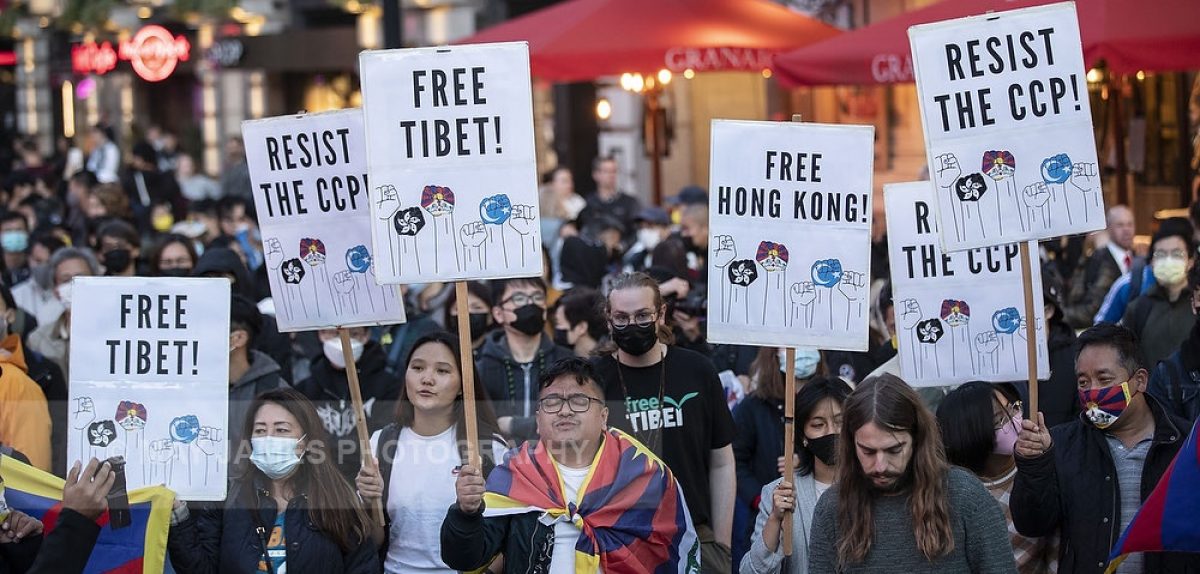
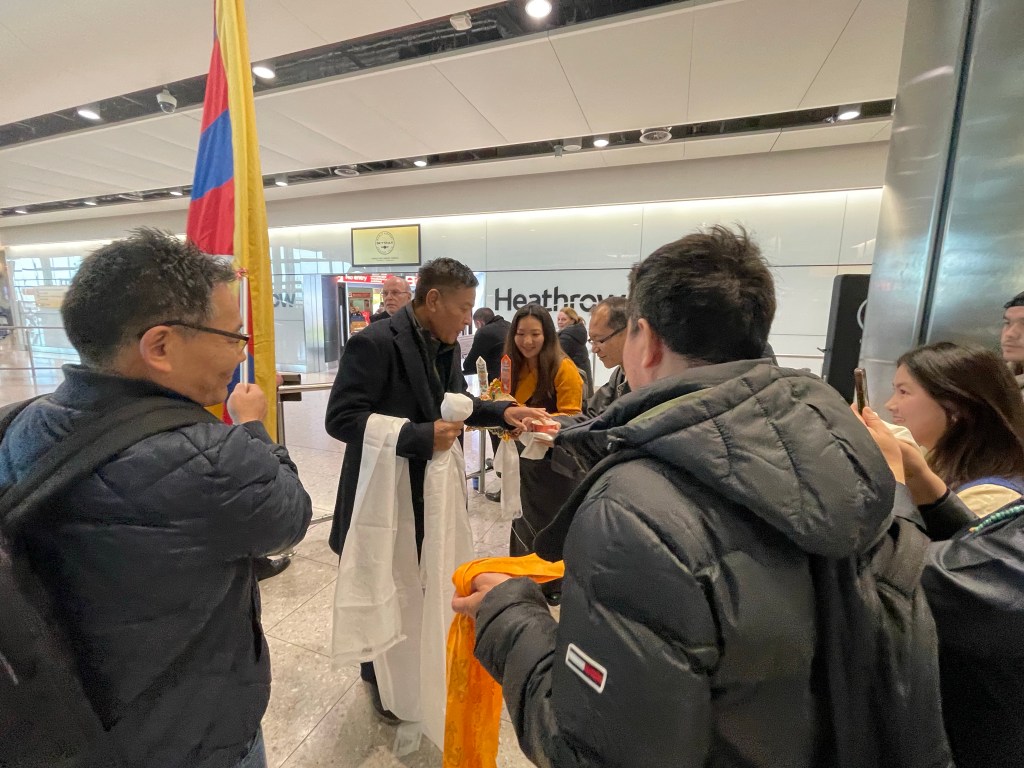


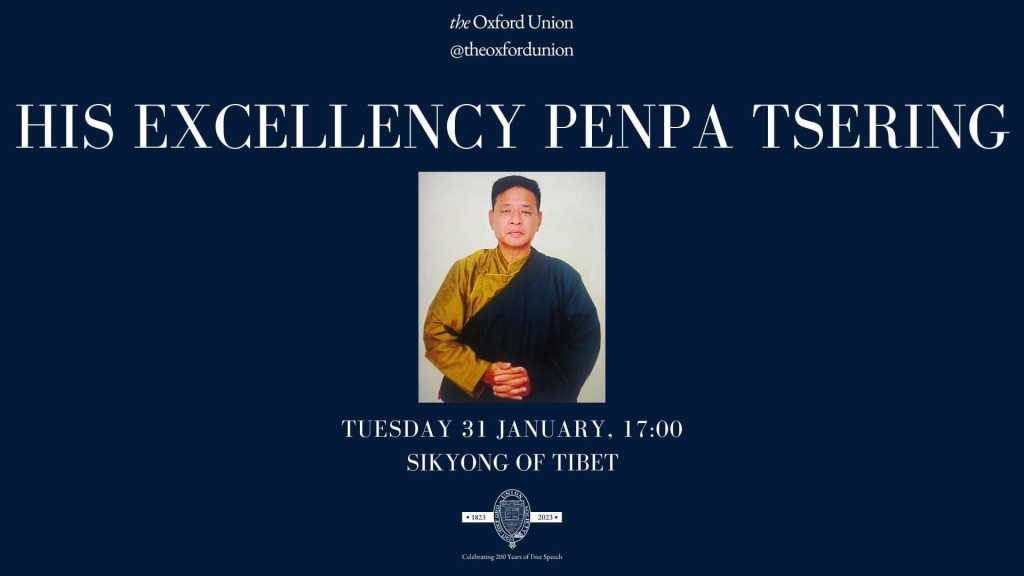


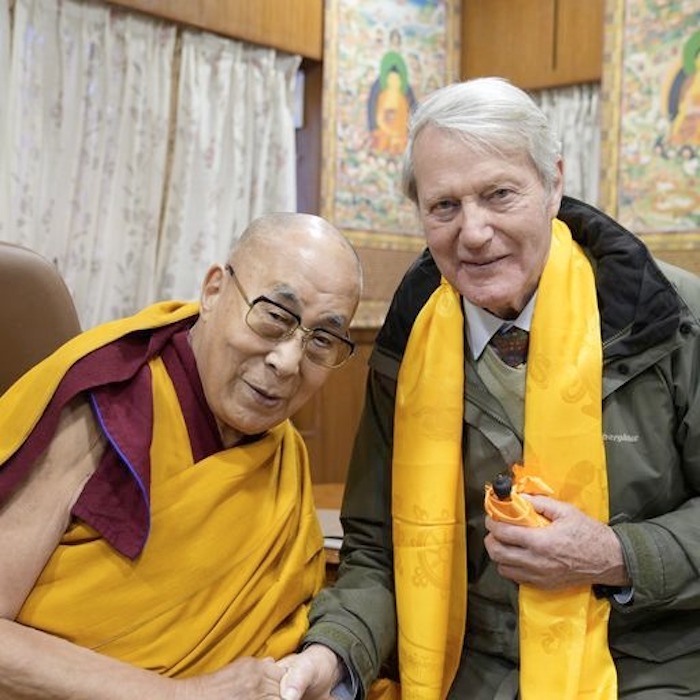
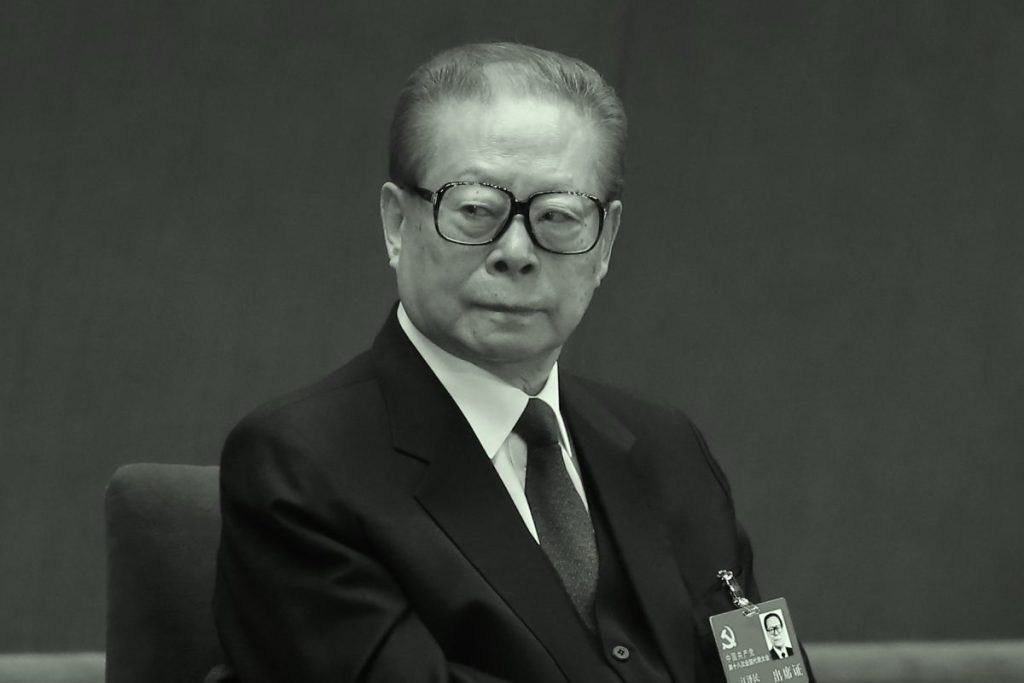
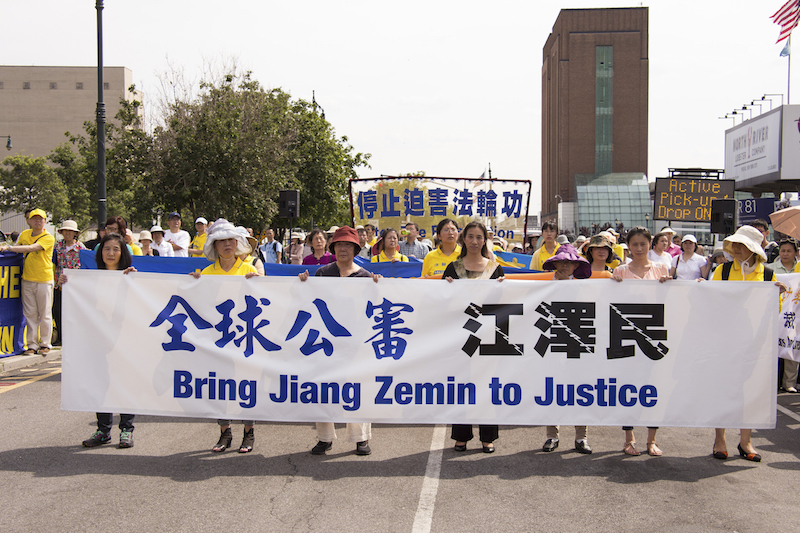
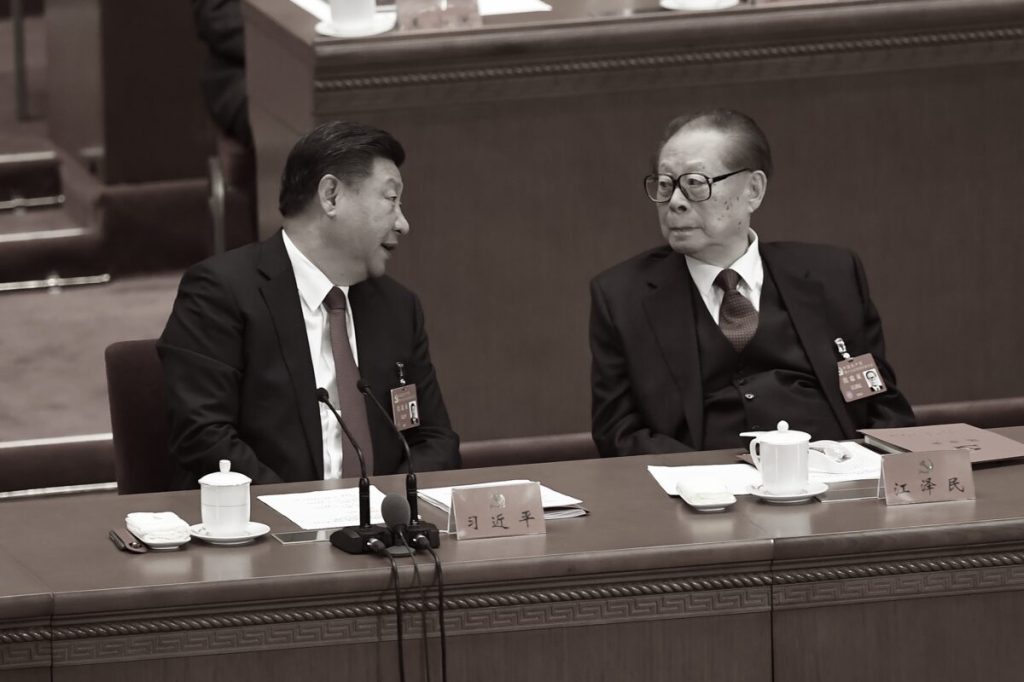
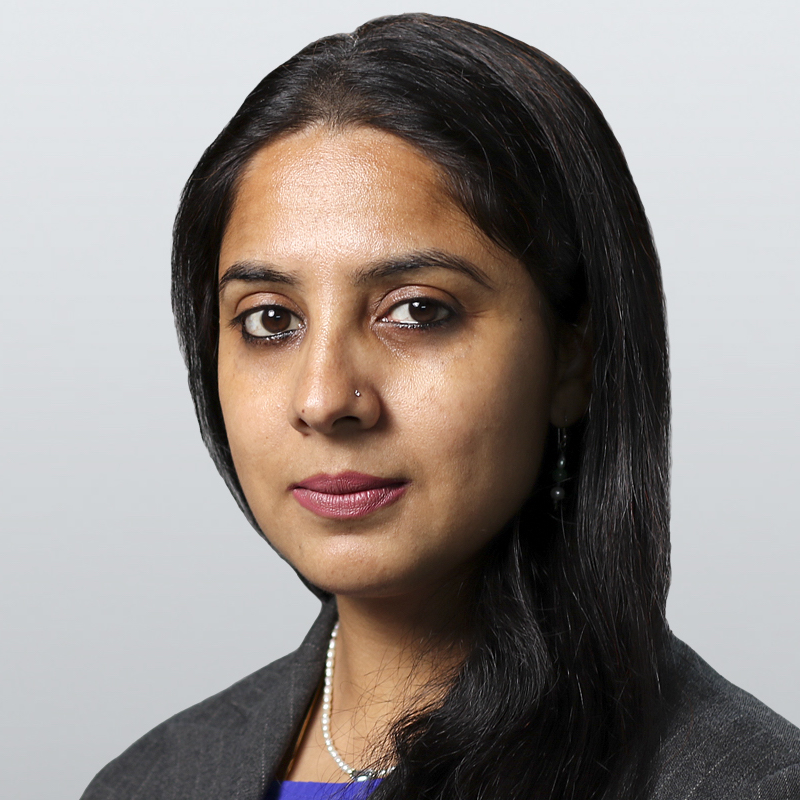


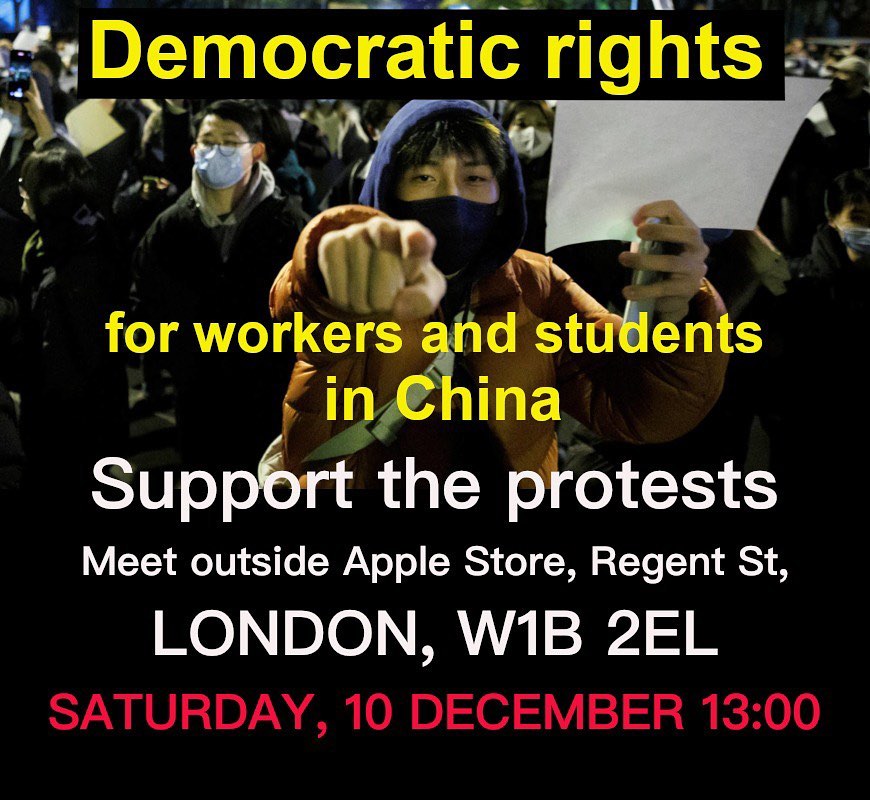
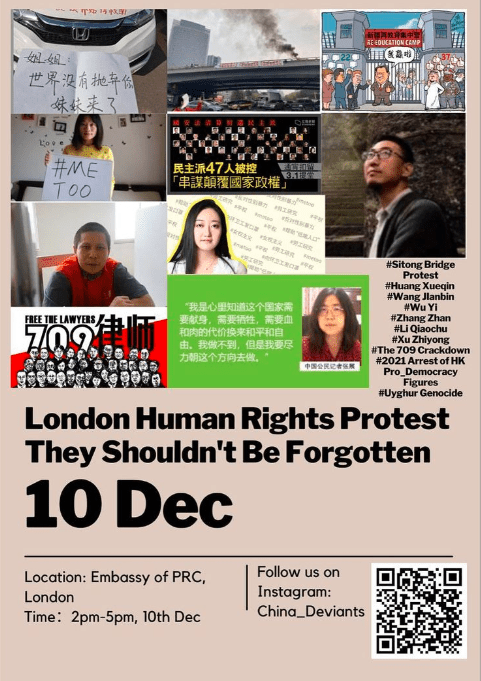


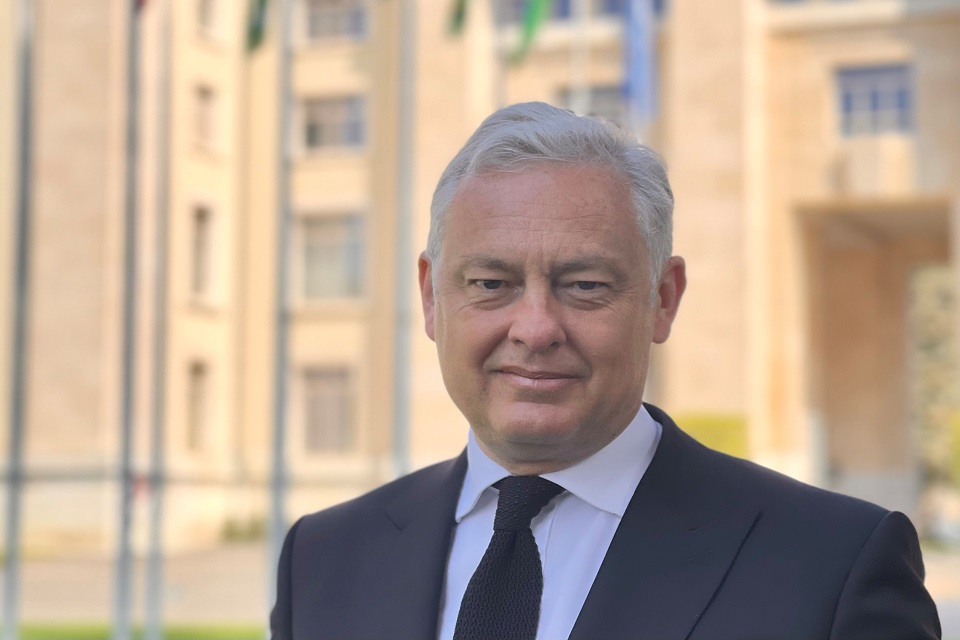

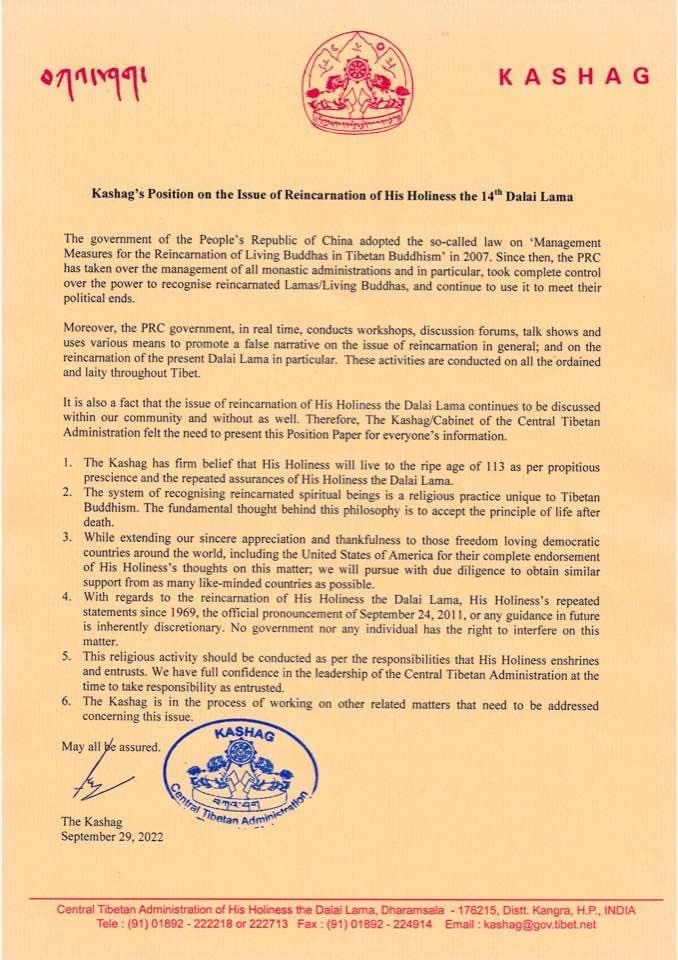

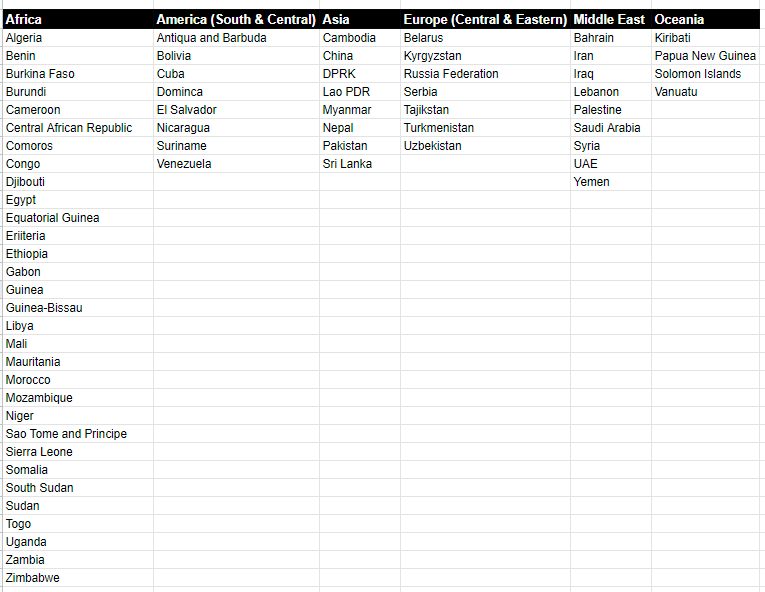
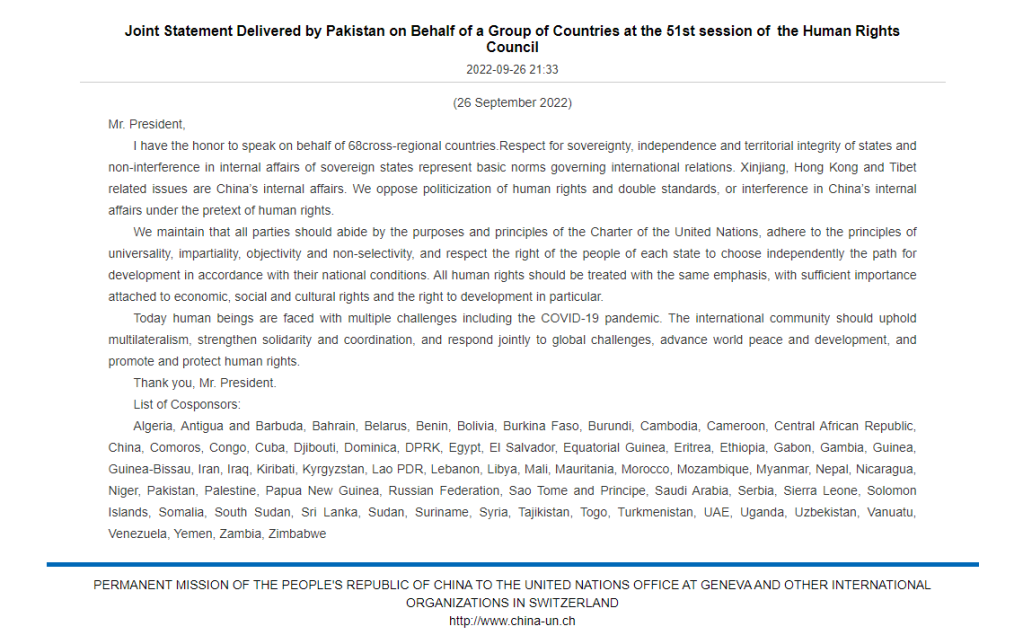
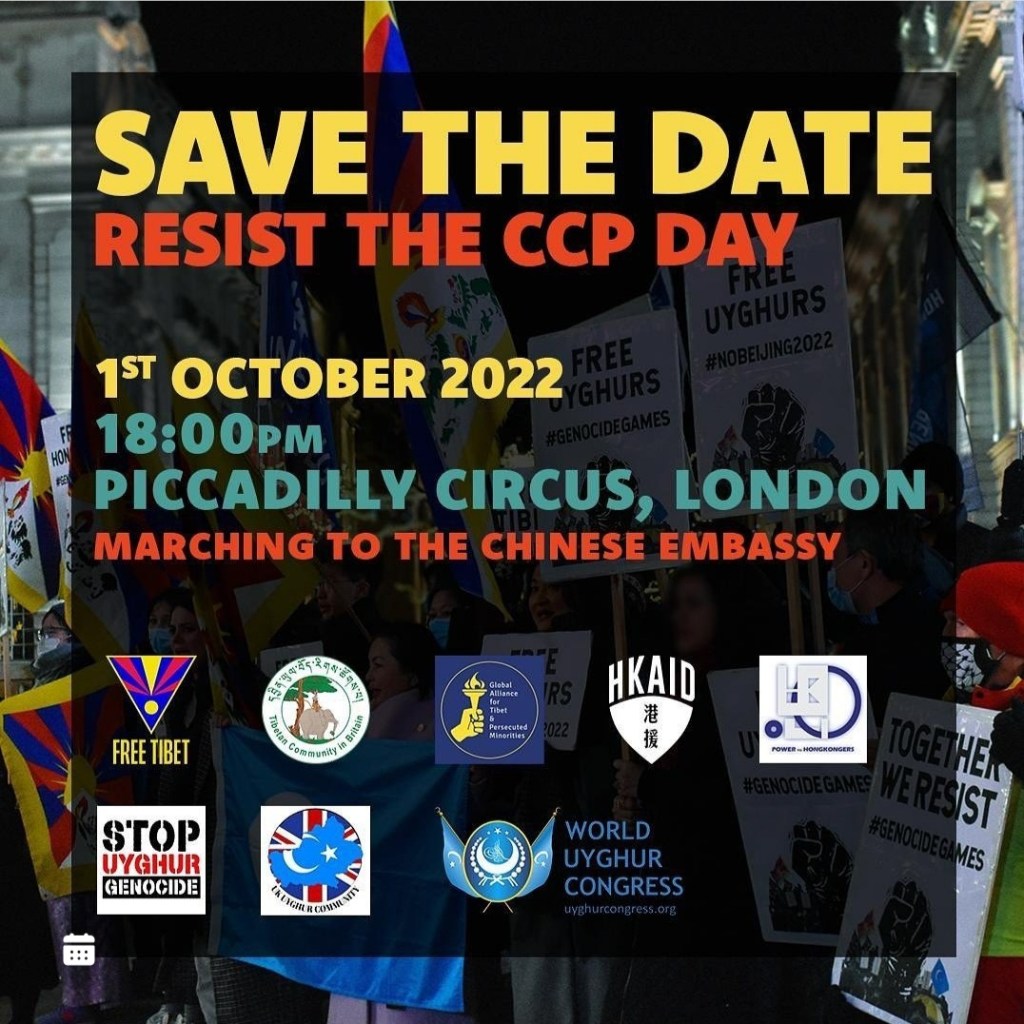
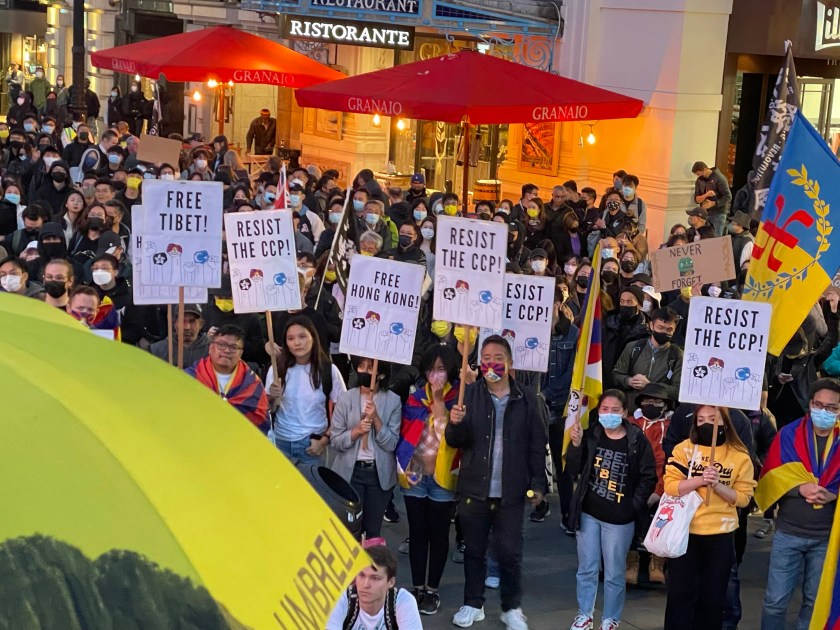
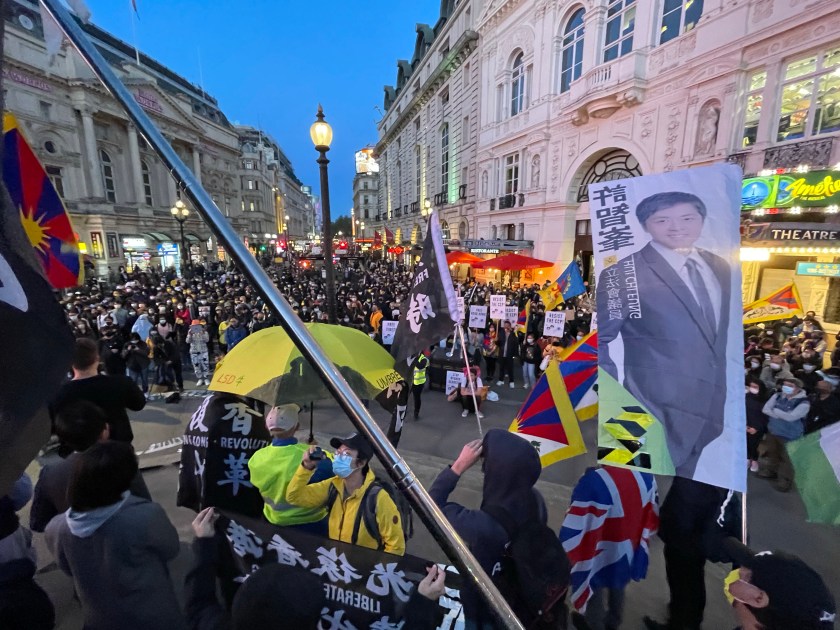
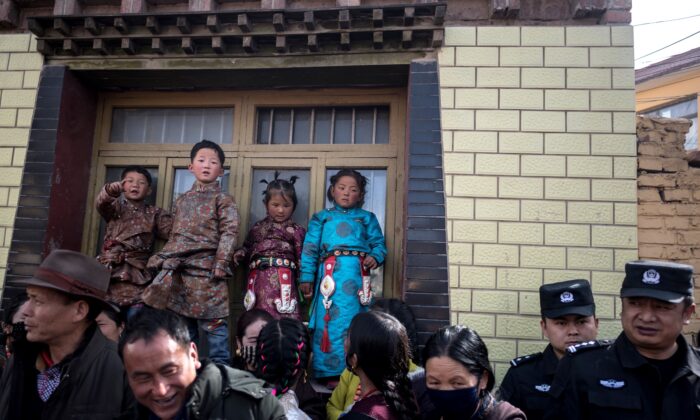



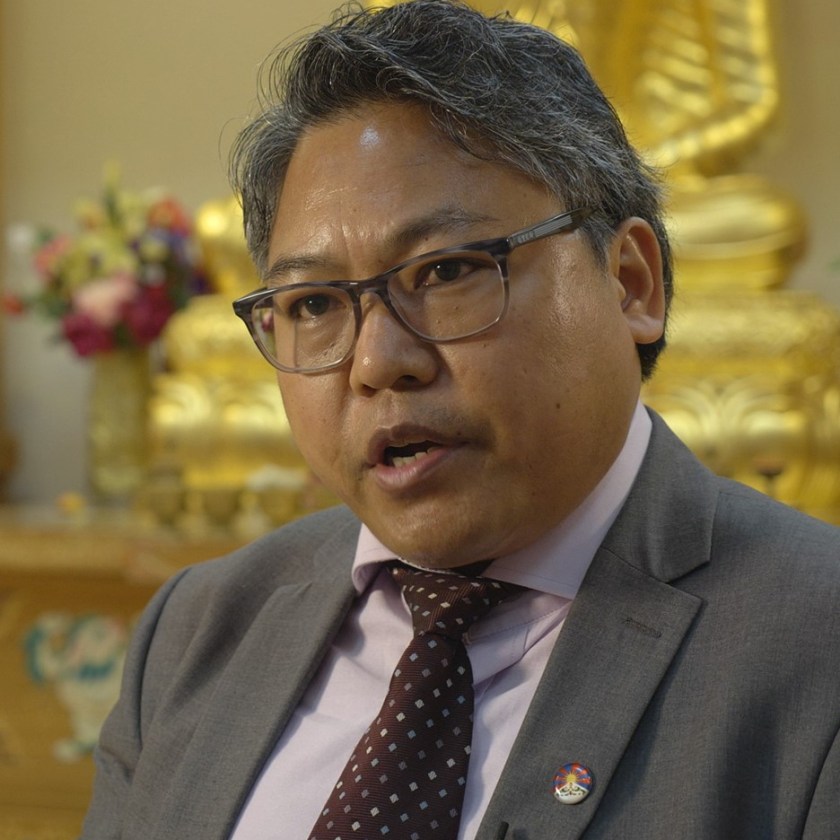


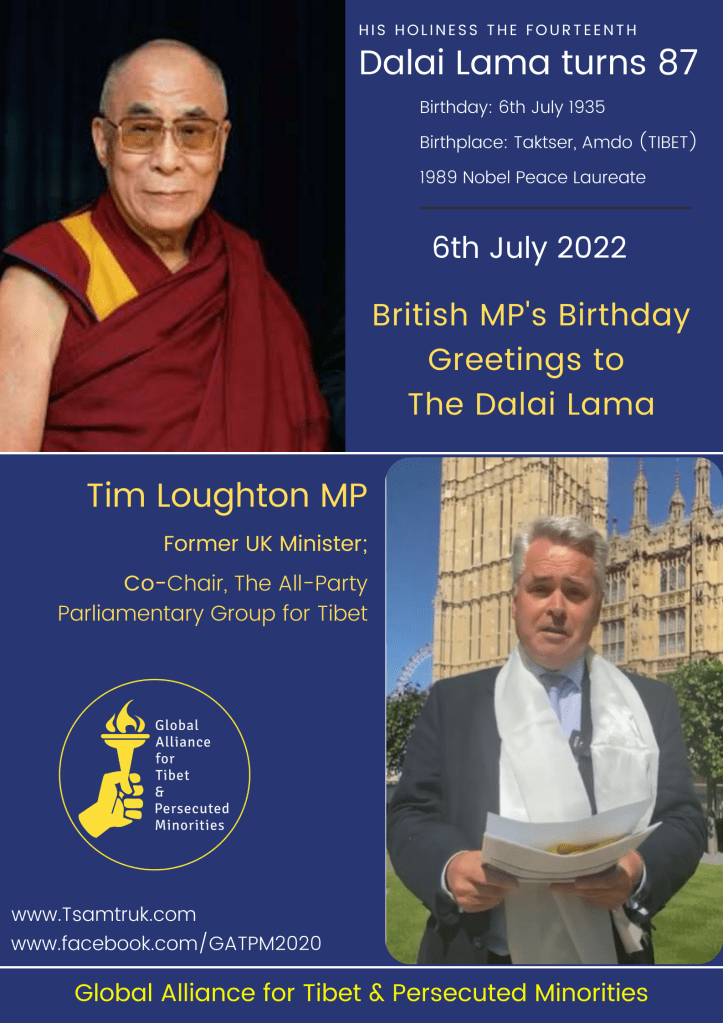
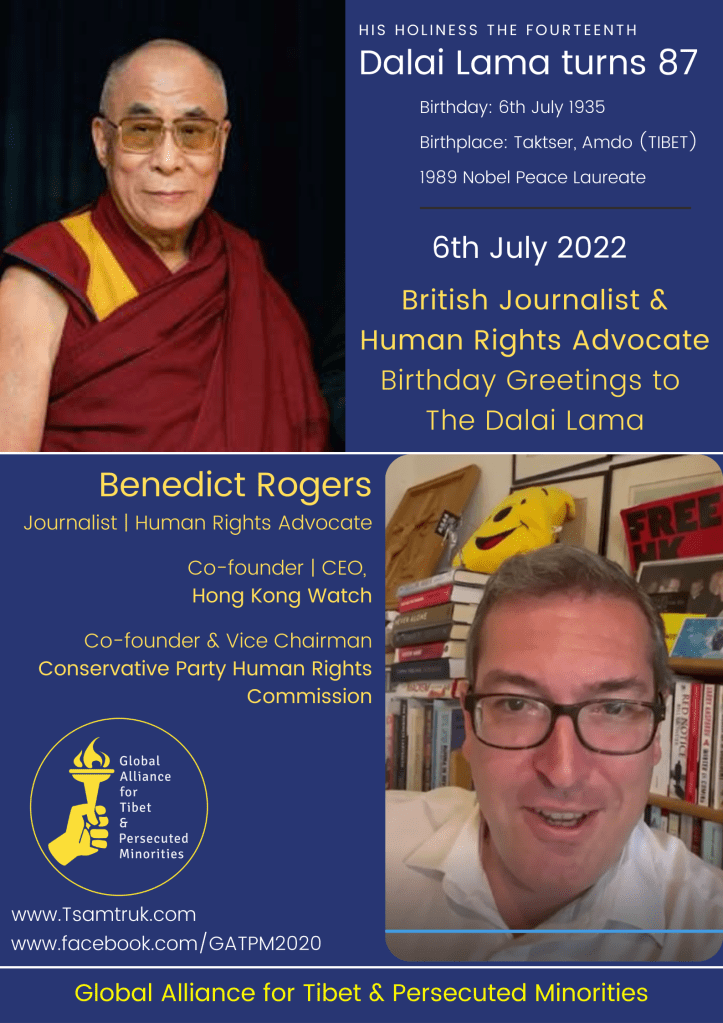

 Global Alliance for Tibet & Persecuted Minorities (GATPM)

You must be logged in to post a comment.