17 June 2026 | GATPM
The Passing of a Great Tibet Scholar and Activist
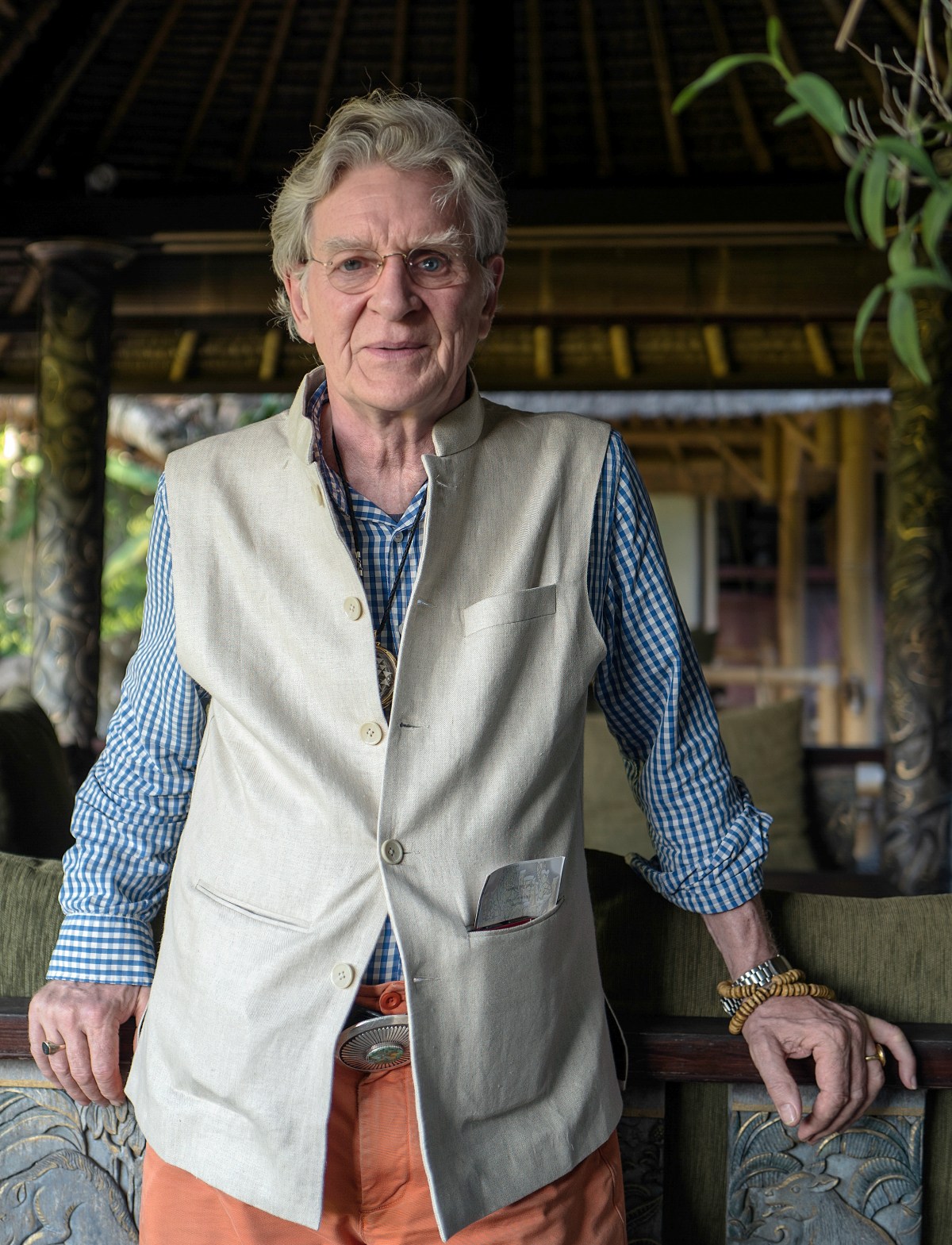
The Global Alliance for Tibet and Persecuted Minorities expresses its profound sadness at the passing of Professor Robert Thurman, who died peacefully on Tuesday morning, 16 June 2026, at his home in Woodstock, New York, at the age of 84.
One of the most influential scholars and public advocates of the modern era, Professor Thurman spent more than half a century serving as a powerful voice for the Tibetan people and a passionate defender of their right to cultural, spiritual, and political survival.
His departure leaves a void in the international movement for Tibet, yet his extraordinary legacy as a scholar activist ensures that his work will continue to inspire generations of campaigners fighting for justice, freedom, and human dignity.
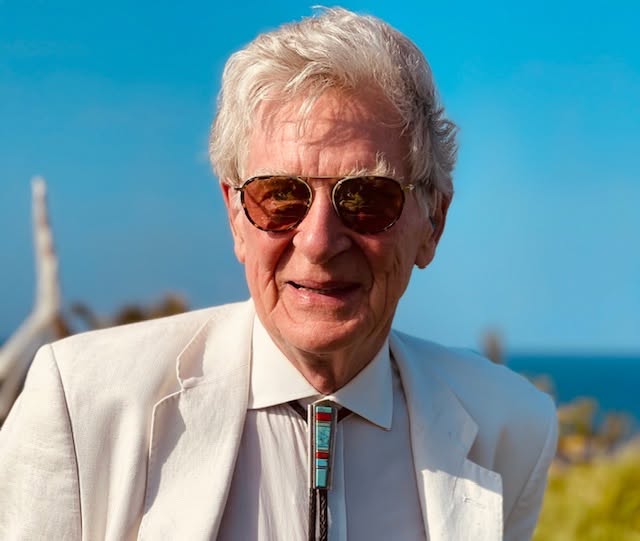
For many within the Tibetan solidarity movement and our wider global alliance, Professor Thurman was a singular, towering presence. He was intellectually fearless, often delightfully provocative, and animated throughout his life by the conviction that academic scholarship must never be detached from moral action.
He fiercely resisted the conventional notion that eastern philosophy or Tibetan thought should be treated as a passive, inward looking, or politically irrelevant pursuit. Instead, he presented Tibetan civilisation as a dynamic source of ethical reflection for practical resistance against authoritarian overreach. He brought Tibet’s cause before the world.
A Lifelong Friendship with His Holiness the Dalai Lama
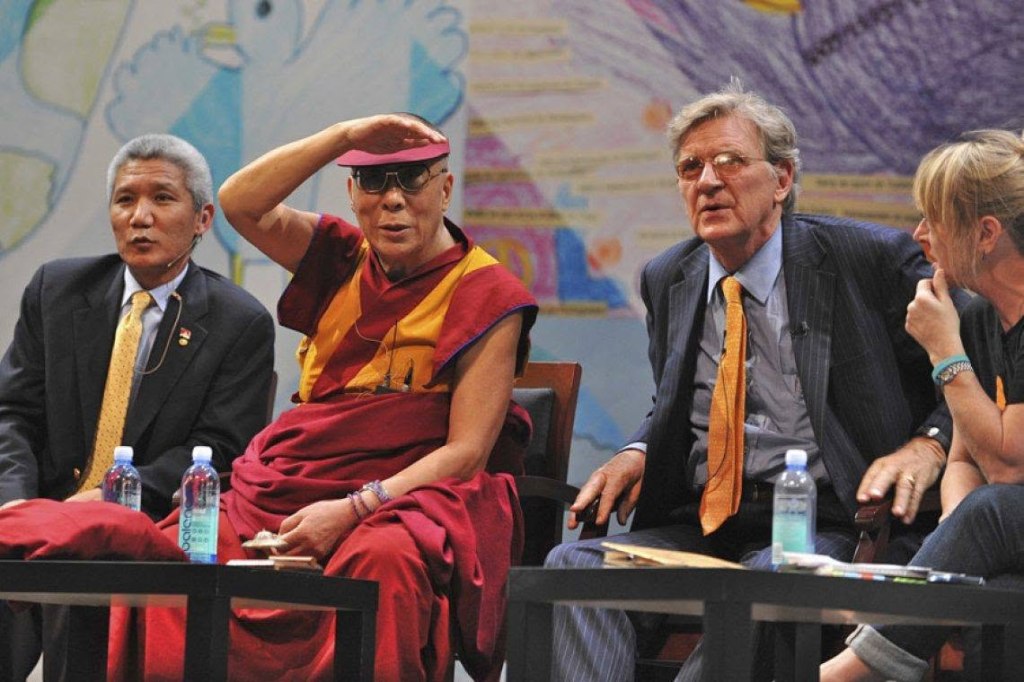
Professor Thurman’s deep, enduring friendship with His Holiness the 14th Dalai Lama was a bond of trust that endured for more than six decades.
Their connection began in the early 1960s, when Thurman, then a young man seeking spiritual meaning, travelled to India and was introduced by his first teacher, the Mongolian lama Geshe Wangyal. Thurman found in the Dalai Lama not only an instructor, but a lasting source of philosophical inspiration, moral courage, and deep personal warmth.
In 1965, Thurman became the first American to be ordained as a Tibetan Buddhist monk by the Dalai Lama himself. Although he later chose to return to lay life to pursue a family life and a distinguished academic career, the friendship and collaborative partnership between the two men remained.
Their close friendship gave Thurman’s public advocacy its distinctive authority because he was not simply speaking about Tibet from an academic distance, but from within a lifelong relationship of trust, shared purpose, and direct historical witness.
Academic
Professor Thurman’s formal academic career was equally remarkable. He earned his doctorate from Harvard University and later held the prestigious Jey Tsong Khapa Professorship of Indo-Tibetan Buddhist Studies at Columbia University, establishing the first endowed chair of its kind in the Western world. In that prominent role, he helped establish Tibetan and Indo-Tibetan studies as a serious, respected, and enduring field of global scholarship.
Yet he never adopted the posture of a detached academic safe inside an ivory tower. Instead, he consistently utilised his academic authority and intellect as a powerful means of cultural defence and public responsibility.
He believed firmly that the study of Tibet could never be separated from the brutal political realities facing Tibetans under Chinese occupation. Through his extensive writing, lecturing, and international organising, Thurman directly challenged the systematic suppression of the Tibetan language, religion, and distinct cultural identity. He argued passionately that the destruction of Tibet was not merely an insular or local issue, but a critical global moral concern that affected all humanity. He viewed Tibetan civilisation as a repository of profound philosophical, ecological, and ethical wisdom, warning that its state sanctioned erasure would permanently impoverish the whole world. In this sense, his scholarship was entirely inseparable from his activism, treating knowledge as something that must actively protect and illuminate.
Political Advocate
Professor Thurman repeatedly defended the right of the Tibetan people to preserve their language, religion, delicate environment, and traditional way of life.
In his public work, he framed the Tibetan cause not as a romanticised or nostalgic ideal, but as a practical, urgent moral necessity for global stability.
A Forceful Voice for Tibet in the United Kingdom
Professor Thurman’s activist campaign was truly global, including political advocacy in the UK in November 2025, when he delivered an inspiring and urgent address inside the Parliament of the United Kingdom. Speaking to a packed Committee Room in the House of Commons at an event hosted by The All-Party Parliamentary Group for Tibet, Thurman celebrated the Dalai Lama’s nine decades of tireless service to global peace.
He utilised this high profile parliamentary platform to launch a devastating critique against Western governments, explicitly lambasting them for their reluctance to confront severe human rights abuses due to their transactional trade relationships with authoritarian regimes. He urged the British political establishment to treat the issue of Tibet as a matter of fundamental democratic principle rather than diplomatic convenience.
Tibet House US: Resistance and Cultural Preservation
One of Thurman’s most enduring institutional contributions to the movement was the co-founding of Tibet House US in New York in 1987, established alongside his wife Nena, Richard Gere, and Philip Glass at the explicit request of the Dalai Lama. The institution was designed to function as a cultural embassy for Tibet in exile, dedicated to preserving and presenting Tibetan art, thought, and spiritual heritage. It provided a vital public space for exhibitions, international teaching, performances, and human rights advocacy, ensuring that Tibetan culture remained visible, respected, and politically protected on the world stage.
Thurman also founded the American Institute of Buddhist Studies, through which he spearheaded a monumental translation project for the Tibetan Treasury of literature. He openly viewed this immense textual work as a direct form of political resistance. By translating classical Tibetan texts into modern languages, he sought to rescue them from systematic neglect, state distortion, and total political erasure under occupation. Through both institutions, he combined cultural preservation with intellectual resistance, proving that a culture’s literature is one of its most potent weapons against oppression.
Legacy
Professor Robert Thurman leaves behind a formidable, unparalleled legacy as a scholar, translator, and unyielding champion of human rights. A great friend of Tibet has passed.
The Global Alliance for Tibet and Persecuted Minorities extends its deepest, most heartfelt condolences to the Thurman family, his colleagues at Tibet House US, and all those whose lives were helped by his teaching.
Useful Link:

