Tsering Passang | Bitter Winter
Beijing’s economic and political ties with Nepal make life increasingly hard for the 10,000 Tibetans who escaped there.

China’s increasing influence in Nepal is no longer just a geopolitical concern—it is a pressing human rights issue that is affecting the lives of the Tibetan refugee community there. This past summer, I spent a month in Nepal and visited Tibetan refugee camps, where I witnessed firsthand the deepening challenges these exiled Tibetans face as Beijing’s grip on the country tightens. What I saw was not just a tale of economic progress, but one of growing repression—disturbingly reminiscent of the conditions Tibetans fled from their homeland over 65 years ago.
One of the most glaring signs of foreign aid in Nepal is the transformation of its infrastructure. Chinese-funded projects, from the arrival of electric buses to the construction of regional airports in Lumbini and Pokhara, are reshaping the country’s landscape and its people’s attitudes to China. While these projects may bring short-term economic benefits, they come at a heavy price: the erosion of Nepal’s sovereignty.
For decades, Nepal has balanced its delicate relationships between India and China. But as Chinese-backed initiatives increase, there is rising concern about Nepal’s long-term independence. Despite the construction of new regional international airports, foreign airlines remain hesitant to use these facilities, largely due to India’s reservations about China’s growing role in Nepal’s internal affairs. With Nepal becoming increasingly reliant on Chinese investments, the country’s foreign policy risks shifting in favour of Beijing—a shift that could have far-reaching consequences for Nepal’s autonomy.
This geopolitical shift has even more serious implications for the dwindling 10,000 Tibetan refugees living in exile in Nepal. Having escaped their homeland after China’s occupation of Tibet, where cultural suppression and persecution still prevail, many now find themselves facing similar restrictions in what was supposed to be a safe haven.
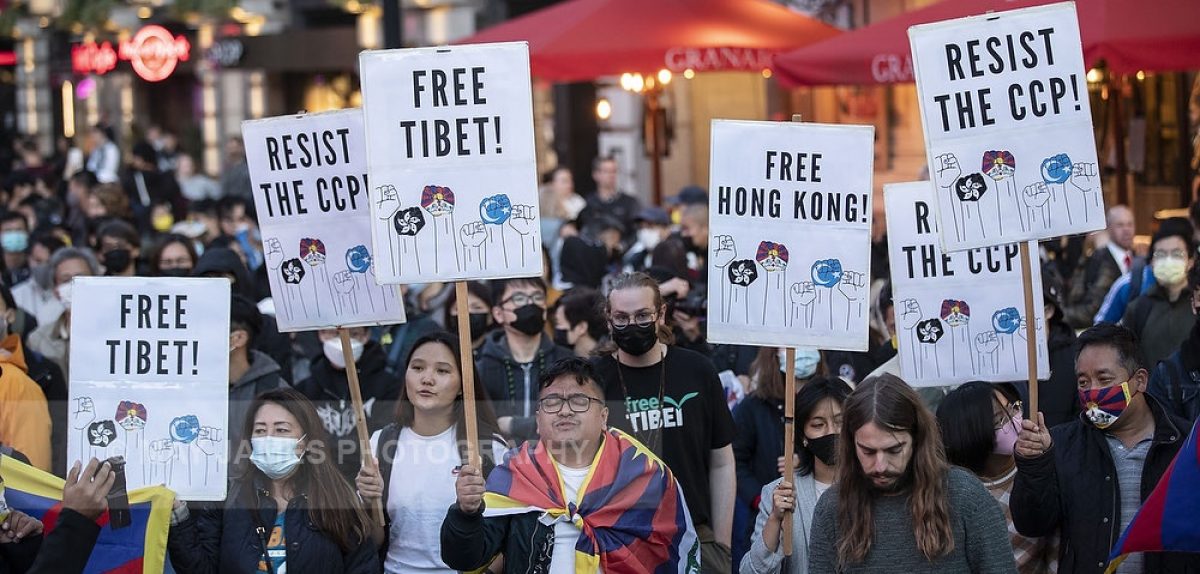
Expressions of Tibetan identity—whether through wearing a “Free Tibet” t-shirt, raising the Tibetan flag, or participating in traditional cultural practices—are being met with growing hostility. During my visit, I learned that local authorities, likely acting under pressure from Chinese interests, have begun restricting Tibetan cultural practices. Events like Gorshey (Tibetan circle dances), once public celebrations of Tibetan heritage, are now forced underground in the Kathmandu Valley. The chilling effect on these cultural activities is a painful echo of the repression that many Tibetans thought they had left behind.

Even the deeply symbolic tradition of Lhakar (White Wednesday) is now under threat. A movement that grew out of the 2008 protests in Tibet, Lhakar is a weekly expression of Tibetan pride and identity. Every Wednesday, Tibetans speak their language, wear traditional clothing, and support Tibetan-owned businesses as an act of peaceful cultural resistance. But even these small acts of pride are being curtailed. As China’s influence in Nepal grows, Tibetans are finding it increasingly difficult to gather, celebrate, and maintain their traditions.
What is particularly troubling is the erosion of the very freedoms Tibetan refugees believed they would find in exile. The rights they sought—freedom of expression, freedom from fear, and the ability to preserve their identity—are being undermined. The parallels between the repression they fled in Tibet and the mounting pressure they face in Nepal are becoming too striking to ignore.
This growing threat to the rights of Tibetan refugees must be a matter of global concern. The international community cannot afford to stay silent. China’s expanding influence in Nepal has implications that go beyond mere infrastructure deals—it strikes at the heart of human rights and cultural survival. Tibetan refugees in Nepal have a fundamental right to express their cultural identity, free from persecution or interference.
The time for action is now. Media outlets, human rights organisations, and governments around the world must shine a light on this pressing issue. As China continues to reshape Nepal’s political and social landscape, the global community has a responsibility to ensure that Tibetans in exile can live free from oppression and preserve their rich cultural heritage. Their struggle is not just about one displaced community—it is about defending the universal values of freedom, dignity, and the right to exist as a people.
The fight for Tibetan freedom is far from over. As the founder and chair of the Global Alliance for Tibet & Persecuted Minorities, I call on the international community to stand up for the Tibetan refugees in Nepal and recognise the growing threat posed by China’s influence. Tibetans’ cultural identity and their right to live free from oppression are worth defending—because their fight is a fight for the fundamental human rights we all cherish.
(This article by Tsering Passang, the founder and chair of the Global Alliance for Tibet & Persecuted Minorities, was first published by Bitter Winter on 9th of October 2024.)
 Global Alliance for Tibet & Persecuted Minorities (GATPM)
You must be logged in to post a comment.