As the Chinese Communist Party (CCP) celebrates its 100th founding anniversary (1921 – 2021) this year, the Global Alliance for Tibet & Persecuted Minorities (GATPM) wishes to invite you, the public, to submit examples of what you believe to be the most evil acts committed by the CCP over the past century.
We will carefully compile the top 100 evil contributions made by the CCP and publish them on 10th December 2021, the UN Human Rights Day.
To coincide with this year’s 72nd founding anniversary of the People’s Republic of China, the Global Alliance for Tibet and Persecuted Minorities (GATPM) organised a webinar with a panel of distinguished China-Tibet experts, former minister and human rights advocates. The Chinese Communist Party (CCP) also marks 100th anniversary of its founding this year.
Since Xi Jinping came to power in 2012, his regime made no secret of its global expansionist ambition. China’s Belt and Road Initiative (BRI) projects have now become debt traps for developing countries. The Hambantota port in Sri Lanka is a typical example. This port located in the Indian Ocean is of great strategic interest to China. As Sri Lanka could not repay its debt, Beijing secured a 99-year lease of the port. There are indications that Beijing might deploy its military installations in this strategic location.
The political instability caused by Beijing, after its claims over the international waters in the South China Sea, is the tipping point of serious concern that pushed the AUKUS (Australia, UK and US) Nuclear Submarine deal to counter China.
China’s flexing of its military muscle in the Himalayan borders through territorial claims against India, Bhutan and Nepal is yet another dangerous game that could spark a major war between the two Asian giants.
To discuss whether China poses a real threat to global peace and security, the GATPM invited a panel of experts to share their thoughts on these vital issues. The panel concluded that China does pose a real threat. Please watch the video in full.
Panellists:
Professor Dibyesh Anand, Head of School – Social Sciences, University of Westminster
Professor Dibyesh Anand is an Associate Professor at London’s Westminster University, an expert on majority-minority relations in China and India, and the author of Geopolitical Exotica: Tibet in Western Imagination.
Professor Anand has written extensively in international journals and papers. He has also given lectures in universities and think tanks around the world. He is a well recognised in the Tibet circle.
Kasur Lobsang Nyandak, Former Minister of Central Tibetan Administration (aka Tibetan Government-in-exile)
Kasur Lobsang Nyandak is a former Minister for the Central Tibetan Administration (aka Tibetan Government-in-exile) from 2001 to 2006.
He served as the Dalai Lama’s Representative to North America based at The Office of Tibet in New York. He was also an elected Tibetan MP in the Tibetan Parliament in Exile from 1996 to 2001.
A Leader of the Tibetan Youth Congress, Lobsang Nyandak founded and served as the Executive Director of Tibetan Centre for Human Rights in Democracy.
Currently, he is the President of The Tibet Fund, a New York-based NGO that raises funds and supports the Tibetan community primarily in India and Nepal through education, healthcare and community development projects.
Steven Schaerer survived communist Chinese incarceration, torture, and deportation.
Steven is a proud first generation American from California’s Bay Area, and is the proud bi-racial son of immigrant parents from Switzerland and Mexico.
He was the first person in his family to attend university earning a degree in chemistry from Sonoma State University in Northern California. In addition to English, Steven also speaks Mandarin, Spanish, and successfully co-founded a business in Beijing in his mid-20’s.
Steven is a staunch advocate for and defender of freedom, liberty, the Constitution, free-market capitalism, Human Rights and the American way of life.
Tsering Passang is Founder and Convener at Global Alliance for Tibet & Persecuted Minorities. Tsering’s blog – www.tsamtruk.com
A webinar with leading China-Tibet experts, former minister and human rights advocates, hosted by the Global Alliance for Tibet & Persecuted Minorities.
Exactly 72 years ago, Mao Tsetung declared the illegal invasion of Tibet and the Republic of East Turkistan. Mao called the illegal invasion of Tibet a ‘peaceful liberation’. That so-called ‘peaceful liberation’ has cost millions of lives of Tibetan and Uyghur people amongst others.
The Chinese government is hosting a week-long celebration of what it calls the “Golden Week” as 1st October marks the 72nd founding anniversary of the People’s Republic of China.
For the Tibetan and the Uyghur victims under the Chinese regime’s military occupation and repressive policy, there is nothing to celebrate so long as China continues to illegally occupy Tibet and East Turkistan.
For the people of Hong Kong, there is nothing to celebrate so long as Beijing disregards the UK-China Joint Declaration and the basic rights are not restored in Hong Kong.
For the people of Taiwan, there is nothing to celebrate when their democratic nation faces the imminent threat of military invasion from the Chinese regime.
There is nothing to celebrate so long as the Southern Mongolians cannot maintain their own language and Buddhist culture.
Certainly, there is nothing to celebrate so long as the Falun Gong, as well as other religious and faith communities, cannot practice their devotions. And the list goes on including the lack of political freedom, democracy and freedom of speech.
Since Xi Jinping came to power in 2012, his regime has made no secret of its global expansionist ambition. China’s Belt and Road Initiative (BRI) projects have now become debt traps for developing countries.
The political instability caused by Beijing, after its claims over the international waters in the South China Sea, is the tipping point of serious concern that pushed the AUKUS nuclear submarine deal to counter China. China’s flexing of its military muscle in the Himalayan borders through territorial claims against India, Bhutan and Nepal is yet another dangerous game that could spark a major war between the two Asian giants.
So, to discuss whether China poses a real threat to global peace and security, the GATPM has invited a panel of experts to share their thoughts on these vital issues.
Professor. Dibyesh Anand, Head of School – Social Sciences, University of Westminster
Kasur Lobsang Nyandak, Former Minister for the Central Tibetan Administration (Tibetan Government-in-exile)
Political and human rights activists from Hong Kong, Tibetan and Uyghur communities and NGOs slated the CCP regime as a real threat to global peace and security as China celebrates its 72nd founding anniversary of the People’s Republic of China in London.
Resist the Chinese Community Party Day – Joint London Rally, was held in central London on 1st October, showing unity among British Hongkonger, Tibetan and Uyghur Communities in the fight for freedom, justice, human rights and democracy.
The protest started off in Piccadilly Circus and finished in front of the Chinese Embassy. Protesters chanted loud slogans of “Free Tibet”, “Free Hong Kong”, “Free East Turkistan” and “Shame Shame Xi Jinping”.
Prominent British, Hong Kong, Tibetan and Uyghur activists addressed the rallies.
Benedict Rogers, Co-founder and CEO of Hong Kong Watch, said, “It is time now for the free world, for our governments of democracies around the world, to stand up to the CCP, to take action to hold them to account, to sanction them, to stop trading with them, to stop kowtowing to them, and to do everything possible to end these 72 years of bloody repression.”
Andrea Venzon & Colombe Cahen-Salvador, co-founders of Atlas also spoke at the Piccadilly Circus rally. Andrea Venzon said, “A threat from an authoritarian regime impacts democracy at large. We have a duty to stand up for the hundreds of millions of people living in captivity under the CCP rule. Democracy is a fundamental right, and we will not back down.”
Finn Lau, Founder of Hong Kong Liberty, addressed the rally. He said, “We have witnessed genocide and severe crackdowns in East Turkestan, Tibet and Hong Kong in that Beijing is wiling to do whatever it would cost to sustain the one-party tyranny. The ambition of the CCP is also being reflected by its infiltration into the international academic, business sector and even intergovernmental organisations like the UN with the tactic called United Front. In light of its ascent as a global threat to human rights and universal values, the free world has to stand firm against the CCP.”
After the national anthems of East Turkistan, Hong Kong and Tibet were played, the protesters marched to the Chinese Embassy via Regents Street, Oxford Circus and the BBC. Some protesters burned a Chinese flag, a sign of defiance against the CCP regime for its actions right in front of the Chinese Embassy.
Speakers outside the Chinese Embassy:
In his opening remarks, Tsering Passang, Founder and Convener at the Global Alliance for Tibet & Persecuted Minorities, said, “Resistance against the CCP regime is growing within China and around the world.
“Exactly 72 years ago, the Chinese Communist Party and its regime under Mao Tsetung’s dictatorship, announced the illegal invasion of Tibet and the Republic of East Turkistan. Mao Tsetung called the illegal invasion of Tibet a “peaceful liberation”. That so-called “peaceful liberation” has cost millions of lives of Tibetan and Uyghur people amongst others.”
Passang further added, “For the Tibetan and Uyghur victims under the Chinese regime’s military occupation and repressive policy, there is nothing to celebrate so long as China continues to illegally occupy Tibet and East Turkistan.
“For the people of Hong Kong, there is nothing to celebrate so long as Beijing disregards the UK-China Joint Declaration and the universal basic rights are not restored in Hong Kong.
“For the people of Taiwan, there is nothing to celebrate when their democratic country faces the imminent threat of military invasion from the Chinese regime.
“There is nothing to celebrate so long as the Southern Mongolians cannot maintain their own language and Buddhist culture.
“Certainly, there is nothing to celebrate so long as the Falun Gong followers as well as other religious and faith groups cannot practice their devotions. And the list goes on… including lack of democracy and freedom of speech.”
Rahima Mahmut, UK Director of World Uyghur Congress and Executive Director of Stop Uyghur Genocide, addressed the rally. She said, “Today we marched against the persecution of Uyghur people over not just the past 5 years, but the entire 72 years of CCP Government. Celebrations in Beijing cannot drown out the pleas for freedom from across the world today, from communities that continue to be denied their human rights. Our people are facing torture, rape, and genocide – it is time for the international community to stand tall against the CCP’s crimes.”
Basil, Representative of Power to Hong Kongers, also spoke outside the Chinese Embassy in Cantonese language.
A 15-year old British Tibetan student from the Tibetan Community in Britain addressed the rally outside the Chinese Embassy. She said, “China hopes to eradicate Tibetan identity. It is robbing a generation of Tibetan children their rights to their language, culture, and heritage. This is cultural genocide. And we have seen what happens when those inside Tibet speak, even amongst themselves. China silences those voices, because they know that when people speak up about injustice, they can bring about change.”
Tom, from the Hong Kong Aid addressed the rally. He said, “The CCP is a friend of terrorism. The CCP is the threat to the whole world. We must keep on fighting for the freedom of Hong Kong. Step out! United and Resist!”
Sam Walton, CEO of Free Tibet, addressed the rally. He said, “Chinese Communist Party’s aggressive expansionism is a threat to democracy, human rights and freedom around the world. Bootlicking world leaders are as good as inviting China to wipe Tibet, Hong Kong and East Turkestan off the map, It’s time for everyone who cares about human rights to stand up to the Chinese Communist Party.”
National anthems of East Turkistan, Hong Kong and Tibet were played once again before Tsering Passang gave his concluding remarks. He said, “We know that the CCP regime poses a real threat to global peace and security.
“Xi Jinping and his regime must immediately end their brutal crackdown on innocent people across China and its occupied territories, who are entitled to basic rights as enshrined in the Universal Declarations of Human Rights. It is about time China ends the colonisation of its neighbours and discrimination against the minorities.
“As Mao Tsetung once said, “where there is oppression there will be resistance”. So, we the people of Tibet, East Turkistan, Hong Kong, Southern Mongolia, Taiwan as well as all those oppressed groups such as the Falun Gong practitioners, will continue to defy and resist the Chinese Communist regime and its repressive rule.”
This year protest was jointly organised by:
– Atlas
– Free Tibet
– Hong Kong Aid
– Hong Kong Liberty
– Power to Hongkongers
– Uyghur Community UK
– World Uyghur Congress
– Tibetan Community in Britain
– Global Alliance for Tibet and Persecuted Minorities
A coalition of UK-based Hong Kong, Tibetan and Uyghur communities staged a public protest in central London to highlight the CCP regime’s continued brutal crackdown and curtailment of freedom of speech and human dignity in their countries.
Rights groups and NGOs such as Atlas, Free Tibet, World Uyghur Congress and Global Alliance for Tibet & Persecuted Minorities supported these communities, who were calling for their basic freedom, human dignity and democracy.
Resist the CCP Day – Joint London Rally kicked off in Piccadilly Circus on Friday, 1st October at 6.30pm. Protesters chanted “Free Tibet”, “Free Hong Kong” and “Free East Turkistan”.
At 7pm, the protesters marched to the Chinese Embassy located at 49 Portland Place, London W1B 1JL (via Regent’s Street and Oxford Circus) where further rally was held at 8pm.
About 1000 people joined this year’s protest. Organisers of this year’s protest included:
– Atlas
– Free Tibet
– Global Alliance for Tibet and Persecuted Minorities
To mark the 72nd founding anniversary of the PRC’s National Day
A coalition of UK-based Tibetan, Hong Kong and Uyghur communities are staging a public protest in central London to highlight the CCP regime’s continued brutal crackdown and curtailment of freedom of speech and human dignity in their countries.
British rights groups and NGOs such as Atlas, Free Tibet, World Uyghur Congress and Global Alliance for Tibet & Persecuted Minorities are supporting these communities, who are calling for their basic freedom, human dignity and democracy.
Resist the CCP Day – Joint London Rally starts at Piccadilly Circus on Friday, 1st October at 6.30pm.
At 7pm, the protesters will march to the Chinese Embassy, 49 Portland Place, London W1B 1JL(via Regent’s Street and Oxford Circus) where the Main Rally will be held at 8pm.
Please join this protest, show your support and solidarity with the peoples of East Turkistan, Hong Kong and Tibet.
Organisers:
– Atlas – Free Tibet – Global Alliance for Tibet and Persecuted Minorities – Hong Kong Aid – Hong Kong Liberty – Power to Hongkongers – Tibetan Community in Britain – World Uyghur Congress
Premier screening of a unique documentary film ‘Getza – Helping Others’
The first public screening of a unique documentary film ‘Getza – Helping Others’ is being planned for 20th October 2021 at the School of Oriental & African Studies (SOAS, University of London from 7pm – 8.45pm.
Introduction to the Film
Since the Chinese occupation of Tibet in 1949/50 there was no peace and the political situation was deteriorating.
“Don’t come back until you are helpful to others”.
With these words of his master in his mind, a teenage monk left Tibet in 1958 with the dream of soon returning to his homeland.
‘Getza -Helping Others’ recounts this incredible Odyssey – from monastery to guerrilla, of diplomacy and politics – that led to the creation of Tibet Foundation, a unique British charity supporting the Tibetan people. Including interviews with individuals from all over the world and rare archive footage, some never seen before, this documentary film tells a story of the Foundation and a tribute to all those who have participated, contributed and helped the work to become a great success story.
This year, the Tibet Foundation came to an end. And after living in exile for more than six decades, the young monk’s dream of returning to his homeland is still to be realised. In the hearts of the Tibetan people the dream of freedom lives on.
Admission is Free
But due to COVID restrictions and limited space attendees are requested to confirm their attendance by emailing at phuntsogw@gmail.com as soon as possible, latest by 4th October 2021, giving the name of the person who will be attending the event.
(Human Rights Watch, New York) – Hong Kong’s government should drop all charges against leaders of the civic group that had been holding annual mass vigils in Victoria Park commemorating the victims of the 1989 Tiananmen Massacre in China, 61 Hong Kong and international human rights groups said today.
On September 9, 2021, the Hong Kong justice secretary charged the Hong Kong Alliance in Support of Patriotic Democratic Movements of China, the group’s chair Lee Cheuk-yan, 64, and the vice-chairs Chow Hang-tung, 36, and Albert Ho, 69, with “inciting subversion.” Police had arrested Chow on September 8, while Lee and Ho have been jailed for their activism since April and May, respectively. Chow, and four other leading members of the group, Tang Ngok-kwan, 53, Simon Leung, 36, Chan To-wai, 57, and Tsui Hon-kwong, 72, are separately charged with “failing to comply with notice to provide information.” All five have been denied bail. The prosecutions violate Hong Kong’s obligations under international human rights law to respect the rights to freedom of expression, association, and peaceful assembly.
“By arresting vigil organizers, Beijing and Hong Kong authorities are telling the world they’re not only afraid of the most peaceful protests, but also of their own brutal past,” said Sophie Richardson, China Director at Human Rights Watch. “They should end this political persecution and immediately drop the charges and release the vigil organizers.”
The charges of “inciting subversion” and “failing to comply with notice to provide information” are crimes under Hong Kong’s draconian National Security Law (arts. 23 and 43), which the Chinese government imposed on the city on June 30, 2020. The definitions of these offenses are overly broad and vague. “Subversion” criminalizes any act that seriously “interferes,” “disrupts,” or “undermines” the functioning of the Chinese or Hong Kong government, a definition that can readily include peaceful protests.
The charges are part of Beijing’s escalating campaign against the Hong Kong Alliance.
Until the Hong Kong police banned the vigils in 2020 and 2021, citing public health grounds, Hong Kong was the only place under Chinese sovereignty where the 1989 Tiananmen Massacre was publicly remembered every year.
The government stepped up its intimidation campaign in 2021. On June 2, the Food and Environmental Hygiene Department declared that the alliance’s “June 4th Museum,” which focuses on the Tiananmen crackdown, had violated the law for not having a “public entertainment” permit, compelling the alliance to temporarily close the museum.
On June 4, the police arrested Chow for “inciting unauthorized assembly” after she urged people to mark the Tiananmen Massacre by lighting candles. The police also blocked off the park and stationed thousands of officers throughout the city to prevent any gatherings.
In July, the Hong Kong Alliance laid off its staff and downsized its operations in anticipation of the government’s crackdown on the group. On August 25, police demanded the group’s membership list and financial information in an investigation of its alleged “collusion with foreign powers.” After the group refused to provide the information, citing the police’s misuse of power and lack of reasonable cause, the police again arrested Chow, along with the alliance committee members.
On September 9, police raided the shuttered June 4th Museum and removed some of the exhibits, including photos of previous Victoria Park vigils and an oversized paper cutout of the Goddess of Democracy, a statue that had featured in the 1989 pro-democracy protests in China. On September 10, police froze HK$2.2 million (US$ 282,850) worth of assets of the alliance. On the same day, the Hong Kong secretary for security informed the alliance that the government is planning to revoke the alliance’s registration with the Company Registrar, which will effectively disband the group.
Human rights and fundamental freedoms are enshrined in Hong Kong’s de facto constitution, the Basic Law. These rights are also guaranteed by the International Covenant on Civil and Political Rights (ICCPR), which is incorporated into Hong Kong’s legal framework via the Basic Law and expressed in the Bill of Rights Ordinance. The ICCPR protects the rights to freedom of expression, association, and peaceful assembly, among other basic liberties.
Concerned governments should impose coordinated, targeted sanctions, including travel bans and asset freezes, on Hong Kong Chief Executive Carrie Lam, Police Commissioner Raymond Siu, Secretary for Security Tang Ping-keung, and other Chinese and Hong Kong officials responsible for the attacks on the Hong Kong Alliance, the groups said. Those governments should also issue coordinated public statements expressing concern about attacks on civic groups more generally. Over the long term, they should provide assistance to groups outside Hong Kong and China to archive and publish materials, including slogans, artworks, and political content, that are now banned or barred in Hong Kong, particularly those related to the 1989 Tiananmen Massacre.
“Hong Kong and mainland authorities should not be able to ban commemorations, shutter museums, and jail peaceful critics without paying a price,” Jianli Yang, founder and president of Citizen Power Initiatives for China, said. “Governments appalled by the rapidly deteriorating human rights situation in Hong Kong should make their opposition felt.”
List of Group Signatories:
Action Free Hong Kong Montreal
Alliance Canada Hong Kong
Association of the New School for Democracy
Bay Area Friends of Tibet
Boston Tibet Network
Cambridge Stands With Hong Kong (UK)
Cadal – Argentina
Canada-Hong Kong Link
China Aid Association
China Against the Death Penalty
China Change
China Political Prisoners Concern Group, HK
Citizen Power Initiatives for China
Comité pour la Liberté à Hong Kong
D4HK (UK)
DC4HK
Dialogue China
ECO Tibet Ireland
Freedom House
Germany Stands with Hong Kong
Global Alliance for Tibet & Persecuted Minorities (GATPM)
Grupo de Apoio ao Tibete-Portugal
Hong Kong Committee in Norway
Hong Kong Committee in Norway
Hong Kong Democracy Council
Hong Kong Forum, Los Angeles
Hong Kong Social Action Movements in Boston
Hong Kong Watch
Human Rights in China
Human Rights Watch
Humanitarian China
International Campaign for Tibet
International Service for Human Rights
International Society for Human Rights, Munich Chapter
International Tibet Network
Judicial Reform Foundation
Kong Club
LUNGTA – Actief voor Tibet
Netherlands for Hong Kong
New Yorkers Supporting Hong Kong (NY4HK)
Northern California Hong
Safeguard Defenders
Santa Barbara Friends of Tibet
Students for a Free Tibet
Swedish Tibet Committee
Swiss Tibetan Friendship Association
Taiwan Association for Human Rights, TAHR
Taiwan Hong Kong Association
Taiwan Forever Association, TFA
Taiwan Support China Human Rights Lawyers Network
The Taiwan United Nations Alliance
The Tibet Support Committee, Denmark
Tibet Initiative Deutschland
Tibet Justice Center
Toronto Association for Democracy in China
Torontonian HongKongers Action Group
US-Tibet Committee
Uyghur Human Rights Project
Victims of Communism Memorial Foundation
Vancouver Hong Kong Forum Society
Vancouver Society in Support of Democratic Movement
The Global Alliance for Tibet & Persecuted Minorities (GATPM) welcome the decision of Speaker Sir Lindsay Hoyle and Lord Speaker Lord McFall to ban the new Chinese Ambassador, Zheng Zeguang’s entry into the UK Parliament whilst China’s sanctions against the British parliamentarians are in place.
Zheng, who moved to London earlier this year from Beijing to take up China’s top foreign diplomatic post, was scheduled to attend a reception hosted by the All-Party Parliamentary China Group (APPCG) in parliament this week. The APPCG, established in 1997, is believed to be one of the largest all-party parliamentary groups in the UK parliament. It currently has 306 members from both the House of Lords and the House of Commons.
The BBC reported Sir Lindsay Hoyle’s Statement on this issue and it quoted: “I do not feel it’s appropriate for the ambassador for China to meet on the Commons estate and in our place of work when his country has imposed sanctions against some of our members.
“If those sanctions were lifted, then of course this would not be an issue.”
Tim Loughton MP, a former Minister, who was one of the MPs sanctioned by the Chinese government earlier this year for speaking up against the Uyghur Muslims genocide and forced labour programme in Tibet, tweeted, “If the genocidal Chinese regime think they can shut down free speech by parliamentarians in a democracy there are consequences and in this case it is that the Chinese regime must not have a platform in the Mother of Parliaments.”
According to media reports, this ruling was made after a number of senior parliamentary figures including Sir Iain Duncan Smith, wrote letters to the Speakers of the House of Commons and the House of Lords, voicing their deep concerns of the Chinese ambassador’s planned visit to the parliament.
According to BBC, the two sanctioned peers – crossbencher Lord Alton and Labour’s Baroness Kennedy – also wrote to the Lord Speaker.
They said: “The sanctions imposed by the Chinese government represent an attack not just on members directly targeted but on Parliament, all parliamentarians, select committees, and parliamentary privilege.
“We should never allow our place of work to become a platform to validate and promote such sanctions.
“We know that this is a view shared by a great many Right Honourable and Honourable Members who will wish their protests to be heard if this visit is to go ahead.”
They added: “It is unthinkable therefore that parliamentarians should have to suffer this infringement on our liberties whilst the prime representative of the Chinese government in the UK is still apparently free to come to Westminster and to use facilities here as a mouthpiece for his regime.”
In response to this unprecedented entry ban, the Chinese Embassy, on 14th September, issued a Statement on its website: “The decision of the UK Parliament reflects the narrow and parochial mindset of some individuals in the UK. It is a shortsighted, reckless and cowardly move. We despise and strongly condemn this.
“China’s sanctions on a handful of anti-China parliamentarians of the UK, announced in March, were completely justified and reasonable. It was a necessary response to these people who spread slanderous rumours and disinformation about China’s Xinjiang and to the unilateral sanctions on relevant personnel and institutions in China by the UK side on the pretext of Xinjiang-related issues.”
Tsering Passang, founder and convener of the Global Alliance for Tibet & Persecuted Minorities (GATPM), said, “We disagree with this latest false statement by the Chinese Embassy because we know what is actually happening in China’s occupied territories such as East Turkistan (Xinjiang Uyghur Autonomous Region) and Tibet. We unequivocally condemn China’s ongoing illegal occupation of Tibet and East Turkistan. The Chinese regime’s continued brutal persecutions of Tibetans, Uyghur Muslims as well as other ethnic minorities must end now. Until we see a real change in the behaviour of Chinese government in these occupied territories, we will continue to garner political support from the UK and around the world.”
Today, we are gathered here to commemorate the sixty-first founding anniversary of the Tibetan Parliament in 1960 following the arrival of His Holiness the Dalai Lama and 80,000 Tibetans in exile.
On 3 February 1960, barely ten months after arriving in exile, the representatives of Tibetans in exile gathered for the first time in India’s sacred land of Bodhgaya and took Na-gyen Chenmo (great oath) pledging utmost dedication and sacrifice to forge unity and cooperation under the guidance of His Holiness the Dalai Lama. His Holiness said, “Unlike the past system in Tibet, it is extremely important to establish a democratic form of governance based on harmonious blend of spiritual and political values. Hence, a popularly elected body of people’s representatives is needed. After you return to your respective places, select from the general public nominees who are educated, capable, patriotic and trustworthy. For the time being, elect one representative from the four schools of Tibetan Buddhism and three representatives from the three traditional provinces.” Accordingly, elections were duly held and 13 representatives were elected and thus began the first Commission of the Tibetan People’s Deputies. They took their oath on 2 September 1960. In 1975, the Kashag declared to commemorate 2 September as the founding day of Tibetan democracy.
In the challenging environment faced on arrival in exile, His Holiness took the bold step of instituting the election of people’s representatives and making structural reforms in the exile Tibetan polity to encourage and steer it towards genuine democracy and rule of law. Because of far-reaching vision of His Holiness, today the Tibetan administration in exile represents all the Tibetan religious faiths, and has jurisdiction not only over areas administered by the Gaden Phodrang government but also the whole of Tibet’s three traditional provinces of U-tsang, Kham and Amdo. The unprecedented consciousness among the Tibetans in exile of belonging to a single Tibetan nationality could also be considered as a fruit of His Holiness the Dalai Lama’s democratisation efforts.
Furthermore, on 10 October 1961, a draft Constitution for Future Tibet was announced followed by the promulgation of the Constitution on 10 March 1963. It paved way for the formation of three pillars of democracy, and creation of fundamental rights and responsibilities of the people. Moreover, to have genuine democracy His Holiness even provided a clause in the constitution allowing for his own impeachment. Similarly, the use of hereditary titles and prerogatives in Tibet were withdrawn.
As the Tibetan Parliament had no secretariat till 3 May 1966, the deputies were attached to various departments of the Central Tibetan Administration. However, it was the Tibetan Parliament which proposed to His Holiness the nominees for the civil servants during the reorganization of the five main departments and four branch offices in 1960.
During that time, the Chinese government pursued its policy of brutal suppression of Tibetan people’s peaceful protests and thrust upon them its so-called democratic reform. How China’s policies brought tragedy in Tibet as it literally experienced hell on earth is evident in the 10th Panchen Lama Choekyi Gyaltsen’s 70,000-character petition to the Chinese government. As a result, the Panchen Lama was sentenced to 14 years in prison and he had to suffer far more cruel treatment during the Cultural Revolution.
Along with establishment of the Tibetan Parliament, the system of six monthly work meeting of the Kashag, Parliament, civil servants and heads of the institutions were started, and till 1969, 17 such meetings were organised. In 1969 it was decided to call an Annual General Meeting. Till 1989, 16 annual general meetings were held with the participation of almost entire section of the local communities. These meetings made significant contribution during the course of the Tibetan democracy. As per His Holiness’s advice, the election of Garthue (local deputies) began from 1964. In 1965, His Holiness also advised that the Tibetan people should elect their settlement officers. In 1972, Tibetans from Varanasi spearheaded an initiative to seek public support for the administration and consequently Tibetan Freedom Movement Subcommittee was set up in Tibetan settlements.
It is not that the process of democratization in exile was carried out unimpeded. It is needless to say that the establishment of democratic governance had negatively affected the interest of those in power to cling to the old system. And those who lack understanding of democracy created various obstacles to the progress of democracy. However, because of his unwavering commitment to follow the democratic system, His Holiness succeeded in smoothly carrying out the reforms in accordance with the changing times.
Since 1974, the Tibetan Youth Congress proposed that the deputies to the Assembly be elected by the combined electorate of the people of all the three provinces. The high-level Standing Committee of the Assembly accepted the proposal and amended the rules. However, during the election of 8th ATPD in 1982, the deputies from Dotoe province and Nyingma school resigned during the primary round and entrusted His Holiness to appoint all the deputies. His Holiness was entrusted to appoint the deputies of the 9th Assembly due to the refusal of Dotoe province to take part in the election. Due to lack of required nominee from Dotoe and Nyingma in the primary election of the 10th Assembly, the high-level Standing Committee was compelled to pass a resolution, calling for the previous Assembly members to continue as the new members.
Similarly, since early 1977, His Holiness advised the Kashag and Standing Committee to make necessary improvements in the appointment of head of the Kashag, election of Kalons and the setting of their term limits. During the 16th National General Assembly held in 1989, His Holiness emphasised the need for more democratic reforms including election of a head of the CTA. However, the Tibetan leaders and people could not come up with a common action plan to act as per His Holiness’s advice.
His Holiness dissolved the Kashag and Parliament in 1990, and in May convened a special conference with 369 participants from members of the Parliament, CTA, former Kalons, representatives of NGOs and institutes, and religious schools and recently arrived Tibetans from Tibet. During the conference His Holiness appointed the Constitution Review Committee. On 14 June 1991, the 11th Tibetan Parliament adopted the Charter bearing the hallmark of democracy, i.e., the three pillars of democracy and autonomous bodies. In order to further the process of democratization, the system of direct election of Kalon Tripa was started in 2001 and His Holiness took semi-retired position. The most significant democratic development took place in 2011 with the devolution of His Holiness’s political authority to the democratically-elected leader of the Central Tibetan Administration through the 25th amendment of the charter.
The essence of democracy is encapsulated by former US president Abraham Lincoln who said democracy is of the people, by the people and for the people. It should be guaranteed by the rule of law and the constitution on which all the laws are based to ensure that the workings of the government should be within the ambit of the laws and that fundamental rights of the people are not affected. The constitution reflects the aspirations of the people, and those in authority are forbidden to act in contravention of it and manipulate the constitution. For this reason the new Kashag declared that the rule of law is the essence of its commitment to equality and justice. Democracy is the most important resource to keep alive our freedom struggle and combine our capabilities. When Tibet regains its freedom, democracy is indispensable for its political, economic and cultural development.
Today, as we commemorate the 61st democracy day, we extend our heartfelt greetings to our compatriots in Tibet. No matter how much China’s propaganda machinery make false claims of development during the 70 years of so-called peaceful liberation of Tibet in its recent White Papers, Tibetans inside Tibet have maintained indomitable courage and determination in the face of China’s continued policy to exterminate the Tibetan identity, and they have been making all round efforts to protect Tibet’s religion, culture, language and tradition, for which we remain deeply grateful. It is this strength that unites the Tibetans in exile and keeps alive the freedom struggle. It is the common wish in our heart to reunite in Tibet and we would like to appeal to our brethren in Tibet not to lose their determination.
The present Kashag has been carrying out its administrative works without any negligence. However, the inability of the parliament to convene its session has been preventing it from carrying out its legislative functions. The parliament is also not able to make use of the opportunities to plan activities and campaigns in accordance with the changing situation in China and the international community. The Kashag has been informed of several instances of the Chinese government exploiting this issue to spread falsehood inside Tibet, create division in the exile Tibetan community and misuse it at the international platforms. It has created great concern and apprehension among the governments, parliaments and Tibet supporters who genuinely support us. Tibetans inside Tibet said they would stop their activities for the Tibetan cause if the problem is not resolved immediately. As all of us know that there are people in our small community who are just venting emotions without careful thinking.
The present Kashag will extend its cooperation and support to any means that are within the Charter. We would like to stress that it is high time that the concerned people should seriously weigh the advantages and disadvantages if the situation lingers on, and make no mistake in their consideration by taking responsibility in the highest interest of our cause. If the impasse drags on due to their intransigence, it will only lead to the collapse of Tibetan administration. Neither will any Tibetan like to see such a result, nor will it benefit any Tibetan. The Kashag is ready and firmly committed to work with the parliament as mandated by the Charter and make concerted efforts in working towards the greater cause of Tibet and welfare of the Tibetan people.
In conclusion, the Kashag extends its warm greetings to India, the United States and all the countries and Tibet Support Groups around the world for supporting the just cause of Tibet. We pray for the flourishing of the meritorious works of His Holiness the Dalai Lama and the spontaneous fulfillment of all his wishes. May Tibetan democracy continue to flourish.
The Kashag 2 September 2021
N.B. Translated from the original in Tibetan. In case of any discrepancies, treat the original Tibetan as final and authoritative
The Central Tibetan Administration today organised an official ceremony to celebrate the 61st anniversary of Tibetan Democracy Day at Sikyong hall in Gangchen Kyishong.
The ceremony was attended by Sikyong Penpa Tsering, Chief Justice Commissioner Sonam Norbu Dagpo, Justice Commissioners Karma Damdul and Tenzin Lungtok, and the heads of the three autonomous bodies. It was also attended by Secretaries and senior staff of the Central Tibetan Administration.
Following the singing of the Tibetan national anthem, the ceremony began with a performance of Tibetan democracy song by the Tibetan Institute of Performing Arts (TIPA). A speech on the importance of strengthening Tibetan democratic institutions by His Holiness the Dalai Lama delivered at the first Tibetan General Meeting on 31 August 2010 was also screened at the ceremony.
Kunleng discusses the beginning of the Tibetan Community in Britain starting with the four Tibetan students who enrolled at the Rugby School in 1913 on British Government scholarship, and Rinchen Lhamo’s settlement in Britain when she married Louis Magrath King, former British Consul at Dartsedo. Currently there are about 800 Tibetans living in the UK, many who are involved in community actions for resolving Tibet issues.
This interview was conducted with Tsering Passang, former Chairman of the Tibetan Community in Britain, by Tsering Wangmo, host at Voice of America (VOA) Tibetan.
30th of August is the International Day of the Disappeared.
London-based Free Tibet, supported by the Tibetan Community UK and International Tibet Network, organised a protest outside the Chinese Embassy to mark this important day with a vigil for Rinchen Kyi, a Tibetan teacher who was arrested on 1st August this year and who is now missing. Weeks before Rinchen’s arrest, her school in eastern Tibet was forced to close down.
Members of the Tibetan Community in London and their supporters chanted “Release Rinchen Kyi”, “Release the Political Prisoners”, “Tibetan Culture – in Tibet”, “Free Tibet”, and “China Out of Tibet”.
Representatives from Free Tibet and Students for a Free Tibet addressed the gathering, who condemned China’s ongoing assaults on Tibetan people, their language and culture. The protest ended with the recitation of Buddhist prayer – “The Prayer of Truth” and the Tibetan National Anthem.
The vigil was held from 6pm to 8pm outside the Embassy of the People’s Republic of China, 49-51 Portland Place, London W1B 1JL.
In a matter of months, China is set to host the prestigious Winter Olympic Games and will use the opportunity to gloss over its violent occupation of Tibet, wide-scale human rights abuses, and the deaths and disappearance of innocent Tibetans.
Join the growing call for governments to boycott the Beijing 2022 Olympics; anything less will be seen as support for the Chinese government’s brutal occupation of Tibet and blatant disregard for human rights.
Tibet was invaded soon after the CCP came to power on 1st October 1949. Over 1.2 million Tibetans died as a direct result of China’s illegal occupation of Tibet. His Holiness the Dalai Lama escaped Tibet and came into exile in India in 1959 where the Tibetan Spiritual Leader is currently based. Over 150,000 Tibetans are scattered across some 25 countries worldwide with the majority of them in India where the Central Tibetan Administration is based (aka Tibetan Government-in-Exile).
Tibetans and Uyghur Muslims are being killed and tortured for exercising their fundamental rights. Many of them disappear in their own countries when they stand up for their basic rights. Tibet and East Turkistan (Xinjiang Uyghur Autonomous Region) became new colonies of the People’s Republic of China after the CCP took over China on 1st October 1949, which forcefully invaded these peaceful neighbouring countries.
30th of August is the International Day of the Disappeared. London-based Free Tibet, supported by the Tibetan Community UK and International Tibet Network, are organising a protest outside the Chinese Embassy to mark this important day with a vigil for Rinchen Kyi, a Tibetan teacher who was arrested on 1st August and who is now missing. Weeks before Rinchen’s arrest, her school in eastern Tibet was forced to close down.
Kunchok Jinpa, a Tibetan tour guide, died on 6 February of a brain hemorrhage after spending seven years in a Chinese prison. He died in hospital without his family by his side because the authorities failed to tell them that he had been taken critically unwell.
In January 19-year-old Tenzin Jinpa was literally beaten to death by Chinese police after he’d taken part in a protest calling for independence for Tibet. Tenzin had been arrested alongside six other monks – the youngest just 15 years old at the time.
A year on from their arrest and we still do not know where Tsultrim, Nyimay, Choegyal, Woeser, Choephel, or Yonten are being held. They are now disappeared like so many other Tibetans who are currently detained or who have lost their lives for their peaceful struggle for Tibetan rights.
In a matter of months, China is set to host the prestigious Winter Olympic Games and will use the opportunity to gloss over its violent occupation of Tibet, wide-scale human rights abuses, and the deaths and disappearance of innocent Tibetans.
Join the growing call for governments to boycott the Beijing 2022 Olympics; anything less will be seen as support for the Chinese government’s brutal occupation of Tibet and blatant disregard for human rights.
The Global Alliance for Tibet & Persecuted Minorities (GATPM) are pleased to join and support the initiatives of Free Tibet, Tibetan Community UK and International Tibet Network.
Date: 30th August 2021 from 6pm – 8pm
Embassy of the People’s Republic of China, 49-51 Portland Place, London W1B 1JL
President Xi Jinping’s unannounced visit to China’s occupied Tibet at the time of heightened border tensions between India and China is seen as a significant development, which has geopolitical implications. His Tibet visit follows the US’s full withdrawal from Afghanistan after nearly 20 years of fighting terrorist groups in the troubled country.
The Islamic Republic of Pakistan, which denies China’s brutal persecution including the genocide of fellow Muslims in the Uyghur region (East Turkistan, which China occupied in 1949), is a big beneficiary of the #CCP regime.
The Chinese president chose Nyingchi (Kongpo region), southern Tibet that borders Arunachal Pradesh (north-eastern India), as his first stopover. Beijing has deployed heavy military installations in the region which is strategically important for China.Watch this panel discussion (if you haven’t done so).
Leading Tibetan activist Tenzin Tsundue, Tibetan MP Lhagyari Namgyal Dolkar, long-time Tibet supporter Vijay Kranti and China Expert Prof Srikanth Kondapalli share their thoughts on this latest development – Chinese President visit to Tibet.
Tim Loughton MP giving speech in the parliament (video source: Parliament.UK)
On Thursday, 15th July 2021, an important Debate was held in the UK Parliament relating to “Beijing Winter Olympics and Chinese Government Sanctions”.
Tim Loughton MP from the ruling Conservative Party, a member of Inter-Parliamentary Alliance on China (IPAC) and Co-chair of The All-Party Parliamentary Group on Tibet (APPG on Tibet), led this important Debate – calling on the UK government for a diplomatic boycott of the Beijing 2022 Winter Olympics.
The Motion put forward by Tim Loughton:
That this House believes that the 2022 Winter Olympic games should not be hosted in a country whose Government is credibly accused of mass atrocity crimes; and calls on the UK Government to decline invitations for its representatives to attend the 2022 Beijing Olympic Games unless the Government of the People’s Republic of China ends the atrocities taking place in the Xinjiang region and lifts the sanctions imposed on UK Parliamentarians, citizens and entities.
Responding to MPs in the Main Chamber, Foreign Minister, Nigel Adams said, “On the substantive issue of whether there should be a diplomatic boycott of the 2022 winter Olympic games, as I made clear at the Dispatch Box a couple of weeks ago at oral questions, and as the Prime Minister has previously made clear, no decisions have yet been made about UK Government attendance at the winter Olympics in Beijing.”
After thoughtful debating for nearly two hours by MPs from cross parties, the Motion was unanimously passed with the UK Parliament calling on the Government for a diplomatic Boycott of the Beijing 2022 Winter Olympics.
Hours before the debate, Tsering Passang from the Global Alliance for Tibet & Persecuted Minorities (GATPM), joined Free Tibet and members of the Tibetan Community to unfurl a banner that reads “Boycott Beijing 2022: NoBeijing2022.org” in Parliament Square, facing the UK Parliament.
Tsering Passang said, “We are very delighted by this positive news. Our MPs have done the right thing. We now hope the government would pay heed to the Parliament and put pressure on China to stop its heinous crimes against humanity in East Turkistan and Tibet.”
In the run up to this important parliamentary debate, the GATPM had written to 66 MPs from cross parties including SNP, Liberal Democrats, Alba and Green Party calling for their support. The advocacy group has also been encouraging Tibetans and supporters to urge their MPs to support the Motion.
For the full proceedings and transcripts, please see below:
Beijing Winter Olympics and Chinese Government Sanctions
Madam Deputy Speaker (Dame Rosie Winterton)
I intend to impose a time limit of seven minutes to start with and see how we go on. It may have to be reduced, but we will try that to start with.
15:16:00
Tim Loughton (East Worthing and Shoreham) (Con)
I beg to move,
That this House believes that the 2022 Winter Olympic games should not be hosted in a country whose Government is credibly accused of mass atrocity crimes; and calls on the UK Government to decline invitations for its representatives to attend the 2022 Beijing Olympic Games unless the Government of the People’s Republic of China ends the atrocities taking place in the Xinjiang region and lifts the sanctions imposed on UK Parliamentarians, citizens and entities.
I presume the time limit does not apply to me, Madam Deputy Speaker. I must first declare an interest, as one of the sanctioned—I wear my badge of honour today—although any financial interest that I would have to declare would no doubt have been frozen by the Chinese Government. I thank the Backbench Business Committee for giving us time for this very important subject.
As a spotty school student back in 1980, I proposed a motion at a local school debating competition that the UK Government should not boycott the Moscow summer Olympics, following the invasion of Afghanistan over the previous Christmas, and that politics should be kept out of sport. As it turned out, Mrs Thatcher, the Prime Minister at the time, recommended a boycott, but it was left up to the individual sporting bodies whether they sent athletes from their sports to the games. Those who competed did so under the Olympic flag, and the few gold medals that we won were collected to the strains of the choral cantata that is the Olympic anthem. My overriding memory of those Olympic games was the image of Daley Thompson emotionally collecting his decathlon gold medal and belting out “God Save the Queen” to the tune of the rather dreary Olympic hymn. Sixty-five countries carried out a full boycott of the 1980 Olympics, including such strange bedfellows as the US and Iran, Israel and Saudi Arabia, and China. China condemned the Russians, sent no athletes and subsequently did not appear on the medal table, so China really does not have a leg to stand on when it finds itself on the end of the same treatment that it meted out to its neighbour back in 1980.
My view on sporting boycotts and keeping politics out of sport has not changed, which is why this motion does not call for a full sporting boycott, which victimises most the elite athletes who dedicate so much to compete every four years, however niche the UK’s medal prospects might be at the winter Olympics compared with the summer version. But the simple reality is that in this day and age sport is inextricably linked with, and often tainted by, politics whether we like it or not, and that taint sometimes can be no greater than when the event is hosted under the Olympic banner.
Most countries will bid for the honour of hosting the Olympics so that they can showcase their nation to the world as an impressive player on the world stage—a land of progress and plenty, where everything is just rosy and all the criticisms that we hear about them are baseless propaganda. I am sure we were guilty of some of that when London hosted the 2012 Olympics, especially in the visually and financially extravagant opening and closing ceremonies, which reminded the world why the United Kingdom is the top nation. The difference was that our people were free to criticise that extravaganza if they disapproved. Our press was free to caricature or lampoon it, as some did, especially Paul McCartney’s singing, and we in this place were free to tackle Ministers about whether it was money well spent and whether we actually wanted it.
In the same way, hon. and right hon. Members in this House are free to speak out against abuses at home or abroad, human rights or otherwise, as freely happened, including with the recent reports by the Business, Energy and Industrial Strategy Committee and the Foreign Affairs Committee on the Uyghur situation. In the same way, the House has spoken out about the grotesque oppression, torture and murder of more than a million peace-loving Tibetans at the hands of the Chinese Communist party since the occupation of 1959. In the same way, too, we have called out the industrial-scale human rights abuses against the Uyghur people—the slave labour camps in Xinjiang, the forced sterilisation of Uyghur woman—all leading to a motion unanimously passed in this House on 22 April, thanks to the good services of my hon. Friend the Member for Wealden (Ms Ghani), which called out those inhuman acts for what they are, namely, genocide, committed by the hand of the Chinese Communist Government, who in just 200 days’ time will be welcoming the world to the temporary mirage that is a free Beijing, as the goose-stepping battalions of the People’s Liberation Army take ownership of the Olympic rings and run the Olympic flag up their flagpole.
Any dissent, any protest and any adverse publicity will be cancelled, crushed and disappeared, just as the Chinese Government tried to suppress the free speech that is the hallmark of parliamentary democracy and to bully five Members of this House, including me, and two noble Lords, by responding to our exposé of their abuses by sanctioning us in the misguided belief that we would shut up and go away. Now we are apparently to be subject to China’s new counter-foreign sanctions law, too.
Of course, the opposite was true; we have been louder than ever. The crimes of the Chinese Government have been under more scrutiny in this place and beyond, as China’s counterproductive miscalculation of what democracy counts for in the west has instead acted as a recruiting sergeant for decent people across the globe determined to call the Chinese Government out as the murderous bully they are.
We should be in no doubt about the real agenda behind China’s enthusiasm to host the Olympics for the second time. The Chinese propaganda machine is being ratcheted up for this historic event, which will make the Chinese capital the first city to host both a summer and winter Olympic games. The spokesman for the Chinese Foreign Ministry, Wang Wenbin, has been boasting that
“the majority of countries and people in the world recognise the fact that China’s human rights conditions are constantly improving and China has achieved notable progress in its human rights cause”—
a claim that would embarrass even the Iraqi spokesman Comical Ali, of Gulf war notoriety.
We know what the Chinese Government will use the Winter Olympics for, as they showed quite clearly at the summer Olympics in Beijing in 2008. They proudly boasted that with 105 Heads of State and Government there, it was the largest gathering of world leaders for a sporting event in world history—until 2012, that is. The People’s Liberation Army Navy Band performed the nationalistic “Welcome March” and goose-stepped across the arena. Some 56 Chinese children, representing supposedly the 56 ethnic groups of ethnic China in their respective costumes, danced across the arena to the strains of “Ode to the Motherland”, lip-synced by a nine-year-old to the pre-recorded voice of another girl who had been told that she was not pretty enough to appear on the stage. To add insult to injury, it later turned out that all 56 of those children claiming to be representatives of China’s diversity were, in fact, all Han Chinese.
The spectacular $100 million opening ceremony lasted four hours and nine minutes as the 91,000 audience enjoyed a panoply of everything Chinese. They saw everything the Chinese Communist party wanted them and the rest of the world to see. Indeed, that was made easier by the notorious use of weather modification technology to prevent clouds and rain—just one of the more extreme examples of the Chinese Communist party manipulating the environment.
It was feted as a spectacular and unforgettable ceremony. It was
“the spectacular to end all spectaculars and probably can never be bettered”,
in the mesmerised words of one Tony Blair, but it was all a sham. The awarding of the 2008 Olympics to Beijing was accompanied by the International Olympic Committee promising that the games would act as a catalyst for human rights reform in China. One widely acknowledged genocide in Xinjiang later; thousands of Tibetans arrested, imprisoned, displaced, tortured and killed later; the snuffing out of free speech, the free press and political freedom and the trashing of the Sino-British joint declaration and imposition of the national security law later—that went well, didn’t it?
To help win the 2008 Olympics, China promised to allow space for Chinese citizens to protest during the games. Spaces were indeed allocated, but those who applied for permission to protest were in fact arrested, making a mockery of the undertakings to the IOC, and no doubt the same will happen again next February, as China remains the world’s largest jailer of journalists.
Tom Tugendhat (Tonbridge and Malling) (Con)
I am delighted to be in the Chamber listening to this extremely important speech from my hon. Friend. Does he recall that we had our own contribution to the silencing of debate, sadly, at the time of the Olympics in London? Some of the so-called guards of the Olympic flame turned out to be operatives from the Ministry of State Security, and dealt with citizens and individuals in this country rather more brutally than we would ever tolerate of our own police.
Tim Loughton
My hon. Friend is absolutely right. Furthermore, I remember mentioning in this House the fate of Tibetans who had been protesting in the Mall and were arrested and stuck behind crowds and, in some cases, had their homes raided by the police, and were arrested before they could go and protest. That is not the way we do things in this country, yet for some reason we kowtowed to the Chinese authorities at that stage. That must never be repeated, and we must not resile from calling out those sort of tactics, which the Chinese will use in their own country and wherever they can gain influence.
Sir Iain Duncan Smith (Chingford and Woodford Green) (Con)
I was reflecting on my hon. Friend’s earlier comments about the Olympics in Beijing. We were told in 2008, as I recall, that the awarding of the Olympics would be a key moment in the movement to get China to acknowledge and uphold human rights to a greater degree. That was in 2008. Does he think that it has made much progress?
Tim Loughton
That is exactly the point that I have been labouring to make. It was all a sham, and we all know how human rights in China have gone from bad to worse.
Back ahead of 2008, the Chinese authorities also had to clean up the environment around Beijing, as it looked at one stage as if everyone would have to compete in masks. Thirteen years on, China remains the world’s largest polluter, responsible for some 26% of the planet’s greenhouse gas emissions. It has burnt more coal over the past 11 years than the rest of the world put together and now imperils the world’s third pole, the Tibetan plateau glaciers that service the water needs of billions of people. Of course, the energy needed to produce artificial snow in Beijing for the winter sports, as will be needed, will not exactly win any environmental awards.
Like it or not, China will make this global sporting event a global political spectacle. It is incredible, frankly, that the winter games were awarded to China in the first place, a sign of the much-too-cosy relationship between the Chinese Government, the IOC and its president, Thomas Bach, who during President Xi’s visit to the IOC headquarters in Lausanne back in 2017 claimed that he wanted to give the Chinese President a set of medals because
“he is the true Olympic champion for the youth”.
Yuck.
On virtually every level, the awarding of the games to China should never have happened. It flies in the face of the Olympic principles as encoded in the Olympics by the IOC, which states that
“Olympism seeks to create a way of life based on the joy of effort, the educational value of good example, social responsibility and respect for universal fundamental ethical principles… The goal of Olympism is to place sport at the service of the harmonious development of humankind, with a view to promoting a peaceful society concerned with the preservation of human dignity…sports organisations within the Olympic Movement shall apply political neutrality. They have the rights and obligations of autonomy, which include freely establishing and controlling the rules of sport, determining the structure and governance of their organisations, enjoying the right of elections free from any outside influence.”
Finally, it states:
“The enjoyment of the rights and freedoms set forth in this Olympic Charter shall be secured without discrimination of any kind, such as race, colour, sex, sexual orientation, language, religion, political or other opinion, national or social origin, property, birth or other status.”
How on earth does a genocidal, industrial scale human rights abusing, free speech intolerant and planet vandalising regime square with those principles?
In 2017, Xi Jinping claimed the international Olympic movement, in its over 100 years, had played a positive role in enhancing all-round human development, deepening friendship between nations, and promoting peace, development and progress. Everything that China has done since then and is still doing makes a mockery of that claim if the Beijing Olympics are allowed to go ahead in the form that the Chinese Communist party wants, its behaviour is allowed to be normalised, and it is allowed to score the major soft power propaganda victory it craves.
That is why a motion passed by this House urging a diplomatic boycott is so important, emphasising again that we will not turn a blind eye to industrial scale human rights abuses, and hopefully impressing on the Government the need to enact such a boycott so that no Ministers, diplomats, royal family members and other VIPs dance to the tune of the Chinese Communist party. The loss of face it will suffer will show how serious the United Kingdom is.
To date, the Chinese Government have taken no notice. Just last week, the Chinese tech giant Tencent’s WeChat social media platform deleted dozens of LGBT accounts, sparking fears of a crackdown on gay content online and gay rights generally, again in defiance of Olympic principles and echoing the actions of Russia suppressing LGBT organisations ahead of the 2014 Sochi winter Olympics.
Graham Stringer (Blackley and Broughton) (Lab)
I apologise for missing the first few seconds of what is a very powerful speech. I agree with every word the hon. Gentleman has said. He is completely right that the Chinese Government intend to use these winter Olympics as a propaganda exercise. Does he agree that it should be possible to turn this around if we—I just put this forward as an example—start referring to these winter Olympics as something like the “Genocide Games”?
Tim Loughton
If they are going to go ahead, that would be a very effective label to put on them to really force the point. The hon. Gentleman makes a fair point.
To go back the LGBT point I was making, remember that homosexuality was classified as a mental disorder in China until 2001 and earlier this year a Chinese court upheld a university’s description of homosexuality as a psychological disorder. How does that square with the principles I quoted in the Olympic charter?
There are also fears that Beijing merchandise will be made with Uyghur forced labour. I hope that the British sponsors of the games will have no truck with that if they continue to offer sponsorship and that some pressure may be applied there.
In bringing this motion before the House today, we are not alone. Through the good services of IPAC—the Inter-Parliamentary Alliance on China—and other like-minded organisations, motions are being put before the US House of Representatives, Parliaments in Germany, Canada, Italy, Switzerland, Sweden, Denmark, Lithuania and others. On 8 June, the European Parliament passed a resolution calling on member states and the Commission to decline invitations to the games in the absence of human rights improvement. For once, the EU did the right thing and voted for that unanimously. US Secretary of State Blinken has already mooted a diplomatic boycott, which has incurred the wrath of China, while Congressman Tom Malinowski of the House Foreign Affairs Committee has said:
“The International Olympic Committee should not be validating the Chinese government’s international standing while that government is committing genocide and crimes against humanity. This coordinated effort by legislators in multiple democratic countries sends a message the IOC cannot ignore: if it can discuss postponing the Tokyo Games over public health concerns, it can certainly move the China games over the mass incarceration of millions in concentration camps.”
In return, when celebrating the 100th anniversary of the Chinese Communist regime earlier this month, President Xi cheerily threatened that any foreigners attempting to influence China
“will have their heads bashed…against the Great Wall of steel”.
President Xi can bash away all he likes, but this House must not and will not be bowed.
This House will soon be invited to vote on a motion calling for the UK Government to institute a diplomatic boycott of the Beijing Olympics. I hope that hon. and right hon. Members vote Aye and that the Government act on that strong hint. But it must mean something and it must lead to more action and consequences for China’s behaviour beyond just a 16-day sporting event in February.
The Foreign Secretary has been robust in his condemnation of industrial scale human rights abuses in Xinjiang. The sanctions against a small number of officials and the restrictions on businesses dealing in Xinjiang are welcome, but they must be just a small start to a much broader programme of tangible action co-ordinated with our allies who champion democracy and human rights. Today, I re-tabled my Tibet (Reciprocal Access) Bill and extended it to apply to Xinjiang. The US Congress unanimously passed the Bill on which it is based—why can’t we?
Earlier, we heard concerns about the proposed Chinese takeover of the UK’s largest semiconductor producer, which must surely be blocked under the powers that the Government have under the National Security and Investment Act 202.
I am coming to an end now, Madam Deputy Speaker, as I know you want me to. The latest move makes it even more imperative that we have a full, holistic audit of the throttling grip that the many tentacles of the Chinese state is taking in British boardrooms, on British research and infrastructure projects, on British university campuses and in British classrooms. When will the notorious Chen Quanguo, the architect of oppression in Tibet and genocide in Xinjiang, be added to the sanctions list, along with other Chinese Communist party officials and politicians?
Acting on the motion today is not a discretionary option. It is imperative, and we are duty bound legally. The UK is a party to the genocide convention. All state parties to the genocide convention are under an obligation to refrain from taking an active part in the crime of genocide and, additionally, to prevent the commission of genocide by others using all means reasonably available and within their power. That includes situations where one state alone would be unable to prevent genocide but where its actions in combination with the efforts of others may do so.
A diplomatic boycott of the Beijing Olympics is a measure available to the UK that may contribute to preventing genocide from being committed in the Xinjiang region. That is precisely because the Olympics has been identified as a key pressure point on China. China is seeking to use the Olympics to portray a positive image to the world and has already threatened a robust response to the suggestion that US diplomats may decline to attend. Such comments reveal its acute sensitivity to the spotlight that a diplomatic boycott would shine on its human rights abuses, and highlight the corresponding leverage that the international community has.
We are therefore under an obligation to prevent and punish the crime of genocide, as set down in the convention on the prevention and punishment of the crime of genocide. This House has already determined that a very credible case exists that atrocities have been carried out by the Chinese Government against the Uyghur people in Xinjiang, amounting to crimes against humanity and the crime of genocide. In passing the motion today, we will be therefore fulfilling our obligations and doing our job. I very much hope that the Minister will confirm that the Government will now take their obligations seriously and do their job by implementing the terms of the motion.
15:37:00
Afzal Khan (Manchester, Gorton) (Lab) [V]
I thank the hon. Member for East Worthing and Shoreham (Tim Loughton) for securing this debate and for his excellent, powerful speech.
The repression of Uyghur Muslims by the Chinese Government has a long and dark history, but in the past few years the Chinese Government have ramped up their persecution of Uyghurs. It is estimated that more than 1 million people are being held in internment camps in Xinjiang, and the Chinese Government are showing no sign of pausing their haunting campaign. Yet despite condemnation from all sides of the House, including the Government, there is still a gaping chasm between rhetoric and action. We cannot on the one hand recognise genocide and on the other send dignitaries and diplomats to the Beijing Olympics. We must be robust in our condemnation and send a message to the Uyghur Muslims that we are on their side.
Calls for a diplomatic boycott of the Beijing Olympics are gaining momentum internationally. It is high time that the UK demonstrates leadership on the issue and follows in the footsteps of the EU and America to send a strong message to the international community that the UK condemns the shocking human rights abuses taking place in Xinjiang and in Hong Kong. We cannot let China divert attention away from international criticism of its human rights abuses and oppressive policies.
A diplomatic boycott is a basic ask. Frankly, we should not even be having a debate on this. Out of sheer principle, the UK Government must support a boycott and press China to allow the UN unfettered access to conduct an independent investigation.
There are many more much-needed practical steps that the Government could take. Will the Minister outline what steps the Government are taking in response to those parliamentarians who have been sanctioned by the Chinese Government? Will he provide an update on further Magnitsky sanctions for those committing human rights abuses in Xinjiang? The Government should also be investigating claims that UK universities could be inadvertently supporting the development of facial recognition and surveillance technologies that are then used by the Chinese Government in the oppression of Uyghur people. What representations has the Minister made to UK universities on that matter?
In conclusion, the point is not the UK’s withdrawing support from a sporting event. It is about condemning the ongoing crimes against humanity taking place in Xinjiang. It is about ensuring that UK supply chains are not linked to forced Uyghur labour. It is about making sure that Chinese companies complicit in the surveillance of Uyghurs in Xinjiang are not sponsoring research in British universities. It is about taking a stand—a stand that I hope, after today’s timely debate, will be taken.
15:41:00
Tom Tugendhat (Tonbridge and Malling) (Con)
It is a great privilege to speak in this debate. It echoes some of the comments that the Foreign Affairs Committee, which I am privileged to chair—one fellow member of the Committee, the hon. Member for Blackley and Broughton (Graham Stringer), is here with us today—was able to put into the report that we published only a few days ago, “Never Again: The UK’s Responsibility to Act on Atrocities in Xinjiang and Beyond”.
In that report, we looked at the Olympics, as my hon. Friend the Member for East Worthing and Shoreham (Tim Loughton) said, because of course they ask some very specific questions of us. It is not just that they are a global event and therefore an opportunity for PR, for awareness, for broadcast, for propaganda even. The Olympics are much more than that. They were, of course, reinvented in the 19th century, but their origins go back to the idea of competition as an avoidance of war. Their origins go, indeed, to the origins of our own civilisations, emerging as they did from the great Greek city states.
The Olympics set, in a constructive and organised fashion, a set of rules—a set of structures—that allowed people to compete equally and fairly among one other. That is a huge achievement. It is a quite remarkable achievement when we think how early it happened. It took a long time before we saw that same peaceful competition in trade, ideas, innovation and technology in our world. In fact, that really only emerged after the last war—in the last 80 years—and it has only really come to fruition since the fall of the cold war and the end of the Soviet occupation of so much of the world. It is quite a remarkable achievement that in 30 years we have been competing on the basis of rules, not force.
So this event really does matter, because this event reinforces that point that the rules matter, fairness matters, equal opportunity matters, access matters, voice matters—and the truth matters. Sadly, my hon. Friend the Member for East Worthing and Shoreham has already cited so many areas where the truth points in a direction that Beijing wishes it did not.
That is a great shame. It is a great shame not just for the people of China, who are of course the first prisoners of the Chinese Communist party, and for the people of the region, who of course suffer from the numerous abuses and indignities that the Chinese state has been imposing upon them; it is actually a shame for the entire world. It is a shame for us in this country, despite the freedoms we enjoy and the luxuries we are blessed with, because we lose out.
We lose out on the ability to share equally and fairly with a people that has given the world so much: 5,000 years of amazing civilisation emerging from that extraordinary plateau around the Yangtze valley and from the emergence of ideas, people, culture and economics. What wealth came from those people, what ideas have the people of China given humanity, and what richness have we enjoyed from their imaginations, minds and freedoms. So we all lose when they lose. We all suffer when their ideals are stolen, we all suffer when their innovation is silenced and their culture is curtailed, and we all suffer when their voices are locked away, and that is what we are seeing today.
There are few ways in which the UK can respond directly. It would be wrong politically, militarily, economically, socially and culturally to threaten force. It would be wrong to seek to punish individuals whose crime is simply to be citizens of a dictatorial state—they are already punished enough—and that makes it very difficult to know how to respond. However, one way we can respond is by standing up and making it clear that we do not accept the legitimacy of the regime, and that we do not accept its right to so change the truth and so violate the reality of the world in which we live that it can use the ultimate evidence—the ultimate moment of propaganda—of the global success of rules, fairness and integrity, and twist, contort and divert it to its own nefarious ends.
So I think we should attend the games, but only as athletes, and at the moments when the games have a propaganda element—at the beginning or at the end—we only need a single athlete to hold a single flag to make clear the point that the team stand together against this tyranny. In seeing that single individual, it will be clear to the world that Britain’s voice is there and present at the games, but not participating in the propaganda gains that go with them.
These are going to be difficult decisions for the Government, because they have to factor in many different areas. Sometimes people say that gesture politics is no politics. I would say no. I would say that this is a gesture that does make a difference. It is a gesture that defends the rules that keep us all safe, defends the cultures that keep us all free and defends our own ability to co-operate fairly and to avoid conflict. The rules matter: they make us richer, they make us safer, they protect Britain, they protect our friends and, if they are allowed to, they will once again protect the people of China.
15:48:00
Wera Hobhouse (Bath) (LD)
I, too, want to congratulate the hon. Member for East Worthing and Shoreham (Tim Loughton) and thank him for securing this debate. He knows how much I support him in his very active campaigning in calling out the human rights abuses of the Chinese Communist party against millions of its own people, and it is such a very important debate that we are having today. I do not want to repeat everything that has already been said, and indeed everything that has been said so far in this Chamber I fully support.
We have already heard in today’s debate about the significant and substantial evidence of the terrible treatment of Uyghur Muslims in Xinjiang, with arbitrary detention, mass incarceration, forced political indoctrination, re-education and Orwellian levels of surveillance. Most horrifying of all are the accounts of sexual abuse, torture and forcible sterilisation. It is a pervasive assault on human rights. It must be challenged; we cannot stay silent.
The UK has to do all it can, working with our international partners including the EU. I listened carefully to the Chair of the Foreign Affairs Committee, the hon. Member for Tonbridge and Malling (Tom Tugendhat), about the limitations on intervening as a foreign state—being strong without going as far as threatening force—but we do have an opportunity. It starts with calling out what we see as what it is: genocide. There is clear evidence that the treatment of the Uyghur Muslims meets the legal definition of the crime of genocide, as set out under article 2 of the genocide convention and article 6 of the Rome statute. Parliament has recognised that, and now the Government and we in this Chamber must follow suit.
We must continue our calls for investigation by the UN, the International Criminal Court and the International Court of Justice, but we cannot afford to wait for that to happen. It is vital that we take other meaningful steps to stop these atrocities. We should work in lockstep with our European allies on sanctions and co-operate with them to expand the reach and scope of our Magnitsky sanctions regime.
That brings me to the topic of our debate: the role of the Beijing winter Olympics and human rights abuses by the CCP—to repeat what has been said many times, it is the Chinese Communist party that is committing these atrocities, not the people of China. I have already touched on the terrible crimes in Xinjiang, but we must remember the context of human rights abuse in places such as Tibet, the CCP’s attempt to dismantle democracy and liberty in Hong Kong, the ever more dangerous rhetoric around Taiwan, and the CCP’s ongoing activities in the South China sea in the face of UN rulings.
Western countries have to take a stance. We must be aware that the Olympics next year will be used to give credibility to the regime, as we have heard several times today. Whether we like it or not, they will serve as a propaganda tool. It would be absolutely unacceptable for the Prime Minister, the Foreign Secretary or senior diplomats and officials to give credibility to such an event.
If the games go ahead, it is vital that the International Olympic Committee adjust its own rules. Rule 50 of the Olympic charter prevents athletes from speaking out or making peaceful demonstrations or protests in the field of play or during medal ceremonies. It is totally unacceptable that competitors should be gagged in that way under the threat of sanctions from the IOC. The justification for the rule is to keep politics out of sport, but as we have heard, the event will be used politically by the Chinese communist party. The reality is that a protest-free games would be just as political as one in which athletes were allowed to express their opinions.
Finally, we must be realistic about whether it is at all appropriate for the games to go ahead in Beijing, given the ongoing human rights abuses. I want to go a little further: is it at all justifiable for the games to go ahead? In such grave circumstances, it is vital for the option of a full sporting boycott of the games at least to remain on the table. There is growing consensus about the diplomatic boycott of the Beijing winter Olympics, but I wonder whether we should dare to go further.
Across the House, we are outraged about the horrific human rights abuses by the CCP against millions of its own people. Critics are becoming more and more aware, but the Chinese communist party is becoming more and more emboldened the longer the rest of the world stands by. Let’s get real—and let us start today by supporting the motion.
15:53:00
Sir Iain Duncan Smith (Chingford and Woodford Green) (Con)
It is a pleasure to take part in this debate; I thank my hon. Friend the Member for East Worthing and Shoreham (Tim Loughton) for securing it. I draw the House’s attention to my entry in the Register of Members’ Financial Interests.
I had a discussion last year with the UK Olympic committee. I had been making a bit of a fuss about why we were holding the Olympics, so they asked to come and see me. They asked what my position was. I said, “Look, as far as I am concerned, it is up to individual athletes what they choose to do. I would like them to understand where they are going and what they will be involved in. I expect the Government to take a position, and I expect they will take the view that attending, giving the games diplomatic credibility and having UK officials, Ministers and so on at the games is no longer feasible given the nature of the Chinese Communist party regime.” That was before a lot of the stuff that we now know came out. The committee’s reaction was, “We could live with that. We can understand that. That’s fair. We won’t complain about that. We understand why you would do that and leave it to individual athletes.”
My view is reinforced by what we know now. Since that conversation, Adrian Zenz laid bare the evidence of the abuses through the documentation he produced showing that the Uyghur atrocity is really a genocide. We eventually managed to publish that through the Inter-Parliamentary Alliance on China and other institutions. We also know much more about the forced labour camps in Tibet, where we think there are 1.5 million or even more than 2 million people. My hon. Friend deserves due credit for raising that long after anyone else cared again to raise it. The list goes on. The Chinese Government are aggressive abroad and aggressive at home. They have killed Indian soldiers as they seek to dispute the border with India, they have taken over the South China sea even though the UN has said they have no historical right over the area, and they have threatened and continue to threaten Taiwan.
My hon. Friend the Chair of the Foreign Affairs Committee was in his place for the urgent question earlier about the UK semiconductor company to be sold to a Chinese company. One thing I did not raise but we know is that China has strategically said that semiconductor production must come to China and that it must dominate globally. More importantly, it wants to use that production as a weapon against Taiwan, which is probably the biggest single producer of semiconductors. China wants to stop that cash flow to Taiwan, so one of China’s reasons for taking over the UK company is to increase its own capability and stop Taiwan. Not a single thing that the Chinese Communist party does has not been thought through to the final degree. It knows where it is going, and it does not even hide it. It was said that the Chinese Government threaten that anybody who affronts them will have their head bashed against a wall of steel. I do not think that when something like that is said, everybody laughs. Imagine if the British Government were to say that about anybody who disagreed with them. We would all be up in arms and everybody around the free world would be complaining.
Tom Tugendhat
I am delighted to support my right hon. Friend in his powerful speech. Does he remember the words of the Chinese ambassador to Stockholm, who said only a few months ago:
“We treat our friends with fine wine, but for our enemies we have shotguns”?
Has he ever heard another diplomat use such language?
Sir Iain Duncan Smith
No, I really have not. My hon. Friend is absolutely right to raise that. The funny thing about the Chinese Government is that President Xi says exactly what he is going to do and, intriguingly, he does it. Sadly, Governments such as my own to some degree and those around the western world think he does not really mean it, and they hope that, because he did not mean it, there will be a different outcome. They make stupid excuses such as to say, “Do you know what? If we give them these games, they will uphold human rights.” That is what they did in 2018, and I do not recall much of that. Then they say, “Don’t worry. If we trade more with China in a golden decade, they will liberalise their politics and head towards democracy.” That is what was done in a Government of which I as a member.
I tell hon. Members who is naive in all of this: it is all of us. It is the western democracies who set policy for what they wish would happen. They do not remember the history of the 1930s. We have forgotten what happened when we appeased another ghastly dictatorship: 60 million people died as a result of our failure, and we are bound on the same course today.
This debate today about boycotting the Olympics is not just a token; we know that China is sensitive when it gets global criticism, when people shine a torch on what goes there. We know that it reacts. Why do we know that? Because it sanctions people such as myself and many of my colleagues in this Chamber and in the European Parliament.
I applaud the Members of the European Parliament and the members of the Inter-Parliamentary Alliance on China who have been sanctioned, because they have stopped the European Union having a trade arrangement. What have we done? Our Government now talk about doing more trade arrangements, while we sit here as sanctioned individuals. I want the Government to act. It is simply not good enough for us, on the one hand, to say that we are horrified about what China does, and then, on the other, to make plans to seek more trade relationships with it and to say that we do not want to interfere with the Olympics.
Everything is political in a communist regime. Every single aspect of people’s lives is governed by a communist political regime. Our Government must recognise that they are no longer dealing with a decent organisation that would uphold freedoms; they are dealing with a dictatorial, militaristic, intolerant and oppressive regime. Every time that we give China public demonstrations such as the Olympics, we do ourselves and, worse, the Uyghurs, the Tibetans and all those oppressed people a disfavour. Let us stand up for freedom, democracy and human rights and not back these games.
16:01:00
Navendu Mishra (Stockport) (Lab) [V]
I want to start by thanking the hon. Member for East Worthing and Shoreham (Tim Loughton) for securing this important debate. The work that he does, alongside the hon. Member for Dundee West (Chris Law), on the all-party group for Tibet is vital in raising awareness around the human rights abuses committed by the Chinese Government.
I am grateful that the debate has been called, but it is depressing that this matter even needs to be discussed at all. This Parliament has recognised that genocide is taking place against the Uyghurs in north-west China. The motion debated in April called on the Government
“to act to fulfil its obligations under the Convention on the Prevention and Punishment of Genocide and all relevant instruments of international law to bring it to an end.”—[Official Report, 22 April 2021; Vol. 692, c. 1211.]
Yet here we are discussing whether it is acceptable for this country’s athletes to participate in games held in a country committing those atrocities.
I would like to draw the House’s attention to the situation in Tibet. At the time of the last Olympics held in China, in 2008, thousands of Tibetans took to the streets to protest and were brutally suppressed, with hundreds killed. The full total of deaths remains unknown. Since then, we have seen the forced erosion of Tibetan culture, from the replacement of the Tibetan language with Mandarin in schools to the repeated use of arbitrary detention and widespread torture. In addition, large religious communities have seen thousands of residents forcefully removed and their homes demolished. The rich Tibetan culture, Buddhist religion and Tibetan language are being forcefully eroded, and freedom of thought, opinion, expression, religion and conscience is being not just undermined, but actively eradicated.
I would like to take this opportunity to pay tribute to the organisation Free Tibet. The work that it does in raising awareness of the oppression of the Tibetan people, culture and language should be placed on record. None the less, it remains unacceptable that more has not been done by this Government to call out these hideous abuses that have been going on for decades. They have pursued a foreign policy of complacency that pans out as a foreign policy of complicity.
Following the vote in April, where were the Government sanctions against China? Why have the Government not made a commitment to boycott these Olympics? What measures are being put in place to support those fleeing the oppression of the Chinese state? These are not just rhetorical questions, but points that should have been considered right back when these issues started to raise their ugly heads.
These winter Olympics provide a choice for this country: to stand up for oppressed people and human rights or to turn a blind eye to atrocities. Shamefully, this Government’s continued silence speaks a thousand words. When the HSBC bank repeatedly refused to unfreeze the assets of Hong Kong activists, including one activist who fled to our country, after they had been crowdfunding for lawsuits against police brutality, did the Government speak out? I am sure we can all guess the answer. Now we have a chance to take an international stance determined by human rights and one that recognises people’s rights to practise their religion freely, to worship, to express their views and to use their language. I would urge the Government to follow that path and call for a boycott of the winter Olympic games.
16:04:00
Mark Logan (Bolton North East) (Con) [V]
I thank my hon. Friend the Member for East Worthing and Shoreham (Tim Loughton) for securing this debate, and I am pleased to have the opportunity to follow a fellow Greater Manchester MP, the hon. Member for Stockport (Navendu Mishra).
When people say “Olympics”, there’s me thinking about jumping hurdles, hitting archery targets, Usain Bolt breaking records and our wonderful Team GB cycling team, but then I realised it is not Tokyo that we are on about today, but rather the Beijing and Hubei 2022 winter Olympics. You know what? I know absolutely nothing about the winter Olympics, yet here I am today speaking in a debate about them, though I am confident in observing that the absence of a background in something does not necessarily deter anyone from waxing lyrical in the Chamber.
I have to declare an interest in China, and that is that I know a wee bit about the country. I worked and lived there for over a decade, and I spent around 14,000 hours learning Mandarin Chinese—Putonghua—along with the Shanghainese dialect. I also hold two master’s degrees on China, as well as currently reading for a PhD in China-related studies. Unfortunately, over the last year, nearly all the debate on China has been extremely one-sided. It is not multifaceted, it fails to see much of the nuance that exists, and ultimately it does not depict the country that I came to know, although it does have many problems.
I know even less about the Olympics. I worked at the embassy during the Beijing 2008 Olympic games as the Olympic and Paralympic attaché, and helped to promote our wonderful country to the Chinese during the London 2012 Olympiad, when I was based at the British consulate in Shanghai. From these experiences, my view is that we should not be boycotting the upcoming 2022 winter Olympics, because it is now more important than ever for us to push for as many people-to-people and governmental exchanges as we possibly can. I am a firm believer in the UK being open to the world, as that is the only true way to maintain influence and project the interests of our people. The alternative is an introverted stance in international politics that, quite frankly, reeks of a seeping of confidence in our ability to influence and attract on the ice rink of international affairs.
I saw this at first hand in 2012 when Mr Wu Chengzhang wrote to me when I was at the British consulate two months before the London 2012 games. He really wanted to go to London to see the Olympics, because he had been there for the 1948 Olympiad playing basketball for the Chinese team. He even played against the British team. Through working with different partners, we were able to get him on a plane—he was 88 years old at the time—to go to London, where he met the man who had been his arch-nemesis at the time, Mr Lionel Price from the British team, who has sadly subsequently passed away. They spent the day together in London, where they went to the London Eye, among other things. This created so much good will between the peoples of the UK and China, and it was widely hailed as a bilateral success.
A British Chambers of Commerce report presented this week to the all-party parliamentary China group made the point that—I paraphrase—the resumption of travel and openness can help to create opportunities to build common ground and enhance intercultural understanding. This is exactly why we should be in attendance, come February 2022.
Today’s debates also makes me think about why, covid faff aside, there is no real opposition to Tokyo hosting the summer Olympics this month. When we think back, there was much anxiety in the 1980s about the economic rise of Japan, especially from the United States. Then we think of the last 30 years. Japan not only has maintained its position as one of the top three largest economies, but has a soft power capability that is truly astonishing. Along with the UK and the USA, it can boast one of the most influential youth cultures on the planet. I cannot help but feel that China can definitely take inspiration from its neighbour across the east China sea. It has done so before in its economic model, sometimes known as the developmental model for economics.
Certain developments obviously have not been helpful of late, including a tilt to a more aggressive tone in diplomatic engagement, sometimes referred to as wolf warrior diplomacy, and the sanctioning of my colleagues in the House. The sooner we can move away from such tools and tone of diplomacy the better. I welcome the arrival of Ambassador Zheng Zeguang to the UK, and hope that, if he happens to see today’s debate, he can work with our Government to ensure an easing in tensions. There is a long way to go in how China presents and communicates itself with the rest of the world. We must, however, ask ourselves what a boycott would achieve. In the case of the 2022 Olympics, many experts say that a boycott likely will not work and could make it even harder to gain concessions from China.
Experts found that boycotting the 1936 Berlin summer games and the 1980 Moscow summer games did not change the direction of state policy. I do not believe that a boycott will lead to China changing its policy on ethnic relations, particularly with the Uyghurs in the Xinjiang autonomous region, or zìzìhqū. If anything, the Government may dig in further. The only thing that it will achieve is potentially some loss of face on the organisers’ behalf, and those boycotting may feel virtuous for a few moments.
The Olympics should not be politicised, but obviously they have always been a medium through which to see the ebbs and flows of international relations. However, if we cannot engage in healthy competition on the slalom or in the bobsleigh, then what—
Mr Deputy Speaker (Mr Nigel Evans)
Order. Sorry, Mark, but we have to leave it there.
Mark Logan
Can I just say in closing—
Mr Deputy Speaker (Mr Nigel Evans)
No, we have to move on. Sorry, Mark; you have had seven minutes.
We now go to Christine Jardine, by video link. We are having a bit of a glitch with the clock, as you may notice, so hopefully you have another device there. If not, just give your wonderful speech, and I will stop you after seven minutes or so.
16:12:00
Christine Jardine (Edinburgh West) (LD) [V]
Thank you very much, Mr Deputy Speaker; I will do my best.
I congratulate the hon. Member for East Worthing and Shoreham (Tim Loughton) on securing this crucial debate, because it is about much more than it might appear at first sight. It is not about sport. It is not about the Olympic games. It is about human rights, and sending a clear message to the Government of China that we will not take part in what will be a celebration of their regime, which, as he so clearly demonstrated, is exactly what it will become.
We have already heard some amazingly erudite contributions, particularly from the hon. Member for Tonbridge and Malling (Tom Tugendhat). Although I have not been sanctioned in the same way that he and many other hon. Members have, my constituency of Edinburgh West is home to the Chinese consulate in Scotland, and in the past it has been made clear to me that my comments and criticisms of the regime’s actions in Xinjiang, Hong Kong or Tibet were less than welcome. Nevertheless, I wish to make it clear that I do not support any indication of this country’s approval of China’s action that might be inferred from diplomatic support of the games.
I am someone who has always believed that politicians should not interfere in sport and doubted, like the hon. Member for Bolton North East (Mark Logan), the value of sporting boycotts, but this summer, like so many others in these islands, I have been swept up in the amazing buzz and excitement that surrounded Wimbledon, Euro 2020, and the anticipation of the Open championship and the Tokyo Olympics—each of them a great celebration of sport, bringing so much happiness to so many young people in pursuit of the goals of sporting achievements, which have already been detailed. So it should be with the winter Olympics next year, but I fear that it will not be.
I am in agreement with those who believe that it is not appropriate for a sporting celebration, and the Olympics in particular, with their declared high ideals and spirit, to be taking place in a country against a background of widespread human rights abuses and undermining of democracy, which is why I am in complete agreement with today’s motion. Indeed, I might be tempted to go even further.
Just a few days ago, the Foreign Affairs Committee released a report urging the UK Government to partially boycott the 2022 Beijing winter Olympics. Earlier, in February, our party leader, my right hon. Friend the Member for Kingston and Surbiton (Ed Davey), announced that we would call for Britain to boycott the 2022 Beijing winter Olympics over alleged ethnic cleansing against Uyghur Muslims, who have been imprisoned and subject to political re-education in Xinjiang. Who could fail to be moved by the TV pictures last year of adults forced to kneel on railway platforms before being loaded on to trains to be taken to who-knows-where and with an intent that I do not even want to think about? At the same time, we see a threat to democracy in Hong Kong and the Chinese Government failing to respect the joint agreement, which was a precursor to the end of British involvement in the territory in 1997.
Against that background, for us to offer any official Government backing for the winter Olympics would be to send the wrong message to Beijing. It would be telling it that we are fine with its behaviour—that we will turn a blind eye to the reports of a million Uyghur Muslims in detention camps and will not defend democracy in Hong Kong. I do not believe that is a message we want to send.
I listened to my hon. Friend the Member for Bath (Wera Hobhouse) speak about what might now be regarded as the sham of Beijing’s opening ceremony—a dazzling, hypnotic sham. Do we want once again to provide such a promotional opportunity for a regime whose approach to human rights is the antithesis of everything we believe in in this country—human rights, democracy and respect—or a positive platform to show off and display the regime in a positive light? I do not believe so.
After my party leader made his call for a boycott, there were warnings that this might mean sanctions from the Chinese Government, but to give in to that threat would be to give way to bullying, which is why I back the call by my hon. Friend the Member for Bath to go further. We should go further than the growing consensus in support of a diplomatic boycott and boycott the winter Olympics in Beijing completely. We should not allow the Olympics to return to China until the regime begins to change and to respect human rights and democracy. There has been enough hand wringing and prevarication. We need to learn from the mistakes of the past. The treatment of Uyghur women and children forced to undergo procedures that they feel they have no choice in meets the criteria for genocide as set out in the genocide convention.
The Liberal Democrats want our Government to send a message that the UK will stand up against such crimes against humanity. We will not indulge the Chinese Government by offering diplomatic credibility to the games. We will not help them to promote the regime on world stage. We will not support the Olympics in Beijing. We do not believe that the Government should do so, and we support the motion before the House today.
Mr Deputy Speaker (Mr Nigel Evans)
There is now a six-minute limit.
16:18:00
Alexander Stafford (Rother Valley) (Con)
I thank my hon. Friend the Member for East Worthing and Shoreham (Tim Loughton) for bringing this important debate to the House.
The Olympic games uses sport to bring nations together, guided by the core values of excellence, friendship and respect. The games and its core principles hold a special place in the heart of Rother Valley, as Lesley Ward, a resident of Brampton-en-le-Morthen, represented Great Britain on our diving team at the Olympic games in 1992, 1996 and 2000. Needless to say, everyone in Rother Valley is immensely proud of her. The Olympic charter’s noble values are cherished in Rother Valley and across the world, which makes the International Olympic Committee’s decision to award the games to Beijing incredibly odd indeed.
Outrage and horror in this place and around the world have rightly followed the reports of mass atrocity crimes in Xinjiang. The UK Government and this Parliament cannot stand by and watch. The Foreign Secretary himself said of the Chinese Communist party’s actions in Xinjiang:
“Internment camps, arbitrary detention, political re-education, forced labour, torture and forced sterilisation—all on an industrial scale. It is truly horrific…We have a moral duty to respond.”—[Official Report, 12 January 2021; Vol. 687, c. 160.]
In April, this House voted to declare that China’s actions amount to genocide and crimes against humanity, so why are we in this situation, even debating the Olympic games next year?
The People’s Republic of China is a cause for concern beyond the Xinjiang crisis, too. Commercially, companies fear upsetting the Chinese government and Chinese consumers, so they will often bend to Chinese demands. It is simply not right that British and American companies, based in the UK and the US, accept the diktat of a foreign dictatorship.
The misuse of economic soft power is directed against sovereign states, too. Australia has had tariffs imposed because of its refusal to toe the line. African nations are the victims of coercive economic neo-colonisation. The belt and road initiative is a Trojan horse for debt-trap diplomacy. The distribution of the Chinese covid-19 vaccines is being used as diplomatic leverage, and the remaining allies of the Republic of China—Taiwan—are being financially induced to switch democratic recognition to the PRC.
Elsewhere in business, the Chinese run roughshod over rules of intellectual property, copying western technology and innovation. They manipulate the renminbi and provide unfettered state aid to their industries and companies to put western businesses at a disadvantage. The recent Chinese Government crackdown on Didi, Alibaba and Tencent demonstrates their intention to control all aspects of Chinese life, threatening our citizens’ data security and the competitiveness of western companies.
It is clear that, on covid-19, the Chinese are not being fully open and co-operative with the international community. All this is without mentioning the PRC’s disregard for the rules-based international order in its treatment of Tibet; its aggression on the Indian border; its persecution of Chinese Christians, Falun Gong and other minorities; its militarisation of the South China sea; its threats towards the Republic of China; its banning of pro-democracy candidates running in elections in Macau; and, of course, its outrageous and illegal national security law in Hong Kong, trampling on the rights of millions of British nationals. In the UK, we face constant threats to our national security from cyber-attacks, espionage, Chinese ownership of vital infrastructure and key companies, as well as infiltration of our universities and institutions. In the light of all this, why is the global community acquiescing in the 2022 winter Olympic games being hosted in Peking? And why are the UK Government even considering sending British representatives to attend the games?
The PRC uses international events such as the winter games to cultivate its image and bolster its legitimacy, both at home and abroad. We must not hand China a propaganda victory. Unless the PRC ends its oppression in Xinjiang and elsewhere and lifts sanctions on British companies and individuals, we must consider action in relation to the games. A possible option is one where Great Britain would still participate in Beiping and we would still cheer the team on to glory, but no state officials would attend. Our stance would send a message to both Peking and the wider international community that the UK unequivocally stands against the horrendous crimes occurring in Xinjiang and elsewhere and would ensure that Beijing realises that it cannot commit these crimes with impunity.
As a result of the PRC’s conduct towards the United Kingdom, its own people and the international community, we cannot and must not provide a veneer of diplomatic respectability to the Chinese regime. I call on the International Olympic Committee to look at moving the 2022 winter games from the PRC and I urge the UK Government to consider not sending official representation if the games do go ahead in Beijing. I shall always celebrate and support the Great Britain Olympic team, but we must not celebrate or support the Communist party of China, which is currently oppressing people both in China and abroad. We must look at all and any options to stop this awful regime.
Mr Deputy Speaker (Mr Nigel Evans)
I call Nusrat Ghani—just take it to 4.30 pm.
16:23:00
Ms Nusrat Ghani (Wealden) (Con)
I must put on record my thanks to my hon. Friend the Member for Rother Valley (Alexander Stafford) for cutting his speech short to allow me to speak this afternoon; I am incredibly grateful for his generosity. I am also grateful to my hon. Friend the Member for East Worthing and Shoreham (Tim Loughton)—my good friend—for bringing this very important debate to the House. He has been a very passionate and powerful campaigner on Tibet, Hong Kong and the Uyghur, and his integrity on some of these key issues of the day continues to be a source of inspiration to all of us.
Before my words are misinterpreted, I want to make it absolutely clear that I am not generally for boycotts—that is not the kind of Conservative I am. I am rising to speak in favour of a diplomatic boycott, which is very different from a sporting boycott. A diplomatic boycott of the Olympic games is nothing new, as has been mentioned in many speeches today. I also put on record the fact that these Olympics will no doubt take place and that I will be supporting our British athletes and hoping that they win gold in every competition that takes place. But that is very different to supporting the CCP as it sportswashes what is happening in Xinjiang.
As you know, Mr Deputy Speaker, I am one of the MPs sanctioned by the Chinese Communist party, and not for committing gross human rights abuses or being a terrorist or a warlord—unless my colleagues who have been sanctioned too have something that they wish to share about themselves—but speaking up against genocide. If my Government think they have any way of persuading the CCP to conduct itself any differently in the face of our values and norms, I am afraid they have lost the plot completely.
If there is any confusion on this House’s views on genocide, let me say that just three months ago this Parliament took an unprecedented decision, based on the evidence, to unanimously declare that all five markers of genocide were being met at the hands of the CCP against the Uyghur in Xinjiang. Let me just remind people about this. Of course one of the markers is killing members of a group. Others are causing serious bodily or mental harm; inflicting conditions of life calculated to bring about physical destruction, in whole or in part; imposing measures intended to prevent births—we know that is happening, with the forced sterilisation of Uyghur women; and the barbaric act that is taking place against Uyghur families, with Uyghur children in their hundreds of thousands being separated from their parents. That is what is taking place in China and this is what they do not want us to talk about as these games take place.
Of course we are signatories to the 1948 convention on the prevention and punishment of the crime of genocide, which is why I would never use the word lightly. Before the Minister at the Dispatch Box has to hold the embarrassing position that only the UN can declare genocide, I must point out that we know the UN is broken when it comes to preventing or even researching genocide when it comes to China.
We should also reflect on what this House has said. We are not the only ones in the world who recognise that the evidence exists that genocide is taking place. The Netherlands, Slovakia, Canada and the Czech Republic have all debated their own motions, and Biden’s Administration have continued to declare the situation in Xinjiang an ongoing, active genocide. More importantly, Mr Deputy Speaker, I wonder whether you could take a message back to Mr Speaker, reflecting on what the US Speaker Nancy Pelosi has said about the Olympic games. She is on the record as saying that she supports a “diplomatic boycott” on those grounds. Mr Speaker may have an opportune moment at some point to let us know what his position is, because somebody in this place has to reflect the view of this House; unfortunately, I am worried that the Government may not be bold enough to hold that line.
My anxiety is that if we have diplomats and politicians attending the Beijing Olympics—the genocide Olympics, as they have been referred to—it enables the CCP to sportswash what is happening in Xinjiang and it makes a mockery of everything we stand for. When the Foreign Secretary talks about:
“Internment camps, arbitrary detention, political re-education, forced labour, torture and forced sterilisation—all on an industrial scale”—[Official Report, 12 January 2021; Vol. 687, c. 160.]
what does it mean if we then turn up to these genocide Olympics? I know it is difficult for the Government, but politics is about choices and at some point we have to defend our values and our British laws. A diplomatic boycott will have an impact and is a low-risk, high-reward way of establishing global Britain’s values. As the Foreign Secretary has already been on record to say
“We have a moral duty to respond.”—[Official Report, 12 January 2021; Vol. 687, c. 160.]
And we can, by making sure that we do not have a diplomatic presence at the Olympics.
Such a measure is nothing new. A former Prime Minister, David Cameron, did not attend the 2014 winter Olympics after the country in question passed anti-LGBT laws. Let us remind ourselves that the CCP believes that homosexuality is a mental illness and it is killing or destroying millions of Uyghur people. The situation is no better—I would argue it is much worse—so we should not be turning up diplomatically at the genocide Olympics.
There is some anxiety that we cannot take action unilaterally, but that is also nonsense. Many Parliaments around the world are currently debating, discussing or putting motions in place to ensure that politicians and diplomats will not be turning up at these Olympics. It is also quite exciting to note how forceful and bold the Biden Administration are being on this. Just last night, a motion was moved in the Senate to declare that all goods coming in from Xinjiang are slave labour goods and will now be blacklisted and not allowed to be imported into America. These are the motions we should be moving in this House; our position should not be to say, on the one hand, that this is an industrial-scale version of human rights abuses and, on the other hand, that there is nothing we can do.
Politics is not for the fainthearted. Every decision has consequences, but a diplomatic boycott would enable us to stand by what this House and our allies believe—that a genocide is taking place in Xinjiang.
The games last 16 days, or about 1.3 million seconds. That is a second for every Uyghur imprisoned, abused or forced into labour under President Xi. We as global Britain have to make a stand. Do we stand by those oppressed, or do we stand by President Xi? A lifetime ago, the 1936 Olympics were not boycotted, and that did not stop the slaughter of millions of Jews. We cannot make the same mistake again. I urge this House to support this motion and push for a full diplomatic boycott of the genocide games.
Mr Deputy Speaker (Mr Nigel Evans)
Gavin, I do not know whether you got the message. You have up to eight minutes.
16:30:00
Gavin Newlands (Paisley and Renfrewshire North) (SNP) [V]
I congratulate the hon. Member for East Worthing and Shoreham (Tim Loughton) on bringing this very important debate before us today, and I thank the Backbench Business Committee for granting it. We have heard a lot of fantastic speeches with a lot of great points made, none more so than the closing remarks of the hon. Member for Wealden (Ms Ghani). She was an extra speaker, and we were very grateful to hear from her because her closing remarks hit the nail on the head.
We have heard a lot recently from many about how sport and politics do not mix, but with all due respect, that is rubbish. The international community came together —well, in the most part—and isolated apartheid South Africa from international sport until it gave full human rights to all its citizens. I say “in the most part” because there were still those who regurgitated the phrase “sport and politics don’t mix”, even while the rest of the world stood against obvious injustice and repression in South Africa. Of course, sport should be free of state interference and political parties or figures meddling in its day-to-day organisation, but that does not mean that we cannot apply political ideals such as human rights and liberal democracy to the governance of sport and to where governing bodies choose to hold events.
Those ideals were thrown under a bus when the 2022 Winter Olympics were awarded to Beijing. We now know from leaked Chinese Communist party documents that, even before the games were awarded in 2015, the Uyghur people were the target of systematic and brutal repression. The party’s general secretary called for a period of painful interventional treatment, education and transformation. That education and treatment has involved up to 2 million people being detained, used as slave labour and forcibly sterilised, and the Muslim population forced to drink alcohol and eat pork as part of their so-called education. That is undisguised, unmitigated barbarity at a scale we have not seen on this continent since the second world war. Those are crimes against humanity, which the rest of the world has a moral duty to stand up against. We must deny the Chinese Government’s attempts to bask in the warm glow of international sport.
The SNP supports the calls for the UK Government to withhold support for the event by not sending any Government officials, politicians or members of the royal family. Of course, it is always solely for the Olympic associations to take decisions about the attendance of athletes themselves. We encourage the UK Government and the international community to call out the egregious human rights abuses being committed against the Uyghurs and other minorities in Xinjiang. We note that the international community did that most recently at the UN Human Rights Council. The UN human rights commissioner or another independent fact-finding body must be given unfettered access to Xinjiang. The genocide in Xinjiang and the human rights abuses elsewhere must not escape an international response.
In a report published last week, as has been referenced, the Foreign Affairs Committee called for big boy politics on China. Boycotting the games was one of the manifold recommendations it made to the UK Government, who have so far dragged their feet on robust action on China. Last week, Members of the European Parliament overwhelmingly passed a resolution calling on diplomatic officials to boycott the ’22 Winter Olympics in response to continuing human rights abuses by the Chinese Government. It was passed by 578 votes to 29 and was supported by all of Europe’s mainstream political groups, including the centre-right European People’s Party—the group of the German Chancellor, Angela Merkel—and the centrists of France’s Emmanuel Macron. The resolution calls for EU officials and member states to decline all Government and diplomatic invitations to the Winter Olympics unless the Chinese Government demonstrate a verifiable improvement in the human rights situation in Hong Kong, the Xinjiang Uyghur region, Tibet, Inner Mongolia and elsewhere in China.
The Prime Minister, when asked about a boycott, recently said:
“I am instinctively, and always have been, against sporting boycotts.”—[Official Report, 7 July 2021; Vol. 698, c. 901.]
That is not the question that was asked of him or what the motion before us seeks.
As we saw during the back-and-forward with the genocide amendment to the Trade Act 2021, the Government cannot be trusted to stand up for human rights when push comes to shove. The global community has failed to stand up to human rights abuses in the past that have coincided in time and location with prominent sporting events, and that mistake should not and must not be repeated. The UK Government have a moral responsibility to diplomatically boycott the games, which in many ways will be used as a propaganda tool for a regime committing genocide. It must be remembered that the CCP is a master of propaganda.
It seems pretty clear, from the speeches today and various other remarks outside this Chamber, that the Government are somewhat isolated in their thinking. That being said, we support the UK’s action to sanction Chinese Government officials for crimes committed in Hong Kong and Xinjiang. The SNP welcomed the UK Government’s decision to begin to impose Magnitsky-style sanctions, but there are few Chinese leaders involved in abuses on the current list.
A report by the Foreign Affairs Committee notes that the Government’s
“current framework of UK policy towards China reflects an unwillingness to face this reality”
of widespread and merciless state-sanctioned abuse. Wider trade sanctions are necessary to avoid UK corporate and consumer complicity and to hit the Chinese economy.
As the US has done, the Government should ban the import of all cotton products known to be produced in whole or in part in the Xinjiang Uyghur Autonomous Region of China, in line with WTO rules. We also believe the ban should be extended to other industries where abuses are known to be taking place: namely in tomato, protective personal equipment and solar panel production. The Department for International Trade should publish an urgent review of the export controls that apply to Xinjiang, because currently we have no import controls whatever in place to prevent goods from Xinjiang arriving on our shelves, despite the Prime Minister’s claim to the contrary.
It is sad in a debate about the winter Olympics not to be concentrating on the sport itself, the athletic endeavour and the sheer hard work that athletes have put in over the previous four years in preparation for the competition. Of course this country has not had the success in the winter version of the games that it has had in the summer games, but growing up I well remember the exploits of Rhona Martin and her team on the curling rink and their gold in Salt Lake City, of Torvill and Dean—well, their comeback, because I am too young to remember their initial “Bolero” dance in 1984—and of Eddie the Eagle and many others.
Sadly, because of the abhorrent situation in Xinjiang, alongside the Chinese Government’s gradual erosion of civil liberties in Hong Kong and what we already know about the decades-long suppression of democracy and freedom of expression in China, and the incomprehensible decision by the IOC, we are talking about something far different and far darker. When the current IOC president says that his organisation must stay out of politics—an echo of his Francoist predecessor and all those who supported apartheid South Africa’s sporting links with other countries—we can see the challenges that those who support human rights and dignity are up against.
The IOC website has the temerity to claim:
“At all times, the IOC recognises and upholds human rights, as enshrined in both the Fundamental Principles of the Olympic Charter and the IOC Code of Ethics.”
Only an institutionally arrogant organisation can make those claims and yet award next year’s games to China, but this is not just an issue for the IOC. Too many international governing bodies have been happy to turn a blind eye to repression and state-sponsored violence when choosing who to host their latest event. One only has to remember the uproar when FIFA awarded World cups to Russia and Qatar.
In conclusion, I fear that we or, rather, the IOC and sport’s governing bodies are too far down the track for next year’s winter Olympics to be moved, but that should not stop future bids for Olympics and other major sporting events from being assessed not just on their stadia capacity or segregated car lanes for VIPs, but on their human rights record and their treatment of their own citizens. History shows that the IOC has not been fussy in the past about who leads them—installing a senior member of Franco’s Falangists as their president should still be a source of shame—but it has a chance in future games to properly incorporate human rights into any assessment of candidate cities in future and to put humanity, rather than cold hard cash, at the heart of sport.
16:38:00
Stephen Kinnock (Aberavon) (Lab)
First, I congratulate and thank the hon. Member for East Worthing and Shoreham (Tim Loughton) for putting forward his motion today and for securing this important debate. Today, I want to set out the Labour party’s position on the genocide that is taking place in Xinjiang—according to all the available evidence we have, it is happening—and to also set out why we wholeheartedly support the motion before the House today.
In a little over six months, the global spotlight will fall on Beijing as the city plays host to the 2022 winter Olympics. The games should be a celebration of sporting achievement and a powerful symbol of our shared humanity, but next year’s event will take place under a dark shadow. There is now an extensive and undeniable body of evidence pointing to the relentless state-sponsored persecution of the Uyghur Muslim minority in Xinjiang province, including the mass detention of more than a million people, first-hand accounts of forced labour camps, the enforced separation of children from parents and harrowing reports of forced sterilisation. We have heard first-hand testimonies from brave Uyghur women speaking out about their experiences, and we have seen the important in-depth research from academic Adrian Zenz that uses the Chinese Government’s own publicly available data on Xinjiang’s population change. Who can forget the film shown to the former Chinese ambassador on “The Andrew Marr Show” of shaven-headed, blindfolded Uyghur being hoarded on to trains by Chinese officials at gunpoint?
The evidence is both compelling and overwhelming, and until the Chinese Government allow UN investigators full and unfettered access to Xinjiang to carry out their investigations, this is the evidence that we in this House and this Government must use as the basis for our opinions and subsequent actions. In April, it was this evidence that led this House to determine that genocide was being committed against the Uyghur people, a matter on which Conservative Members were shamefully instructed to abstain by the Government.
Now we are approaching the point at which a decision must be made regarding the Beijing winter Olympics. There are some who would argue that politics and sport should not mix, but from National Football League star Colin Kaepernick taking the knee and Marcus Rashford shaming the Government into U-turning on free school meals to the England football team’s united stance against divisive dog-whistle politics this week, we have seen that many issues do transcend the divide between sport and politics.
This is not a new phenomenon. We only need to look back to the 1980s, when the sporting world played an integral role in piling pressure on the South African Government to end its racist apartheid agenda. I am not sure how Conservative Members feel about this given the position that the then Prime Minister, Margaret Thatcher, took on the matter, but as a huge British and Irish Lions rugby fan and as an internationalist, I still feel tremendously proud of the stance the Lions took. Their refusal to tour South Africa throughout the 1980s is irrefutable evidence of the power of sport to deliver progress and positive change.
Now is the moment to harness that Lions spirit and send a clear message to the Chinese Communist party that oppression and discrimination can never be tolerated. Today, Labour is calling for a political and diplomatic boycott of the Beijing games, as set out in a letter from my hon. Friends the shadow Foreign Secretary and the shadow Culture Secretary to their opposite numbers on 7 July.
The Olympic games have of course become a symbol of our global interconnectedness, bringing together athletes from across the world to compete under the Olympic values of excellence, respect and friendship. At their best, they are a testament to sport’s ability to bridge divisions of culture, language, geography and race. Yet while many sportspeople have chosen to use their platform to show solidarity or to amplify the message of causes and movements, it would be wrong to expect them to sacrifice years of hard work and dedication to make up for the inaction and failings of their Government, nor would calling for a sporting boycott or for the cancellation of the 2022 games be fair on the Chinese people, who are not responsible for the atrocities being committed by their Government. We need to be absolutely clear that Britain stands in solidarity with the Chinese people against oppression, and that this solidarity can be strengthened by enhanced cultural understanding between western and Chinese people and communities. This is why a political and diplomatic boycott is without doubt the position the Government must adopt.
Over the past year, along with international allies, the UK Government have rightly supported calls from the United Nations for unfettered access to Xinjiang in order to conduct a full investigation into the treatment of the Uyghur, yet China has remained unmoved. That is not to say that the UK Government’s demands have been particularly strong. As is so often the case with this Conservative Government, strong rhetoric is yet to be matched by meaningful action, and I will come back to that in my questions to the Minister shortly.
On the assumption that access to Xinjiang will not be granted by 14 September, the start of the next United Nations General Assembly, Labour has made it clear that no member of the royal family, UK politician or senior official should attend the games, as we cannot expect those individuals to be put in a position where they are serving to legitimise attempts by the Chinese Government to sportswash, to take the word of the hon. Member for Wealden (Ms Ghani), the genocide that is being perpetrated against its own people. In short, sending royals or officials to Beijing in February would not be fair on those individuals, would not be right for our country and would be a betrayal of the Uyghur people.
Today’s debate is an opportunity for this House and the Government to take a clear and unambiguous stance against the atrocities being committed by the Chinese Government by supporting the motion. I urge all those on the Government Benches to support the motion and send a clear message about what kind of country we are—a nation that stands against genocide and for human rights.
It is clear that Conservative Members are divided on this issue. I commend any hon. Member on the Conservative Benches who takes a stand against the Government’s weak approach on China, which is rooted in the type of naivety and complacency that have epitomised the approach of successive Conservative Governments over the past decade, from the so-called golden era to the present day.
With that in mind, I have the following questions for the Minister. Does he think it is right that the Prime Minister is set to put members of the royal family and, by association, Her Majesty the Queen in the awkward and uncomfortable position of appearing to endorse a regime that is responsible for genocide? Why are the Government doing all they can to avoid votes in Parliament on China? Is it because they recognise that they are on the wrong side of public opinion and on the wrong side of opinion in this House?
What recent pressure have the Government put on the Chinese Government to allow UN investigators to enter Xinjiang province? Where are the Magnitsky sanctions on Chen Quanguo? It has been a full six months since the Foreign Secretary announced a supposedly urgent review of export controls on UK products sold into Xinjiang. When will we see that report? When will the Government make genuine, substantive legislative changes to the Modern Slavery Act 2015 to toughen up supply chain due diligence?
Will the Minister send a clear message that, by the time of the next UN General Assembly meeting, China must have not only granted full and unfettered access for the UN to Xinjiang, but removed the entirely unjust sanctions that have been placed on Members of this House and of the other place by the Chinese Government? And will he take steps to ensure that China is not awarded the 2030 World cup, bidding for which begins in June 2022?
If global Britain is to mean anything, it should mean upholding our values and defending human rights, no matter where in the world they are under threat. For too long, the Government have been naïve, complacent and inconsistent in their approach to China. Today’s debate should be a turning point that leads to actions, not words. To do otherwise would be to hand the Chinese Government the propaganda coup that they crave, at the expense of our country’s reputation and obligations.
A genocide is taking place in Xinjiang. This Government now have a choice. Are they going to look the other way and send senior representatives to Beijing in February, or are they going to take a stand and understand that sending those representatives would be a betrayal of our values? Enough is enough. It is time to draw a line in the sand. We on the Opposition Benches recognise that, and that is why we shall be supporting this motion today.
16:48:00
The Minister for Asia (Nigel Adams)
May I start by congratulating my hon. Friend the Member for East Worthing and Shoreham (Tim Loughton) on securing this debate? We have heard some passionate and well thought-through speeches throughout the afternoon. I am grateful to all hon. and right hon. Members for their contributions, and I will try to respond to as many of the points raised as possible before I hand back to my hon. Friend.
On the substantive issue of whether there should be a diplomatic boycott of the 2022 winter Olympic games, as I made clear at the Dispatch Box a couple of weeks ago at oral questions, and as the Prime Minister has previously made clear, no decisions have yet been made about UK Government attendance at the winter Olympics in Beijing.
One or two Members have mentioned that they would not like to see the games go ahead at all. Of course, the participation of Team GB at the Olympics and Paralympics is a matter for the British Olympic Association and the British Paralympic Association. They operate independently of Government, as is absolutely right, and as is also required by International Olympic Committee regulations.
The Government have consistently been clear about our serious concerns about the human rights situation in Xinjiang. In response, we have taken robust action, as has been pointed out by a number of hon. and right hon. Members. We have led international efforts to hold China to account for the gross human rights violations in Xinjiang. We have imposed sanctions on those responsible, and we have announced a package of robust domestic measures to help to ensure that no British organisations are complicit, including through their supply chains.
The Foreign Secretary has consistently raised our concerns directly with Chinese State Councillor and Foreign Minister Wang Yi, most recently at the end of May. He has also, on 22 March, announced asset freezes and travel bans under our global human rights sanctions regime against four Chinese Government officials and one entity, who we believe are responsible for the gross human rights violations in Xinjiang. Importantly, those measures were co-ordinated alongside sanctions from the United States, Canada and the European Union. The hon. Member for Bath (Wera Hobhouse) said that we should be working alongside the European Union. We have done, and that is why we have delivered those sanctions alongside the EU.
We believe that those actions send a clear message to the Chinese Government that the international community will not turn a blind eye to such serious and systematic violations of basic human rights. It speaks for itself that, while 30 countries were united in sanctioning those responsible for the violations, China’s response was to retaliate against its critics, a number of whom are in the Chamber today.
As the Prime Minister and the Foreign Secretary have made clear, China’s attempts to silence those highlighting human rights violations at home and abroad, including its targeting of right hon. and hon. Friends and peers in the UK, are completely unwarranted and unacceptable. The freedom to speak out in opposition to human rights violations is fundamental, and the Government stand firm with all those who have been sanctioned, including my hon. Friend the Member for East Worthing and Shoreham and other right hon. and hon. Members.
On that point, on 26 March, I summoned the Chinese representative in the UK to the Foreign, Commonwealth and Development Office, where I lodged a strong formal protest at the actions of China. The sanctions we imposed in relation to Xinjiang followed the Foreign Secretary’s announcement on 12 January of a series of measures on UK supply chains. Those measures, which included a review of export controls, the introduction of financial penalties for organisations that fail to comply with their obligations under the Modern Slavery Act and robust guidance to UK businesses on the risks faced by companies with links to Xinjiang, will help to ensure that no British organisation—Government or private sector, deliberately or inadvertently—profits from or contributes to human rights violations against the Uyghurs or other minorities.
We have also consistently taken a leading international role in holding China to account, and we have used our diplomatic influence to raise the issue up the international agenda. On 22 June, a global UK diplomatic effort helped to deliver the support of 44 countries for a joint statement at the UN Human Rights Council. That underlined our shared concerns and called on China to grant unfettered access to the region for the UN High Commissioner for Human Rights.
The growing caucus of countries expressing concern about the situation in Xinjiang sends a powerful message about the breadth of international opinion. That caucus of international countries, which has called out China’s actions, has grown from 23 countries to 44 in just over a year, which is a tribute to it. I pay tribute to the UK’s diplomatic leadership, including our network across the globe, and the Foreign Secretary’s influence with his counterparts. Under our G7 presidency, both G7 leaders and Foreign and Development Ministers registered strong concern about the situation in Xinjiang. We will continue to work with partners across the world to build an international caucus of those willing to speak out against China’s human rights violations and to increase the pressure on China to change its behaviour.
I turn to some of the points raised by hon. and right hon. Members. My hon. Friend the Member for East Worthing and Shoreham, in his powerful and eloquent speech, made a very strong case. I thought he was a little unfair on one of my heroes, Sir Paul McCartney, when he sang at the opening of the London games, but he also raised the issue of sanctions, as did the hon. Member for Manchester, Gorton (Afzal Khan) and others, including my hon. Friend the Member for Rother Valley (Alexander Stafford). It speaks volumes that, while we join the international community in sanctioning those responsible for human rights abuses, the Chinese Government sanction their critics. If Beijing wants to credibly rebut claims of human rights abuses in Xinjiang, it should allow the UN High Commissioner for Human Rights full access to verify the truth, a point the hon. Member for Aberavon (Stephen Kinnock) agreed with.
Sir Iain Duncan Smith
I am grateful to the Minister for giving way. I do not want to hold him up for very long because he is in the last part of this speech. With regard to slave labour chains and supply in Xinjiang, on two occasions in the last four weeks, the Prime Minister has, from the Dispatch Box, said that the UK Government have import controls on those who are suspected of being suppliers through that chain. I have asked a series of questions of both the Minister’s Department and the Department for International Trade. The one answer that comes from the Department for International Trade is that it has no import controls and no plans to make any. Could the Minister tell me what Government policy is on import controls?
Nigel Adams
We are making good progress. Our guidance to businesses is being updated. We have launched a regular programme of ministerial engagement with businesses and trade bodies, but my right hon. Friend will understand that much of this work is incredibly complex and requires the introduction of new legislation and co-ordination with our international partners.
My hon. Friend the Member for East Worthing and Shoreham, the hon. Member for Stockport (Navendu Mishra) and my right hon. Friend the Member for Chingford and Woodford Green (Sir Iain Duncan Smith) raised the issue of Tibet. We are deeply concerned at reports of coercive control, restrictions on freedom of religion or belief and labour transfer schemes in Tibet. We have drawn attention to the human rights situation there, including most recently in a ministerial statement at the UN Human Rights Council.
I am going to be timed out, I am afraid, Mr Deputy Speaker. I had a number of points to respond to. I thank all hon. Members. If I could just raise the point made by the hon. Member for Bath, who wondered whether we should go further and have a full boycott of the games. We are clear that the participation of the national team is a matter for the British Olympic Association and the British Paralympic Association. She also mentioned amendments to IOC rule 50 forbidding athletes to protest. Again, that is a matter for the BOA and other national Olympic committees to agree.
Let me end by saying that no decisions have yet been made about ministerial travel to the Beijing winter Olympics. If there is a Division on the motion today, the Government will therefore abstain. However, our approach to China remains clear-eyed and rooted in our values and our interests.
16:58:00
Tim Loughton
I am grateful to the Minister and to all hon. and right hon. Members who have made such impassioned speeches here today. I think we have spoken virtually as one voice, although I am sure my hon. Friend the Member for Bolton North East (Mark Logan) would want to put it on record that he is a funding patron of the UK National Committee on China. We have heard great phrases: sportswashing; the genocide Olympics, which it will become known as; and the veneer of diplomatic respectability. Let us reinforce the point that our argument is not with the people of China, but with the murderous regime of the Chinese Communist party Government.
I am glad no decisions have been made so far. I hope the Minister will take very seriously the clear words he has heard here today. May I say gently to the Opposition spokesman, the hon. Member for Aberavon (Stephen Kinnock), that the enemy is not other democrats in this House? He has had a pop at the Government on several occasions, but the enemy is the Government of China, who are abusing their own people.
I go back to the principles of Olympism:
“The enjoyment of the rights and freedoms set forth in this Olympic Charter shall be secured without discrimination of any kind, such as race, colour, sex, sexual orientation, language, religion, political or other opinion.”
It is the people of China who are not allowed those privileges. It is for them that we are standing up. That is why we need a diplomatic and political boycott to make that point loud and clear. I hope that the House will pass the motion today.
Question put and agreed to.
Resolved,
That this House believes that the 2022 Winter Olympic games should not be hosted in a country whose Government is credibly accused of mass atrocity crimes; and calls on the UK Government to decline invitations for its representatives to attend the 2022 Beijing Olympic Games unless the Government of the People’s Republic of China ends the atrocities taking place in the Xinjiang region and lifts the sanctions imposed on UK Parliamentarians, citizens and entities.
Source: Volume 699: debated on Thursday 15 July 2021
UK parliament debating on Beijing Winter Olympics and Chinese Government Sanctions (video source: Parliament.UK)
On behalf of the Global Alliance for Tibet & Persecuted Minorities (GATPM), I am writing to draw your kind attention to two important issues in the parliament this week.
Debate on Thursday 15th July of a motion relating to the Beijing 2022 Winter Olympics and Chinese Government sanctions
On Thursday 15th July, Tim Loughton MP is leading a Debate on the above subject. We urge you to take part in the debate and support Tim Loughton’s motion.
A diplomatic boycott would send a clear and strong message to the dictatorship in Beijing that their human rights abuses in Tibet, Xinjiang, Hong Kong and throughout China should not be rewarded by hosting the 2022 Winter Olympic Games (now known to many people as the “Genocide Games”).
And that the Chinese government’s ongoing sanctions against UK parliamentarians and other human rights activists will have adverse consequences.
Early Day Motion (no. 149) sponsored by Sir Iain Duncan Smith MP
On 7th June 2021, Sir Iain Duncan Smith tabled the following Early Day Motion (EDM149). So far, only 11 MPs have signed this EDM – surprisingly few given that most MPs would presumably support holding China to account for the long-standing and industrial scale human rights abuses against Tibetans, Uyghurs, citizens of Hong Kong and throughout the country.
If you do oppose China’s human rights record, would you please give your support to EDM-149 and boost numbers? – so that parliamentarians do not unwittingly hand a propaganda victory to the Chinese dictatorship.
Motion text:
“That this House notes with concern that the Beijing 2022 Winter Olympics will take place alongside a rapidly deteriorating human rights situation in the Xinjiang Uyghur Autonomous Region, where Uyghurs and other minority groups are subject to widespread forced labour, sterilization, political indoctrination and arbitrary detention; reaffirms its opinion that Uyghurs and other minority groups in the Uyghur Region are victims of Genocide and Crimes Against Humanity; reminds the International Olympics Committee that the Olympic Charter’s principles of solidarity and non-discrimination are hard to reconcile with holding the 2022 Winter Games in a country whose Government stands credibly accused of perpetrating Crimes Against Humanity and Genocide; affirms that the International Olympic Committee’s desire to stay above politics does not permit turning a blind eye to mass atrocity crimes; urges the International Olympics Committee to initiate an emergency search process for suitable replacement facilities for the 2022 Winter Games; calls on the Government to decline invitations for state officials to attend the 2022 Winter Games so long as Beijing remains the host venue; advises the Government to discourage companies operating in the UK from acting as commercial sponsors for the Beijing 2022 Winter Olympics; recognises that individual athletes have the right to choose whether to participate in the Olympic Games or not and urges them to think carefully about whether they should take part; and encourages the Chinese Government to work with international partners to take verifiable steps to improve the human rights situation of Uyghurs and other persecuted groups.”
China has once again been given the privilege of hosting a prestigious international sporting event – the 2022 Winter Olympics in Beijing. We believe under the current circumstances and with its appalling unapologetic human rights record, China does not deserve this award. The Global Alliance for Tibet and Persecuted Minorities are campaigning for the venue for the 2022 Winter Olympics to be changed from Beijing to another world city where the Olympics motto is respected.
We would like to remind you of the Olympics Charter which states, “The goal of Olympism is to place sport at the service of the harmonious development of humankind, with a view to promoting a peaceful society concerned with the preservation of human dignity.”
Unfortunately, the Chinese State is committing crimes against humanity – against the Uyghur Muslims, Tibetans and many other minorities in China. The introduction of the so-called “National Security Law” in Hong Kong is yet another breach of the international rules based system. What we are witnessing today is China becoming a serious threat to regional as well as global peace and security.
We therefore urge you to take part and support the above two important matters related to China.
Yours sincerely,
Tsering Passang
Founder & Convener,
Global Alliance for Tibet & Persecuted Minorities (GATPM)
DEBATE IN THE UK PARLIAMENT: SUPPORT THE DIPLOMATIC BOYCOTT OF BEIJING 2022 WINTER OLYMPICS
On Thursday, 15th July there will be an important debate in the UK Parliament.
Tim Loughton MP
Tim Loughton MP, also a member of the Inter-Parliamentary Alliance on China (IPAC) and Co-chair of The All-Party Parliamentary Group (APPG) on Tibet, issued an important Statement (please follow this link) on 23rd June 2021 – the Global Day of Action – Boycott Beijing 2022 Olympics. Tim calls for a diplomatic Boycott of the Beijing 2022 Winter Olympics.
Tim Loughton has now secured a Backbench Debate in the parliament on a Motion relating to the Beijing 2022 Winter Olympics and the Chinese Government sanctions on UK parliamentarians. The debate will be held in the parliament on Thursday, 15th July.
ACTION: Please encourage your MPs to join this important debate and urge them to support the motion. It is very important that we send a strong message to the Chinese dictators in Beijing that they cannot silence our elected representatives in this country for simply standing up for human rights around the world including in China’s occupied territories.
On 7th June, Sir Iain Duncan Smith MP, also a Co-chair of Inter-Parliament Alliance on China (IPAC), tabled an Early Day Motion (EDM: 149 UK representation at the Beijing 2022 Winter Olympics), calling on the government to decline invitations for state officials to attend the 2022 Winter Olympics in Beijing.
ACTION: Please ask your MPs to sign this EDM as soon as possible. We should try to secure as many MPs to support this EDM before 15th July 2021.
“That this House notes with concern that the Beijing 2022 Winter Olympics will take place alongside a rapidly deteriorating human rights situation in the Xinjiang Uyghur Autonomous Region, where Uyghurs and other minority groups are subject to widespread forced labour, sterilization, political indoctrination and arbitrary detention; reaffirms its opinion that Uyghurs and other minority groups in the Uyghur Region are victims of Genocide and Crimes Against Humanity; reminds the International Olympics Committee that the Olympic Charter’s principles of solidarity and non-discrimination are hard to reconcile with holding the 2022 Winter Games in a country whose Government stands credibly accused of perpetrating Crimes Against Humanity and Genocide; affirms that the International Olympic Committee’s desire to stay above politics does not permit turning a blind eye to mass atrocity crimes; urges the International Olympics Committee to initiate an emergency search process for suitable replacement facilities for the 2022 Winter Games; calls on the Government to decline invitations for state officials to attend the 2022 Winter Games so long as Beijing remains the host venue; advises the Government to discourage companies operating in the UK from acting as commercial sponsors for the Beijing 2022 Winter Olympics; recognises that individual athletes have the right to choose whether to participate in the Olympic Games or not and urges them to think carefully about whether they should take part; and encourages the Chinese Government to work with international partners to take verifiable steps to improve the human rights situation of Uyghurs and other persecuted groups.”
[ If you need help, please contact us at: info@gatpm.com ]
Together, we make a difference. It is time we speak up and expose the Chinese regime’s crimes against humanity including genocides in East Turkistan and Tibet.
Tenzin Gyatso, His Holiness the Great 14th Dalai Lama of Tibet, turns 86 this year. The Tibetan Spiritual Leader was born on 6th July 1935, in Taktser (Amdo), north-eastern Tibet.
The Global Alliance for Tibet & Persecuted Minorities (GATPM) extends His Holiness the Great 14th Dalai Lama a very Happy Birthday. May His Holiness live a long and a very health life.
The GATPM is also very delighted with the presence of Mr. Alexander Norman, a prominent British author, who paid a special fitting tribute to His Holiness the Dalai Lama, the 1989 Nobel Peace laureate, on this special occasion. He also added that China’s interference on Dalai Lama’s reincarnation a “completely ludicrous claim”.
Alex Norman is the Founder and Director of Oxford-based Dalai Lama’s Centre for Compassion. He holds a BA in Philosophy and Theology and a Masters in Oriental Studies from the University of Oxford.
An acclaimed scholar on Tibet and The Dalai Lama, Alex Norman is a long-time associate of His Holiness the Dalai Lama, having worked closely with the Tibetan leader on his autobiography, Freedom In Exile (1990).
His other works: –
Ethics For The New Millennium (2000)
Holder Of The White Lotus: Secret Lives of the Dalai Lama (2008)
Beyond Religion: Ethics For a Whole World (2011)
The Dalai Lama: An Extraordinary Life (2020)
Alex has also served as a speechwriter for His Holiness the Dalai Lama and on the Tibetan leader’s Special Review Committee.
He is the President of The Help Tibet, a British charity, which helps Tibetan refugees in India and Nepal.
Prior to his Tibet involvement, Alex served in the British Army, as an Officer. As a journalist, he wrote for The Spectator, a leading weekly British magazine on politics, culture, and current affairs. The Spectator is the oldest weekly magazine in the world. Alex first met the Dalai Lama in 1987, when he interviewed the Tibetan Leader for The Spectator.
The GATPM extends its sincere appreciation and thanks Alex Norman, NorTse and his band for taking part in this special event. Tsering Passang, Founder of the Global Alliance for Tibet & Persecuted Minorities (GATPM), presented this special event.
Since Beijing first began bidding to host the Olympics, I have argued that the international community should reject Beijing’s hosting of the Games because of the lack of change in Chinese Communist dictatorship since the Tiananmen massacre and the continued deterioration of human rights in P R China. The peaceful protests across Tibet in March 2008 were brutally cracked down five months before the opening of the Beijing Olympics. But many leaders, business and media tycoons and academic influential in democratic countries were not willing to take action to boycott the 2008 Beijing Olympics. They argued that the Games would bring positive change to China.
Fourteen years on, the assumption that positive change would happen in China through the Olympics has proved to be totally wrong. The 2008 Beijing Olympics have only encouraged the Chinese dictatorship to repress even more atrociously on human rights defenders, democracy movement and self-determination campaigns in China, East Turkestan, Hong Kong, Southern Mongolia and Tibet. Dozens of Charter 08 signatories received long prison sentences, including Liu Xiaobo. Liu Xiaobo was the first Nobel Peace Prize laureate to die in prison since Nazi Germany. Dozens of prisoners of conscience including Cao Shunli and Tenzin Delek Rinpoche also have died in prison.
In past fourteen years, more than 150 Tibetans have set themselves on fire in protest against the cultural genocide in Tibet. The Uighur area has been turned into an open-air prison through street surveillance and police checkpoints after Urumqi bloodshed created by the Chinese authorities. Uyghur scholar Ilhaam Tohti has been sentenced to life imprisonment in 2014 after advocacy for the rights of the Uyghurs. Since 2016, millions of Uighurs and other Turkic Muslims have been imprisoned in “re-education” concentration camps, where they are subjected to forced labour and their slave products have been sold across the world.
Over the past dozens of years, many democracies have seen their democratic principles have eroded and human rights standards lowered after attempted to gain economic advantage with China. During Xi Jinping’s visit to the UK, the British police were pressured by the Chinese and British governments to detain peaceful protesters, raid their homes and confiscate their electronic equipment. To this day, the British government and police continue to cover up the inside story of their dealings with the Chinese dictator and refuse to take responsibility.
The international democratic community must unite to boycott the Beijing 2022 Olympics. If human rights and democracy continue to be sacrificed to elites’ economic interests and business of sport, then finally we will lose democracy and more rights. To boycott the Beijing 2022 Olympics, uplift our humanity and consciousness, safeguard our own democracy and freedom, fight for human rights and equality for all.
(Dr. Shao Jiang, a scholar, Chinese dissident, and survivor of the 1989 Tiananmen Massacre, lives and works in exile in London. He is the author of Citizen Publications in China before the Internet. This Statement was released to Global Alliance for Tibet & Persecuted Minorities (GATPM) on 23rd June 2021 for the Global Day of Action – Boycott Beijing 2022 Olympics.
Follow Dr Shao Jiang on twitter: @shaojiang
NoteApple Daily, Hong Kong’s pro-democracy newspaper targeted by a national security police raid last week, will shut down online at midnight today (23 June) and will print its final edition on 24 June 2021.
The International Olympic Committee (IOC) have made a serious error of judgement in awarding the 2022 Winter Olympics to Beijing. They have not learned the lesson from their previous error of judgment in awarding the summer Olympics to China in 2008.
Back then, the IOC said that hosting the summer games would help the cause of human rights in China, as the spirit of the Olympics – tolerance, equality, sportsmanship and the rest – would have a positive influence on the dictatorship.
The Chinese Communist Party – the CCP – had other ideas. They did indeed promise concessions about human rights before being awarded the honour in 2008: foreign journalists, for example, would be allowed unrestricted access throughout China. But, like many of the words that have come out of the mouth of the Chinese Communist Party, now as in the past, these promises were just lies – told to help bring the Games to China.
The Chinese Communist Party is good at lying. Their regime is founded on propaganda and suppression of the truth. The CCP have signed up to the Universal Declaration of Human Rights but of the 31 basic rights enshrined within the Declaration, 25 are denied to Tibetans. Most ordinary people within China are little better off.
Since 2008, the oppression within China has increased. The regime`s human rights record is so bad that President Xi has earned the title “Butcher of Beijing”. In deciding where to award the 2022 Winter Olympics, the IOC seem to have overlooked a number of inconvenient truths about modern day China:
Between 1 and 2 million Uyghurs and 500,000 Tibetans have been detained in 3,000 barbed wired compounds which the Chinese Communist Party call re-education centres. There, they are brutalised, starved, beaten and tortured until they are broken. When they are let out, they are dispersed around China as forced labour. The CCP have openly said that their intention is to destroy the Tibetan and Uyghur identity and culture. IOC, you have given the Winter Games to one of the most racist regimes on the planet.
Tibetans know all about cultural genocide: 98% of Tibetan places of worship and traditional education have been destroyed by the Chinese Communist Party since the 1950 invasion. IOC, are you blind?
When the Chinese Communist Party outlawed the Buddhist meditation association Falun Gong in 2000, they “disappeared” 500,000 practitioners. 10,000 of these political prisoners a year are estimated to be murdered to order by the regime, to steal their organs and sell them for transplant. “Body snatching”, commercially organised by the Chinese government. A nice little earner for the CCP. IOC, you are tainted with industrial scale killers.
People within China “disappear” at the will of the authorities. Torture is not only condoned by the CCP, it is a part of the dictatorship`s policy – to control by fear. IOC, why did you look the other way?
Mass surveillance and racial profiling are the new normal in many parts of the country. Is that in the Olympic Charter, IOC?
The Chinese Communist Party have broken International Law whenever it suits them – witness “one country, two systems” in Hong Kong; and their efforts to turn the East and South China Seas – international waters each the size of the Mediterranean – into Chinese territory. Threatening military flights over Taiwan. Seizing the Scarborough Shoals, 1000 km from the mainland and within Philippines territorial waters. Has someone lined your pocket, IOC?
And let me ask the IOC this: diversity is held to be an Olympic ideal. So, if it IS such a good thing, why are the Chinese Communist Party hell bent on destroying it within China? And why is the IOC turning a blind eye and rewarding these policies by awarding the 2022 Winter Olympics to Beijing?
The IOC should remember how another aggressive dictatorship used the Olympic Games to glorify their political system: the Nazi Games of 1936. Will they never learn?
This is the background to the Boycott Beijing movement. Please support it by writing to your MP, writing to the UK government or to your own government if you live outside the UK; joining protests on the ground or on social media; writing to your local or national newspaper. Join people of goodwill around the world. Boycott Beijing!
Let us FREEZE China out of the 2022 Winter Olympics.
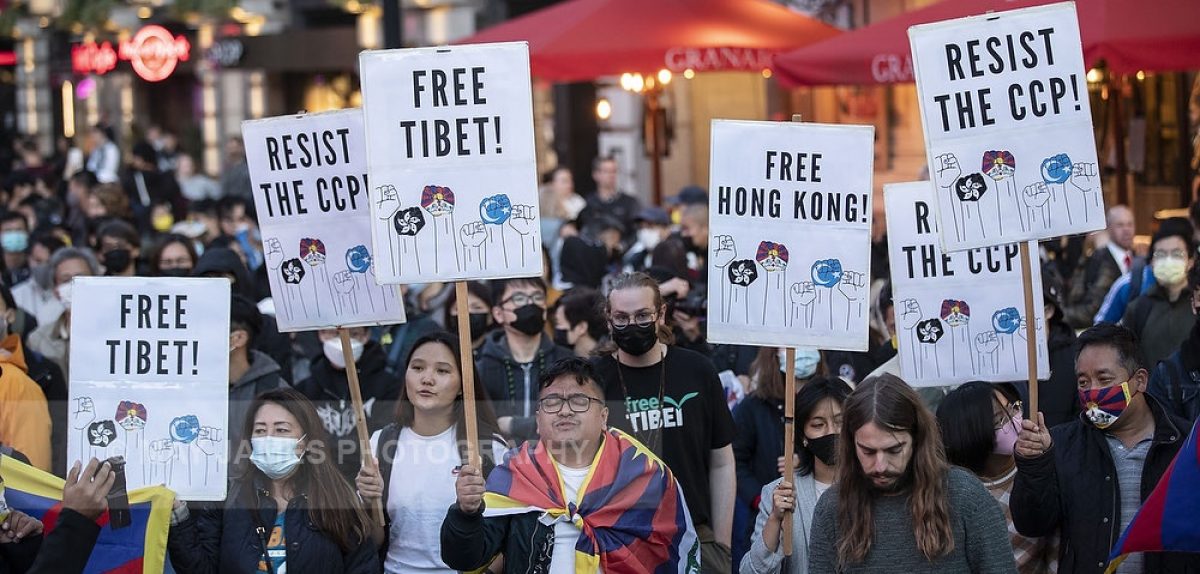

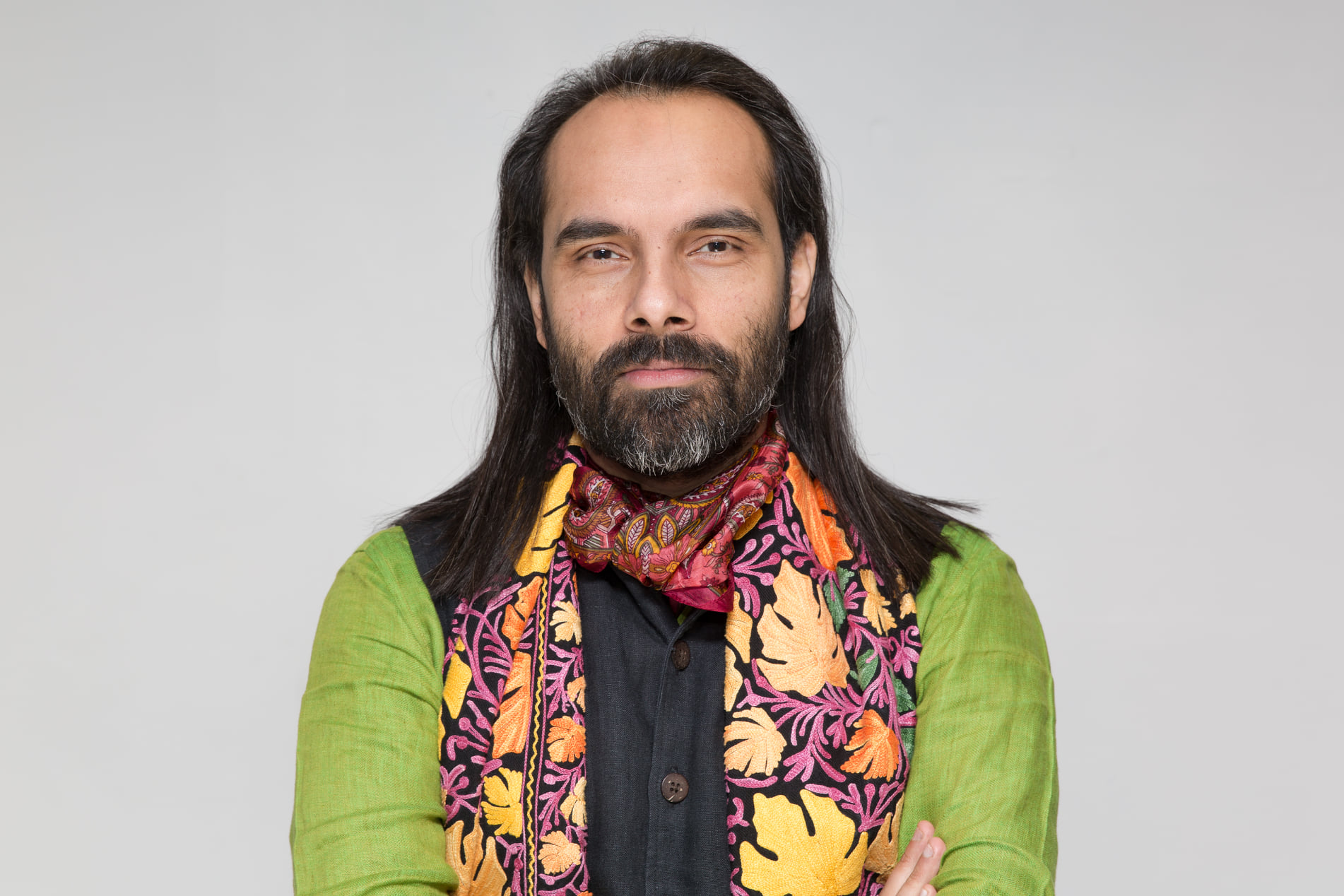



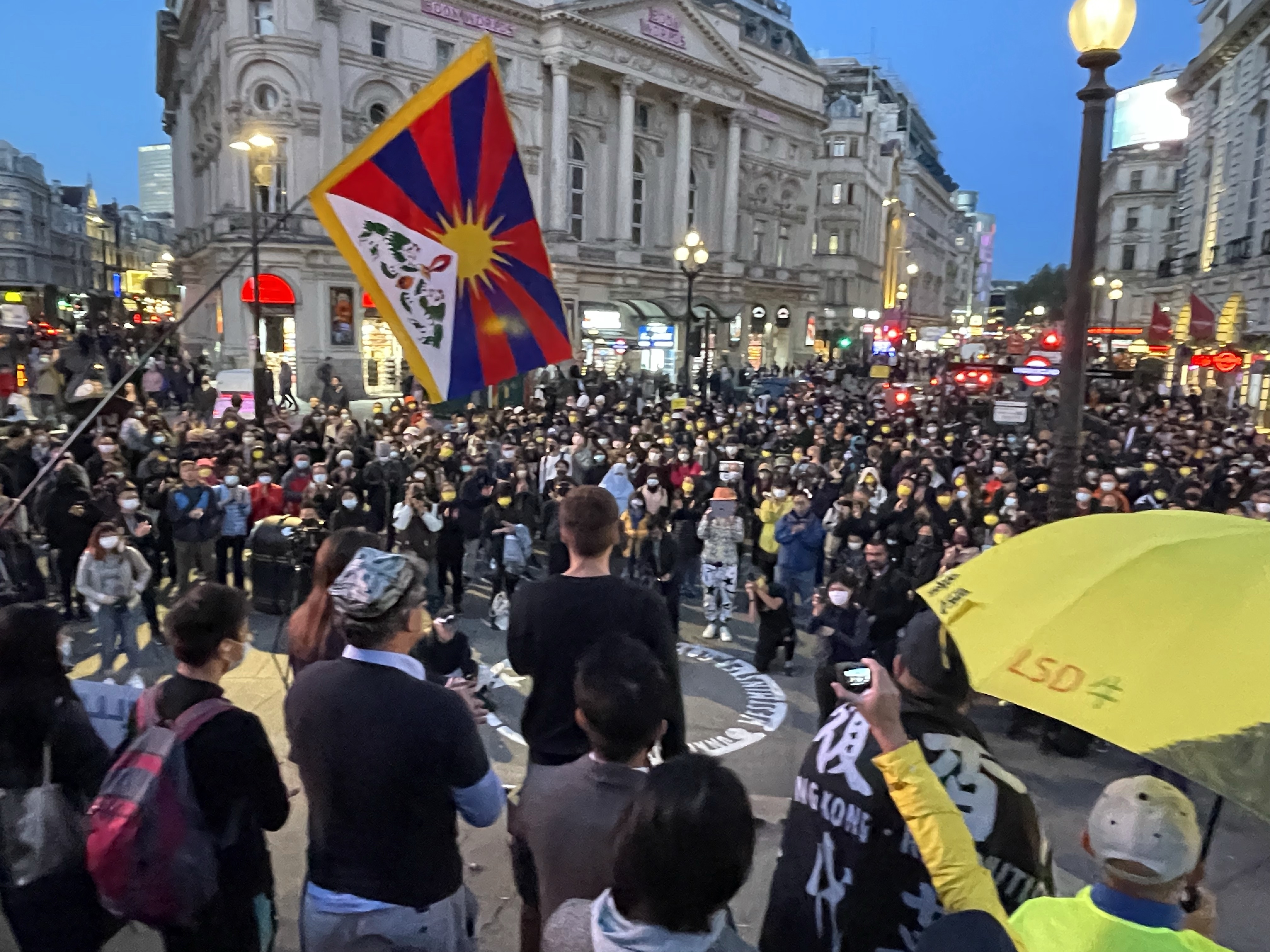

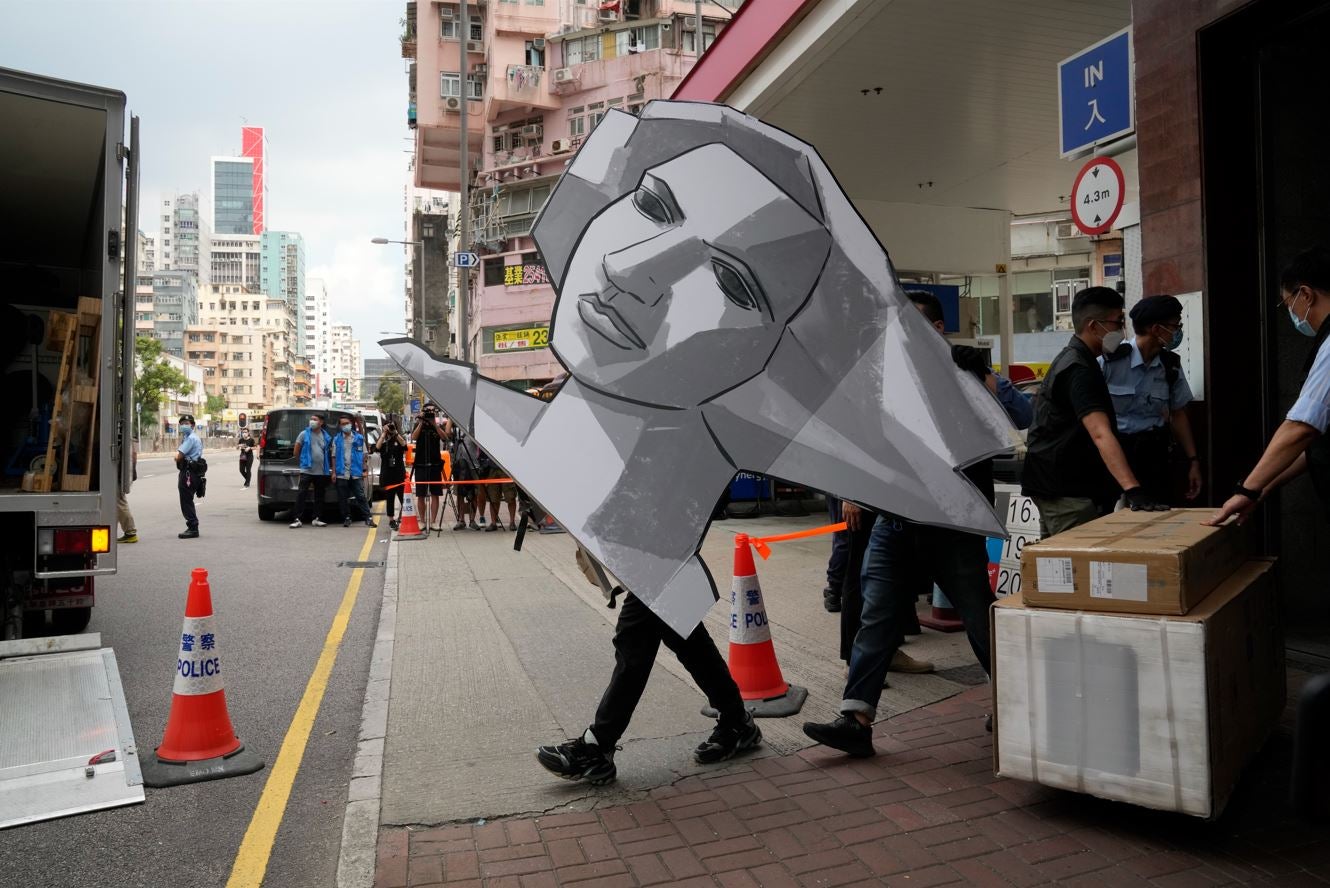

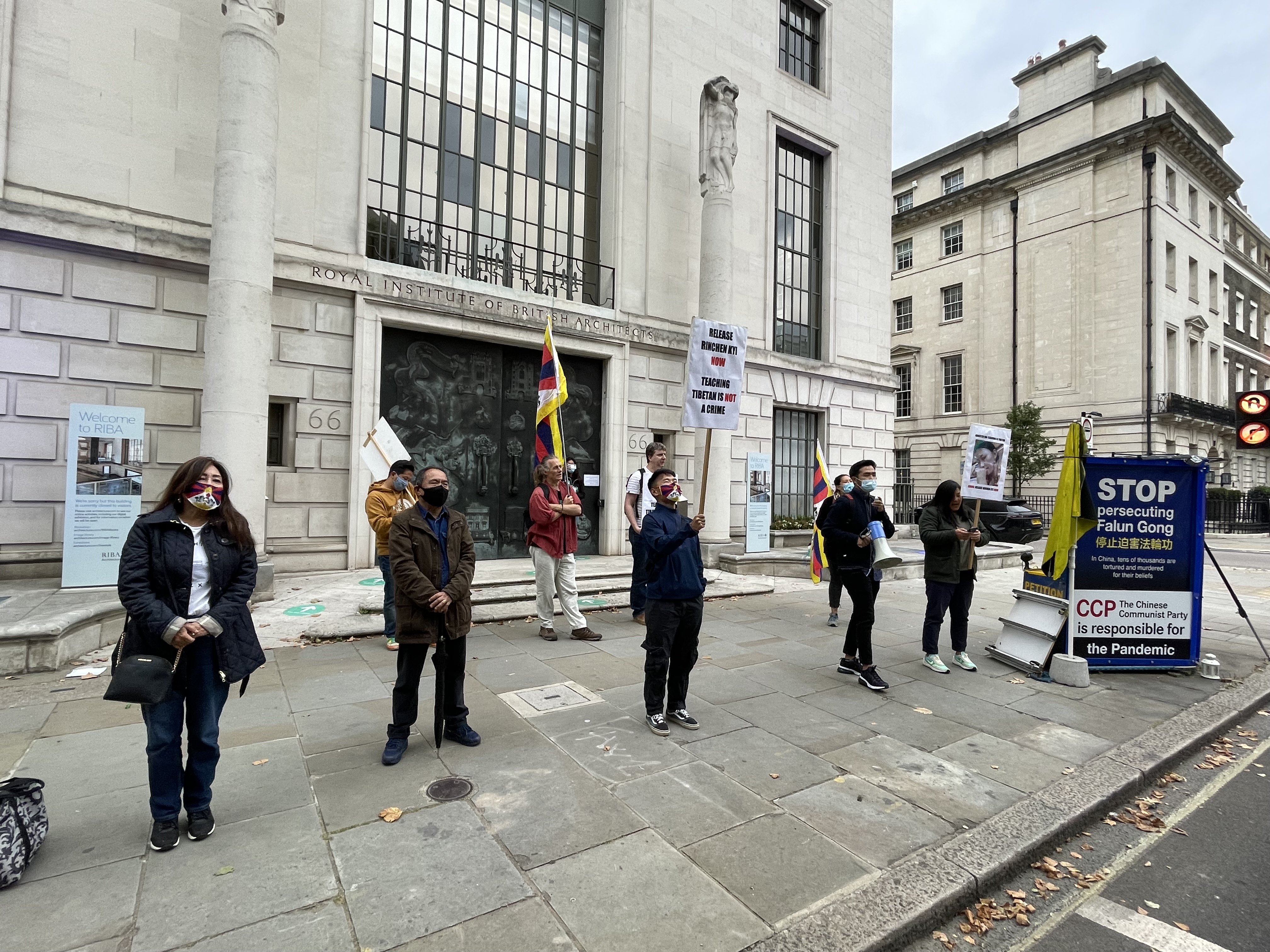
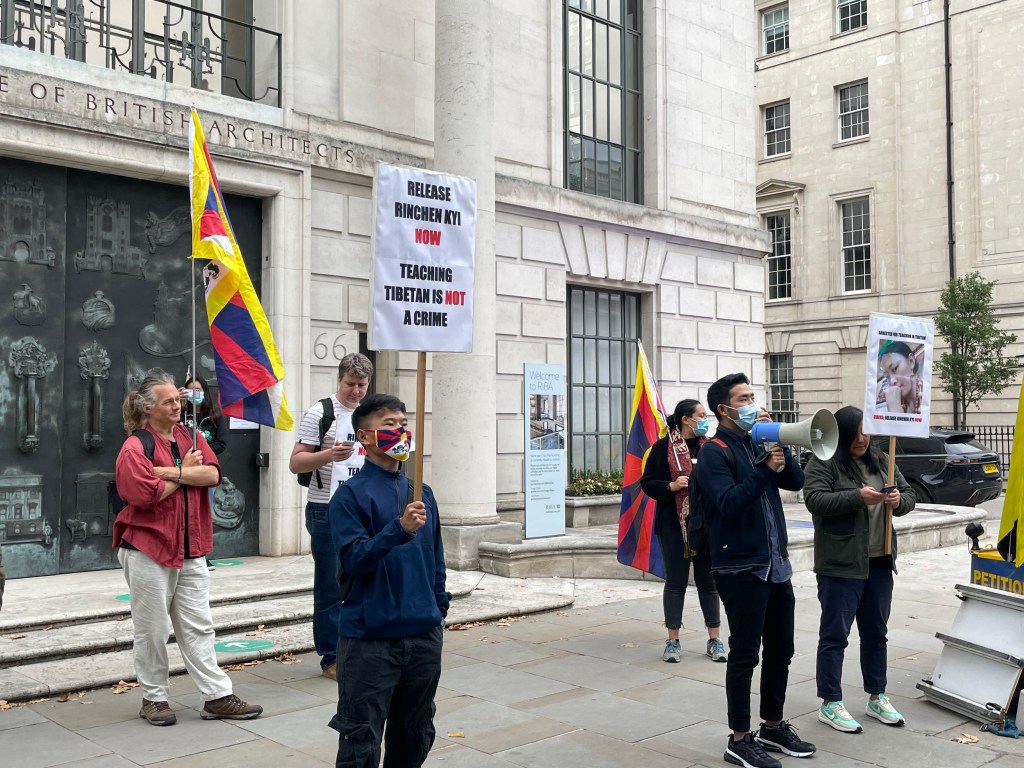


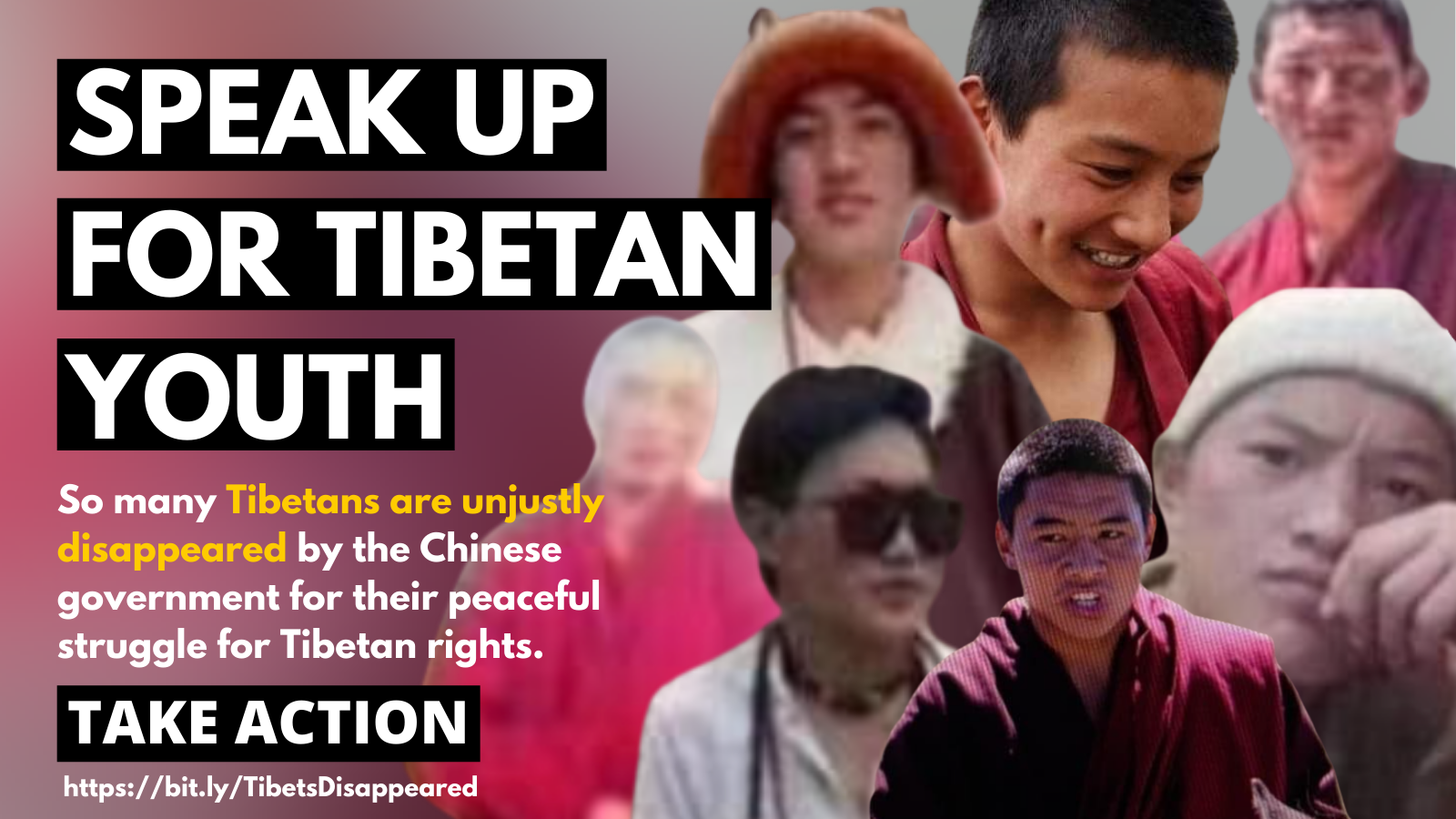
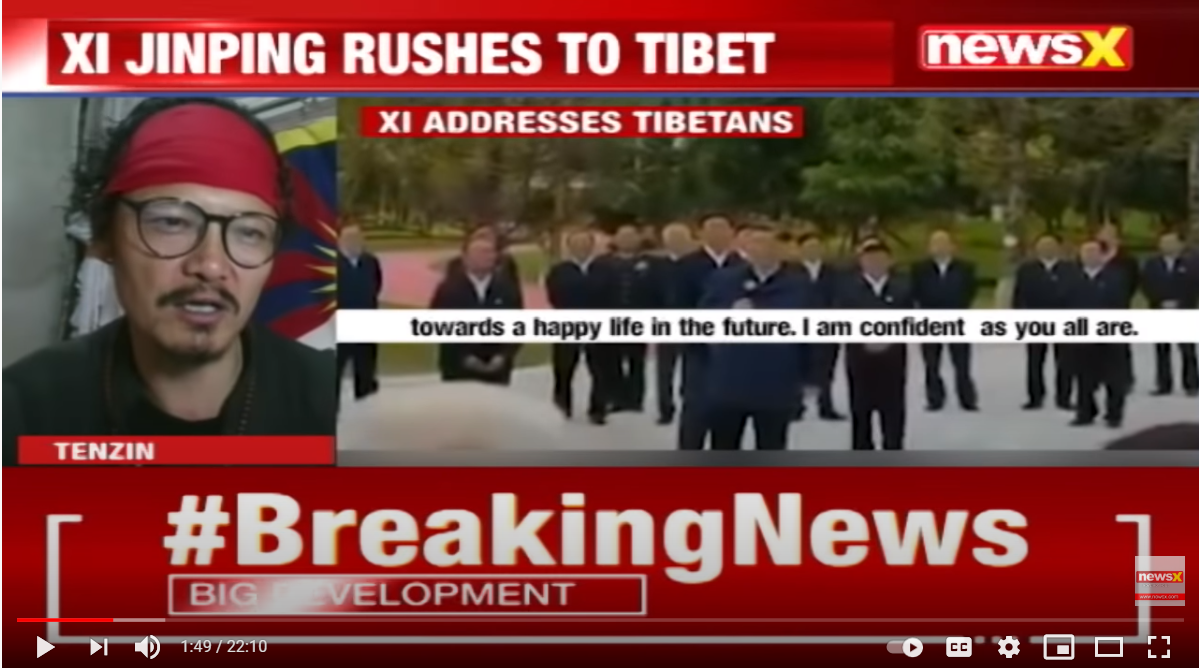
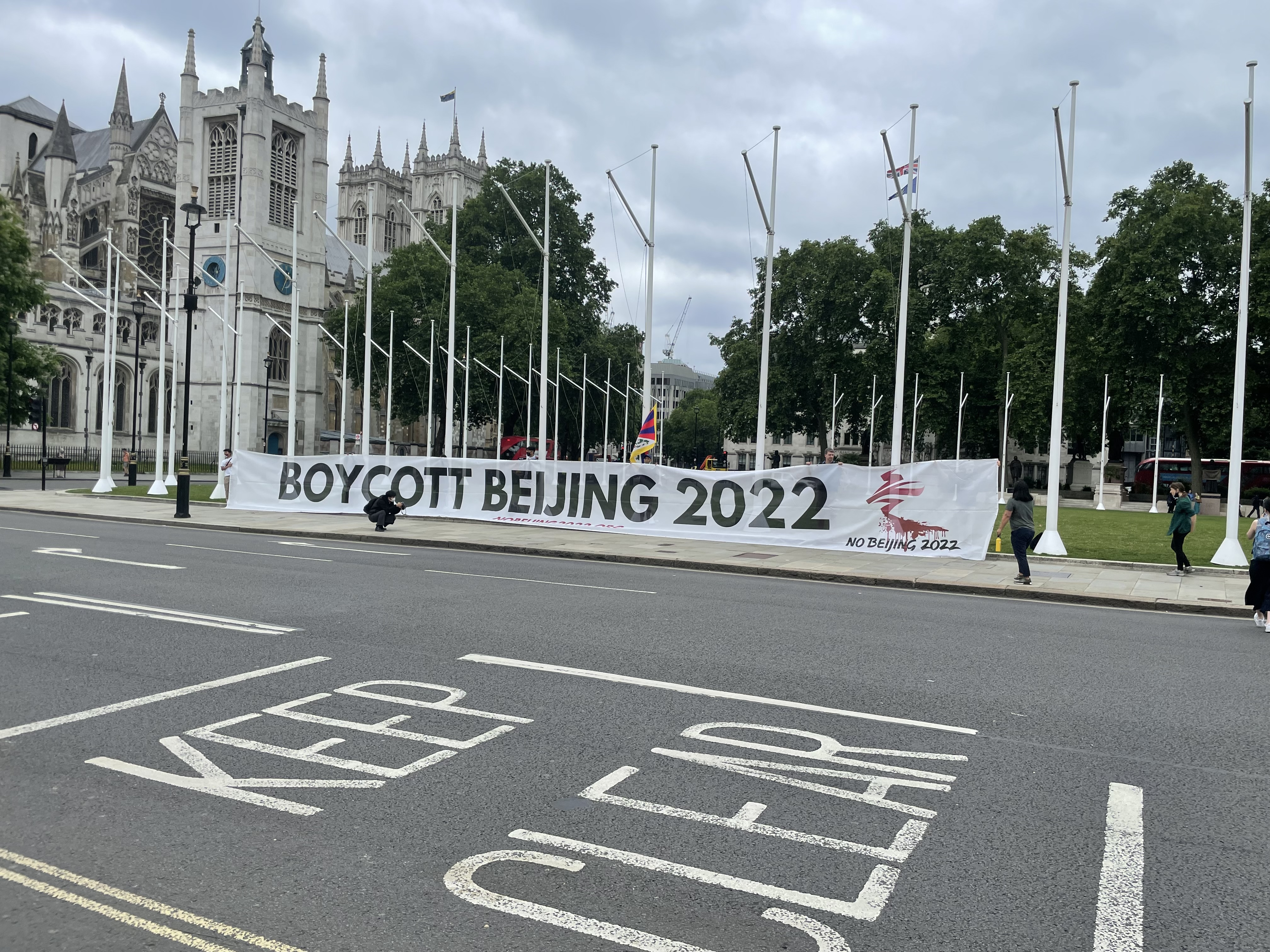

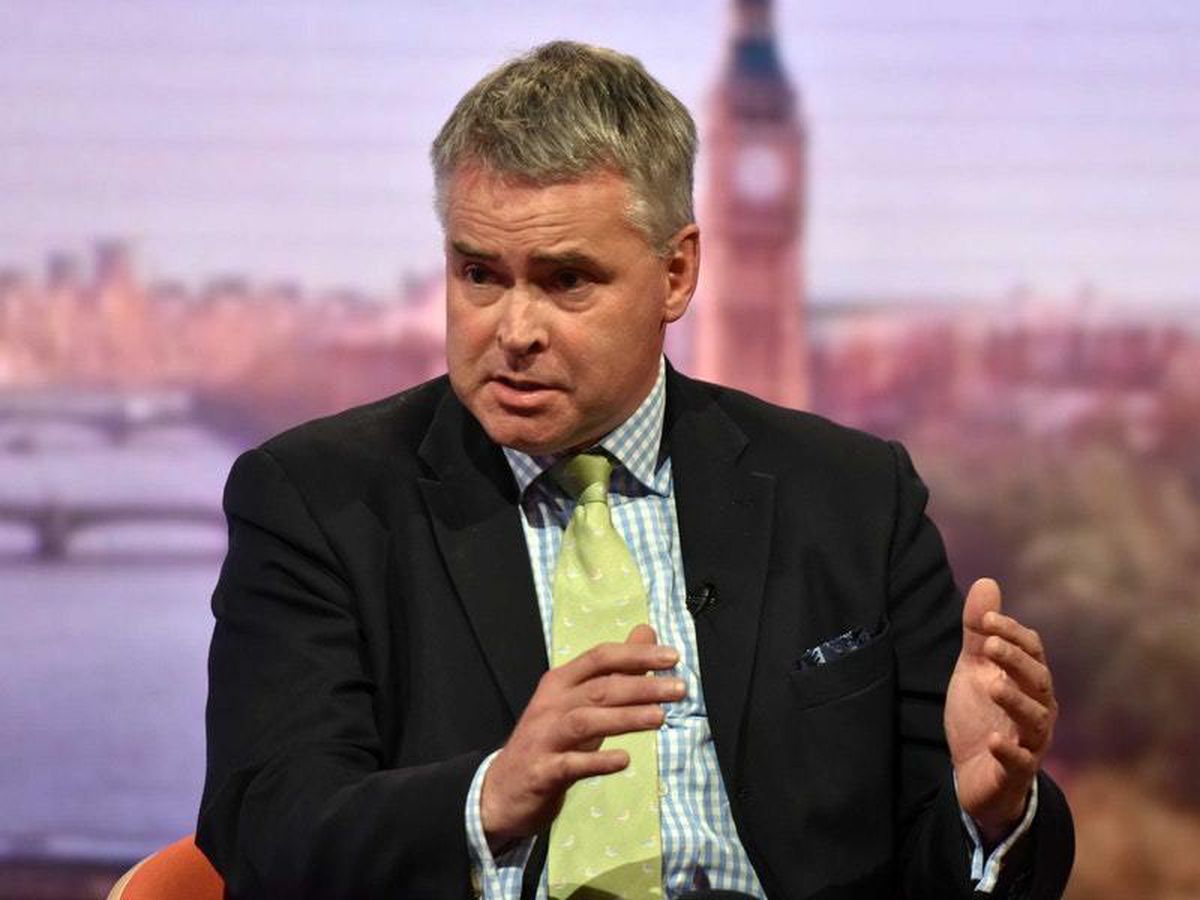

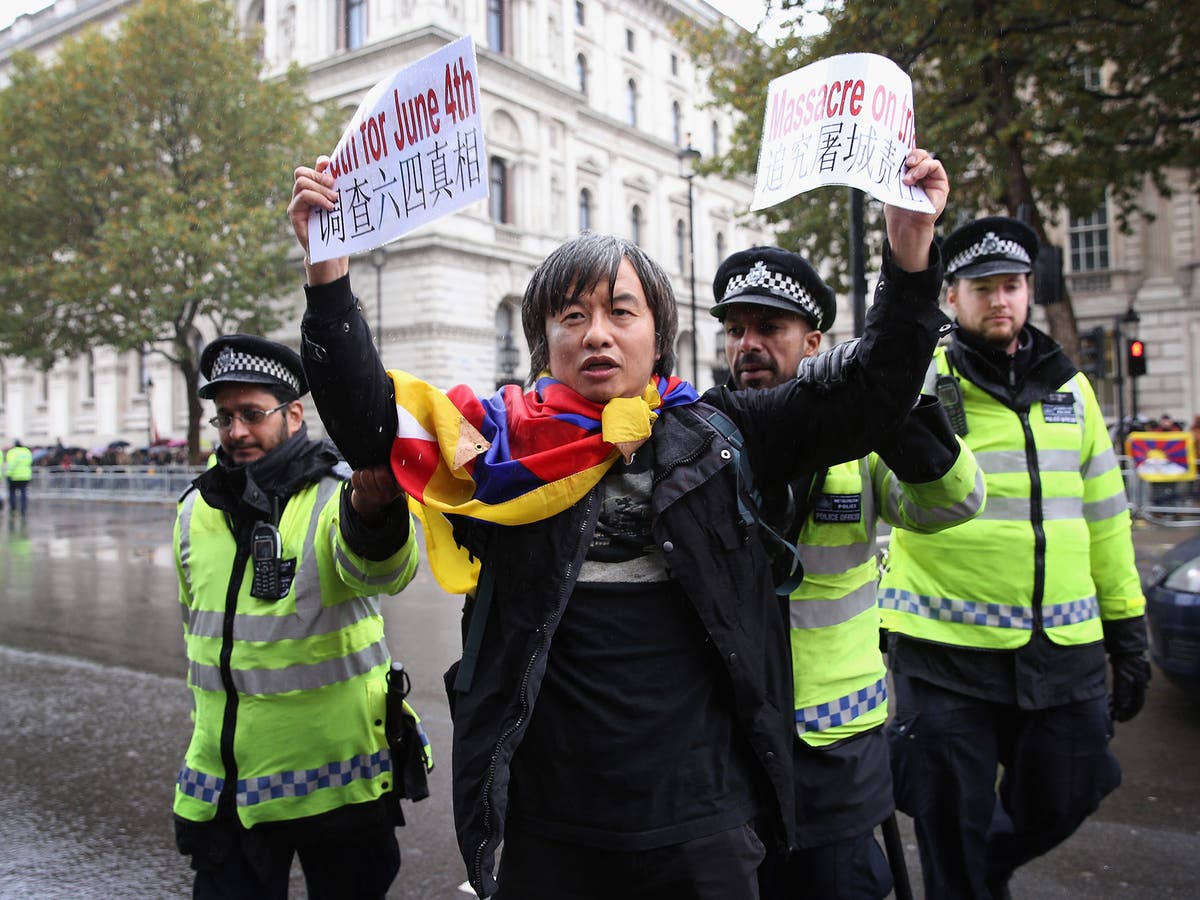
 Global Alliance for Tibet & Persecuted Minorities (GATPM)
You must be logged in to post a comment.