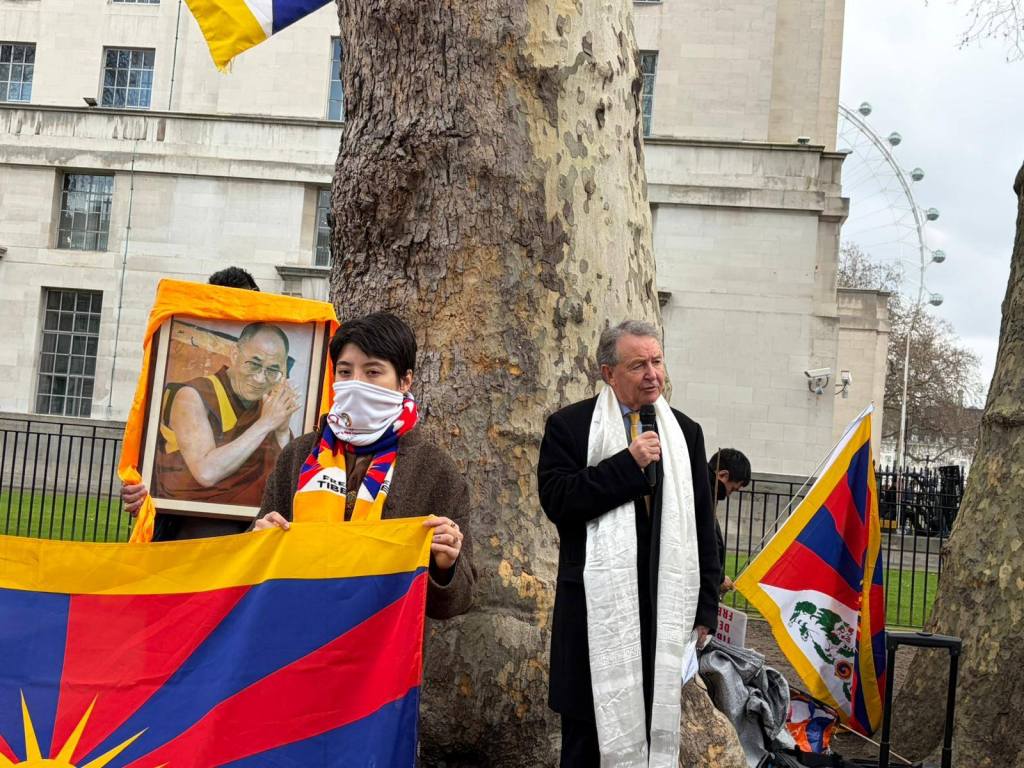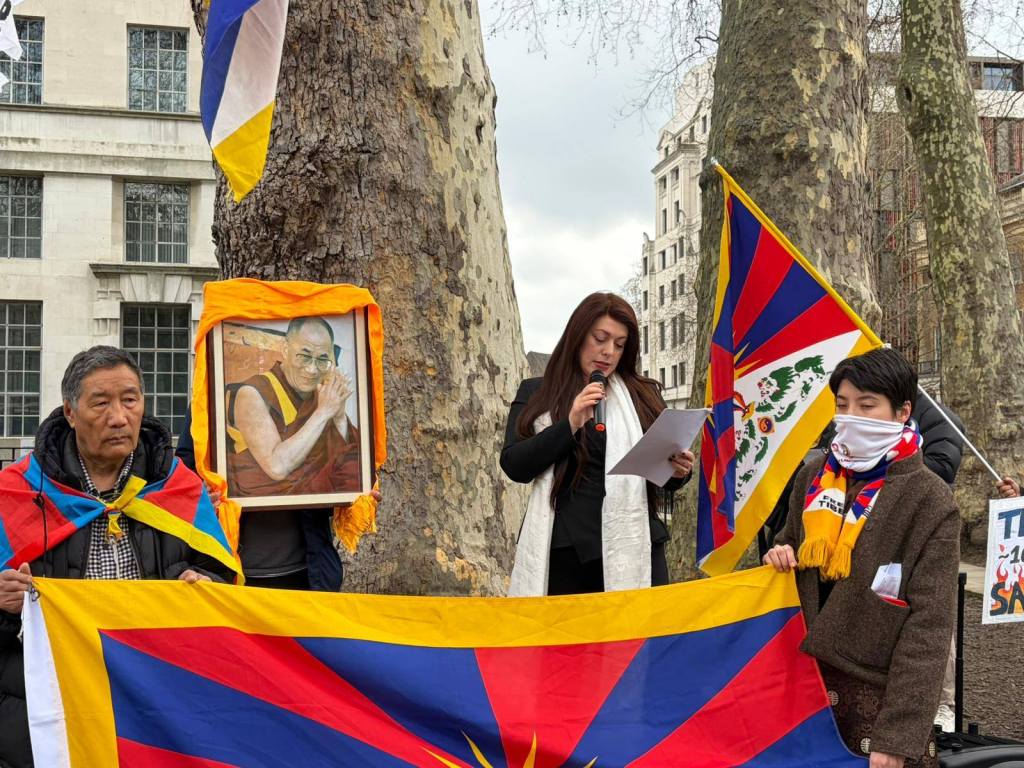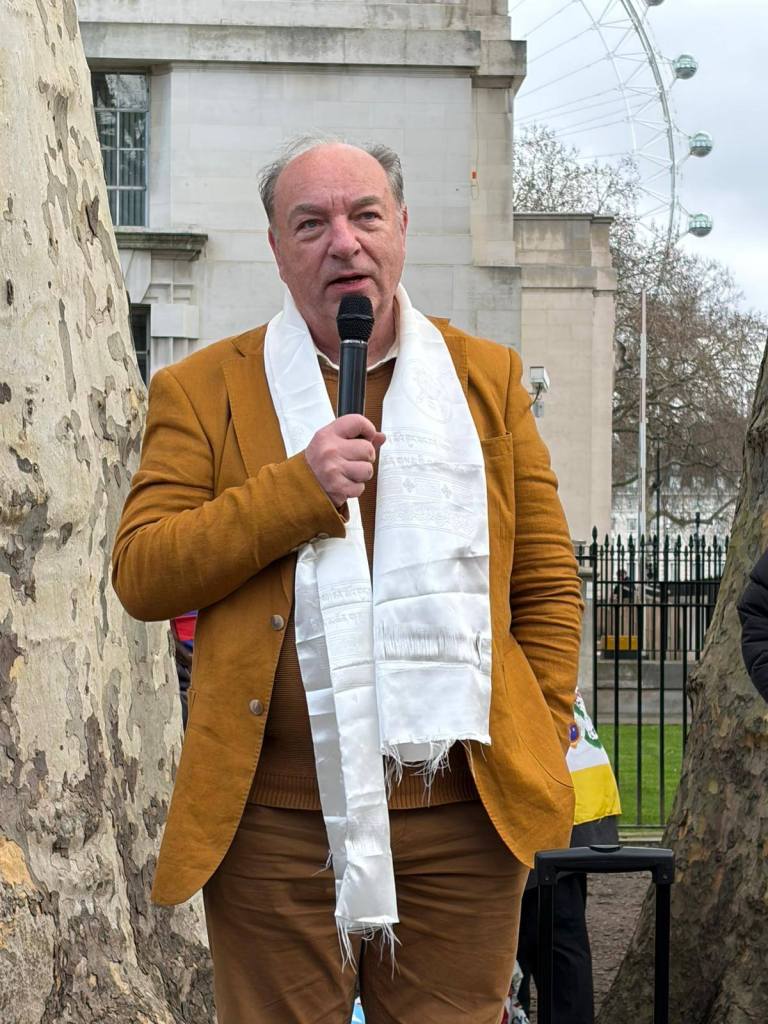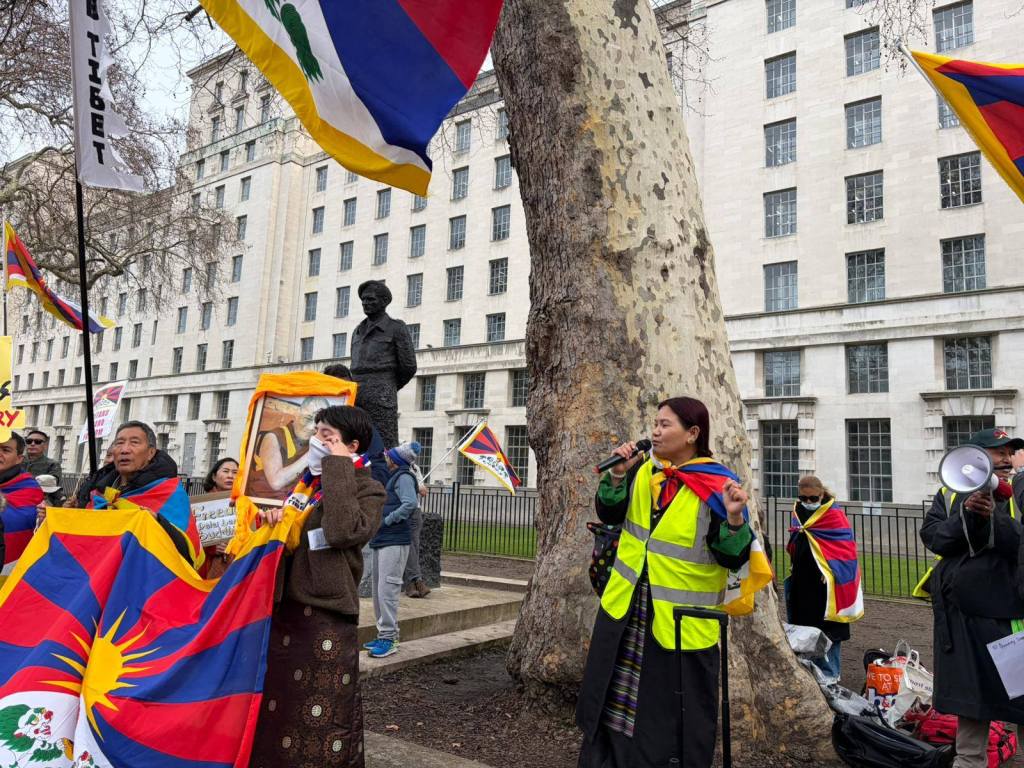
International Law is Universal, Not Selective: Global Alliance for Tibet & Persecuted Minorities Responds to CCP People’s Daily “Zhong Sheng” Commentary (7 January 2026)

GATPM, London | 8th January 2026

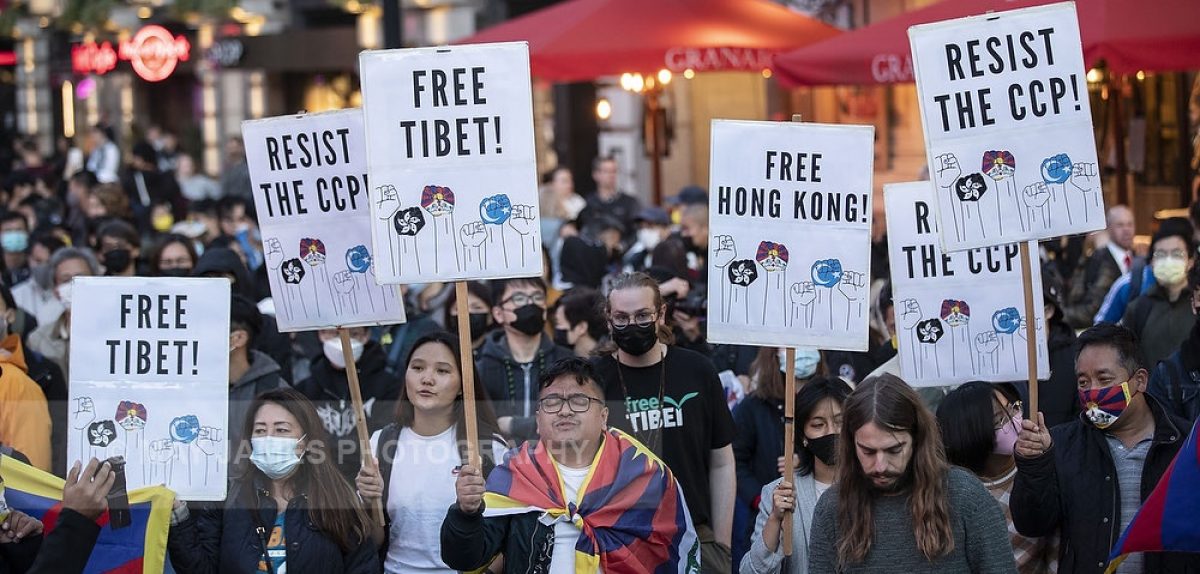
The Global Alliance for Tibet & Persecuted Minorities has taken note of the CCP-funded People’s Daily commentary published on 7th January 2026 under the byline Zhong Sheng, which asserts that “No single country can act as the international policeman” and calls on all states to uphold international law, oppose the “law of the jungle,” and respect the purposes and principles of the United Nations Charter.

On this fundamental point, we agree: international law must be applied universally, consistently, and without double standards. However, it is precisely on this ground that the Government of the People’s Republic of China (PRC) stands in profound contradiction to its own words.

International Law is Not Selective

The United Nations was established in October 1945, with the UN Charter forming the bedrock of the post–Second World War international legal order. The People’s Republic of China was established in October 1949 in the aftermath of a violent civil war, following the takeover of the ruling Kuomintang by the Mao Tsetung–led Communist Party of China, at a time when the UN Charter was already in force and the core principles of sovereign equality, the prohibition on the use of force, the right of peoples to self-determination, and respect for human rights had crystallised as binding norms of international law.

Yet it was after the UN Charter was in place that Beijing’s Communist regime:

  • Invaded and occupied Tibet (1950–51) by armed force;
  • Consolidated control over East Turkestan (renamed “Xinjiang”) through mass repression, demographic engineering, and the destruction of indigenous identity;
  • Eliminated the promised autonomy of Southern Mongolia through cultural erasure and political coercion;
  • Systematically dismantled Hong Kong’s autonomy and freedoms in clear breach of binding international commitments; and
  • Continues to issue military threats against Taiwan, including the threat or use of force prohibited by the UN Charter.

These are not historical abstractions. They are ongoing realities. To invoke the UN Charter while violating it at home is not a defence of international law – it is its instrumentalisation.

The “Law of the Jungle” Begins at Home

The People’s Daily commentary rightly condemns hegemonism, unilateralism, and the use of force to impose political outcomes. It states that:

“All countries that do not wish to live under the ‘law of the jungle’ should resolutely uphold international law and the purposes and principles of the UN Charter, and unequivocally oppose all unilateral acts of bullying.”

By this standard, the PRC must answer uncomfortable questions:

  • How does the militarised occupation of Tibet, accompanied by mass surveillance, arbitrary detention, and the denial of religious freedom, uphold the UN Charter?
  • How do mass internment camps, forced labour, cultural destruction, and family separation in East Turkestan comply with international human rights law and the Genocide Convention?
  • How does the imposition of the National Security Law in Hong Kong, in violation of the Sino–British Joint Declaration registered with the UN, reflect respect for international obligations?
  • How do repeated threats of force against Taiwan align with the Charter’s prohibition on the threat or use of force?

If “no country can act as the international police,” then no country can act as an internal empire either – governing distinct peoples through coercion, fear, and military domination while demanding non-interference from the rest of the world.

Sovereignty Does Not Trump Human Rights

The PRC repeatedly invokes “sovereignty” to shield itself from scrutiny. But sovereignty under international law is not a license to commit crimes, erase cultures, or silence entire peoples. The UN Charter, international human rights treaties, and peremptory norms of international law exist precisely to ensure that state power is constrained by law and morality.

Respect for sovereignty cannot mean:

  • The criminalisation of indigenous languages, religions, and identities;
  • The disappearance of writers, monks, scholars, and activists;
  • The forced assimilation of children; or
  • The transformation of entire regions into open-air prisons.

To claim the mantle of international justice while denying justice to Tibetans, Uyghurs, Mongolians, Hongkongers, and others is the very double standard that Beijing claims to oppose.

Exporting Instability Through “Development”

The People’s Daily warns against exporting chaos and humanitarian disaster through hegemonic behaviour. Yet Beijing’s own record abroad – particularly under the banner of Belt and Road “development” projects – raises serious concerns: opaque debt arrangements, environmental destruction, support for authoritarian regimes, and the export of surveillance technologies used to repress populations.

True development cannot be built on repression at home and coercion abroad. A state that has not made peace with its own peoples and neighbours cannot credibly claim to be building a peaceful international order.

A Call for Responsibility, Not Rhetoric

The Global Alliance for Tibet & Persecuted Minorities calls on the Government of the People’s Republic of China to:

  1. Align its actions with its rhetoric by genuinely upholding the UN Charter at home as well as abroad;
  2. End policies of occupation, forced assimilation, and mass repression in Tibet, East Turkestan, Southern Mongolia, and Hong Kong;
  3. Cease threats of force against Taiwan and commit to peaceful, lawful engagement in respect of the Taiwanese people;
  4. Allow independent international investigations and UN access to affected regions; and
  5. Engage in dialogue with the legitimate representatives of the persecuted peoples under its control.

As the People’s Daily correctly notes, a world governed by the “law of the jungle” is a dangerous one. But that danger does not arise only from distant powers – it also arises when a state invokes international law abroad while systematically dismantling it within its own borders.

International law cannot be a weapon of convenience. It must be a standard of conduct.

The peoples of Tibet, East Turkestan, Southern Mongolia, Hong Kong, and Taiwan do not seek privilege. They seek what the UN Charter promises to all: dignity, freedom, equality, and justice. Until Beijing honours these principles in practice, its appeals to international law will remain unconvincing – and its calls for fairness will ring hollow.

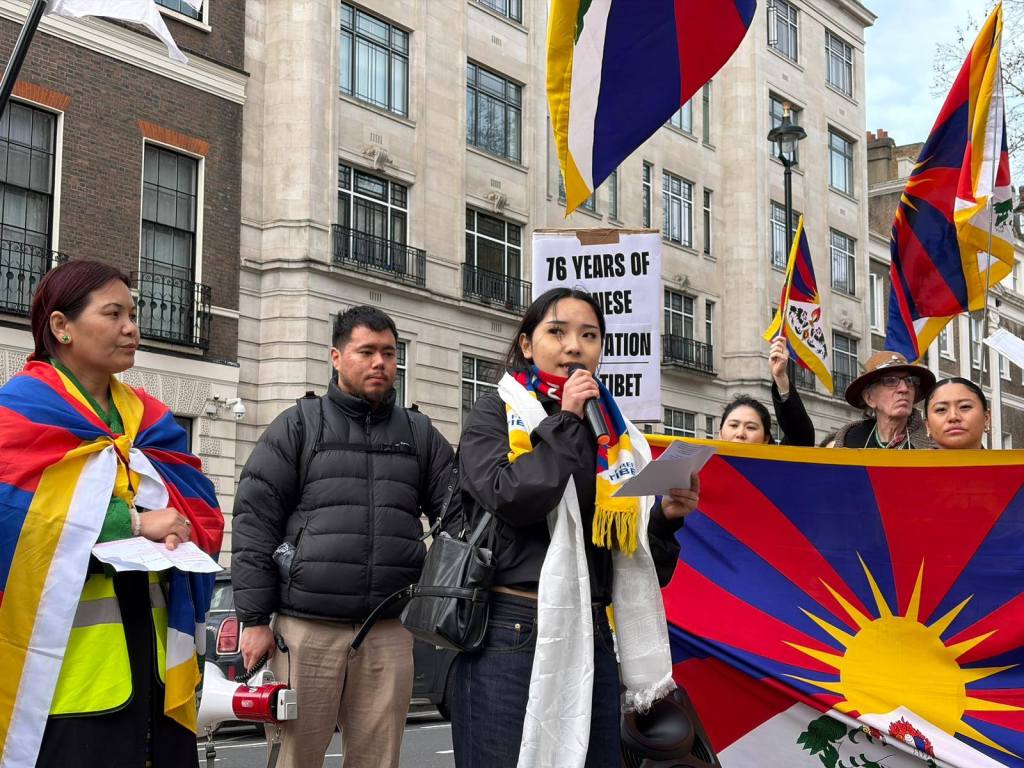
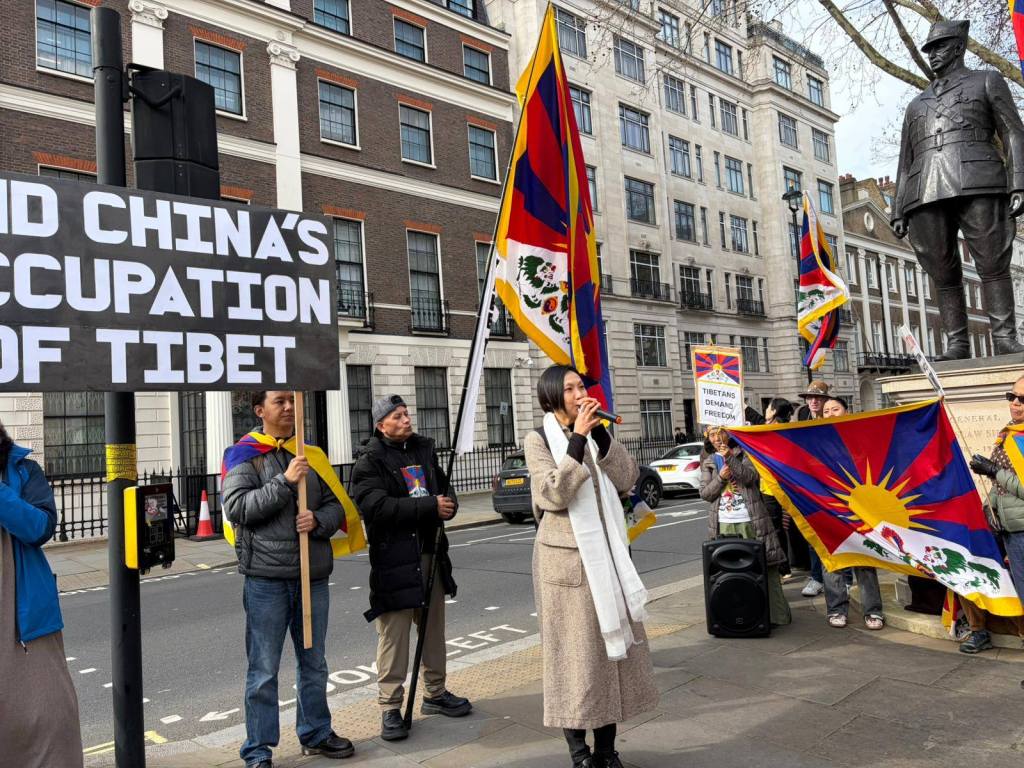
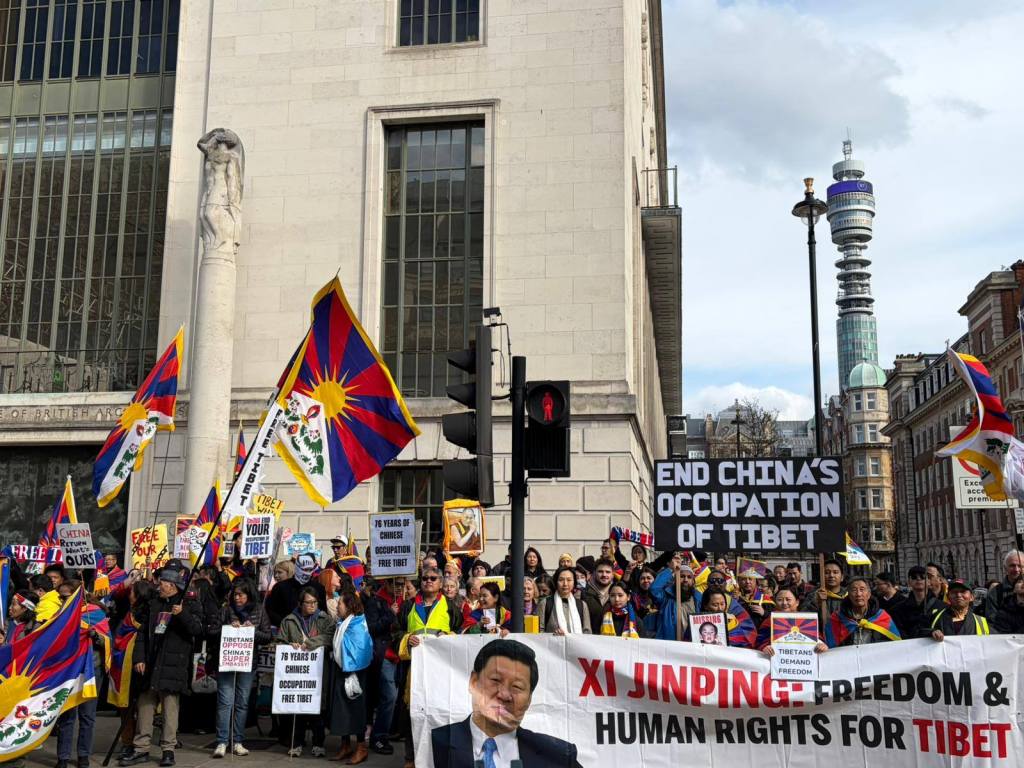
Bridge the Gap. Stand Together. Stop China’s Mega-Embassy – Join Us on 17 January

Dear Friends,

Bridge the Gap. Stand Together. Stop the Mega-Embassy.

We are writing to urgently call on you to join what is expected to be the largest and most decisive protest yet against China’s proposed so-called “Super-Embassy” at the Royal Mint Court, near the Tower of London.

Protest Details:

Venue: Royal Mint Court, London
Date: Saturday, 17 January 2026
Time: 2:00 pm

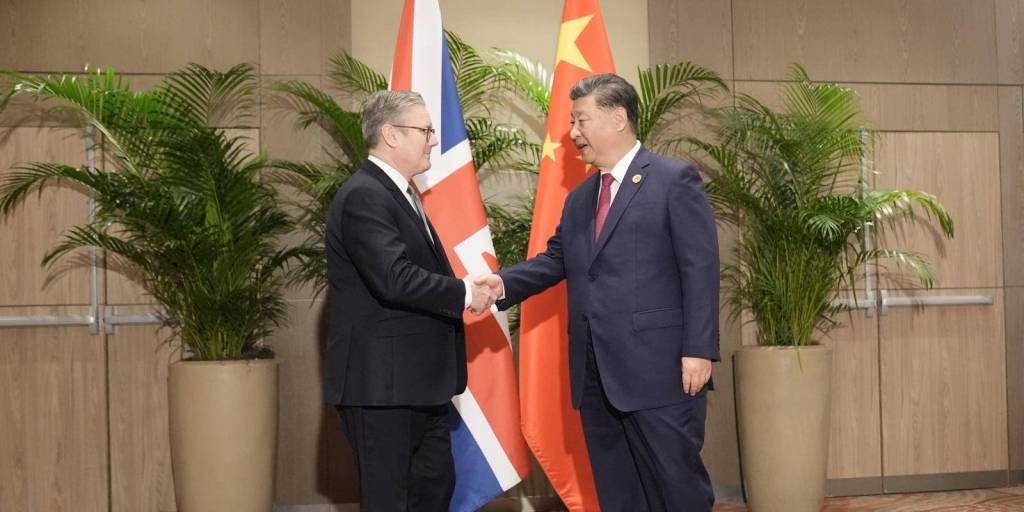
This rally comes at a critical moment. The UK Government is approaching its final decision – expected on or before 20 January – and Prime Minister Keir Starmer is reportedly planning a visit to China later this month. What happens now will matter.

Why This Protest Matters

China’s proposed Mega-Embassy is not a routine planning issue. It represents a serious threat to democracy, human rights, public safety, and national security in the heart of London.

For Tibetans, Uyghurs, Hongkongers, Chinese dissidents, and other communities persecuted by the Chinese Communist Party (CCP), this site would be a powerful symbol – and potentially a tool – of intimidation and transnational repression.

Thanks to the tireless efforts of grassroots organisers, legal teams, and community volunteers, the decision has already been delayed from September to December 2025, and again until now. These delays have been crucial. They have enabled the Royal Mint Court Residents Association (RMCRA) and others to develop a strong legal challenge and assemble compelling arguments that will be tested through judicial review.

But we must be clear-eyed: there is unlikely to be another delay.

One Final Push

Throughout 2025, demonstrations have strengthened and broadened opposition to the Mega-Embassy. What began as a local concern has grown into a wide-ranging coalition of human rights advocates, community leaders, residents, faith groups, democracy campaigners, and elected representatives.

At the February 2025 public inquiry, the Embassy’s own legal team suggested that protests would “run their course” and that opposition would fade over time. We cannot allow the 17 January demonstration to validate that narrative.

Cancellation or low turnout would be seized upon as evidence that resistance has weakened. A strong, visible, and united turnout will send the opposite message – clearly and unmistakably.

This Is the Moment

This protest represents the last major public opportunity before the decision to:

  • Show MPs and ministers the true scale of opposition
  • Command national and international media attention
  • Strengthen legal challenges
  • Demonstrate unity across communities and causes
  • Make clear that the UK must not trade democratic values for political or economic expediency

Leading MPs, prominent human rights advocates, community leaders, and campaigners will be addressing the rally. This is not just another protest – it is a line in the sand.

Our Message to Government Is Simple

China’s Mega-Embassy in London must be stopped.

The UK should not legitimise repression, reward intimidation, or silence affected communities – especially at a time when democratic values and the rule of law are under strain worldwide.

Let’s bridge the gap, stand together, and make this final protest count.

In solidarity,

Global Alliance for Tibet & Persecuted Minorities 

(Part of the Bridge the Gap – Stop the Mega-Embassy Campaign)

Choosing Leaders for a Narrowing Window: A Call to the Tibetan Electorate

Tsering Passang (First published in Tibet Times on 6th January 2026)

For nearly seven decades since coming into exile in 1959, the Tibetan freedom movement has endured through moral clarity, resilience, and an unshakeable commitment to nonviolence. These values remain our compass. They earned global recognition most notably in 1989, when His Holiness the Dalai Lama was awarded the Nobel Peace Prize, bringing Tibet briefly back into the conscience of the international community as a symbol of peaceful resistance.

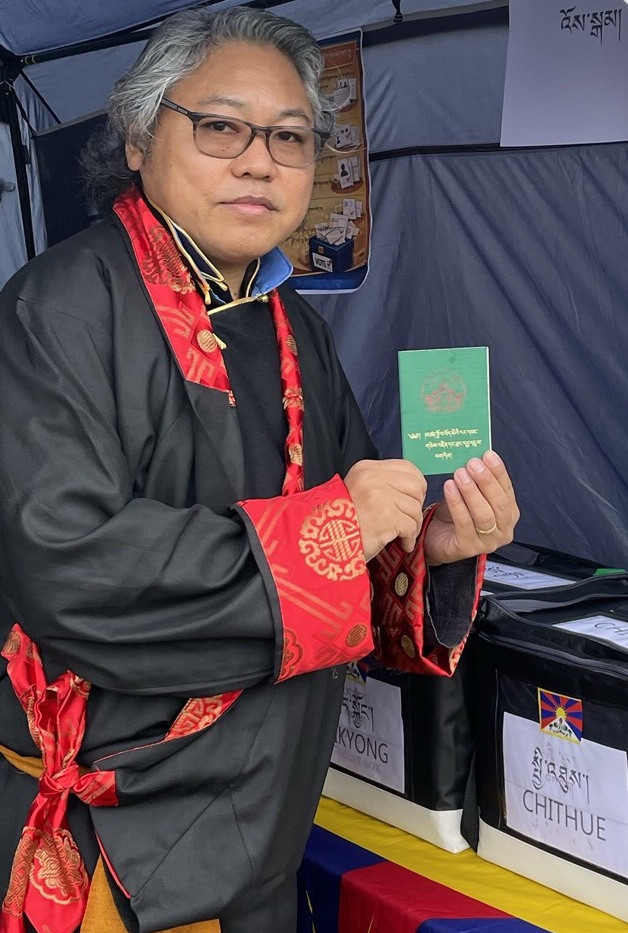
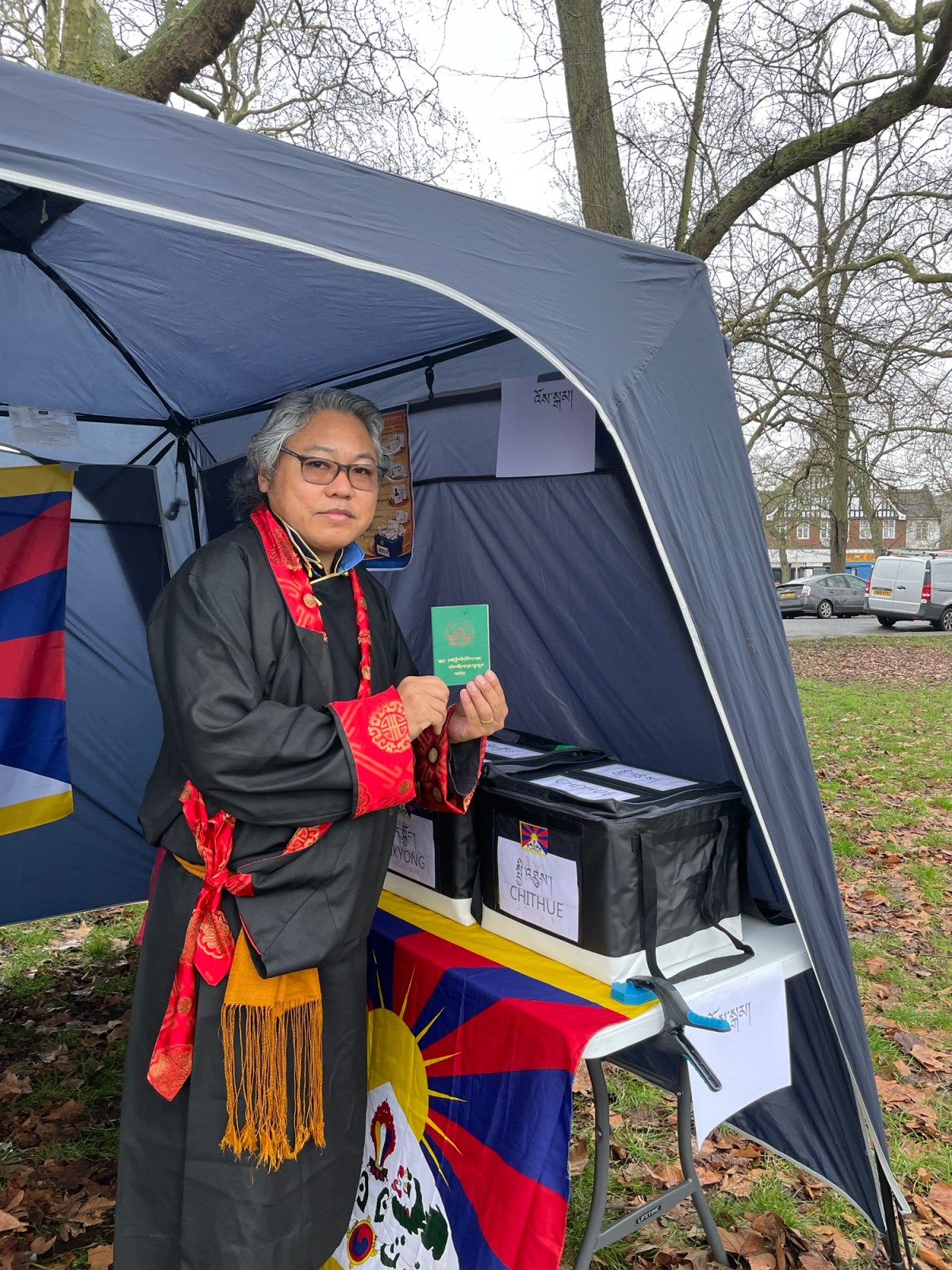
Yet values alone do not move geopolitics. As Tibetans prepare for the 2026 General Elections – to choose a new Sikyong (President of the Central Tibetan Administration, the Tibetan government-in-exile) and forty-five Chithue (Members of the Tibetan Parliament-in-Exile) – amid unprecedented global flux, and as His Holiness enters his 90th year, we must confront the world as it is, not as we wish it to be. The next five to ten years will be decisive, and our leadership choices must reflect the full gravity of this moment.

This is not an election like others. It takes place amid China’s rapidly expanding global influence, particularly across the Global South; a multilateral system increasingly paralysed by power politics; and a Tibetan movement that, while morally compelling, has struggled to translate sympathy into sustained strategic outcomes. Compounding this is a reality we too often avoid stating plainly: the Central Tibetan Administration (CTA) faces serious and growing funding constraints. The era of predictable institutional support is ending. The question before us is therefore not abstract but urgent: what kind of leaders do we need now – and how do we choose them responsibly?

From Moral Authority to Strategic Capacity

The Tibetan struggle has long commanded international admiration. United Nations General Assembly resolutions in 1959, 1961, and 1965 affirmed the rights of the Tibetan people at a moment when the world briefly paid attention. Since then, silence. Despite parliamentary resolutions and supportive legislation in a handful of Western democracies, Tibet has all but disappeared from the formal multilateral agenda. Trade, markets, and short-term national interests have prevailed over principle.

This is not a moral judgement; it is a geopolitical reality. Our leaders must therefore be more than eloquent advocates of a just cause. They must be strategic operators – people who understand how states behave, how influence is built, how resources are mobilised, and how alliances are sustained over time. Moral authority may open doors; strategic capacity determines whether anything follows.

The next generation of leadership must be able to prioritise ruthlessly in an era of scarcity. This means diversifying funding, strengthening institutional sustainability, and ensuring that the exile freedom movement remains viable long into the future. Thinking big is essential – but it must be matched by decisiveness and speed. Delay, indecision, factionalism, and internal bickering are luxuries we can no longer afford.

Leadership in an Age of Scarcity

The funding challenges facing the CTA are not merely technical; they are deeply political and strategic. Future leaders must be capable of making difficult choices, investing in impact rather than symbolism, and mobilising support beyond traditional donor bases. This requires professional fundraising, serious engagement with philanthropic institutions, and far more effective use of the Tibetan diaspora’s expertise.

Today’s Tibetan diaspora is vastly more educated, multilingual, and professionally diverse than it was in the early 1960s, when Tibet last appeared meaningfully on the UN agenda. Lawyers, academics, development practitioners, diplomats, economists, and policy specialists now exist across our global community. Our leaders must harness this collective capacity rather than operate within narrow circles or outdated institutional habits. If the UN General Assembly no longer looks at Tibet, that should compel innovation – not resignation.

Reaching the Unreached: A Test of Seriousness

For too long, Tibetan international advocacy has been concentrated in North America, Europe, and parts of the Asia-Pacific. While these relationships remain important, they are no longer sufficient. China’s strongest diplomatic backing today comes from Africa’s 54 nations, more than 20 countries in Latin America, and over 50 across Asia – regions that together constitute the political weight of the Global South.

This raises an uncomfortable but necessary question: how seriously have our leaders engaged these regions? Over the past five years, how many of the four Chithue representing Europe, Africa, and the Americas – two from Europe/Africa and two from North/South America combined – have travelled to or undertaken sustained engagement with African or South American countries? How often have the Sikyong or the Kalon for the Department of Information and International Relations (DIIR) pursued consistent diplomatic outreach in these continents?

By any honest assessment, the answer exposes a troubling gap. This is not an attack on individuals, but an indictment of a pattern. If we claim that the Global South matters – and it does – our actions must reflect that priority. Occasional statements or symbolic meetings are no substitute for presence, relationships, and long-term political work. China has invested heavily and consistently in these regions for decades. Our absence or inaction in these continents represents a strategic failure, not a moral one – and it is a failure that future leaders must confront and correct.

Law, Justice, and Untapped Pathways

As political avenues narrow, legal strategies deserve renewed attention. The 1959 findings of the International Commission of Jurists, which recognised grave violations of international law in Tibet, remain an underutilised foundation.

There is scope to reinvigorate legal pathways through international forums, universal jurisdiction mechanisms, and professional bodies such as the American Bar Association – the world’s largest association of legal professionals. The ABA’s adoption of its first-ever resolutions on Tibet in August 2024, supported through quiet and effective engagement by the Global Alliance for Tibet & Persecuted Minorities (GATPM), demonstrates that targeted, professional advocacy can still yield results when pursued strategically.

Such work requires patience, expertise, and resources. Abandoning legal avenues altogether would be a serious strategic error.

Democratic Leadership Requires Democratic Scrutiny

Equally important is how our leaders are chosen. Political candidates – especially those seeking the office of Sikyong – must participate in public debates and submit themselves to voters’ hard questions. This is not optional; it is a democratic obligation.

Voters deserve clear and honest answers. Candidates for Sikyong and Chithue should therefore be prepared to respond publicly to questions such as the following:

Strategy and Geopolitics

    • What is your concrete strategy for engaging Africa, Latin America, and the wider Global South over the next five years? 
    • Which specific countries will you prioritise, and why?

Track Record

    • Over the past five years, how many countries in Africa or South America have you personally visited or engaged in an official or sustained capacity?
    • What outcomes resulted from those engagements?

Funding and Sustainability

    • How will you address the CTA’s growing funding challenges?
    • What new funding sources or partnerships will you pursue beyond traditional donors?

Use of Diaspora Expertise

    • How will you systematically harness the Tibetan diaspora’s professional expertise, including legal, diplomatic, development, and language skills?

Legal Pathways

    • What role do you see for international legal strategies, including engagement with bodies such as the American Bar Association and other legal forums?

Democratic Accountability

    • Will you commit to participating in public debates and regular open forums with voters?
    • How will you ensure transparency and accountability once in office? 

Parliamentary Reform

    • Do you support reforming parliamentary representation to reflect current demographic realities in the diaspora?
    • If so, what timeline and process would you propose?

Leadership and Unity

    • How will you prevent factionalism and ensure unity during a critical period of political transition?

Avoiding debates or meaningful scrutiny weakens our democracy and undermines voter confidence. We cannot credibly criticise China’s system of anointed leadership while tolerating practices that dilute democratic norms within our own polity. Transparency and accountability are not inconveniences; they are the very strengths that distinguish us.

Representation, Reform, and Responsibility

Elected Chithue must also show the courage to legislate for change. Parliamentary seats must be reviewed and rebalanced to reflect demographic realities within the diaspora. Such reforms should be guided by evidence and long-term vision – not factional politics or narrow interests. Failure to act will only entrench inefficiencies and weaken institutional legitimacy over time.

Leadership today demands difficult decisions. Avoiding them may be politically convenient, but it will prove costly for future generations.

A Final Word

The Tibetan cause remains just. But justice does not advance itself. It requires leaders who are principled yet pragmatic, bold yet disciplined, and accountable to the people they seek to serve.

In choosing our next Sikyong and Chithue, we are not merely filling positions. We are deciding whether we are serious about adapting to a changing world, stewarding limited resources wisely, and sustaining the Tibetan freedom movement beyond symbolism.

History has given us a narrowing window. Let us choose leaders worthy of the moment – and capable of ensuring that our struggle endures, evolves, and remains relevant in the years ahead.

Tsering Passang is a London-based Tibetan blogger and the founder–chair of the Global Alliance for Tibet & Persecuted Minorities. A long-standing Tibetan human rights advocate, he works internationally to advance justice, freedom, and peaceful solutions for Tibetans and other persecuted communities living under authoritarian rule. His writing can be found at www.Tsamtruk.com.
Tibet at the Crossroads of a Changing World

(First published in Tibetan Review on 31 December 2025)

As 2026 approaches, Tsering Passang* argues why resolving the China–Tibet conflict before it is too late serves global peace, regional stability, and justice, and sees a role for India, amid a weakening of Western support for Tibet and what he sees as a rising China’s dangerous miscalculation that time and demographics will dissolve the Tibetan question. (Tibetan Review)

As we approach 2026, the world is in the midst of a profound geopolitical recalibration that offers little comfort to stateless nations and persecuted peoples like Tibetans, Uyghurs, and Hong Kongers. China’s rise has been neither sudden nor accidental. It is the result of decades of strategic patience, economic integration, and the West’s willingness to prioritise business over values. For those of us who live under, or in exile because of, Beijing’s rule, this reality demands clarity rather than illusion.

China today wields unprecedented influence across the Global South, where infrastructure projects, loans, and political backing have translated into diplomatic loyalty. Western economies, despite growing unease, remain deeply reliant on Chinese manufacturing, supply chains, and markets. There is no serious sign of economic decoupling. As a result, the moral space for championing human rights in Tibet, East Turkestan (Xinjiang), or Hong Kong has narrowed considerably. Our struggles are no longer central to global agendas; they are often treated as inconvenient footnotes to economic diplomacy.

Recent developments in Washington, DC, underscore this troubling shift. The change in administration in January 2025 has coincided with the closure or scaling back of critical broadcasting platforms such as Radio Free Asia and Voice of America’s Tibetan-language services – lifelines that for decades transmitted independent news, cultural programming, and uncensored analysis into Tibet. At a time when information inside Tibet is tightly controlled and dissent criminalised, the loss of these voices is deeply unfortunate. It weakens not only Tibetans’ access to truth but also the international community’s ability to understand realities on the ground.

Compounding this challenge, reductions in annual US funding have begun to affect the Tibetan exile community’s sustainability. Capacity-building initiatives, educational programmes, leadership training, and grassroots advocacy – essential to maintaining a resilient, non-violent freedom movement – now face growing uncertainty. These investments were never acts of charity; they were commitments to democratic values, pluralism, and peaceful conflict resolution. Their erosion risks creating a vacuum that benefits repression, not stability.

For Tibetans, this moment is especially poignant. His Holiness the 14th Dalai Lama, who turned 90 this year, remains the single most credible bridge between Tibetans and the Chinese state. His Middle Way Approach – seeking genuine autonomy within the framework of the People’s Republic of China – has been consistently realistic, pragmatic, and non-violent. Yet Beijing has chosen to sideline him, betting that time and demographics will dissolve the Tibetan question. This is a dangerous miscalculation. Ignoring the Dalai Lama does not end the conflict; it merely postpones it to a far more unstable and unpredictable future.

The same logic applies to Uyghurs and Hong Kong. In Xinjiang, the scale and sophistication of repression have shocked global consciences but failed to produce decisive collective action. In Hong Kong, the National Security Law has effectively extinguished the promise of “one country, two systems,” even as the world looks on with resignation. Taiwan now stands as the most visible flashpoint, with China’s increased military exercises signalling that coercion is no longer hypothetical. A takeover of Taiwan would not only redraw Asia’s security architecture but would extinguish any remaining hope that Beijing can be persuaded through restraint alone.

And yet, opportunities – however limited – do exist.

India occupies a unique and consequential position in this landscape. Relations between New Delhi and Beijing may appear eased for now, but deep distrust persists, particularly along the unresolved border in Arunachal Pradesh, which China claims as “Southern Tibet.” The McMahon Line, agreed upon in the 1914 Simla Convention signed between British India and Tibet, remains the de facto boundary, yet Beijing continues to reject its legitimacy. Dozens of rounds of border talks have yielded little progress. This is not merely a territorial dispute; it is inseparable from Tibet’s unresolved political status.

India has long hosted the Tibetan government-in-exile and the Dalai Lama himself. With this moral responsibility comes strategic opportunity. By raising the Tibet issue on global forums – not as an act of hostility, but as a pursuit of truth, reconciliation, and justice – India can help frame a solution that benefits all stakeholders. Resolving the China–Tibet conflict while the Dalai Lama is still with us would remove a major source of regional tension, stabilise the Himalayan frontier, and offer Beijing a dignified pathway toward lasting peace.

Such an approach need not be confrontational. India can work with friends and allies to encourage Beijing to take a realistic and forward-looking approach rooted in autonomy, cultural preservation, and religious freedom. The Dalai Lama’s moral authority – trusted by Tibetans and respected worldwide – remains an asset no other figure can replace. Ignoring this opportunity risks leaving behind a vacuum filled by resentment, radicalisation, and instability.

As we look ahead to 2026, Tibetans harbour no illusions of quick victories. But history reminds us that even the most powerful states cannot indefinitely suppress the aspirations of a people without consequence. The question is whether the international community – and particularly India and the United States – will choose foresight over fear. Continued support for Tibetan institutions, independent media, education, and dialogue is not symbolic; it is strategic.

Time is not infinite. For Tibet, for China, and for the region, the moment to act is now – while wisdom, dialogue, and reconciliation are still possible.

Tsering Passang is the founder-chair of the Global Alliance for Tibet & Persecuted Minorities, based in London. He is a prominent Tibetan human rights advocate who works internationally to advance justice, freedom, and peaceful resolution for Tibetans and other persecuted communities under authoritarian rule. Tsering’s blog: www.Tsamtruk.com

Remembering Riga Wangyal (1946–2025): A Life of Compassion, Service, and Quiet Strength

By Tsering Passang

Remembering Riga Wangyal

On Sunday, 28 December 2025, I joined more than one hundred members of the Tibetan Community in Britain, along with Riga Wangyal’s family, friends, and well-wishers, at the Rigpa Buddhist Meditation Centre in north London to attend a memorial service held in her loving memory. As a former colleague and long-time admirer of Riga’s work and character, it was deeply moving to witness the breadth of community she touched through decades of service, friendship, and quiet leadership.

The ceremony took place in the serene shrine hall of the Centre, before a magnificent statue of the Buddha, surrounded by sacred images, Buddhist scriptures, and a portrait of His Holiness the Dalai Lama. In keeping with Tibetan Buddhist tradition, 108 butter lamps (candles) and floral offerings were arranged before the shrine, symbolising the dispelling of ignorance and the illumination of wisdom. At the centre stood a photograph of Riga, respectfully adorned with a white khata, with two candles placed on either side – gentle prayers for her peaceful transition and favourable rebirth.

Members of Riga’s family were present, including her sister Yangchen, her two daughters who had travelled from Switzerland, her husband Phuntsog Wangyal, and his niece Tsekyi. They were joined by many from both the Tibetan and wider British communities. The atmosphere throughout the service was one of deep reverence, gratitude, and quiet strength – qualities that many of us recognised as reflections of Riga herself.

Prayers Led by His Eminence Lelung Rinpoche

The memorial service was blessed by His Eminence Lelung Rinpoche, Spiritual Director of the Lelung Dharma Centre in London, who led an hour-long dedication of prayers. In his remarks, Rinpoche spoke of Riga’s distinguished family background, noting that she was born into the Chamdo Yabtsang lineage, traditionally known as “the lineage from which many reincarnated lamas were born.”

He also reflected on his long-standing connection with Riga, remarking on the meaningful coincidence that he was able to offer prayers for her during her illness, at her funeral rites, and again at this memorial service. The ceremony began with the chanting of the refuge prayers and the generation of bodhicitta, followed by the recitation of Samantabhadra’s Aspiration, Maitreya’s Aspiration, the Well-Being Aspiration, the six-syllable mantra of Avalokiteśvara, and prayers for the long life of His Holiness the Fourteenth Dalai Lama. The prayers concluded with dedication and aspiration prayers for Riga’s peace and liberation, and for the benefit of all sentient beings.

Memorial Speeches

Riga’s husband, Phuntsog Wangyal, offered a deeply moving tribute, read on his behalf by Sam Leigh, a former colleague. In it, he described Riga as “a woman of exceptional courage, compassion, and kindness,” someone who consistently placed the needs of others before her own. He spoke movingly of their shared journey – from exile and long years of separation to their eventual reunion and marriage in London – and of Riga’s lifelong devotion to the Tibetan cause.

He highlighted her tireless service as a midwife, nurse, community organiser, and founding member of the UK chapter of the Tibetan Women’s Association. Reflecting on their life together, he said: “For 52 years, Riga stood beside me as a devoted and loving wife… Her strength and encouragement made my work possible.” His words were a powerful reminder that Riga’s legacy lives on through the values she embodied: courage, humility, compassion, and selfless service.

The second tribute was delivered by Susan Burrows (known to many as Bunny), a close and long-time friend. Speaking with warmth, humour, and deep affection, Susan recalled first meeting Riga in the mid-1970s and realising almost immediately that she was “no ordinary individual.” She described Riga as “one of the least self-centred individuals I have ever known,” someone with a rare ability to empower others and make people feel welcome, confident, and heard.

Through vivid memories – from community fundraisers and Losar celebrations to Riga’s fearless work as a nurse – Susan captured Riga’s remarkable energy, integrity, and generosity of spirit. She described her as “an unforgettable example of all that is best in the Tibetan people,” and expressed the hope that Riga’s lifelong dedication to Tibet would continue to inspire future generations.

Community Gathering and Offerings

Following the prayers and speeches, home-cooked vegetarian refreshments and tea were generously prepared and served by Tsering Yangzom, Tenzin Daesel, Dolma Dorji, Dolma Norbu, and Tsering Wangmo, supported by a dedicated team of young volunteers. This simple yet heartfelt act of hospitality reflected the Tibetan tradition of generosity and the accumulation of merit in memory of the deceased.

Conclusion

For those of us who knew and worked alongside Riga Wangyal, the memorial service was both a solemn farewell and a heartfelt celebration of a life lived in service to others. Through prayer, remembrance, and community gathering, we honoured not only her passing but also her enduring legacy.

As expressed in the final dedication prayers:

“May all these virtuous actions become causes for Riga’s swift progress on the path and for the benefit of all sentient beings.”

A Song That Crosses Borders: Tibetan Music, Memory, and a Century of Connection

Legendary Tibetan singer Tsering Gyurmey recently brought his music to the UK, captivating audiences with songs that carry the heart and memory of Tibet across generations. From the Himalayas to London, his performance celebrated not only artistry but a century of Tibetan–British connections, uniting exiled and homeland communities through resilience, culture, and compassion.

30 December 2025 | London | Tsering Passang

The UK Compassionate Concert 2025, held on 27 December at the Asian Community Centre near Woolwich in London, unfolded as a deeply moving evening of music, remembrance, and historical reconnection. Featuring the legendary Tibetan singer and musician Tsering Gyurmey, the event received an exceptionally warm and heartfelt reception from Tibetan audiences and friends drawn from across the United Kingdom – reflecting the artist’s enduring resonance across generations, borders, and geographies.

Well known both inside China’s occupied Tibet and throughout the Tibetan exile diaspora, as well as across the Himalayan regions of India, Nepal, and Bhutan, Tsering Gyurmey’s presence on stage carried a significance that extended far beyond performance alone. His songs – rich with devotion, longing, resilience, and compassion – were met with sustained applause, quiet reflection, and moments of shared emotion, affirming his place as one of the most respected and beloved voices in contemporary Tibetan music.

At a time when China’s continued occupation of Tibet imposes severe restrictions on political expression, free discussion, and cultural transmission, Tsering Gyurmey’s music plays a uniquely vital role. Through melody and verse, he serves as a living bridge between Tibetans inside Tibet and those in exile, sustaining a shared cultural and emotional language where open dialogue is curtailed. His art travels where politics cannot – carrying memory, identity, and hope across borders and barriers.

A Historic Setting, a Living Continuum

The choice of a venue near the riverside town of Woolwich lent the evening a remarkable historical resonance. More than a century ago, during the era of an independent Tibet, Woolwich emerged as an unlikely yet significant site of early Tibetan–British engagement. Under the farsighted vision of the 13th Dalai Lama, four young Tibetans were sent to Britain in 1913 to pursue modern education and training – an extraordinary initiative at a time when Tibet was cautiously opening itself to the outside world.

Following their initial studies at Rugby School, one of the students, Sonam Gonpa Gongkar, went on to receive military training at the Royal Military Academy, Woolwich, during the First World War. Another, Rigzin Dorje Ringang – an engineering student educated at the Universities of London and Birmingham – undertook short-term technical training at the Royal Arsenal in Woolwich, then a major centre of British armaments manufacturing and research, before returning to Tibet in 1920. These sites now fall within the Royal Borough of Greenwich. Their presence marked some of the earliest Tibetan engagements with British modern education and state institutions, laying symbolic groundwork for future cultural and intellectual exchange.

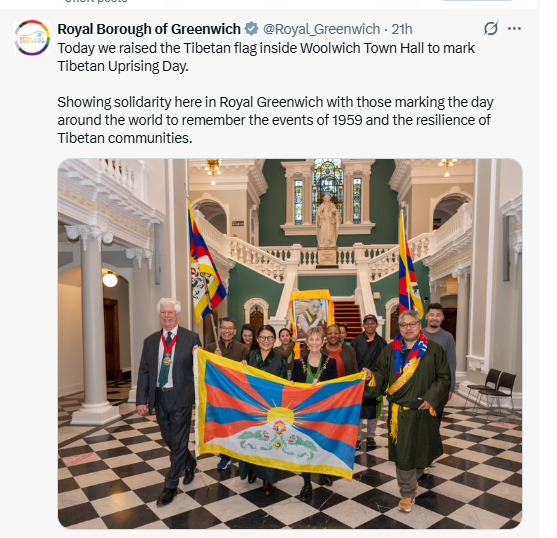
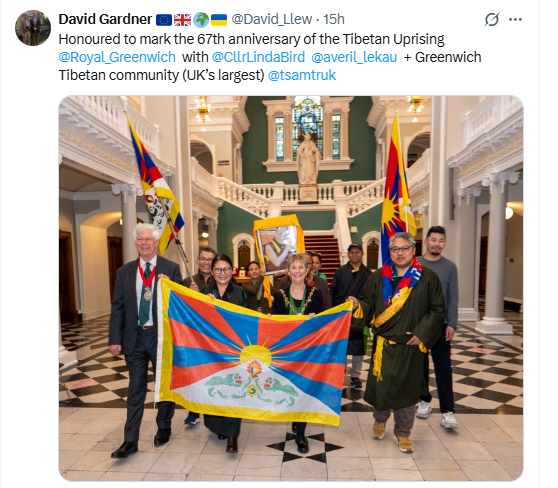
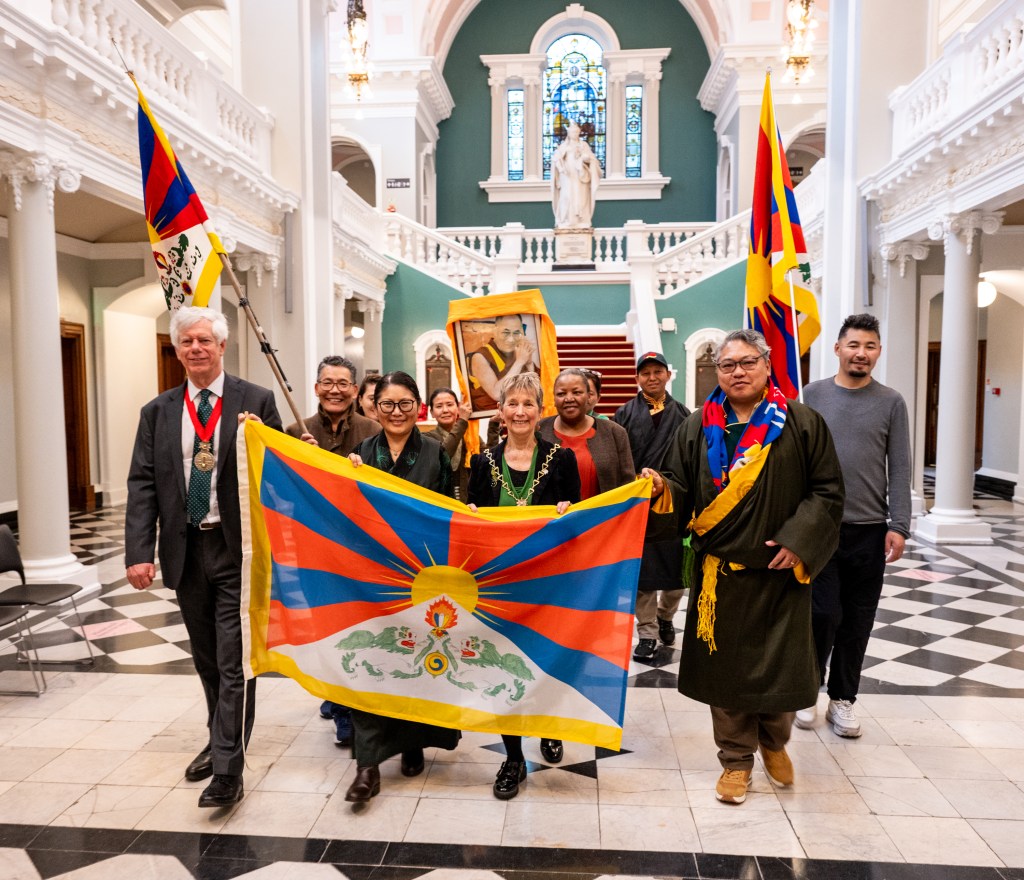
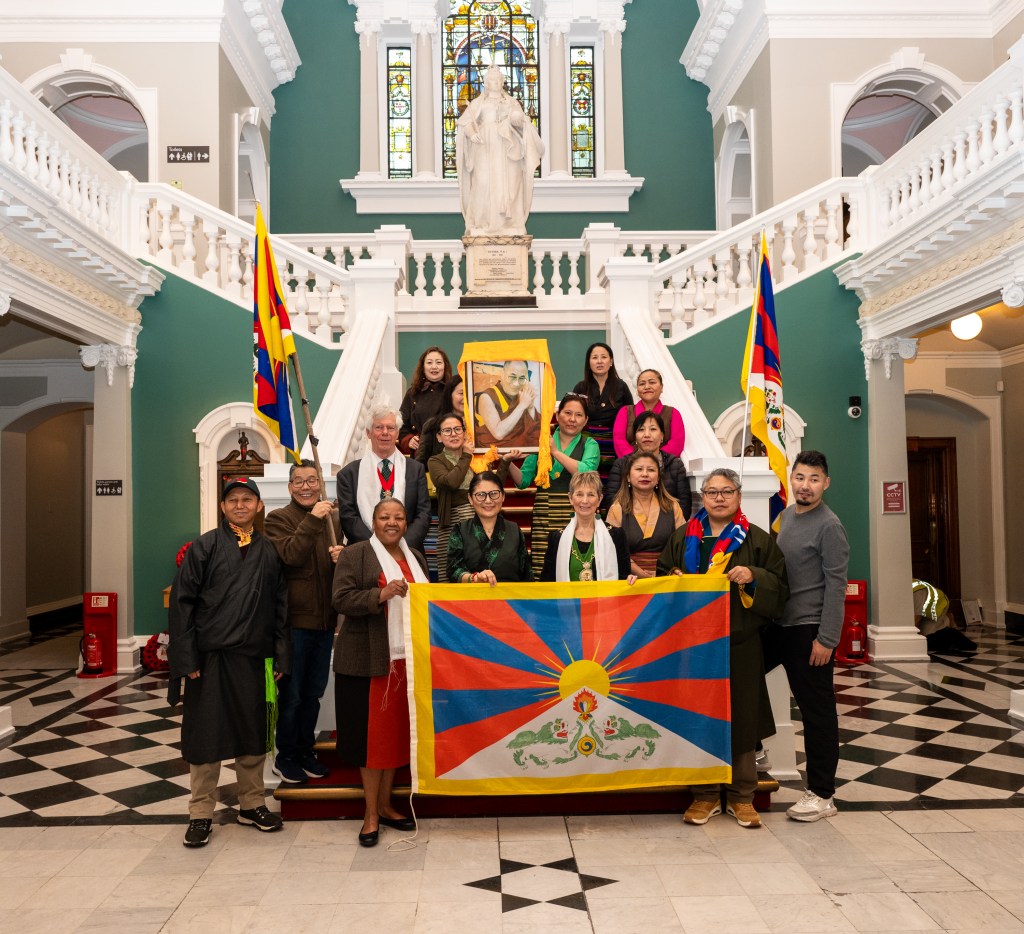
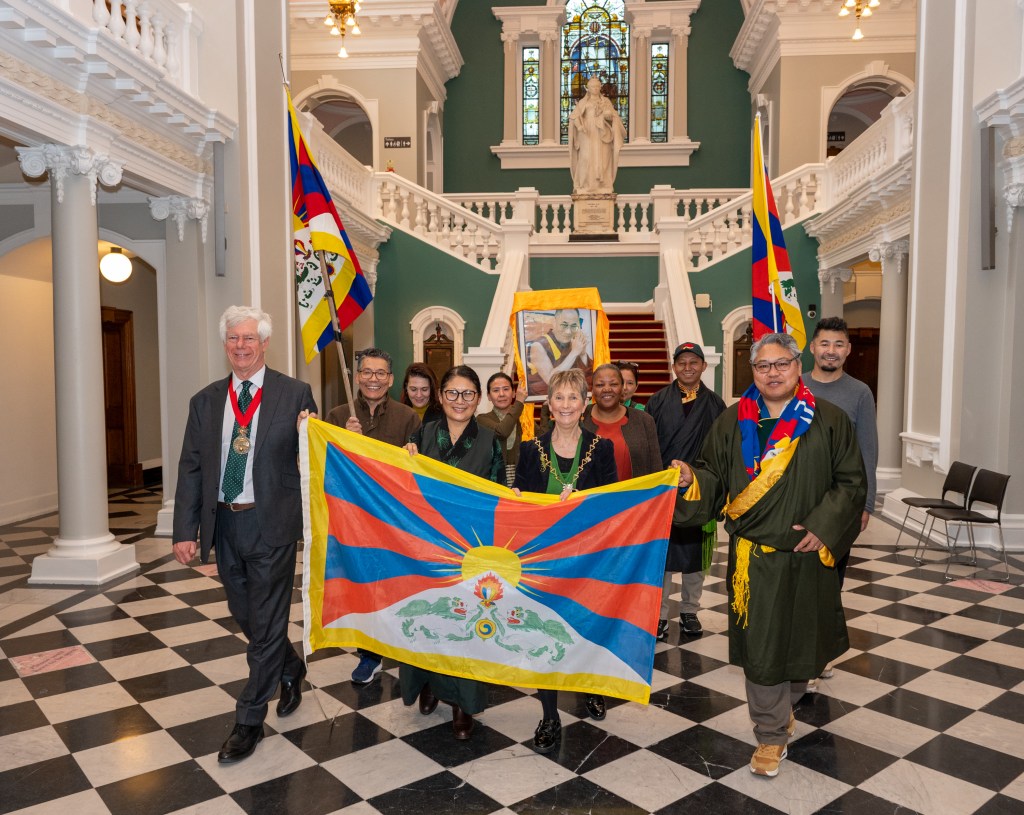
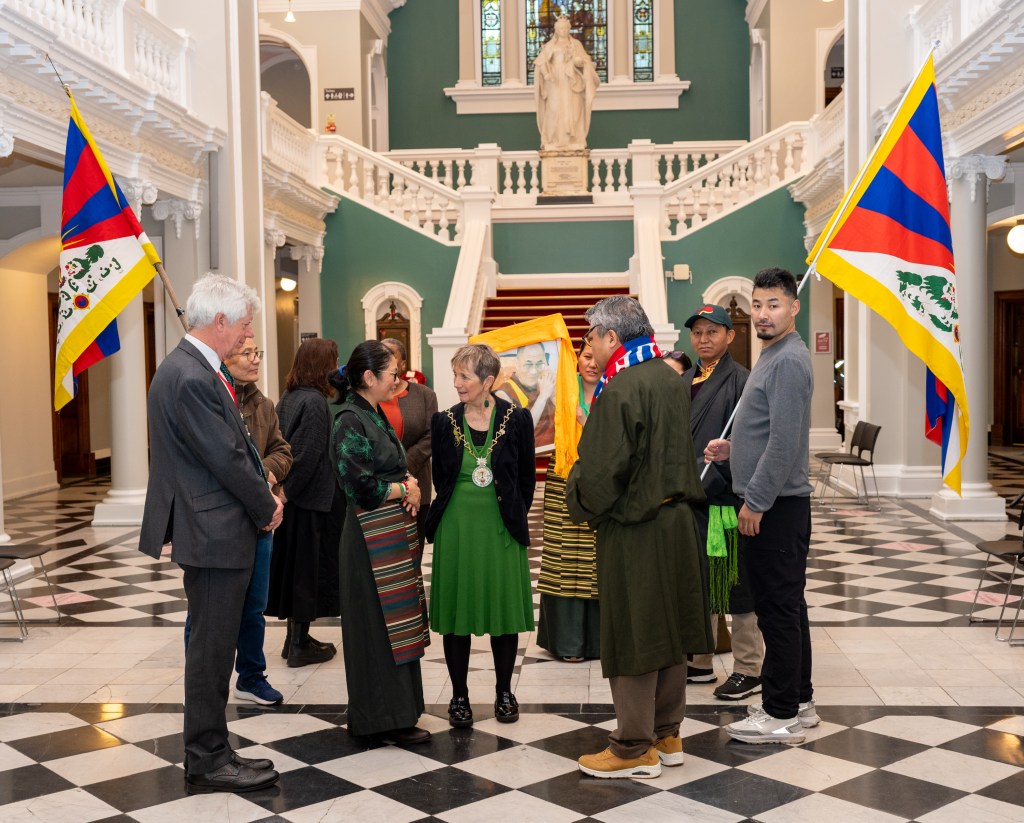
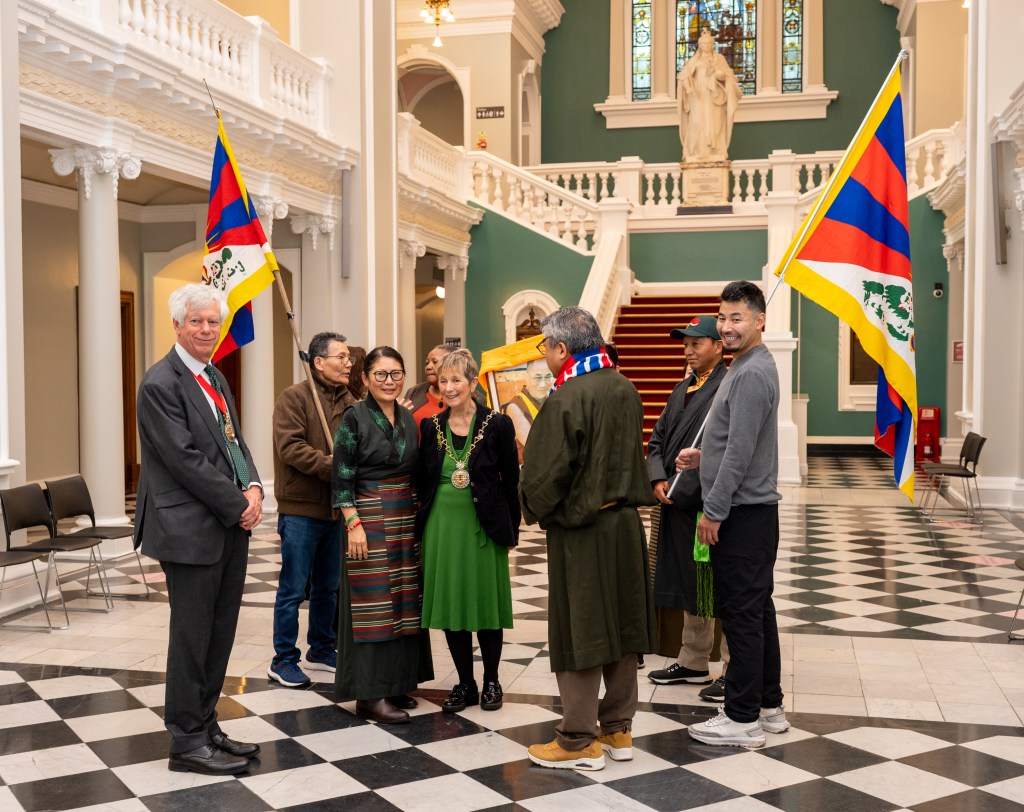
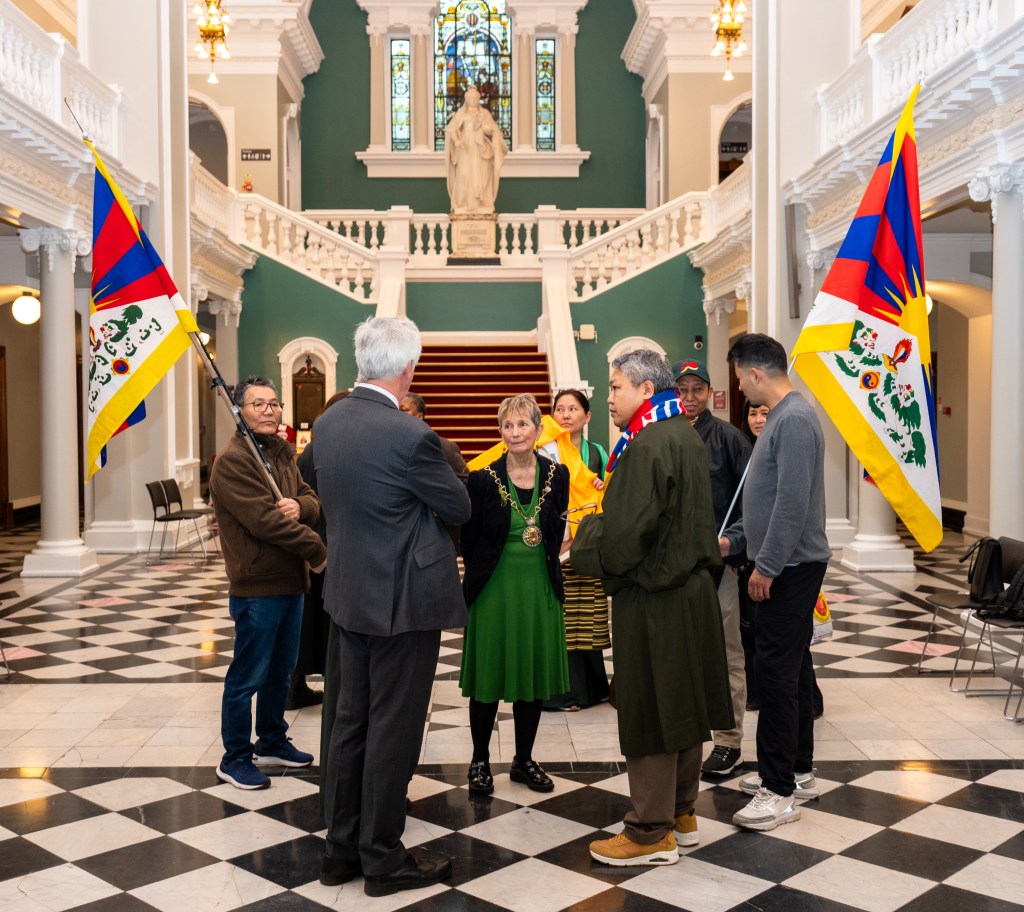
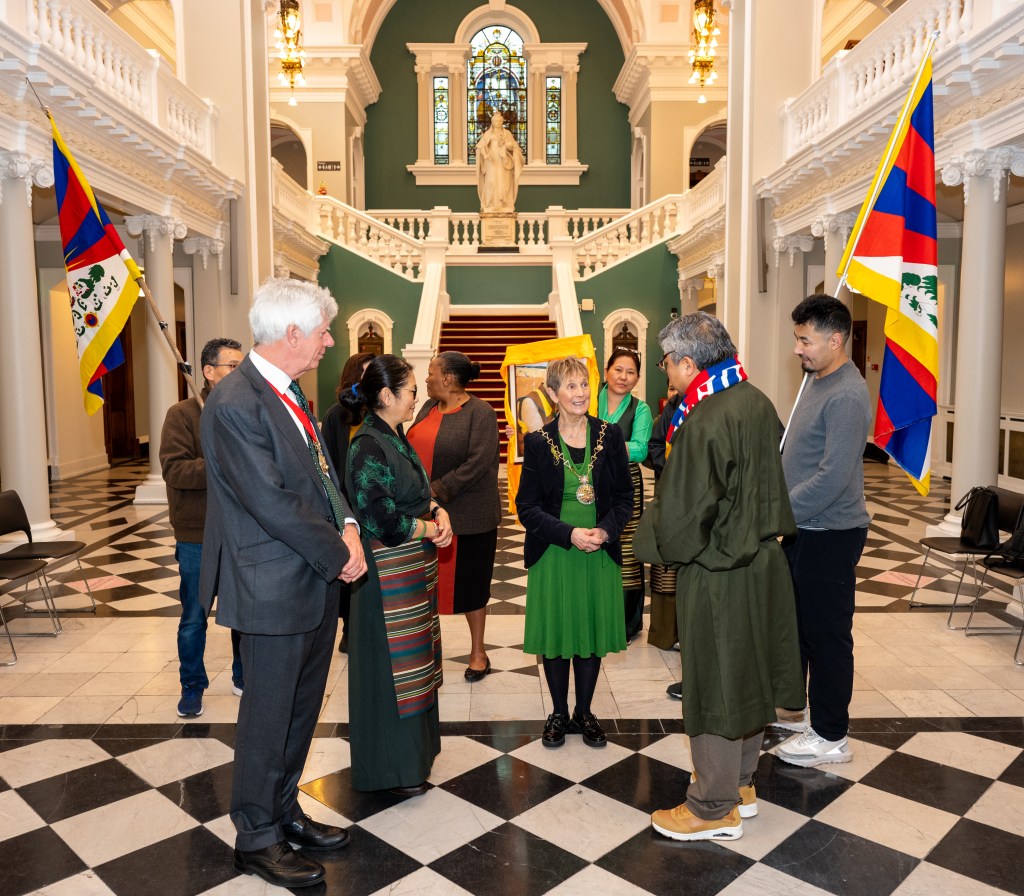
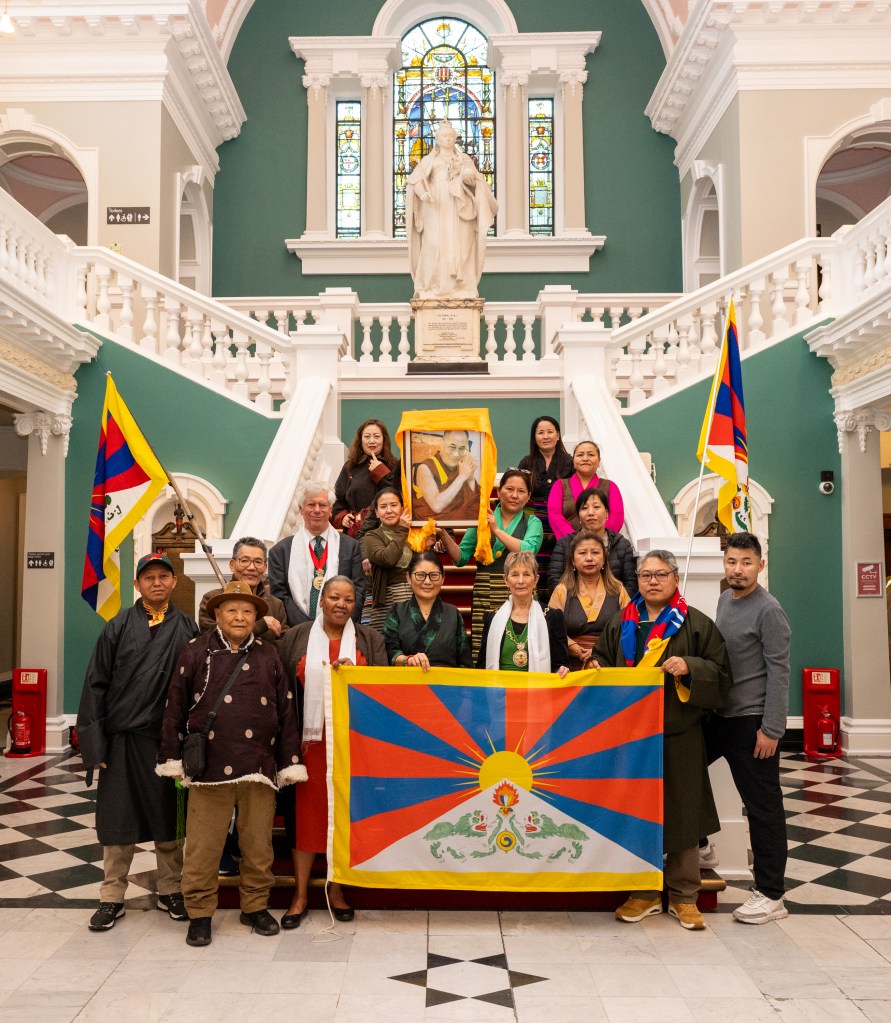
Today, the Royal Borough of Greenwich stands as the largest hub of Tibetans residing within a single borough in the UK. Against this backdrop, the performance of a celebrated Tibetan artist in nearby Plumstead felt not only timely but profoundly circular – history, culture, and community converging once again along the Thames. The borough’s Town Hall continues to raise the Tibetan flag each March, demonstrating solidarity with the Tibetan people in their pursuit of human rights, self-determination, and a peaceful resolution to the China–Tibet conflict, while offering sanctuary to Tibetans who now call the borough home.

Echoes of Rinchen Lhamo

This year also marks another milestone in Tibetan–British history: the centenary of the arrival of Rinchen Lhamo, the first Tibetan woman to settle in Britain. Arriving in 1925 from eastern Tibet, Rinchen Lhamo was married to Louis Magrath King, a British consul stationed in Dartsedo (Kangding). She played a pioneering role in introducing Tibetan culture, history, and perspectives to British audiences through a Tibetan lens. She was also the first Tibetan to write a book about her country in English, We Tibetans, published in 1926.

Lhamo’s journey, like those of Gongkar and Ringang before her, speaks to a long and often overlooked history of Tibetan presence and contribution in Britain – one that continues today through vibrant community life, cultural expression, and intergenerational continuity.

A Night of Compassion and Community

Organised by the Tibetan Community in Britain, the concert formed part of the Year of Compassion, marking the 90th birthday of His Holiness the 14th Dalai Lama, and was held in support of the Tibetan Community Hall Project. The project seeks to establish a permanent home for cultural preservation, youth engagement, education, and community cohesion for Tibetans living in the UK.

Throughout the evening, Tsering Gyurmey’s music served as both a bridge and a vessel – connecting Tibetans in Tibet with those in exile, elders with youth, and historic memory with present-day aspirations. His performance, shaped by decades of artistic dedication and spiritual grounding, stood as a living expression of compassion in action. Local Tibetan artists and dancers also joined this special concert, showcasing their collaborations with the legendary musician Tsering Gyurmey.

An Evening of Tribute and Togetherness at Kailash Momo Restaurant

The spirit of the concert continued the following evening, on 28 December, with a dinner reception held in honour of Tsering Gyurmey at the Kailash Momo Restaurant in Welling. The gathering brought together community elders, youth, artists, and well-wishers in an intimate and celebratory setting.

Over Kailash’s culinary specialities, the evening evolved into an informal yet deeply meaningful cultural exchange. Poetic tributes were offered by community members, reflecting on Tsering Gyurmey’s voice as a carrier of memory and a source of healing across generations. Venerated Lelung Tulku paid homage through verses honouring the artist’s lifelong dedication to Tibetan culture, compassion, and spiritual values – recognising music as both offering and service. Several other admirers shared their own composed tributes in his honour.

The evening was further enriched by a personal reflection shared by the author of this piece, who recalled playing the dranyen (Tibetan lute) donated by Tsering Gyurmey to the Central School for Tibetans in Darjeeling in the early 1990s after the artist had left the school. That instrument, passed into the hands of students, became a symbol of his quiet yet enduring commitment to nurturing Tibetan culture among young people growing up in exile.

Spontaneous singing followed – songs flowing not from a stage, but from the heart – as Tsering Gyurmey joined fellow Tibetans in moments of laughter, memory, and gratitude. These informal melodies captured the essence of his journey: an artist shaped by the refugee experience, grounded in humility, and inseparably connected to the people he sings for.

Tributes throughout the evening acknowledged not only his artistic excellence, but a life that mirrors the broader Tibetan story. Having grown up in a Tibetan refugee settlement in Orissa (now Odisha), India, and currently living and creating music in Kathmandu, Nepal, Tsering Gyurmey has remained steadfast in uplifting Tibetan refugees and communities across the Himalayan belt. His generous collaboration with aspiring, emerging, and established artists – both in exile and inside Tibet – has helped cultivate new voices while ensuring the continuity and relevance of Tibetan music for future generations.

Carrying the Song Forward

The warmth and reverence accorded to Tsering Gyurmey – both on stage and around the communal dinner table – was more than an appreciation of musical brilliance. It was a collective expression of gratitude to an artist whose life and work embody resilience, humility, and compassion.

As the final notes of the concert and the shared songs of the evening faded into memory, one truth stood clear: music, when rooted in history and guided by compassion, becomes a living archive of a people’s story – carried across borders, sustained through community, and passed lovingly from one generation to the next.

Tibetans in the UK now look forward with anticipation to welcoming Tsering Gyurmey back to the UK soon, to once again share in the music, memory, and spirit he so generously brings wherever he goes.

(Photos: Londonney, Igyen and Jamyang)

Global Rights Groups Urge US Action Following Jimmy Lai Verdict before Time Runs Out

WASHINGTON, D.C., (Dec. 29, 2025) — The Committee for Freedom in Hong Kong Foundation (CFHK Foundation) on Monday released two open letters, signed by more than 50 U.S. and international organizations, urging President Donald Trump and key Congressional leaders to take immediate, concrete action following the guilty verdict of Hong Kong publisher Jimmy Lai, warning that his case represents a grave escalation in Beijing’s crackdown on press freedom and political dissent.

The groups call for the release of Lai, six of his former Apple Daily executives, and other political prisoners held in Hong Kong.

On Dec. 15, 2025, a panel of three national security judges found Lai guilty of conspiring to collude with foreign forces and publishing seditious materials under Hong Kong’s National Security Law. The 855-page judgment cites interactions with U.S. political figures and officials — including contacts involving President Trump, members of his first administration, and members of Congress — as purported evidence of “collusion with foreign forces.” The verdict marks a decisive break with rule of law principles and fundamental protections for free expression and due process in Hong Kong. A mitigation hearing is scheduled to begin on Jan. 12, 2026, after which the court will proceed to sentencing; Lai now faces the possibility of life imprisonment.

The coalition’s call for action is also driven by urgent humanitarian concerns. Lai, 78, has been detained for more than five years, much of it in solitary confinement. Press freedom and human rights organizations, along with Lai’s family, have repeatedly raised alarm about his deteriorating health, citing significant weight loss, untreated medical conditions, and harsh prison conditions. The coalition warns that time is running out.

  • Making Lai’s release and meaningful steps to free political prisoners a central element for any high‑level engagement or potential presidential visit to Beijing in 2026, treating progress on human rights as integral to a stable, predictable environment for U.S. economic interests in the region. 
  • Targeted sanctions on the three national security judges in Lai’s trial — Esther Toh Lye-ping, Alex Lee Wan-tang, and Susana D’Almada Remedios — as well as prosecutors and Hong Kong and Chinese officials responsible for this political prosecution, using both executive authority and Congressional push to pass the Hong Kong Judicial Sanctions Act (H.R. 733 / S. 1755). 
  • Reassessment of the privileges and immunities enjoyed by the Hong Kong Economic and Trade Offices in the United States, including a Congressional push to pass the Hong Kong Economic and Trade Offices Certification Act (H.R. 2661) and an administrative review that can be done without Congressional action.  

“Jimmy Lai’s conviction is a direct attack on the U.S. Lai is being punished merely for his journalism, peaceful advocacy, and ordinary engagement with U.S. officials,” Frances Hui, the CFHK Foundation’s policy and advocacy coordinator, said. “No one should face life in prison for defending freedom and speaking to the world. President Trump and Congress have both the leverage and the responsibility to act now — to save a 78‑year‑old democracy advocate from dying in prison, to show Beijing that there are real costs for assaulting basic freedom, and to prove that standing with democracy and free speech is still in America’s strategic interest.” 

When Advocacy Slips into Inaccuracy: A Call for Reflection and Correction

Tsering Passang | 26 December 2025

In this article, Tsering Passang critically examines how historically inaccurate public statements by an elected Tibetan leader risk weakening the credibility, coherence, and moral authority of the Tibetan cause, underscoring the responsibility of leadership to uphold historical accuracy.

Tenzin Phuntsok Doring’s recent viral video — reportedly viewed by over one million people — has attracted significant attention across Tibetan and international communities. As a serving Tibetan Member of Parliament speaking during a public protest outside a Chinese Consulate in Australia, his words carry influence far beyond the immediate context of protest. Precisely because of this responsibility, the factual inaccuracies and sweeping historical claims made in the clip demand careful, principled, and constructive scrutiny.

In the video, Mr. Doring asserts that the Tibetan language came from India, Tibetan religion came from India, and Tibetan humanity came from India, further stating that nothing came from China. He also states that Tibet was never part of China and never wanted to be part of China, while strongly implying that Tibet’s ancient Bon religion originated in India.

While such statements may have been intended to galvanise emotional solidarity and political resolve, they significantly oversimplify — and in several instances misrepresent — Tibetan history. When such narratives are amplified by an elected representative, they risk undermining intellectual credibility, political coherence, and ultimately the moral authority of the Tibetan struggle itself.

Language, Culture, and Historical Complexity

It is historically inaccurate to claim that the Tibetan language “came from India.” While the Tibetan script was developed in the 7th century with inspiration from Indian writing systems — particularly during the reign of King Songtsen Gampo — this does not mean the Tibetan language itself originated in India. Tibetan is a Tibeto-Burman language with deep indigenous roots on the Tibetan Plateau. Scriptural or orthographic influence is not synonymous with linguistic origin, and conflating the two weakens an otherwise rich and well-documented historical narrative.

Similarly, Tibetan Buddhism undeniably absorbed profound philosophical, textual, and institutional influences from India’s Nalanda Buddhist tradition with the profound help of great Indian Buddhist scholars. This is a source of historical pride and spiritual connection, not contention. However, to claim that Tibetan religion as a whole came from India effectively erases the indigenous religious and cultural traditions that existed long before Buddhism’s arrival.

Most concerning is the implication that Bon originated in India. This claim is factually unsound. Bon is widely recognised by scholars as an indigenous Tibetan tradition, even though it later incorporated Buddhist elements and engaged in sustained dialogue with the Indian religious thought. Portraying Bon as Indian in origin distorts history and marginalises a foundational pillar of Tibetan civilisation and identity.

Political Messaging and Historical Responsibility

The assertion that “there is nothing that came from China” is another absolutist statement that does not withstand historical scrutiny. Tibet’s historical relationship with successive Chinese dynasties, Mongol polities, and neighbouring regions was complex, evolving, and often contested. Serious Tibetan scholarship has long acknowledged this complexity rather than denying interaction altogether.

At the same time, it is equally important to state accurately that Tibet was regarded by Tibetans as an independent nation for much of its history, including periods when Tibetan emperors exercised influence or invaded parts of mainland China, until Communist China invaded Tibet in 1950. Historical interactions — such as King Songtsen Gampo’s marriage to the Chinese Princess Wencheng and the arrival of the Jowo statue — cannot simply be erased or selectively ignored. A mature and credible historical narrative acknowledges interaction without surrendering self-determination, identity, or political claims.

More critically, such rhetoric sits uneasily with the Middle-Way Approach, the official policy adopted by the Tibetan Parliament-in-Exile and consistently championed by His Holiness the 14th Dalai Lama. The Middle-Way policy explicitly seeks genuine autonomy within the framework of the Constitution of the People’s Republic of China, not outright independence. Public messaging that categorically rejects any association with China risks contradicting this long-standing policy and creating confusion among Tibetans, supporters, and international stakeholders alike.

The Stakes of Public Inaccuracy

Mr. Tenzin Phuntsok Doring is not a casual social media commentator. Born in Tibet, educated in India to the MPhil level, and entrusted as an elected lawmaker, he bears responsibility for shaping Tibetan political discourse and legislative direction. When a sitting parliamentarian disseminates historically inaccurate narratives to a global audience, it raises serious concerns about the boundary between principled advocacy and disinformation.

Notably, I personally sought to encourage Mr. Doring to reflect on these inaccuracies and take corrective action after the video began circulating widely. Unfortunately, no such correction has been made. Instead, earlier today, he further shared the same viral clip on his social media platform amid the ongoing Tibetan parliamentary election campaign, prominently displaying the Tibetan national flag. This action deepens concern, as it risks politicising historical inaccuracies for electoral visibility rather than addressing them responsibly.

At a time when Tibetans are striving for international credibility, moral authority, and a principled commitment to nonviolence, accuracy is not optional — it is essential. Emotional mobilisation built on weak or inaccurate historical claims can be easily dismantled by critics and exploited by adversaries, ultimately harming the very cause it seeks to advance.

A Call for Reflection and Correction

This moment should not be approached defensively, but embraced as an opportunity for reflection, learning, and accountability. A public clarification or correction would demonstrate intellectual integrity, leadership maturity, and genuine respect for the Tibetan people’s history.

If Tibetan leaders wish to challenge Chinese state narratives effectively, they must do so with rigour, nuance, and factual confidence. Acknowledging historical complexity does not weaken the Tibetan cause — it strengthens it.

The Tibetan people deserve representation that honours both their past and their future truthfully, responsibly, and wisely.

Season’s greetings from Global Alliance for Tibet & Persecuted Minorities (GATPM)

Dear Friends and Supporters,

As the year draws to a close, we wish to express our sincere appreciation for your continued solidarity, encouragement, and support over the past year. In a rapidly shifting global environment – where human rights and democratic values are increasingly tested – your engagement has been both meaningful and sustaining.

Throughout the year, GATPM has remained steadfast in advancing justice, truth, and dignity for Tibetans and other persecuted communities. By working closely with international alliances and partners, we have strengthened collective advocacy, built bridges across movements, and amplified voices that are too often marginalised in global discourse.

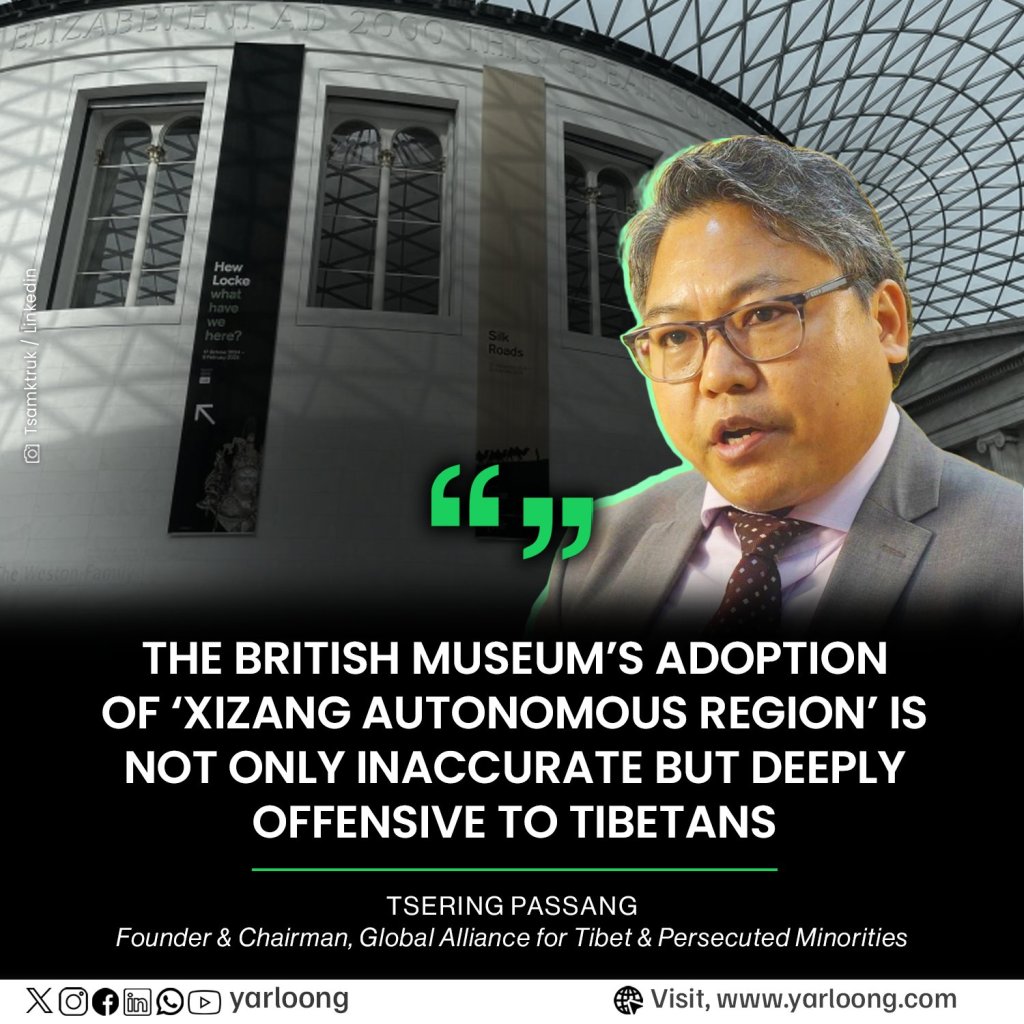
Among several notable milestones, we were honoured to help secure and safeguard historic Tibet documents that surfaced at auction, ensuring their preservation as part of the Tibetan people’s living history. We also welcomed the British Museum’s decision to drop the politically imposed term “Xizang” and appropriately display “Tibet” in its Silk Roads exhibition – an important affirmation of historical accuracy and cultural integrity.

This year also saw GATPM’s active engagement in public dialogue and policy advocacy. I had the privilege of attending the Strengthening Solidarity for Tibet, Minority and Indigenous Rights Conference at the University of Stirling, contributing to discussions on intersectional solidarity and indigenous rights. We also co-hosted a joint event with the Buddhist Society, where Kasur Lobsang Nyandak delivered a timely and insightful address on “The Dalai Lama and the Future of Tibet: A Vision for Compassion and Resilience.” Alongside these efforts, we continued sustained advocacy with parliamentarians and government ministers, reinforcing the importance of principled engagement on Tibet and other persecuted communities.

These achievements would not have been possible without the trust, collaboration, and solidarity of friends and allies like you. At a time when authoritarian narratives seek to erase identity, history, and truth, collective action – rooted in shared values – continues to matter.

As we look ahead to the coming year, we remain hopeful and resolute. With your continued partnership, we will deepen our advocacy, strengthen alliances, and invest in initiatives that promote peaceful solutions, human rights, and long-term stability – guided by dialogue, justice, and compassion.

We wish you and your loved ones a peaceful festive season and a New Year filled with hope, good health, and renewed purpose.

With warm regards and gratitude,


Tsering Passang
Founder-Chair
Global Alliance for Tibet & Persecuted Minorities

GATPM Welcomes EU’s Clear Human Rights Stand, Calls for Concrete Action in 2026

GATPM, London | 23 December 2025

The Global Alliance for Tibet & Persecuted Minorities (GATPM) strongly welcomes the Statement of the European Union Delegation to China on International Human Rights Day 2025, issued on 10 December in Beijing, as a principled and necessary reaffirmation of the EU’s commitment to universal human rights, minority protection, and human dignity.

As 2025 comes to an end, GATPM regards the EU’s statement as a vital intervention at a time when human rights conditions in China continue to deteriorate. The EU’s explicit recognition of the situation facing Tibetans, Uyghurs, Southern Mongolians, religious communities, human rights defenders, and other persecuted minorities helps counter denial, silence, and impunity.

The EU’s detailed reference to the situation in Tibet – including restrictions on religious freedom, intensified surveillance of monasteries, forced boarding schools, and the systematic marginalisation of Tibetan language and culture – reflects the lived reality of the Tibetan people. GATPM welcomes this clarity, which validates long-standing concerns raised by Tibetan civil society and international human rights organisations.

GATPM also strongly acknowledges the EU’s continued call for accountability for enforced disappearances, including that of Gedhun Choekyi Nyima, the 11th Panchen Lama, and its firm position that the succession of Tibetan religious leaders, including His Holiness the Dalai Lama, must occur free from state interference and in accordance with religious tradition.

GATPM believes that the EU’s Human Rights Day statement sends a critical message as the world moves into 2026: principled engagement must be matched by concrete action. Continued repression, cultural erasure, and collective punishment underscore the urgency of coordinated international responses.

Dialogue alone has not resulted in meaningful improvements on the ground. Stronger accountability mechanisms, coordinated diplomatic pressure, and protective measures for vulnerable communities are urgently needed.

Tsering Passang, Founder-Chair-Founder of GATPM, said:

Looking Ahead to 2026

GATPM urges the European Union and its Member States to strengthen their response in 2026 by:

  • Advancing accountability through multilateral mechanisms
  • Supporting independent UN investigations and follow-up actions
  • Expanding protection for human rights defenders and exiled communities
  • Ensuring that trade, investment, and diplomatic engagement do not undermine human rights obligations

As the international community enters 2026, GATPM reiterates its commitment to working with democratic governments, civil society, and international institutions to ensure that the voices of Tibetans and all persecuted minorities are not silenced, forgotten, or erased.

10.12.2025  Beijing Press and information team of the Delegation to CHINA


On the occasion of Human Rights Day 2025, the Delegation of the European Union to China reaffirms, in line with Article 21 of the Treaty on European Union, the principles that guide the Union’s external action, including “the universality and indivisibility of human rights and fundamental freedoms, as well as respect for human dignity, the principles of equality and solidarity”.

Over the past year, our engagement with China on human rights has continued. The 40th EU–China Human Rights Dialogue was held in Brussels in June, preceded by a field visit to South Tyrol that focused on multilingualism and the protection of minorities rights. The EU also consistently raised human rights concerns at the 25th EU–China Summit in July 2025 as well as in multilateral fora, including at the 59th and 60th sessions of the UN Human Rights Council. Where possible and in full respect of universal human rights, the EU remained open to working with China including in multilateral settings.

In spite of these engagements, unfortunately, the overall human rights situation in China showed no substantive sign of improvement. We uphold all human rights, civil, cultural, economic, social and political rights and emphasize the importance of the International Covenant on Civil and Political Rights (ICCPR), to which China is a signatory. The EU remains deeply concerned about the systemic and severe restrictions on the exercise of fundamental freedoms and on the right of minorities to enjoy their own culture, and to use their own language, in private and public, including in the field of education. These restrictions risk leading to cultural erasure. 

In this context, the situation in Xinjiang remains serious. Numerous credible reports, including the assessment issued by the Office of the High Commissioner for Human Rights (OHCHR), indicate serious human rights violations that “may constitute international crimes, in particular crimes against humanity”. The EU remains deeply troubled by continuing reports of forced labour and state‑imposed labour transfer schemes involving Uyghurs both within Xinjiang and to other provinces.

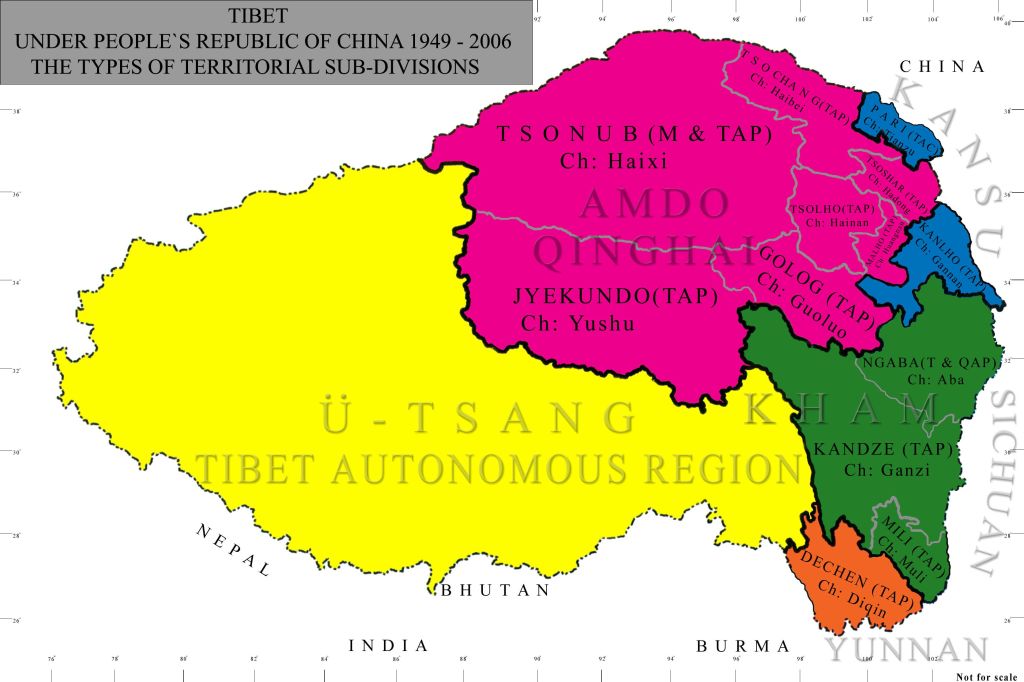
The human rights situation in Tibet remains equally alarming. This applies both to the Tibet Autonomous Region and to Tibetan areas of Qinghai, Sichuan and Gansu provinces, where similar patterns of restrictions have been reported. Reports continue to document far-reaching state control over religious life, intensified surveillance of monasteries, and the imposition of mandatory boarding schools, where Tibetan children are separated from their families and educated primarily in Mandarin. The closure of Tibetan-language schools, and the marginalisation of Tibetan-language instruction are deeply troubling. 

We reiterate our concern for the enforced disappearance since 1995 of Gedhun Choekyi Nyima, the 11th Panchen Lama. No credible information is provided on his whereabouts or well-being. We continue to call on China to respect and protect the rights of persons belonging to religious groups to exercise their religious freedoms without interference. The selection of religious leaders should happen without government interference and in accordance with religious norms, including for the succession of the Dalai Lama. 

The EU also remains concerned about the situation in the Inner Mongolia Autonomous Region, where policy shifts have resulted in a marked reduction in the use of Mongolian as a language of instruction and a narrowing of space for cultural and linguistic expression. The move from Mongolian as a vehicle of instruction to its relegation as a stand‑alone subject stands in contrast with official commitments to ethnic harmony and cultural diversity, and risks accelerating the erosion of the Mongolian community’s cultural and linguistic identity.

The recent nationwide crackdown on the Beijing Zion Church network, including the arrest of clergy, is a further sign of a broader tightening of control over religious communities and online religious activities.

On Human Rights Day, we affirm our clear and principled call for the abolition of the death penalty globally, in accordance with international human rights law. The EU highlights that capital punishment is ineffective as a deterrent, unnecessary for modern justice systems, and irrevocable, constituting a violation of human dignity. We are concerned that China continues to use the death penalty, including for non-violent offences, in a system lacking transparency. The EU urges China to establish a moratorium on executions, adopt rigorous and transparent procedures for reviewing sentences and reporting cases, and ultimately abolish this irreversible practice.

We stand firmly with human rights defenders, lawyers, journalists and all those who face repression for exercising or defending fundamental rights. In China, individuals who speak out continue to face harassment, intimidation, intrusive surveillance, exit bans, house arrest, unlawful detention, torture and ill-treatment, and enforced disappearance. 

The EU urges China to uphold the rule of law and guarantee fair trials and due process for all. Comprehensive, impartial investigations into allegations of arbitrary detention, torture and other inhumane treatment must be ensured, including harassment targeting human rights defenders and their families. All detainees must be able to choose their own legal representation, access adequate medical care, and maintain regular contact with their relatives. We reiterate our call on China to abolish Residential Surveillance at a Designated Location (RSDL), which UN Special Procedures have assessed as a form of enforced disappearance. Torture, ill-treatment and coerced or televised confessions constitute grave violations of international law and must be eliminated entirely.

The EU continues to be concerned and calls for the immediate and unconditional release of, among others, Gulshan Abbas, Anya Sengdra, Ekpar Asat, Chadrel Rinpoche, Rahile Dawut, Ding Jiaxi, Ding Yuande, Dong Yuyu, Pastor Mingri (Ezra) Jin, Gao Zhen, Gao Zhisheng, Go Sherab Gyatso, Golog Palden, He Fangmei, Huang Qi, Huang Xueqin, Hushtar Isa, Yalkun Isa, Ji Xiaolong, Li Yanhe, Peng Lifa, Qin Yongming, Ruan Xiaohuan, Tashi Dorje, Tashpolat Tiyip, Sakharov Prize winner Ilham Tohti, Wang Bingzhang, Pastor Wang Yi, Kamile Wayit, Xie Yang, Xu Na, Xu Zhiyong, Yang Hengjung, Yang Maodong, Yu Wensheng, Pastor Zhang Chunlei, Tara Zhang Yadi and Zhang Zhan, as well as EU citizen Gui Minhai whose right to consular access must be respected.

The EU underscores the essential role of freedom of expression, media independence and access to information in ensuring accountable and effective governance. In China, these freedoms remain severely constrained. Suppression of expression persists through pervasive online censorship, intensified control of digital platforms, deletion of content addressing socially sensitive issues, and pressure on users to conform to official narratives. Journalists, other media workers and bloggers continue to face intimidation, surveillance, arrest, prosecution and harsh sentencing simply for carrying out their professional duties. Chinese journalists should be able to meet freely with all interlocutors – including foreign counterparts – without fear of reprisals. Foreign correspondents likewise operate in a restrictive environment marked by harassment, surveillance, obstacles to reporting, and visa uncertainty. The EU also calls on China to respect the right to demonstration, which remains an integral component of freedom of expression and civic participation.

The EU strongly promotes global gender equality and women and girls full enjoyment of human rights. As we mark the 30th anniversary of the Beijing Conference on Women, we emphasise that the commitments from the Beijing Declaration and Platform for Action remain crucial. These commitments focus on women’s full participation in political and public decision-making, economic empowerment, and the dismantling of discriminatory social and cultural norms. Urgent attention is needed to combat widespread sexual and gender-based violence – both online and offline – globally, including in China and within the EU. The EU urges China to protect women human rights defenders, gender-equality advocates, and those opposing discrimination.

The EU reaffirms its commitment to LGBTI persons’ full enjoyment of human rights. We are concerned about the rising challenges faced by China’s LGBTI community, including the restriction on the freedom of association, online censorship, and intimidation of activists. No one should endure harassment, job loss, or surveillance due to their sexual orientation, gender identity, or expression. The EU calls on China to ensure that all individuals can live safely and freely without discrimination, stigma, or fear, and to uphold the fundamental rights of LGBTI persons according to international human rights standards.

In Hong Kong, fundamental rights and freedoms have further eroded. Five years after the entry into force of the National Security Law, over 330 people have been arrested and more than 160 convicted under the NSL and the Safeguarding National Security Ordinance. We continue to closely follow the cases of individuals charged under these laws, including barrister and human rights defender Chow Hang-tung and British citizen and media entrepreneur Jimmy Lai, whose deteriorating health is deeply worrying. The extraterritorial application of national security legislation and the repeated issuance of arrest warrants against persons abroad, including an EU citizen, remain unacceptable.

China must also respect the principle of non-refoulement, and refrain from any extraterritorial activity, including transnational repression, that is not in line with international law. 

The EU will continue to promote human rights, democracy, the rule of law and accountability everywhere, including through sustained engagement with Chinese authorities, international partners, civil society and human rights defenders. On this Human Rights Day, we reaffirm our commitment to uphold the dignity and freedoms of all people in China and around the world.

UK Compassionate Concert 2025: An Evening with Legendary Tibetan Singer Tsering Gyurmey

17 December 2025 | London | Tsering Passang

The Tibetan Community in Britain is honoured to present the UK Compassionate Concert 2025, an evening of music, memory, and meaning featuring the pioneering Tibetan singer Tsering Gyurmey. Local talented artists, Bollywood dance performances, and traditional Gorshey will also feature the evening.

This special concert, to be held on 27th December, forms part of the Year of Compassion, a series of community-led events organised in celebration of His Holiness the 14th Dalai Lama’s 90th birthday, and is held in support of the Tibetan Community Hall Project – a vital initiative to establish a permanent space for cultural continuity, community connection, and collective growth for Tibetans living in the UK.

About the Artist – Tsering Gyurmey

Artist Tsering Gyurmey

Tsering Gyurmey stands among the most revered and influential voices in contemporary Tibetan music. Born and raised in the Tibetan settlement of Odisha (Orissa), India, his early life was shaped by the lived realities of exile – an experience that would profoundly inform both his artistic and spiritual journey.

He received his formal education at the Central School for Tibetans, Darjeeling, where his early musical sensibilities began to take shape. Recognising his natural talent and dedication, he later joined the prestigious Tibetan Institute of Performing Arts (TIPA) in Dharamsala, where he refined his vocal artistry and deepened his understanding of Tibetan musical traditions. TIPA provided the foundation upon which he would build a lifelong career devoted to preserving and evolving Tibetan music.

Artist Tsering Gyurmey in Nepal (Photo: http://www.facebook.com/tsering.gyurmey.3)

More than three decades ago, Tsering Gyurmey made Nepal his home, where he continues to live and create today. From Nepal, he has produced a rich and enduring body of work that seamlessly weaves traditional Tibetan melodies with contemporary musical expression. His songs explore themes of compassion, longing, resilience, devotion, and hope – echoing the emotional and spiritual experiences of Tibetans across generations and geographies.

His music has reached and touched millions of Tibetans worldwide, including in China’s occupied-Tibet, becoming an integral part of the soundscape of exile. Among his most celebrated and best-selling albums is Tsawai Lama – Root Guru, a deeply devotional work that reflects his spiritual depth and profound reverence for the guru-disciple relationship central to Tibetan Buddhism.

Renowned for his warm, resonant voice and poetic sincerity, Tsering Gyurmey has toured extensively across Asia, Europe, and North America, performing for Tibetan communities and international audiences alike. He is especially admired for his generosity of spirit– frequently collaborating and duetting with both aspiring and established Tibetan singers, from the diaspora as well as from inside Tibet – helping nurture emerging talent while ensuring the continued vitality and relevance of Tibetan music.

Musical Journey & Album Highlights

Across decades of artistic dedication, Tsering Gyurmey has released numerous Tibetan music albums that are deeply cherished by listeners in exile and beyond. His recordings are celebrated for their emotional sincerity, lyrical richness, and spiritual grounding.

His musical repertoire includes:

  • Early works rooted in traditional Tibetan folk and exile songs, reflecting the emotional landscape of settlement life in India
  • Devotional and contemplative compositions, inspired by Buddhist values of compassion, mindfulness, and inner reflection
  • Contemporary Tibetan albums blending modern arrangements with traditional melodies, resonating strongly with younger generations
  • Collaborative projects and duets with emerging Tibetan singers, offering mentorship and shared artistic expression

Notable works include the acclaimed Tsawai Lama – Root Guru, alongside other albums that reflect enduring themes of love for Tibet, spiritual devotion, and the shared experience of exile.

The Compassionate Cause

This UK Compassionate Concert is dedicated to raising funds for the Tibetan Community Hall Project, envisioned as a permanent home for:

  • Cultural preservation and celebrations
  • Community gatherings and youth engagement
  • Educational, spiritual, and social programmes

By attending this concert, audiences will not only experience an unforgettable evening of Tibetan music, but also contribute meaningfully to strengthening and sustaining the Tibetan community in Britain for generations to come.

Event details:

Date: Saturday, 27 December 2025 from 4pm to 11pm
Event: UK Compassionate Concert with Tsering Gyurmey

Ticket Prices:

  • General Ticket: £25
  • Ages 11–17: £20
  • Under 10: Free

Venue: Asian Community Centre, White Hart Road, Plumstead, London SE18 1DG
Cause: Tibetan Community Hall Project
Organiser: Tibetan Community in Britain

Tibetan Community in Britainwww.tibetancommunityuk.net

Mass Arrests, Torture Allegations and Communications Blackout Follow Tibetan Protest Against Gold Mining in Eastern Tibet

GATPM, London | 16 December 2025

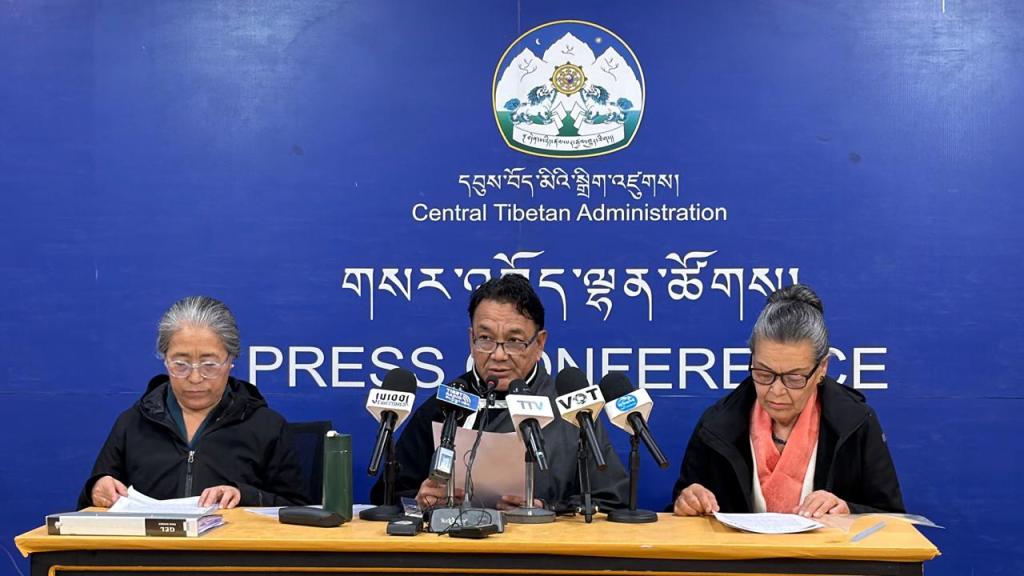
The Tibet Policy Institute (TPI), under the Department of Information and International Relations (DIIR) of the Central Tibetan Administration (CTA), held a press conference on Tuesday afternoon to draw urgent attention to a rapidly deteriorating situation in Kashi village, Kham Zachukha (Sershul County), eastern Tibet. The briefing highlighted credible reports of mass arrests, enforced disappearances, torture, and a sweeping communications blackout following a peaceful protest by local Tibetans against gold-mining activities on their ancestral land.

The press conference, held at the TPI Hall in Dharamsala, was addressed by TPI Deputy Director Tempa Gyaltsen Zamlha and attended by representatives of Tibetan media as well as national and local Indian press. TPI described the unfolding situation as one of the most serious crackdowns reported in the region in recent years.

Protest Against Gold Mining Triggers Crackdown

According to information received by TPI, tensions erupted on 5 November 2025 when residents of Kashi village discovered an active gold-mining operation at Serkhok, or “Gold Valley,” a site of deep ecological, cultural, and spiritual significance. Villagers confronted those involved and alerted township authorities, raising concerns about environmental destruction and the complete absence of community consent.

Central Tibetan Administration’s Press Conference on 16 December 2025 (Photo: TibetTimes.net)

Rather than addressing these legitimate concerns, local officials reportedly dismissed the villagers’ objections, asserting that the land belonged exclusively to the state and that Tibetans had “no right to interfere.” Authorities allegedly declared the villagers’ attempt to halt the mining illegal, further inflaming tensions in a region long marked by repression and marginalisation.

Night-Time Raids and Mass Detentions

On the evening of 6 November, at approximately 6:50 pm, Chinese authorities reportedly launched coordinated door-to-door raids throughout Kashi village. Local sources estimate that around 80 Tibetans were detained and transported to Sershul County for interrogation. Families later reported that several individuals remain unaccounted for, raising grave concerns of enforced disappearance under international human rights law.

Shortly after the arrests began, Kashi township was sealed off. Residents report that officials from the United Front Work Department, Public Security Bureau, armed police, and township administration jointly imposed a strict lockdown. Villagers were warned that sharing information with outsiders or higher authorities would be treated as a serious criminal offence.

Communications Blackout and Surveillance State Tactics

Security forces allegedly confiscated mobile phones, conducted invasive home searches, and imposed a communications blackout across the township. Armed police and military personnel reportedly patrol roads and public spaces, detaining individuals merely suspected of opposing the mining operation.

TPI noted that only authorised individuals are permitted to speak with journalists, while local Tibetans are explicitly prohibited from doing so – amounting to a near-total suppression of freedom of expression and access to information.

Torture, Degrading Treatment and Forced Confessions

Updated information received in December paints a deeply disturbing picture of detainee treatment. According to multiple accounts, detainees were subjected to inhuman and degrading treatment, including denial of access to toilets, prolonged sleep deprivation, and deliberate starvation. Prisoners reportedly received only one serving of cold tsampa mixed with water per day.

During violent interrogations, several detainees reportedly suffered broken ribs, kidney-related illnesses, and severe physical and psychological deterioration. Cases of tuberculosis relapse have been reported, indicating extreme stress and abuse. Although some medical examinations were conducted at Sershul County hospital, authorities allegedly withheld full medical reports, raising serious concerns about transparency and denial of medical information.

Detainees were also forced to sign written pledges committing them to silence. Others were coerced into signing fabricated statements falsely accusing fellow villagers of assaulting Chinese officials – clear indications of forced confessions and false testimony. Seven Tibetans arrested in November reportedly remain missing, with no information provided to their families.

Elderly Targeted, Surveillance Intensifies

Elderly residents were not spared. Many were arbitrarily detained, had their mobile phone records scrutinised, and were threatened before being released. Following release, several elders were repeatedly summoned for “re-education” sessions, during which authorities manually inspected their phones to monitor communications.

Residents further report that surveillance cameras and audio-recording devices have been installed inside private homes, enabling authorities to monitor conversations and daily activities – constituting systematic violations of the rights to privacy, freedom of movement, and expression.

A Pattern of Environmental and Cultural Destruction

TPI stressed that the gold-mining incident in Kashi is not isolated. Mining activities in the region reportedly date back to the 1990s, often involving collusion between local officials and private business interests. Under the banner of “development,” authorities have facilitated mining operations and dam construction that Tibetans say have devastated rivers, grasslands, and sacred landscapes.

Alongside environmental destruction, cultural and religious repression has intensified. Current restrictions reportedly include strict limits on monastic gatherings, bans on public prayer assemblies, prohibitions on circumambulation during festivals, restrictions on group gatherings, and the prevention of students from attending cultural or religious programmes during school holidays.

Condemnation from GATPM

Reacting to the unfolding crisis, Tsering Passang, speaking on behalf of the Global Alliance for Tibet & Persecuted Minorities (GATPM), issued a strong condemnation of the Chinese authorities and the Chinese Communist Party’s policies in Tibet:

“The brutal crackdown in Kashi village once again exposes the true nature of the Chinese Communist Party’s rule in Tibet – where peaceful environmental defenders are treated as criminals, communities are silenced through fear, and sacred land is sacrificed for exploitative extraction. We unequivocally condemn the mass arrests, torture, enforced disappearances, and the deliberate destruction of Tibet’s fragile environment under the guise of ‘development.’”

Passang added:

“Tibet has lived under China’s occupation since 1950, when CCP Chairman Mao Tsetung ordered the People’s Liberation Army to invade the country. Since then, Tibetans have faced systematic repression, cultural erasure, and relentless exploitation of their land and natural resources. What is happening in Kashi is not an isolated incident – it is part of a long-standing colonial policy that prioritises control and profit over human dignity, environmental protection, and the rights of indigenous peoples.”

GATPM called on democratic governments, UN human rights bodies, environmental organisations, and independent observers to urgently investigate the situation, demand the release of all detainees, and hold Chinese authorities accountable for violations of international human rights and environmental norms.

Calls for International Accountability

TPI warned that the situation in Kashi township remains “extremely tense,” with arrests ongoing and residents living in fear under total surveillance and isolation. The institute urged the international community to remain vigilant, stressing that silence and inaction only embolden further abuses.

As communications from Kashi remain heavily restricted, the full scale of the crackdown may yet be unknown. What is clear, however, is that a Tibetan community seeking to protect its land, culture, and way of life is once again being met with overwhelming force for asserting its most basic rights.

Useful Links

Central Tibetan Administration: www.Tibet.net

Tibet Policy Institute: https://tibetpolicy.net

Ganden Ngamchö Celebrated at Drepung Monastery as His Holiness the Dalai Lama is Honoured

London | 15 December 2025

Drepung Monastery in Mundgod, south India, witnessed a deeply auspicious and historic observance of Ganden Ngamchö yesterday as His Holiness the 14th Dalai Lama presided over the annual ceremony commemorating the parinirvana of Jé Tsongkhapa, founder of the Gelug tradition of Tibetan Buddhism. The event was held at the request of the entire Gelug lineage and drew senior hierarchs, abbots, scholars, and more than 10,000 monks and devotees from across India, the Himalayan region and Bhutan.

Marking the occasion, the Gelugpa Buddhist Cultural Society presented His Holiness with a commemorative award honouring the 51st anniversary of his formal conferment of the Geshé Lharampa degree – Tibetan Buddhism’s highest scholastic qualification (equivalent to PhD in Philosophy or Theology) – in recognition of his lifelong contribution to Buddhist learning and the preservation of the Gelug tradition in exile.

Gaden Tripa Lobsang Dorje presenting traditional offerings to His Holiness the Dalai Lama during Ganden Ngamchö Celebrations at Drepung Monastery in Mundgod, Karnataka, India on December 14, 2025. Photo by Ven Zamling Norbu (Source: DalaiLama.com)

The ceremony unfolded with traditional rituals led by the Ganden Tripa, including the offering of a ceremonial khata, the recitation of Jé Tsongkhapa’s In Praise of Dependent Origination, and the Tsari Tsog Ganachakra offering according to the Sutra tradition. This was followed by the Thirty-Seven Heaped Mandala Offering presented by the Ganden Tripa, Jangtsé Chöjé and Sharpa Chöjé. Tea and ceremonial sweet rice were distributed to the vast assembly.

Explaining the significance of the award, Geshé Jangchub Sangyé, Abbot of Ganden Shartsé Monastery, stated that as His Holiness enters his 90th year, millions of devotees worldwide are observing the milestone with prayers and celebrations. The honour was also framed within what has been described as a “Year of Compassion,” marking the 66th anniversary of His Holiness’s Lharampa Geshé examination in Lhasa in 1959, the 51st anniversary of the formal presentation of his degree in 1974, and the 50th anniversary of the establishment of the Central Board Examination of Gelugpa Universities in India.

On this occasion, a newly crafted Lharampa Geshé Award, made of gold and silver on behalf of the Lhadhan Chötrul Monlam Chenmo Trust and the Gelugpa Buddhist Cultural Society, was formally presented to His Holiness in a gesture of deep gratitude and reverence.

Representatives from the Gelugpa Buddhist Cultural Society holding a commemorative award in honour of the 51st anniversary of His Holiness the Dalai Lama being formally awarded the degree of Geshé Lharampa during Ganden Ngamchö Celebrations at Drepung Monastery in Mundgod, Karnataka, India on December 14, 2025. Photo by Tenzin Choejor (Source: DalaiLama.com)

Addressing the gathering at Drepung Gomang Monastery, His Holiness reflected on the significance of the large monastic assembly in exile. “This place where our Tibetan settlements are located lies to the south-west of Tibet,” he said. “Today, members of the monastic communities have gathered here in a joyful and heartfelt manner. What does this signify? It shows that the vast and profound Buddhist teachings of the sutras and tantras – the immaculate doctrine upheld by great scholars like Nagarjuna – are being preserved by us Tibetans.”

A view of the Drepung Gomang Monastery debate ground during the Ganden Ngamchö Celebrations in Mundgod, Karnataka, India on December 14, 2025. Photo by Tenzin Choejor (Source: DalaiLama.com)

Despite the hardships endured in Tibet, His Holiness noted that devotion to religion and culture has remained resilient. “The essential point is that we Tibetans feel a deep sense of responsibility for the teachings of the Land of Snows,” he said, adding that respect for Tibetan Buddhism is steadily growing not only among Tibetans but also in China and around the world.

Highlighting contemporary relevance, His Holiness observed that while some may not approach Buddhism as a religion, there is strong interest in its methods of study, contemplation and inner development – particularly among younger generations. He also spoke of increasing dialogue with scientists, many of whom are drawn to Buddhist approaches for cultivating inner peace through a calm and disciplined mind.

Reflecting on the period following exile, His Holiness remarked that although the Dharma was nearly extinguished in Tibet, those who escaped worked tirelessly to preserve it. Today, he said, the Buddhist view, meditation and ethical conduct continue to attract global attention, demonstrating the enduring value of the Buddha’s teachings rooted in the three higher trainings.

The Ganden Ngamchö ceremony concluded with the recitation of traditional prayers, including praises to Jé Tsongkhapa and long-life prayers for His Holiness, followed by the Mig-tse-ma prayer. Carrying incense and khatas, senior lamas and abbots led a solemn procession escorting His Holiness to his private quarters.

His Holiness arrived at Drepung Monastery on 12 December after travelling from Dharamsala via Delhi to Karnataka, where he was accorded a warm reception by senior monastic leaders, civil authorities and thousands of devotees lining the roads to Mundgod.

The observance of Ganden Ngamchö at Drepung once again affirmed the enduring vitality of the Gelug tradition and His Holiness the Dalai Lama’s pivotal role in safeguarding, revitalising and sharing the Buddha’s teachings for the benefit of humanity.

The Tibetan spiritual leader went into exile in March 1959 and has since made India his home where he set up Tibet’s government-in-exile, officially known as the Central Tibetan Administration. Following the entry of the People’s Liberation Army into Tibet in 1950, His Holiness spent nearly nine years seeking a peaceful and constructive relationship with the Chinese central leadership in Beijing. Those efforts came to an abrupt end during the Tibetan national uprising, when heavy military force was used in Lhasa and tens of thousands of Tibetans gathered in a final attempt to protect their spiritual leader. As artillery fire struck the capital, His Holiness was compelled to flee Lhasa to ensure his own safety and to avert further bloodshed, beginning a life in exile dedicated to the preservation of Tibetan culture, religion and identity.

Further information available from:

Office of His Holiness the Dalai Lama: www.DalaiLama.com

Drepung Gomang Monastery: www.DrepungGomang.org

Central Tibetan Administration: www.Tibet.net 

A Voice of Courage and Compassion: Anastasia Lin Highlights North America Rally for Tibet

Tsering Passang / 12 December 2025

On Human Rights Day, the North America Rally for Tibet brought hundreds of supporters to the heart of the international stage – the United Nations Plaza – culminating in a daylong show of solidarity that began with a nearly 100-car convoy from Philadelphia. Organised by a coalition of Tibetan associations and advocacy groups, the rally aimed to spotlight ongoing concerns regarding China’s policies in Tibet and to amplify calls for freedom, dignity, justice, and human rights.

Screenshot

Among the many prominent speakers, one voice stood out with particular emotional force: Anastasia Lin, the Chinese-Canadian human rights advocate and former Miss World Canada, who delivered a profoundly personal and reflective speech that resonated across the diverse crowd.

An Intimate Reflection, A Universal Message

In her address, Lin – born and raised in mainland China – recounted the childhood dream that first drew her toward Tibet. She described imagining the region as a sanctuary of purity and spiritual depth, a place so peaceful and morally grounded that it inspired her youthful dream of becoming a Buddhist nun.

Her admiration for Tibet’s spiritual heritage was unmistakable. Lin spoke of Tibet not only as a cultural treasure but as a source of moral clarity for the world, a place where compassion, wisdom, and inner peace are not abstract ideals but lived traditions. Her message, rooted in sincerity and courage, touched on universal human aspirations – freedom, dignity, and the search for inner calm.

In a time of growing division, her speech served as a unifying force, encouraging the audience to look beyond politics and connect with Tibet’s story through shared human experience. Speaking with genuine emotion about beauty, suffering, and hope, Lin showed how heartfelt truth has the power to resonate widely and move people everywhere.

An Advocate Known for Her Courage

Lin’s presence carried added weight given her own history. After being crowned Miss World Canada 2015, she was barred from entering China for the global pageant, declared persona non grata by Chinese authorities due to her outspoken criticism of human rights violations. Her advocacy has since made her a globally recognised voice for those silenced or persecuted.

Her powerful speech at the rally continues that legacy.

Watch her full address here:

A Day of Solidarity From Philadelphia to the United Nations

This special rally began in Philadelphia with the Peace Rally in Honour of His Holiness the Dalai Lama at City Hall. The event featured warm welcome remarks from Tsering Jurme, President of the Tibetan Association of Philadelphia, followed by compelling speeches from Tibetan MP Tenzing Jigme, representatives from the offices of Sen. David McCormick, Governor Josh Shapiro, and Dickyi Topbhutsang of the Tibetan National Congress. Statements from Sen. John Fetterman and a citation from Mayor Cherelle Parker were also read.

From there, nearly 100 vehicles formed a spirited convoy to New York City, stopping at the Chinese Consulate before gathering at UN Plaza, where chants for peace and freedom were carried through the streets. Supporters, community members, and friends of Tibet from across North America joined in a unified call for justice and human rights.

The North America Rally for Tibet was jointly organised by:

Regional Tibetan Youth Congress (RTYC) of NYNJ, Regional Tibetan Women’s Association (RTWA) of NYNJ, Chushi Gangdruk NYNJ, Students for a Free Tibet NYNJ, US-Tibet Committee, and Tibetan National Congress (TNC) NYNJ.

Let the Message Carry Forward

Lin’s speech – alongside the contributions of many other leaders, activists, and community members – underscored the purpose of the day: to ensure Tibet’s struggle is neither forgotten nor misunderstood.

Let her message echo.
Let it open hearts.
Let it strengthen the global movement for justice and peace.

From Free Tibet to London: The Uncompromising Life of Riga Wangyal

Riga Wangyal (2 January 1946 – 10 December 2025)

Riga Wangyal after 10th December 2017 Human Rights Day Protest in London

Tsering Passang | 12 December 2025

The Tibetan Community in Britain is mourning the loss of Mrs. Riga Wangyal la, a much-loved elder whose steady presence, conviction, and quiet strength shaped our community for decades. She passed away peacefully in a London hospital on 10 December 2025. Our thoughts are with her husband, Phuntsog Wangyal la, and with all her family members and relatives at this deeply difficult time.

Born in Tibet in 1946, Riga-la entered the world in a free Buddhist nation — before communist China’s invasion dramatically altered the course of Tibetan history. Though that early period was brief, it anchored her lifelong sense of identity and her unwavering commitment to Tibetan freedom.

Riga-la’s life was defined by service — to her profession, to her people, and to the Tibetan cause. After arriving in the UK and training as a nurse, she devoted her early career to caring for others, including during her years at Holloway Prison for Women, part of HM Prisons Service.

She also lived with a frankness and flair that made her unforgettable. Riga-la enjoyed her pints in local pubs, a cigarette in hand, always ready for lively — and often fierce — debates that stretched late into the evening. She was passionate and principled, especially when the conversation turned to Tibet. This was where her convictions burned brightest.

Her commitment to Tibet was lived, not merely expressed. Despite nearly six decades in the UK, Riga-la never accepted British citizenship. Her refusal was both a personal and political stand for Rangzen — full Tibetan independence from China. For her, identity and principle were inseparable, and she upheld that belief with clarity and courage.

Her devotion to community life was equally deep. Riga-la established and managed the Tibet Shop in London, next to the Tibet Foundation office — a cultural anchor, a gathering place, and a practical resource for Tibetans and friends of Tibet. She later joined the Tibet Foundation itself, serving with characteristic diligence until its closure in 2021. Whether managing the shop or supporting educational and cultural programmes, she brought sincerity, integrity, and an unrelenting sense of purpose.

Her compassion extended far beyond Britain. For several decades, Riga-la supported the education of Tibetan refugee children in Nepal, sponsoring more than a dozen students through funds she raised as part of the Tibetan Women’s Association’s educational scheme. Many of those young people grew into adulthood with opportunities made possible by her quiet generosity and steadfast commitment.

She was also a pioneering force in Tibetan women’s organising in Britain. At the request of Kasur Rinchen Khandro-la, then President of the Central Tibetan Women’s Association(TWA) in Dharamsala, she helped establish the UK chapter of the Tibetan Women’s Association in the mid-1980s. Each year on 12 March, she led commemorations of the Tibetan Women’s Uprising, ensuring that the courage and sacrifices of Tibetan women were honoured on British soil.

Her vision extended to the next generation as well. Soon after founding the UK chapter of TWA, she co-founded the first Tibetan language class for children in London, creating a vital space for young Tibetans to stay rooted in their language, identity, and heritage.

For those of us who knew her as a colleague, friend, or fellow Tibetan, Riga-la was known for her humility, directness, and steadfast dedication. She could be fiery in debate, generous in friendship, and unwavering in principle. Her absence will be felt deeply, but her legacy — woven through decades of service, conviction, and community — endures.

Later this evening, the Tibetan community in London will convene a prayer meeting in her memory.

A formal memorial service will be held at a later date.

Tim Boyle’s Flat-Earth Challenge Creates an Unexpected Opportunity to Amplify Tibet’s Untold Story

Inspired by Brainy Monkey’s reporting on Columbia Sportswear’s bold new “flat Earth” challenge, Tsering Passang explores how Tim Boyle’s headline-grabbing dare offers an unexpected opportunity to shine a brighter light on Tibet. What begins as a playful marketing stunt becomes, in this reflection, a doorway to a far more urgent story – the story of a people, a culture, and a homeland whose truths still struggle to be seen, told, and heard on the world stage.

Every now and then, a news story pops up that is amusing on the surface but revealing at a deeper level.

Recently, Tim Boyle, the billionaire CEO of Columbia Sportswear, made headlines by offering his entire three-billion-dollar company to anyone who can prove the Earth is flat. His challenge – Expedition Impossible – invites believers to find the “edge of the planet” and bring back photographic proof. It’s all part of a daring marketing campaign, but the idea has caught global attention.

For Tibetans, though, the joke is an old one.

For thousands of years, Tibetans living on the Roof of the World have laughed about how everything below them looks flat. At over 4,000 meters above sea level – where horizons stretch endlessly and clouds drift beneath your feet – the world really does appear that way. And yet, Tibetans, like the rest of humanity, long ago accepted the scientific truth: the Earth is round, no matter how flat it may look from high above the plateau.

So if any modern flat-Earther decides to chase Boyle’s mega-prize, let me offer one piece of friendly advice:

Pack a very warm Columbia jacket before heading to the Tibetan plateau. You’ll need it.

But before you begin your “expedition,” I have one important request:

If you travel to Tibet, please also tell the world what you see happening there.

Share not only the mountains and monasteries, but also the reality of life for the native Tibetans, who have lived on their land for millennia yet cannot freely speak, think, or practice their culture. Since 1950, Tibet has been under the rule of the CCP, and Tibetans continue to face severe restrictions on movement, language, belief, and expression.

Behind the grandeur of the Himalayas lies a quieter truth – one that struggles to reach global ears:

Tibetans are denied basic freedoms in their own homeland.

Their story is still not widely known.

And their voices must not be erased.

If the world has time and curiosity to entertain flat-Earth challenges, then surely it has the capacity – and responsibility – to listen to a people whose culture, identity, and dignity are at risk of being silenced.

This is why the Tibetan story must be seen, told, and heard – not only for Tibetans today, but for the future of a culture that has illuminated humanity for centuries with its wisdom, resilience, and profound spirituality.

Let us keep that story alive.
Let us keep Tibet visible.

Nobel Peace Prize Day – A Personal Reflection by Dr. Tsewang Ngodup*

In this reflective and deeply personal essay, Dr. Tsewang Ngodup explores the significance of Nobel Peace Prize Day through the lens of Tibet’s ongoing struggle and the universal quest for human dignity. Drawing on historical context, contemporary developments and his own lived experience as a Tibetan refugee, physician and community leader, Dr. Ngodup offers a powerful meditation on resilience, responsibility and hope. His narrative bridges the past and present, reminding readers that the pursuit of peace is not an abstract ideal but a daily act of courage — one shaped by memory, identity and an unwavering commitment to justice.

On December 10 2025, which is World Human Rights Day, Tibetans all over the world (except in Tibet) will celebrate the 36th anniversary of the Nobel Peace Prize being bestowed upon His Holiness the 14th Dalai Lama. On this day, His Holiness received the prestigious award in Oslo, Norway, and this catapulted Him on to the international stage. I reflected on the significance of this day. The world knows His Holiness as a global icon and messenger of world peace, mutual understanding, compassion and reconciliation. He is also the foremost relentless, enduring and persuasive advocate for Tibet and Tibetans. It has been over 75 years since Chairman Mao Zedong ordered the People’s Liberation Army to invade Tibet in October 1950. Despite all odds and general expectations, Tibetans have proven their resiliency by sustaining the struggle against a formidable opponent for so long while simultaneously transforming into a vibrant diaspora. As we rejoice the presence of His Holiness, celebrate His 90th year on this planet, and honor 2025 as the year of compassion, this day also stands as a solemn moment for Tibetans to renew our commitment to carrying on this David and Goliath story to its natural conclusion.

Dr. Tsewang Ngodup giving address at Tibetan American Foundation of Minnesota (Photo: Thor S. Anderson)

His Holiness put forward his thoughts and approach to world peace in an essay written in 1984 titled, A Human Approach to World Peace. I found the suggestions simple, yet radical and pragmatic. Some may contend that they are too idealistic and naive. Nevertheless, no one would argue, just as the title suggests, this is how humans should ideally approach any conflict or issue. In a nutshell, His Holiness calls for: a balance between material development and human values; a more compassionate, equitable society; every religion and its followers taking an active role in contributing towards world peace; and a collective awareness of the universal responsibility in promoting world peace. 

For Tibetans all over, the Nobel Peace Prize was a huge boost to their morale and an impetus to continue their effort in preserving and passing on their rich cultural heritage, and the non-violent struggle to restore the birthright of brethren living in Tibet to a life of dignity and freedom. Tibetans had hoped that this award would, somehow, be a catalyst for a resolution to the Tibet-China dispute. Since then, the global optimism for, in Bernard Bailyn’s term, “contagion of liberty”, has been replaced with democratic recession. 

Unfortunately, this decline is accelerating as evidenced by the recent rise of authoritarian regimes. We as Tibetan Buddhists, rather than becoming disheartened, should double down on our commitments, as we are a product of a tradition motivated by the philosophy of Impermanence and Compassion. To paraphrase His Holiness, no matter how dark and gloomy clouds may appear, the Sun will surely shine again.

His Holiness is one leader who walks the talk. I vividly remember, sometime in the early 1970s, reading a brief column in the Indian Express newspaper where His Holiness had expressed willingness to negotiate with the Chinese government as long as, “Tibetans inside Tibet were happy”. I was in middle school at the time and understood this to be an olive branch indicating the willingness to step down from seeking outright independence for Tibet. Of course, “happiness” can mean many things, and it is a loaded word. To me, happiness encompasses freedom, well-being and human flourishing. Subsequently, His Holiness delivered the famous Five-Point Peace Plan for Tibet when addressing the US Congress in 1987. The very next year, this was followed by the historic Strasbourg Proposal of 1988 when He spoke to the European Parliament in France. Neither of these documents mention independence. Rather, these serve as the framework (now popularly known as The Middle-Way Approach – དབུ་མའི་ལམ་ seeking genuine autonomy) for mutual understanding, consideration and respect in finding a compassionate, peaceful and lasting win-win solution to the Tibet-China conflict. It was no surprise, yet still a disappointment to all Tibetans, when China rejected The Strasbourg Proposal. Today, despite nine rounds of talks between the Chinese and Tibetan representatives during His Eminence Professor Samdhong Rinpoche’s term (2001-2011) as the Kalon Tripa (elected Tibetan political leader), there has been no concrete progress. In fact, since 2010, the impasse continues.

It has been over 65 years since His Holiness, followed by about 80,000 Tibetans, had to leave Tibet in 1959. Generations in Tibet have been born and grew up without ever having seen His Holiness. While celebrating His Holiness’s 90 glorious years, the million dollar question for those who care for Tibet is what happens to Tibet’s cause after Him. However, the faith young Tibetans in Tibet have in Him is quite remarkable. Take the case of Namkyi, who was born in 2000 in a village in north-eastern Tibet, and who, along with her sister, protested the repressive Chinese communist regime by carrying a portrait of the 14th Dalai Lama calling for His return to Tibet, and freedom for Tibetans. She did it being fully aware of the dire consequences and was imprisoned for three years. This is the manifestation of her faith in His Holiness. She and her family were not struggling for their livelihood. In October this year, Namkyi was in the Twin Cities to speak to Minnesotan Tibetans. She was dressed in traditional chupa, dignified, gentle, with a ready smile. Her large round glowing eyes instantly widened and lit up when interacting with another person. Her thoughts and speech were so moving and inspiring that tears flowed freely from those young and old listening to her. She did not mince her words when referring to His Holiness as a precious jewel and an unmatched leader while imploring the audience to remain united in following the path shown by Him in the common struggle. Her tender outside belies her grit and indomitable spirit. Namkyi went on to reminisce how, even in prison, Tibetans were discriminated against by the Han prison staff. Yet, as a true Buddhist practitioner and a follower of the Dalai Lama’s teachings, there was no hatred in her speech. She even recalled how one Han prison staff was particularly abusive to her. When she had had enough, all that Namkyi did was give this person a “dirty look” – no harsh words, no raising her voice, or spitting at the woman. She was tortured on a regular basis, made to undergo “reeducation”, coerced to express remorse for her actions and confess that she was influenced by external forces. When that did not work, a carrot was offered in the form of a proposal for her confessing to a misdemeanor to have her sentence reduced. Even as a teenager, she had the moral clarity and courage to refuse the enticement despite the deplorable prison conditions. Namkyi is proof that Tibetan intergenerational memory will carry on. She is a model, both of and for, the new Tibetan generations. Their allegiance to the institution of the Dalai Lama will not wane; the message and legacy of this Great 14th Dalai Lama will remain a potent force for generations to come.

When we gather this December 10th, let it not be just another ritualistic celebration. Along with the fun and frolicking, each one of us should reflect and resolve to completely embrace and embody our shared Tibetan identity. The need for such an action has never been this urgent. Together, we can continue the struggle, regardless of how long it takes. We may, and should, have diverse viewpoints or even disagree on the short-term tactics and/or long-term strategy; ultimately, we need to be on the same wavelength sharing our core values and one guiding “North Star” – happiness for everyone. Words and consciousness of His Holiness the Great 14th Dalai Lama will continue to reverberate from the ranges of Dauladhar far and wide, and even ricochet to the Great Walls of China. A day will come when there will be resonance in the echoes coming from Dharamshala and the mountains surrounding Tibet, strong enough to open the multitude of doors and windows adorning the Potala palace. It will usher in a breath of fresh air, light of equitable freedom and warmth of compassion for every being in Tibet, China and beyond. Until then, let us keep the steady flame for justice burning, while advancing in unison, bonded by the collective destiny as Tibetans and global citizens with universal responsibilities. Let this be a day to reaffirm our commitment, focus our attention, and come together as one people.

Dr. Tsewang Ngodup receiving holy blessings from His Holiness the Dalai Lama, 2015
(Photo: Thor S. Anderson)

Dr. Tsewang Ngodup* – physician, community leader and refugee advocate

Dr. Tsewang Ngodup is a family-medicine physician based in Minneapolis, Minnesota, with a career spanning several decades. He trained at Government Medical College in Amritsar, India, and completed his residency at Hennepin Healthcare in Minnesota.

Born into a Tibetan refugee family that fled their homeland in 1959 and resettled in India, Dr. Ngodup spent his early life there before migrating to the United States in 1997 to further his medical training; his family joined him a few years later.
Beyond his medical career, Dr. Ngodup has been deeply engaged in supporting the Tibetan diaspora. He has served as president of the Tibetan American Foundation of Minnesota (TAFM), leading cultural-preservation initiatives, community outreach and support for newly resettled Tibetans.

In recognition of his service — both as a physician caring for underserved communities and as a civic leader — he received the Civic Leadership Award from the Minnesota Department of Human Services under its Outstanding Refugees program.

His life and work trace a remarkable journey from refugee beginnings to community-builder and healer, blending medical service with cultural advocacy and a lifelong commitment to education, self-reliance and service.

Useful Links

Central Tibetan Administrationwww.tibet.net

Office of His Holiness the Dalai Lamawww.dalailama.com

Tibetan American Foundation of Minnesota (TAFM)www.tafm.org

[Book Review] The Robe and the Sword: How Buddhist Extremism Is Shaping Modern Asia by Sonia Faleiro

A Book Review Submitted by an Anonymous Contributor to Tsamtruk.com.

Two Buddhisms: How Faleiro’s New Book Separates Aggressors from the Oppressed

In the collective imagination of the West, Buddhism is frequently reduced to a monolith of serenity – a philosophy of meditation and the gentle visage of the Dalai Lama. However, in her incisive new book, The Robe and the Sword: How Buddhist Extremism Is Shaping Modern Asia, journalist Sonia Faleiro shatters this “Shangri-La” myth to reveal a darker, more complex geopolitical reality. What makes this work essential, and what defenders of the Tibetan cause should understand, is that Faleiro does not conflate the aggressors with the oppressed; rather, she draws a sharp, necessary distinction between violent nationalist monks in Sri Lanka and Myanmar, and the non-violent resistance of exiled Tibetans facing a different crisis entirely: the world’s silence.

When Media Frames Obscure Intent

The publication of an edited excerpt in The Guardian in November 2025 sparked significant debate about how the book has been packaged in the press. Following the article’s release, several observers voiced concern that using an image of the Dalai Lama to illustrate a headline about “Buddhist extremism” was misleading, given his Nobel Peace Prize status and lifelong commitment to non-violence. Other critics expressed alarm that highlighting extreme cases in Sri Lanka and Myanmar risks stereotyping the entire faith, while the non-violent struggle of Tibetans remains met with global indifference. These objections point to a real problem in media representation, but they do not reflect Faleiro’s main argument. A full reading of the text reveals her careful architecture: the Tibetan material functions not as a sidenote, but as a moral counterweight to the violence erupting elsewhere in the Buddhist world.

 The Sword: Majoritarianism and Its Victims

The “Sword” in Faleiro’s title refers primarily to the rise of violent nationalism in nations where Buddhism is the majority faith. The book provides forensic detail on Sri Lanka, where the constitution grants Buddhism the “foremost place”, and where the Sinhalese majority, approximately 75 percent of the population, has been weaponised by groups such as the Bodu Bala Sena (BBS). Tamil Hindus comprise 12.6 percent of the population, Muslims 9.7 percent, and Christians 7.4 percent. 

Faleiro catalogues the devastating impact of this radicalisation through on-the-ground reporting and interviews with survivors. In the 2018 Digana riots alone, a spasm of mob violence that Faleiro recounts with meticulous detail, over 300 homes were destroyed, more than 200 shops were looted, 20 mosques were desecrated, and a young Muslim man, Abdul Basith, a journalist, was burned alive as police stood idle. These are not abstract statistics in Faleiro’s hands; they are the material consequences of theological narratives weaponised for political gain.

Similarly, in Myanmar, Faleiro documents how monks like Ashin Wirathu have incited genocide against the Rohingya. She traces the genealogy of his 969 movement, which emerged in the early 2000s and gained massive momentum after his release from prison in 2012. Through interviews with Abbot Zero, a dissident monk who once followed Wirathu and now flees him, Faleiro reveals how nationalist Buddhist rhetoric creates a logic of existential threat that justifies mass violence. These cases serve as a stark rebuttal to the Western perception of Buddhism as a purely pacifist philosophy, and they document the role of colonial trauma, economic grievance, and state power in transforming religious identity into a tool of terror.

 The Robe: Tibet and the Crisis of Silence

Crucially, the narrative heart of the book beats in Dharamshala, India, where the Tibetan government-in-exile is based. Here, Faleiro offers a counter-narrative that validates the concerns of media critics while exposing a different tragedy altogether. For the Tibetan community, the crisis is defined not by the aggression of the monkhood, but by what Faleiro calls the “deafening silence” of the world in the face of China’s deep entrenchment and erasure.

Faleiro recounts her meeting with Lhakpa Tsering, a Tibetan refugee who set himself on fire outside a hotel in Mumbai in 2006 to protest the visit of Chinese President Hu Jintao. Now in his forties, married with children, and running a cafe in Dharamshala, Lhakpa has become a documentor of Tibetan refugee experience through theatre. Through him, the book explores the theological underpinning of Tibetan self-immolation via the Jakata tale of the Starving Tigress. In this parable, the Buddha, as a prince, encounters a tigress too weak to hunt and about to devour her own cubs. The prince leaps from a cliff, offering his body as a sacrifice: “I will kill my miserable body by casting it down into the precipice, and with my corpse I shall preserve the tigress from killing her young ones.” To sacrifice one’s body for the well-being of another, Lhakpa explains, “is the highest form of nonviolent action.”

This inclusion is vital. It distinguishes the self-sacrificial resistance of the Tibetan model from the violent aggression of the Sri Lankan model. Both claim to protect the Dharma, but one offers the self, while the other destroys the ‘other’. Yet Faleiro is careful to note a dangerous duality: this same narrative of sacrifice for the “greater good” has also been co-opted by violent monks in Sri Lanka to justify attacks on minorities as defensive acts. This juxtaposition forces readers to distinguish between sacrificial resistance of the oppressed and violent aggression of the oppressor, a distinction that much media coverage fails to maintain.

 Women’s Defiance and the Long Struggle

Faleiro also shines a light on the role of women in both resisting Chinese rule and rebuilding exile communities. In Tibet itself, nuns have been at the forefront of protests against Chinese occupation, facing imprisonment, disappearance, and death. In exile, however, women are reclaiming educational and institutional power. Faleiro profiles Tenzin Kunsel, a teacher at the Dolma Ling Nunnery who became the first nun in India to earn the Geshema degree, the equivalent of a PhD in Tibetan Buddhist Philosophy. This degree was only formally made available to women in 2012. Kunsel left Tibet because nuns in Lhasa are “not given an education” and are “only ever been taught prayers.” For women like Kunsel, education is not a luxury; it is defiance, and it represents the long-term capacity-building of the exile community. Faleiro also notes the “Kung Fu Nuns” of Nepal and the pan-Asian network of female Buddhist leaders challenging both patriarchy and authoritarianism, a trans-regional feminist Buddhism in which Tibet is a crucial node.

The Moral Crisis and the Danger of Silence

At the Library of Tibetan Works and Archives, Faleiro interviews the scholar Geshe Lhakdor, who offers a chilling paraphrase of Martin Luther King Jr.: “I don’t feel sad when bad people do bad things. I feel sad when good people don’t do anything.” Lhakdor identifies the “deafening silence of the majority” as the true danger facing Buddhism. This is the book’s core insight: that the crisis is not only one of violent extremists, but of institutional and international complicity through inaction.

Context and Consequence

Faleiro’s final reflections in Dharamshala point to a growing realisation within Buddhist communities that “merely refraining from harm is no longer enough.” The crisis we face demands what Tibetan activists and scholars have long advocated: an engaged Buddhism, one that responds to violence not only with contemplation, but with action. Yet for Tibet, this engagement faces a specific obstacle: the suffocation of religious life inside the country through shuttered monasteries, relentless surveillance, and the ban on images of the Dalai Lama. Faleiro notes the abduction of the Panchen Lama in 1995, the child recognised by the Dalai Lama as the rightful successor, and his replacement by a Beijing appointee. This move was pivotal in China’s strategy to control the reincarnation lineage and, by extension, the spiritual future of Tibetan Buddhism itself. Against this backdrop, the international silence is not neutral; it is a choice.

 Conclusion: A Call for Engaged Solidarity

The Robe and the Sword is not a blanket condemnation of Buddhism. Instead, it is a documentation of a moral crisis unfolding across Asia, with specific implications for different communities. The book illustrates that while the “Sword” is wielded by nationalists in the south, the “Robe” in Dharamshala faces the threat of irrelevance in a world moving on, indifferent to non-violent resistance.

Faleiro’s work validates the “engaged Buddhism” championed by Tibetan activists and supporters of other persecuted minorities. It demonstrates that solidarity with Myanmar, Sri Lanka, and other contexts is not only morally necessary but strategically important, because it is often easier to speak about Buddhist extremism in certain forums than about Chinese occupation of Tibet directly. Faleiro’s book gives language and framework for those linkages.

For advocates of Tibet, the message is clear: the silence in Dharamshala is not peace. It is a breathless wait for the world to speak up, to recognise that non-violence in the face of occupation is not weakness but a coherent political and spiritual choice. Faleiro reminds us that this choice demands reciprocal commitment from those beyond Tibet’s borders, in scholarship, journalism, advocacy, and policy. The task now is to ensure that Faleiro’s careful moral distinctions are not flattened by headlines, and that the Tibetan struggle remains visible within the larger story of Buddhism and resistance that she has so meticulously documented.

Milarepa (2025): Beautiful, Confusing, and Sometimes Just Baffling

A reflective Tibetan perspective on Louis Nero’s reimagining of Milarepa — a visually beautiful yet culturally unsettling film that blends creativity with controversy.

By Tsering Passang

Louis Nero’s Milarepa (2025) arrives as an ambitious, visually striking reimagining of one of Tibet’s most revered spiritual masters. Whenever someone outside our community interprets the life of Jetsun Milarepa, it naturally stirs mixed feelings – curiosity, hope, caution, and sometimes unease. After watching the film, I felt a bit of everything, though admittedly more of the latter.

Yet even before I reached the screening venue – the Italian Cultural Institute in London, something happened that set the tone for the entire viewing experience.

Image: https://altrofilm.com

Retelling Milarepa’s Life on the Way to Childcare

Driving my children to childcare, they asked where I was headed afterward. I told them I was attending a new screening of a film about Milarepa – a name that immediately animated them, as it often does. Like many Tibetan parents, I have narrated Milarepa’s story to them many times.

And so, navigating the London traffic, I told it again.

I spoke of Milarepa’s tragic childhood: how his family was left impoverished after his father’s death; how relatives seized the family’s inheritance; and how, in despair and bitterness, the young boy learned black magic to take revenge – only to recoil in horror at the destruction he caused.

Then came the heart of the story: his turning away from harm and destruction, his desperate search for the teacher Marpa Lotsawa, the severe trials imposed on him, and the years of solitary meditation in Himalayan caves that culminated in enlightenment. It is a story of profound moral transformation – one that resonates across generations.

My children listened, interjected at times, and finally asked, “So is the film the same story?”

At the time, I believed so.

Little did I know how much had been changed.

Milarepa as a Girl: A Creative Leap or a Cultural Misstep?

The film’s first major surprise is the portrayal of Milarepa as a female protagonist named “Mila” (pronounced “Meila”).

This is not a creative casting choice – it is a full rewriting of the character’s identity.

For Tibetans, this choice is deeply disorienting. Milarepa’s journey as a young boy – and later, as a renunciant who transforms immense suffering into spiritual awakening – is central to Tibetan cultural memory. Altering his gender shifts the narrative’s emotional architecture and distances the film from the historical and spiritual foundation of the story.

I asked director Louis Nero during the Q&A, and later again in conversation, why he chose to depict Milarepa as a female protagonist. He replied that the decision was entirely intentional, the altered name deliberate, and that the film was meant as a creative reinterpretation rather than a faithful rendering of the historical figure.

Creative? Undoubtedly.

Necessary? Much harder to argue.

Without a strong cultural or spiritual rationale, the shift feels unanchored – designed more for Western audiences than for those who hold Milarepa’s legacy close.

About That Sex Scene… Why? Truly, Why?

The most jarring moment in the film is a brief sexual encounter involving the protagonist. It contributes almost nothing to the development of the story, yet immediately restricts who can comfortably watch the film.

When questioned about it, the director suggested that it was not a “sex scene” per se, but an acknowledgment of sexual behaviour within monastic communities.

Regardless of intention, it felt unnecessary. It neither deepens the character’s spiritual arc nor strengthens the narrative. Instead, it introduces an awkward dissonance – especially for Tibetan families.

I had planned to take my 12-year-old daughter – because truly, with a film about Milarepa, what could go wrong?

Thankfully, I reconsidered. As it happened, my daughter didn’t feel like going either.

Milarepa’s authentic life story is the one Tibetan parents proudly pass down precisely because it embodies ethical clarity and spiritual transformation. The inclusion of a sexual moment adds nothing to this message and feels more like an insertion for dramatic tension than narrative purpose.

A Milarepa Film Without Tibetans – Not Even One

Another glaring issue is the complete absence of Tibetan representation. With a production budget of approximately €3 million, the film did not cast a single ethnic Tibetan.

Not one.

Although filmmaking should not be restricted solely by ethnicity, crafting a cinematic interpretation of Tibet’s most beloved saint – without Tibetan actors, Tibetan landscapes, Tibetan attire, or Tibetan cultural presence – is a decision that cannot be overlooked.

Filmed in Sardinia, the landscapes bear no resemblance to the Himalayas. Some of the monastic robes resemble styles associated with the Friends of the Western Buddhist Order (FWBO) rather than Tibetan monastic dress. The director later acknowledged his admiration for Sangharakshita (born Dennis Lingwood), FWBO’s founder, which clarifies the influence – but also distances the film even further from Tibetan roots.

When reimagining Milarepa’s story, maintaining at least some recognisably Tibetan elements would help anchor the narrative.

Where the Film Truly Shines

Despite its cultural and narrative departures, Milarepa does excel in several areas:

Outstanding Performances

This must be acknowledged clearly.

  • Isabelle Allen, as Mila, delivers an emotionally rich, introspective performance with remarkable sincerity.
  • Harvey Keitel and F. Murray Abraham bring depth and gravitas, grounding the story with their veteran presence.

These performances are among the film’s strongest assets, and credit is due to all three for elevating the material.

Visual Mastery

  • The cinematography is undeniably beautiful. Sardinia’s rugged landscapes, though not Tibetan, are captured with care and artistry.
  • Certain scenes showcase breathtaking compositions that make the film a pleasure to watch visually.

Production Ambition

The film’s stylistic blend – post-apocalyptic aesthetic, spiritual-fantasy atmosphere, and philosophical undertones – reflect Louis Nero’s distinctive creative vision.

If one looks closely, Milarepa’s silhouette is present – refracted through Nero’s unique, imaginative lens.

A Beautiful Film – But Not Our Milarepa

Here is my honest conclusion:

Milarepa (2025) is visually compelling, boldly imaginative, and strengthened by strong performances from its principal cast.

But culturally? Spiritually? Historically?

It drifts too far from the essence of Milarepa’s life.

When a revered Tibetan saint is reinvented as a girl, placed in a foreign landscape, dressed in non-Tibetan robes, surrounded by non-Tibetan symbolism, given an unnecessary sexual encounter, and portrayed entirely without Tibetan involvement – what remains is no longer Milarepa’s story.

What remains is a spiritual fantasy inspired loosely by his name.

Is it a bad film?
No.

Louis Nero with Tsering Passang

But is it meaningful for Tibetans hoping to see their heritage, spirituality, and cultural memory on screen? Unfortunately, no.

Milarepa’s authentic story teaches us to confront our shadows, transform anger into wisdom, and commit to profound inner practice. That message is timeless – and sacred.

Nero’s Milarepa is beautiful in many ways.

But Milarepa himself?
Only in name.

Film Details:

Title: Milarepa (2025)
Director: Louis Nero

Principal Cast:

  • Isabelle Allen
  • Harvey Keitel
  • F. Murray Abraham

Runtime: 100 minutes
Release Date: 19 June 2025 (Italy)

Production Companies:

  • L’Altrofilm (Main Producer)
  • Orwo Studios (Co-production)
  • Black Hangar Studios
  • Black Lab
  • Black VFX

Estimated Budget: €3,000,000
Worldwide Gross: $29,155

A FUTURE SHAPED BY COMPASSION – Reflections on “The Dalai Lama and the Future of Tibet: A Vision for Compassion and Resilience”

By GATPM | 20 November 2025

Hosted by The Buddhist Society in partnership with the Global Alliance for Tibet & Persecuted Minorities (GATPM)

An Evening of Insight, Reflection, and Resolve

More than 100 participants joined – both in person and online – on 19 November for an inspiring evening at The Buddhist Society, where Kasur Lobsang Nyandak, one of the most seasoned and respected Tibetan leaders of the past three decades, delivered a compelling address on the future of Tibet and the global significance of His Holiness the 14th Dalai Lama.

The Buddhist Society’s Chaplaincy opened the evening with a warm welcome and thoughtful introduction. Nyandak expressed deep appreciation for the Society’s “excellent and longstanding work” in supporting Tibet and upholding Buddhist values – setting the tone for a lecture rooted in gratitude, clarity, and shared moral purpose.

A former Minister in the Central Tibetan Administration and a prominent figure in Tibetan diplomacy, governance, and human rights advocacy, Nyandak drew upon decades of public service – from the Tibet Fund and the Tibetan Centre for Human Rights and Democracy (TCHRD) to his current role as Director of the Norbulingka Institute. His insights offered a rich, authoritative perspective on the crossroads Tibet faces today.

Kasur Lobsang Nyandak

The Fragility and Resilience of Tibetan Civilisation

At the centre of Nyandak’s remarks was a stark warning: Tibetan civilisation – celebrated for its scholarship, compassion, and spiritual depth – is under severe and escalating pressure.

He highlighted the rapid expansion of China’s colonial-style boarding schools across Tibet, where close to a million Tibetan children are separated from their families and immersed exclusively in Mandarin-language curricula. The closure of community-led private Tibetan schools has intensified this erasure.

This, he stressed, is not simply a matter of education policy: Language loss is the severing of a people from their history, their spirituality, and their capacity to imagine a collective future.

In contrast, he praised His Holiness the Dalai Lama’s far-sighted vision in the early years of exile to establish Tibetan schools across India. These institutions, he said, have served for generations as sanctuaries of language, culture, and identity – proof that compassionate leadership can sustain an uprooted nation.

Institutions That Safeguard Tibet’s Future

Nyandak identified two pillars essential to Tibet’s continuity:

  • The Dalai Lama Institution, carrying centuries of spiritual authority, moral leadership, and diplomatic wisdom.
  • The Central Tibetan Administration, the democratic government-in-exile entrusted with preserving Tibetan identity, rights, and aspirations.

Both, he argued, must remain strong, relevant, and protected for Tibetans and for the wider world, which increasingly looks to His Holiness for ethical guidance.

Nyandak reminded the audience that the Dalai Lama has long been recognised globally – not only as a religious leader but as a statesman. Historically, Dalai Lamas mediated between Tibetan, Chinese, and Mongolian realms. He referenced the 1942 letter from President Franklin D. Roosevelt to the young Dalai Lama as an early testament to Tibet’s international relevance.

Hope, Courage, and the Dalai Lama’s Enduring Vision

Nyandak distilled His Holiness’s mission into three enduring commitments:

  • to seek a peaceful resolution to Tibet’s political question,
  • to protect the unique Tibetan culture, and
  • to give hope to the Tibetan people.

The survival of Tibetan civilisation, he noted, depends on the generational protection of these values. Despite immense challenges – both inside Tibet and in exile – the Tibetan spirit continues to draw strength from them.
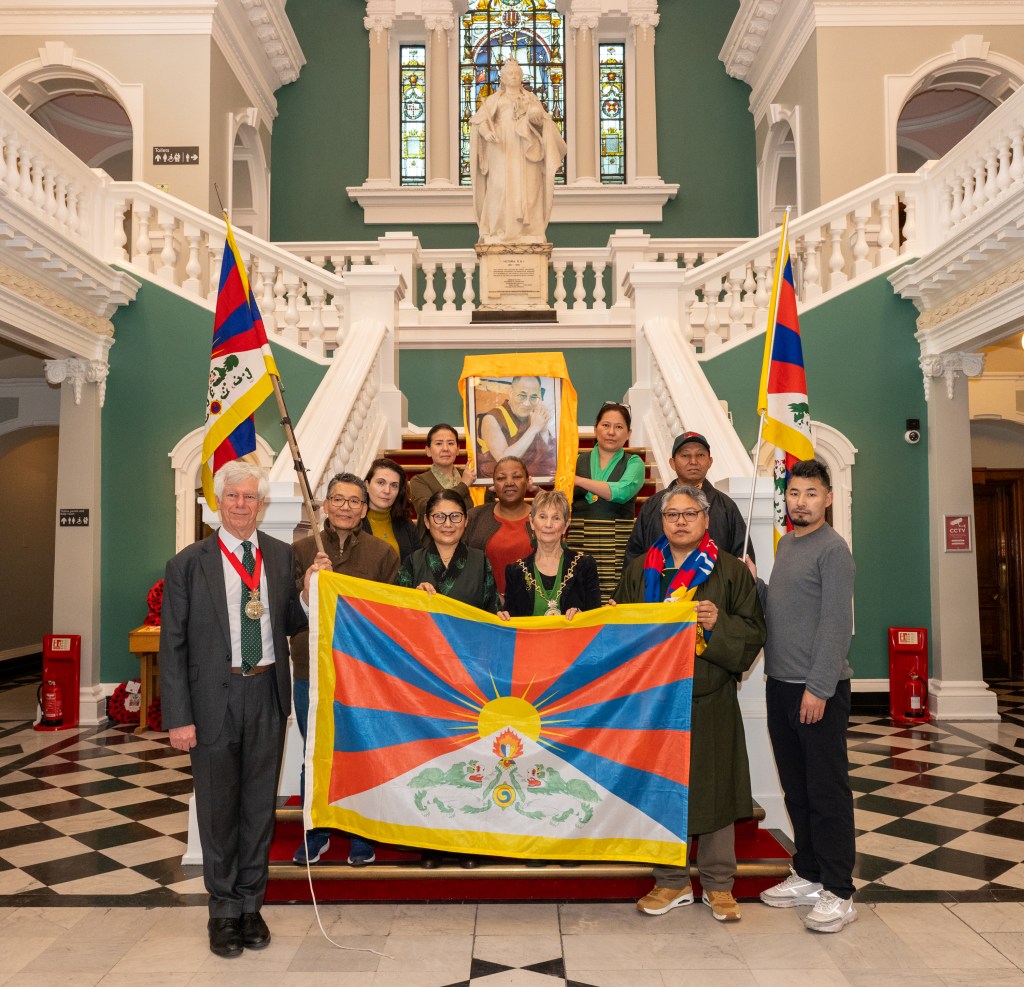
A Powerful Vote of Thanks: Compassion Translated into Action

Following the lecture, Tsering Passang, Founder-Chair of GATPM, offered a heartfelt Vote of Thanks. He described the evening as “a transmission of courage, clarity, and hope”, emphasising that the Year of Compassion (July 2025 – July 2026) is not merely commemorative but an urgent call to action.
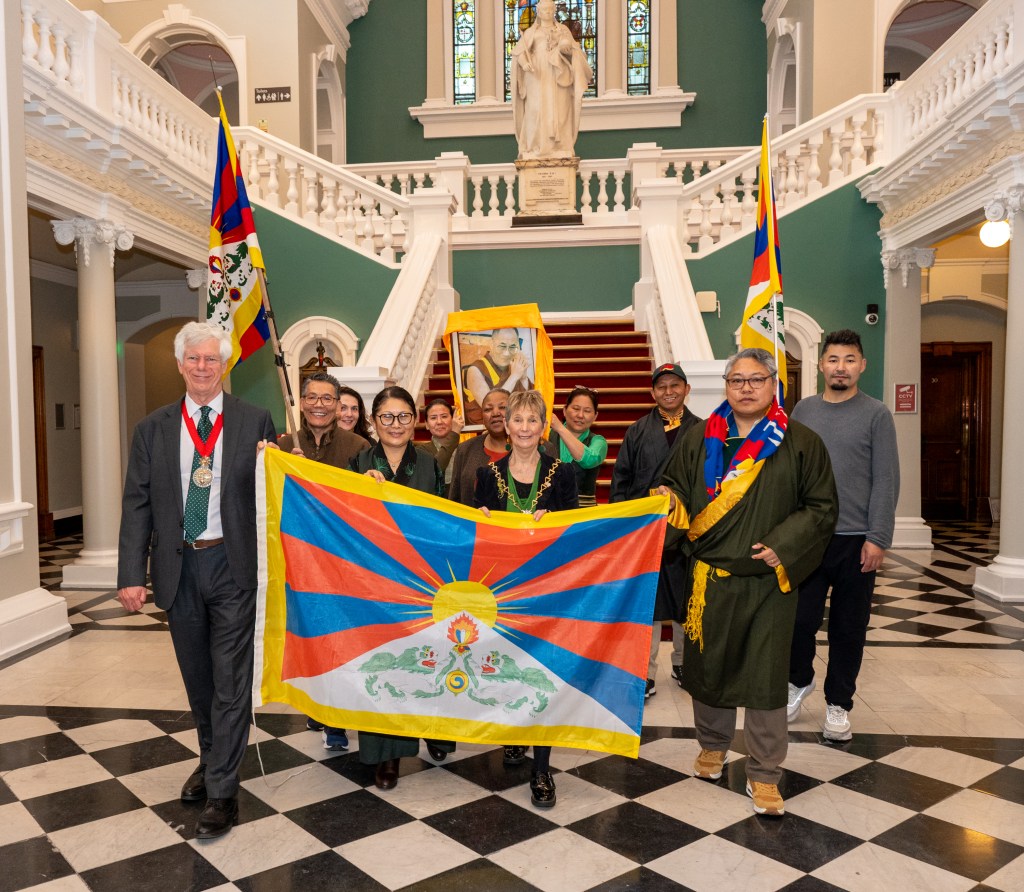
He honoured The Buddhist Society’s historic solidarity with Tibet. In 1959, during Tibet’s greatest crisis, the Society offered its basement as the first office of the newly formed Tibet Society & Relief Fund – the world’s first Tibet support organisation.

“From the very beginning,” he said, “The Buddhist Society stood with Tibet.”

A Story of Compassion in Action

Passang then shared the personal story that shaped his own life. In 1996, he arrived in the UK on a scholarship supported by the Tibet Society & Relief Fund. That opportunity existed because an English Buddhist, Mr David Elsey, had witnessed a Chinese soldier point a gun at a monk inside Tibet’s holiest shrine, the Jokhang Temple – an experience that shook him to his core.

Determined to respond, Mr Elsey persuaded his Principal at Weston College, Mr Gary Williams, to establish two scholarships for Tibetan refugees, later expanded to four. Working with Mr Patrick Nash, Director of Tibet Society & Relief Fund of the UK, he also helped arrange accommodation for the students.

Passang reflected: “This story reveals a fundamental truth: Tibet’s struggle has been shaped not only by institutions, but by individuals – ordinary people who refuse to ignore injustice.”

Safeguarding Tibet’s History: The Bonhams Auction Rescue

Passang also recounted the GATPM’s recent success in securing the safe repatriation of two historically significant 1947 letters from His Holiness the Dalai Lama and the Regent of Tibet – now preserved at the Tibet Museum in Dharamsala.

These priceless documents surfaced at a Bonhams auction in London in June 2025. Addressed to Sir Basil Gould, the British Political Officer for Bhutan, Sikkim, and Tibet, they were at imminent risk of vanishing into private or inappropriate hands – potentially lost to the Tibetan people forever.

Recognising the urgency, GATPM undertook quiet but determined advocacy. Through careful communication, the Bonhams team and members of the Gould family were persuaded not only to withdraw the items from sale, but to gift them to the Tibetan community.

Passang emphasised that this outcome was far more than the preservation of historical documents: it was a victory for cultural and historical justice – clear proof that principled action, timely intervention, and respectful engagement can protect Tibet’s legacy even today.

A Call to Conscience

In closing, he reminded the audience of Tibetans in Tibet, who continue to practise their faith in secrecy under oppressive conditions. He urged all who enjoy freedom to use it with responsibility and courage: “Movements endure not through numbers alone, but through the dedication of those who remain committed.”

Audience Feedback: A Call to Action That Resonated

The emotional impact of the evening extended far beyond the room. One online attendee, J Young, later reflected: “Excellent talk tonight, Tsering. Your words at the end were outstanding – moving and an inspirational call to action. Especially your reminder that even the action of one person can make a difference, as sometimes it doesn’t feel that way. Thank you for organising this. The work you do is incredible – thank you for your deep commitment, advocacy, and action.”

This heartfelt response captured a sentiment shared widely: that compassion, when expressed through action, can change lives and shape history.

Carrying the Message Forward

The evening offered a powerful reminder that Tibet’s future is not an abstract ideal – it is shaped every day by the courage of individuals, the commitment of institutions, and the unwavering solidarity of supporters across the world.

As Nyandak underscored, Tibetan civilisation endures because people choose to act: to protect language, to defend rights, and to stand with a nation struggling to preserve its identity.

As Tibetans and friends observe the Year of Compassion, one message rises above all others: Compassion is not simply an emotion – it is a responsibility. And when translated into action, it becomes a transformative force capable of shaping history.

A Shared Commitment to the Future

The evening concluded with a renewed sense of unity and resolve. The Buddhist Society, GATPM, and all who participated left with a shared understanding: safeguarding Tibet’s future requires both collective effort and the steady, principled actions of individuals.

This gathering stood as a testament to partnership, perseverance, and the enduring belief that compassion, translated into action, remains one of humanity’s greatest strengths.

(Photos: Dawa, Karma and T Samphel)