Tsering Passang | GATPM |
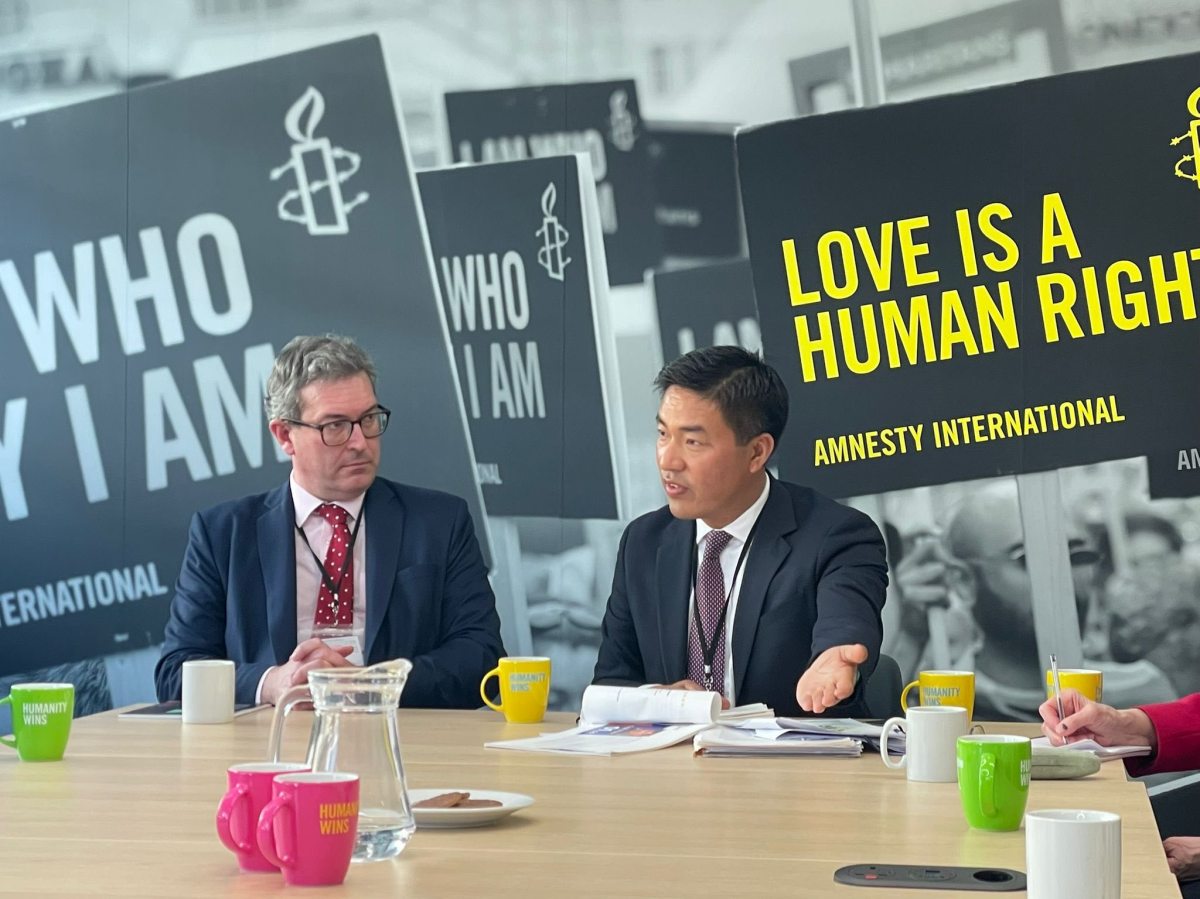
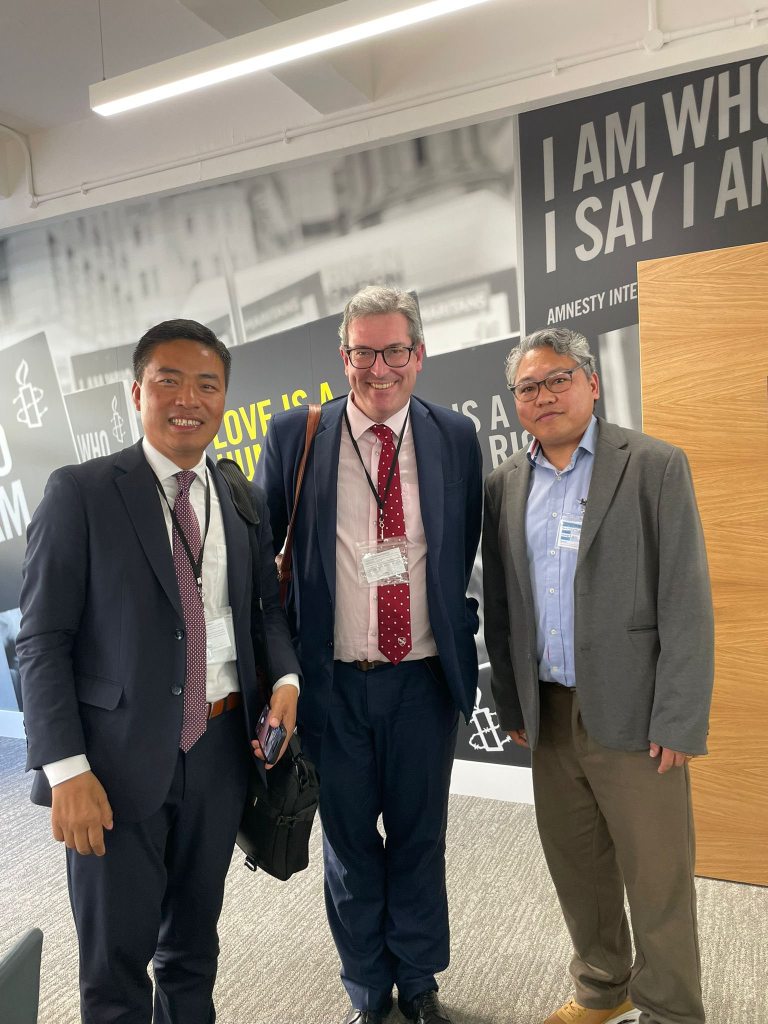
On Thursday, 19 March, I had the privilege of attending a timely and impactful meeting at Amnesty International UK’s office in London, convened by Benedict Rogers of Fortify Rights and hosted by Amnesty International UK’s Hong Kong Desk. The gathering brought together activists and representatives from Tibet, Burma, Hong Kong, and other affected communities – including Falun Gong practitioners and pro-democracy advocates from mainland China – by a shared commitment to human rights, freedom, and justice.
At a time of rising authoritarianism – where regimes are increasingly coordinated, emboldened, and willing to curtail fundamental freedoms, including freedom of expression – the importance of strengthening alliances across our movements cannot be overstated. This meeting was a powerful example of that shared resolve.
I would like to express my sincere appreciation to Dr. Sasa for his powerful insights and steadfast leadership, and I look forward to remaining in close contact as we continue this vital work together.
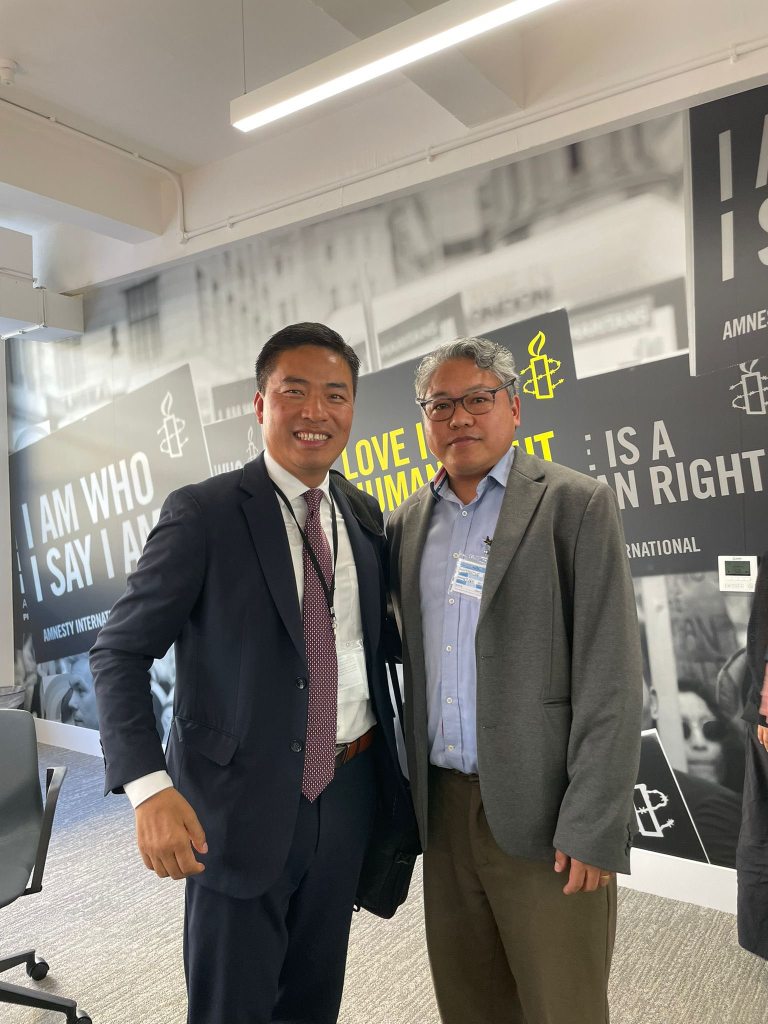
(Photo: GATPM)
Dr. Sasa’s journey is both remarkable and deeply inspiring. Born in a remote village in Chin State, he rose from humble beginnings marked by hardship and systemic neglect to become a medical doctor, humanitarian leader, and one of Burma’s most prominent voices for democracy. He went on to serve as Myanmar’s Special Envoy to the United Nations, as well as Union Minister for International Cooperation and Spokesperson for the National Unity Government (NUG) – the legitimate, democratically elected government of Myanmar.
In these roles, he became a leading international advocate for the Burmese people following the military coup, mobilising global support and exposing the atrocities committed by the junta. In December 2025, as part of broader reforms within the NUG, he transitioned from his ministerial role to launch new initiatives under a “People’s Platforms” framework, including the Institute of Peace and Federal Democracy (IPFD).
Reflecting on this transition, Dr. Sasa stated: “Serving the courageous people of Myanmar during the darkest period in our modern history has been the greatest honour of my life… Though this chapter closes, my commitment to our nation continues with even greater purpose.”
He further emphasised: “It is not a departure from our shared struggle, but a continuation of it in a new capacity.”
At the centre of our discussion was his ongoing effort to build coordinated international support. Currently in the UK, Dr. Sasa is engaging parliamentarians, government officials, and key stakeholders to strengthen cooperation in support of Burma’s democratic future.
The discussion itself was both sobering and galvanising. We heard stark accounts of realities on the ground: over 300 churches destroyed, widespread denial of fundamental freedoms, and a sham electoral process rejected by 95% of respondents in a recent survey. The scale of external influence – particularly from China, which supplies over 55% of the arms used by the military junta – underscores the geopolitical complexity and urgency of the crisis.
Dr. Sasa spoke with clarity and conviction about what is at stake:
“If Burma doesn’t become a fully democratic country, there will be no more Burma.”
He also issued a powerful call for unity: “Together – one voice, one mission, one future – we must stand united against Min Aung Hlaing and his unlawful junta.”
Crucially, he reminded us of the enduring spirit of the Burmese people and the necessity of unwavering commitment: “I will not rest until the people of Myanmar are free. We must never give up.”
He emphasised that the struggle in Burma is not isolated, but deeply interconnected with the experiences of Tibetans, Uyghurs, Hongkongers, and pro-democracy advocates from mainland China – all facing repression under authoritarian regimes. His message was clear: greater cooperation, coordination, and solidarity across these movements is essential to challenge impunity and uphold the aspirations of oppressed peoples.
Underscoring the need for accountability, he stated: “Perpetrators must not be allowed to travel freely.”
Western governments, including the UK and the US, have a critical responsibility to ensure that those responsible for atrocities are held accountable, while meaningfully supporting the democratic will of the Burmese people.
Through the Institute of Peace and Federal Democracy, Dr. Sasa continues to advance a vision rooted in inclusive governance, respect for diversity, and bottom-up federalism – amplifying the voices of Myanmar’s many communities and accelerating the path toward a genuine federal democracy.
This meeting served as a powerful reminder that the fight for freedom, justice, and human dignity transcends borders. In the face of growing authoritarian coordination, our response must be equally united, strategic, and sustained.
 Global Alliance for Tibet & Persecuted Minorities (GATPM)