Tsering Passang | 1st February 2026
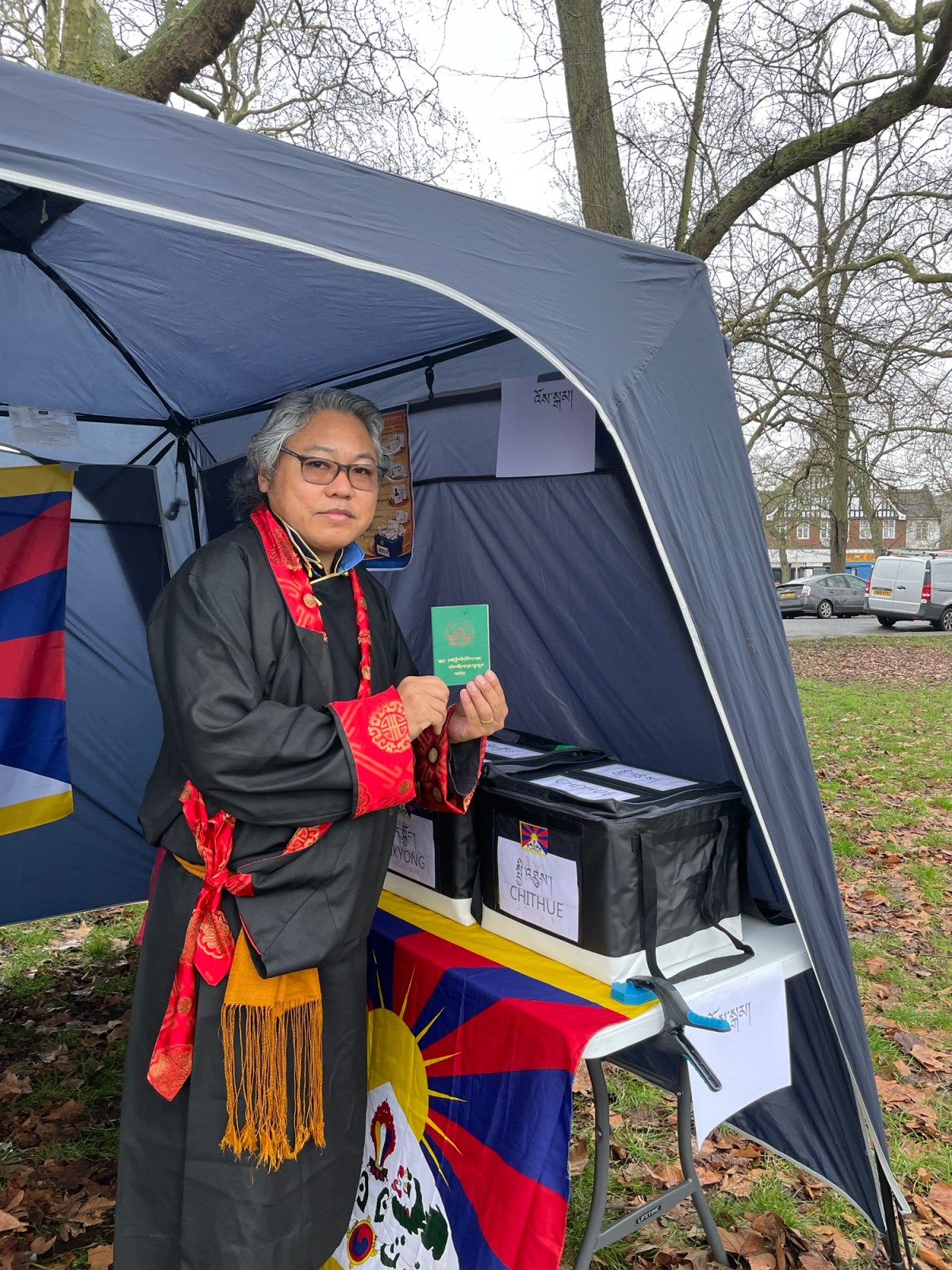
Today, I cast my vote in London to elect the Sikyong and Chithues of Tibet’s government-in-exile — the Central Tibetan Administration (CTA) based in India. It was a simple act on the surface, yet one filled with deep meaning, history, and responsibility.
Every five years, Tibetans living in exile across some 27 countries participate in a democratic process to choose our political leadership. This, in itself, is extraordinary. Despite being a stateless people, scattered across continents, Tibetans continue to exercise democratic rights with dignity, discipline, and faith in a collective future. Our elected leaders carry a dual responsibility: to advance the political cause of Tibet on the international stage, and to safeguard the social, cultural, and economic wellbeing of the Tibetan exile community.
At the same time, they must continue to speak out and draw global attention to China’s policies that severely restrict religious freedom, cultural expression, and basic human rights inside occupied Tibet. Tibetans living inside Tibet are denied even the most basic civic freedoms; they cannot vote, assemble freely, or express political opinions without fear of severe repercussions. Their voices are systematically silenced — making it all the more important that Tibetans in exile speak responsibly, strategically, and with unity on their behalf.
Even in exile, the right to vote is not equally accessible to all Tibetans. Tibetans in Nepal, in particular, are forced to cast their votes in fear and often in hiding, especially since 2011. There have been repeated instances where ballot boxes were seized or disrupted by Nepalese authorities under pressure from China. The simple act of voting — celebrated as a democratic right elsewhere — becomes an act of quiet resistance for Tibetans in Nepal. This reality should weigh heavily on all of us who are fortunate enough to vote freely.
This democratic system is one of the greatest gifts bestowed upon the Tibetan people by His Holiness the XIVth Dalai Lama. Long before stepping back from political authority, His Holiness envisioned a future where Tibetans would govern themselves through democratic institutions rather than depend on a single individual. As he turns 91 this July, Tibetan democracy in exile stands as a living testament to his foresight, humility, and unwavering faith in his people.
As I cast my vote, I did so with the belief that my voice — however small — matters. That I have a say in Tibet’s future. Participation is not merely a right; it is a responsibility, especially when our people continue to endure repression inside Tibet and prolonged uncertainty in exile.
That said, our democratic system must continue to evolve. Postal voting facilities are still not available, limiting participation for many Tibetans who live far from polling stations due to work, health, or financial constraints. This is an issue the Central Election Commission must seriously address if we are to make Tibetan democracy more inclusive and representative.
Likewise, the voting age should be lowered from 18 to 16. If young Tibetans are old enough to understand their identity, history, and struggle, they are old enough to have a voice in shaping their future. Under the current system, a Tibetan who misses voting at 18 may not get another chance until they are 22 or even 23 — an entire generation’s formative years lost to disengagement. If we want our youth to take ownership of the freedom struggle, we must trust them with responsibility.
My hope is that those elected will rise above personal ambition and petty infighting. The Tibetan struggle is far too serious, and the stakes far too high, for ego-driven politics or factionalism. What we need is unity, long-term vision, and leadership rooted in service rather than self-interest.
Singapore offers an instructive example. In 1965, after a brief merger with Malaysia following British colonial rule, Singapore was expelled and left to survive on its own — small, vulnerable, and surrounded by uncertainty with no resources. Yet through disciplined governance, unity of purpose, and an uncompromising focus on the common good, Singapore transformed itself into a stable and prosperous nation within just 50 years.
The Tibetan situation is, of course, vastly different. But the lesson remains relevant: progress demands clarity of purpose, collective responsibility, and leaders who place the future of their people above personal differences.
Today’s vote is not the end of the journey — it is one step in a long and unfinished struggle. Democracy alone will not free Tibet. But without democracy, we risk losing our moral authority, our unity, and our sense of direction as a people.
I voted with hope.
Hope that our leaders will lead wisely.
Hope that our community will stay engaged.
And hope that one day, Tibetans everywhere — inside Tibet and in exile — will be able to vote freely in our own homeland.
 Global Alliance for Tibet & Persecuted Minorities (GATPM)