Tsering Passang (First published in Tibet Times on 6th January 2026)
For nearly seven decades since coming into exile in 1959, the Tibetan freedom movement has endured through moral clarity, resilience, and an unshakeable commitment to nonviolence. These values remain our compass. They earned global recognition most notably in 1989, when His Holiness the Dalai Lama was awarded the Nobel Peace Prize, bringing Tibet briefly back into the conscience of the international community as a symbol of peaceful resistance.
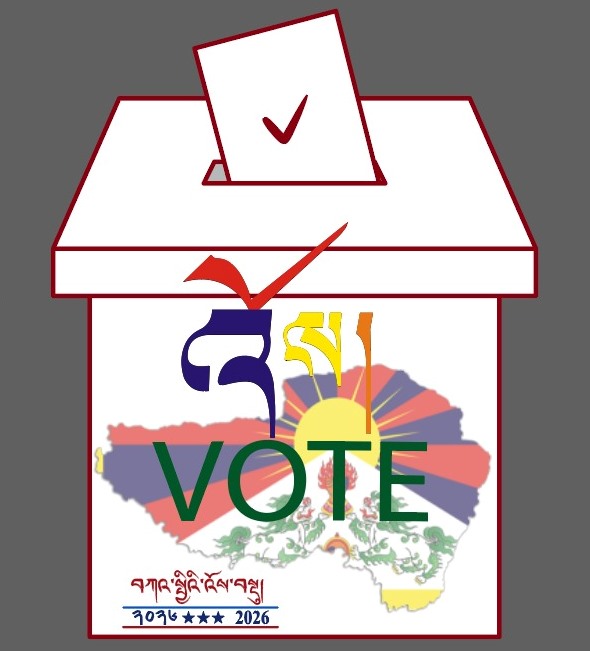
Yet values alone do not move geopolitics. As Tibetans prepare for the 2026 General Elections – to choose a new Sikyong (President of the Central Tibetan Administration, the Tibetan government-in-exile) and forty-five Chithue (Members of the Tibetan Parliament-in-Exile) – amid unprecedented global flux, and as His Holiness enters his 90th year, we must confront the world as it is, not as we wish it to be. The next five to ten years will be decisive, and our leadership choices must reflect the full gravity of this moment.
This is not an election like others. It takes place amid China’s rapidly expanding global influence, particularly across the Global South; a multilateral system increasingly paralysed by power politics; and a Tibetan movement that, while morally compelling, has struggled to translate sympathy into sustained strategic outcomes. Compounding this is a reality we too often avoid stating plainly: the Central Tibetan Administration (CTA) faces serious and growing funding constraints. The era of predictable institutional support is ending. The question before us is therefore not abstract but urgent: what kind of leaders do we need now – and how do we choose them responsibly?
From Moral Authority to Strategic Capacity
The Tibetan struggle has long commanded international admiration. United Nations General Assembly resolutions in 1959, 1961, and 1965 affirmed the rights of the Tibetan people at a moment when the world briefly paid attention. Since then, silence. Despite parliamentary resolutions and supportive legislation in a handful of Western democracies, Tibet has all but disappeared from the formal multilateral agenda. Trade, markets, and short-term national interests have prevailed over principle.
This is not a moral judgement; it is a geopolitical reality. Our leaders must therefore be more than eloquent advocates of a just cause. They must be strategic operators – people who understand how states behave, how influence is built, how resources are mobilised, and how alliances are sustained over time. Moral authority may open doors; strategic capacity determines whether anything follows.
The next generation of leadership must be able to prioritise ruthlessly in an era of scarcity. This means diversifying funding, strengthening institutional sustainability, and ensuring that the exile freedom movement remains viable long into the future. Thinking big is essential – but it must be matched by decisiveness and speed. Delay, indecision, factionalism, and internal bickering are luxuries we can no longer afford.
Leadership in an Age of Scarcity
The funding challenges facing the CTA are not merely technical; they are deeply political and strategic. Future leaders must be capable of making difficult choices, investing in impact rather than symbolism, and mobilising support beyond traditional donor bases. This requires professional fundraising, serious engagement with philanthropic institutions, and far more effective use of the Tibetan diaspora’s expertise.
Today’s Tibetan diaspora is vastly more educated, multilingual, and professionally diverse than it was in the early 1960s, when Tibet last appeared meaningfully on the UN agenda. Lawyers, academics, development practitioners, diplomats, economists, and policy specialists now exist across our global community. Our leaders must harness this collective capacity rather than operate within narrow circles or outdated institutional habits. If the UN General Assembly no longer looks at Tibet, that should compel innovation – not resignation.
Reaching the Unreached: A Test of Seriousness
For too long, Tibetan international advocacy has been concentrated in North America, Europe, and parts of the Asia-Pacific. While these relationships remain important, they are no longer sufficient. China’s strongest diplomatic backing today comes from Africa’s 54 nations, more than 20 countries in Latin America, and over 50 across Asia – regions that together constitute the political weight of the Global South.
This raises an uncomfortable but necessary question: how seriously have our leaders engaged these regions? Over the past five years, how many of the four Chithue representing Europe, Africa, and the Americas – two from Europe/Africa and two from North/South America combined – have travelled to or undertaken sustained engagement with African or South American countries? How often have the Sikyong or the Kalon for the Department of Information and International Relations (DIIR) pursued consistent diplomatic outreach in these continents?
By any honest assessment, the answer exposes a troubling gap. This is not an attack on individuals, but an indictment of a pattern. If we claim that the Global South matters – and it does – our actions must reflect that priority. Occasional statements or symbolic meetings are no substitute for presence, relationships, and long-term political work. China has invested heavily and consistently in these regions for decades. Our absence or inaction in these continents represents a strategic failure, not a moral one – and it is a failure that future leaders must confront and correct.
Law, Justice, and Untapped Pathways
As political avenues narrow, legal strategies deserve renewed attention. The 1959 findings of the International Commission of Jurists, which recognised grave violations of international law in Tibet, remain an underutilised foundation.
There is scope to reinvigorate legal pathways through international forums, universal jurisdiction mechanisms, and professional bodies such as the American Bar Association – the world’s largest association of legal professionals. The ABA’s adoption of its first-ever resolutions on Tibet in August 2024, supported through quiet and effective engagement by the Global Alliance for Tibet & Persecuted Minorities (GATPM), demonstrates that targeted, professional advocacy can still yield results when pursued strategically.
Such work requires patience, expertise, and resources. Abandoning legal avenues altogether would be a serious strategic error.
Democratic Leadership Requires Democratic Scrutiny
Equally important is how our leaders are chosen. Political candidates – especially those seeking the office of Sikyong – must participate in public debates and submit themselves to voters’ hard questions. This is not optional; it is a democratic obligation.
Voters deserve clear and honest answers. Candidates for Sikyong and Chithue should therefore be prepared to respond publicly to questions such as the following:
Strategy and Geopolitics
-
- What is your concrete strategy for engaging Africa, Latin America, and the wider Global South over the next five years?
- Which specific countries will you prioritise, and why?
Track Record
-
- Over the past five years, how many countries in Africa or South America have you personally visited or engaged in an official or sustained capacity?
- What outcomes resulted from those engagements?
Funding and Sustainability
-
- How will you address the CTA’s growing funding challenges?
- What new funding sources or partnerships will you pursue beyond traditional donors?
Use of Diaspora Expertise
-
- How will you systematically harness the Tibetan diaspora’s professional expertise, including legal, diplomatic, development, and language skills?
Legal Pathways
-
- What role do you see for international legal strategies, including engagement with bodies such as the American Bar Association and other legal forums?
Democratic Accountability
-
- Will you commit to participating in public debates and regular open forums with voters?
- How will you ensure transparency and accountability once in office?
Parliamentary Reform
-
- Do you support reforming parliamentary representation to reflect current demographic realities in the diaspora?
- If so, what timeline and process would you propose?
Leadership and Unity
-
- How will you prevent factionalism and ensure unity during a critical period of political transition?
Avoiding debates or meaningful scrutiny weakens our democracy and undermines voter confidence. We cannot credibly criticise China’s system of anointed leadership while tolerating practices that dilute democratic norms within our own polity. Transparency and accountability are not inconveniences; they are the very strengths that distinguish us.
Representation, Reform, and Responsibility
Elected Chithue must also show the courage to legislate for change. Parliamentary seats must be reviewed and rebalanced to reflect demographic realities within the diaspora. Such reforms should be guided by evidence and long-term vision – not factional politics or narrow interests. Failure to act will only entrench inefficiencies and weaken institutional legitimacy over time.
Leadership today demands difficult decisions. Avoiding them may be politically convenient, but it will prove costly for future generations.
A Final Word
The Tibetan cause remains just. But justice does not advance itself. It requires leaders who are principled yet pragmatic, bold yet disciplined, and accountable to the people they seek to serve.
In choosing our next Sikyong and Chithue, we are not merely filling positions. We are deciding whether we are serious about adapting to a changing world, stewarding limited resources wisely, and sustaining the Tibetan freedom movement beyond symbolism.
History has given us a narrowing window. Let us choose leaders worthy of the moment – and capable of ensuring that our struggle endures, evolves, and remains relevant in the years ahead.

Tsering Passang is a London-based Tibetan blogger and the founder–chair of the Global Alliance for Tibet & Persecuted Minorities. A long-standing Tibetan human rights advocate, he works internationally to advance justice, freedom, and peaceful solutions for Tibetans and other persecuted communities living under authoritarian rule. His writing can be found at www.Tsamtruk.com.
 Global Alliance for Tibet & Persecuted Minorities (GATPM)
Dear Colleague, I have read with interest your posts on Tibetan issues, including this one on the upcoming elections to the Tibetan Parliament in exile. However, I would like to comment on one of your statements. You write concerning the United Nations, “There were discussions in 1959, 1961, 1965 and then silence”. Without underlining my efforts and those of some colleagues, I would highlight efforts during the 1980s and 1990s in the UN human rights bodies in Geneva which received a good bit of attention and are reported in the Tibetan Review then on paper to which you must have access. My efforts began with a statement to the UN Commission on Human Rights (as it was then) in 1985. The text is in the Tibetan Review for May 1985. There is a follow up report in the Tibetan Review for April 1986 and July 1987. Copies of these articles were sent around widely to NGOs and other human rights organizations. In 1988, there was the intervention at the Commission of Robert Barnett who had been in Lhasa when there was police violence against Tibetans. I had accredited Barnett to my delegation (Fellowship of Reconciliation) so that he could speak at the UN. We remained in close touch as he went on to the Tibetan studies program at Columbia University in New York City. In 1989 Tica Broch spoke for the Minority Rights Group. She was the translator for the Dalai Lama in Europe and was his only European student. There is a report in the May 1989 issue of the Tibetan Review. Tica and I cooperated closely. In addition to the Commission on Human Rights, we were active in the Sub-Commission on the Prevention of Discrimination and the Protection of Minorities (No longer in existence) and in discussions with the Special Rapporteur on Religious Libeerty. There are articles in the July 1990 and October 1991 Tibetan Review as well as the April 1992 and 1993 issues. There is an article in the April 1995 and Aug 1999 issues of the Review. I had spent a week in Dharamsala to brief persons on working with the UN system. As I am also interested in discussions with Chinese government authorities, there are articles in July 2011, December 2007, January 2006, November 2005, Jube 2003, January 2006, November 2005, June 2003, Sept 2000, Sept 1998, May 1999, April 1999, Aug 1994 issues largely on negotiating with the Chinese. I knew both Lodi Gyari and Kelsang Gyaltsen who were the Tibetan representatives in a round of discussion with the Chinese authorities. I agree fully with you that the new parliament members need to be well informed. There is much to build on from past efforts. René Wadlow, President, Association of World Citizens
On Wed, Jan 7, 2026 at 12:31 PM Global Alliance for Tibet & Persecuted
LikeLike