
GATPM, London | 16 December 2025
The Tibet Policy Institute (TPI), under the Department of Information and International Relations (DIIR) of the Central Tibetan Administration (CTA), held a press conference on Tuesday afternoon to draw urgent attention to a rapidly deteriorating situation in Kashi village, Kham Zachukha (Sershul County), eastern Tibet. The briefing highlighted credible reports of mass arrests, enforced disappearances, torture, and a sweeping communications blackout following a peaceful protest by local Tibetans against gold-mining activities on their ancestral land.
The press conference, held at the TPI Hall in Dharamsala, was addressed by TPI Deputy Director Tempa Gyaltsen Zamlha and attended by representatives of Tibetan media as well as national and local Indian press. TPI described the unfolding situation as one of the most serious crackdowns reported in the region in recent years.
Protest Against Gold Mining Triggers Crackdown
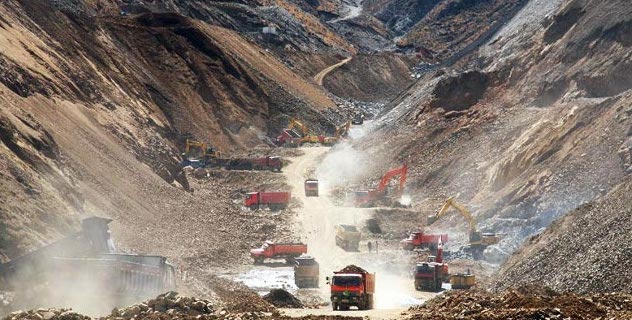
According to information received by TPI, tensions erupted on 5 November 2025 when residents of Kashi village discovered an active gold-mining operation at Serkhok, or “Gold Valley,” a site of deep ecological, cultural, and spiritual significance. Villagers confronted those involved and alerted township authorities, raising concerns about environmental destruction and the complete absence of community consent.

Rather than addressing these legitimate concerns, local officials reportedly dismissed the villagers’ objections, asserting that the land belonged exclusively to the state and that Tibetans had “no right to interfere.” Authorities allegedly declared the villagers’ attempt to halt the mining illegal, further inflaming tensions in a region long marked by repression and marginalisation.
Night-Time Raids and Mass Detentions
On the evening of 6 November, at approximately 6:50 pm, Chinese authorities reportedly launched coordinated door-to-door raids throughout Kashi village. Local sources estimate that around 80 Tibetans were detained and transported to Sershul County for interrogation. Families later reported that several individuals remain unaccounted for, raising grave concerns of enforced disappearance under international human rights law.
Shortly after the arrests began, Kashi township was sealed off. Residents report that officials from the United Front Work Department, Public Security Bureau, armed police, and township administration jointly imposed a strict lockdown. Villagers were warned that sharing information with outsiders or higher authorities would be treated as a serious criminal offence.
Communications Blackout and Surveillance State Tactics
Security forces allegedly confiscated mobile phones, conducted invasive home searches, and imposed a communications blackout across the township. Armed police and military personnel reportedly patrol roads and public spaces, detaining individuals merely suspected of opposing the mining operation.
TPI noted that only authorised individuals are permitted to speak with journalists, while local Tibetans are explicitly prohibited from doing so – amounting to a near-total suppression of freedom of expression and access to information.
Torture, Degrading Treatment and Forced Confessions
Updated information received in December paints a deeply disturbing picture of detainee treatment. According to multiple accounts, detainees were subjected to inhuman and degrading treatment, including denial of access to toilets, prolonged sleep deprivation, and deliberate starvation. Prisoners reportedly received only one serving of cold tsampa mixed with water per day.
During violent interrogations, several detainees reportedly suffered broken ribs, kidney-related illnesses, and severe physical and psychological deterioration. Cases of tuberculosis relapse have been reported, indicating extreme stress and abuse. Although some medical examinations were conducted at Sershul County hospital, authorities allegedly withheld full medical reports, raising serious concerns about transparency and denial of medical information.
Detainees were also forced to sign written pledges committing them to silence. Others were coerced into signing fabricated statements falsely accusing fellow villagers of assaulting Chinese officials – clear indications of forced confessions and false testimony. Seven Tibetans arrested in November reportedly remain missing, with no information provided to their families.
Elderly Targeted, Surveillance Intensifies
Elderly residents were not spared. Many were arbitrarily detained, had their mobile phone records scrutinised, and were threatened before being released. Following release, several elders were repeatedly summoned for “re-education” sessions, during which authorities manually inspected their phones to monitor communications.
Residents further report that surveillance cameras and audio-recording devices have been installed inside private homes, enabling authorities to monitor conversations and daily activities – constituting systematic violations of the rights to privacy, freedom of movement, and expression.
A Pattern of Environmental and Cultural Destruction
TPI stressed that the gold-mining incident in Kashi is not isolated. Mining activities in the region reportedly date back to the 1990s, often involving collusion between local officials and private business interests. Under the banner of “development,” authorities have facilitated mining operations and dam construction that Tibetans say have devastated rivers, grasslands, and sacred landscapes.
Alongside environmental destruction, cultural and religious repression has intensified. Current restrictions reportedly include strict limits on monastic gatherings, bans on public prayer assemblies, prohibitions on circumambulation during festivals, restrictions on group gatherings, and the prevention of students from attending cultural or religious programmes during school holidays.
Condemnation from GATPM
Reacting to the unfolding crisis, Tsering Passang, speaking on behalf of the Global Alliance for Tibet & Persecuted Minorities (GATPM), issued a strong condemnation of the Chinese authorities and the Chinese Communist Party’s policies in Tibet:
“The brutal crackdown in Kashi village once again exposes the true nature of the Chinese Communist Party’s rule in Tibet – where peaceful environmental defenders are treated as criminals, communities are silenced through fear, and sacred land is sacrificed for exploitative extraction. We unequivocally condemn the mass arrests, torture, enforced disappearances, and the deliberate destruction of Tibet’s fragile environment under the guise of ‘development.’”
Passang added:
“Tibet has lived under China’s occupation since 1950, when CCP Chairman Mao Tsetung ordered the People’s Liberation Army to invade the country. Since then, Tibetans have faced systematic repression, cultural erasure, and relentless exploitation of their land and natural resources. What is happening in Kashi is not an isolated incident – it is part of a long-standing colonial policy that prioritises control and profit over human dignity, environmental protection, and the rights of indigenous peoples.”
GATPM called on democratic governments, UN human rights bodies, environmental organisations, and independent observers to urgently investigate the situation, demand the release of all detainees, and hold Chinese authorities accountable for violations of international human rights and environmental norms.
Calls for International Accountability
TPI warned that the situation in Kashi township remains “extremely tense,” with arrests ongoing and residents living in fear under total surveillance and isolation. The institute urged the international community to remain vigilant, stressing that silence and inaction only embolden further abuses.
As communications from Kashi remain heavily restricted, the full scale of the crackdown may yet be unknown. What is clear, however, is that a Tibetan community seeking to protect its land, culture, and way of life is once again being met with overwhelming force for asserting its most basic rights.



Useful Links
Central Tibetan Administration: www.Tibet.net
Tibet Policy Institute: https://tibetpolicy.net
 Global Alliance for Tibet & Persecuted Minorities (GATPM)
International Migrants Day: A Crucial Issue
−
18 December has been set by the United Nations General Assembly in December 2000 as International Migrants Day to reaffirm the need for safer, more inclusive and fairer migration systems in a rapidly changing world. There are a number of causes for migration, and migration can take a variety of forms.
René Wadlow, Association of World Citizens
On Tue, Dec 16, 2025 at 4:56 PM Global Alliance for Tibet & Persecuted
LikeLike