
Tsering Passang | 21 May 2025
As Bonhams prepares to auction rare artworks from Sir Basil Gould’s Tibetan missions, questions resurface about Britain’s past support for an independent Tibet – and its future role amid rising Indo-Pacific tensions and China’s expanding influence.
A landmark exhibition and auction at Bonhams New Bond Street this June is set to spotlight a long-overlooked chapter in British diplomatic history – its historic engagement with a sovereign Tibet. As the Tibetan community and their supporters mark the 90th birthday of His Holiness the 14th Dalai Lama and the 85th anniversary of his enthronement, rare archival artworks and collections documenting that era are going under the hammer, reigniting timely questions about Britain’s past commitments and future responsibilities regarding Tibet.
Revisiting Sovereignty Before the Storm
From 1–3 June 2025, Bonhams will exhibit The Collection and Archive of Sir Basil Gould (1883–1956), Britain’s former Political Officer for Sikkim, Bhutan, and Tibet. This unique archive – being offered for public auction for the first time on 5 June – provides striking visual and documentary evidence of Tibet’s de facto independence before the Chinese Communist occupation in 1950.
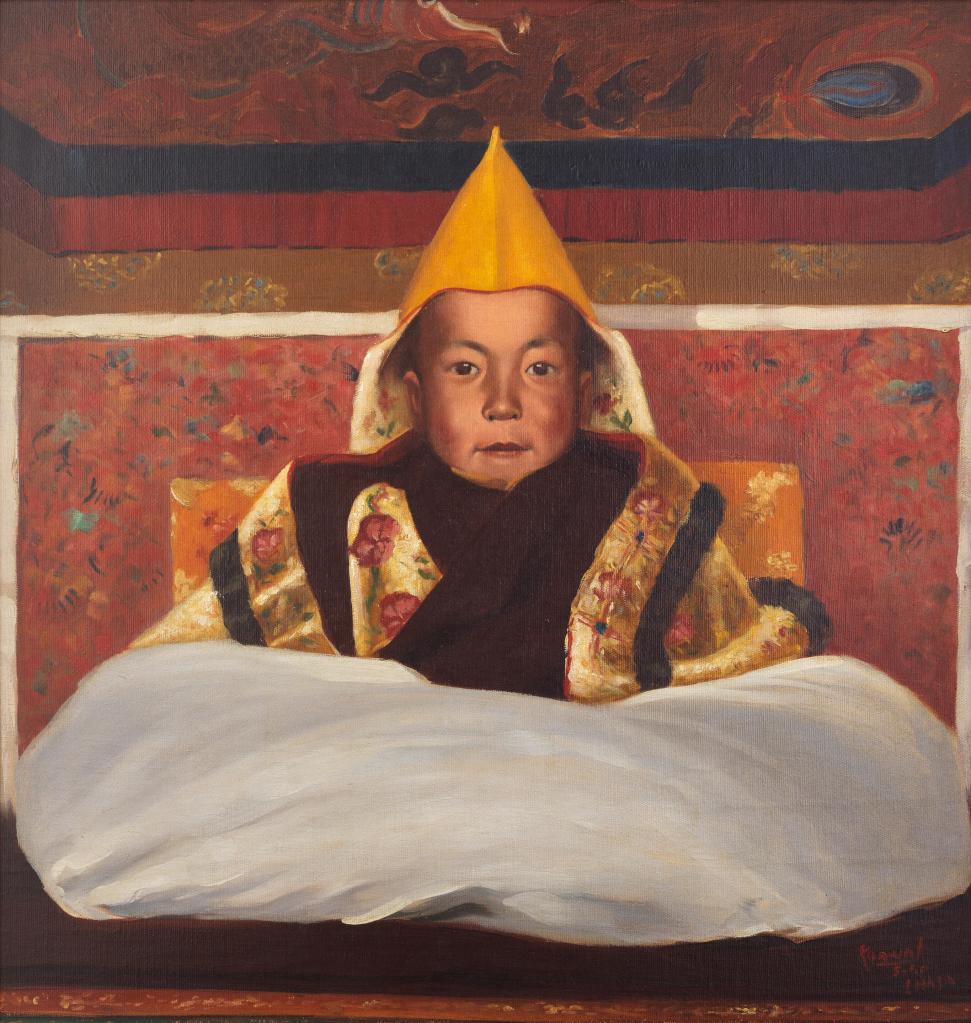
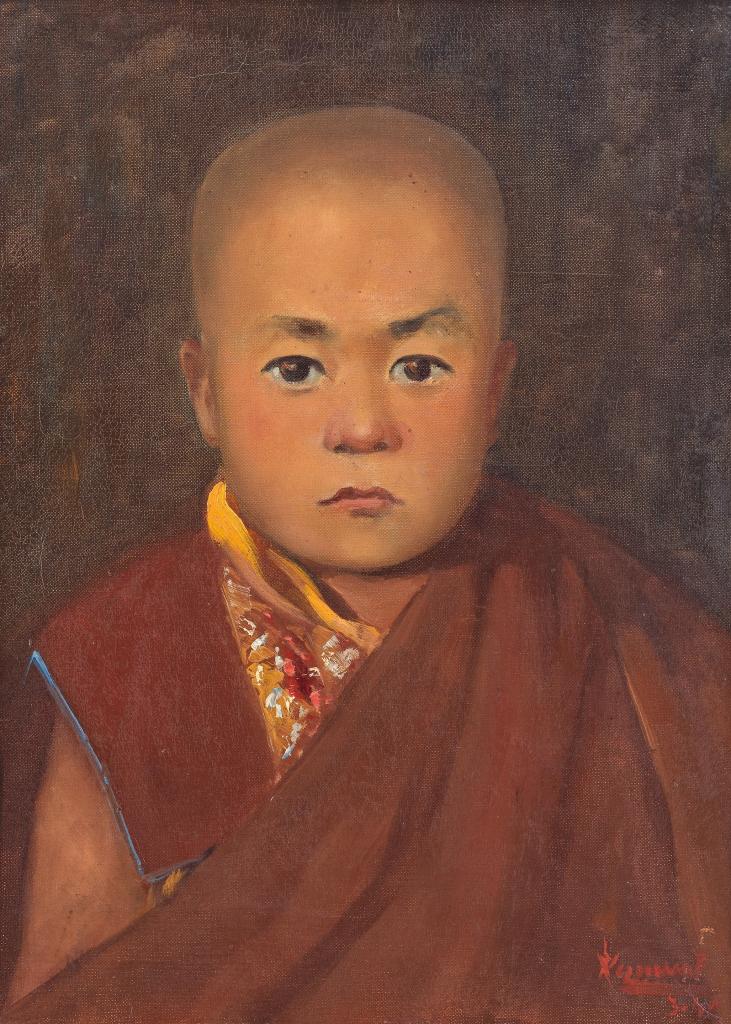
The centrepieces of the exhibition are 40 original watercolours by renowned Indian artist Kanwal Krishna, commissioned during Gould’s 1940 mission to Lhasa. These paintings document the divination, recognition, and enthronement of the 14th Dalai Lama at a time when Tibet conducted its own foreign policy, maintained diplomatic missions, and upheld a distinct national identity independent of China.
Two portrait works by Krishna – one of the Dalai Lama as a child before his recognition, and another at the moment of enthronement – carry individual estimates of up to £200,000.
Giles Peppiatt, Bonhams Group Head of Pictures, remarked:
“The Gould Collection represents a rare and profoundly important historical archive, shedding light on the cultural and political landscape of Tibet and the British presence in the Himalayas. Many of these items have never been seen on the open market, and we anticipate strong interest from collectors, institutions, and historians alike.”

Reframing Tibet-UK Relations Through Art
In conjunction with the exhibition, Bonhams and the Office of Tibet are hosting a lecture by acclaimed Dalai Lama biographer Alexander Norman on 2 June. Titled “The Divination, Search & Installation of His Holiness the 14th Dalai Lama,” the lecture will unpack the cultural and political significance of the Gould Collection. It serves as a reminder of Britain’s direct relations with Tibet before the founding of the People’s Republic of China (PRC) in 1949 and long before Beijing’s claims over the region gained international currency.
Norman’s talk will explore the untold story of British diplomacy in the Himalayas – when the independent Tibetan Government and British officials collaborated, and the enthronement of the Dalai Lama was conducted without reference to any Chinese authority. These interactions underscore a time when Tibet, though isolated geographically, was far from politically obscure.
Sir Basil Gould CBE: Britain’s Trusted Ally in Tibet

Sir Basil Gould’s service in Tibet represents a high point of British engagement in the region. Long before his appointment as Political Officer for Sikkim in 1935, Gould served as Trade Agent in Gyantse (1912–1913), where he witnessed and participated in the delicate diplomacy preceding the Simla Conference (1913–1914). His early experience in Tibet gave him invaluable insight into its internal governance, and the degree of sovereignty exercised by the Tibetan authorities.
The Simla Conference itself, attended by representatives from Britain, China, and Tibet, produced the tripartite Simla Accord and the McMahon Line. Although China later repudiated the agreement, Britain continued to treat Tibet as an autonomous entity under its own government, often engaging directly in diplomatic and commercial matters.
Following the 13th Dalai Lama’s proclamation of Tibet’s independence in 1913, the British recognised Tibetan sovereignty in practice and extended various forms of assistance – including military training, arms, and technical support. Gould was instrumental in facilitating such cooperation, and remained a trusted intermediary between the Tibetan government and British India across several decades.
In 1913, at the request of the Dalai Lama, Gould escorted four Tibetan boys to England for education – the “Rugby Boys.” Among them was Ringang, who trained as an engineer and later built Tibet’s first hydroelectric power station in 1927. Gongkar was another young Tibetan who received British military training, including at the Royal Military Academy in Woolwich during World War I. These episodes reflected Tibet’s modernising ambitions and willingness to embrace international cooperation.
As Britain’s Political Officer for Sikkim, Bhutan, and Tibet from 1935, Gould helped maintain direct diplomatic relations with Lhasa. His participation in the 1940 enthronement of the current Dalai Lama, as the British government’s official envoy, underscores a period of bilateral engagement grounded in mutual respect and shared strategic interests – a stark contrast to Britain’s present-day policy of cautious neutrality, particularly after then-Foreign Secretary David Miliband’s 2008 statement which, in the context of global financial negotiations with China, downplayed Britain’s historic recognition of Tibetan autonomy.

Auction Provenance and Cultural Diplomacy
The Gould archive remained in private family hands for decades. Following a recent bereavement, his descendants chose to bring the archive to public attention. Bonhams confirmed that there were no objections from any government or private party regarding the sale.
Far from being a mere commercial event, the auction is viewed by many Tibetans and their supporters as a cultural milestone – a respectful recognition of Tibet’s historical sovereignty, at a time when such truths are at risk of erasure by dominant geopolitical narratives. While some may argue that such items should eventually be returned to Tibet, others see their public display as a powerful means of preservation and awareness-raising.
Reclaiming Memory in the Shadow of Occupation
Since the PRC’s military invasion of Tibet in 1950 and the brutal crackdown on the Tibetan Uprising of 1959, over 6,000 monasteries have been destroyed and approximately 1.2 million lives lost. Tibetan language, religion, and identity have come under sustained assault. The Dalai Lama’s escape to India in 1959 led to the establishment of the Central Tibetan Administration (CTA), a democratic government-in-exile that continues to represent Tibetan interests globally.
The Bonhams exhibition offers a vivid reminder of the period before this rupture – when Tibet conducted its own foreign relations, developed infrastructure, and engaged in peaceful modernisation with trusted allies like Britain.
A Strategic Policy Opportunity for the UK
In light of Britain’s post-Brexit Indo-Pacific tilt, the exhibition raises pressing questions: Should the UK reconsider its policy of silence on Tibet? Can it acknowledge Tibet’s past independence while supporting a negotiated solution to the current crisis?
Policy Recommendations:
- Revive Parliamentary Dialogue on Tibet for Tangible Outcomes: Initiate renewed debates in Parliament to explore Britain’s historical engagement and develop a future strategy aligned with UK Indo-Pacific interests.
- Recognise Tibet’s Historic Sovereignty: Incorporate into official discourse that Tibet functioned as an independent state prior to 1950, as recorded in British diplomatic archives.
- Support a “Buffer Zone” Approach: Examine strategic frameworks in which a demilitarised or genuinely autonomous Tibet could serve as a stabilising buffer between nuclear powers China and India – an idea endorsed by Lord Alton and Chris Law MP in their joint Op-Ed.
- Extend Cultural and Political Support for the CTA: Deepen engagement with the Central Tibetan Administration in exile, recognising its democratic governance and moral authority.
- Counter Disinformation: Support academic freedom and fund independent research initiatives to challenge Chinese historical revisionism and amplify factual narratives.
Conclusion: Past Lessons, Future Responsibility
For too long, Tibet has been treated as a geopolitical inconvenience rather than a moral and strategic ally. The Bonhams exhibition is a timely reminder that Tibet’s claim to self-determination – supported by three United Nations General Assembly resolutions (1959, 1961, and 1965) – is not a modern invention, but a continuation of centuries of cultural, political, and spiritual freedom.
With China preparing to mark the 100th anniversary of the PRC’s founding in 2049 with sweeping global ambitions, Britain must reclaim its historical voice on Tibet. This is not only a matter of justice for a long-forgotten ally, but also an essential step toward securing a principled and stable Indo-Pacific future.
Public Exhibition: 1–3 June 2025
Auction: 5 June 2025
Venue: Bonhams New Bond Street, London
For continuing coverage on Tibet and other persecuted minorities, follow Tsering Passang and the Global Alliance for Tibet & Persecuted Minorities.


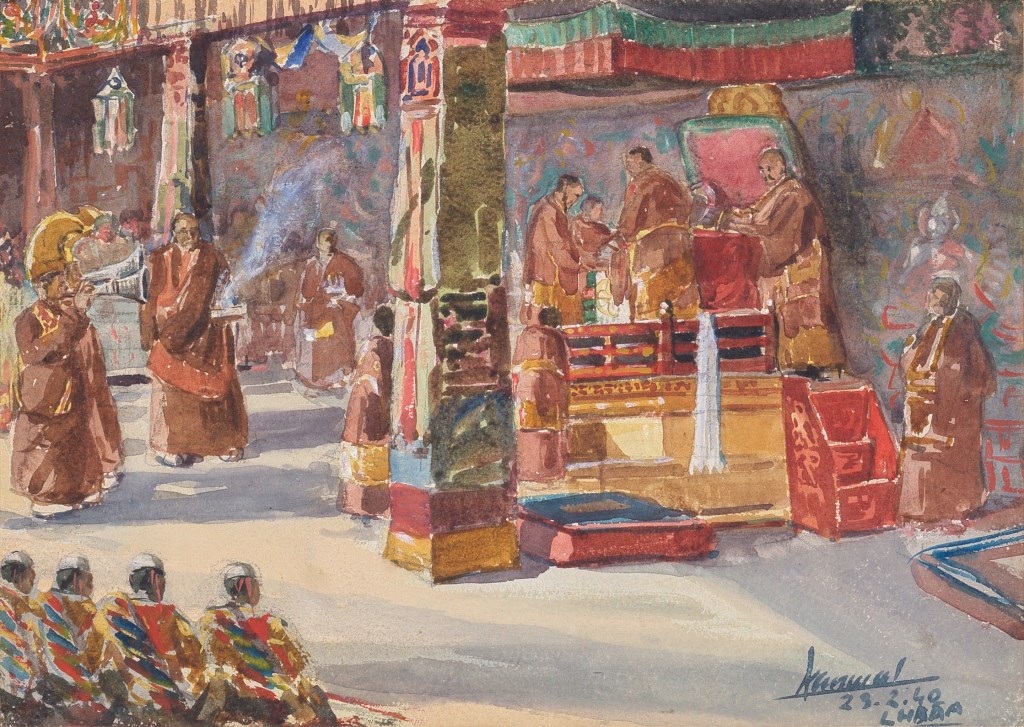
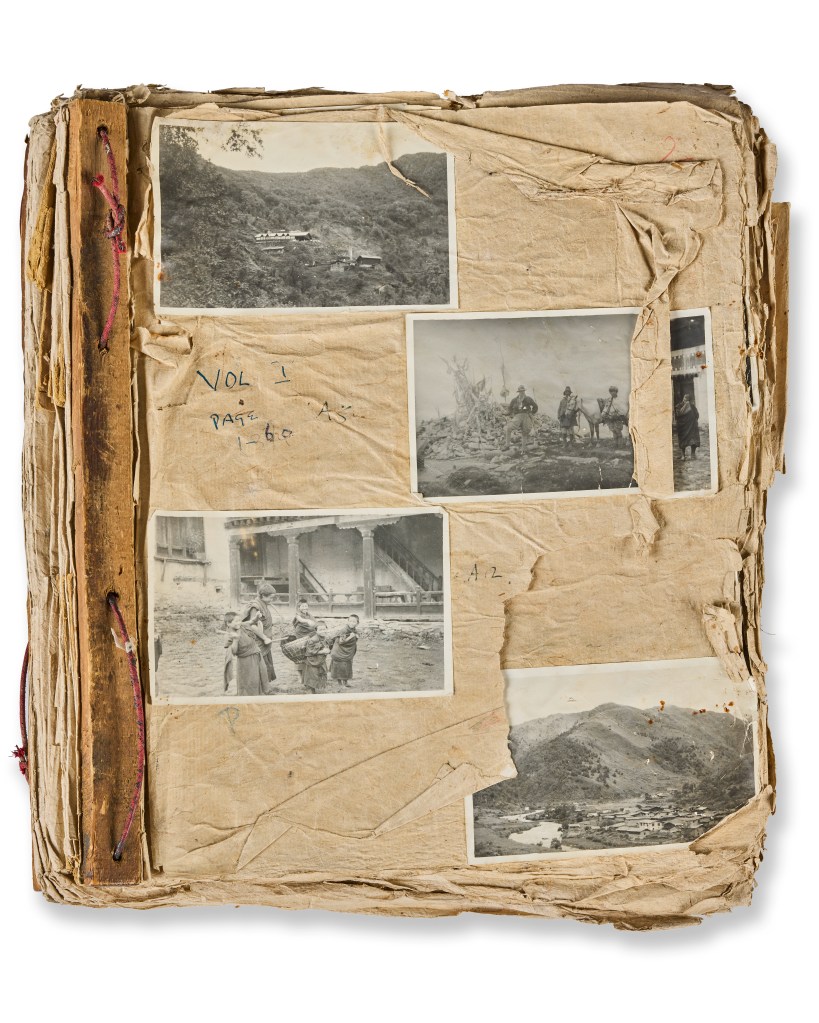

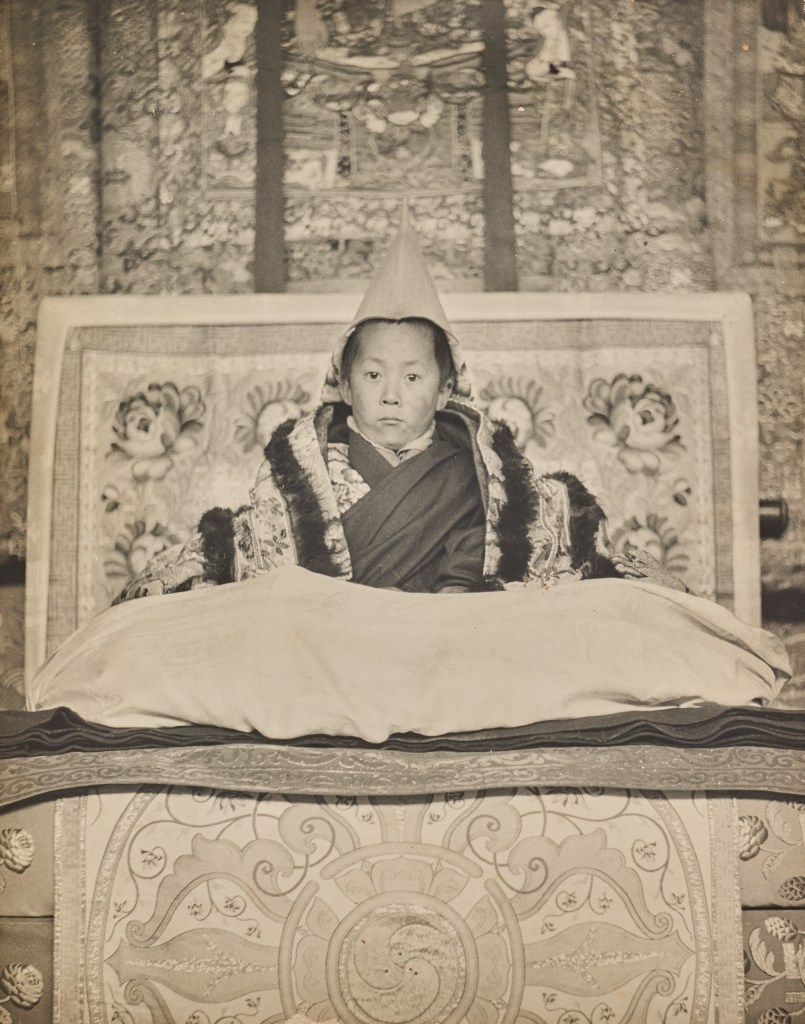
(Credits: The Collection and Archive of Sir Basil Gould CBE / Bonhams)
 Global Alliance for Tibet & Persecuted Minorities (GATPM)

3 thoughts on “A Forgotten Ally? British Envoy Sir Basil Gould’s Historic Tibet Collection at Bonhams Reignites Debate on UK’s Tibet Legacy and China Policy”