
May 5th is celebrated as Doppa Day – an occasion that honours the rich cultural heritage of the Uyghur people, but also serves as a bold stand against the suppression of their identity. The story of the Doppa, a traditional Uyghur hat, is intertwined with the struggle for cultural preservation and resistance to Chinese oppression.
The Doppa Festival, an initiative launched in 2009 by young Uyghur activist and journalist Tahir Imin, has evolved into a significant movement for the Uyghur people. Imin, a former political prisoner who grew up in Urumqi, the capital of Xinjiang Uyghur Autonomous Region (also known as East Turkestan), started the festival with the aim of celebrating and preserving Uyghur cultural identity. Initially broadcast on Central China TV in 2009, the festival gained traction and by 2011, it had spread across China, even garnering support from local governments in places like Yakan and Kashgar. Yet, the rise of the Doppa’s cultural significance came with a cost.

The historical backdrop is one of occupation and violence: following the rise of the People’s Republic of China (PRC) in 1949, China’s communist government violently annexed East Turkestan. Since then, the Uyghur people have endured systemic oppression, including documented human rights abuses and genocidal actions by the Chinese state.
As part of China’s cultural erasure, Uyghurs have faced increasing restrictions on religious practices, language, and symbols of identity.
In his X (formerly twitter) post on 5th May, Tahir Irmin wrote: “The Uyghur Doppa Cultural Festival (also known as Uyghur Doppa Day) continues to stand as a powerful symbol of cultural pride, national unity, and collective identity for Uyghurs around the world. We are Uyghurs, we remain Uyghurs, and we will achieve Uyghur freedom.”
The Doppa is more than just a hat. With its four corners, vibrant embroidery, and deep cultural symbolism, it is worn with pride across Uyghur communities, symbolising unity and belonging. There are over 250 variations of the Doppa, each with distinct designs that signify a person’s gender, region, and artistic heritage. Traditionally worn by the Turkic peoples of Central Asia, the Doppa is both a personal and collective emblem.
However, this powerful symbol of identity has been banned in schools and public spaces by Chinese authorities, heightening fears of cultural genocide among Uyghurs. In a broader context, the celebration of Doppa Day has facilitated international conversations about the importance of cultural preservation.
The Uyghur people – a Turkic, predominantly Muslim ethnic group – are deeply connected to the Silk Road cities like Kashgar and Urumqi, which were once major cultural and commercial hubs. Their culture is an intricate blend of East Asian, Central Asian, and Islamic influences, making the suppression of their heritage an even more profound loss.
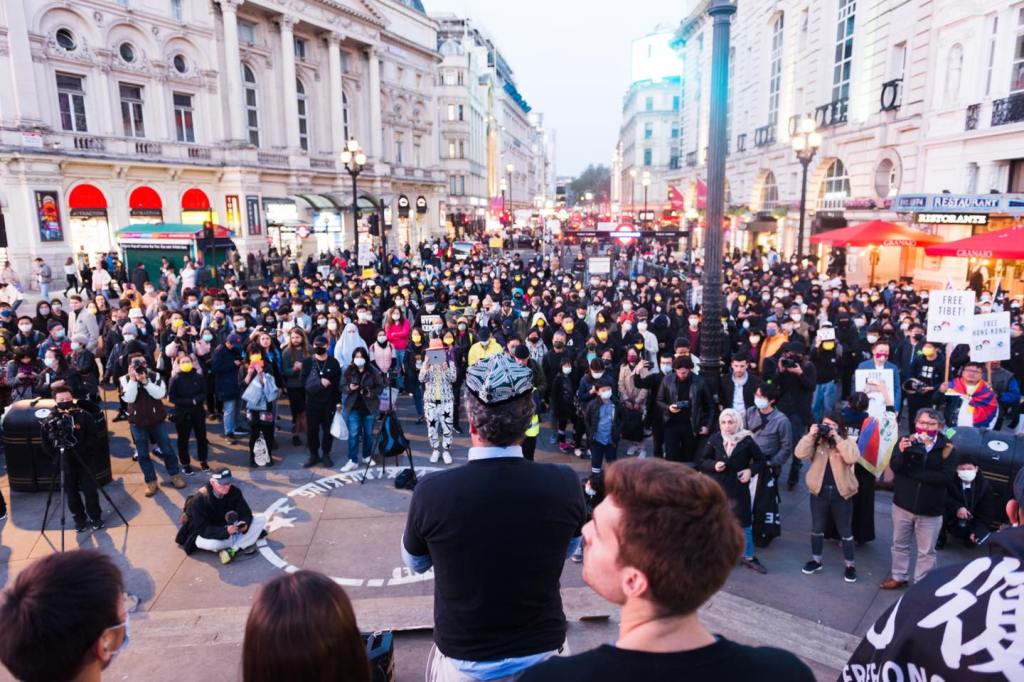
As part of global solidarity, a few years ago, during the formal launch of the Stop Uyghur Genocide campaign, the Uyghur community presented Doppas to prominent supporters in the UK, including Benedict Rogers, who wore the hat at a London rally to show his support for the Uyghur cause.

Ahead of the Doppa day, Benedict Rogers posted in his social media platform: “This coming Monday, 5 May, it is World #Doppa Day for #Uyghurs. Unfortunately I forgot to pack my doppa when I left for the US earlier this week, but it is in my heart and in my spirit. Let’s all wear our doppas – in reality or in spirit – in solidarity with #Uyghurs.”
The Story of Tahir Imin
At the heart of the Doppa movement is Tahir Imin, a courageous figure who has fought tirelessly for Uyghur rights. Born in 1981, Imin’s early life was shaped by his deep commitment to Uyghur culture and Islam. After studying Islamic religion and Arabic, Imin became an active voice in the Uyghur community. For his efforts to preserve Uyghur identity and challenge Chinese policies, he was imprisoned twice, from 2005 to 2007.
With the rise of Chen Quanguo as Party Secretary in Xinjiang, the repression of Uyghurs intensified. Forced into exile in 2017, Imin relocated to the United States, where he continued to speak out against the Chinese regime. Tragically, his activism led to retaliation from China, including imprisoning his family members and severing his relationship with his daughter. Despite these heartbreaking challenges, Imin has remained unwavering in his commitment to the Uyghur cause, founding Uyghur Times, a media outlet dedicated to reporting on human rights abuses in East Turkistan.

The Global Movement
The significance of Doppa Day extends beyond Uyghur communities. It serves as a stark reminder of the urgent need for global attention to the ongoing Uyghur genocide. Every May 5th, as Uyghurs around the world wear their Doppas in solidarity, it is a call to the international community to take a stand against Communist China’s repression and to honour the Uyghur people’s fight for freedom, identity, and their dignity.
Through the story of the Doppa, the Uyghur people are not only preserving their heritage but boldly defying China’s cultural and political dominance. The Doppa is no longer just a piece of clothing – it’s a symbol of defiance, unity, and resistance.
 Global Alliance for Tibet & Persecuted Minorities (GATPM)