
On 25th April 1989, a boy named Gedhun Choekyi Nyima was born – a birth that would later carry profound spiritual significance for millions of Tibetans. Recognised in 1995 by His Holiness the 14th Dalai Lama as the 11th Panchen Lama – the second-highest figure in Tibetan Buddhism – Gedhun Choekyi Nyima became a beacon of hope for a people striving to preserve their spiritual and cultural identity under occupation. But this hope was soon shattered. Within days of his recognition, the six-year-old child and his family were abducted by Chinese authorities. He has not been seen since.
What should have been a sacred moment in Tibetan religious tradition was turned into one of the most chilling examples of religious persecution and enforced disappearance in modern times. For thirty years, the Tibetan people and followers of Tibetan Buddhism around the world have been denied access to their rightful spiritual leader. The Panchen Lama’s fate is not just a personal tragedy; it epitomises the Chinese Communist Party’s (CCP) ongoing campaign to co-opt, control, and ultimately erase Tibetan religious identity.
The Disappearance of the 11th Panchen Lama
On 14 May 1995, the Dalai Lama recognised Gedhun Choekyi Nyima as the reincarnation of the 10th Panchen Lama, following centuries-old spiritual traditions. Merely three days later, the child, his parents, and senior Tibetan Buddhist leader Jadrel Rinpoche, Head of the Search Committee of the Panchen Lama, vanished. China later admitted to detaining them, but has refused all independent access. No credible information has ever been provided about the Tibetan religious figure’s health, location, or circumstances. He remains one of the world’s longest-held political prisoners – and was the youngest at the time of his disappearance.
To legitimise its interference, the Chinese government installed its own candidate, Gyaincain Norbu, as a state-appointed “Panchen Lama” – an act that grossly violated Tibetan religious norms and attempted to rewrite sacred tradition through political fiat.
Why the Panchen Lama Matters
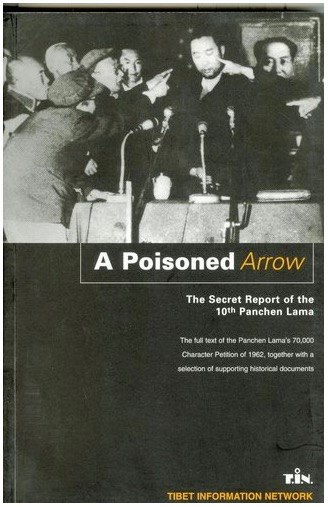
The Panchen Lama is not a symbolic role – he is a central figure in Tibetan Buddhism, responsible for key religious teachings and, historically, for recognising the reincarnation of the Dalai Lama himself. The 10th Panchen Lama was a formidable advocate for Tibetan identity who, in 1962, boldly challenged the CCP’s policies by submitting a 70,000-character petition detailing famine, persecution, destruction of monasteries, and cultural genocide in Tibet. For his courage, he was imprisoned and later placed under house arrest. His death in 1989 remains widely suspected to have been unnatural.

The CCP’s move to hijack the Panchen Lama’s reincarnation is not just political theatre; it is a strategic attempt to manipulate future leadership in Tibetan Buddhism, especially in anticipation of the 15th Dalai Lama’s recognition process.
A Pattern of State-Controlled Religion
This is not an isolated case. The CCP’s effort to manufacture religious authority extends to its 2007 State Religious Affairs Bureau Order No. 5, which arrogantly decrees that all reincarnations of Tibetan lamas must be state-approved – a brazen violation of both international law and China’s own constitution, which supposedly protects religious freedom under Article 36.
From the banning of the Dalai Lama’s image in Tibet to the forced assimilation of Tibetan children in state-run schools, China’s strategy is clear: erase the spiritual and cultural fabric of Tibetan life and replace it with unquestioning loyalty to the Party.

The Broader Campaign of Repression
The abduction of the Panchen Lama fits into a wider campaign of systemic persecution. Uyghur Muslims in East Turkestan (Xinjiang Uyghur Autonomous Region) face internment and cultural genocide. Christians are arrested and churches razed. Falun Gong practitioners are subjected to brutal repression. Mongolian language and culture are being erased. Tibetans face forced relocations, surveillance, and cultural annihilation.
As His Holiness the 14th Dalai Lama ages, Beijing is preparing to use its manufactured “Panchen Lama” as a political tool to interfere in the next reincarnation process. This would create a false Dalai Lama – a state-sponsored spiritual puppet – while the legitimate reincarnation, chosen by Tibetans, would be revered by the Tibetan people and Buddhist communities worldwide.
Geopolitical and Moral Responsibilities
China’s actions have global implications. India, which hosts the Dalai Lama and the Tibetan Government-in-Exile, holds a vital responsibility in safeguarding Tibetan spiritual autonomy. The United States, through its Tibet Policy and Support Act (TPSA), has taken commendable steps to ensure that only Tibetans have the right to determine their spiritual leaders.
The United Nations and democratic nations must now go beyond statements of concern and hold China accountable to the Universal Declaration of Human Rights, which enshrines freedom of religion and belief.
Recommendations
- Immediate Release and Independent Access: China must reveal Gedhun Choekyi Nyima’s whereabouts and condition, and allow international agencies, including the UN and Red Cross, to verify his wellbeing.
- End State Interference in Religion: Repeal Order No. 5 and stop interfering in reincarnation processes and spiritual affairs of the Tibetan people.
- Protect All Persecuted Groups: End repression of Tibetan Buddhists, Uyghur Muslims, Christians, Falun Gong practitioners, and Mongolians.
- Impose Accountability Measures: Governments must apply Magnitsky-style sanctions against Chinese officials responsible for religious persecution and disappearances.
- Support the Dalai Lama’s Reincarnation Process: India, the US, EU, and UN must uphold Tibetans’ exclusive right to choose their spiritual leaders, free from CCP control.
- Demand Legal and Moral Clarity: The UN Human Rights Council must intensify pressure on China to comply with its constitutional and international commitments.
Faith Cannot Be Fabricated
China can copy and manufacture nearly anything – from consumer goods to copyrighted designs – and has done so with notable success. But attempting to fabricate a spiritual leader through political coercion is not only a gross violation of religious rights, it is an insult to human intelligence and the sacred traditions of an ancient people. Faith cannot be manufactured; it must be lived, practiced, and honoured freely.
Gedhun Choekyi Nyima remains a symbol of what is at stake – the future of Tibetan identity, faith, and freedom. The world must act. Return the Panchen Lama. Restore religious freedom in Tibet.
 Global Alliance for Tibet & Persecuted Minorities (GATPM)
Human Rights Focus on the Gaza Strip Situation sum −
René Wadlow, Association of World Citizens
On Fri, Apr 25, 2025 at 12:22 PM Global Alliance for Tibet & Persecuted
LikeLike