7th November 2024 | Global Alliance for Tibet & Persecuted Minorities (GATPM)
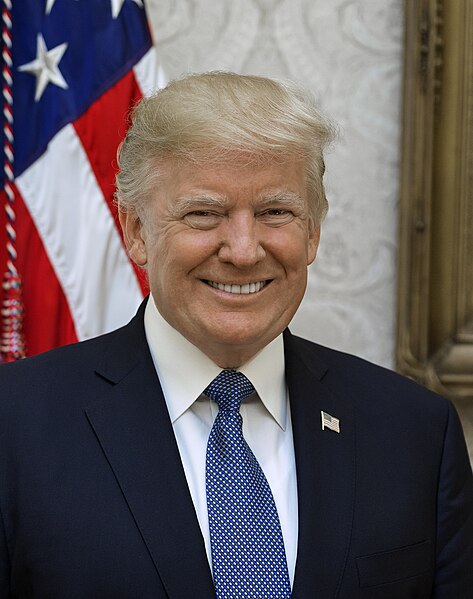
The Global Alliance for Tibet & Persecuted Minorities (GATPM) congratulates President Donald J. Trump on his re-election as the 47th President of the United States. We urge the new administration to reaffirm America’s commitment to global human rights, justice, and accountability, values that face unprecedented threats today. Now, more than ever, strong U.S. leadership is crucial in defending these principles worldwide.
During President Trump’s first term, the United States made significant progress in supporting the Tibetan people’s fight for fundamental rights and autonomy. The administration’s enactment of the Reciprocal Access to Tibet Act of 2018 and the Tibetan Policy and Support Act of 2020 marked critical steps in holding China accountable for human rights abuses and supporting Tibetans’ aspirations to preserve their culture, language, and spiritual heritage. The Reciprocal Access to Tibet Act pioneered efforts to counter China’s systematic restriction of foreign access to Tibet, thereby enhancing independent observation and reporting on human rights conditions in the region. Meanwhile, the Tibetan Policy and Support Act bolstered U.S. commitments to protect Tibetans’ religious freedom and promote a future of genuine autonomy.
As President Trump prepares for his second term, GATPM calls for immediate, decisive actions to expand upon these commitments. One urgent priority is the swift appointment of a U.S. Special Coordinator for Tibetan Issues, as mandated by Congress, to lead a coordinated response to ongoing rights abuses in Tibet and champion Tibetan rights on the international stage. Additionally, we urge the administration to advocate for Tibet in multilateral forums, encouraging global allies to join in pressing China to end its repressive policies.
Beyond Tibet, GATPM calls on the United States to adopt a principled stance against the full range of China’s rights violations, including its draconian policies in Xinjiang (East Turkistan), Southern Mongolia, and Hong Kong, along with its growing aggression toward Taiwan. As Beijing expands its territorial ambitions and tightens its authoritarian control, the international community must stand united in demanding accountability. The United States should lead in implementing policies that uphold the rule of law, protect persecuted minorities, and collaborate with allies to counter these mounting threats.
With its enduring commitment to justice and the rule of law, the United States holds a unique position in the global defence of human rights. We hope that, under President Trump’s leadership, the U.S. will continue to prioritise the freedom and security of oppressed communities, champion human rights, and support multilateral efforts that advance peace and justice.
We also extend our gratitude to President Joe Biden, his administration, and the U.S. Congress for their continued support for Tibet, including the Resolve Tibet Act (2024), and persecuted minorities facing repression in China.
The Global Alliance for Tibet & Persecuted Minorities (GATPM) is dedicated to advocating for human rights, justice, and the protection of persecuted communities around the world.
 Global Alliance for Tibet & Persecuted Minorities (GATPM)
Francesca Albanese https://www.aljazeera.com/program/newsfeed/2024/11/1/un-should-consider-suspending-israel-over-genocide-says-special-rapporteur, the U.N. Special Rapporteur on Human Rights in Occupied Palestine, presented her Report to the Human Rights Council on 30 October 2024 and gave a briefing for the press on her Report. Her Report pointed clearly to the danger of genocide, a policy with the intent to cleanse ethnically all or part of Gaza, the Occupied West Bank and East Jerusalem.
1) See William A. Schabas. Genocide in International Law
(Cambridge: Cambridge University Press, 2000)
René Wadlow, Association of World Citizens
On Thu, Nov 7, 2024 at 12:11 PM Global Alliance for Tibet & Persecuted
LikeLike