21st October 2024 | London | Tsering Passang
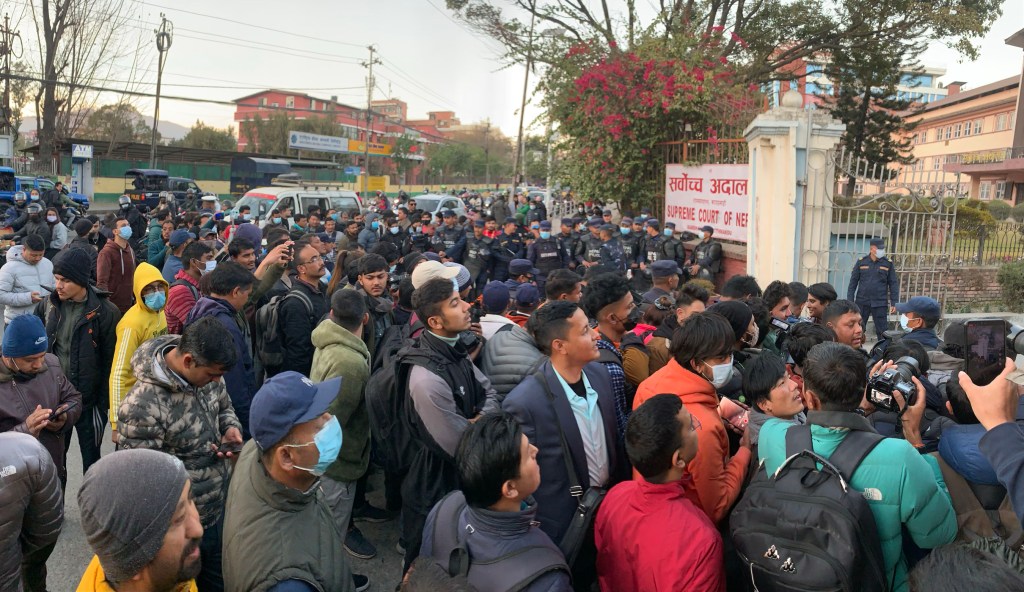
Rabi Lamichhane, a prominent Nepalese politician, journalist, and former television personality, has become the centre of political discussions across Nepal and abroad. Supporters of Lamichhane, who briefly held positions as Deputy Prime Minister and Home Minister, have taken to the streets in protest, claiming that his removal from office may have been politically motivated.

Background and Rise in Politics
Lamichhane, originally a media figure, gained nationwide fame for his investigative journalism and his championing of issues affecting marginalised communities. His direct, often confrontational approach to exposing corruption and social injustices earned him widespread public support, particularly among Nepal’s youth and disenfranchised communities. His television show, Sidha Kura Janata Sanga (Straight Talk with the People), became a platform for public accountability, turning Lamichhane into a household name.
In December 2022, Lamichhane transitioned from journalism to politics, leading his newly formed Rastriya Swatantra Party (RSP). He won a seat in the House of Representatives from Chitwan-2, and shortly afterward, he was appointed as Deputy Prime Minister and Home Minister in Pushpa Kamal Dahal‘s government. However, his political career faced a major setback in January 2023, when the Supreme Court disqualified him, citing that he was still a U.S. citizen at the time of his candidacy. The ruling forced him to relinquish his positions and temporarily derailed his political momentum.
Allegations of Political Vendetta
Lamichhane’s supporters believe his removal from office was not solely a legal matter but part of a larger political conspiracy orchestrated by Nepal’s established political elite. Many point fingers at the incumbent Prime Minister KP Sharma Oli and his government, suggesting that Lamichhane’s rapid rise and increasing popularity posed a threat to the traditional political order. Oli’s government had been accused of using legal technicalities to neutralise political rivals in the past, and Lamichhane’s case, they argue, was no different.
Some analysts contend that the scrutiny around Lamichhane’s citizenship was exaggerated and politically motivated. His growing influence within a short span of time – along with his reformist agenda – allegedly rattled several established parties, including Oli’s Communist Party of Nepal (Unified Marxist Leninist), who viewed him as a potential disruptor in Nepalese politics.
Political Future
Despite the setback, Lamichhane has remained a force in Nepalese politics. After regaining his citizenship, Lamichhane contested the by-elections in April 2023 and once again secured victory from Chitwan-2. His RSP continues to enjoy significant support, especially among voters disillusioned by Nepal’s traditional political parties.
Lamichhane’s future remains promising, though uncertain. While he has successfully reclaimed his political position, his ability to navigate Nepal’s often turbulent political landscape is still being tested. Whether he can continue his reformist agenda or face further legal and political challenges remains to be seen. However, the widespread protests in his favour suggest that he still enjoys strong grassroots support, positioning him as a key figure in shaping Nepal’s political future.
Lamichhane’s critics argue that he lacks the political experience needed to implement sustainable changes, while his supporters view him as a necessary alternative to Nepal’s entrenched political establishment. The coming months will likely determine whether he can convert his popularity into lasting political power, or whether the forces aligned against him will continue to impede his rise.
UPDATE: 22nd October 2024
Could Nepal Become the Next Bangladesh Amid Growing Protests Against the Government?
Nepal is witnessing a wave of public protests, most notably in support of Rabi Lamichhane, leader of the Rashtriya Swatantra Party (RSP), which signal growing dissatisfaction with the government. Accusations against Lamichhane and his party, widely seen as politically motivated, have ignited broader frustrations over corruption and poor governance. Lamichhane’s supporters have taken to the streets, accusing the government of a political vendetta, demanding justice, and challenging the status quo. The movement, while focused on Lamichhane, echoes deeper concerns about the country’s leadership.

Though these protests could escalate into a larger national movement, it is uncertain whether they will spark immediate political change. Nepal’s political history is turbulent, having cycled through 13 different governments in the past 16 years. The nation’s strategic position, wedged between India and China, only adds to its complexity. Both regional powers vie for influence, and Prime Minister KP Sharma Oli’s government has often been perceived as leaning toward Beijing. This alignment could have far-reaching consequences for Nepal’s future, especially as tensions simmer domestically.
As for Oli, despite facing mounting political pressure and allegations from Lamichhane’s camp, there is no substantial evidence to suggest that he might flee to either India or China. Speculation about his potential asylum remains largely rumour, with little indication that the ongoing protests will force him from power. Oli continues to assert his leadership, staying actively engaged in domestic governance.
The trajectory of these protests remains to be seen, but the parallels with Bangladesh’s political unrest raise questions about Nepal’s own future as public discontent grows louder.
 Global Alliance for Tibet & Persecuted Minorities (GATPM)