
London | 7th March 2024 | By Tsering Passang
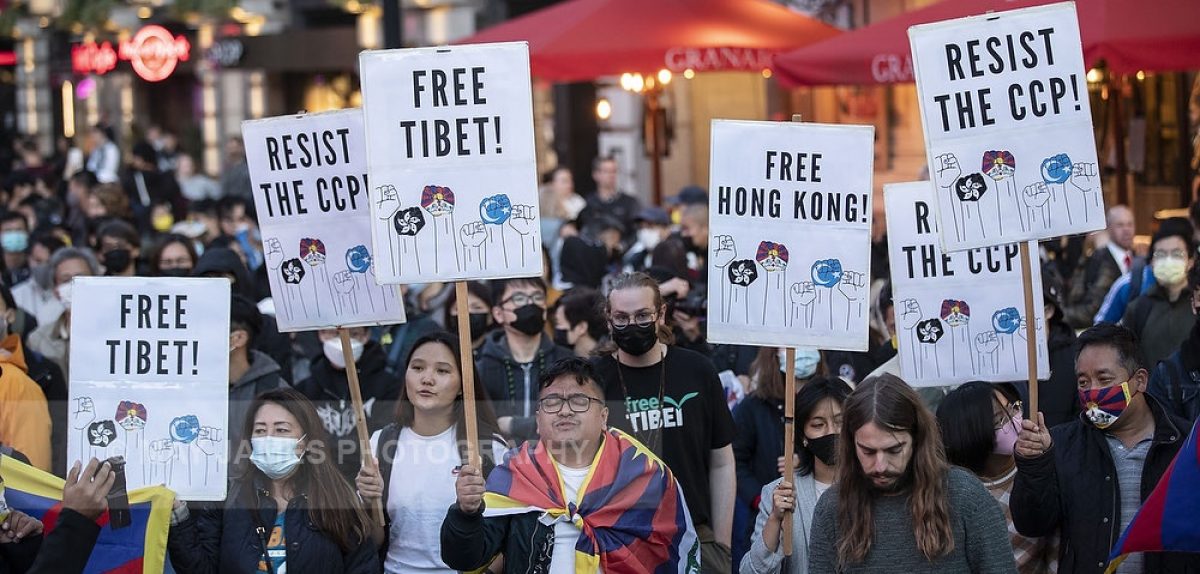
On Wednesday, 6th March, ‘Why Tibet Matters’ – an important topic chosen for a public discourse was held in an English town of Woolwich, which the local Tibetans say had historical connection with the independent Tibet over a century ago.
Woolwich is a thriving town in southeast London, England, within the Royal Borough of Greenwich. It is currently a home to over 100 Tibetans, which is the single largest concentration of Tibetans in one borough in the whole of UK. The town’s location on the River Thames led to its status as an important naval, military and industrial area; a role that was maintained throughout the 16th to 20th centuries.
Historical connections between Tibet and Great Britain goes long back to the late 1800s and early 1900s, especially during the Great Game, when British and Russian empires had a rivalry over influence in Central Asia, primarily in Afghanistan, Persia, and Tibet.
For the isolated Tibetan Buddhists, the Younghusband Expedition to Tibet (1903-04) gave them the first taste of what a powerful western military force was like. Britain’s brief invasion of Tibet eventually taught the Tibetans a lesson that one cannot remain in isolation in this interdependent world. So, after nearly three years of exile in India, on 13th February 1913, His Holiness the 13th Dalai Lama made the Decree on Tibet’s Independence upon his return to Lhasa, Tibet’s capital.
As Britain was willing to aid the Tibetans, as part of modernising Tibet, the 13th Dalai Lama’s experiment with modern education resulted in the British welcoming four young Tibetans from Lhasa, dubbed ‘Rugby Boys’, aged between 12 and 15, in April 1913. Two of the young boys also received some training in Woolwich – at the Royal Military Academy and the Royal Arsenal.
After long negotiations, Great Britain and Tibet signed The Simla Treaty of 1913-14, which also included the McMohan Lines, the demarcation of today’s border between India and Tibet. Tibetans still abide by this signed treaty with a foreign country, which was negotiated by Henry McMahon, foreign secretary of British India and the chief British negotiator of the conference at Simla. However, since China’s illegal occupation of Tibet in the 1950s, Communist China has been causing real problems in the Indo-Tibet border region, which has today resulted in the deployments of over a million military personnel and sophisticated military hardwares on both sides, readying for war.
Watch the proceedings, filmed by Londonney here:
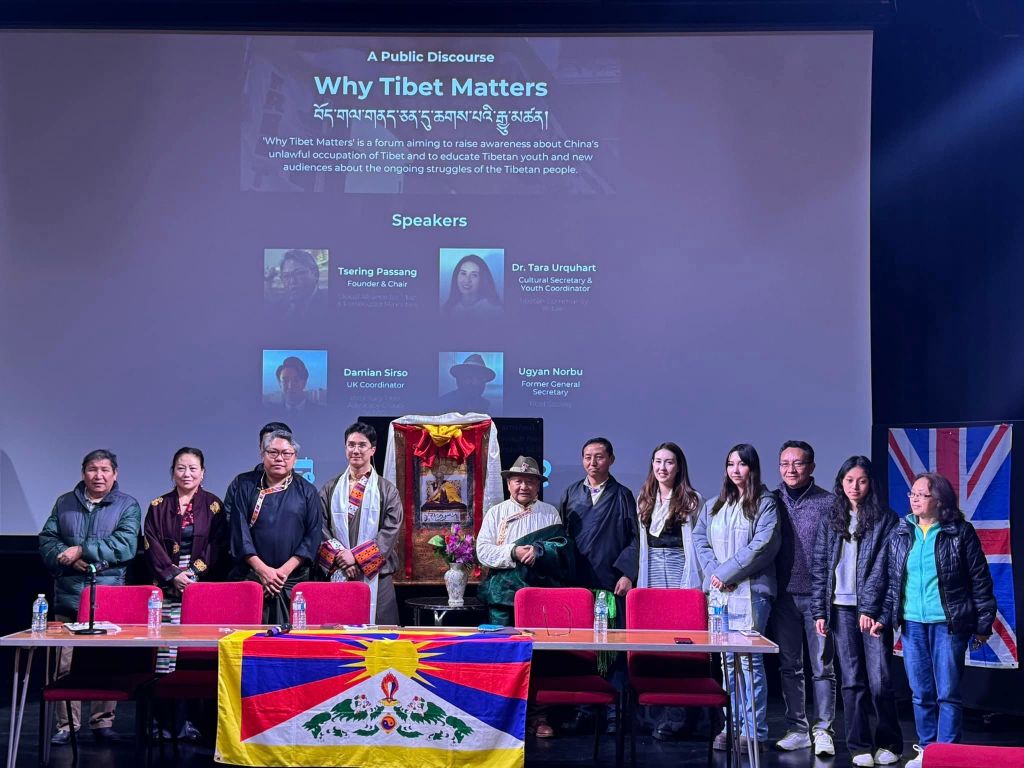
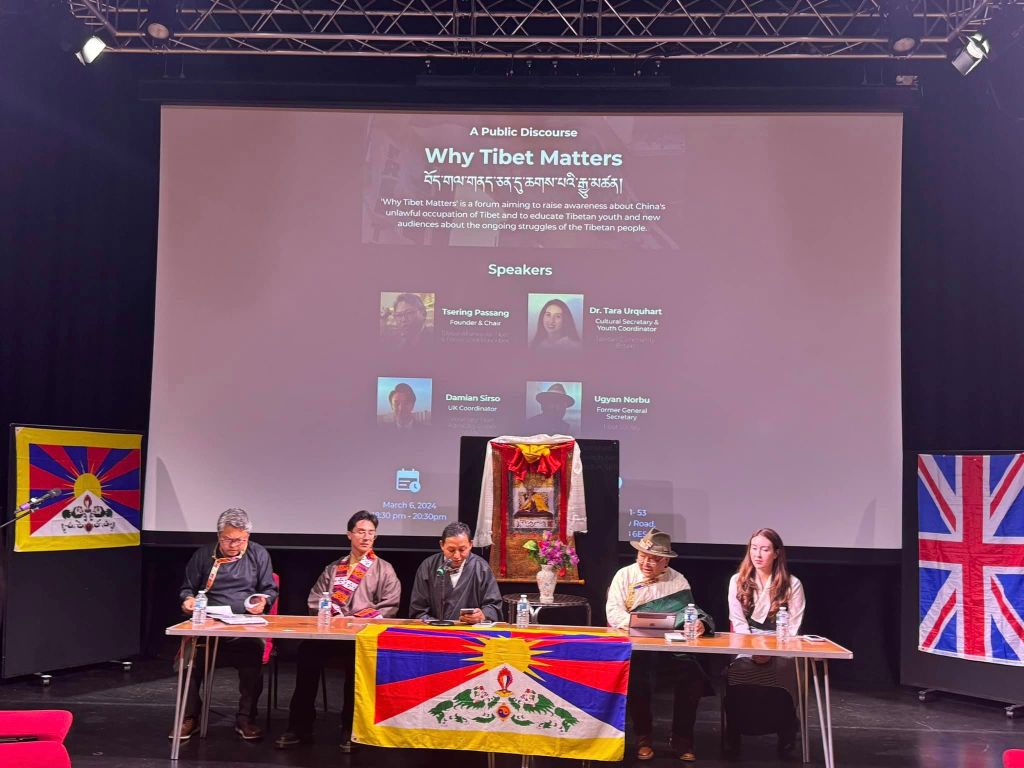
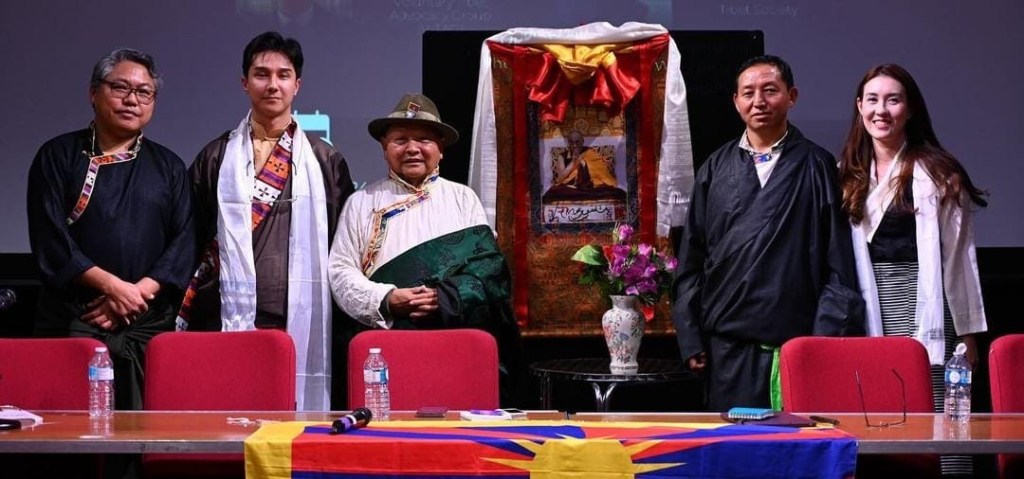
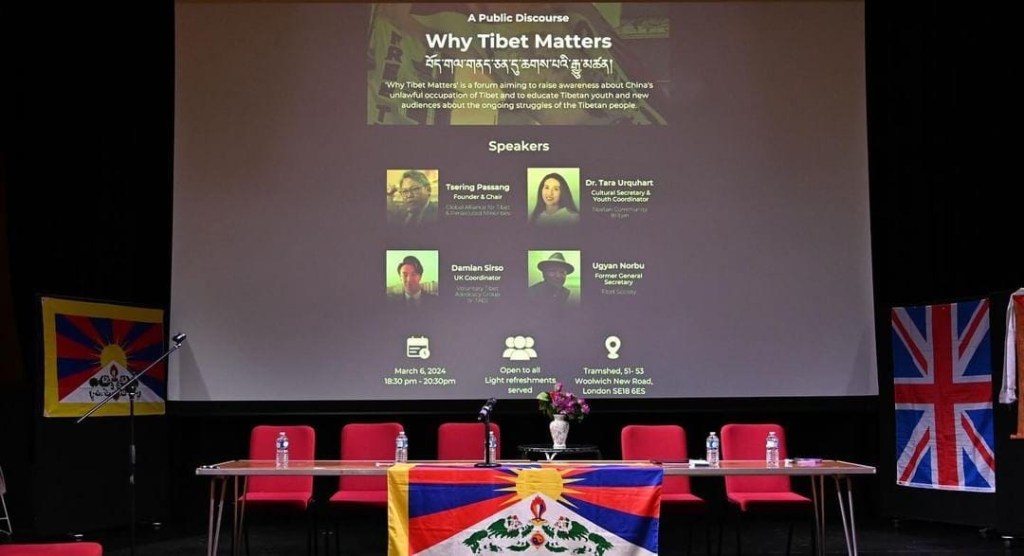
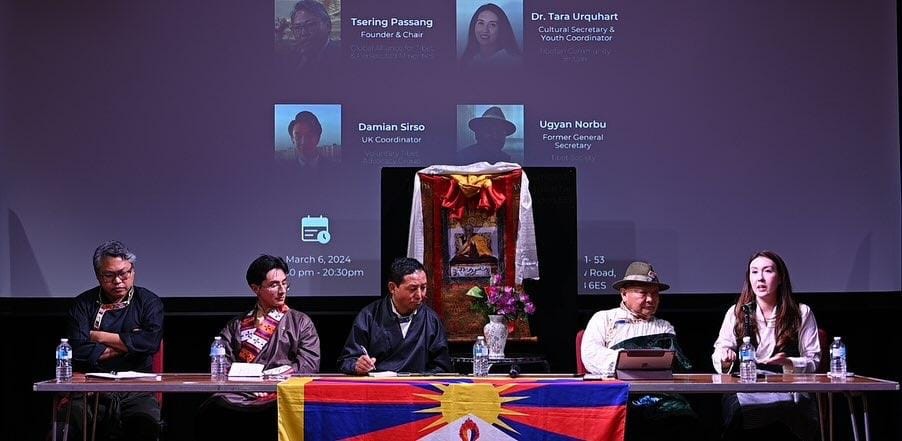
Speakers who took part in this discourse:
- Tsering Passang, Founder and Chair, Global Alliance for Tibet & Persecuted Minorities; Former Chairman of Tibetan Community in Britain
- Damian Sirso, UK Coordinator, Voluntary Tibet Advocacy Group (V-TAG)
- Ugyan Norbu, Former General Secretary of Tibet Society & Relief Fund of the UK; Former Treasurer of Tibetan Community in Britain
- Dr. Tara Urquhart, Culture Secretary and Youth Coordinator, Tibetan Community in Britain
- Phuntsok Norbu, Former Vice Chairman of Tibetan Community in Britain; Former Vice President of Regional Tibetan Youth Congress-Chandigarh, moderated this panel discussion.

Before the welcome and opening remark, the organisers released a short 8-minute video in reflection of China’s occupation of Tibet as well as the continued suppression of religious freedom and enforced colonial-style residential schooling for Tibetan children from the age of 6 to 18 with the long term goal of annihilation of the Tibetan language, identity, culture and history.




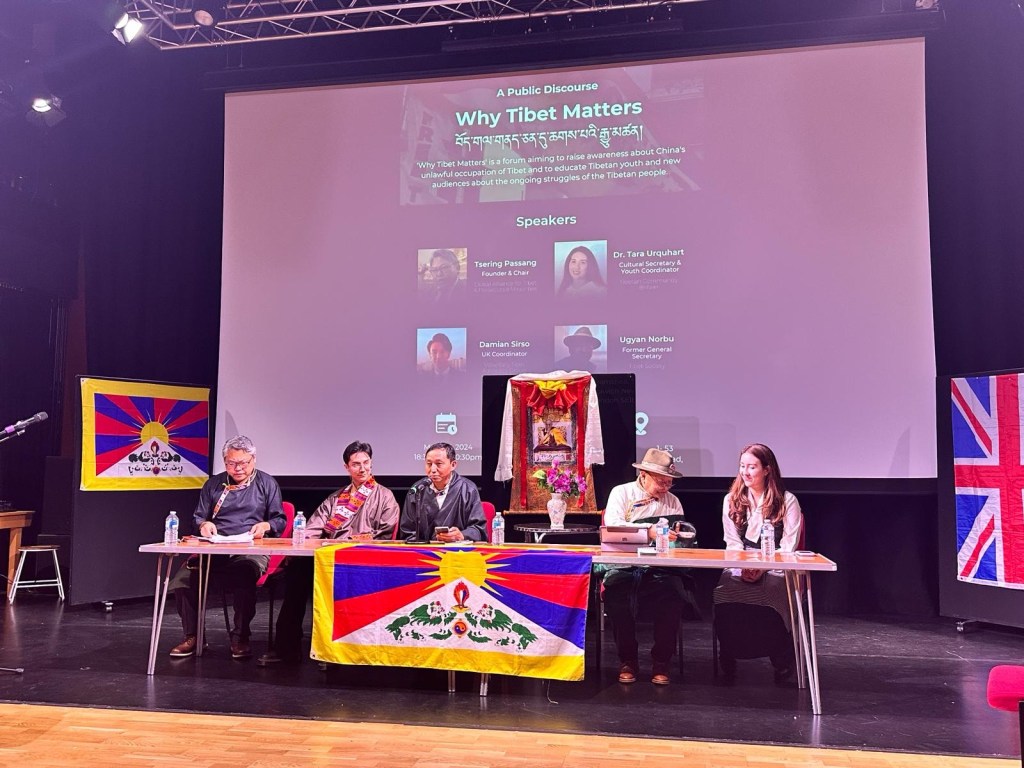
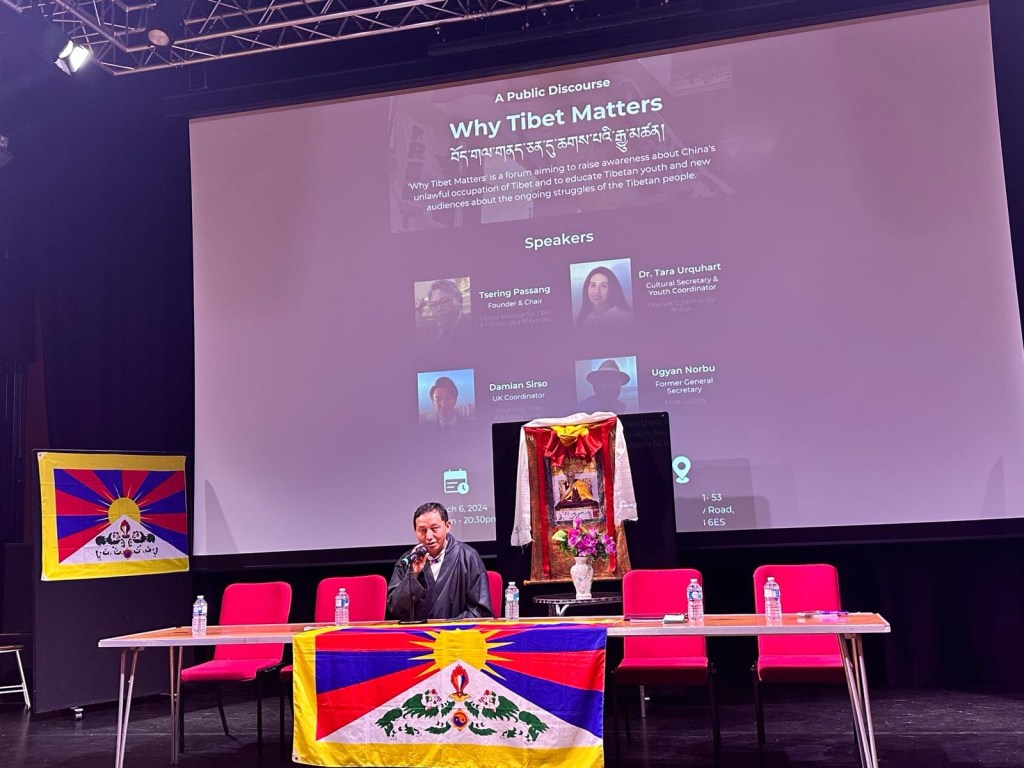

The free event held at Woolwich-Tramshed, was voluntarily organised and sponsored by Ugyan Norbu, Phuntsok Norbu, Jamyang, (Former Council Member – Campaign Coordinator, Web Designer and Administrator – Tibetan Community in Britain), and Tsering Passang to promote the Tibetan issue through public discourse.

Tibetan National Uprising Day
Following the illegal invasion of Tibet by Communist China in the 1950s, the present 14th Dalai Lama was forced into exile in India, where the Tibetan leader established Tibet’s ‘Government-in-exile’ – officially known as the ‘Central Tibetan Administration’. Some 80,000 Tibetans followed their leader into exile.
Each year on 10th March, Tibetans commemorate the National Uprising Day of 1959 in Lhasa, Tibet’s capital. For more, please read Keeping The Flame Alive: Why Tibetans Worldwide Commemorate March 10th
 Global Alliance for Tibet & Persecuted Minorities (GATPM)