
(By Tsering Passang, GATPM, London 31st January 2024)
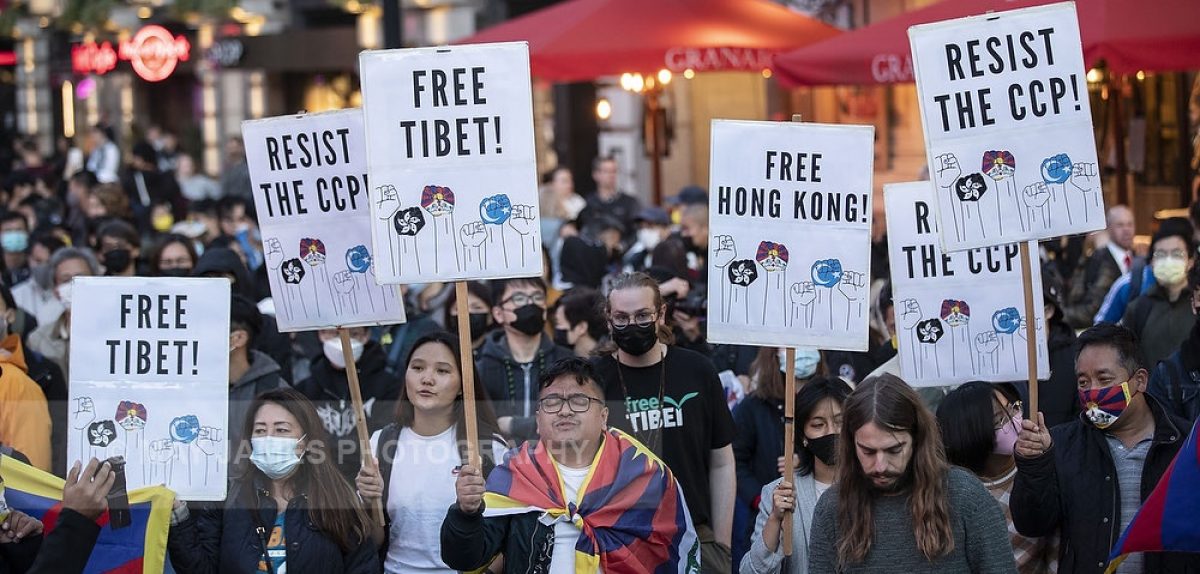
Speaking at the Royal Society for Asian Affairs (RSAA) event – ‘Reincarnation and Future of Tibet’, British Tibetan activist Tsering Passang said that Tibet’s past historical connections with the UK and India can help to resolve the China-Tibet conflict that has gone on for over 70 years.
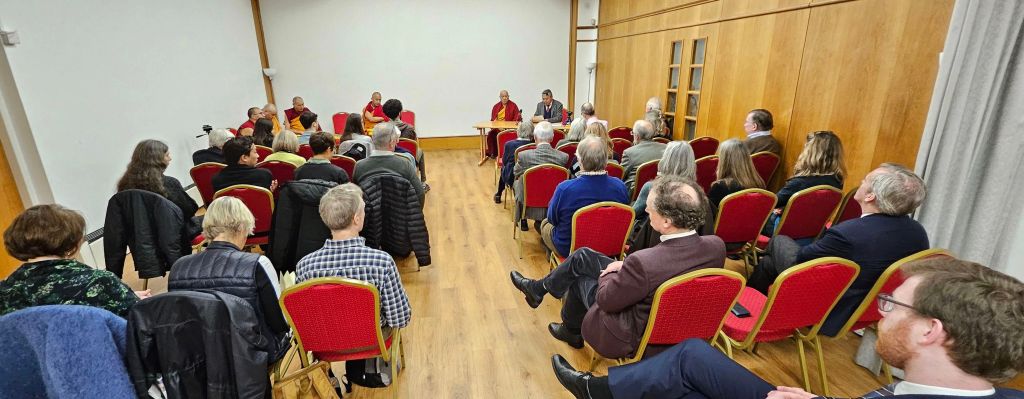
The Royal Society for Asian Affairs (RSAA) on Monday 29th January hosted a Tibet event at St. Anne’s Church, Soho, London for its members and guests, with cooperation from the Global Alliance for Tibet & Persecuted Minorities. The event also revisited Tibet’s past historical connections with the United Kingdom and other countries.
Captain Francis Younghusband, who was one of the founders of the Royal Society for Asian Affairs, is very familiar to the Tibetans. During the British rule of India, the young ambitious British military officer embarked on what was called “Younghusband Expedition” to Tibet in 1903-04 that gave Tibetans the first experience of western power’s invasion. This brief invasion of Tibet by Great Britain saw heavy casualties on the Tibetan side. A decade later, the Simla-Treaty of 1914 was signed between the Tibetans and the British, which is well documented in the archives of the British Foreign Office.
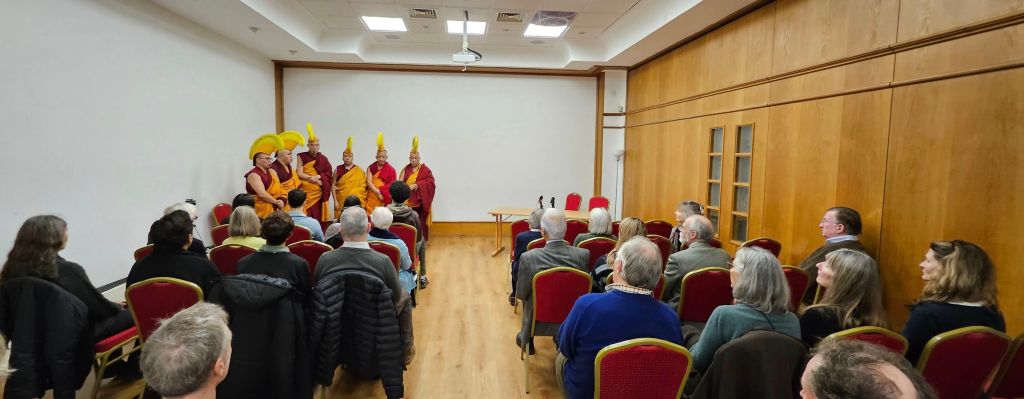
The afternoon programme started with six visiting Buddhist monks from Gyuto Monastery (India) reciting evocative Buddhist chants, who prayed for World Peace. Geshe Ngakrampa Thupten Sherap, a senior Buddhist scholar at Gyuto, spoke on the ‘Reincarnation” in Tibetan Buddhism. This was followed by an inspirational talk on the ‘Future of Tibet’ by Tsering Passang, Founder and Chair of the Global Alliance for Tibet & Persecuted Minorities. Michael Ryder CMG, Chief Executive Officer of the Royal Society for Asian Affairs, conducted the programme.
Geshe Ngakrampa Thupten Sherab, who was born in Tibet, and educated in India, said: “The reincarnation system in Tibetan Buddhist tradition is a deeply rooted and complex belief system that revolves around the concept of samsara, the cycle of birth, death, and rebirth. This spiritual philosophy holds that individuals undergo successive lifetimes, and the circumstances of each life are influenced by the accumulated karma from previous existences.”
In a reference to the Dalai Lama’s reincarnation, the Tibetan Buddhist scholar said, “The recognition of the Dalai Lama’s reincarnation involves a complex process. Upon the death of a Dalai Lama, a search is initiated to find the next reincarnation. This search may involve spiritual leaders, visions, and various signs. The identification process often includes examining young children who are believed to be potential candidates. The selected child undergoes a series of tests and observations to ensure alignment with the spiritual characteristics of the previous Dalai Lama.”
Whilst explaining the reforms and contributions made by His Holiness the Dalai Lama, including the introduction of democracy to Tibetans after coming into exile in 1959 as well as full transfer of the political authority to the elected Tibetan leadership in 2011, Geshe Sherab said: “For Tibetans, the Dalai Lama is the spiritual leader of Tibetan Buddhism and is considered Chenrezig, the manifestation of Avalokiteshvara, the Bodhisattva of Compassion.”
He concluded by saying that the Tibetan reincarnation tradition should neither be politicised nor to be interfered with by external forces (China) as this ancient belief system should be left to the Tibetan Buddhist practitioners to deal with. The Buddhist scholar even cited atheist Communist leader Mao Tsetung, who once told the Dalai Lama during one of their last meetings in China, “Religion is poison”.
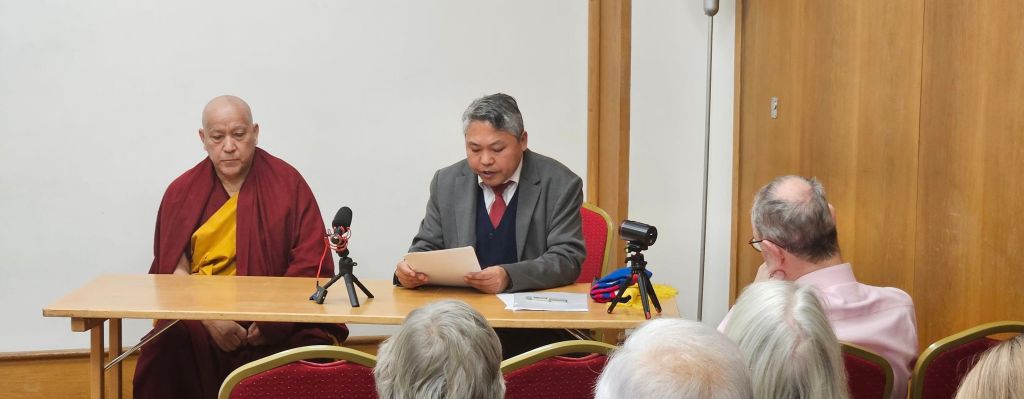
Tsering Passang, Founder and Chair of GATPM, who addressed on the ‘Future of Tibet’ subject, started off by explaining his family background. Born in a refugee camp, Tsering said that his father was a member of the CIA-funded Tibetan guerrilla resistance movement, a covert operation based in Mustang, near the Nepal-Tibet border. He said that he “opted” for the peaceful path guided by the Dalai Lama to fight back the Chinese regime. Passang said that he has resorted to writing and making new friends and alliances to garner political support for Tibet and the Tibetan people’s just cause.
Drawing on Tibet’s historical connections with India and the UK, Tsering Passang said: “Before we delve into the prospects of Tibet’s future, it is crucial to acknowledge the historical struggle that has defined the Tibetan narrative. Tibet, a land with a rich cultural heritage and natural resources, and a history of sovereign existence, faced a seismic shift with the invasion by the People’s Republic of China in the 1950s. The forced exile of His Holiness the Dalai Lama and some 80,000 Tibetan refugees, who have remained in India since 1959, marked a tragic chapter in Tibetan history.
“Tibetans, both inside Tibet and in the diaspora, have shown remarkable resilience, holding onto their unique cultural identity despite the challenges imposed by external forces, primarily under China’s illegal occupation of Tibet, for more than 70 years. Monasteries were desecrated, cultural artifacts were destroyed, and over a million Tibetans lost their lives since Communist China’s invasion of Tibet. Today, in Tibet, nearly a million Tibetan children, between the age of 4 and 18, are forcefully being admitted in China’s colonial-style residential schools with a long-term goal of annihilating the Tibetan identity, language and culture.”
Whilst highlighting Tibet’s trajectory involving the United Kingdom, India, the United States, and European countries, Tsering Passang urged for a united front amongst these leading democratic nations and support the Tibetan people’s yearning for freedom and self-determination. He said, “As a permanent member of the United Nations, the United Kingdom, with its democratic principles and commitment to human rights, holds a unique position to champion the Tibetan cause. It is a call for the UK government to utilise its diplomatic influence and historical ties to mobilise international support for Tibet, emphasising the importance of self-determination.”
On India’s connection, Passang said, “India, as a neighbour and a nation with a history of cultural ties to Tibet, plays a pivotal role in the Tibetan struggle. The refuge provided to His Holiness the Dalai Lama and thousands of Tibetan refugees since 1959 established a unique bond between India and Tibet. As we envision the future, I urge India to strengthen its commitment to the Tibetan cause. Tibet’s freedom is also linked with India’s national security. The historical ties between India and Tibet, coupled with shared democratic values, position India as a key player in advocating for the self-determination of the Tibetan people. It is a call for India to leverage its diplomatic relations with China to encourage a peaceful resolution, respecting the aspirations of Tibetans for self-determination.” (For Tsering Passang’s full address at RSAA, please click here.)
During the Q&A slot, a member of the RSAA shared his personal experience of embarking on a group trip to Tibet in 2003 as part of the 100th anniversary of the Younghusband Expedition to Lhasa. It was also expressed that the Tibetan issue had been sidelined for some time and there was a general feeling that something needed to be done to help the Tibetans. Passang responded by stating that the outreach event was so important to make new friends and alliances. He urged the audience to share the Tibet story and encourage their children and grandchildren to support the Tibetan people in their quest for justice from China’s illegal occupation of Tibet.
Some feedback received from the audience and organiser:
A British woman, who had some connections with the Tibetans, wrote: “Your talk yesterday was inspirational. It was also a privilege to be witness to the formidable chanting of the monks, and hear Geshe Ngakrampa on Reincarnation. It is a shame there is so much trouble in the world at the moment, but it is important too that issues such as Tibet are not forgotten.”
A young Hong Kong Advocate reached Tsering Passang via a social media platform and wrote: “I was inspired by your speech! Would love to connect with you.” (Yes, we are connected now!)
Another attendee, who is keen to follow-up with Passang, wrote: “I was very moved by your speech on Monday and felt roused that the persecution of the Tibetans needed to be raised up the agenda again as it appears to have fallen off somewhat.”
Whilst thanking Tsering Passang, an organiser from the RSAA, said: “I think it went extremely well and many of the people that I have spoken to have said how much they enjoyed it.”

Author’s note: It was indeed a very meaningful outreach initiative, which has helped to highlight and call for political support to resolve the China-Tibet conflict. I wish to acknowledge and thank the Royal Society for Asian Affairs, supporter Victoria, the six visiting Gyuto monks and of course my good friend Tenzin Dakpa, proprietor of Kailash Momo Restaurant, sponsor of the Gyuto monks’ UK Tour, for all their support and cooperation.
Useful links
The Royal Society for Asian Affairs
Gyuto Monastery, Dharamsala, India
Global Alliance for Tibet & Persecuted Minorities
Media Coverage
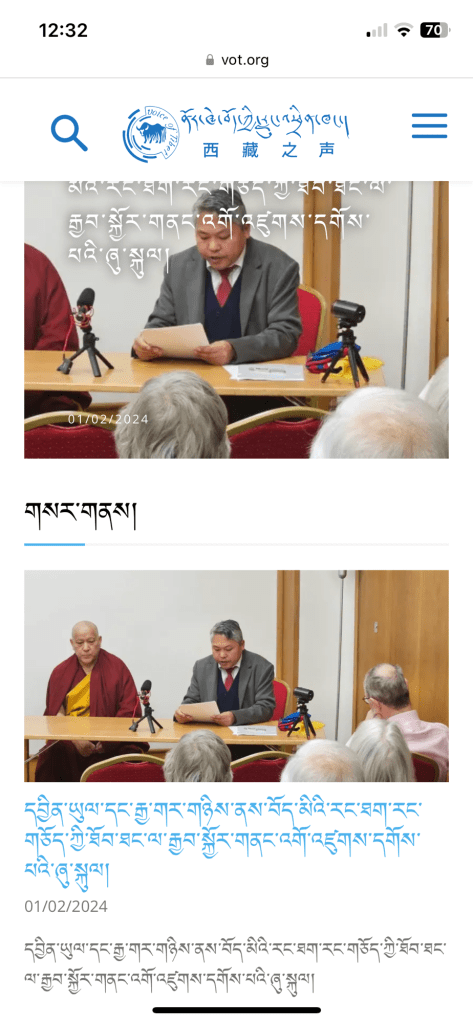
Radio Free Asia (RFA) (starting 15:22 – 23.28)
 Global Alliance for Tibet & Persecuted Minorities (GATPM)
One thought on “UK and India urged to kickstart international advocacy for self-determination of the Tibetan people”