
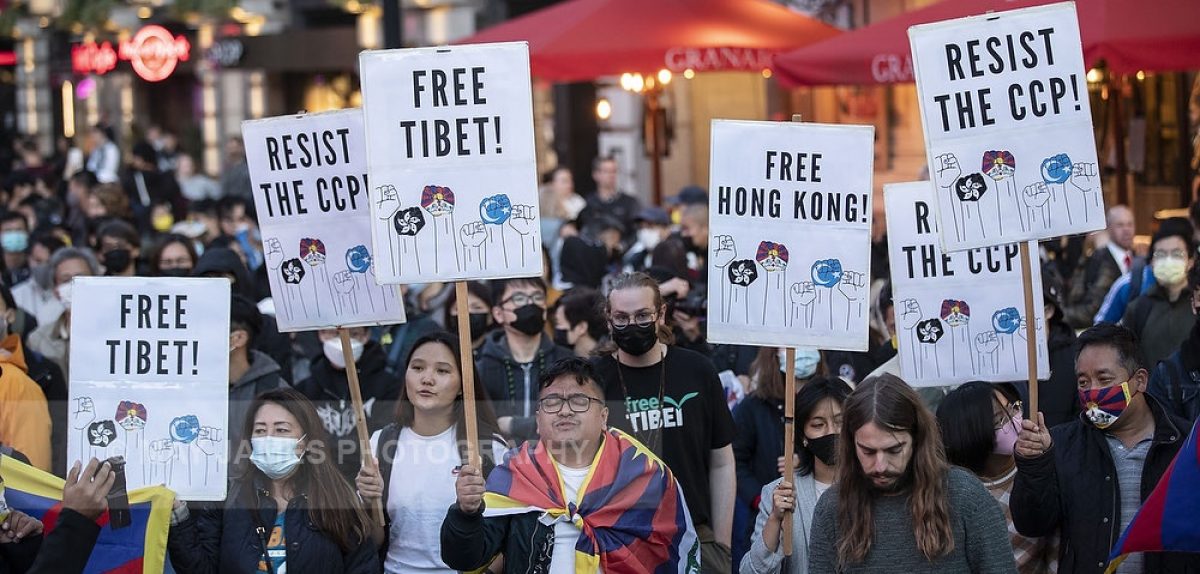
Tsering Passang’s Presentation at The Royal Society for Asian Affairs (RSAA), London – 29 January 2024. The Tibet event was held at St. Anne’s Church, Soho, London for RSAA’s members and guests, with cooperation from the Global Alliance for Tibet & Persecuted Minorities.

Ladies and gentlemen, esteemed guests, and fellow advocates for justice,
Thank you for joining us today as we embark on a journey of reflection and hope, delving into the profound topic of the future prospects of Tibet. In our exploration, we find ourselves standing at a crucial intersection where the destiny of Tibet is intricately linked with the decisions and actions of nations. Today, I present to you a discourse not only on the challenges faced by Tibet but, more importantly, on the way forward – a path marked by self-determination, justice, and the preservation of the unique Tibetan identity and culture.
Understanding the Historical Tapestry
Before we delve into the prospects of Tibet’s future, it is crucial to acknowledge the historical struggle that has defined the Tibetan narrative. Tibet, a land with a rich cultural heritage and natural resources, and a history of sovereign existence, faced a seismic shift with the invasion by the People’s Republic of China in the 1950s. The forced exile of His Holiness the Dalai Lama and some 80,000 Tibetan refugees, who have remained in India since 1959, marked a tragic chapter in Tibetan history.
Tibetans, both inside Tibet and in the diaspora, have shown remarkable resilience, holding onto their unique cultural identity despite the challenges imposed by external forces, primarily under China’s illegal occupation of Tibet, for more than 70 years. Monasteries were desecrated, cultural artifacts were destroyed, and over a million Tibetans lost their lives since Communist China’s invasion of Tibet. Today, in Tibet, nearly a million Tibetan children, between the age of 4 and 18, are forcefully being admitted in China’s colonial-style residential schools with a long-term goal of annihilating the Tibetan identity, language and culture. As we examine the trajectory involving the United Kingdom, India, the United States, and European countries we must recognise the complexity of historical ties, geopolitical manoeuvring, and the aspirations of the Tibetan people’s yearning for freedom and self-determination.
Tibet’s Trajectory Involving Foreign Powers
The geopolitical trajectory involving foreign powers is intricate, shaped by historical connections, diplomatic intricacies, and the evolving dynamics of global politics. Each nation plays a unique role in the unfolding story of Tibet, and it is within this context that we explore the prospects for Tibet’s future.
1. Historical Connection with the United Kingdom
The early 20th century witnessed the Younghusband Expedition to Tibet, a historical interaction between the British and the Tibetans, when Tibet faced a brief foreign invasion with direct order from London. While formal recognition of Tibetan sovereignty remained elusive in the modern context, the historical ties between the United Kingdom and Tibet, including the signing of the 1914 Simla Treaty, are profound. As we navigate the way forward, I implore the United Kingdom to draw upon these historical connections and advocate for the rights of the Tibetan people.
As a permanent member of the United Nations, the United Kingdom, with its democratic principles and commitment to human rights, holds a unique position to champion the Tibetan cause. It is a call for the UK government to utilise its diplomatic influence and historical ties to mobilise international support for Tibet, emphasising the importance of self-determination.
2. India’s Historic Ties and Ongoing Role
India, as a neighbour and a nation with a history of cultural ties to Tibet, plays a pivotal role in the Tibetan struggle. The refuge provided to His Holiness the Dalai Lama and thousands of Tibetan refugees since 1959 established a unique bond between India and Tibet. As we envision the future, I urge India to strengthen its commitment to the Tibetan cause. Tibet’s freedom is also linked with India’s national security.
The historical ties between India and Tibet, coupled with shared democratic values, position India as a key player in advocating for the self-determination of the Tibetan people. It is a call for India to leverage its diplomatic relations with China to encourage a peaceful resolution, respecting the aspirations of Tibetans for self-determination.
3. The United States: A Beacon of Support
The United States, with its commitment to democracy and human rights, has consistently expressed support for Tibet. Bipartisan initiatives such as the Tibet Policy and Support Act (TPSA) underscore the U.S. government’s dedication to addressing the Tibetan issue and advocating for the rights of the Tibetan people.
As we discuss the prospects for Tibet’s future, I call upon the United States to continue its unwavering support. The U.S. government’s engagement with China should include a strong stance on human rights abuses, religious repression, and the preservation of Tibetan culture. Self-determination is a fundamental right that must be acknowledged and supported by nations committed to justice.
4. The Role of the European Union
The European countries, particularly the European Union, with their commitments to fundamental rights and democratic principles, are significant players in shaping global affairs. As we navigate the future of Tibet, I implore the European Union to champion the Tibetan cause on the international stage. The values that bind the EU – human dignity, cultural diversity, and self-determination – should guide its advocacy for Tibet.
The EU’s diplomatic and economic influence can contribute significantly to the self-determination of the Tibetan people. It is a call for the EU to utilise its position to engage with like-minded nations, foster alliances, and promote the cause of justice, human rights, and political resolutions for Tibet.
5. China’s Assertiveness and Global Implications
China’s assertiveness, particularly in its policies towards Tibet, has profound global implications. The invasion of Tibet in the 1950s marked a turning point, and China’s rising influence adds complexity to the Tibetan struggle. As we contemplate the prospects for Tibet’s future, it is crucial for the international community, including the UK, to recognise the broader implications of China’s actions in Tibet.
The self-determination of the Tibetan people is intricately linked to the global commitment to justice and human rights. The world must not turn a blind eye to the plight of Tibetans and the erosion of their cultural identity. It is a call for nations to consider the broader context and understand that justice for Tibet is not only a regional concern but a litmus test for the international community’s commitment to the principles of self-determination.
The Way Forward: Self-Determination and Political Resolutions
As we contemplate the way forward for Tibet, the central tenet must be the self-determination of the Tibetan people. The right to determine one’s political status and pursue economic, social, and cultural development is a fundamental principle enshrined in international law. The trajectory involving the UK, India, the United States, and the European Union must be one that respects and upholds this right.
1. International Diplomacy for Self-Determination
International diplomacy plays a crucial role in advocating for self-determination. The UK, with its historical ties to Tibet, should take a lead in mobilising the international community to recognise and support the Tibetan people’s right to self-determination. The path forward involves diplomatic efforts that emphasise the importance of respecting the will of the Tibetan people in determining their political status.
Nations sympathetic to the Tibetan cause, including the United Kingdom, the United States, India, and the European Union, should collaborate on diplomatic initiatives that exert maximum pressure on China to engage in meaningful dialogue with Tibetan representatives. It is a call for the international community to stand united in support of the Tibetan people’s right to self-determination.
2. Human Rights Advocacy: A Pillar of Self-Determination
Human rights advocacy is intrinsic to the Tibetan struggle for self-determination. The UK, the United States, India, and the European Union must collectively condemn human rights abuses in Tibet by China’s authorities. The violation of religious freedom, cultural assimilation, and repression of dissent are stark realities that demand international attention.
As a British Tibetan, I urge the UK government to consistently raise the issue of human rights abuses in Tibet on the global stage. The right to self-determination cannot be realised in an environment where basic human rights are systematically violated. It is a call for the international community to hold China accountable for its actions in Tibet and insist on the protection of the fundamental rights of the Tibetan people.
3. Regional Collaboration for Self-Determination
Regional collaboration, particularly involving India, is crucial for the self-determination of the Tibetan people. India, with its historic ties to Tibet and commitment to democratic values, can play a pivotal role in advocating for self-determination. The path forward involves strengthening regional alliances that prioritise justice, human rights, and political resolutions for Tibet.
Collaborative efforts between India, the UK, the European Union and the United States can amplify the impact of diplomatic initiatives. I call for a united front that advocates for the self-determination of the Tibetan people within the regional context. Joint efforts should focus on encouraging China to engage in meaningful dialogue that respects the aspirations of Tibetans. Like it was before China’s invasion, Tibet as a ‘buffer’ state between India and China ensures stability and restores peace in the region.
4. Empowering the ‘Middle-Way’ Approach
The ‘Middle-Way’ Approach, advocated by the Central Tibetan Administration (aka Tibet’s Government-in-exile), offers a pragmatic path toward self-determination. It seeks genuine autonomy for Tibet within the framework of the PRC Constitution while respecting China’s territorial integrity. As we envision the future, I urge the UK and European nations to endorse and actively support the ‘Middle-Way’ Approach on the global stage whilst extending all practical assistance to the Tibetans.
This approach represents a bridge between the aspirations of the Tibetan people for self-determination and the geopolitical realities. It is a call for nations to recognise and endorse this pragmatic and non-confrontational stance, encouraging China to engage in dialogue that respects the self-determination of the Tibetan people. This bold political move, championed by His Holiness the 14th Dalai Lama during his political leadership of the Central Tibetan Administration, aims to secure a lasting peaceful resolution to the China-Tibet conflict.
5. Economic Leverage: Ethical Development and Self-Determination
Economic leverage can be harnessed to support the self-determination of the Tibetan people. The UK and other nations sympathetic to Tibet should use their economic influence to encourage responsible business practices in the region. Companies operating in Tibet or with business ties to the region should adhere to ethical, social, and environmental standards.
The economic path forward involves policies that prioritise the economic well-being of Tibetans and support sustainable development. It is a call for nations to explore economic engagements that empower the Tibetan people and contribute to their ability to determine their own political and economic future.
6. International Forums and Self-Determination
International forums provide platforms for advocating self-determination. The UK, the United States, India, and the European Union should consistently raise the Tibetan issue in multilateral organisations. Whether it is the United Nations or other global platforms, such as the G7, these nations must champion the self-determination of the Tibetan people.
Engaging in international forums allows for collective action and the building of alliances. I call for sustained efforts to keep the Tibetan issue on the agenda of these organisations. It is a call for the international community to recognise and respect the right of the Tibetan people to determine their own political future.
Conclusion: A Collective Commitment to Self-Determination
In conclusion, the prospects of Tibet’s future lie in the collective commitment to self-determination, justice, and the preservation of the unique Tibetan identity and culture. The Tibet trajectory involving the United Kingdom and India, is complex, but it presents opportunities for meaningful diplomatic engagement, human rights advocacy, and collaborative efforts on the global stage by making stronger alliances with like-minded countries, including the United States.
Born in a Tibetan refugee camp in Nepal, I stand before you with the conviction that self-determination is not merely a political principle but a fundamental human right. The destiny of Tibet is intertwined with the collective will of the Tibetan people to determine their own political status, economic development, and cultural preservation.
May our shared commitment to justice, human rights, and self-determination be a guiding force in shaping the future of Tibet. Let us stand united in advocating for a future where the Tibetan people can exercise their right to determine their own destiny, free from external coercion or repression. Let us reward the Tibetan people for their continued efforts in pursuit of lasting political resolution through nonviolence and peaceful means for many decades.
Ladies and gentlemen, thank you, and may our collective efforts pave the way for a future where the Tibetan people’s aspirations for self-determination are realised and celebrated on the global stage.
Tsering Passang is the founder and chair of the Global Alliance for Tibet & Persecuted Minorities.
 Global Alliance for Tibet & Persecuted Minorities (GATPM)
One thought on “‘Future of Tibet’ by Tsering Passang”