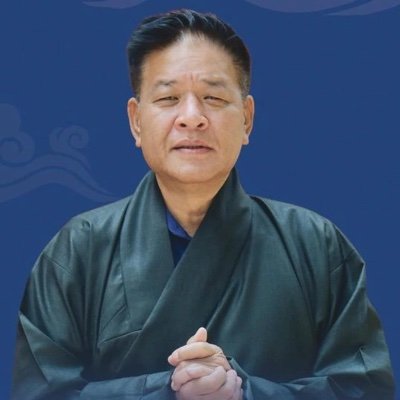
An exclusive interview with the exiled Tibetan leader – Sikyong Penpa Tsering, President of the Central Tibetan Administration (aka Tibet’s ‘Government-in-exile’) based in Dharamsala, northern India, by Voice of America Chinese (VOA) reporter Huang Yaoyi.
The interview, conducted in Dharamsala before Sikyong Penpa Tsering embarked on foreign visits to south and north America, was broadcast to coincide with his arrival in the US last week. In Washington DC, the Tibetan leader met with senior figures from both political parties. He is due to meet with the US government officials.
Sikyong Penpa Tsering candidly talks about his administration’s relations with the Biden and the Tsai Ing-wen administrations in Washington DC and Taipei respectively. He also speaks about the Central Tibetan Administration’s relations with India. In addition, the Tibetan leader shares his view on the growing political situation around the world.
Sikyong Penpa Tsering says that Taiwan’s policy on Tibet supports the Tibetan people’s right to “self-determination”. This has warmed up the relationship between Dharamsala and Taipei. Since he took the Office of Sikyong over two years ago, there were several exchanges of ministerial visits between the two sides, the Tibetan leader adds.
Whilst reiterating Tibet’s historical independence status, Sikyong Penpa Tsering expresses his commitment to the Dalai Lama’s proposed “Middle-Way” policy towards finding a lasting political resolution to the China-Tibet conflict. However, the Tibetan elected leader refutes China’s attempt to apply “One-China” principle to Tibet. He also criticises China’s cultural genocide in Tibet. He says that there is currently no “official” communication between Dharamsala and Beijing.
China’s occupation of Tibet
After the Communist Party of China (CCP) came to power and with the establishment of the People’s Republic of China (PRC), Mao Tsetung declared the so-called “peaceful liberation” of Tibet from foreign imperialists, on 1st October 1949. Soon, the People’s Liberation Army (PLA) troops marched into Tibet from the eastern frontiers. For Tibetans, this was the beginning of modern China’s invasion of Tibet in the post Second World War.
On the night of 17th March 1959, the Dalai Lama decided to leave Lhasa immediately. According to his autobiography, the Dalai Lama, disguised as an ordinary soldier, rode out of his palace on horseback “unchallenged [and moved] towards the dark road beyond”.
After nearly two weeks of a treacherous journey, with protection provided by the volunteer Tibetan resistance forces, the Dalai Lama reached safety in India, on 31st March 1959. He then set up the ‘Tibet’s Government-in-exile’ – officially known as the Central Tibetan Administration. A staunch believer in democracy, the Dalai Lama has introduced this western democratic system into Tibetan society, little by little since 1960.
In 2011, the Dalai Lama decided to fully relinquish his previously inherited political leadership, which had been sustained for nearly 400 years, by passing the historic seal to the directly elected Sikyong Dr. Lobsang Sangay, a legal scholar from Harvard University, who served two terms until May 2021.
Useful Links
 Global Alliance for Tibet & Persecuted Minorities (GATPM)
One thought on “Taiwan supports Tibetan people’s right to “self-determination”, Sikyong Penpa Tsering”